

DEATHMATE is a strategy indie game that blends chess tactics with roguelike deckbuilding on PC. Players construct armies of chess pieces and assemble decks of specialized move cards to navigate a map and confront the Grim Reaper in a race against a shrinking time limit.
Gameplay
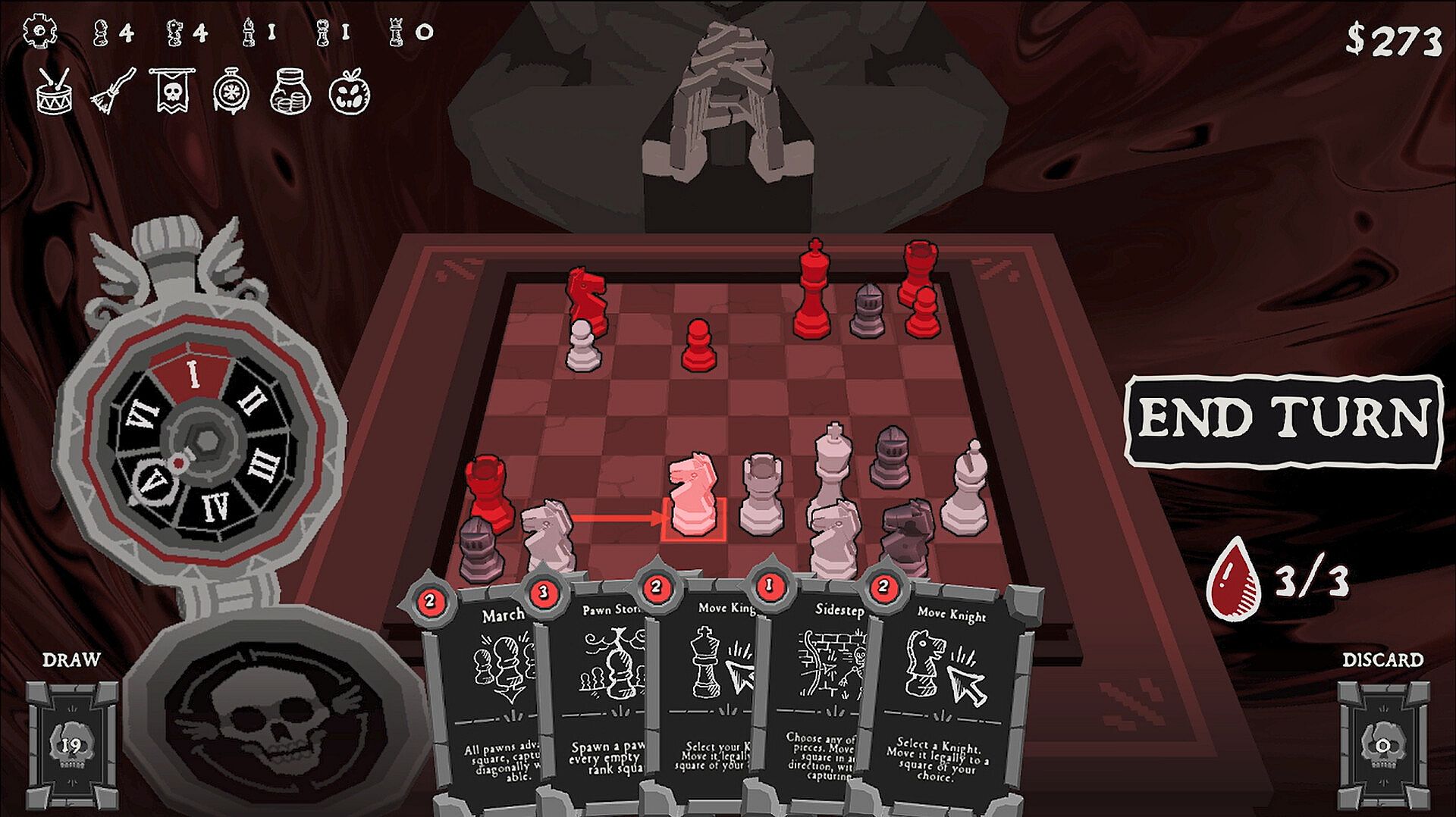
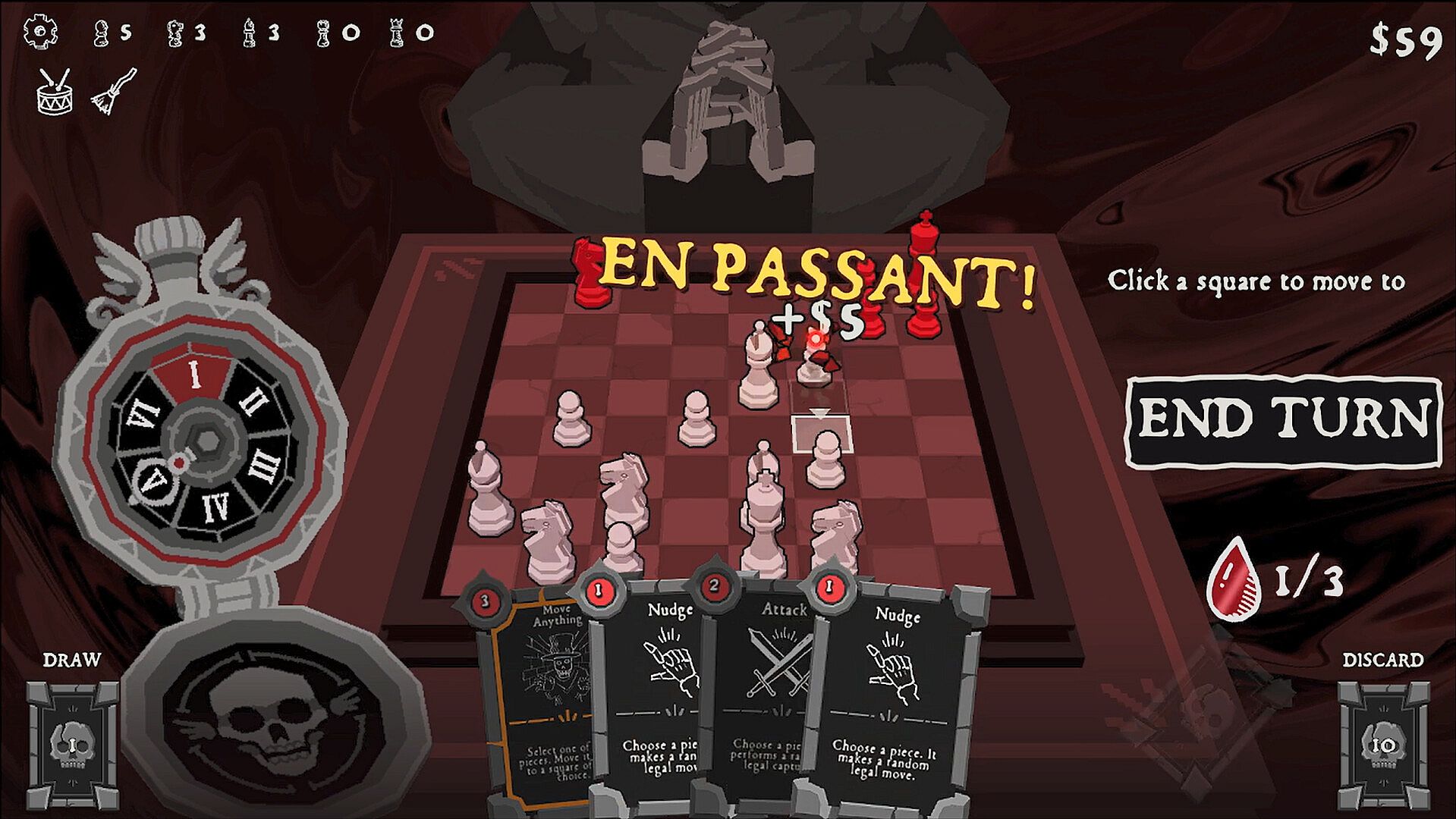
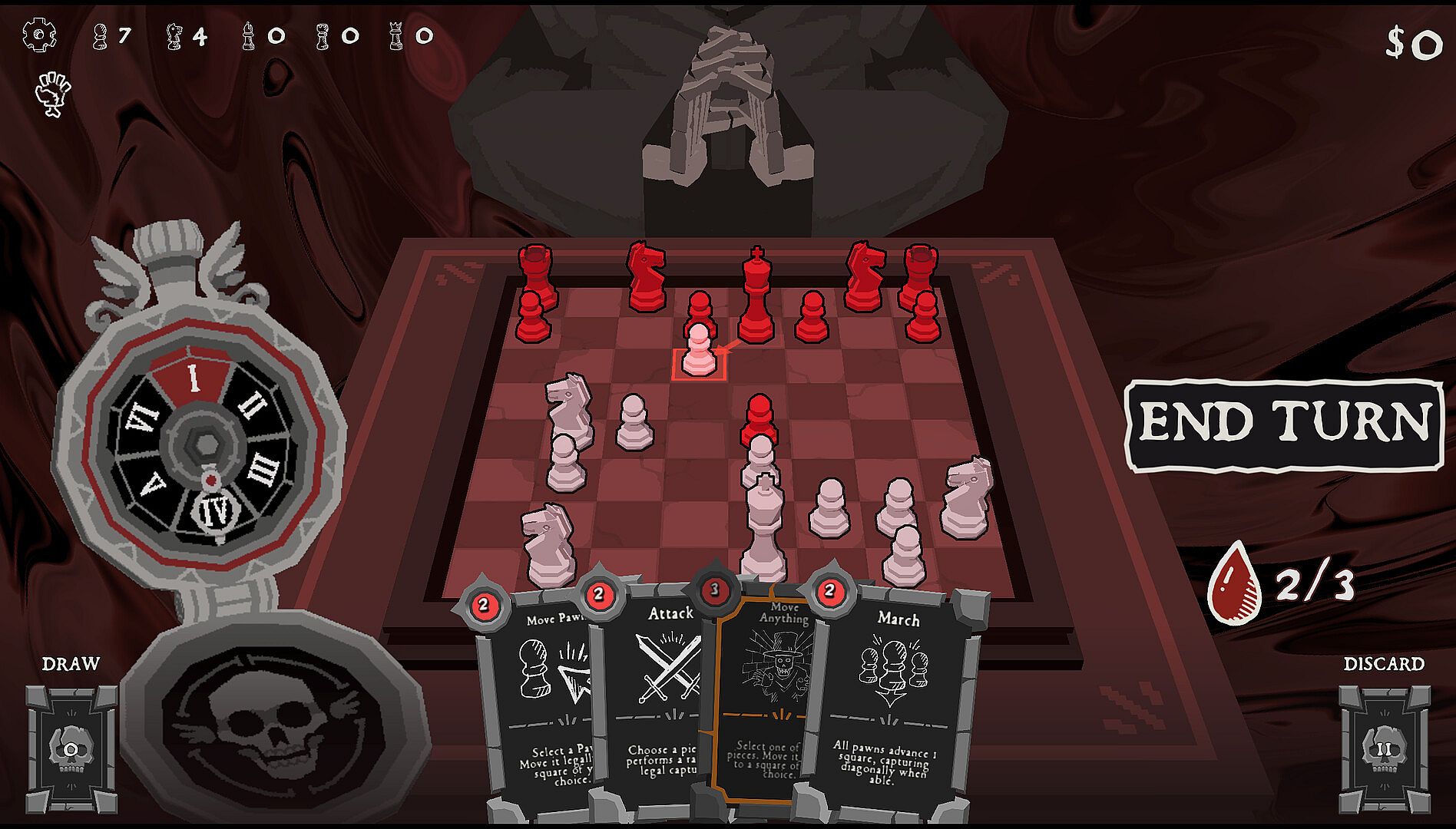
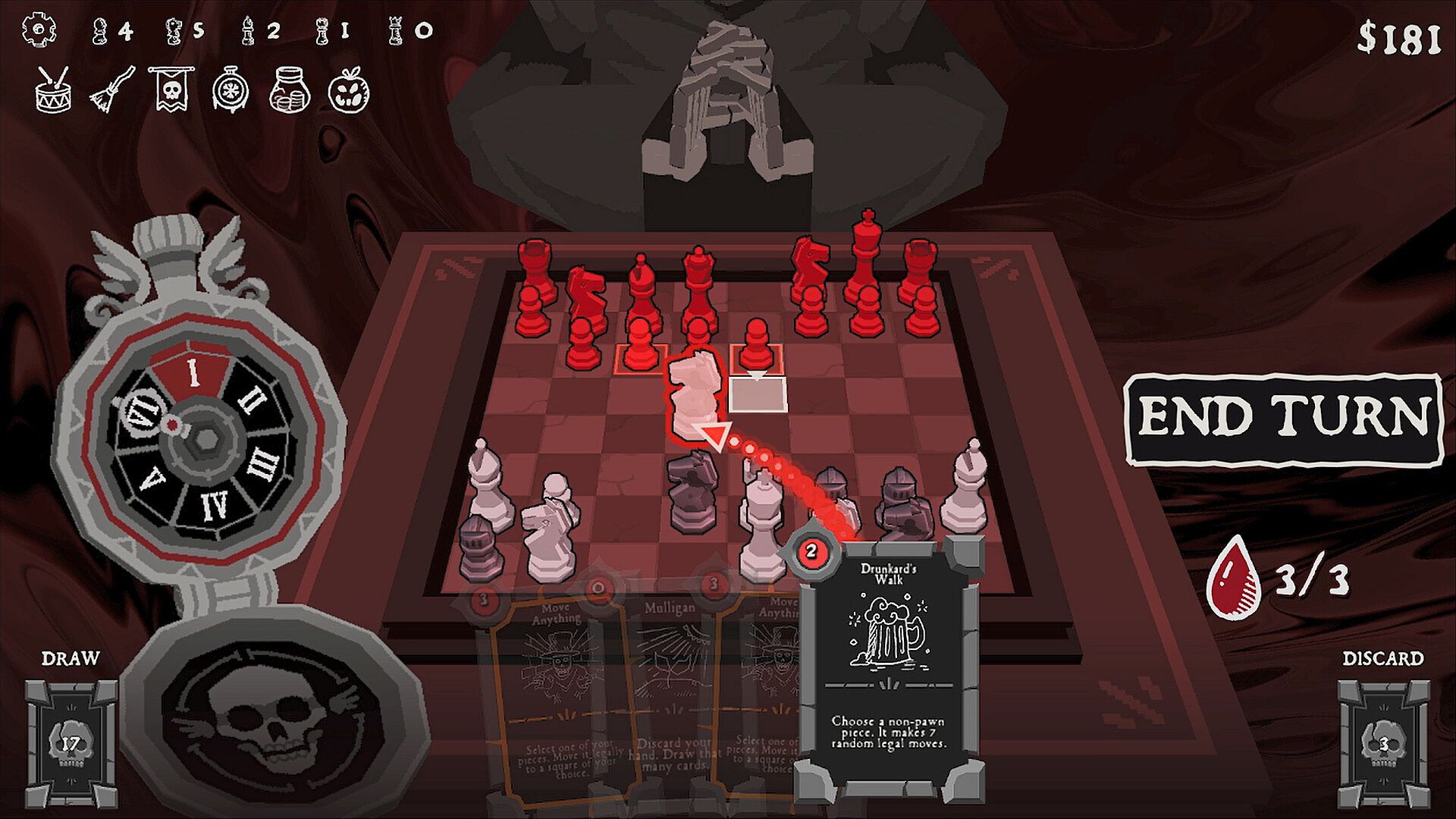
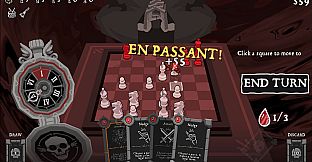
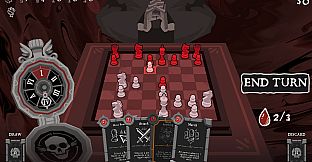
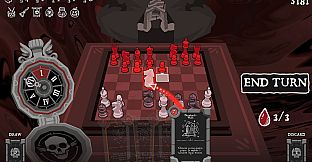
The core loop revolves around turn-based battles on a chessboard where standard piece movement gives way to a card-driven system. Each turn begins with a hand of cards drawn from the deck, and players spend blood resources to activate as many as they can afford. Cards represent unique effects and movements that replace conventional chess rules, allowing for creative combinations and powerful synergies as the run progresses.
Time management adds tension through a pocket watch that advances one segment per turn. Reaching zero ends the run, so survival depends on aggressive play. Capturing enemy pieces restores segments to the watch, rewarding decisive captures and forcing players to balance offense with the need to reach the final confrontation before time expires.
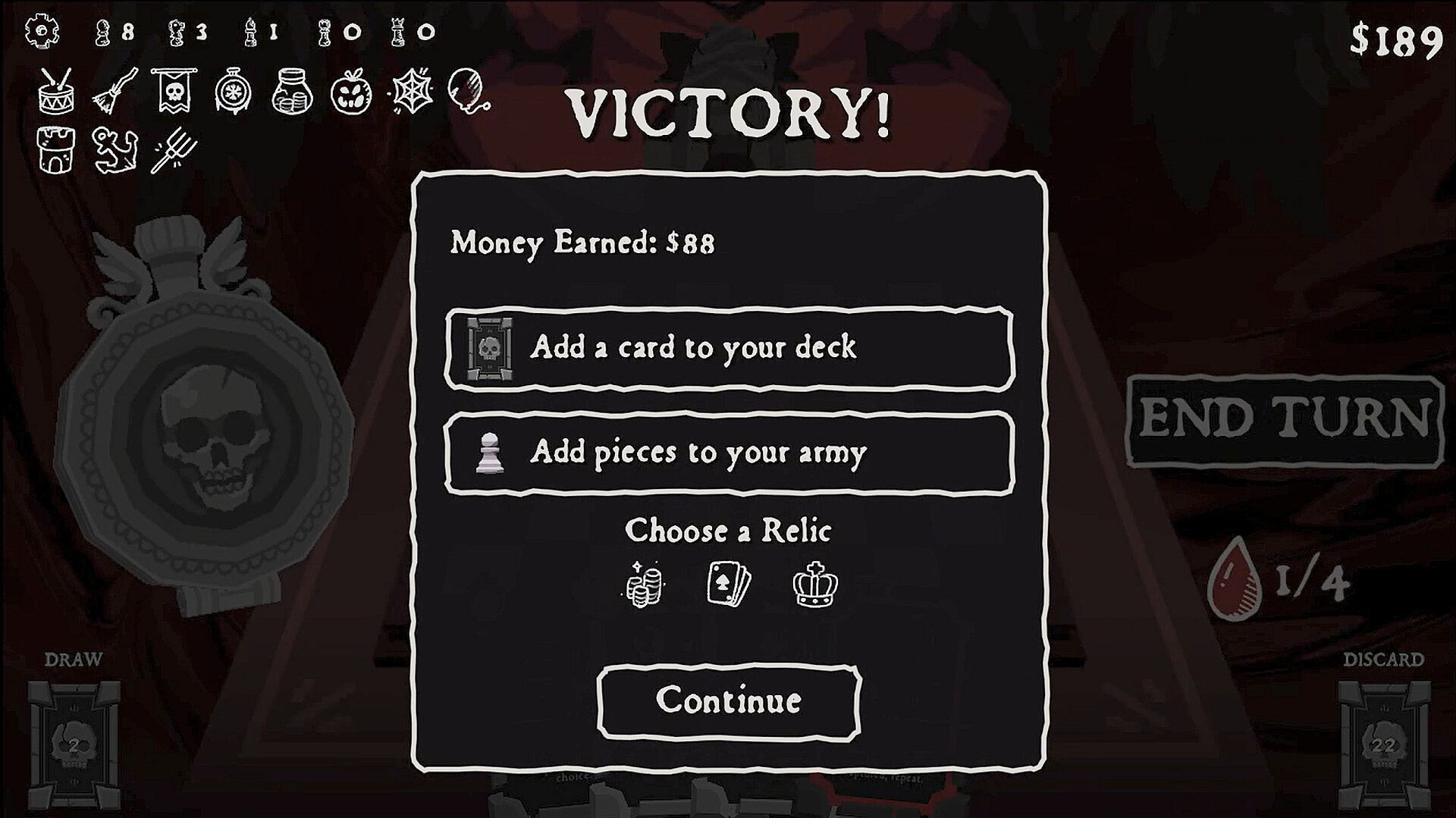
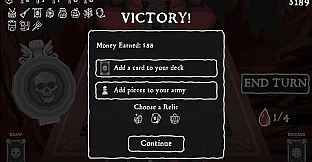
Deck construction happens between battles. Victories and shop visits provide opportunities to add new cards, expanding options for future encounters. Over the course of a run, the collection grows into a personalized arsenal tailored to different piece types and tactical approaches. Relics further alter the rules, introducing permanent modifications that can shift priorities or enable unexpected strategies across multiple encounters.
Progression leads across a map toward the Grim Reaper, with encounters featuring enemy formations that test the current deck. Several bosses punctuate the journey, each presenting distinct challenges that demand adaptation. The system supports deep experimentation, as different card combinations and relic effects create varied paths to the end goal of capturing the enemy king.
Game Modes
DEATHMATE centers on a single-player roguelike structure built around repeated runs. Each attempt starts with a limited number of turns on the pocket watch, emphasizing efficient play and quick adaptation to the hand drawn each round.
An ascension ladder provides escalating difficulty options that modify enemy behavior, resource costs, or other parameters. Higher ascensions reward successful clears with greater challenge and replay incentive, encouraging players to refine decks and relic choices over multiple attempts. The format keeps focus on the core chess-deckbuilding loop without branching into separate multiplayer or cooperative experiences.
Shops and battle rewards serve as consistent progression points within every run, allowing incremental deck growth regardless of the chosen ascension level. This structure supports both short sessions focused on experimentation and longer efforts aimed at completing higher ascensions.
Key Mechanics and Features
Over 150 cards deliver distinct effects that interact with chess pieces in non-standard ways, moving beyond simple relocation to include abilities that influence positioning, resources, or enemy states. Building a deck involves selecting cards that complement chosen pieces and relics, creating opportunities for powerful turns when the right combination appears in hand.
More than 100 relics bend fundamental rules, such as altering blood costs, watch mechanics, or piece capabilities. These items accumulate during a run and persist in influence, often turning potential liabilities into strengths or enabling entirely new approaches to familiar board states.
The blood resource system introduces a spending layer on top of card draws. Players must decide how aggressively to commit resources each turn, balancing immediate impact against the need to maintain options for subsequent rounds. Captures remain the primary method for extending time, tying every engagement directly to survival.
Is It Worth Playing?
DEATHMATE appeals to players who enjoy strategic depth in roguelike formats combined with chess fundamentals. The card-based movement and time-pressure mechanics create a distinct rhythm that rewards careful planning alongside opportunistic captures. Those comfortable with deckbuilding loops and iterative run improvement will find substantial replay value in experimenting with card synergies and relic interactions across ascensions.
The game suits individuals seeking a focused, single-player experience without reliance on external progression systems or seasonal content. Its indie scope keeps the emphasis on core systems rather than expansive features, making it a solid choice for fans of tactical roguelikes who appreciate chess-inspired positioning and resource management under constraint. Availability on PC supports straightforward access for those interested in the genre blend.