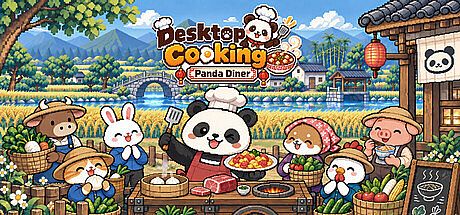



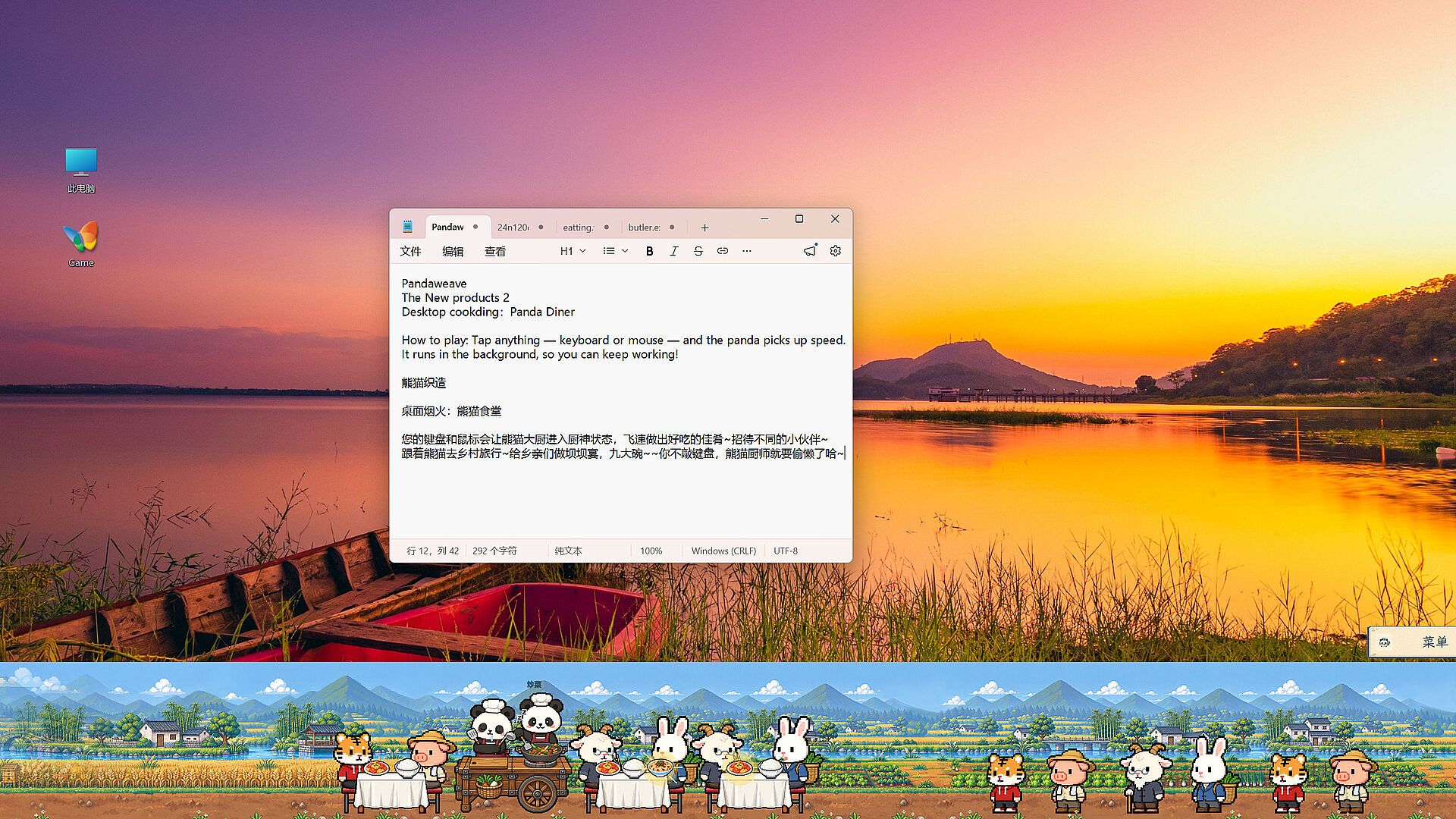


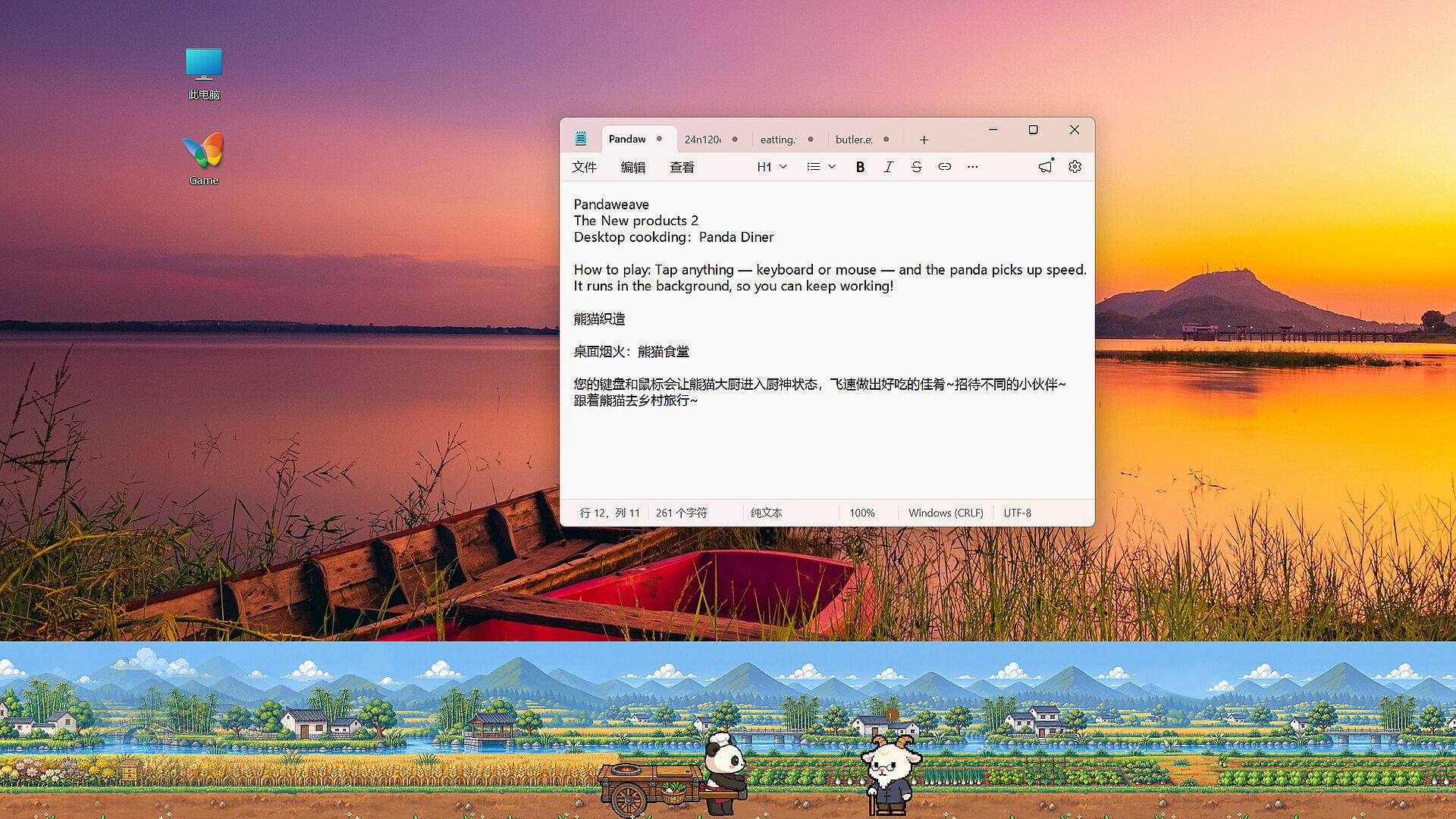

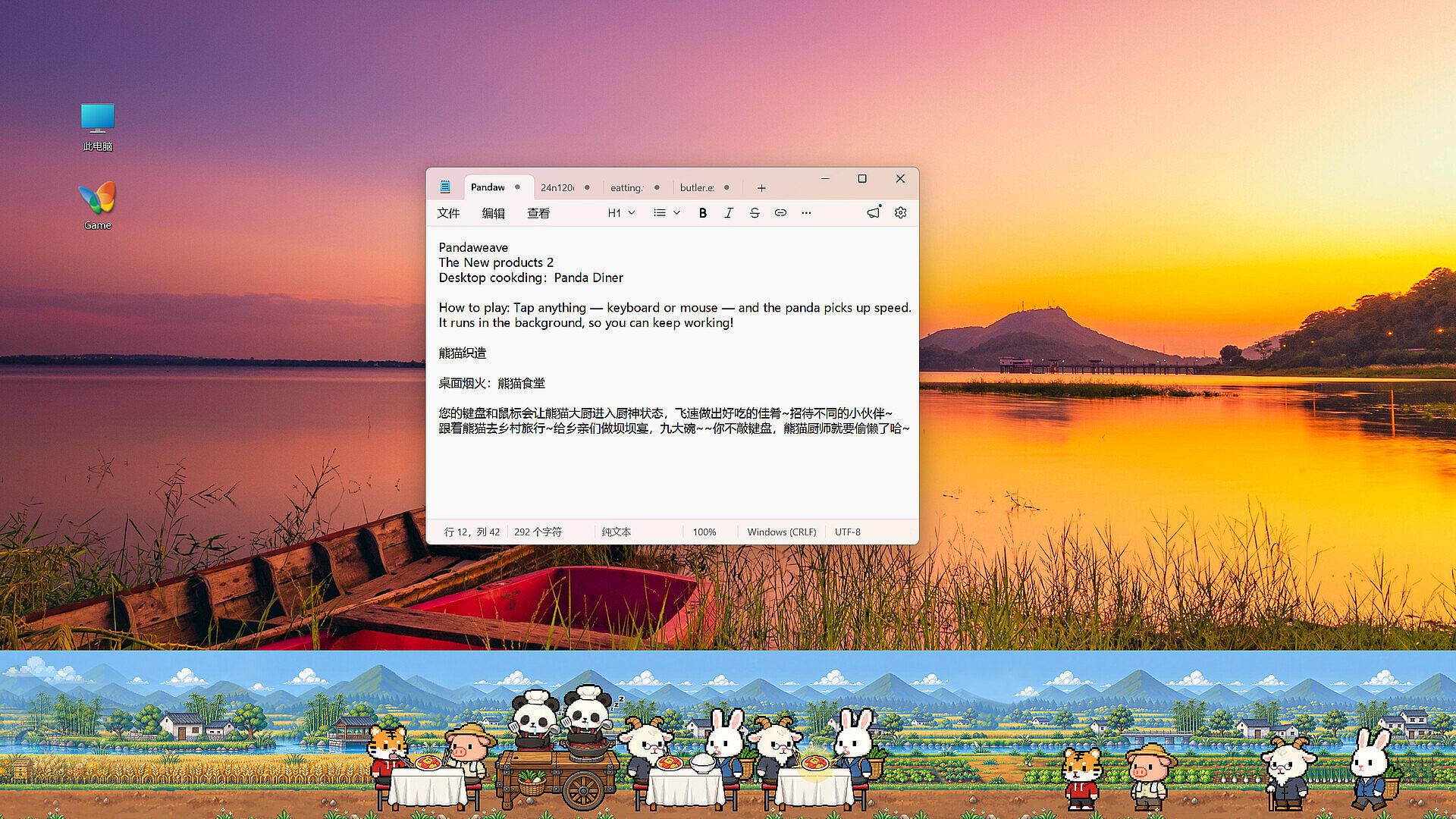
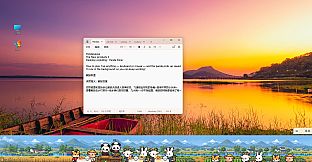


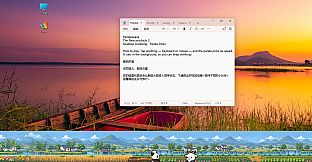

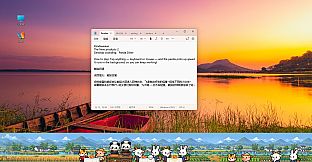
Desktop Cooking: Panda Diner is a casual simulation game built around an auto-cooking management loop that runs in a narrow strip along the bottom of a PC desktop. The panda chef travels the countryside with a food cart, accepting commissions from villagers and letting the core processes of chopping, cooking, carrying, and serving unfold automatically once a job begins. Guests provide ratings on each dish, after which players collect the coins left on the table before advancing to the next stage of the journey.
Gameplay
The central loop centers on selecting commissions by clicking on villagers, after which the kitchen tasks proceed without further direct input. This setup keeps the experience lightweight and non-intrusive during other computer work. Keyboard typing and mouse clicks accelerate the chef's pace, adding a layer of active engagement that speeds up preparation and service without requiring constant attention or complex commands.
Progression involves unlocking content across thirty levels and thirty distinct characters. Fifty grand dishes form the menu options that players work toward mastering. Mysterious events appear along the route, introducing variety and unexpected elements to the panda's travels. A key milestone comes from preparing a legendary golden dish, which triggers widespread praise and rewards for the player's growing expertise.
The system emphasizes relaxed management rather than hands-on control. Automatic execution of kitchen steps means the game continues smoothly even when the player steps away briefly, while the boost from input actions rewards periodic interaction. This balance suits sessions that fit around a workday or other desktop activities on PC.
Game Modes
The experience operates as a single-player progression title focused on sequential levels. Each stage builds on the previous one through the panda chef's countryside tour, with commissions, ratings, and coin collection driving advancement. Unlocking new characters and dishes expands the available options as players move forward.
No separate competitive or cooperative modes appear in the core design. The structure stays centered on individual management of the food cart, with the automatic systems handling the bulk of the work while player actions influence overall speed and outcomes. This keeps the focus on steady advancement through the thirty levels rather than branching multiplayer elements.
Key Features and Progression
Content depth comes from the combination of fifty grand dishes, thirty levels, and thirty characters that become available through play. The panda's journey incorporates mysterious events that add unpredictability to the routine of accepting jobs and collecting earnings. Mastery builds gradually, culminating in the preparation of special golden dishes that stand out from standard offerings.
The desktop integration sets the game apart from traditional full-screen simulations. The persistent strip format allows the panda chef's activities to continue in the background, making it practical for extended play without dominating the screen. System requirements remain modest, supporting Windows 7 and higher with basic hardware, which broadens accessibility for casual PC users.
Is It Worth Playing?
Desktop Cooking: Panda Diner appeals to players seeking a low-pressure simulation that blends automatic management with occasional input boosts. The single-player structure and level-based progression provide a clear path forward without demanding intense focus or quick reflexes. Those who enjoy casual indie titles centered on cooking themes and incremental unlocks will find the core loop aligns with relaxed desktop play sessions.
The game remains in a pre-release state with no user reviews available yet. Its lightweight design and emphasis on automatic processes make it suitable for anyone looking for background entertainment that rewards periodic engagement through typing or clicking. Availability on PC through standard digital platforms positions it as an option for simulation fans who prefer games that do not interrupt other tasks.