




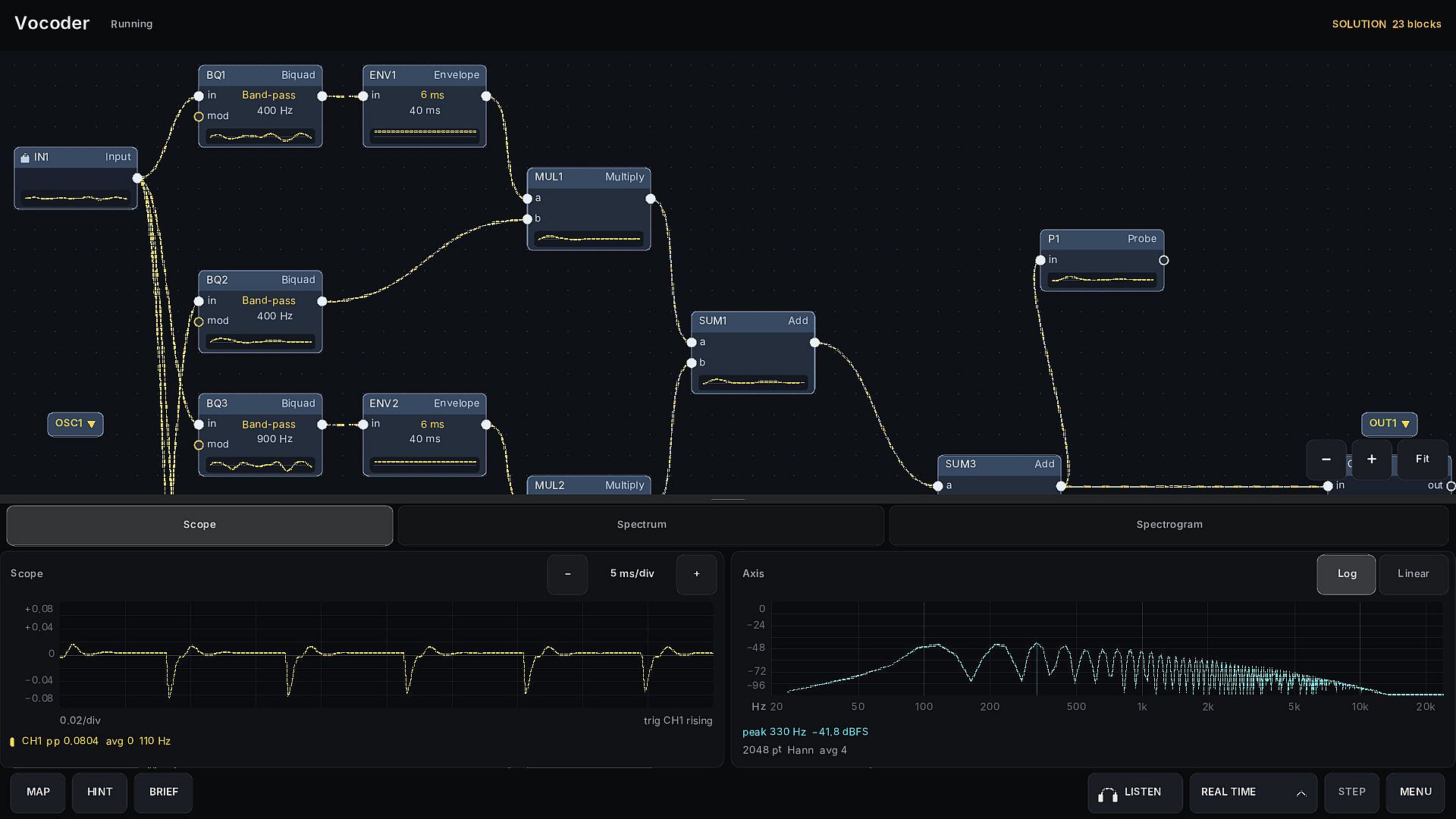
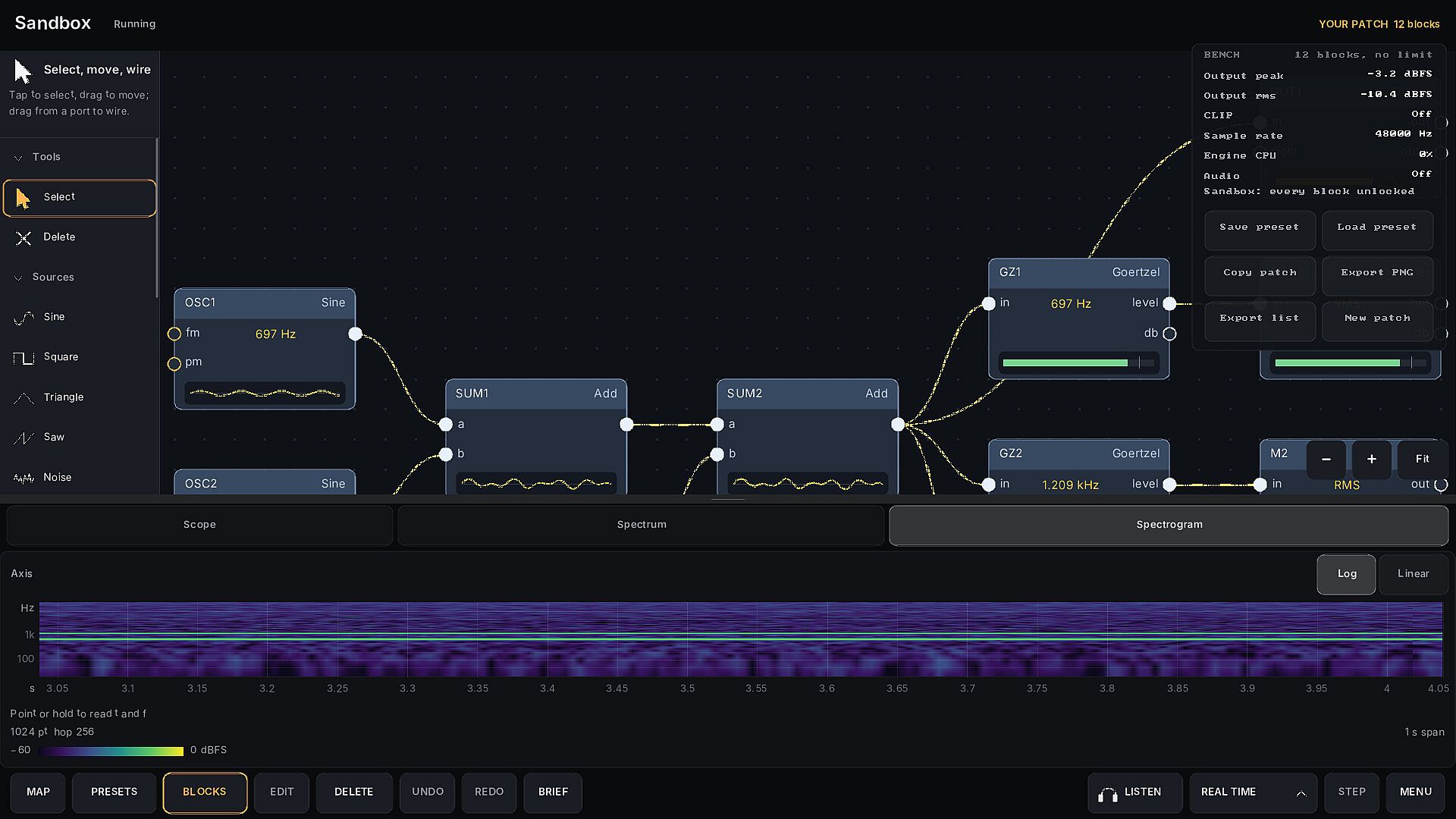
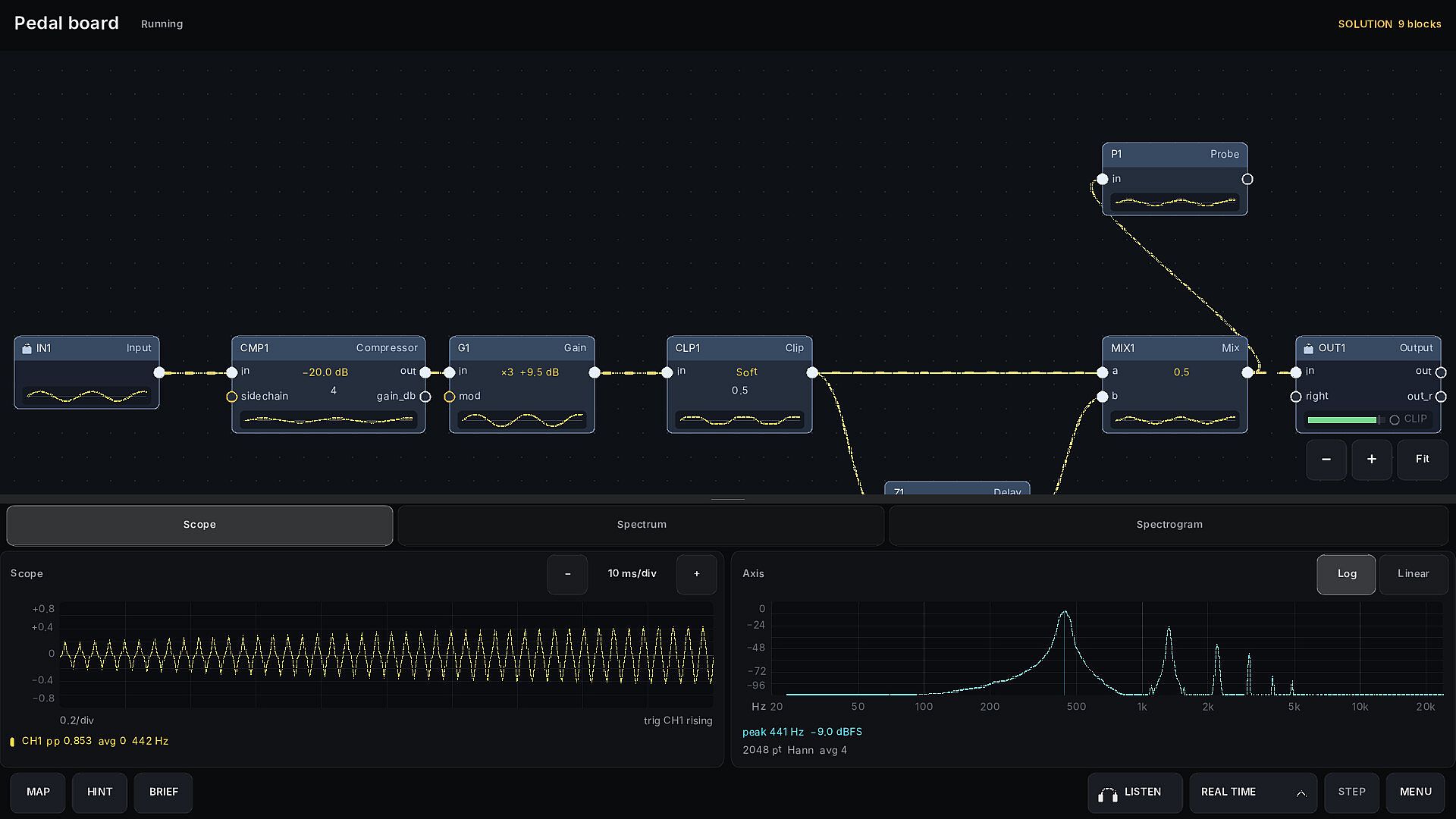
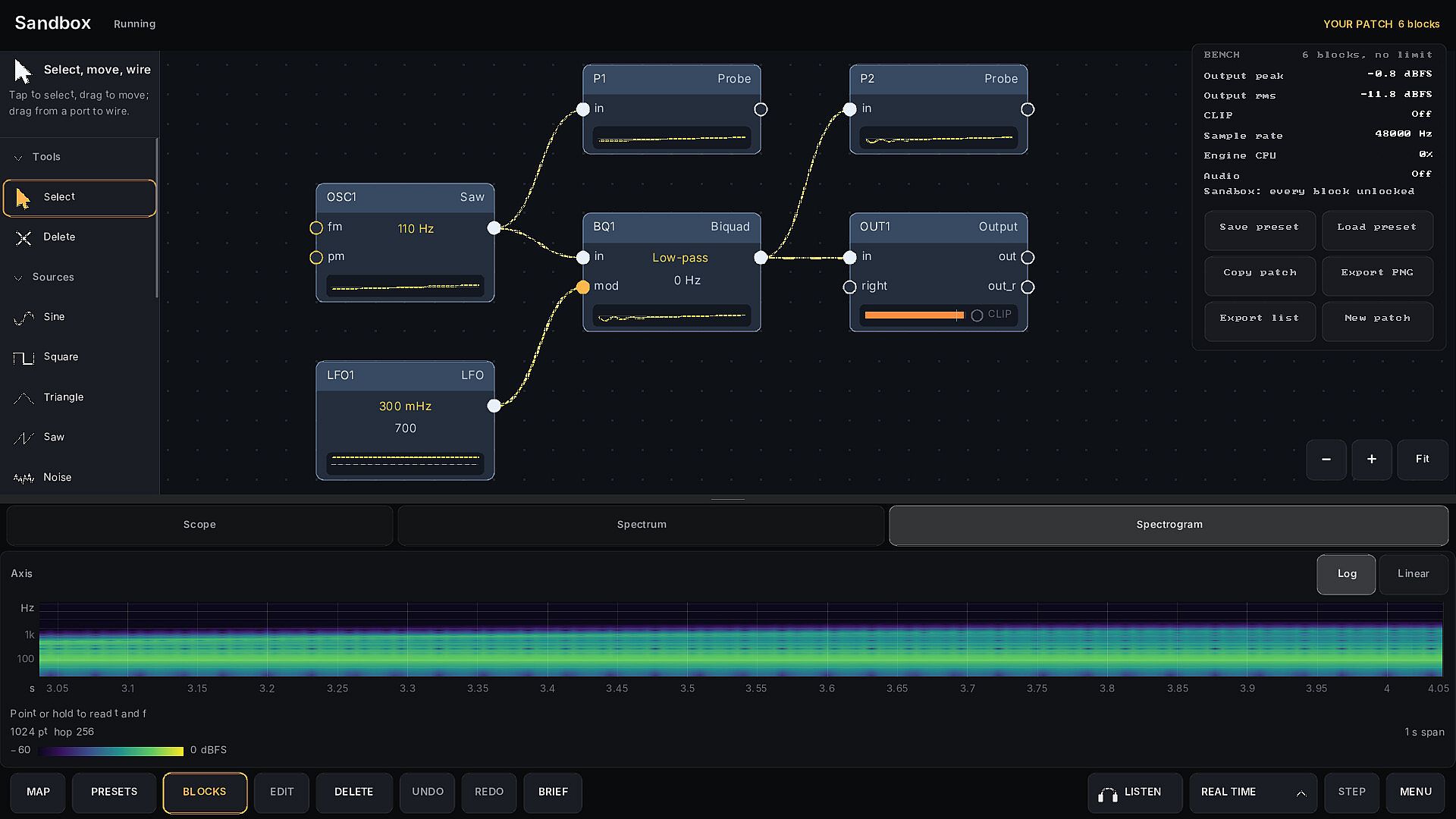
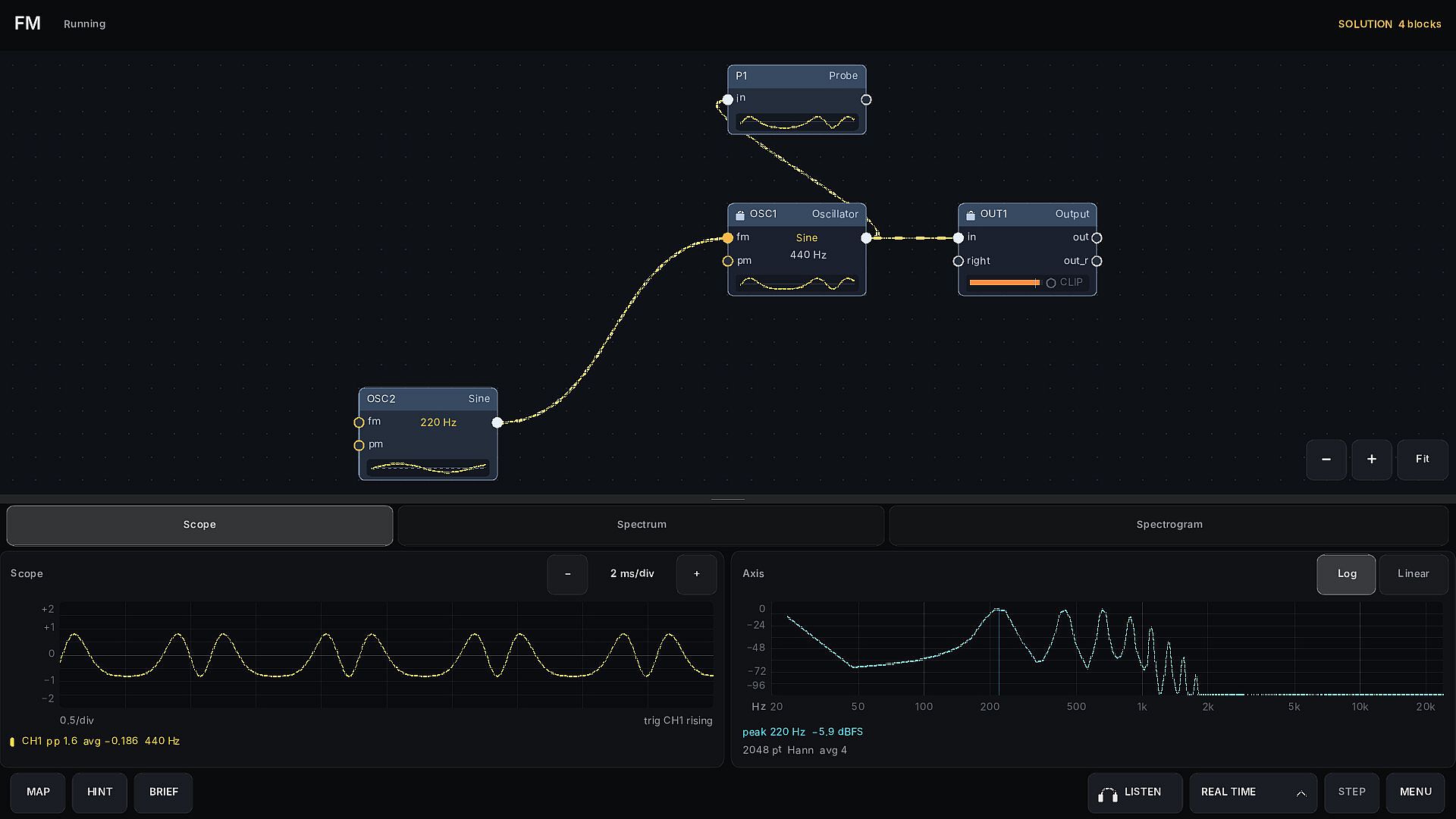
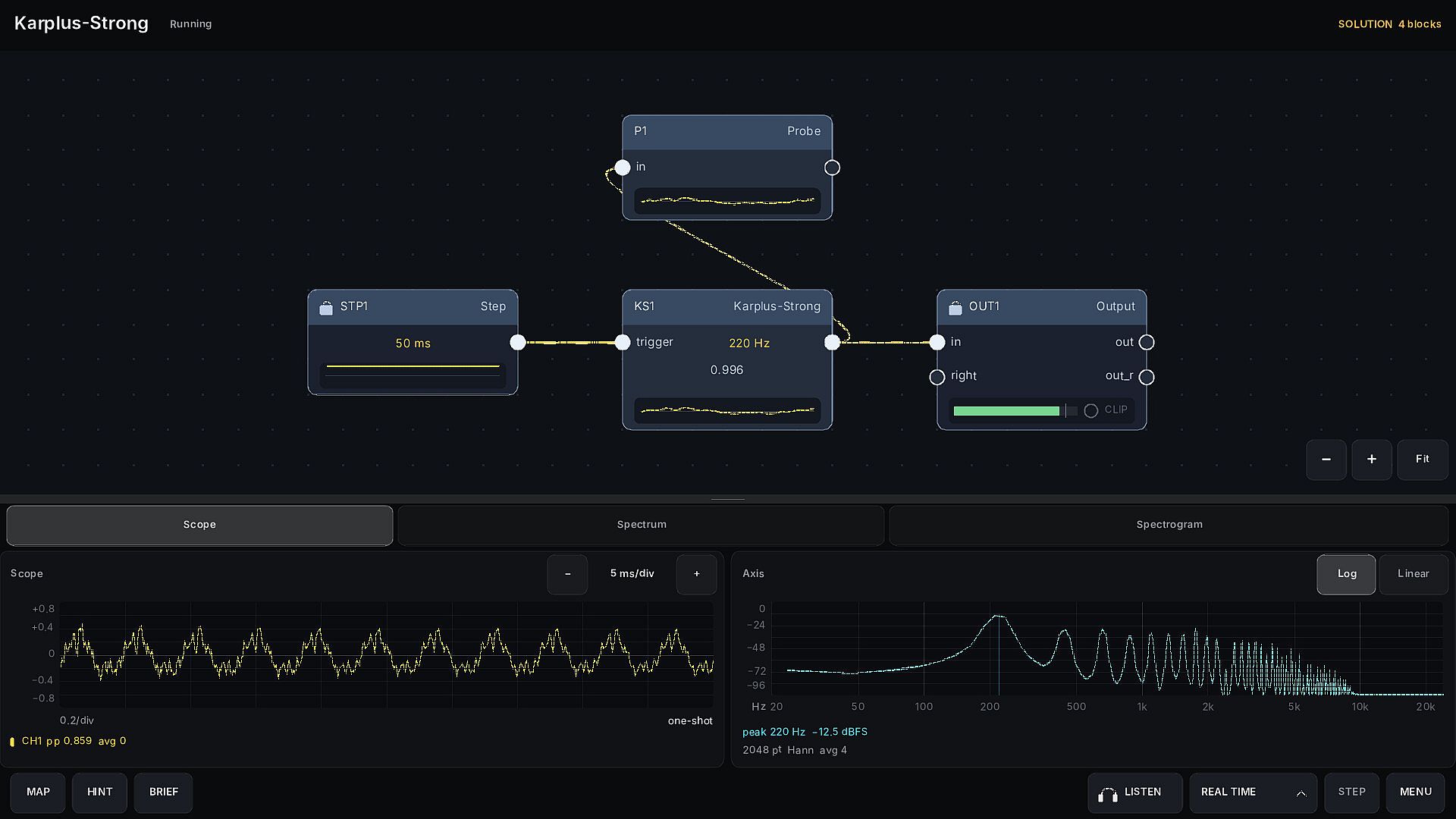
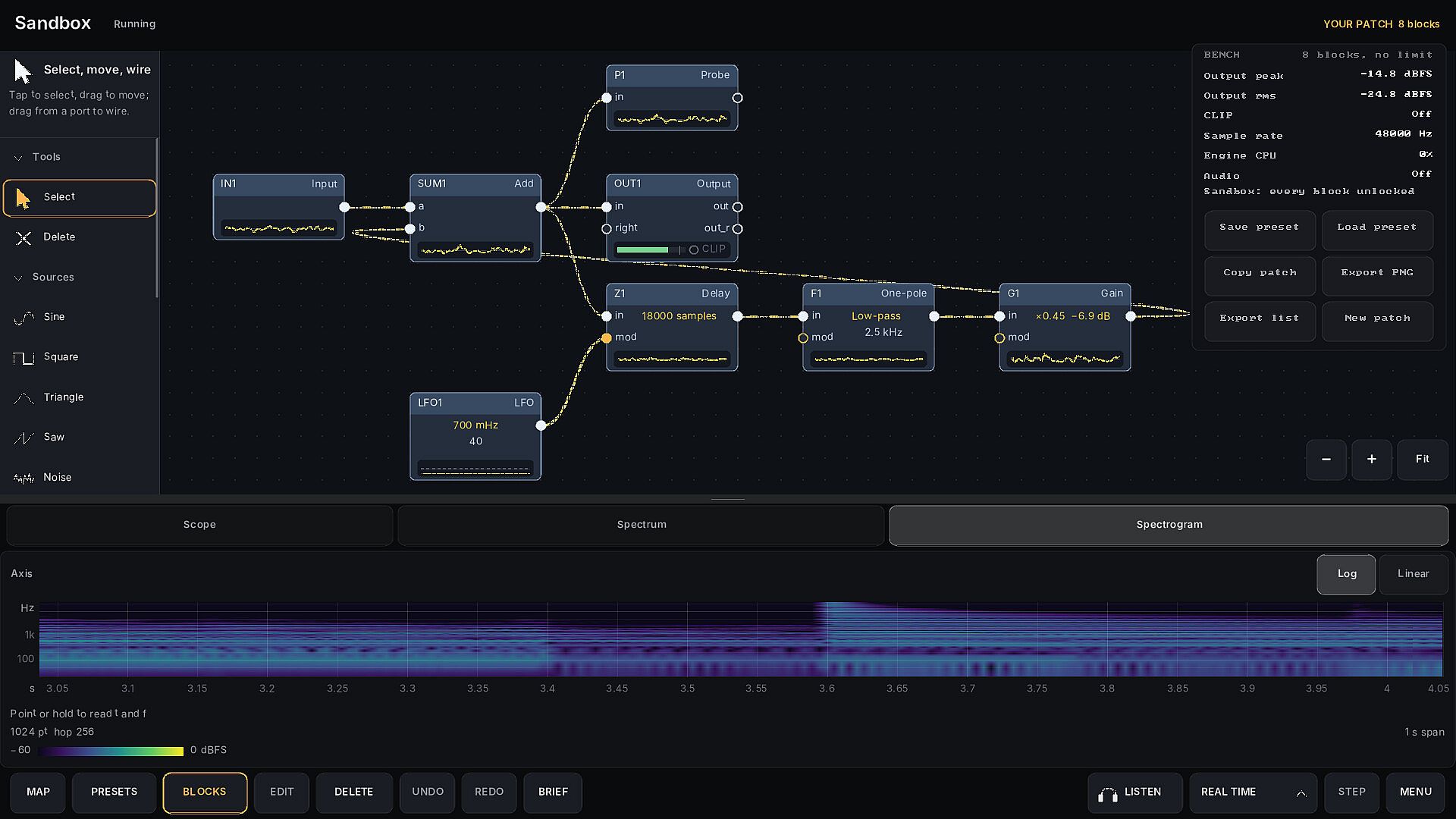
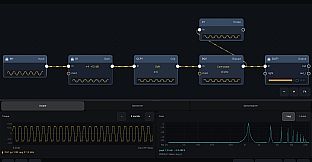
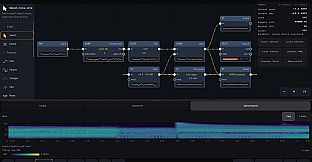
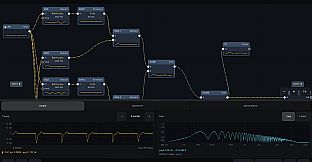
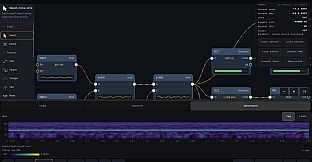
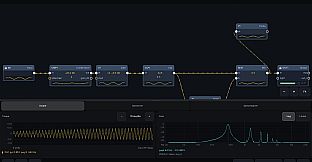
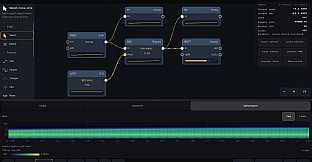
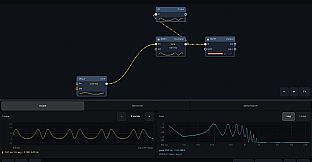
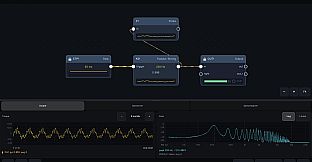
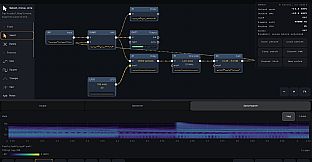
DSP Bench is a single player casual simulation game for PC that centers on building and testing digital signal processing patches. Players construct audio signal flows block by block in a live engine that processes samples in real time. The experience combines puzzle solving with practical exploration of signal concepts such as sampling, filtering, modulation, and synthesis.
Gameplay
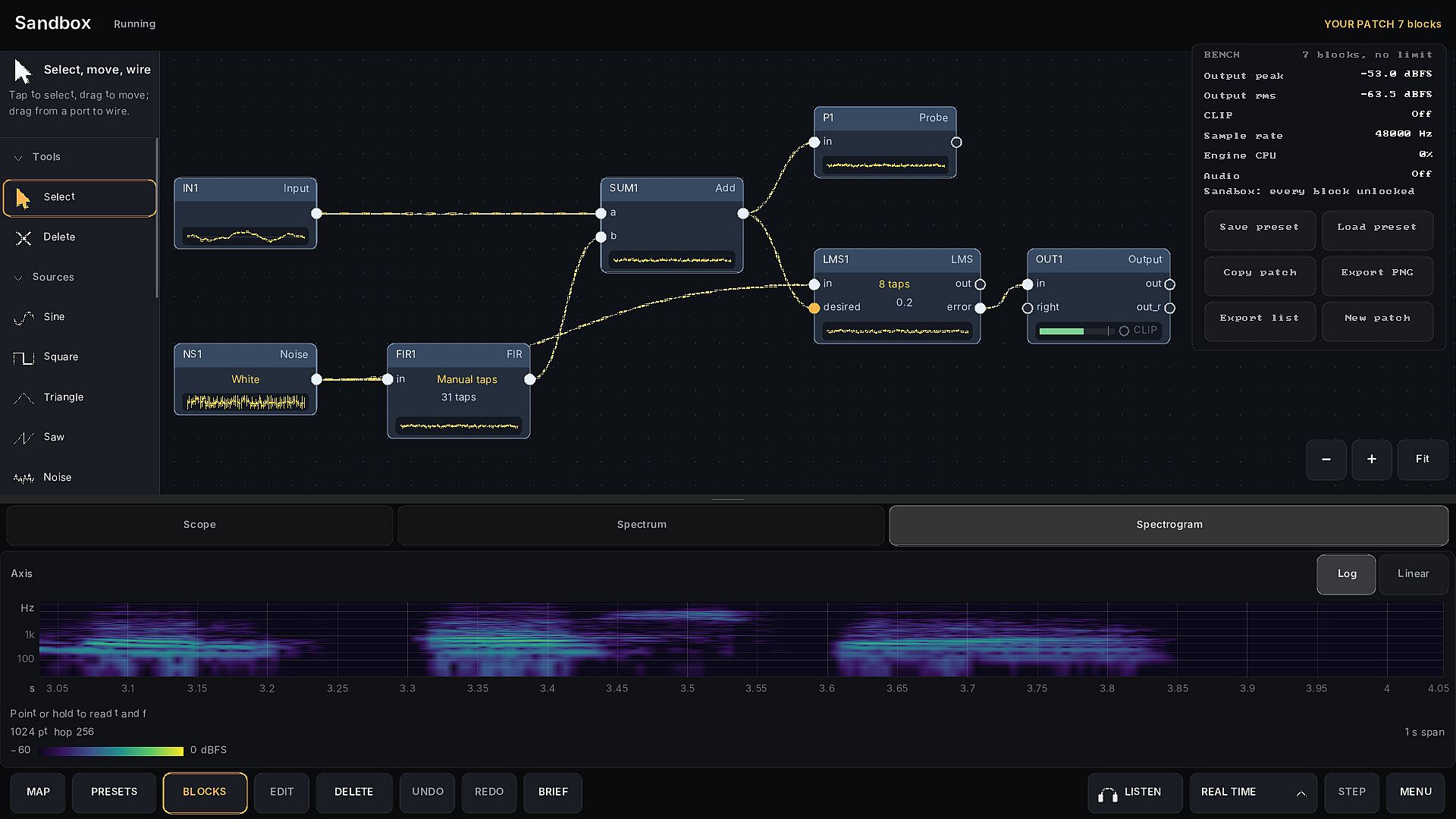
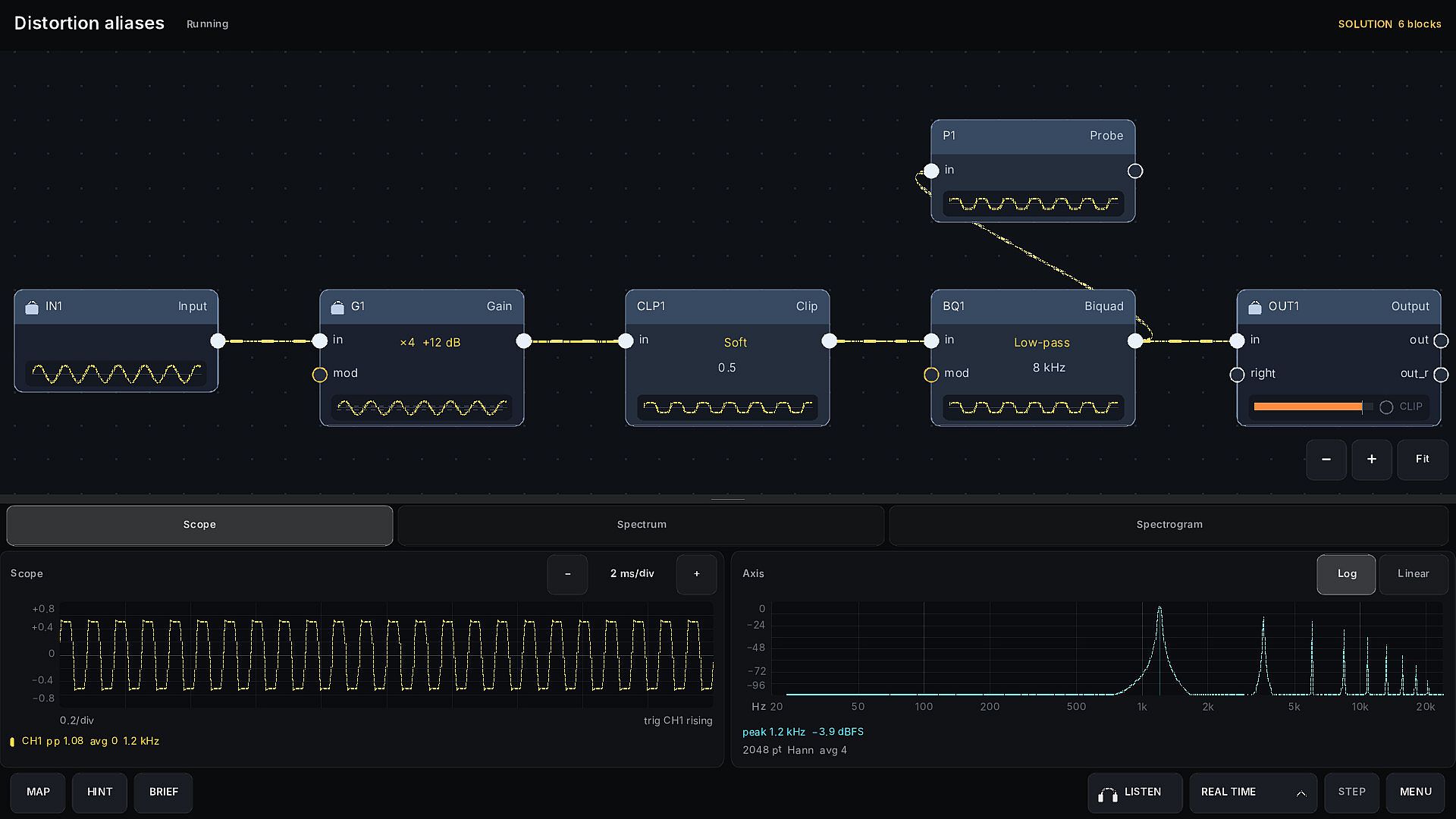
The core loop involves wiring together processing blocks to complete specific audio tasks. Each puzzle supplies a job description and evaluates the output against measurable criteria including pitch accuracy, signal level, distortion levels, latency, and aliasing. When results fall short, players insert probe blocks to inspect the signal path on a live scope or switch to spectrum and spectrogram views for frequency analysis. Stepping through individual samples reveals exactly how each block transforms the data.
Progression follows nine structured chapters that introduce concepts in sequence. Early sections cover signals and sampling rates along with time domain operations such as mixing, delay lines, echo, and comb filters. Later chapters address filter design from simple one pole models to biquads, EQ curves, and FIR implementations. Frequency domain topics include spectral leakage, window functions, and spectrogram interpretation. Modulation and effects sections explore tremolo, ring modulation, chorus, phasers, distortion, and a full pedal board setup. Dynamics processing covers compressors, gates, and limiters. Synthesis work includes envelope generators, FM techniques, and a Karplus Strong plucked string model. Final chapters tackle estimation and adaptive systems such as pitch detection plus noise and echo cancellation. Capstone exercises require building a complete vocoder and an AM radio receiver entirely within the patch environment.
Every exercise provides a concise brief, an optional deeper lesson, and progressive hints. A built in glossary defines technical terms while chapter recaps summarize key formulas. The interface supports adjustable scaling, color themes, and audio visual settings. Autosave, undo, and restart functions reduce friction during experimentation.
Game Modes
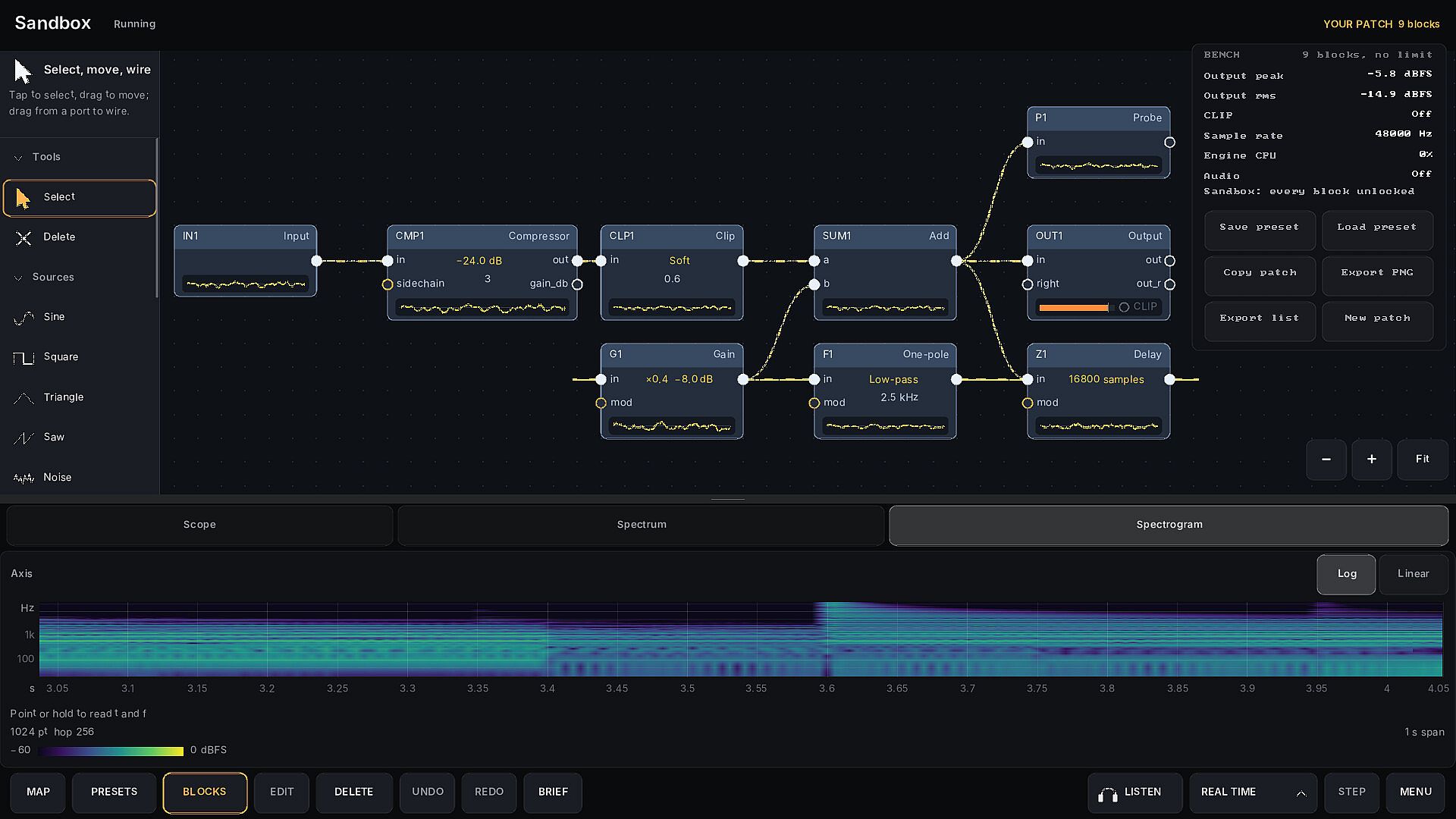
The primary activity consists of 66 guided puzzles spread across the nine chapters. These exercises enforce specific performance targets and provide immediate feedback on the completed patch. A separate sandbox mode offers a blank workspace or any of thirteen pre built starter patches, including examples such as a pedal board, an FM bell, a vocoder, and a Karplus guitar. Players can save custom patches, export them as text, or generate images of the layout. No additional modes or multiplayer features exist.
Learning and Experimentation
Each chapter builds directly on the previous material, allowing players to apply newly acquired blocks in increasingly complex combinations. The live engine updates the output instantly as connections change, making cause and effect relationships clear. Sandbox work encourages free form exploration beyond the puzzles, while the ability to step through samples one at a time supports precise debugging of timing or phase issues. Offline play on Windows and macOS requires no account or internet connection after installation.
Is It Worth Playing?
DSP Bench suits players who want a hands on introduction to digital signal processing concepts through direct construction rather than abstract theory. The puzzle structure provides clear goals and measurable success criteria while the sandbox supports continued experimentation after the main content. Single player offline availability and the absence of external accounts keep the focus on the core mechanics. Those interested in audio engineering, modular synthesis, or educational simulations will find the detailed block library and analysis tools particularly relevant. The game delivers its content without additional purchases or ongoing updates required for the core experience.











