


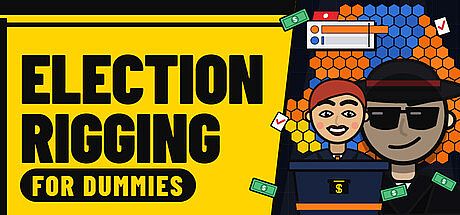


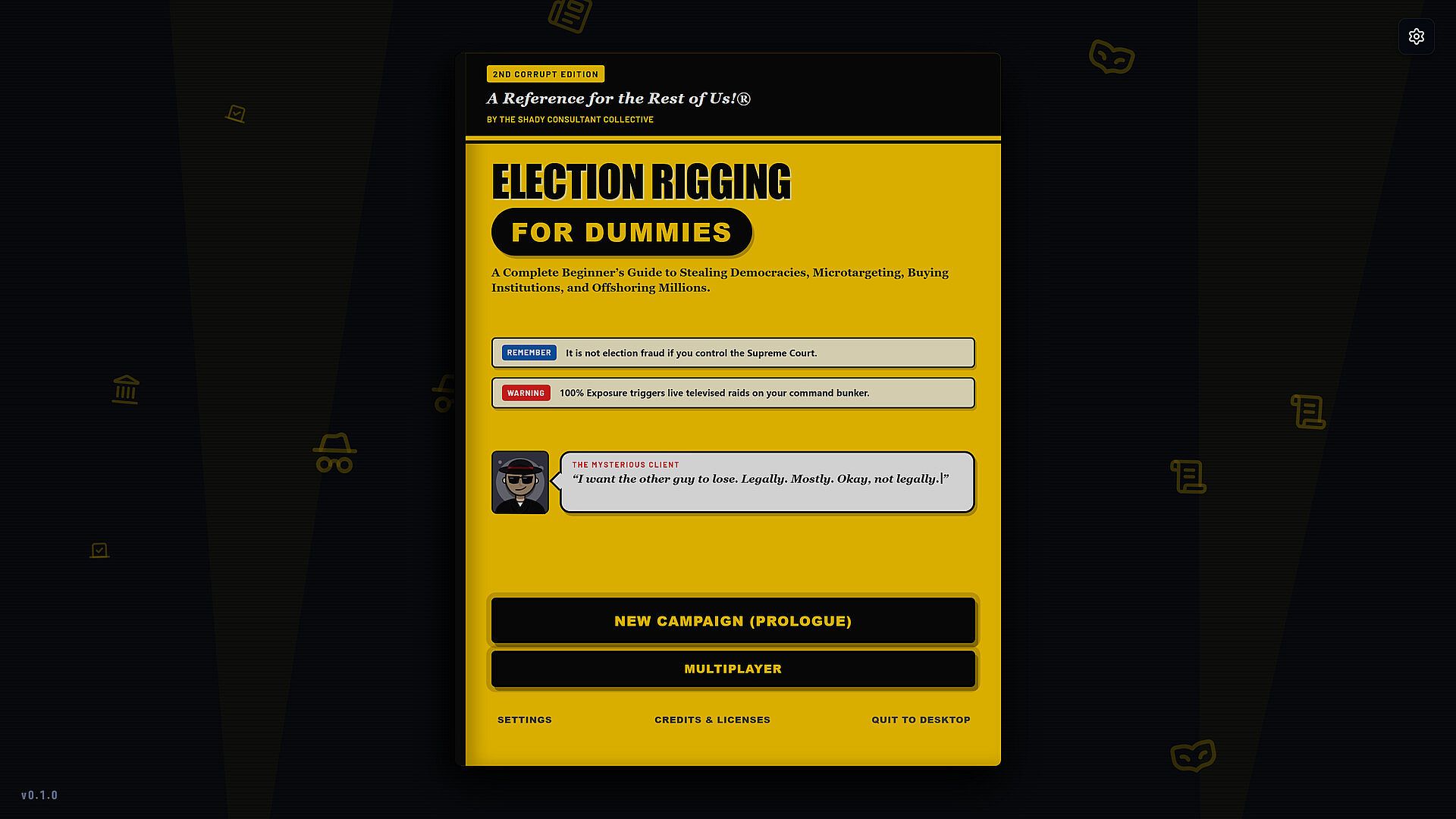
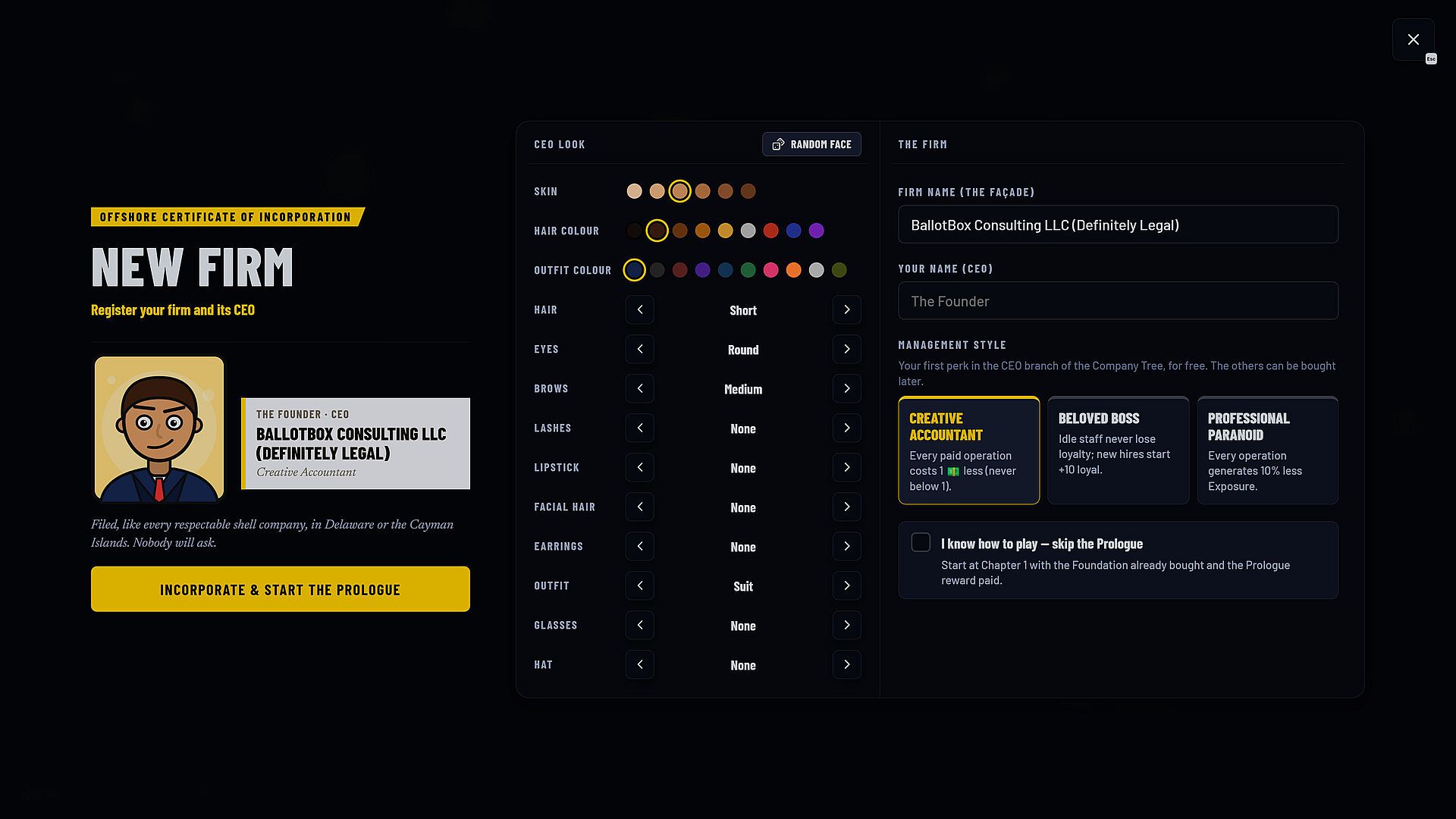
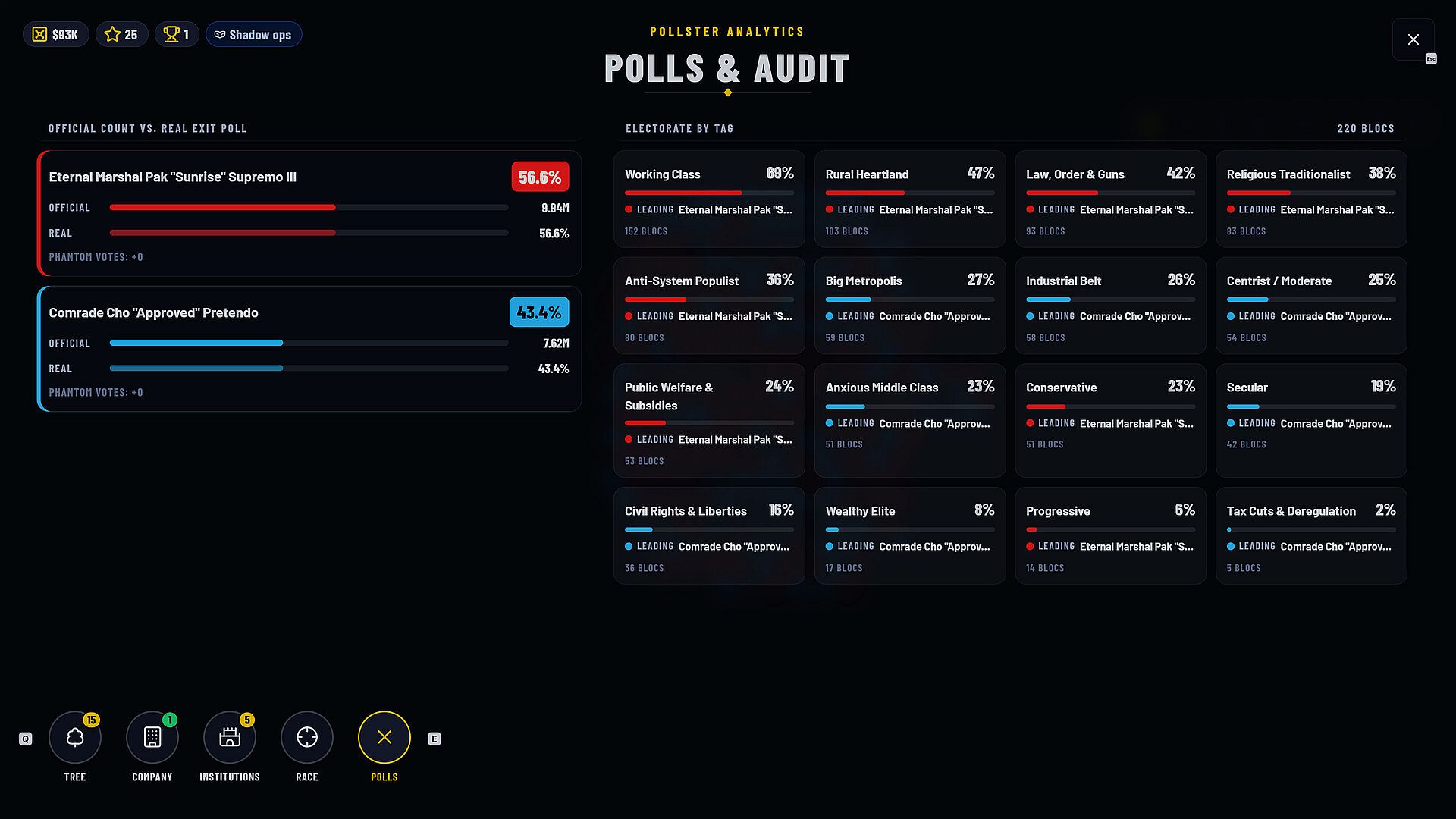
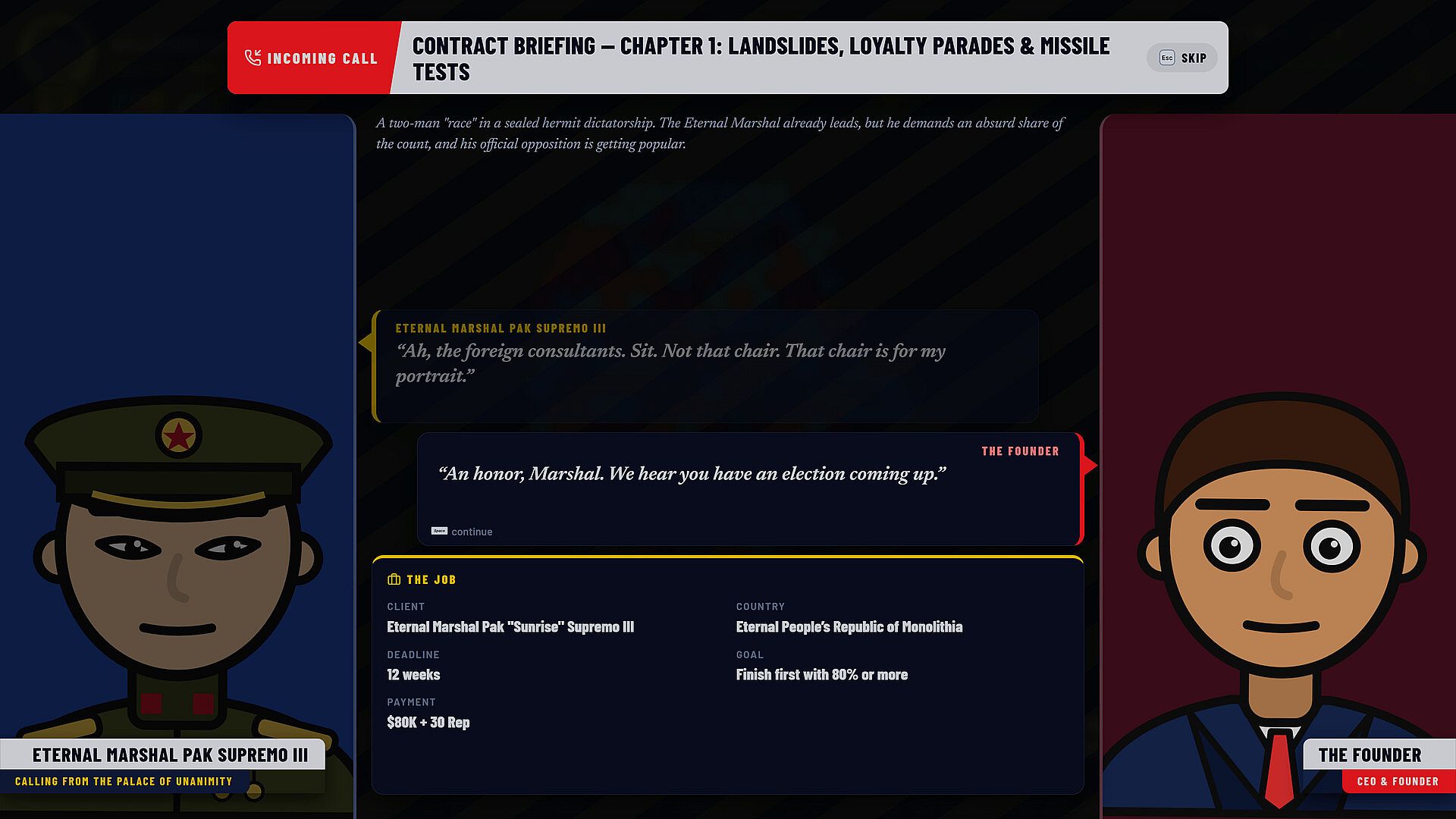



Election Rigging for Dummies is a satirical turn-based strategy and simulation game set on PC. Players manage an unethical consulting firm tasked with ensuring specific candidates win elections across fictional countries through a mix of voter manipulation, institutional influence, and covert operations.
Gameplay
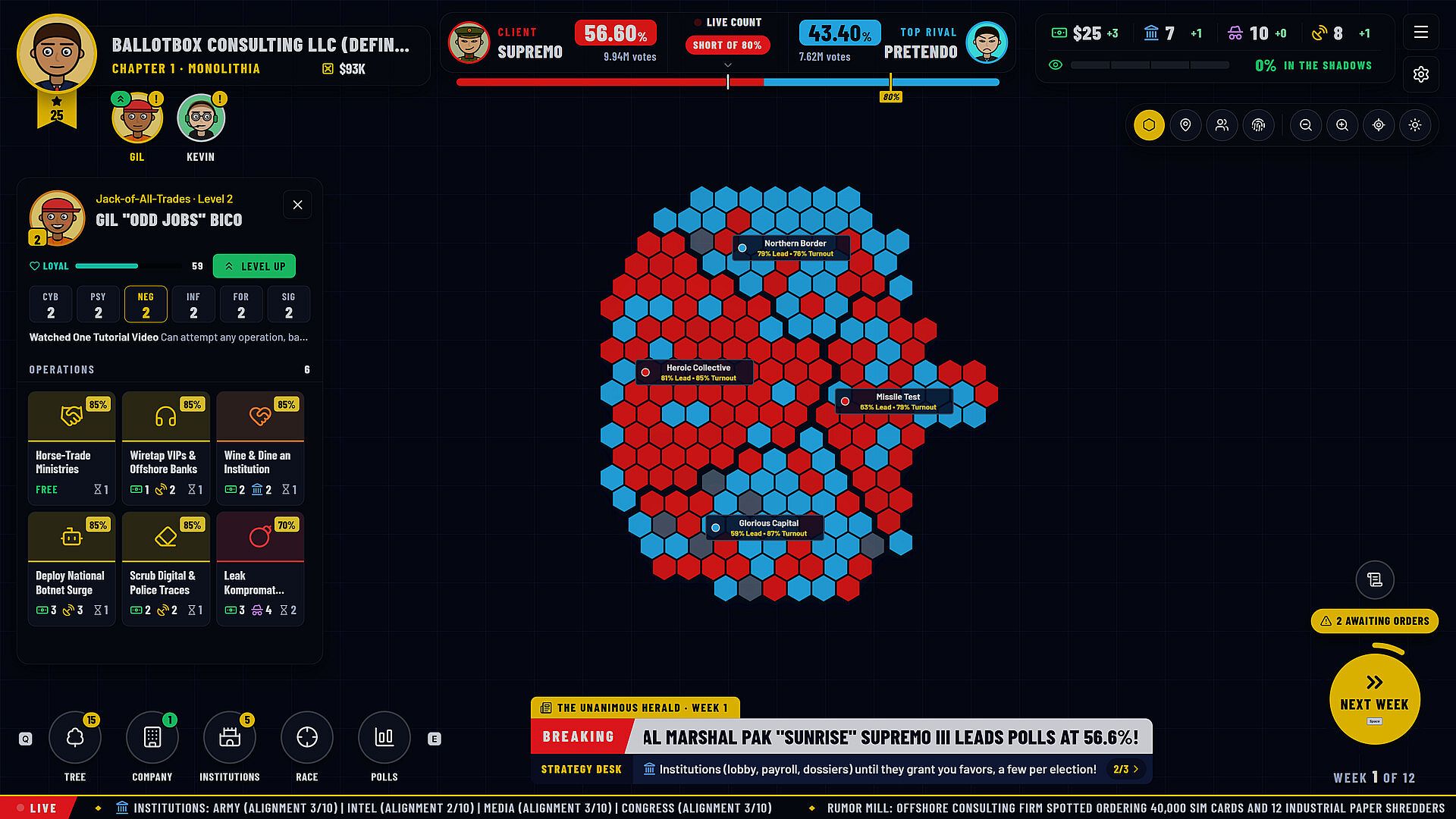
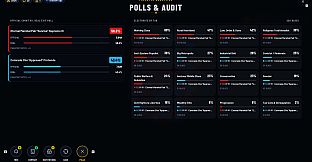
The core loop revolves around weekly turns where you allocate resources and operatives to sway voter blocs on hex-based maps. Each country breaks down into distinct voter groups defined by class, faith, grudges, and opinions. Actions range from running bot farms and microtargeting ads to stuffing ballot boxes, hacking machines, or planting scandals. Success depends on balancing aggression with caution, as every operation increases your exposure level. Higher exposure raises costs, slows operations, and risks backfiring or triggering a police raid at maximum levels.
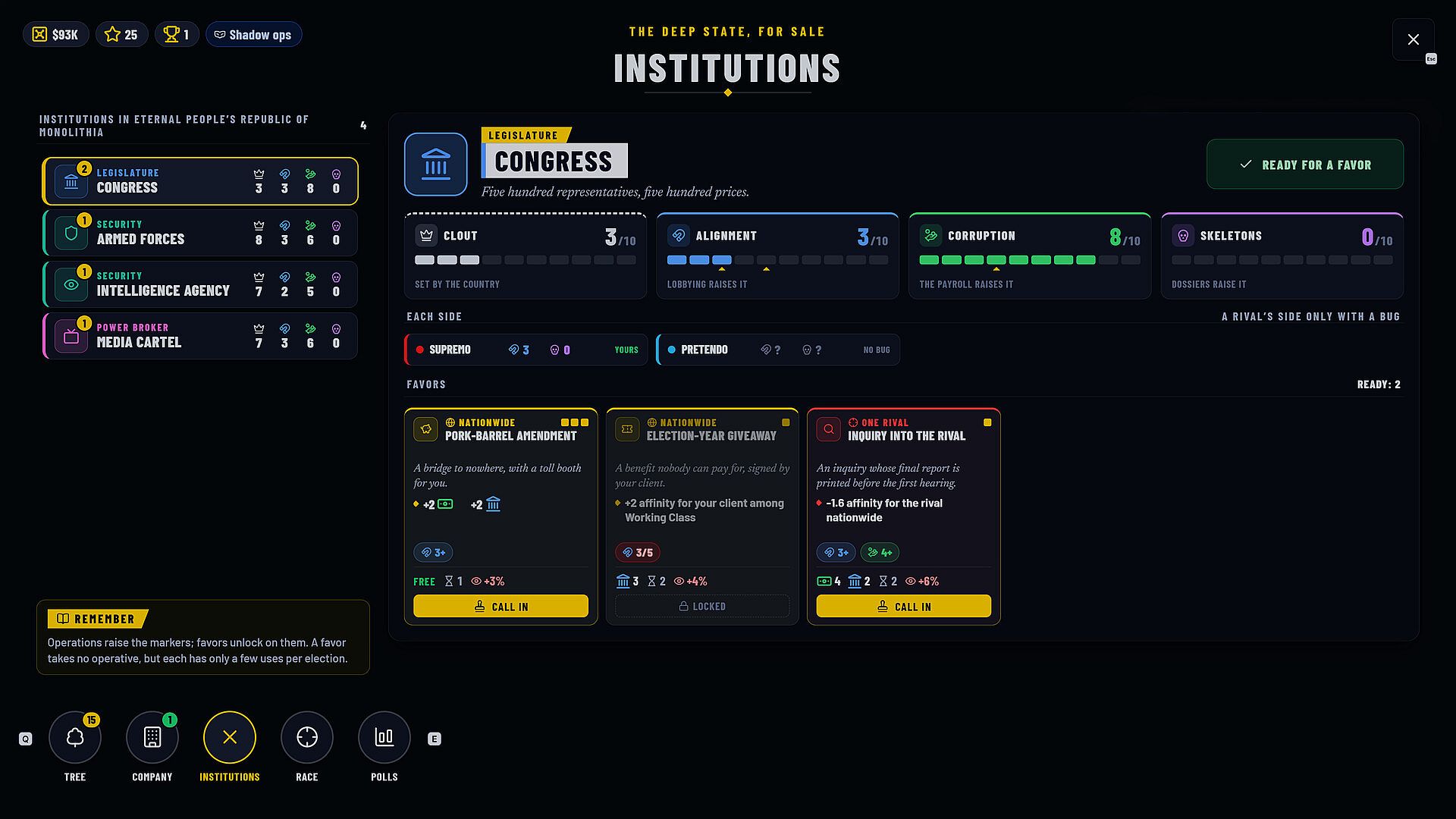
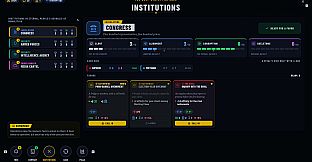
Operatives function as collectible cards with stats, levels, skills, loyalty, and unique traits. You recruit them through the Underworld Classifieds, where details like forged resumes appear upfront. Loyalty matters because you can sacrifice underperforming staff as scapegoats, though disloyal ones may expose you further. Beyond operatives, you target institutions such as courts, police, generals, megachurches, tech firms, and oligarchs. Building relationships through bribes, favors, or blackmail unlocks interventions like raids on rivals or candidate disqualifications.
Media control adds another layer. Countries feature multiple outlets across TV, print, radio, online, and social channels. You can buy ads, plant stories, or seize control of an outlet to dictate coverage. Financial tracking lets you identify and disrupt rival backers or protect your own funding sources. Rival firms operate under identical rules in simultaneous planning phases, enabling espionage like bugging offices to view their plans and cash reserves.
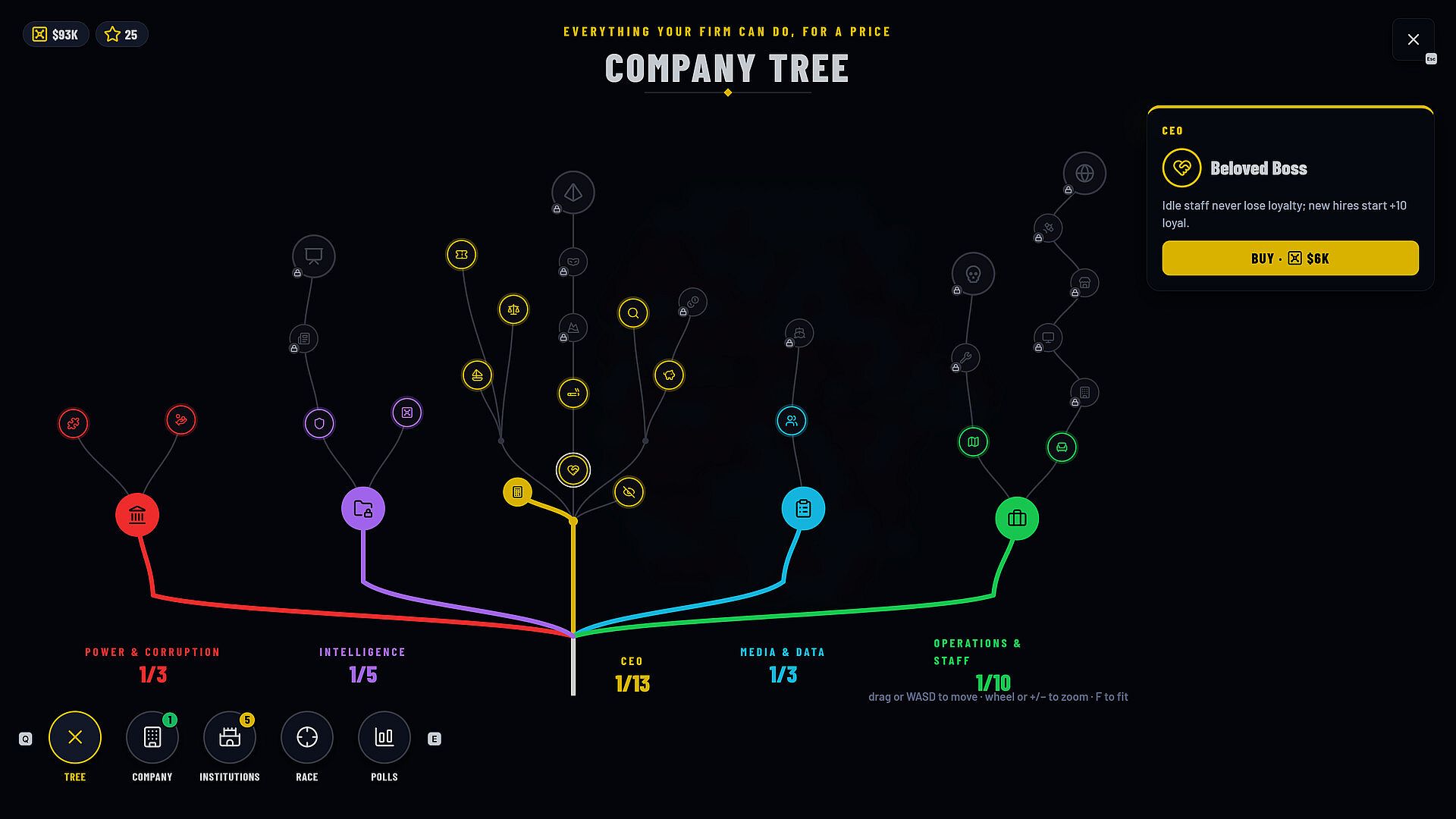
Election Night introduces a final phase of prepared contingencies, from extending polls to glitches or rerouting ballots. Results unfold live with candidate reactions. Post-victory spending includes upgrades across a company tree, luxury purchases, or risky financial plays tied to the election outcome. A commentary cast provides ongoing narration and interrupts with crises throughout each week.
Game Modes
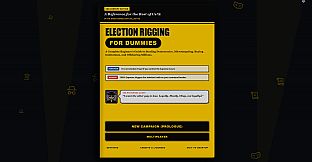
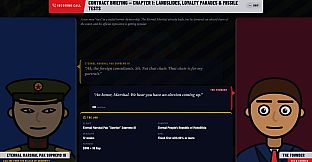
Story Mode delivers a scripted campaign presented as a how-to guide. It begins with a tutorial on a banana-shaped island and progresses through scenarios like a dictatorship aiming for an inflated vote share. Roguelike Mode generates sequences of countries with varying difficulty. After each contract, you select from easy, standard, or risky options, with losses accumulating until a run ends after three failures. Multiplayer supports up to four participants, each controlling a firm for one candidate. Turns occur simultaneously over online invites or local networks, with AI filling empty slots and the host managing settings like country choice and game speed.
Four speed settings adjust pacing from quick sessions to extended marathons. The game includes full controller support alongside mouse and keyboard controls, plus a streamer-friendly interface that reserves screen space for overlays. Language options cover English and Brazilian Portuguese.
Key Mechanics and Progression
Exposure management forms a central risk-reward system that scales with dirty tricks. Cleaning tracks or leveraging friendly institutions helps mitigate it. Firm growth unlocks better operatives and a company tree of upgrades that expand headquarters and capabilities. Post-election rewards extend beyond payment into state asset deals and secret society progression, adding long-term incentives across multiple contracts.
The hex map system emphasizes targeted influence over broad strokes. Voter blocs respond differently to tactics, requiring adaptation per country. Simultaneous rival actions create defensive layers where you must anticipate and counter opponent moves while advancing your own agenda. Money flows from backers add another strategic dimension, as disrupting rival funding or shielding your own sources can shift outcomes without direct voter contact.
Is It Worth Playing?
This upcoming title targets players who enjoy satirical strategy simulations that blend resource management, risk assessment, and political maneuvering. The combination of operative recruitment, institutional leverage, media control, and exposure tracking creates layered decisions that reward planning and adaptability. Multiplayer adds competitive depth through shared rules and simultaneous turns, while single-player modes offer structured stories or procedural runs for varied replayability.
With no release date confirmed and no player reviews available yet, interest depends on appetite for its dark humor and detailed systems. Those drawn to turn-based games involving hidden actions, rival interactions, and high-stakes outcomes will find the mechanics align closely with that preference. The fictional setting keeps focus on gameplay rather than real-world parallels, and features like controller support broaden accessibility. Watch for updates on its launch to assess fit with your preferred play style.












