

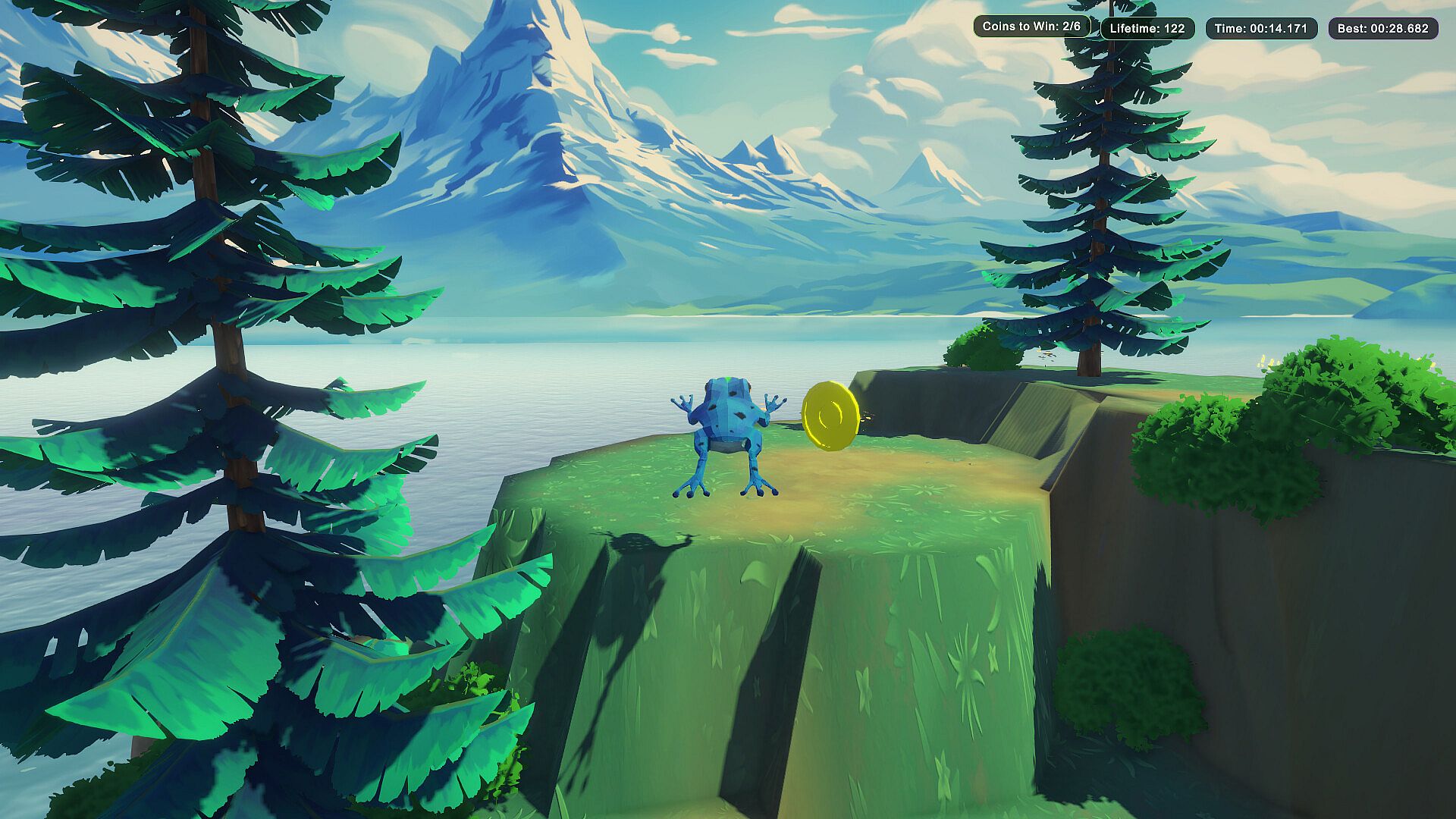
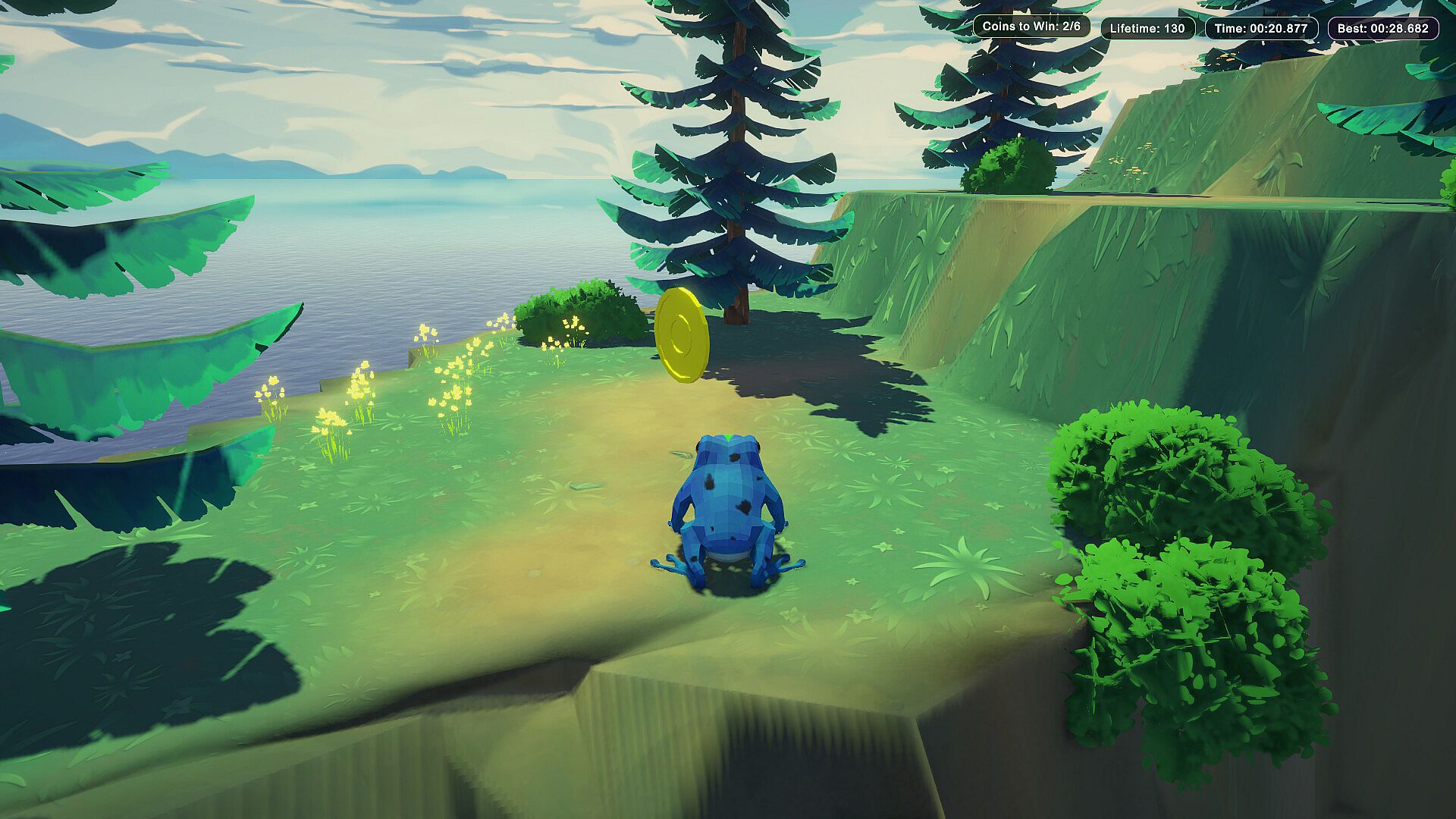
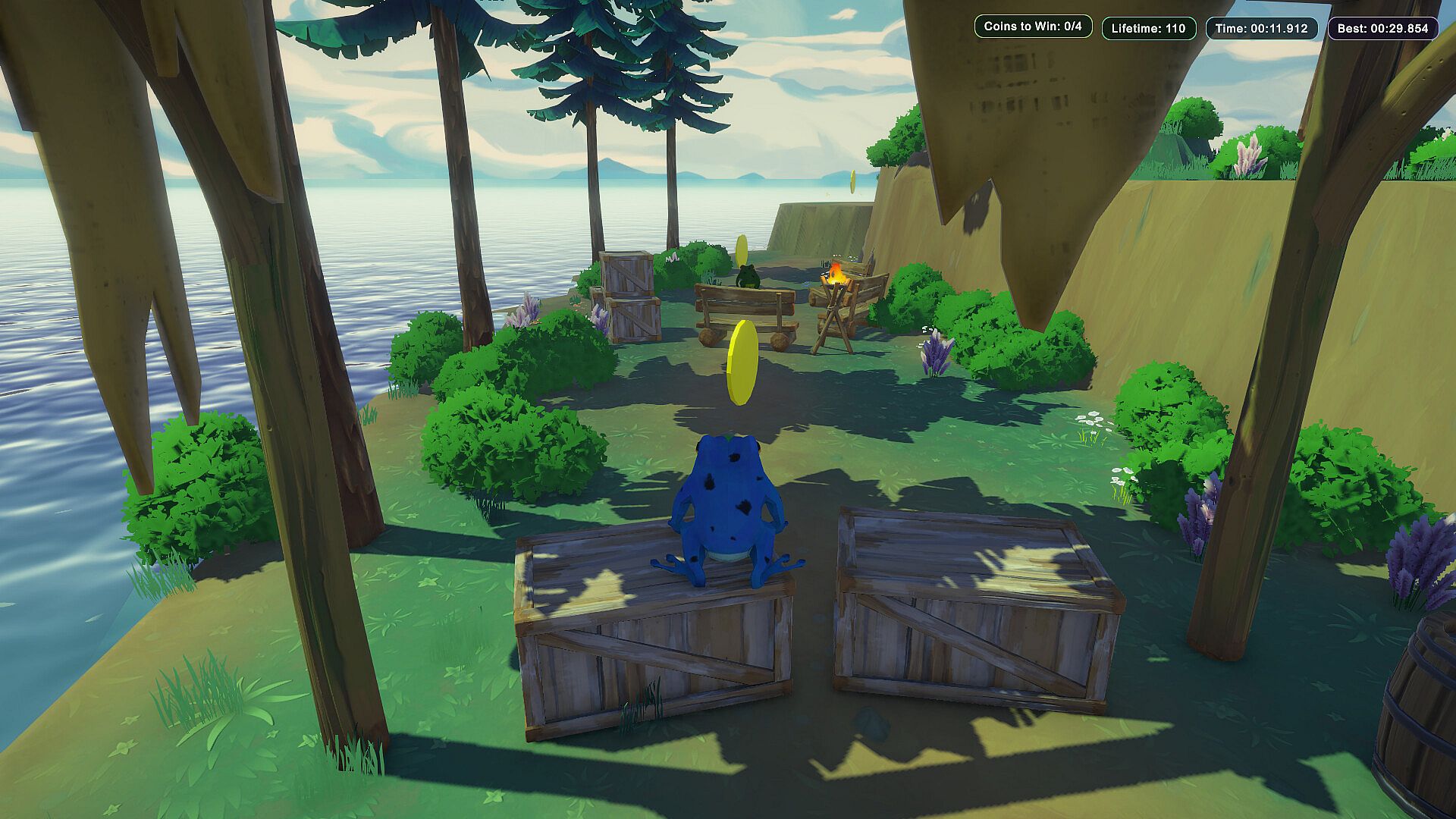
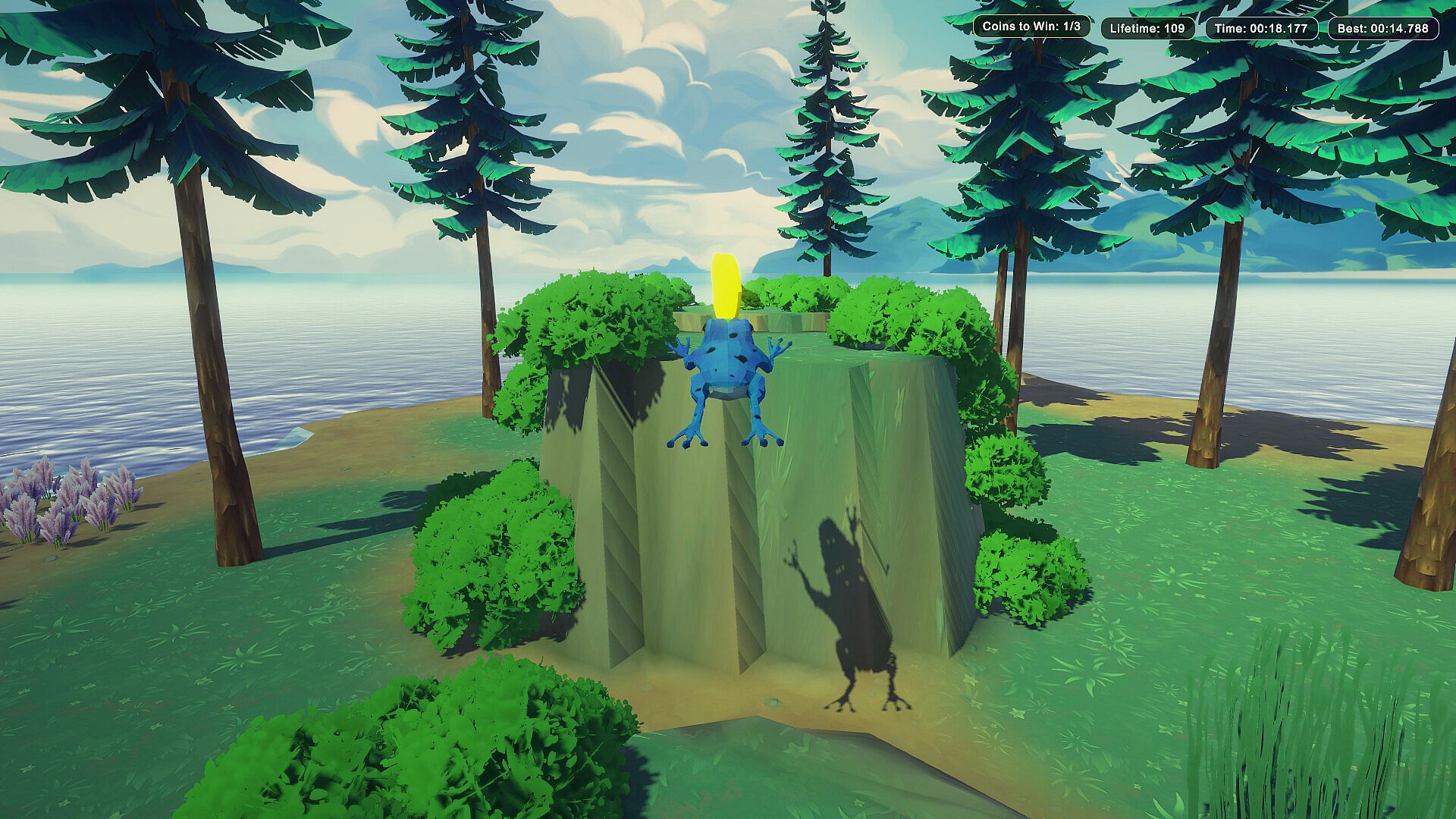
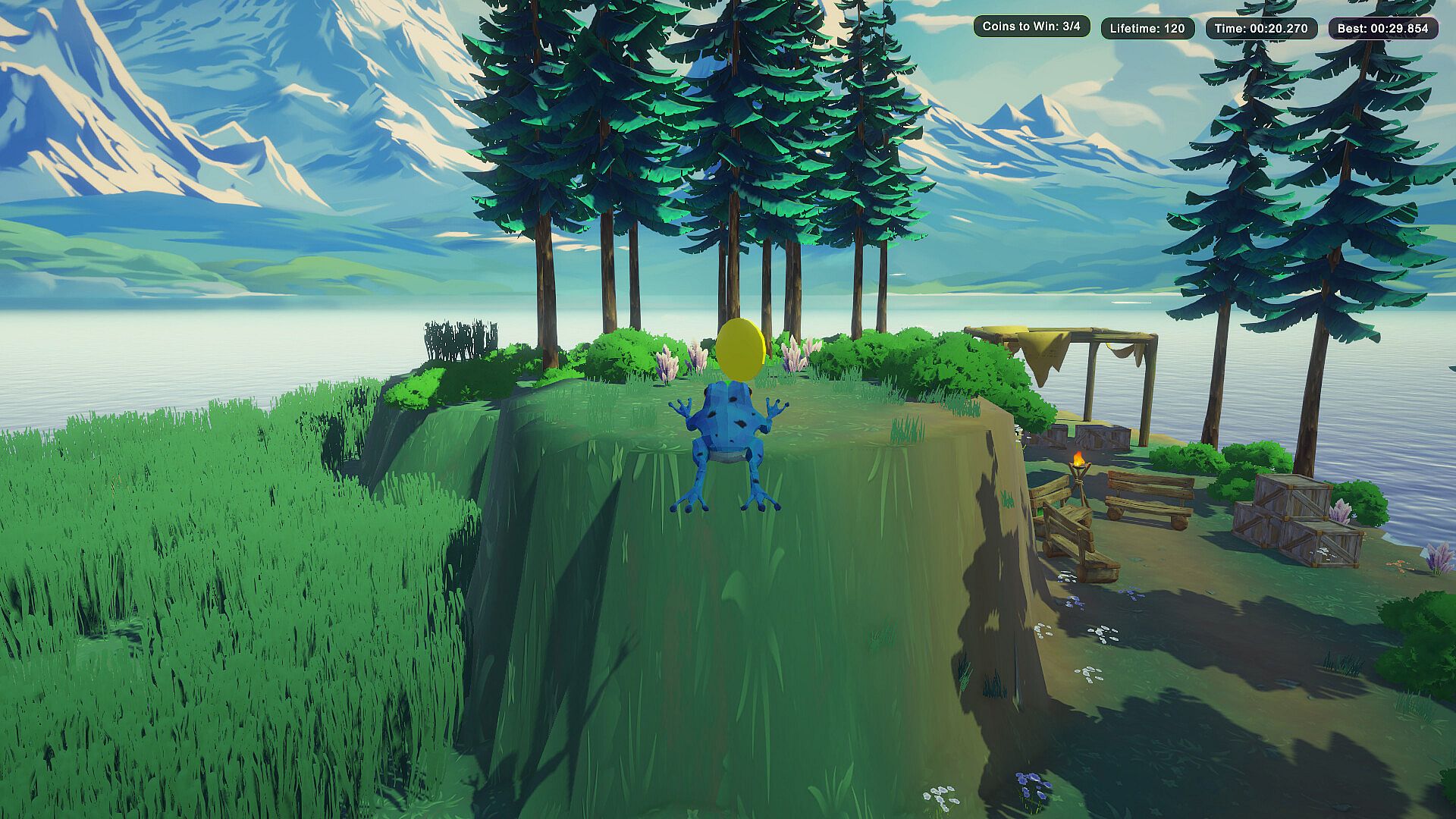
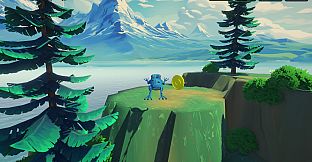
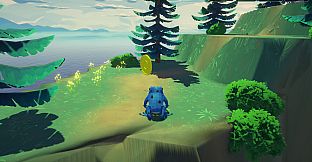
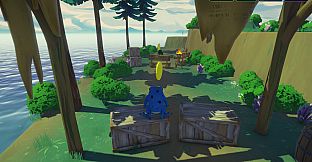
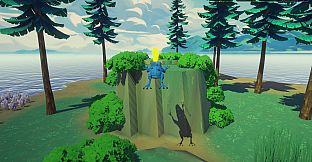
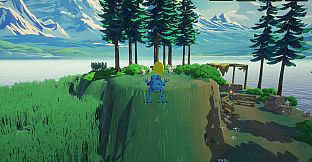
Frog Frog Parkour is a casual indie parkour game for PC that puts players in control of a frog navigating obstacle-filled courses through precise, momentum-based movement. The core loop revolves around charging jumps to control distance and trajectory while collecting coins and aiming for the fastest completion times on short, replayable levels.
Gameplay
The experience centers on charge-based jumping mechanics that reward careful timing and directional control. Players hold the jump input to build power before releasing to launch across gaps, onto platforms, and around obstacles. Momentum carries the frog forward, so route planning becomes essential to maintain speed without overshooting or falling short. Each level tests these skills in sequence, with layouts that encourage multiple attempts to discover optimal paths.
Precision movement forms the foundation, blending timing, direction, and forward momentum into every leap. A single mistimed release can end a run, while a well-executed series of jumps creates fluid progress. The game emphasizes learning level geometry through repetition, allowing players to refine techniques and shave seconds off their times. Coins scattered throughout courses add a secondary objective that rewards exploration without altering the primary focus on speed.
Controls remain straightforward with WASD or arrow keys for movement, spacebar for jumping, and mouse input for looking around. Restarting a level happens instantly with the R key, supporting quick iteration. These elements combine to create an accessible entry point that scales in difficulty as players push for personal bests.
Game Modes
Frog Frog Parkour operates entirely in a single-player format centered on individual level completion and improvement. The primary activity involves racing through courses to reach the finish line as quickly as possible while gathering coins along the way. Ghost replays of previous attempts appear on screen during runs, providing a direct visual comparison that highlights areas for refinement in timing or route choice.
Progression builds through repeated play of the same short levels, where each attempt contributes to mastery. There are no separate multiplayer options or alternate modes, keeping the focus on solo skill development and optimization. Players set and beat personal best times, using the ghost system as a consistent benchmark for measuring improvement across sessions.
Core Mechanics and Progression
Charge-based jumping serves as the central system, giving direct control over leap distance and height based on how long the input is held. This mechanic interacts with level design to create challenges that reward both power management and precise release timing. Momentum carries through the air and upon landing, influencing subsequent jumps and requiring players to account for carryover speed when planning routes.
Levels are designed as compact tests of these systems, each presenting a sequence of obstacles that demand consistent execution. Collecting coins encourages slight deviations from the fastest line, adding replay value without complicating the main objective. The high skill ceiling emerges from the combination of simple inputs and demanding execution, where small adjustments in angle or charge duration produce noticeable time gains.
Is It Worth Playing?
Frog Frog Parkour suits players who enjoy precision platformers and time-trial style challenges in a single-player setting. Its short levels support repeated attempts without long sessions, while the ghost replay feature provides immediate feedback on performance. The game rewards practice and route optimization, making it a strong fit for those who appreciate high-skill-ceiling experiences that remain easy to start.
With a release scheduled for November 1, 2026, and no user reviews available yet, the title stands on its described mechanics and focus on personal improvement. Those drawn to casual indie games built around momentum and timing will find a straightforward yet demanding loop that emphasizes mastery over extended campaigns or additional content layers.