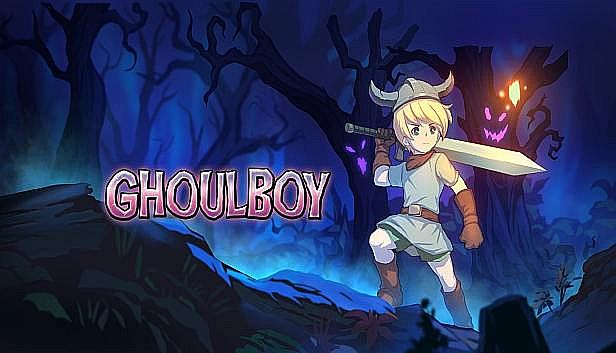








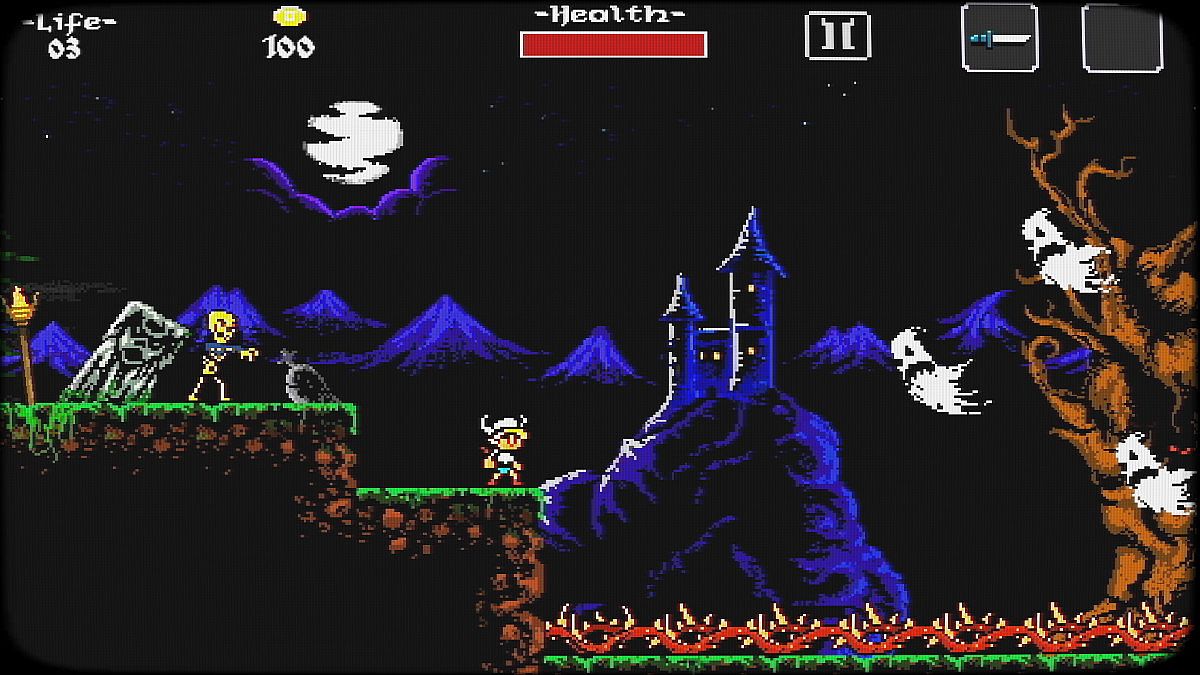
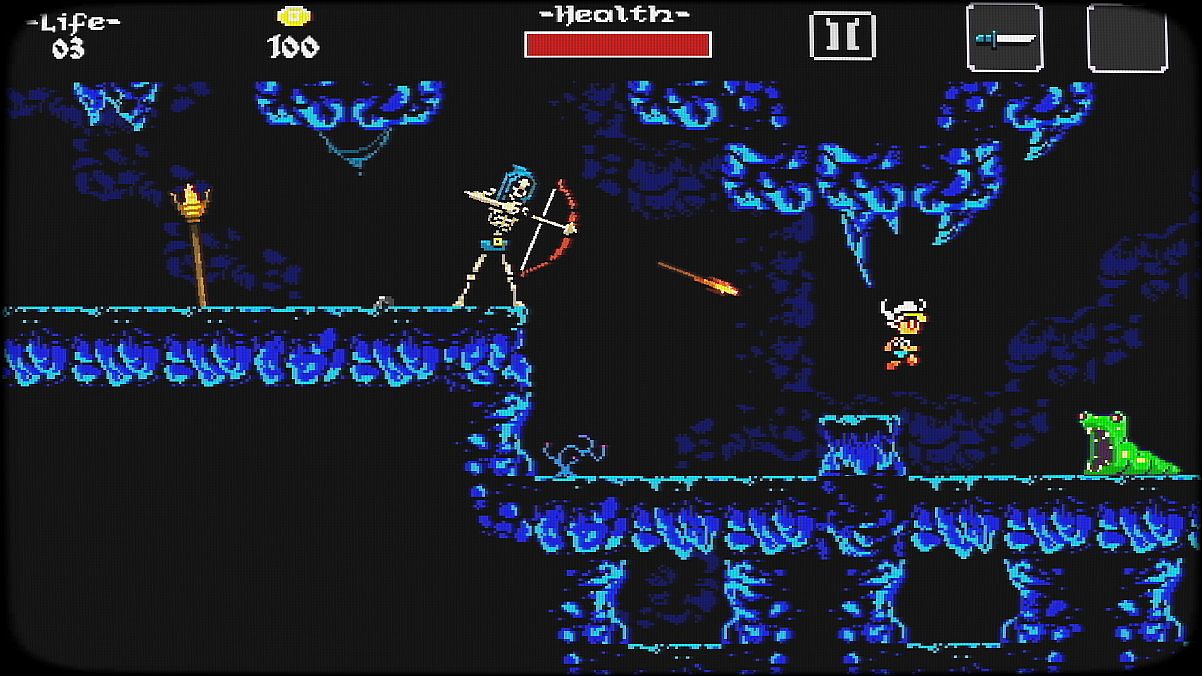
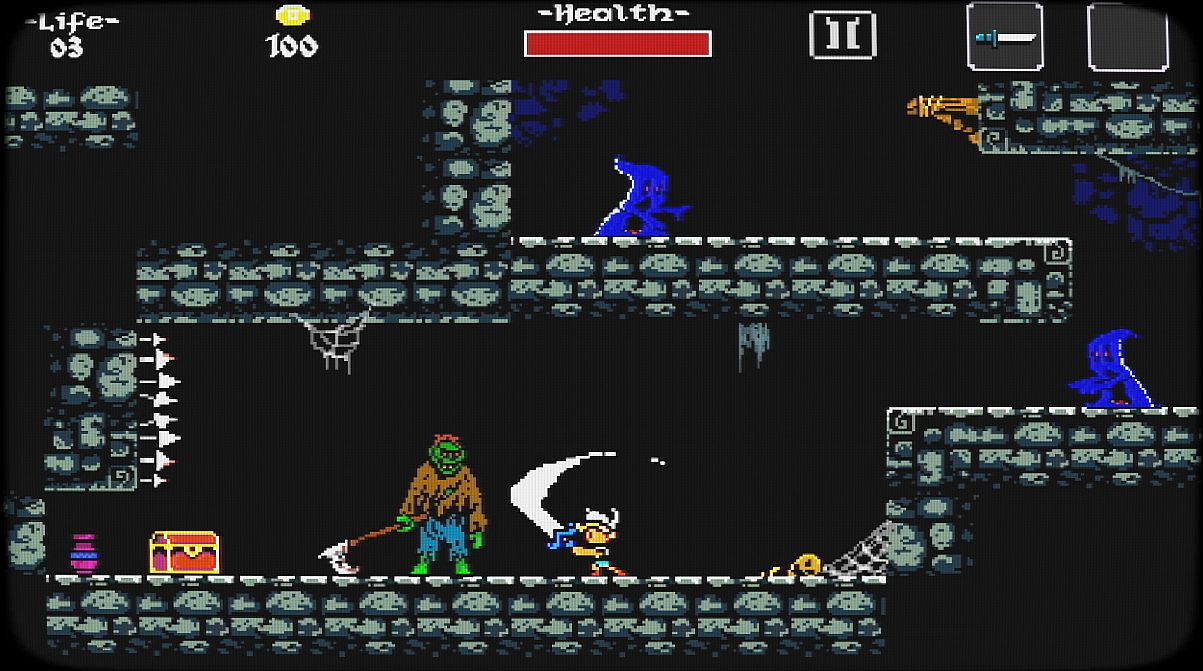
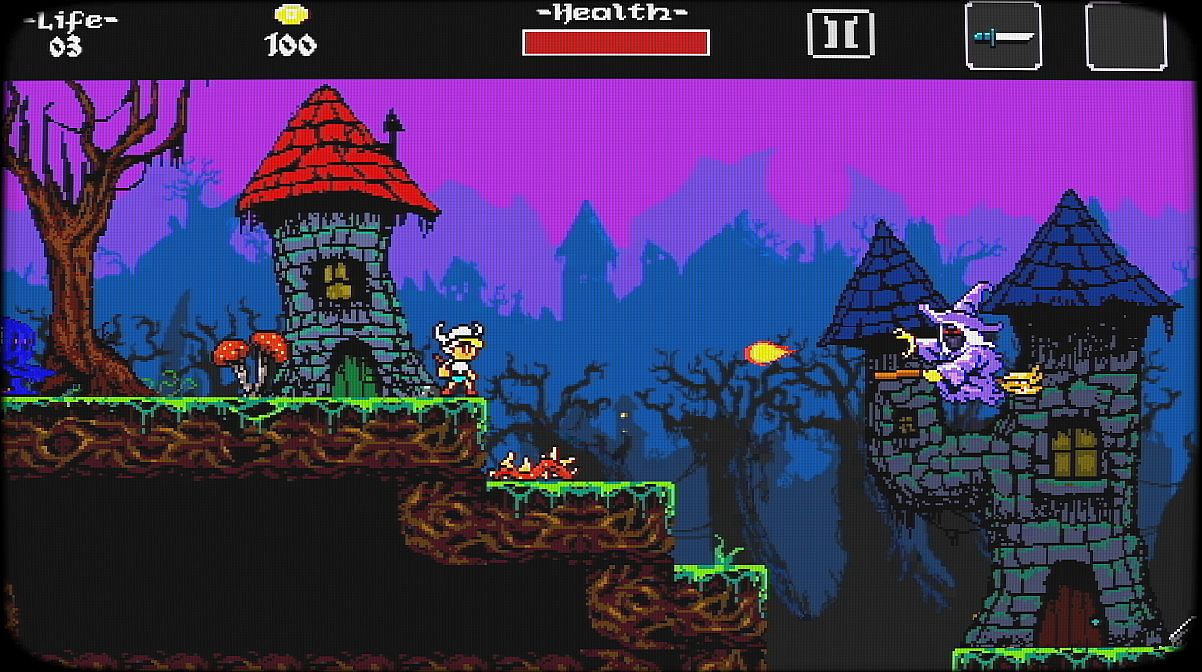
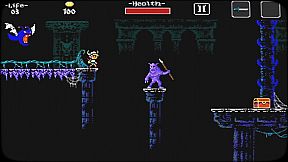
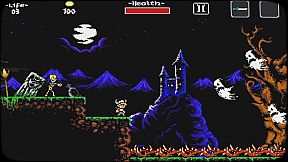
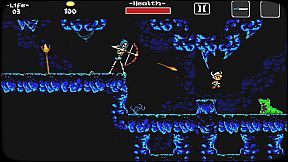
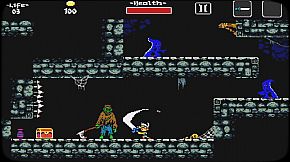
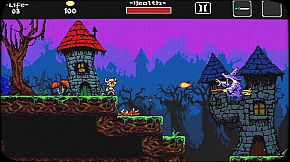
Ghoulboy - Dark Sword of Goblin is a 2D retro-inspired action platformer that blends hack and slash combat with light action-RPG progression elements. Players control a young hero navigating side-scrolling levels filled with monsters, traps, and environmental challenges in a gloomy fantasy setting. The game emphasizes precise platforming, resource management through collected gold, and creative use of throwable weapons to overcome obstacles.
Gameplay
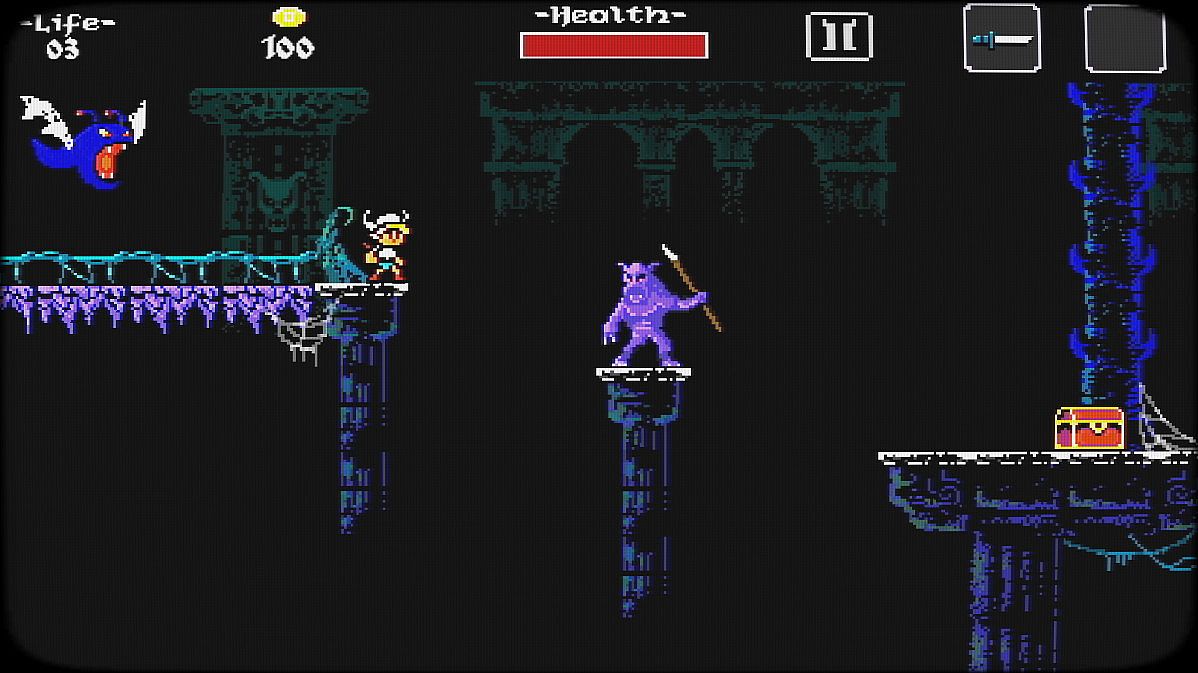
The core loop revolves around moving through linear levels, defeating enemies with melee attacks, avoiding hazards, and solving simple environmental puzzles. Gold dropped by foes allows upgrades to health and access to new weapons. The standout mechanic involves throwing spears that stick into walls or surfaces, creating temporary platforms for reaching higher areas or bridging gaps. This system encourages experimentation with positioning during both traversal and combat sequences.
Melee options include a starting small sword, a larger sword acquired early, and a mace that provides extended reach. Throwable weapons consist of daggers that function similarly to boomerangs for returning attacks and spears primarily used for platform creation. Combat stays straightforward with pattern recognition against regular enemies and bosses. Levels feature crumbling platforms, moving elements, pressure plates, and breakable blocks that tie into the puzzle aspects. Chiptune tracks accompany the pixel art visuals across gloomy dungeons and settlements.
Controls support gamepads fully, with responsive jumping that includes a double jump option. Checkpoints appear once per level in many cases, requiring players to repeat sections upon death. The experience stays single-player focused with no branching paths or alternate routes beyond what the spear mechanic enables.
Game Modes
The game offers a single continuous campaign structured around acts that contain multiple levels each. Progression moves from left to right through themed stages, culminating in boss encounters. There are no separate difficulty settings, multiplayer options, or additional modes such as survival or challenge arenas. All content unfolds within this linear single-player adventure that incorporates combat, platforming, and light puzzle solving as integrated elements rather than isolated activities.
Exploration stays limited to the main path, though the spear-throwing feature opens small vertical shortcuts or alternative routes within individual levels. Boss fights number four in total, each requiring recognition of attack patterns amid the platforming demands. The structure rewards repeated attempts on tougher sections while keeping sessions relatively brief overall.
Progression and Features
Gold collection drives permanent upgrades to health capacity and weapon availability, adding a light RPG layer to the platforming foundation. Players start with basic equipment and expand their arsenal as they advance. Puzzles typically involve interacting with switches, pushing objects, or using thrown spears to access new areas. Monster encounters range from basic foes to more complex demonic bosses that test timing and positioning.
Retro elements define the presentation, from the pixel graphics and chiptune soundtrack to the overall level design reminiscent of 16-bit era platformers. Gamepad support enhances the feel of precise jumps and attacks. The full experience spans roughly two to four hours for most players, depending on skill with the platforming challenges and familiarity with similar titles.
Is It Worth Playing?
Reception on Steam sits at Mostly Positive based on hundreds of reviews, with players often highlighting the nostalgic atmosphere, the useful spear platform mechanic, and the tight controls for the price point. Common notes include the short overall length and occasional technical issues like glitches or menu quirks that some find disruptive. The game appeals most to those seeking a compact retro-style platformer with hack and slash elements rather than lengthy campaigns or complex systems.
For fans of 1990s platformers who enjoy methodical movement, sub-weapon experimentation, and straightforward boss patterns, the title delivers a satisfying session or two. Its low cost and focused design make it a reasonable choice for short playthroughs, though those preferring deeper exploration or higher difficulty curves may find it limited. The single-player campaign remains the only way to experience the content, with no ongoing updates or additional modes available.