

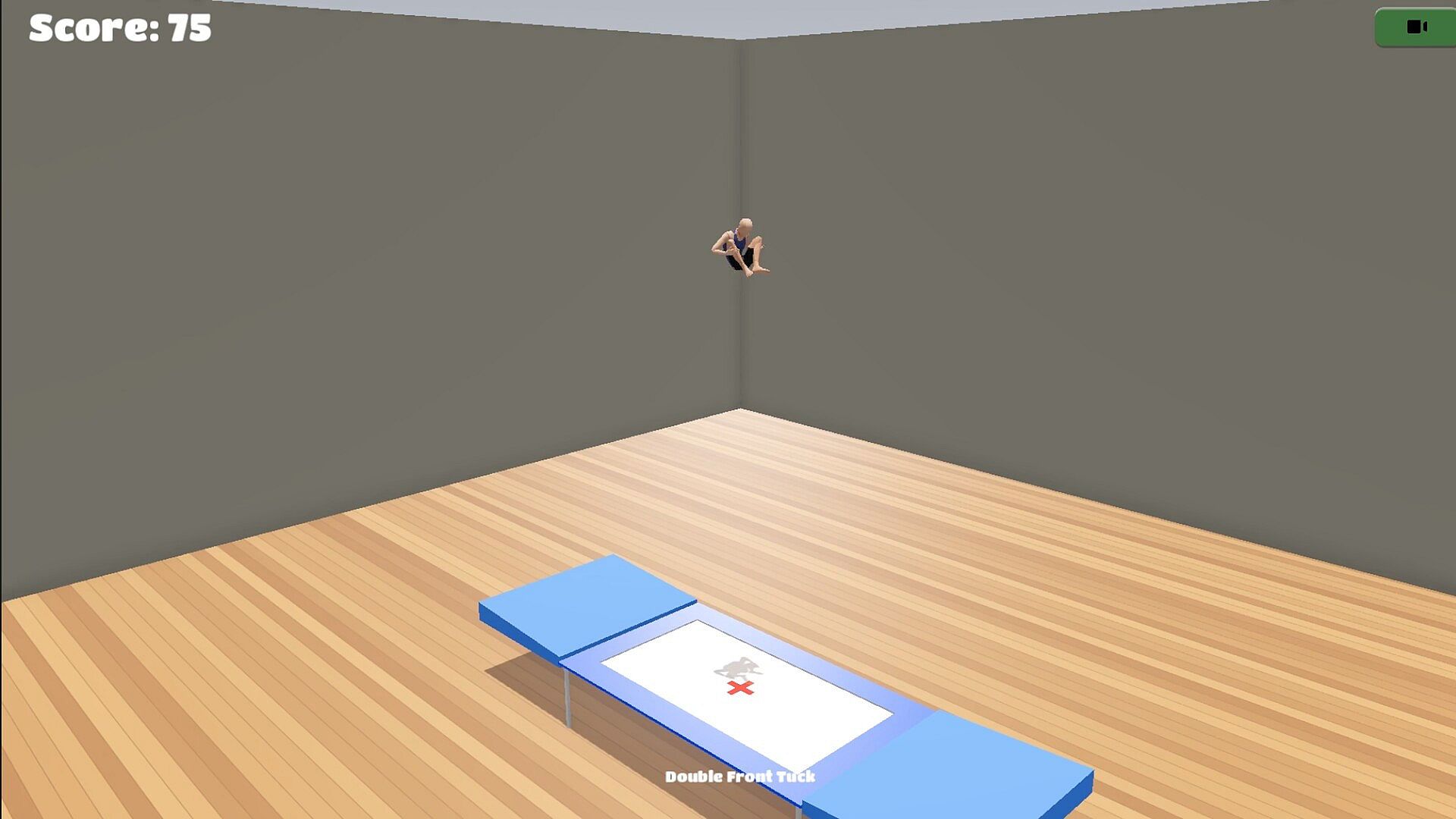
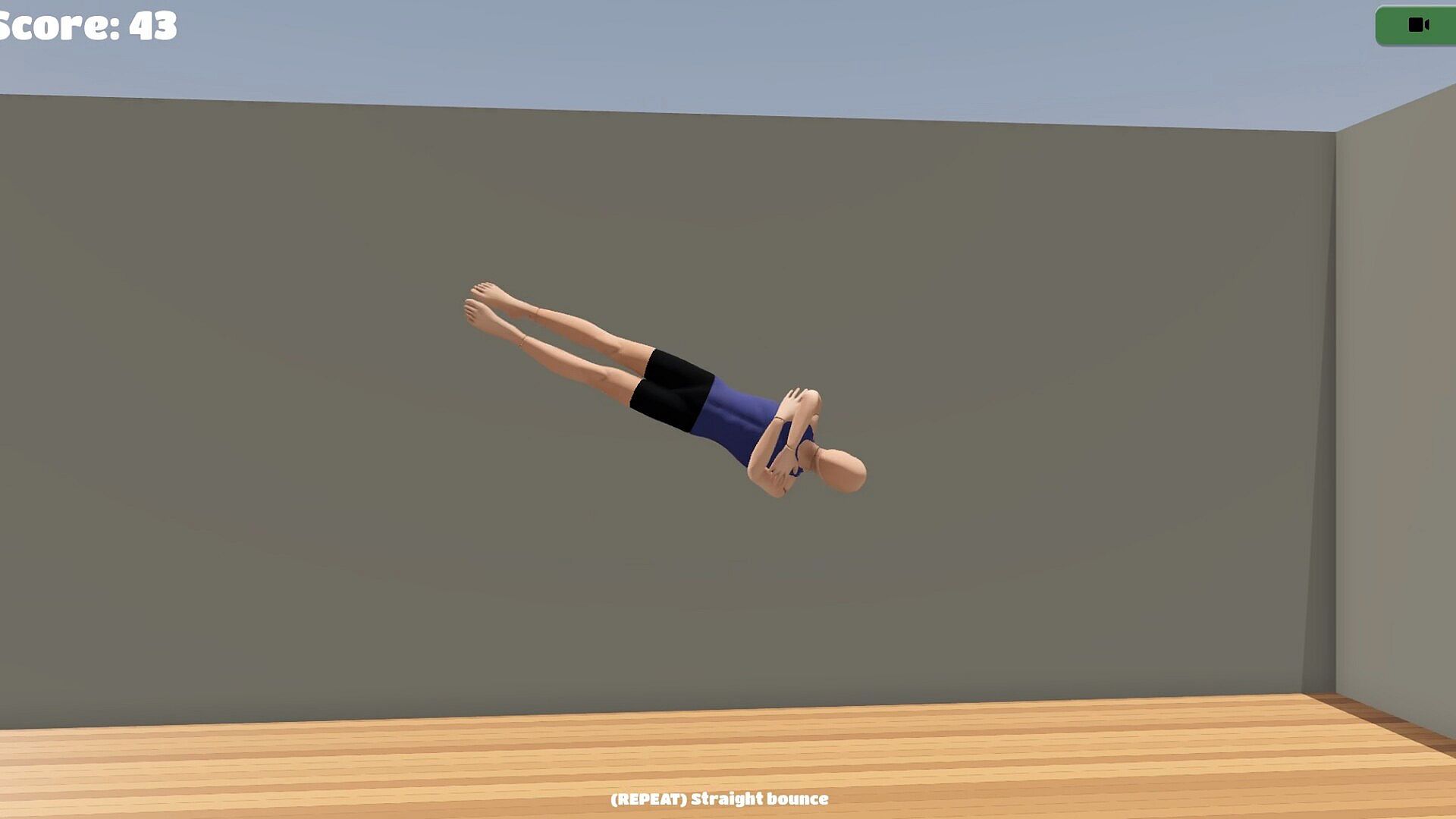
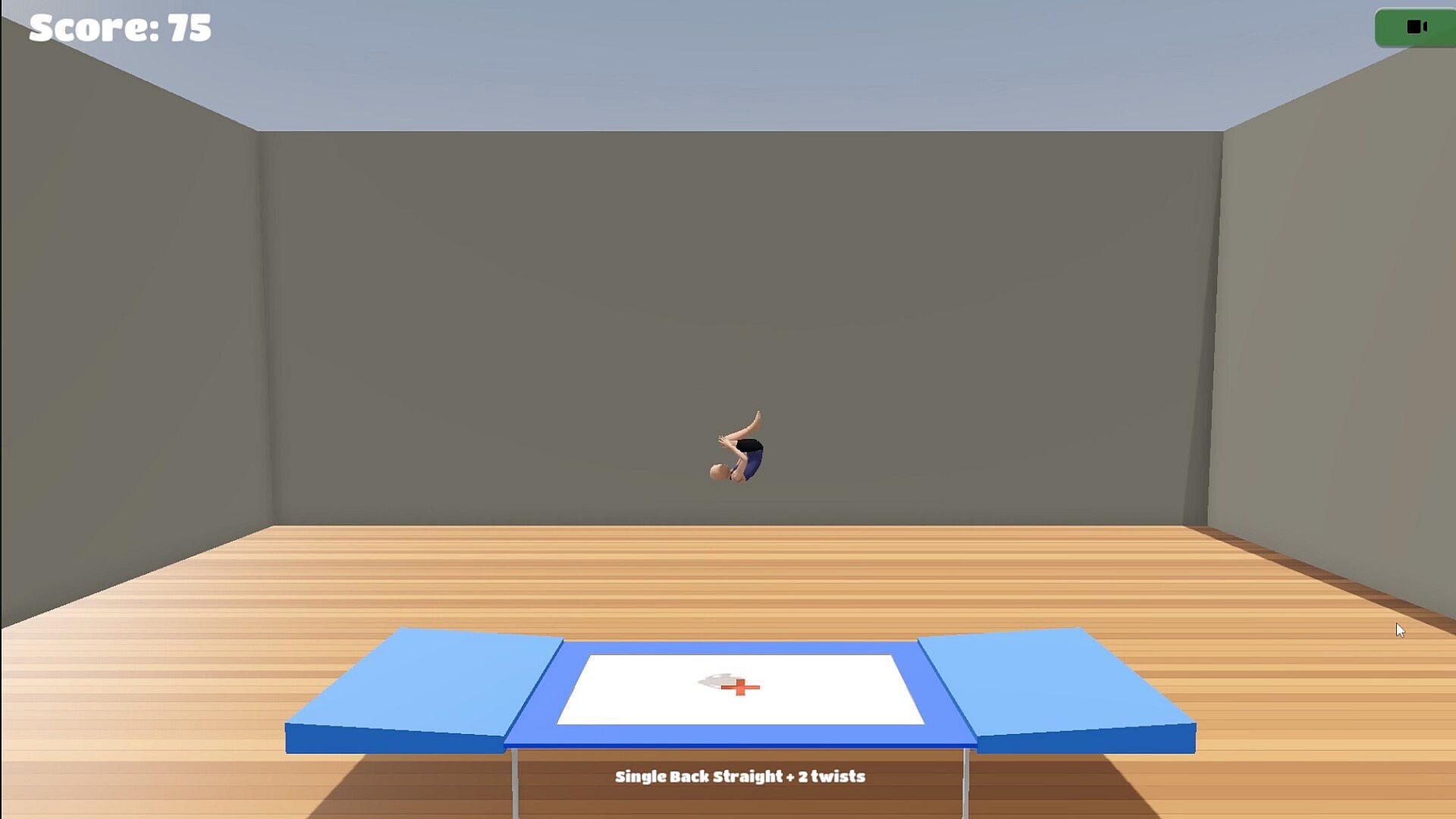
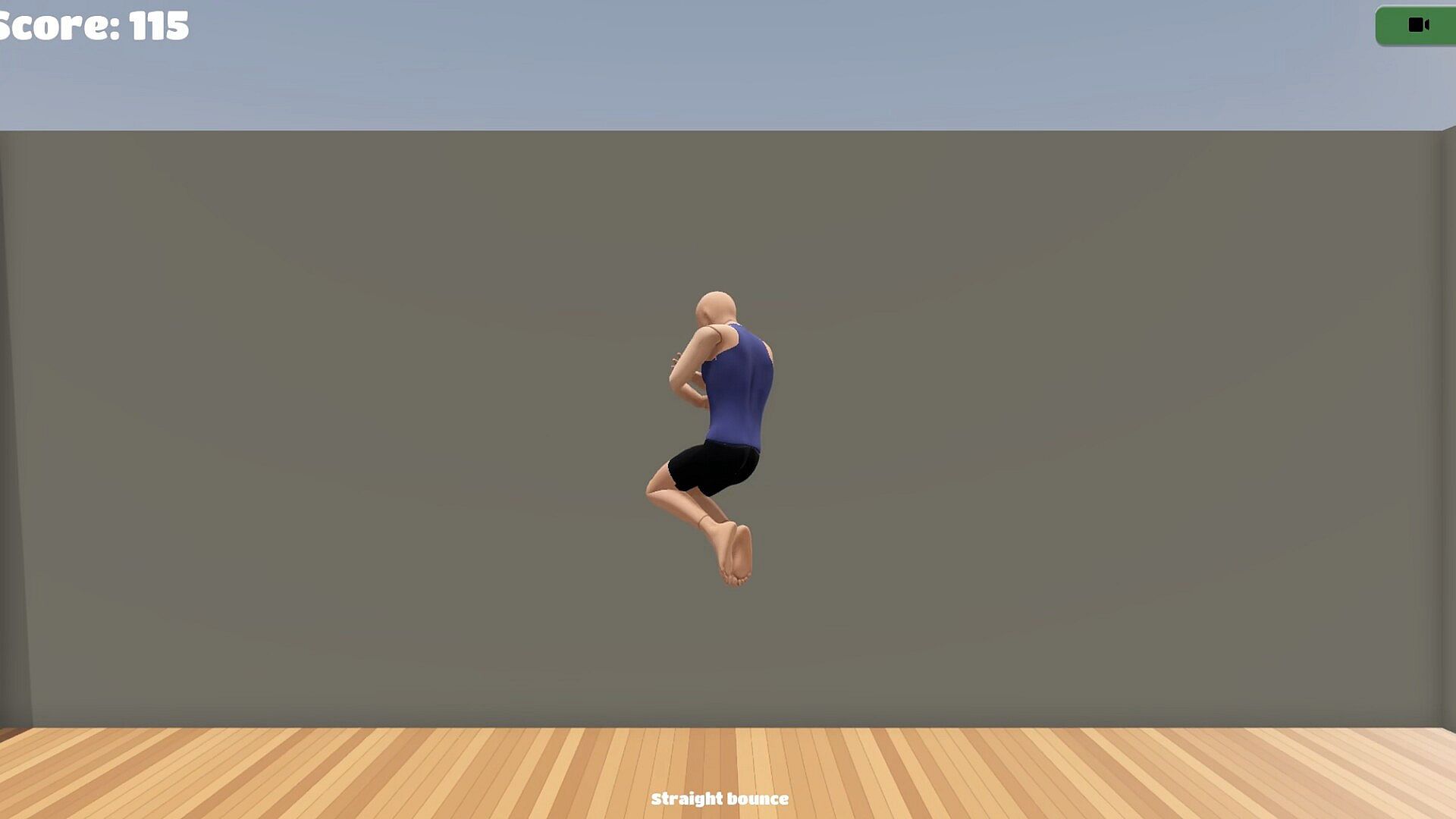
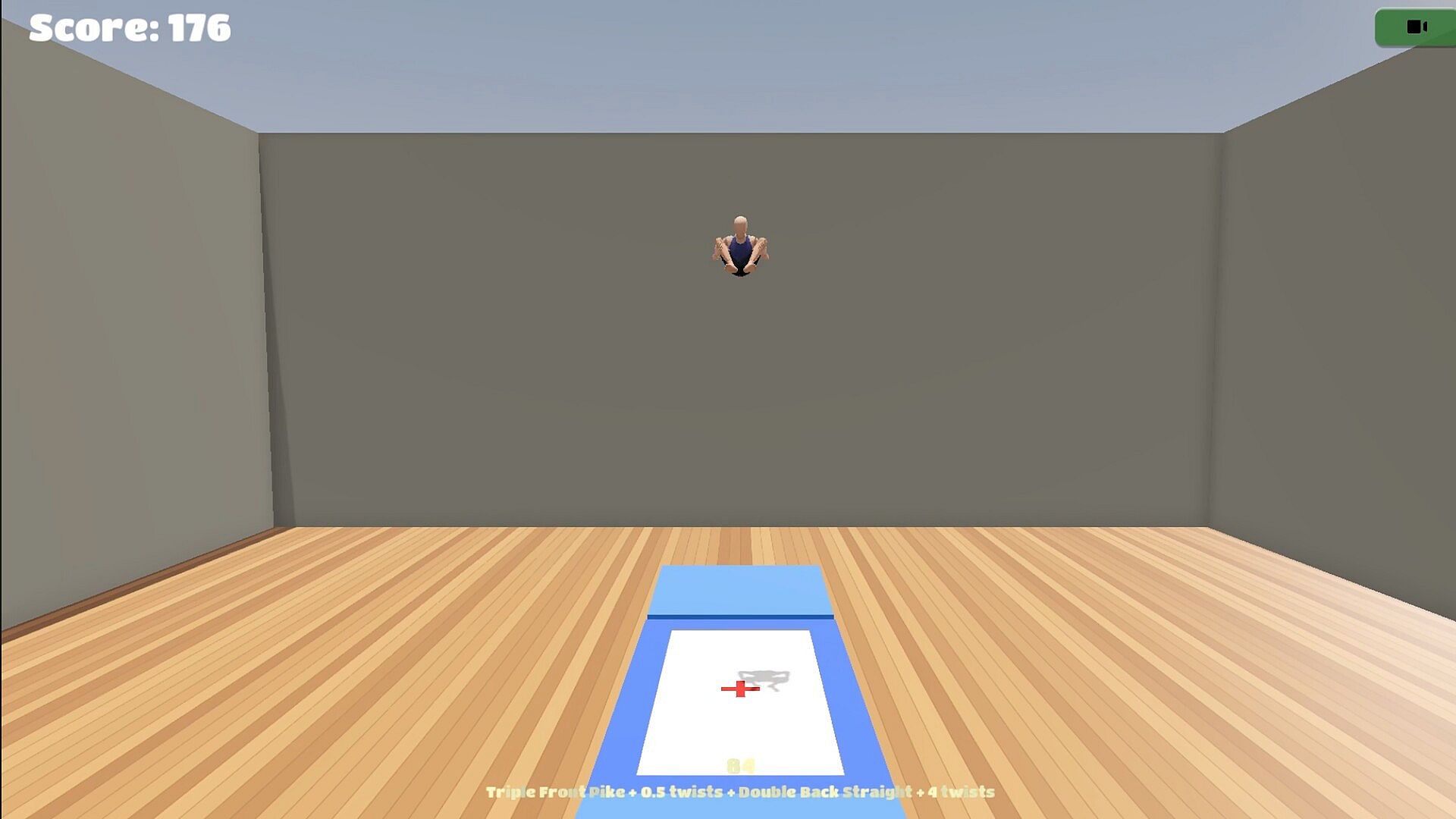
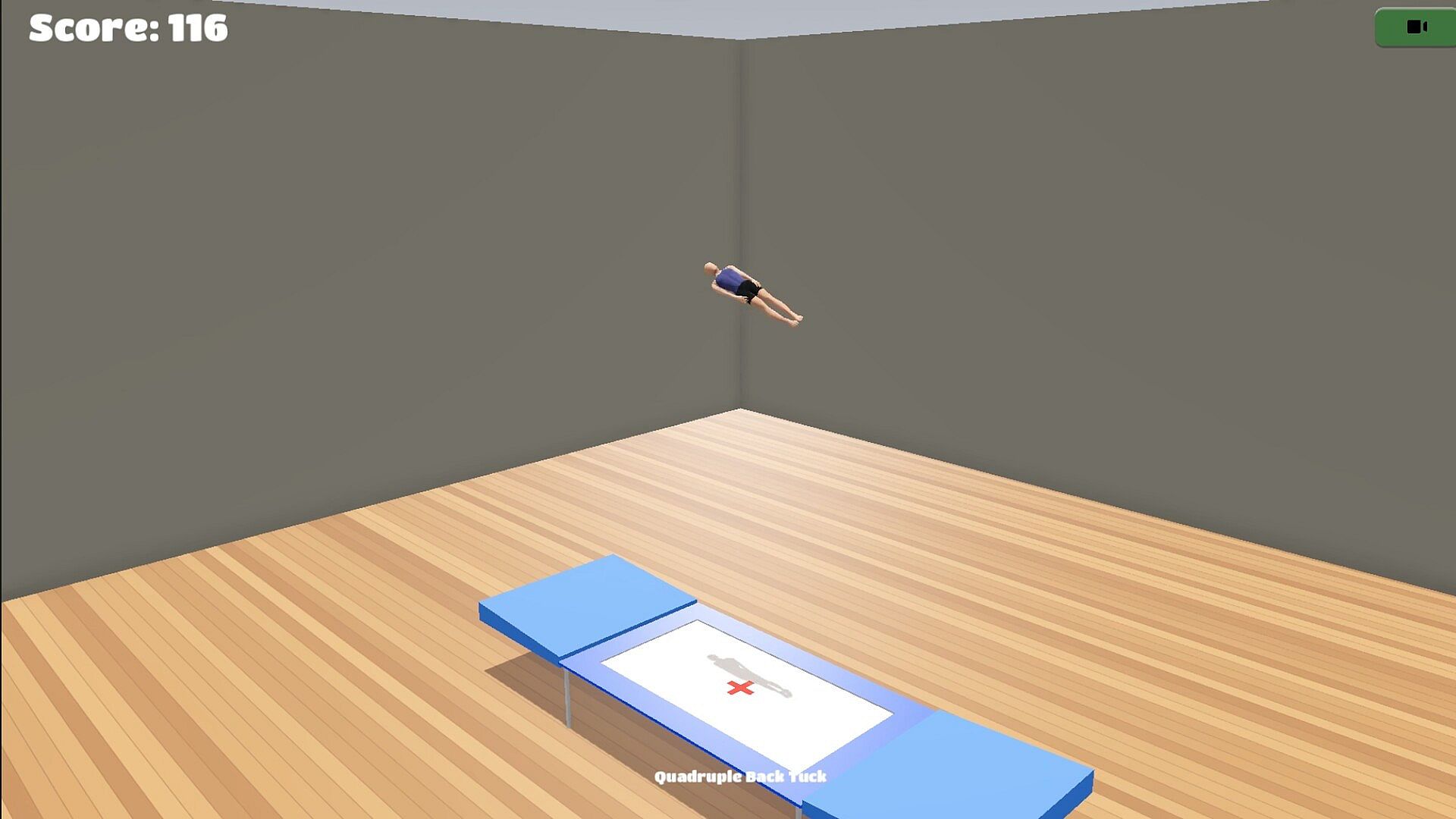
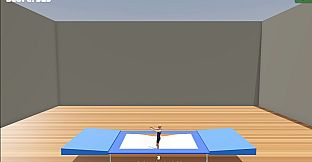
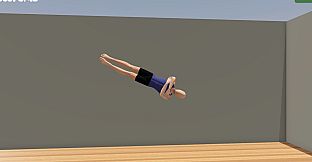
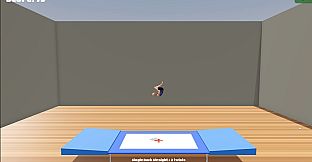
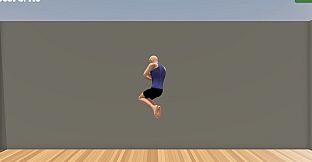
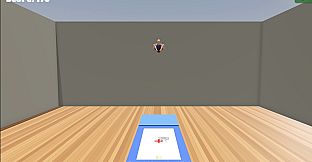
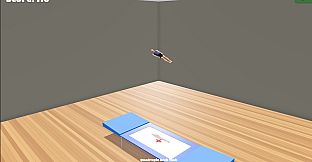
Gymnastics Simulator is an indie casual simulation sports game for PC that captures the precise demands of trampoline gymnastics. Built from the perspective of someone with two decades of experience in the sport, it narrows its scope to the critical two seconds spent in the air after each bounce. Players control flips, twists, body shapes, and timing to execute increasingly complex skills while managing the consequences of every decision on the next jump.
Gameplay
The core loop centers on automatic bounces that leave all aerial control in the player's hands. Direction choices lock in forward or backward rotation the moment they are committed, after which shape adjustments become the primary throttle. A tucked position accelerates rotation the most, a piked shape sits in the middle, and a straight body slows the spin while delivering the highest score value. Mid-air changes to shape are possible multiple times per flight, rewarding precise timing.
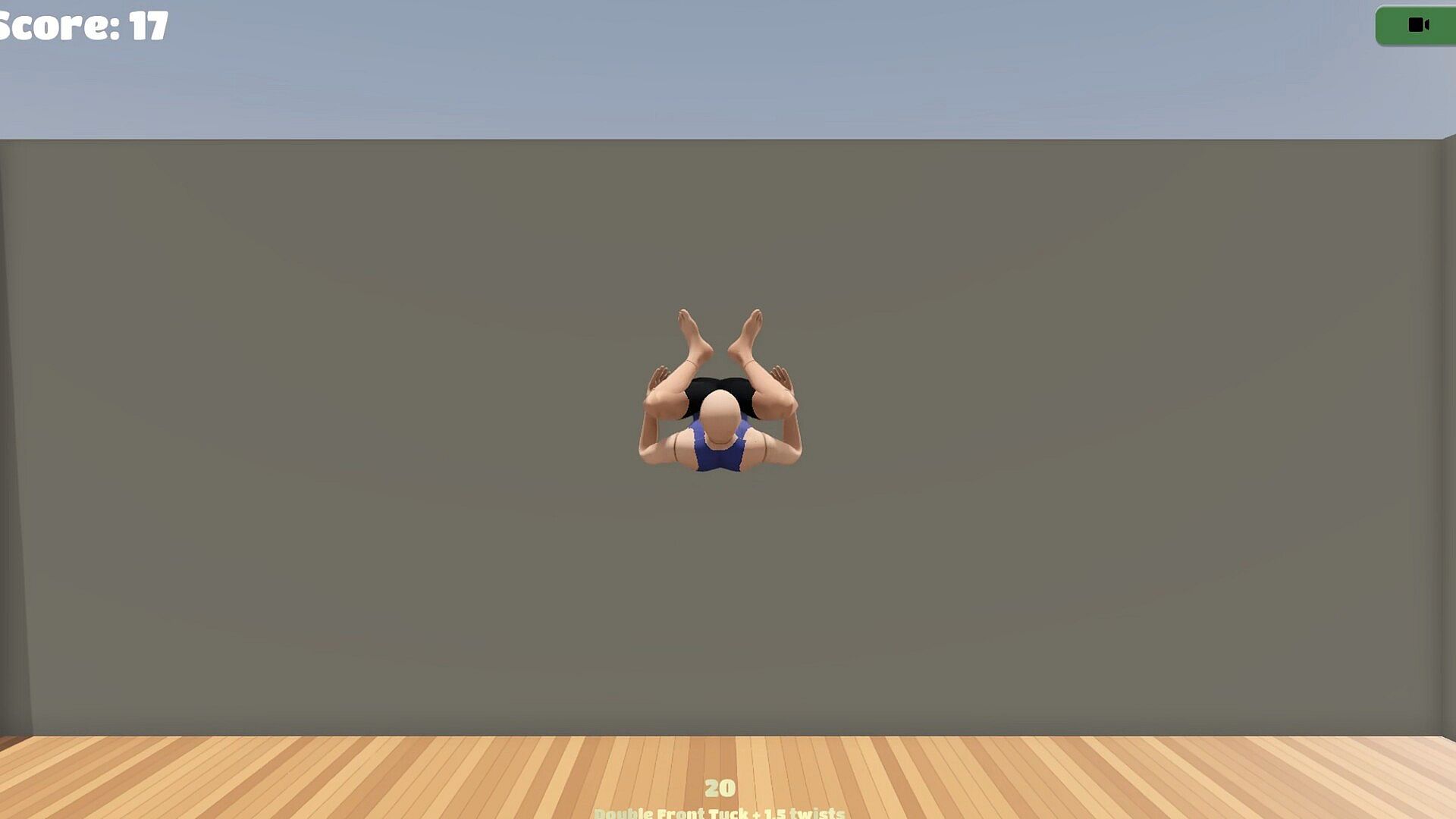
Twisting adds another layer of real-time trade-offs. Rotating around the body's axis reduces somersault speed, forcing players to balance the two elements in every skill. Boosting provides extra power to either rotation or twist speed, yet activating one always reduces the effectiveness of the other. These choices must be made while the floor approaches, turning each flight into a sequence of calculated risks.
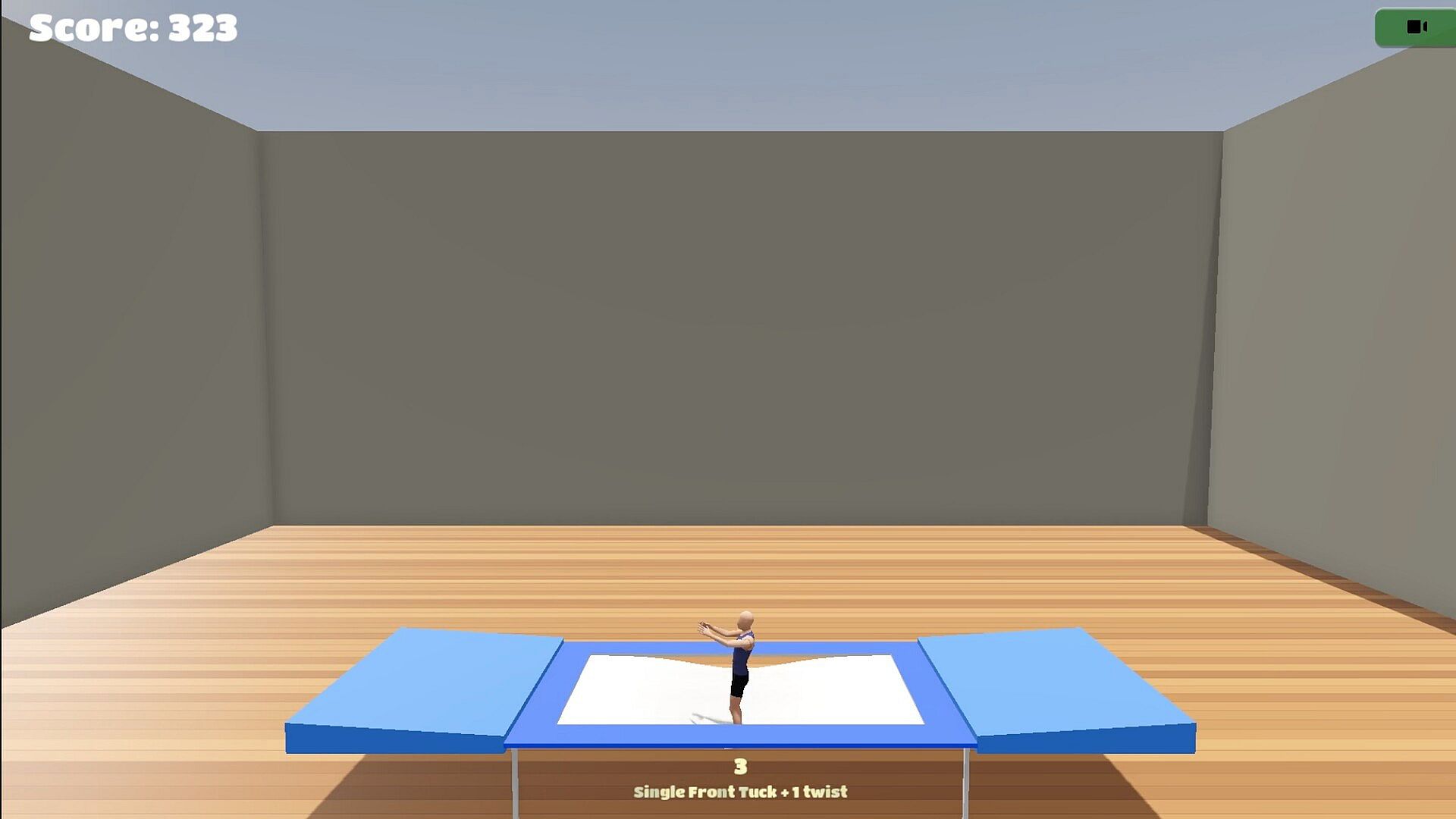
Landing determines the run's momentum. An upright landing preserves height for subsequent jumps and banks the completed skill. A crooked landing drops height, shortening the air time available for the next attempt and risking a cascading loss of control. Clean landings compound across a full sequence, while any error resets accumulated progress within that run.
Progression mirrors real athletic development. Earnings improve three core attributes: jump height for greater air time, rotation speed for faster flips, and twist capability for more advanced combinations. Early runs feel limited, but unlocking twisting and boosting transforms the available skills, allowing moves that were previously impossible to land consistently.
Game Modes
The primary experience revolves around structured runs of exactly ten jumps. Each run functions as a judged routine where repeating a previously performed skill scores nothing and ends the attempt. Players must therefore plan the order of skills carefully, deciding which combinations to attempt early and which to save for later jumps when height and timing may differ.
Venues introduce meaningful variety without altering the fundamental rules. Each location features its own trampoline bed size, spring stiffness, and bounce characteristics, ranging from a basic garden setup to a competition-grade surface. Unlocking new venues requires meeting specific goals tied to prior performance, and each one carries its own set of short-term targets to complete.
Persistent records track every skill landed for the first time, creating a long-term collection layer separate from individual runs. Best performances on each venue are stored and compared against personal or community benchmarks, encouraging repeated attempts to refine execution and climb the internal leaderboard.
Progression and Venues
Skill acquisition follows a deliberate path that rewards consistent practice over flashy attempts. Early sessions focus on basic flips and controlled landings to build height and rotation attributes. Later unlocks open twisting mechanics and boosting options, expanding the range of viable combinations in the same ten-jump format.
Venue differences affect strategy directly. Softer or smaller beds alter timing windows and maximum height, requiring adjustments to shape changes and boost usage. Completing venue-specific goals unlocks the next location while also populating the permanent skill record with new entries.
Is It Worth Playing?
Gymnastics Simulator appeals to players seeking a focused, high-skill simulation rather than broad action or variety. Its single-apparatus design and emphasis on precise aerial control create a steep but rewarding learning curve that echoes the real demands of gymnastics training. The absence of extraneous systems keeps attention on execution, timing, and decision-making under pressure.
Those who enjoy mastering tight mechanical loops and tracking incremental physical improvements will find depth in the attribute progression and the challenge of stringing together multi-decision skills without error. The ten-jump structure adds strategic planning to what might otherwise feel like pure reflex practice.
The game suits dedicated solo play sessions where short runs can be repeated quickly, with longer engagement coming from venue unlocks and the permanent record of achieved skills. Its narrow scope means it delivers exactly what the description promises: an accurate-feeling representation of trampoline gymnastics without dilution from unrelated features.