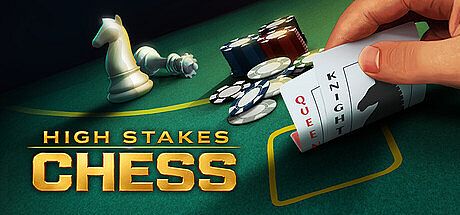


High Stakes Chess is a strategy game for PC that fuses poker betting with chess combat in a single round-based experience. Players navigate three distinct phases each round, starting with card collection through poker mechanics and ending with traditional chess rules applied to custom armies and positions. The result is a game where every decision in the early stages directly shapes the battlefield later on.
Gameplay
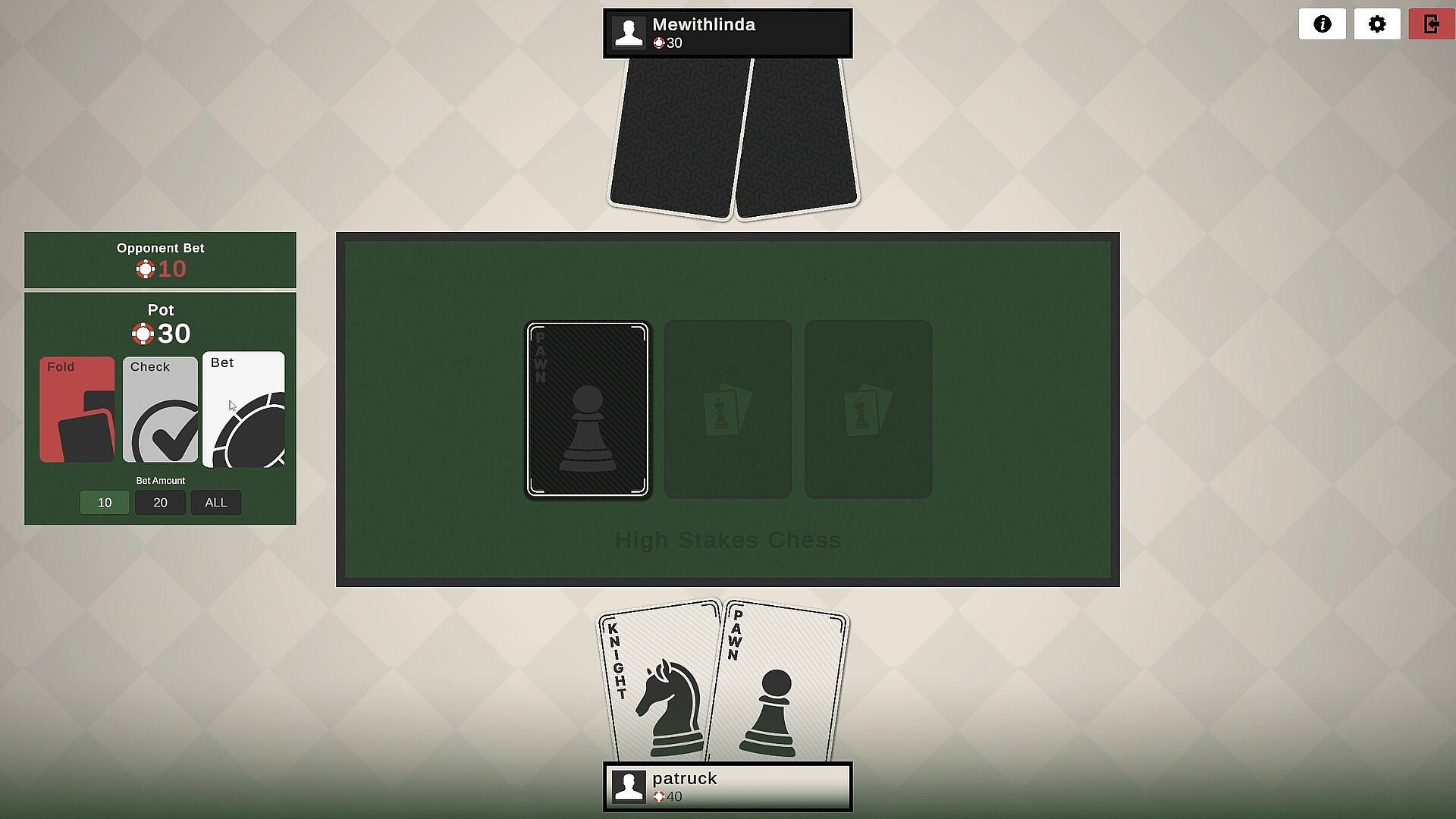
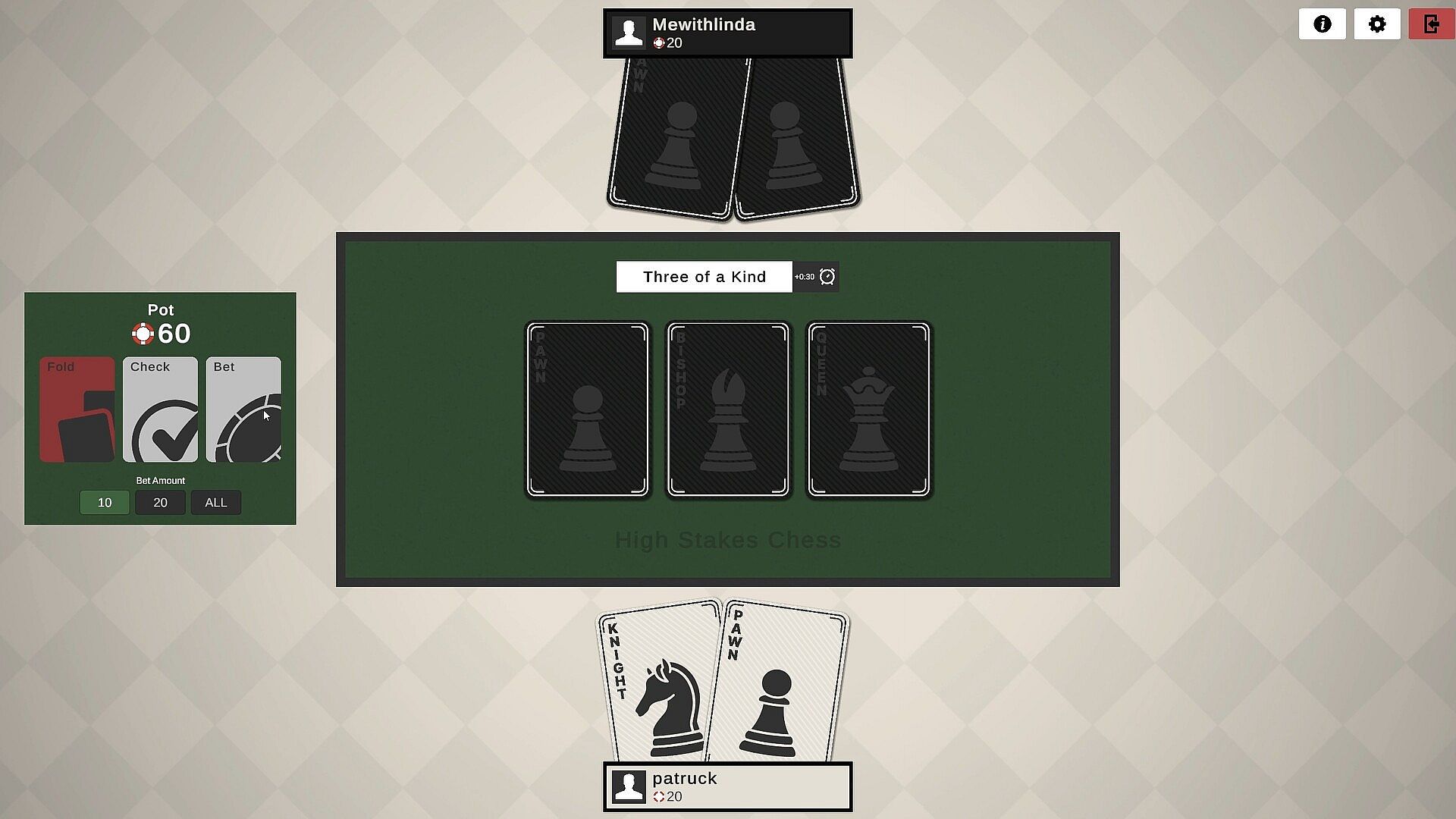
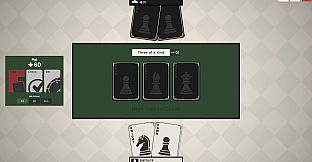
The core loop begins when each round deals a hand of poker using a deck composed entirely of chess pieces. Participants bet, bluff, and aim to form the strongest possible hand from these unique cards. Stronger poker combinations deliver extra rewards that carry forward, while the collected cards themselves dictate which pieces become available for the upcoming battle. This phase rewards careful risk assessment and reading opponents at the table.
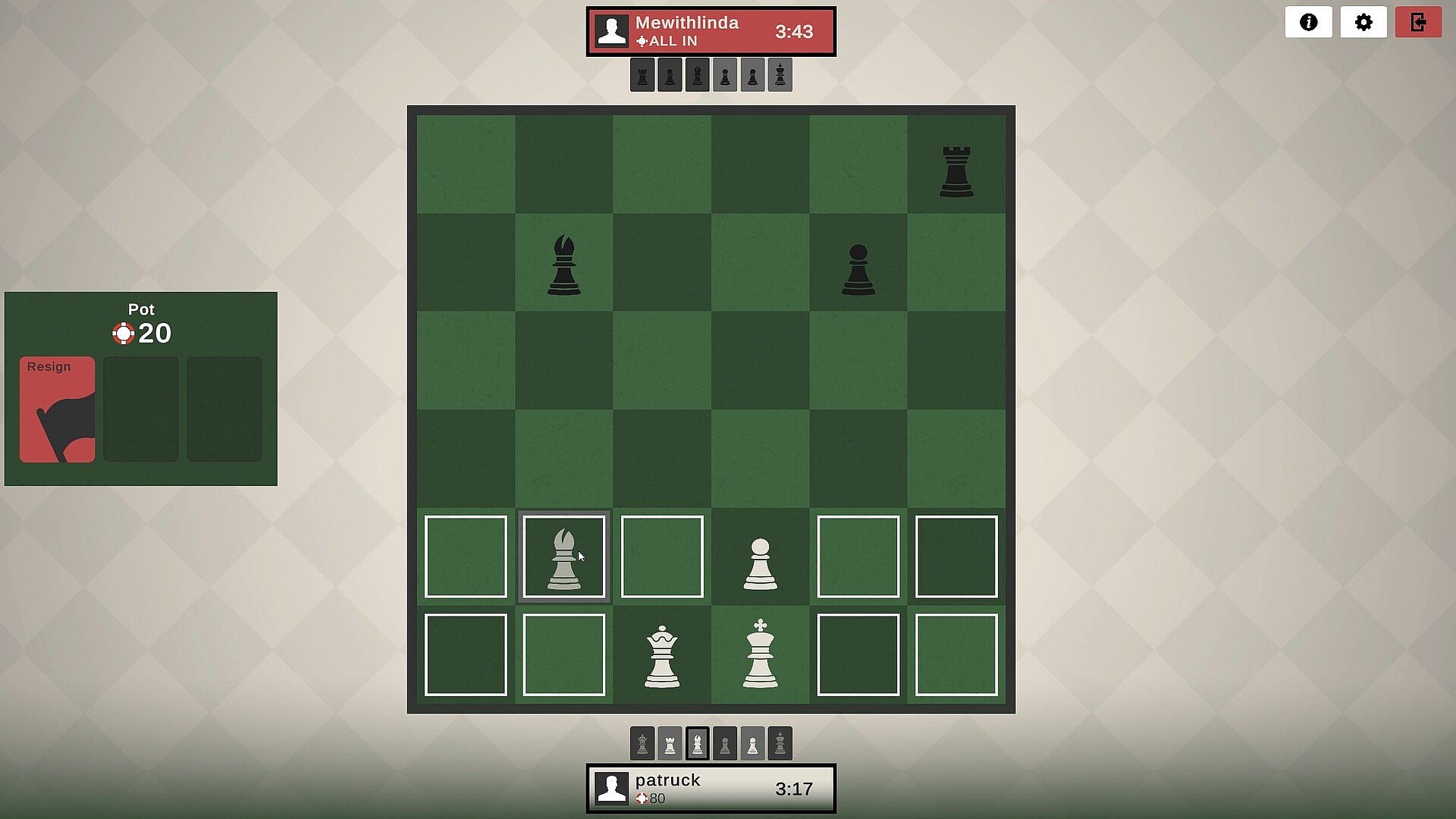
After the poker hands resolve, the placement phase lets players arrange their acquired pieces on the board. With no fixed starting setup, every round presents a fresh configuration based on the cards dealt and collected. Building a cohesive position around limited forces requires adapting to whatever army the poker phase provided, turning standard chess openings into irrelevant history.
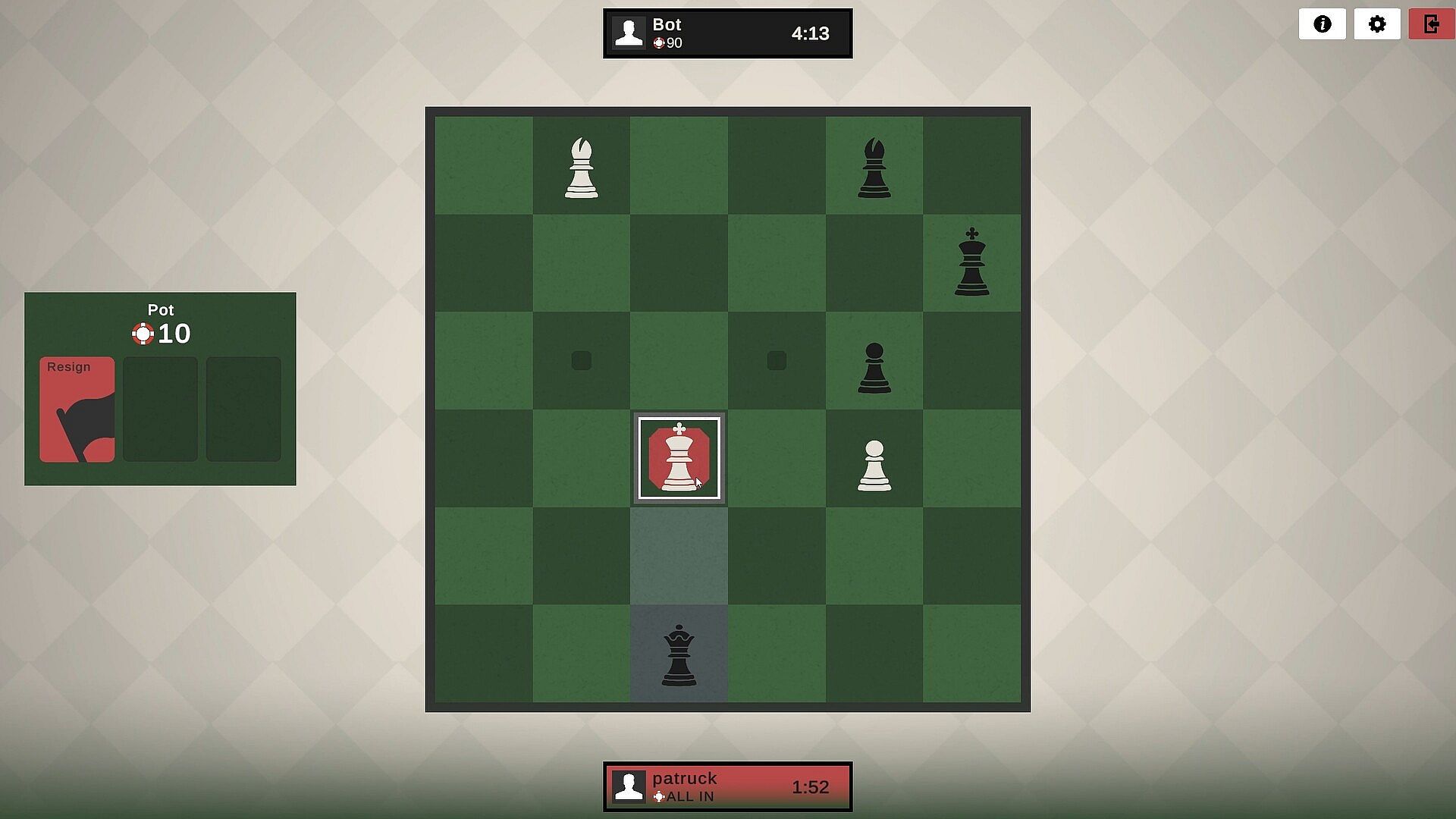
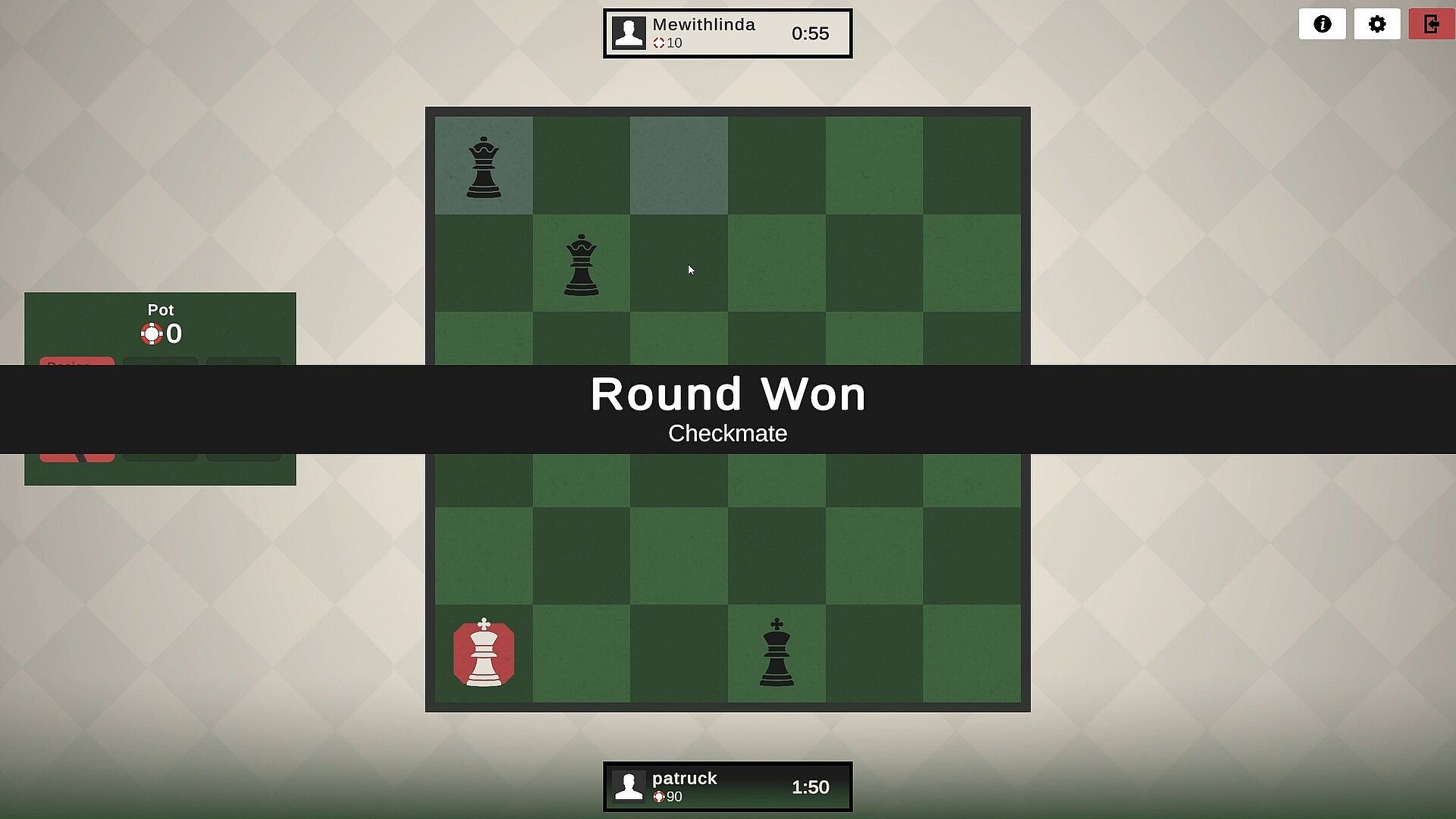
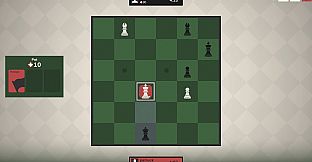
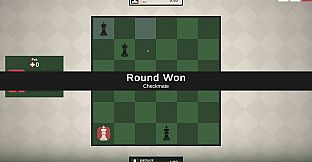
The final chess phase follows familiar movement and capture rules. Players alternate turns, seeking to deliver checkmate while accounting for the asymmetric armies and starting positions created earlier. Success depends on outmaneuvering the opponent through superior positioning established in prior phases, blending table psychology with board tactics.
Game Modes
High Stakes Chess structures its experience around the three sequential phases of poker, placement, and chess rather than offering separate named modes. Each round flows through these stages in order, creating a consistent yet variable format where the outcome of one phase influences the next. The emphasis remains on head-to-head competition, with opponents facing off across the full cycle.
Because every round generates a different set of pieces and board layout, the game avoids repetitive openings or predictable strategies. Players must constantly reassess based on the poker results and placement choices, keeping the chess portion dynamic even under standard rules.
Strategic Depth and Player Choices
The integration of poker elements adds layers of bluffing and hand evaluation that standard chess lacks. Collecting pieces through betting decisions means the army composition itself becomes a point of contention before any piece moves. Rewards from strong poker hands can provide advantages that tilt the later chess battle, encouraging aggressive or conservative play depending on the situation.
Placement offers another critical decision point. With armies varying round to round, positioning must account for piece strengths, potential captures, and long-term control of key squares. This setup rewards foresight and flexibility over memorized lines.
Once chess begins, the familiar rules provide a solid foundation while the preceding phases ensure no two games feel identical. Captures and movement follow classic patterns, yet the starting conditions force creative problem-solving tailored to the specific forces in play.
Is It Worth Playing?
High Stakes Chess suits players who enjoy strategy games that combine card-based selection with tactical board play. Those drawn to chess for its depth but seeking fresh variables each session will find the poker and placement phases refreshing. The game appeals particularly to fans of hybrid experiences where early decisions compound into later advantages.
Its strength lies in the seamless connection between phases, where poker success directly enables stronger chess positions. Players comfortable with bluffing mechanics alongside precise movement will likely appreciate the variety. For anyone looking for a strategy title that evolves beyond traditional chess openings while retaining core rules, the format offers consistent engagement through its round structure.