







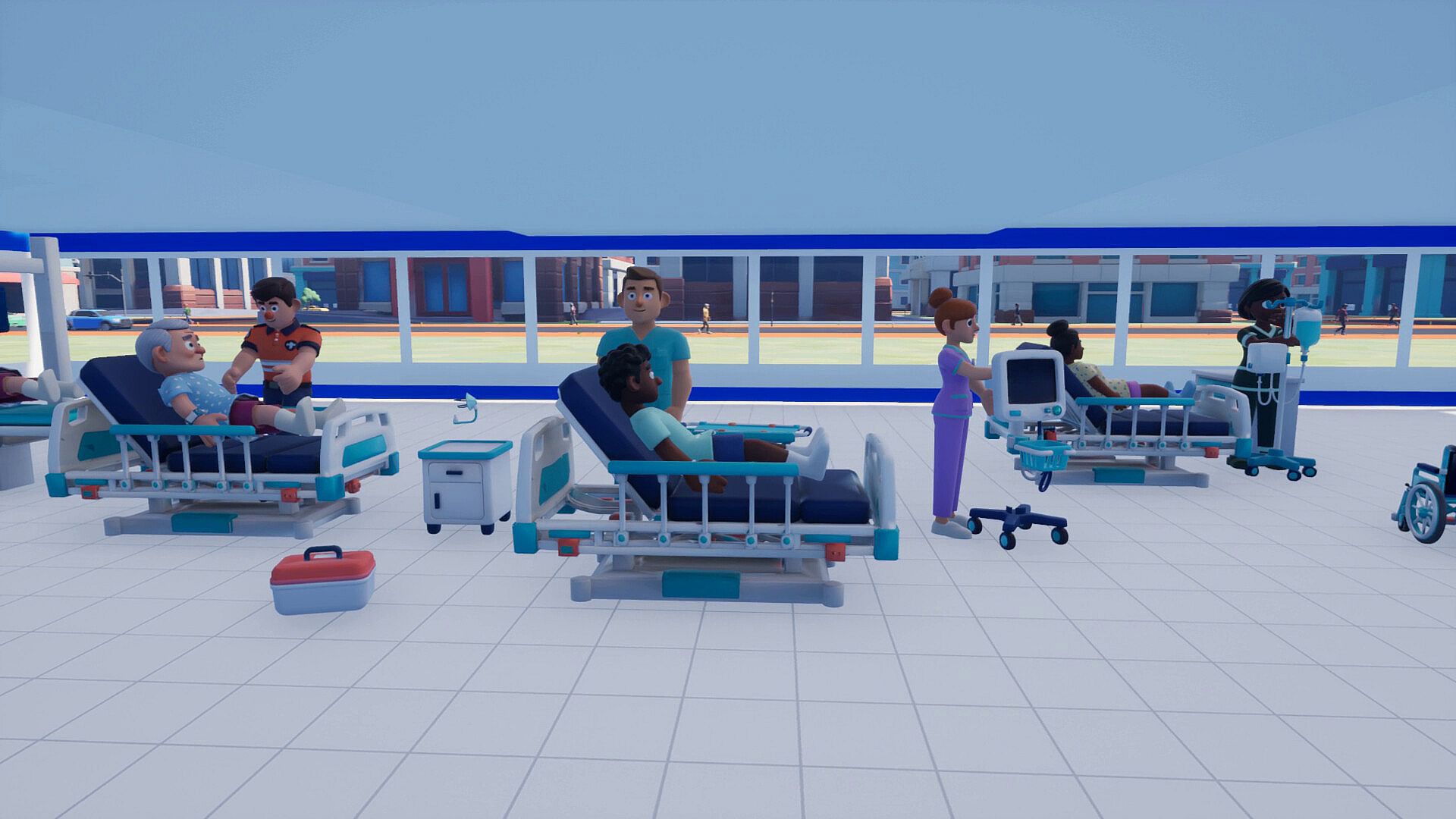
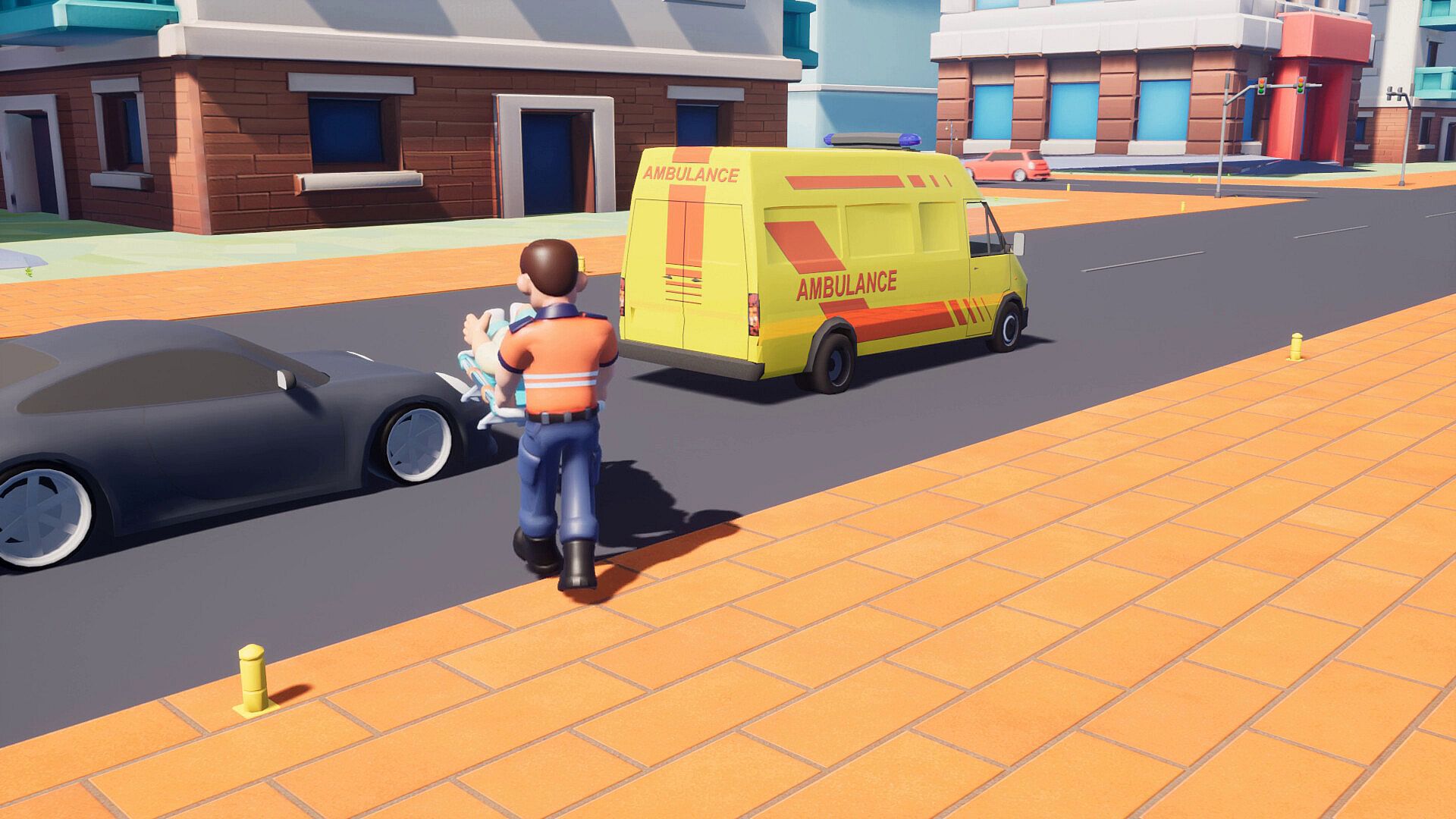
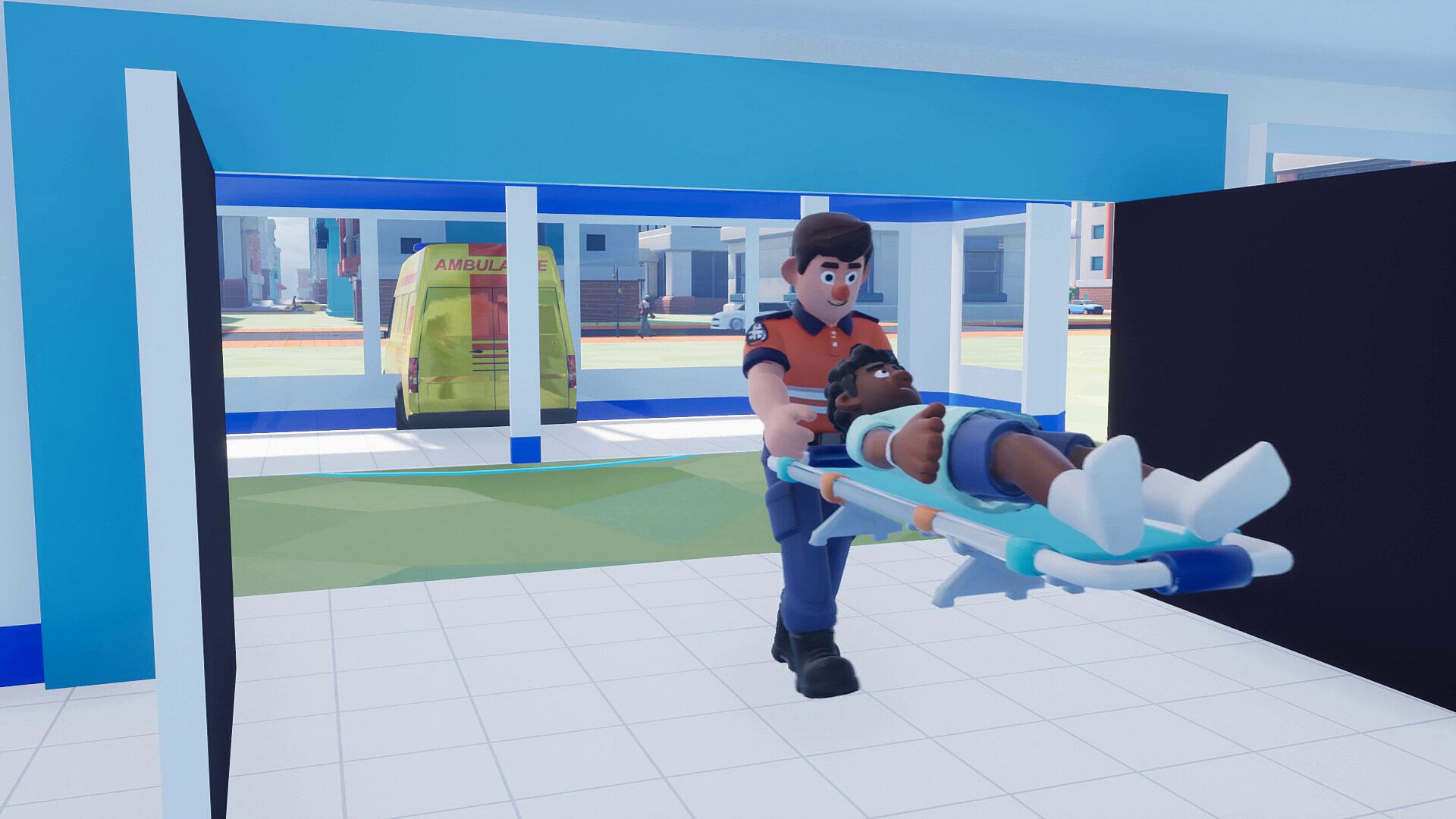
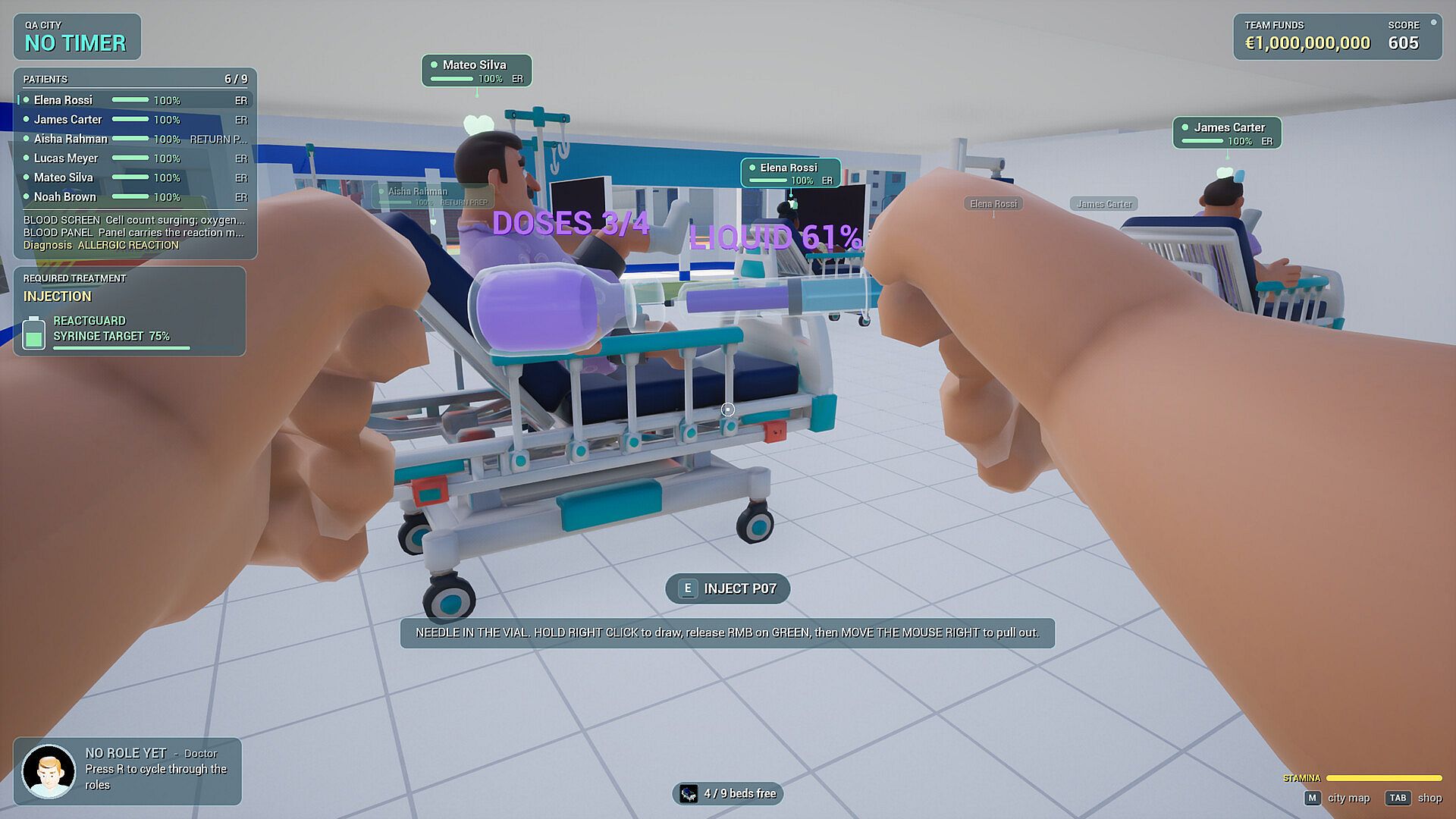
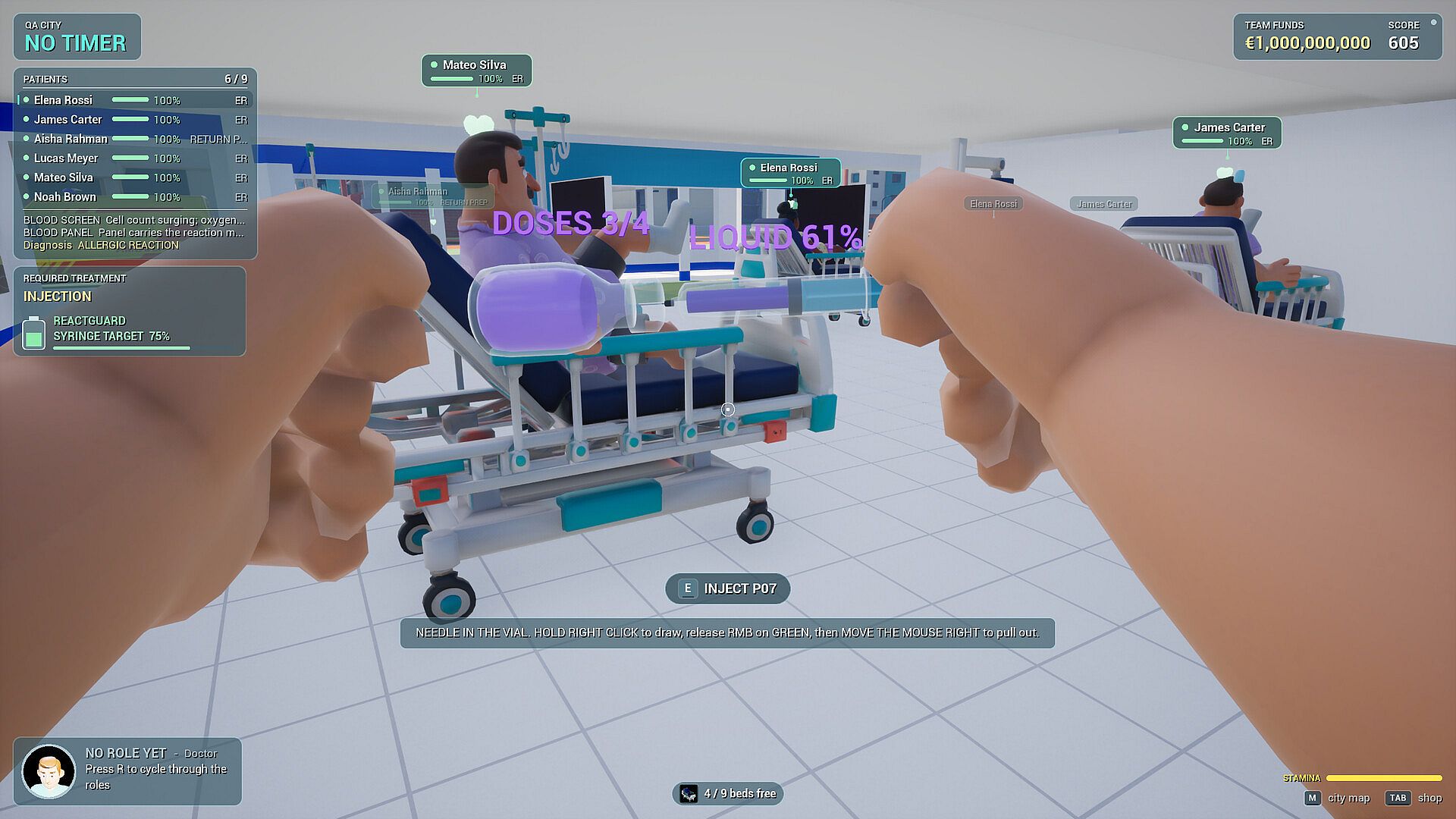
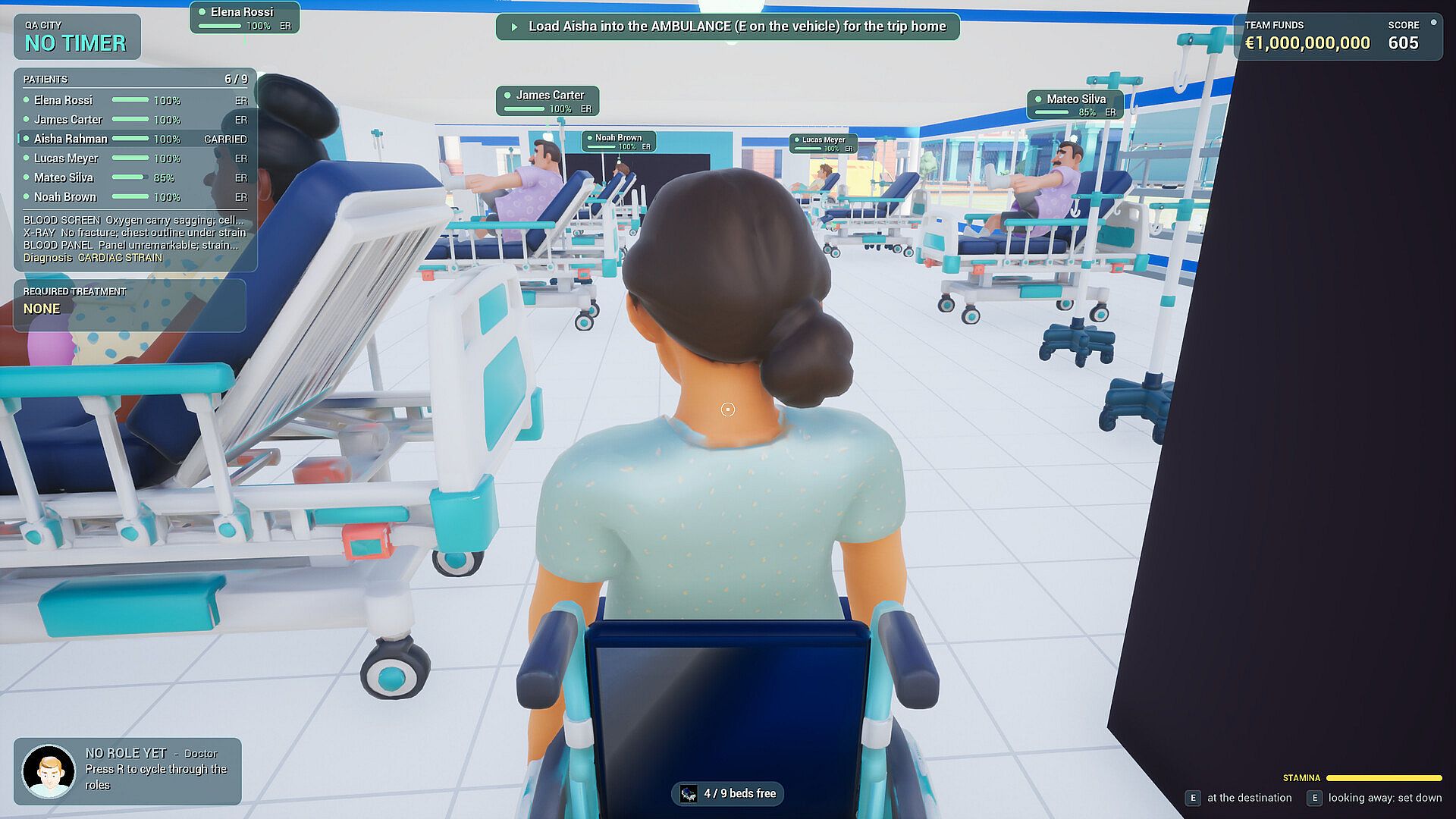





Hippocratic Chaos is a first-person casual simulation game built around cooperative hospital management and emergency response. Players work together in groups of two to eight to run a struggling medical facility, handling everything from incoming calls to patient transport and treatment while the building expands over time.
Gameplay
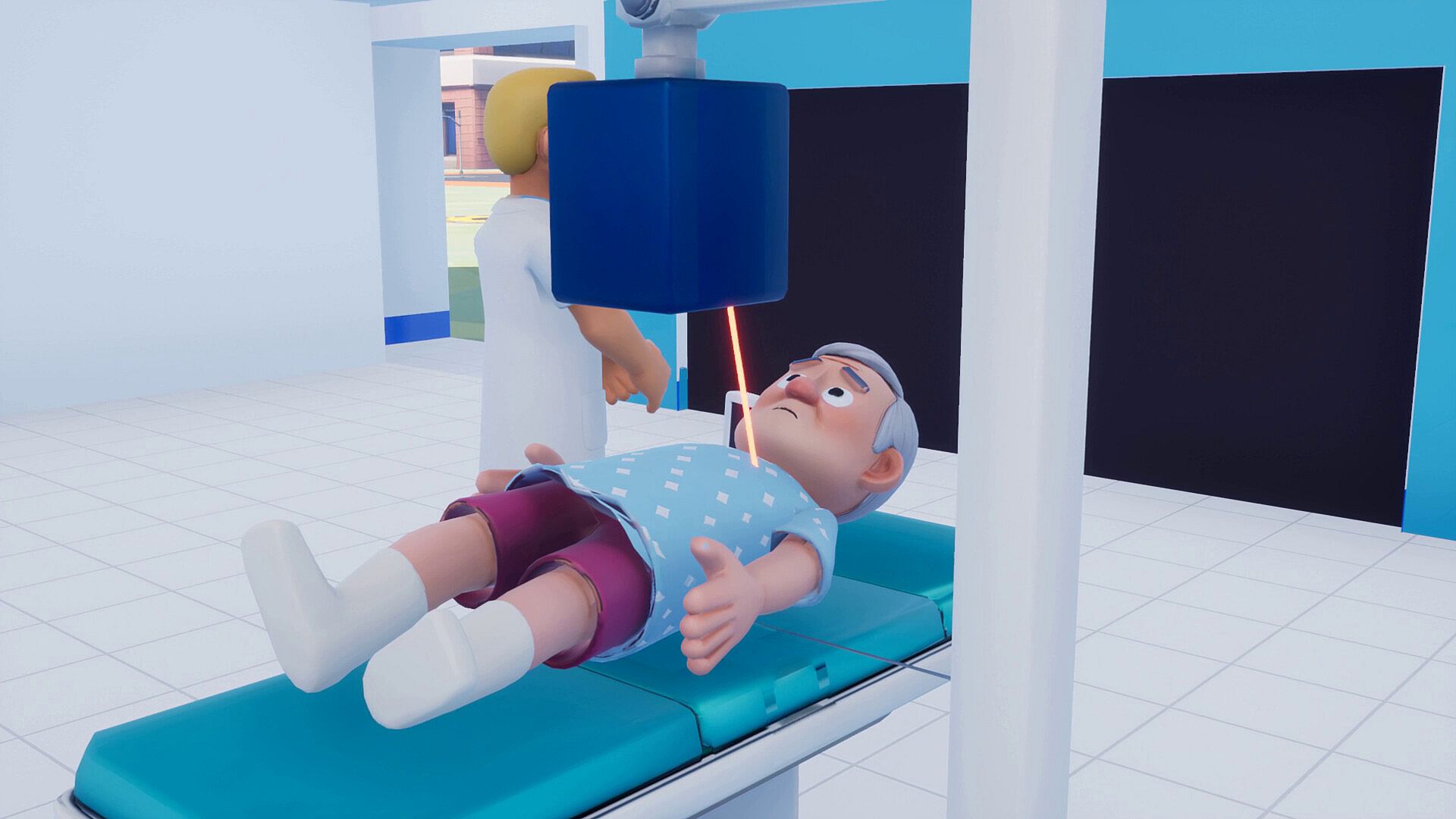
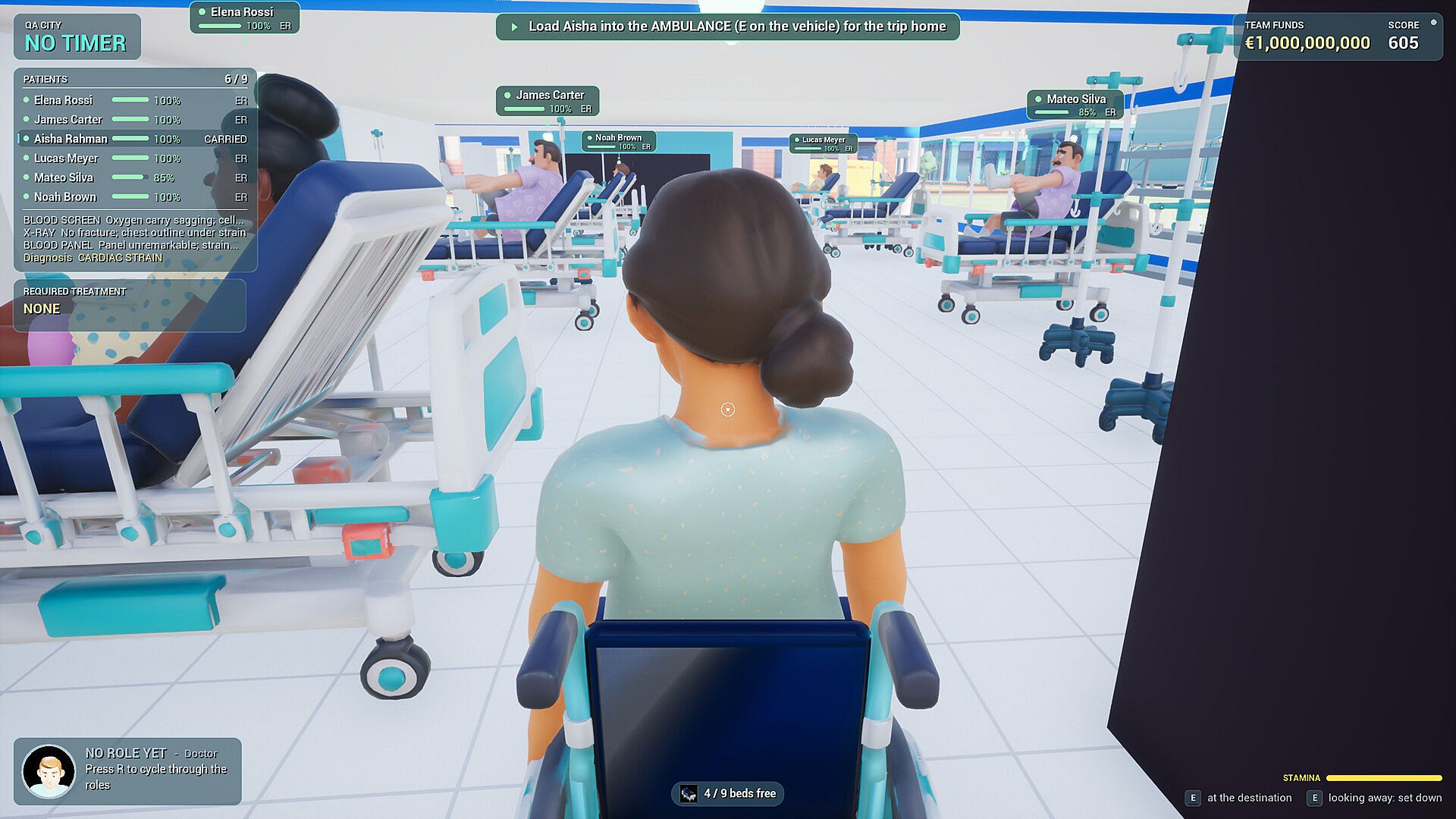
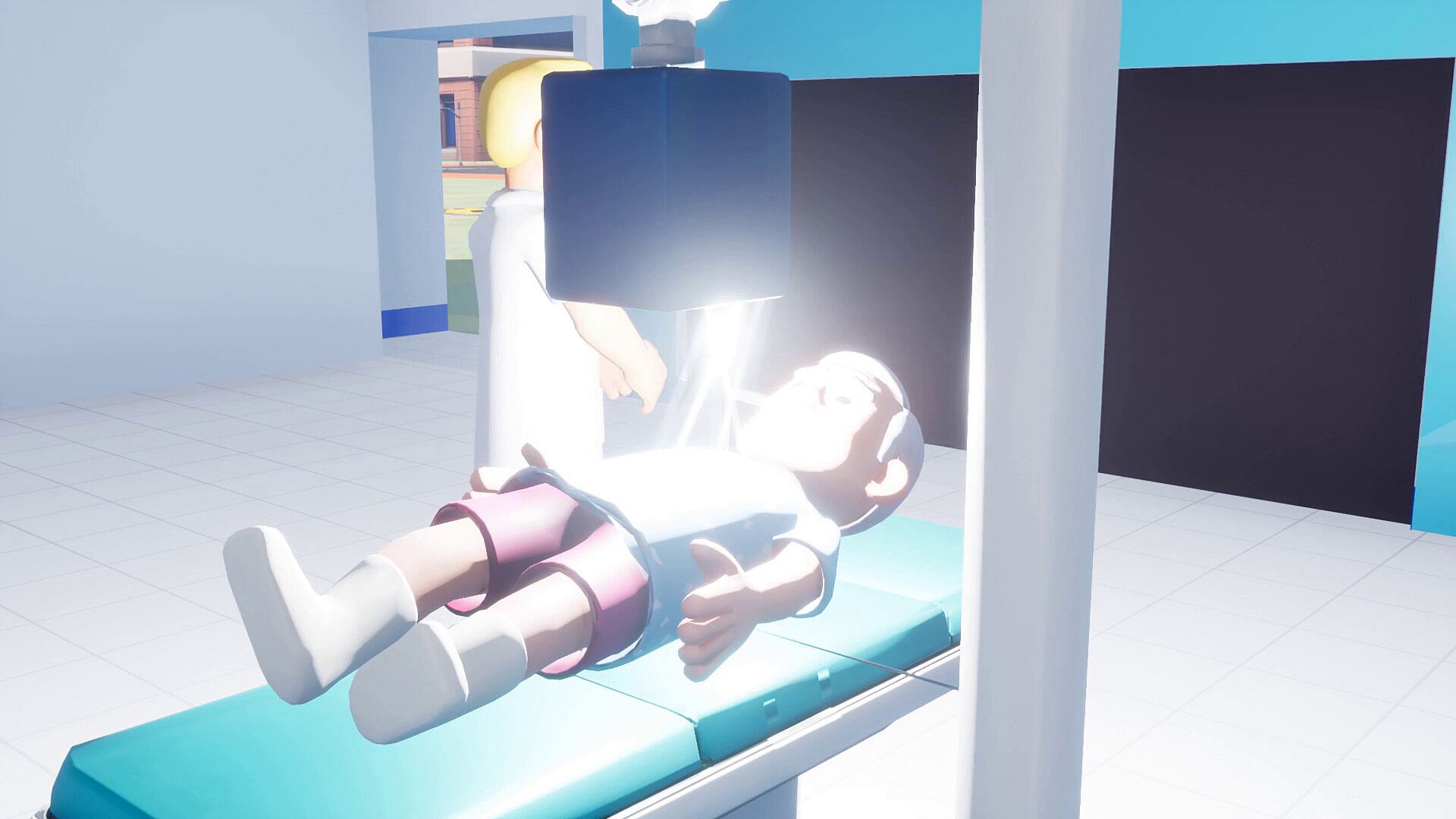
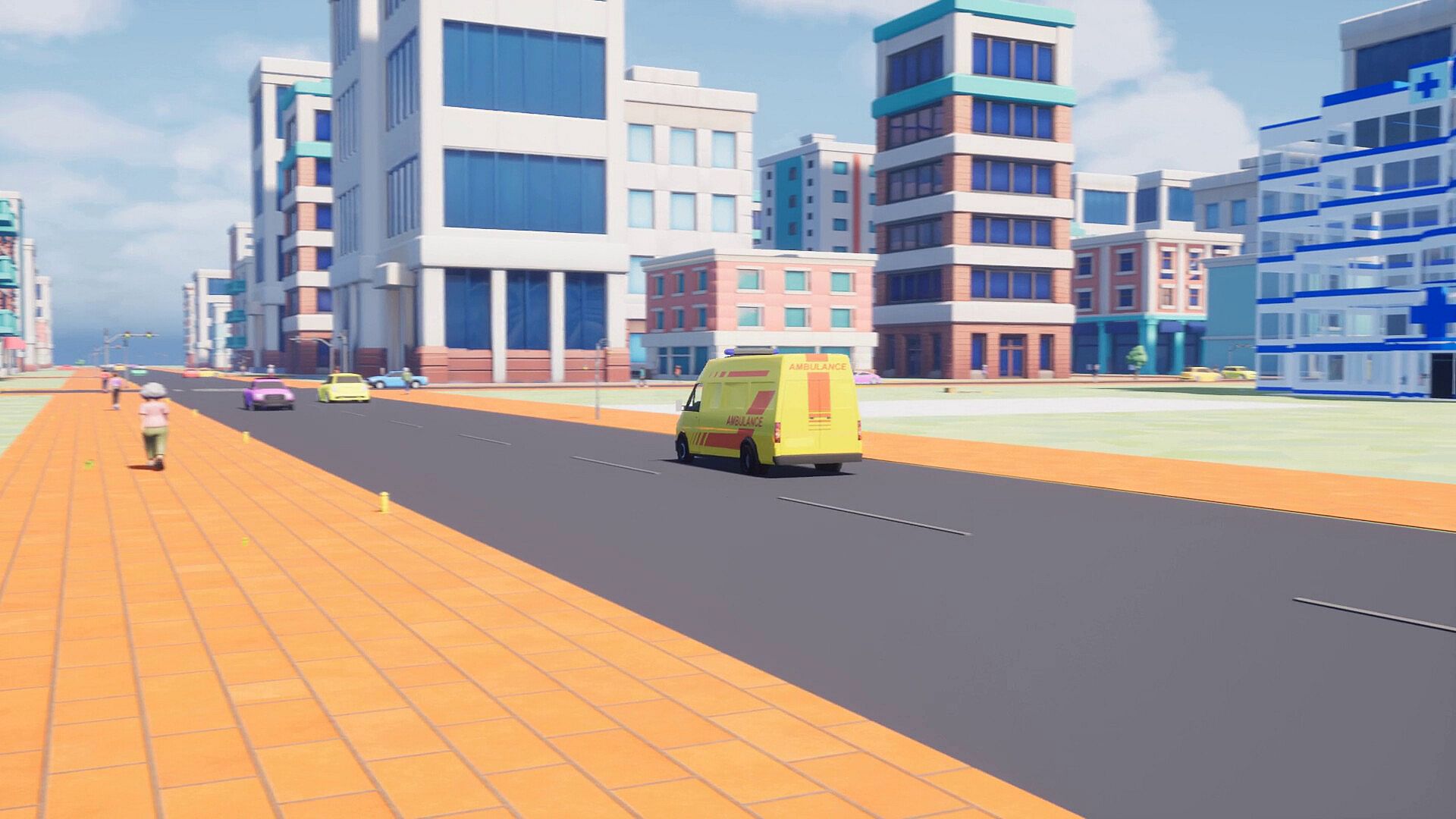
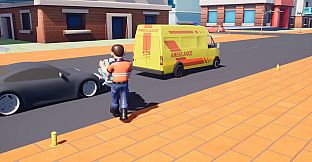
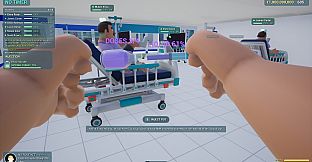
The core loop centers on responding to emergencies in real time. One or more players answer the constantly ringing phone to dispatch the ambulance, while others drive through the city streets to pick up patients and return them to the hospital. Once patients arrive, the team examines symptoms, runs tests with available equipment, selects treatments, and monitors recovery. Walk-in cases add extra pressure, and supplies can run low at any moment, forcing quick decisions about resource allocation.
Hospital construction forms the second major pillar. Starting from an empty structure, the group spends a shared budget on beds, diagnostic machines, and medical stock. Placement matters because space is limited and every new piece of equipment requires someone to operate or restock it. Between shifts the team reviews performance, replenishes items, and carries forward any remaining funds and unlocked improvements into the next day.
Role flexibility keeps every session dynamic. Although players can select specialties that provide small bonuses in areas such as dispatch, driving, nursing, diagnostics, or surgery, anyone can switch to any task at any time. Coordination becomes essential when one player needs equipment passed across the room or when multiple patients require simultaneous attention.
Game Modes
The game focuses on cooperative sessions where the entire group shares the same hospital and works toward common survival goals. There are no separate competitive or solo modes described; instead, the experience scales with player count as more hands help manage the growing workload. Sessions revolve around completing a series of shifts, with each shift presenting a fresh wave of calls and patient needs that must be cleared before the next one begins.
Progression ties directly to the shared hospital. Successful shifts unlock new equipment options and layout improvements that carry over, encouraging repeated play as the facility grows from a basic emergency room into a more capable department. The emphasis remains on teamwork under time pressure rather than on distinct named modes.
Building and Managing the Hospital
Expansion decisions create ongoing tension. Adding another bed increases capacity but leaves less money for medicine or diagnostic tools. Players must balance immediate patient flow against long-term efficiency, often while an ambulance is still en route with the next case. Cleaning stations and supply management also fall to the team, preventing the facility from becoming unusable mid-shift.
Equipment placement affects workflow. Diagnostic machines need clear access, beds require proximity to treatment areas, and storage for supplies must remain reachable during busy periods. Poor layout choices slow down care and can lead to missed opportunities or patient deterioration.
Is It Worth Playing?
Hippocratic Chaos suits players who enjoy cooperative simulation experiences that blend driving, resource management, and light medical procedures. The early-access state means the game continues to receive updates, and the core loop of answering emergencies, transporting patients, and expanding the facility already delivers repeatable sessions for groups that like working together under pressure. Those seeking a polished single-player experience or highly competitive play will find less to engage with at this stage. The title rewards coordination and quick thinking more than individual skill, making it a solid choice for regular multiplayer groups interested in hospital-themed simulation.











