


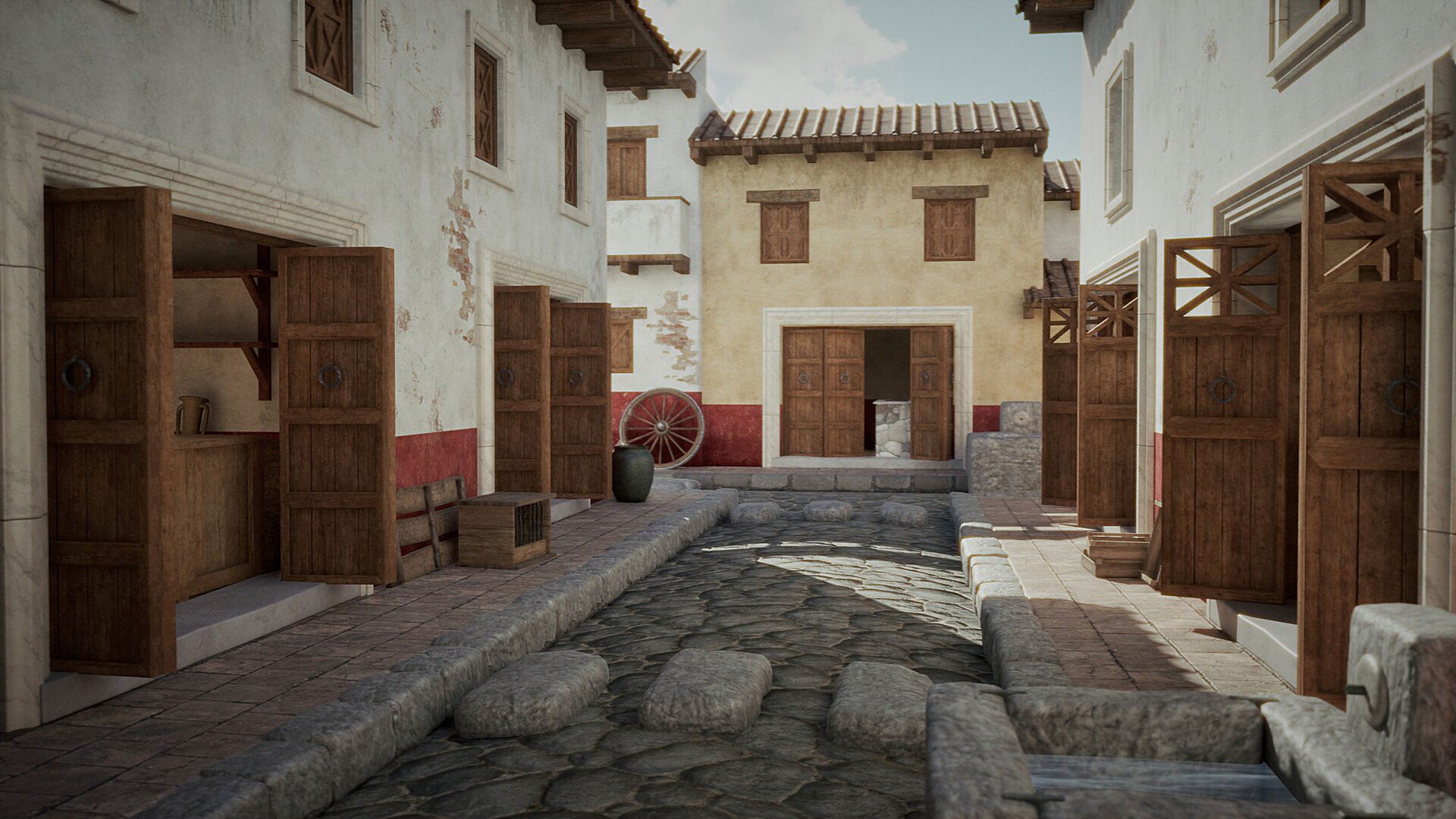
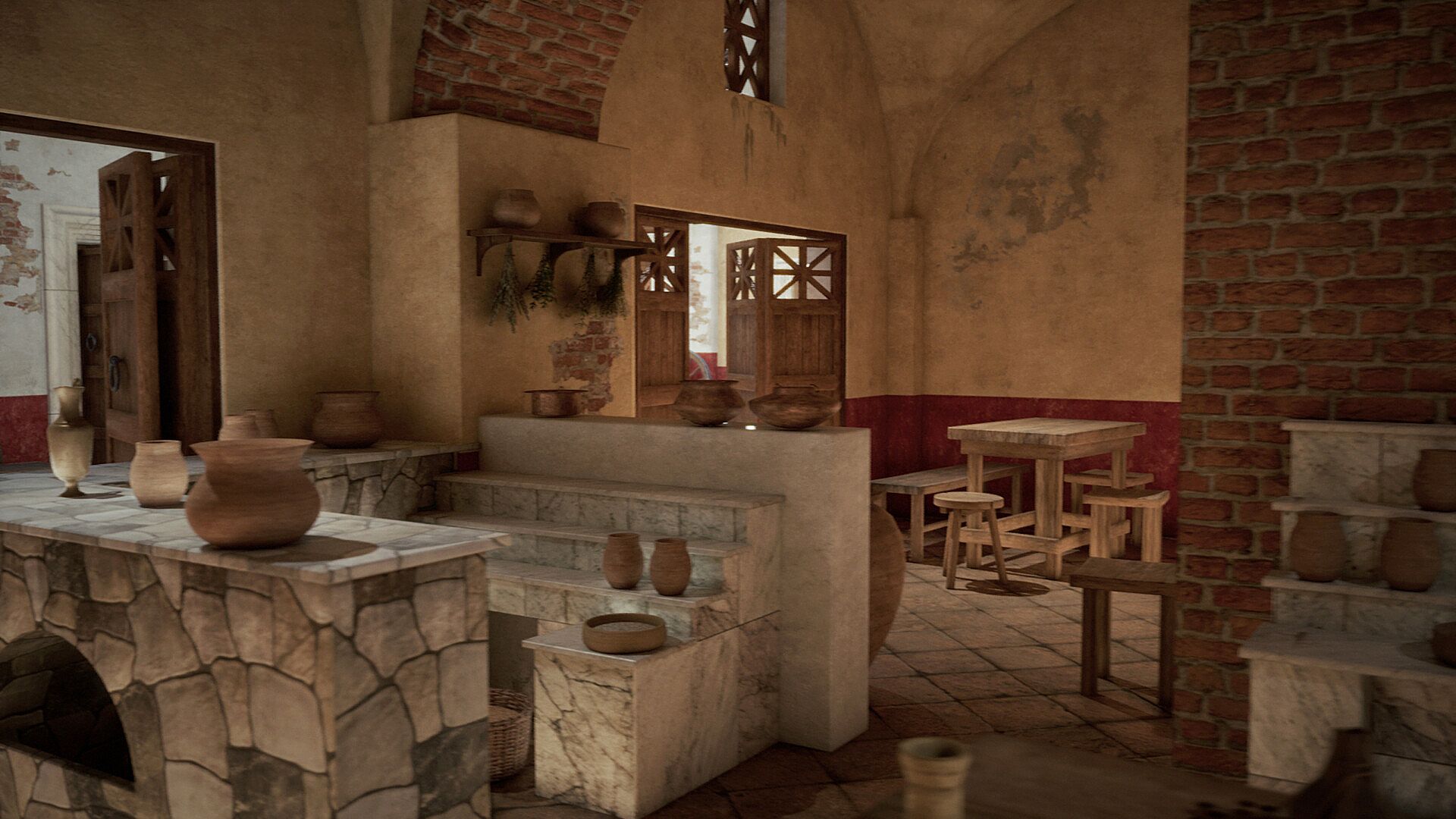
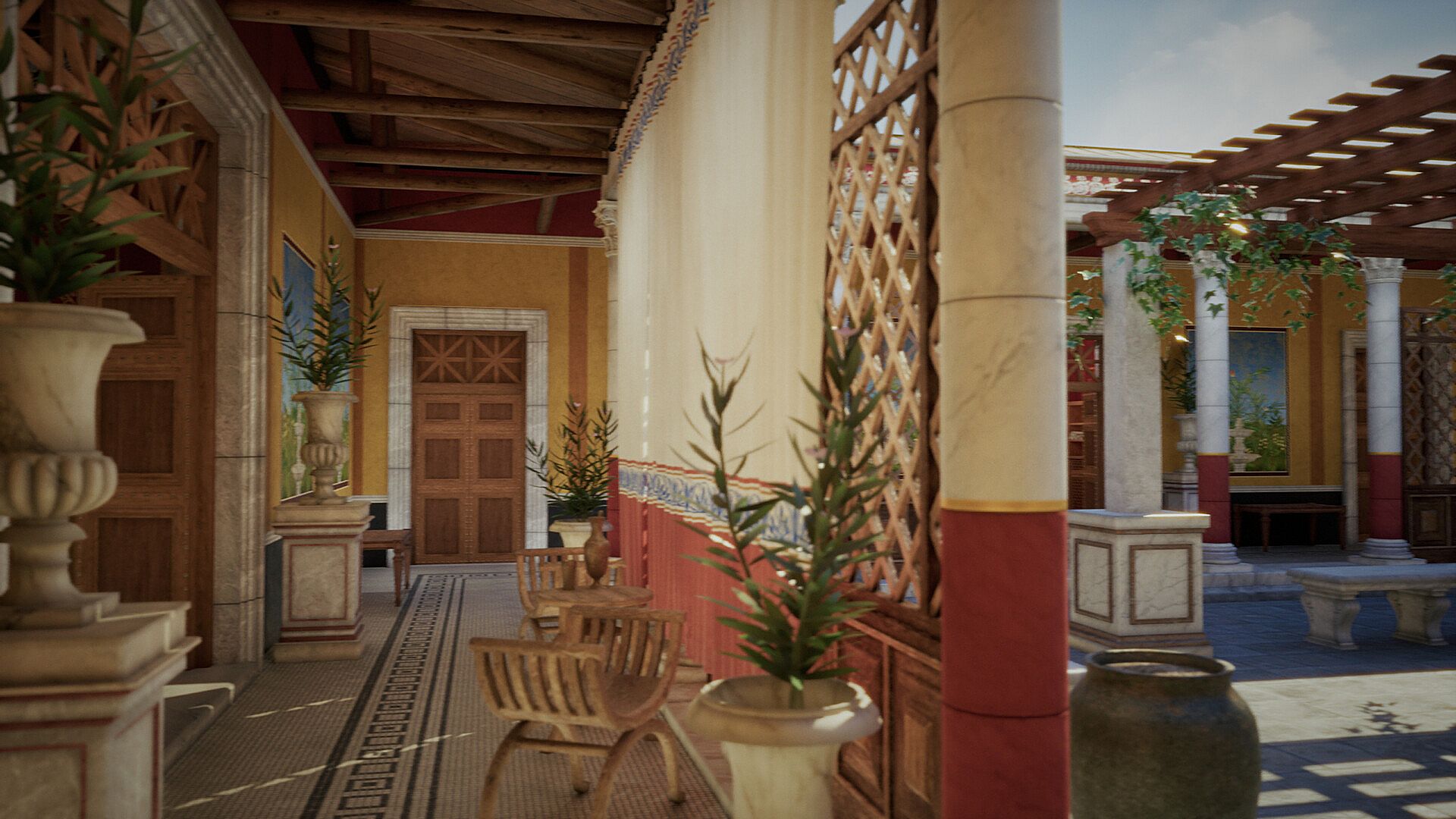
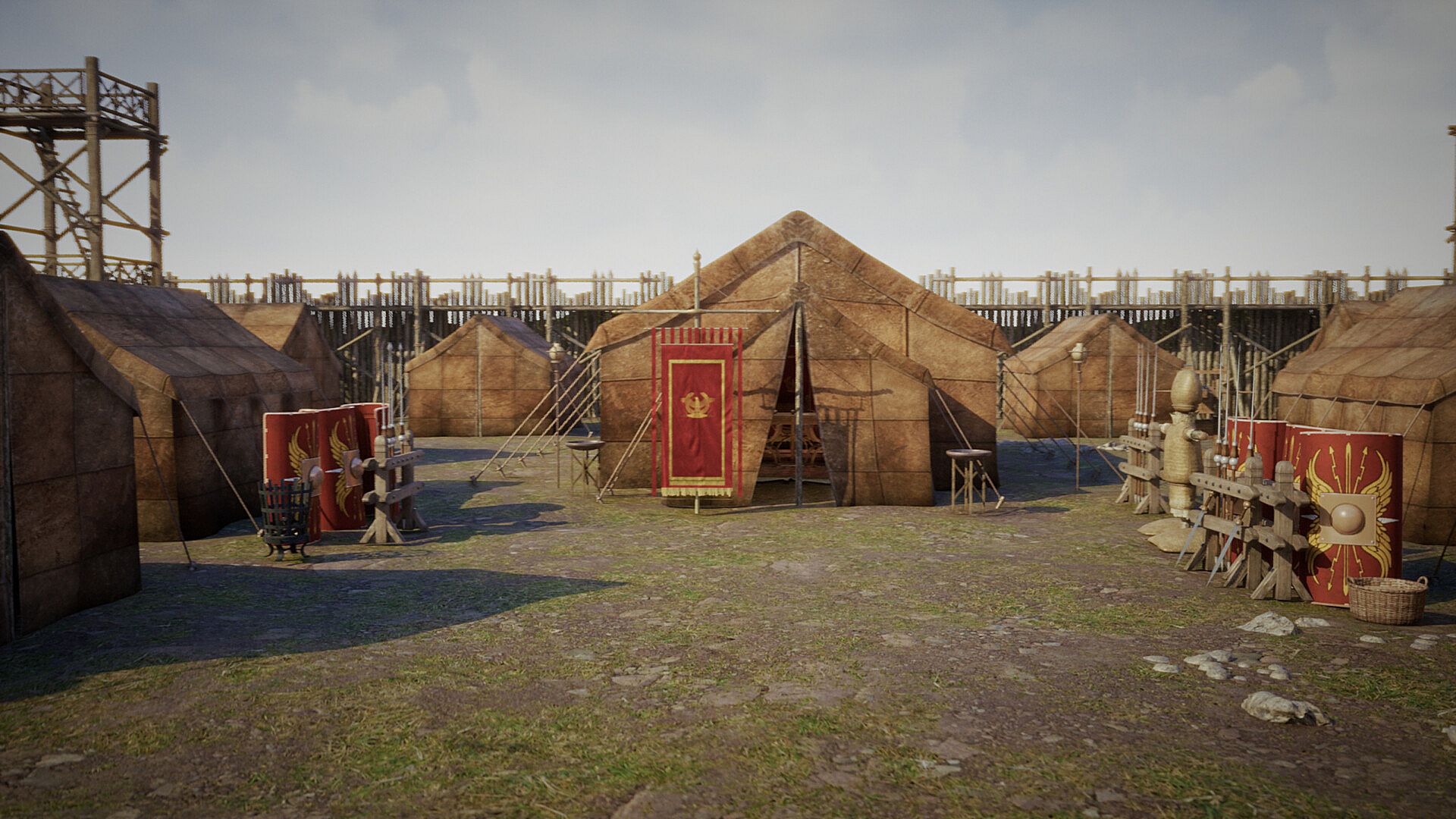
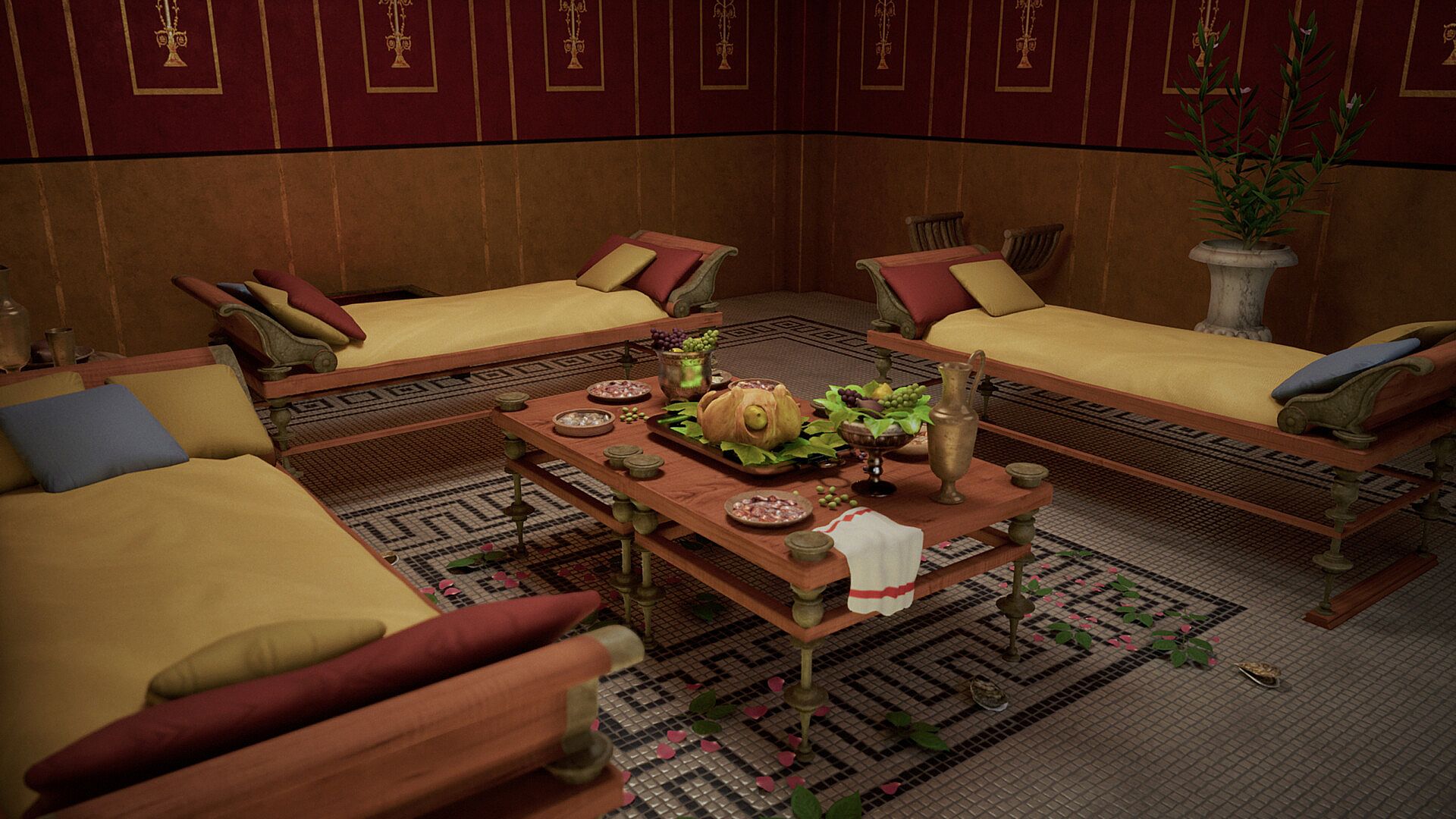
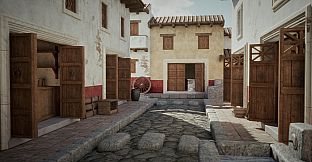
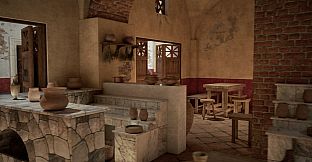
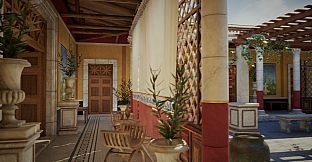
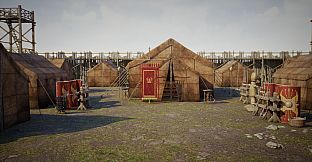
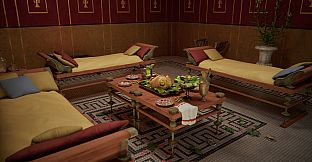
History Experience: Rome is a single-player VR simulation that recreates spaces from ancient Rome with a focus on architectural detail and everyday environments. Developed as an indie casual title for PC, it emphasizes faithful representations of locations such as a Roman domus and a castrum, rendered through next-generation graphics to highlight classical structures and martial settings.
Gameplay
The core loop centers on movement through these recreated environments, where users examine architectural features and spatial layouts at close range. Next-generation visuals support the recreation of interiors and exteriors, allowing observation of elements like temple designs or tabernae setups. The simulation prioritizes realism in scale and atmosphere, presenting daily life contexts without additional mechanics such as combat or resource management.
Audio narration integrates directly with progression through the spaces, providing context on historical functions and social roles. This approach suits extended sessions of focused viewing, where the emphasis remains on visual and auditory exploration rather than interactive systems or objectives beyond navigation.
Game Modes
Tour Mode follows a structured route through representative areas. Audio guides activate along the path to explain the history, purpose, and daily operations of specific sites, such as temples or commercial spaces. The route supports an educational flow that builds understanding of Roman society through sequential visits.
Free Mode removes route restrictions entirely. Users navigate independently across the environments, pausing at any point to inspect details or revisit sections. This setup accommodates varied pacing, from brief overviews to prolonged examination of individual features like structural elements or atmospheric lighting.
Educational Value
The simulation serves as a tool for historical learning by combining accurate spatial recreations with narrated explanations of social and functional aspects. It covers elements of Roman daily routines and civic life through direct environmental interaction, making abstract historical concepts tangible in a virtual setting.
Accessibility from any location supports repeated use for study or reference, with the two modes allowing adaptation to different learning preferences. The focus on representative spaces provides a grounded view of one of history's influential civilizations without requiring physical travel.
VR Experience
Built exclusively for VR headsets compatible with SteamVR and OpenXR, the title requires motion-tracked controllers for navigation. System requirements include a capable Windows PC with sufficient graphics processing to maintain visual fidelity in the detailed environments.
The experience highlights immersion through scale and atmosphere, where users can appreciate the layout of domestic and military structures in three dimensions. Language support includes full audio and subtitles in English and Spanish, broadening access for different audiences.
Is It Worth Playing?
This title appeals to users seeking a focused historical simulation centered on exploration and learning. The combination of detailed recreations and guided narration offers value for educational purposes or personal interest in ancient Rome, particularly for those comfortable with VR interfaces.
With no user reviews available prior to release, reception will depend on how well the environments and audio delivery meet expectations for realism and engagement. It suits single-player sessions aimed at cultural or instructional experiences rather than competitive or narrative-driven gameplay.