

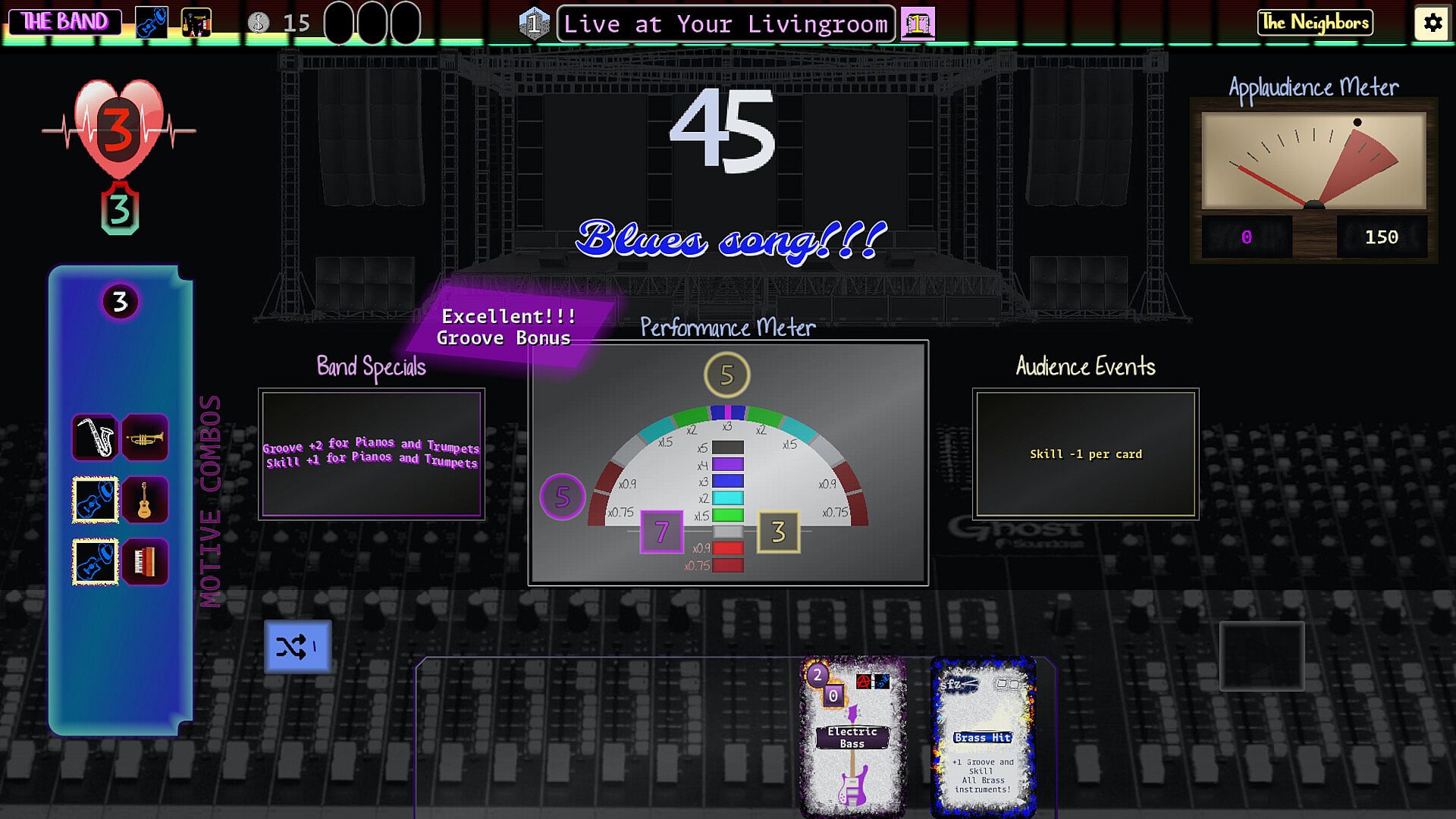
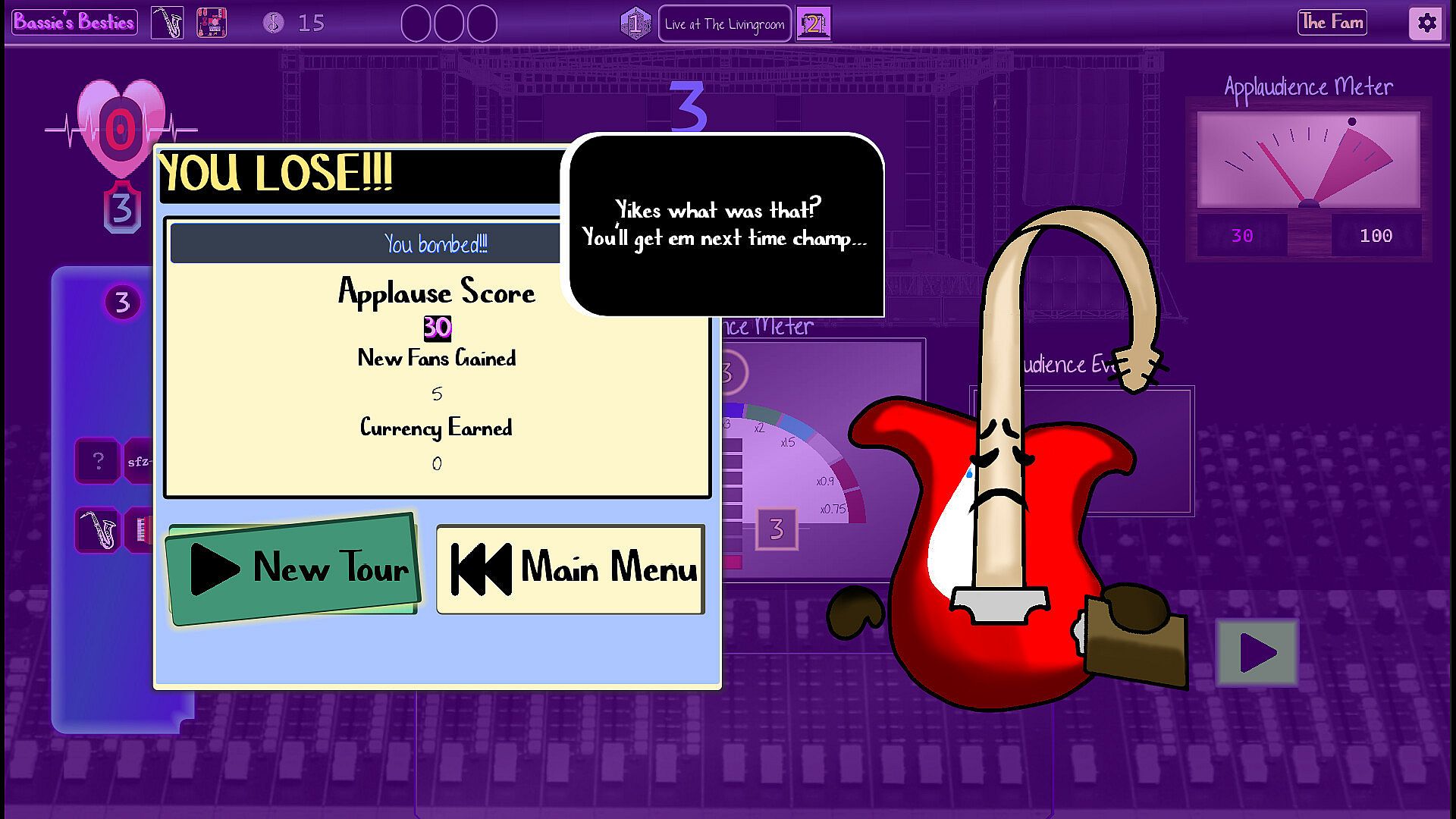
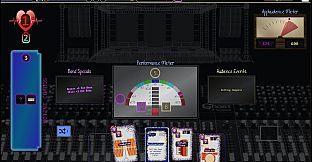
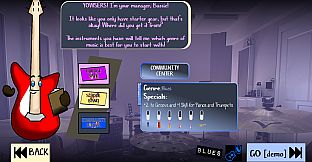
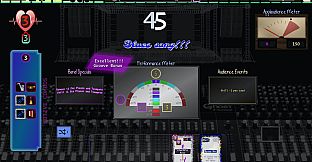
Improve the Groove is a single-player roguelike deckbuilder for PC in which players act as sound designers for a garage band. Cards represent instruments that shape the band's playstyle and genre. The goal is to build appeal with varied audiences across a series of gigs while managing resources and making strategic choices that carry over between runs.
Gameplay
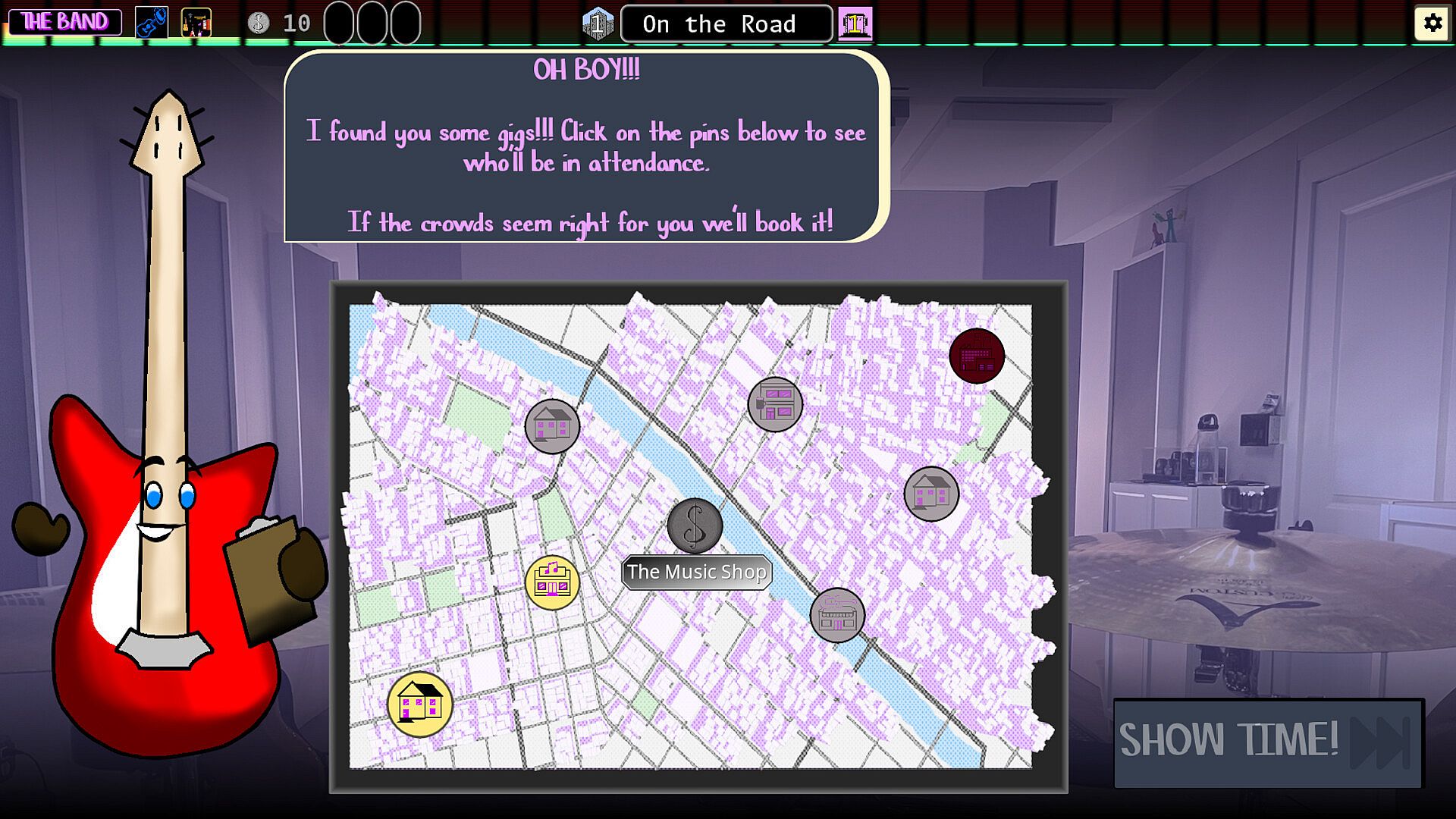
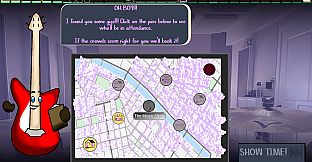
The core loop centers on preparing for performances by selecting and upgrading instruments along with their dynamics. Each choice influences how the band performs and what genre it leans toward. Players navigate a map of venues and festivals, selecting routes that lead to progressively tougher crowds. Success depends on matching the music to audience preferences through careful card play.
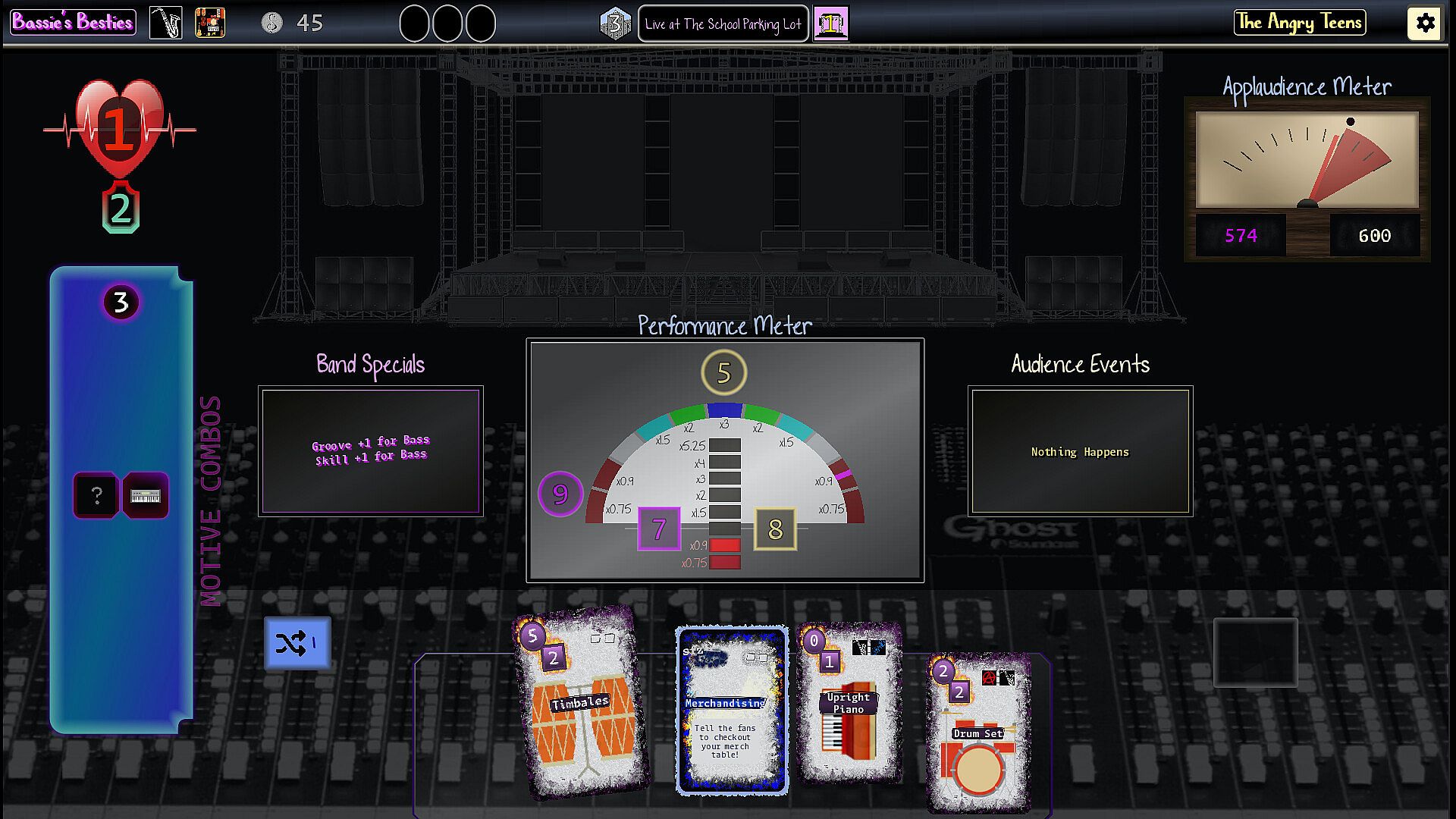
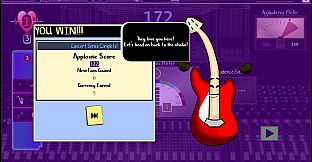
During shows, combinations of instruments create bonuses that stack for greater fan gains. Different audiences respond uniquely, so observation of their reactions guides decisions on which elements to emphasize. The roguelike structure means each attempt starts fresh with new opportunities to refine the deck, though progress unlocks permanent improvements to available options.
Resource management plays a key role as players balance instrument additions against the need for stronger effects. Genre selection adds another layer, altering how certain cards interact and what bonuses become available. The system rewards experimentation with combos that turn individual instruments into powerful sequences capable of winning over larger crowds.
Game Modes
The experience revolves around a series of performances structured as runs. Players choose paths through available venues and festivals, each presenting distinct audience challenges. There are no separate named modes beyond this core progression of gigs that increase in demand.
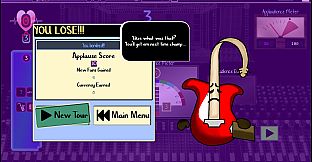
Every performance functions as a self-contained encounter where deck composition determines outcomes. The roguelike nature ensures variety across attempts, with instrument upgrades and genre choices carrying implications for future shows. Path selection on the map introduces replayability as different routes expose players to new audience types and reward structures.
Key Mechanics
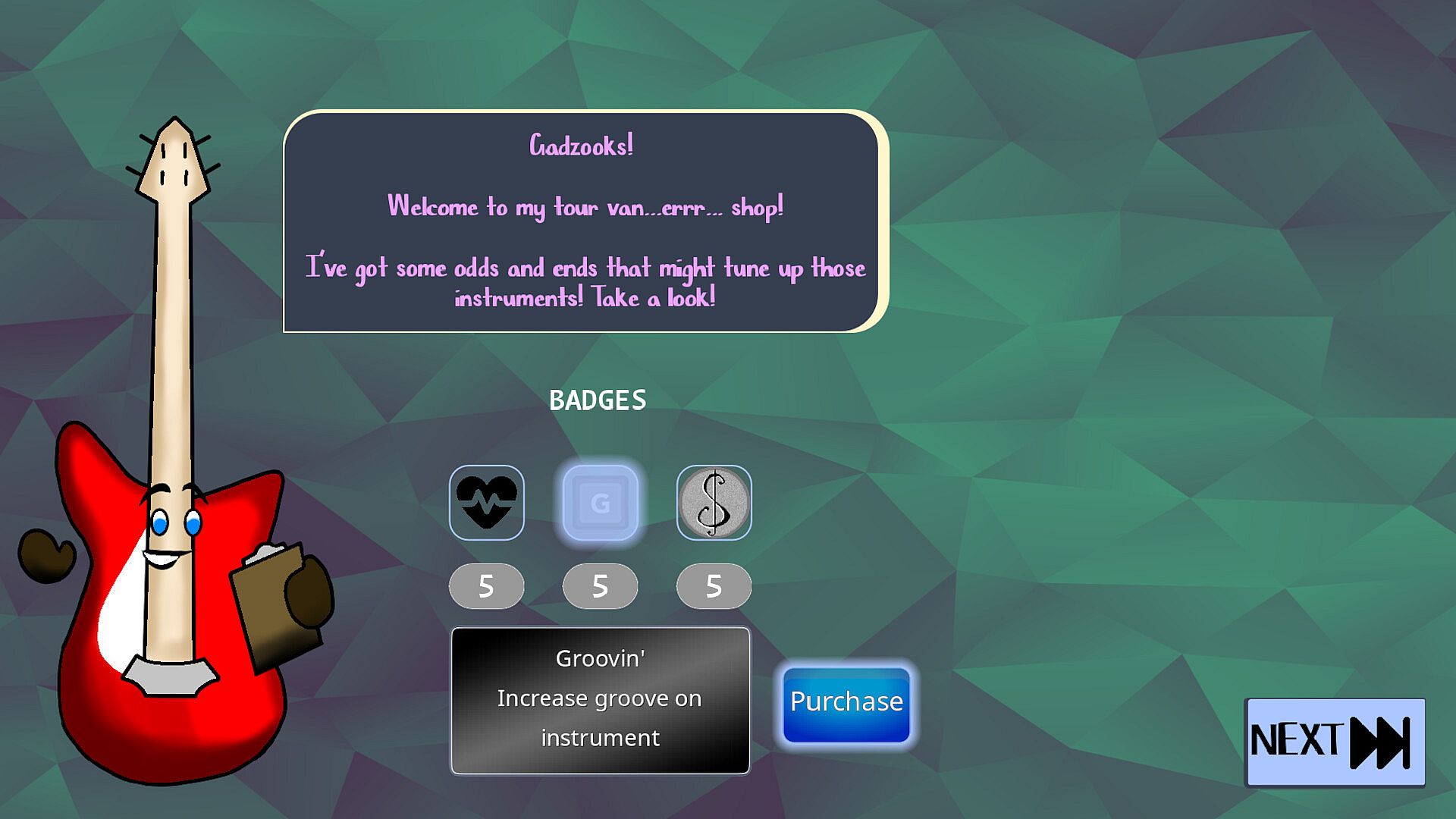
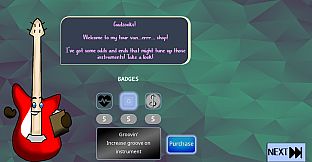
Instrument cards form the foundation of strategy. Adding new cards or improving existing ones changes the band's capabilities and genre identity. Dynamics adjustments further refine these effects, allowing fine-tuning of how each performance unfolds.
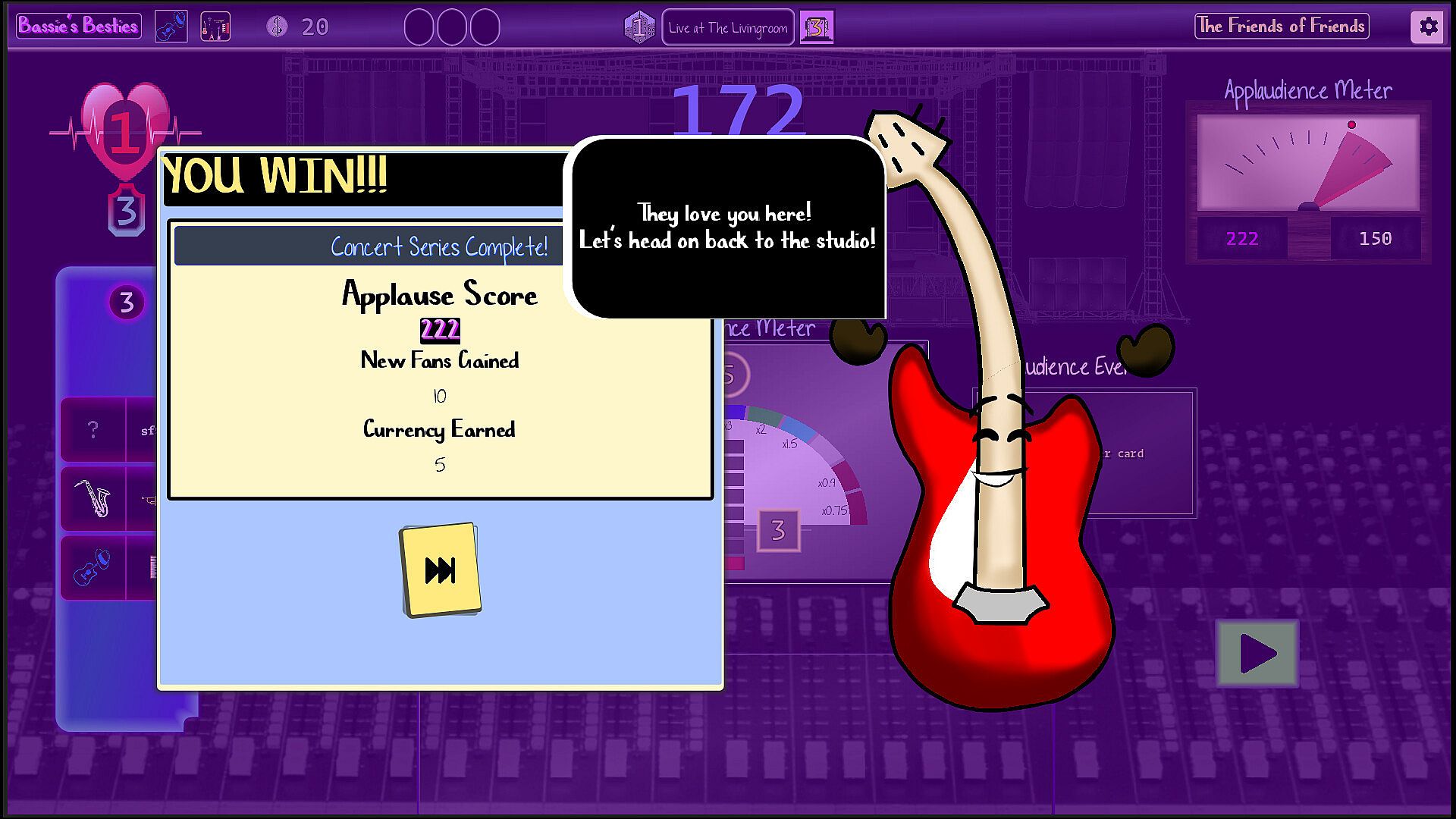
Combo building and bonus stacking provide the main tools for success. Players watch audience feedback in real time to adjust play, aiming to maximize fan acquisition from each show. The manager character sets expectations by booking tougher gigs as the band gains traction, pushing the need for stronger decks over time.
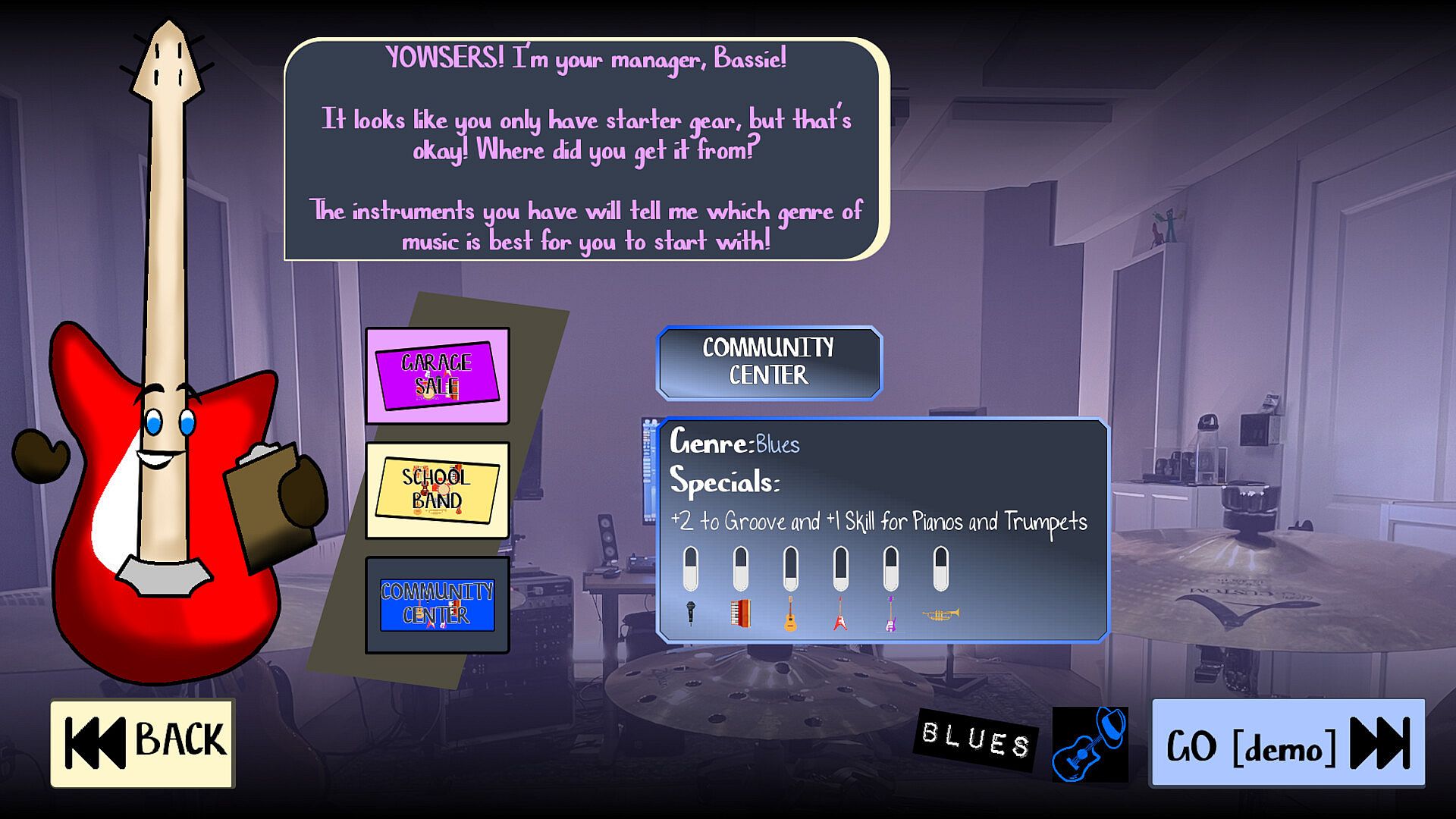
Genre choice acts as a modifier that influences card synergies. Selecting one genre over another can unlock specific bonuses or alter how instruments contribute to overall appeal. This layer encourages adaptation based on the path taken through the venue map.
Is It Worth Playing?
Improve the Groove remains unreleased with a date to be announced and currently shows no user reviews. Its appeal lies in the roguelike deckbuilding format combined with a music-themed twist focused on instrument selection and audience matching. Fans of single-player roguelikes that emphasize strategic card play and run variety may find the concept engaging once available.
The game targets players who enjoy building and refining systems over multiple attempts rather than linear progression. Availability on PC through Steam means it will reach that audience directly upon launch. Without completed runs or community feedback available yet, any recommendation stays tied to interest in the described mechanics of genre definition and performance optimization.
Those drawn to indie titles with creative themes around music and strategy should monitor its development. The single-player focus keeps the experience self-contained, centered on personal deck evolution and gig progression. Early interest stems from the unique framing of sound design as the central gameplay pillar.