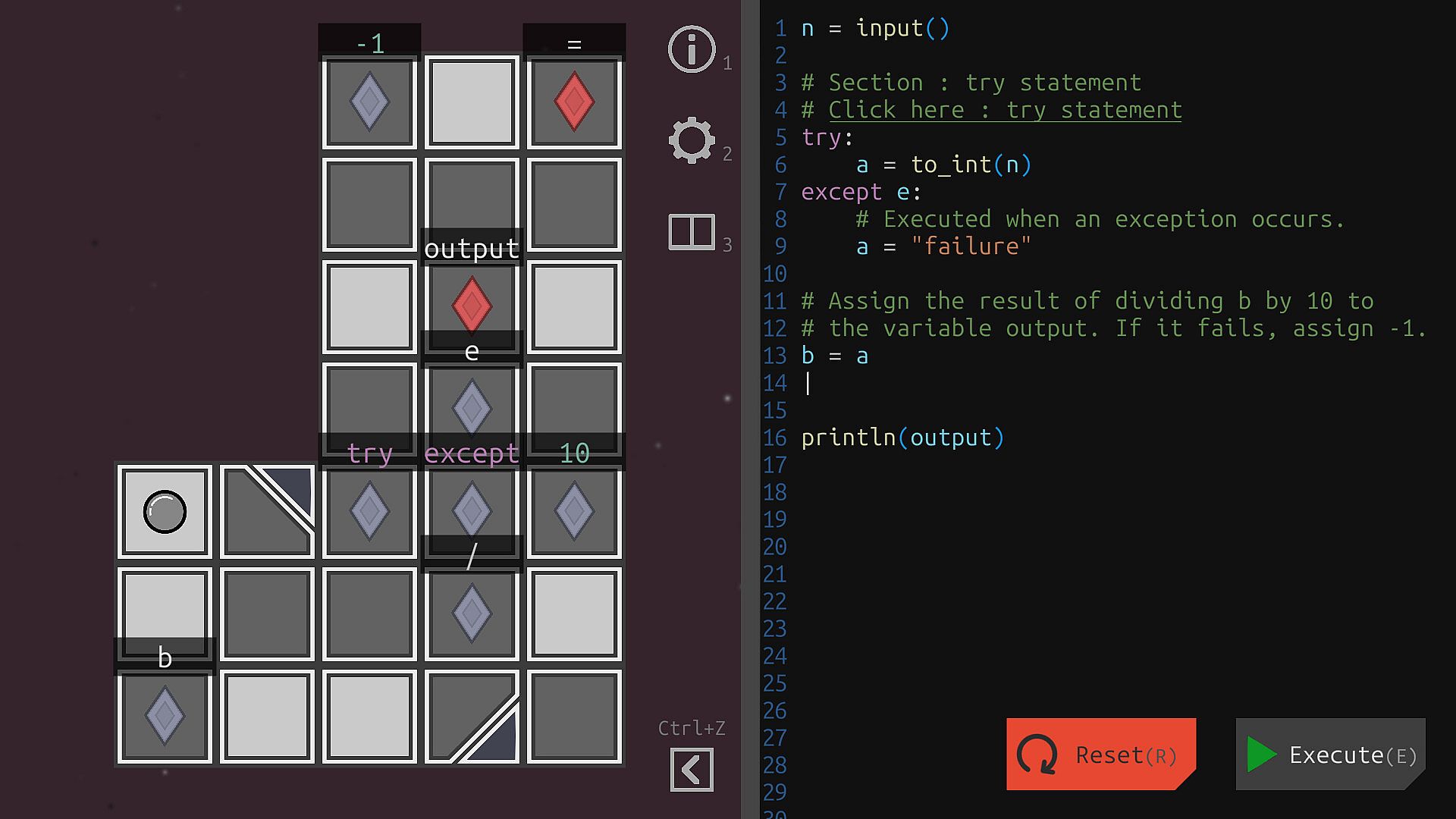
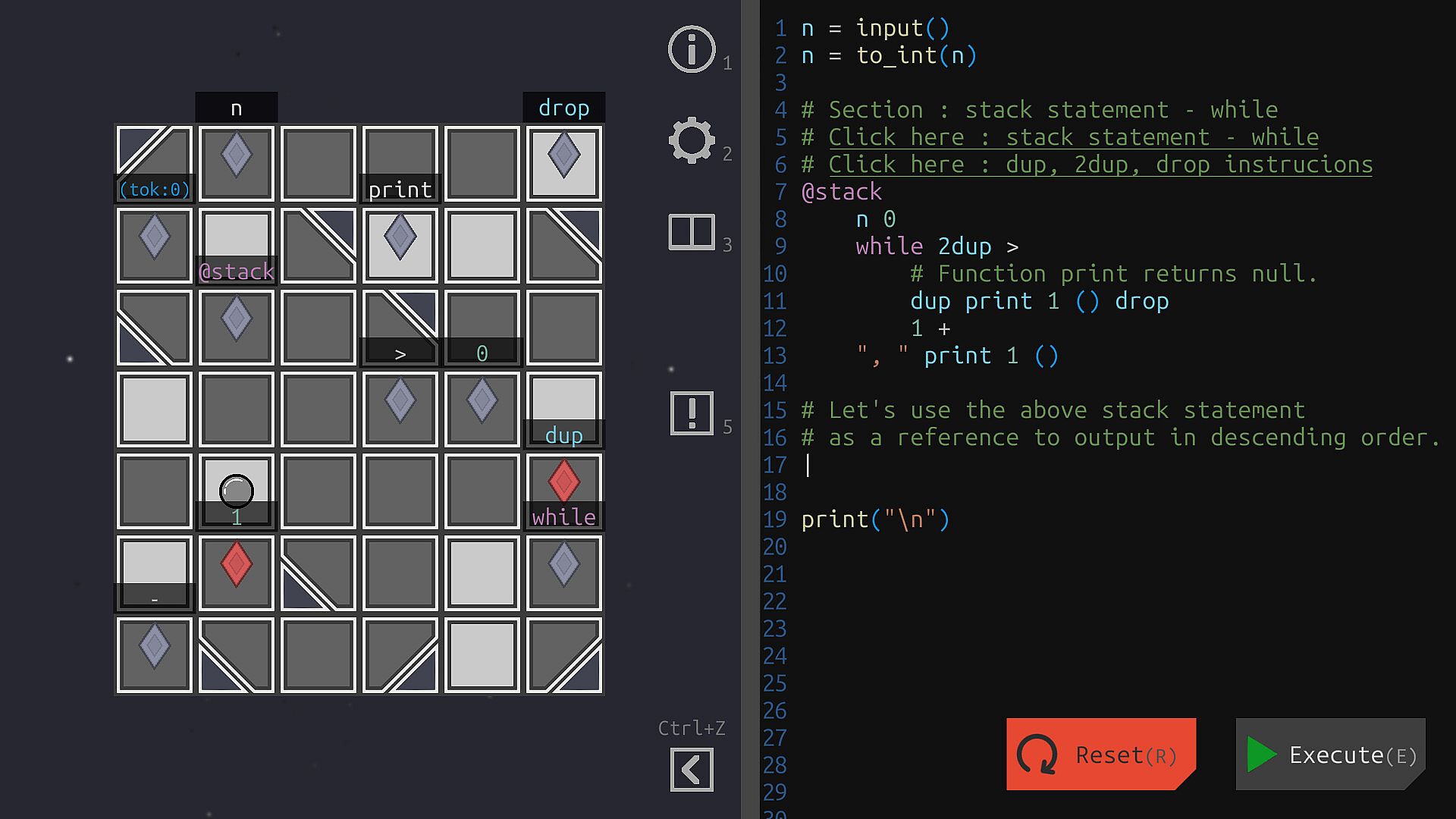
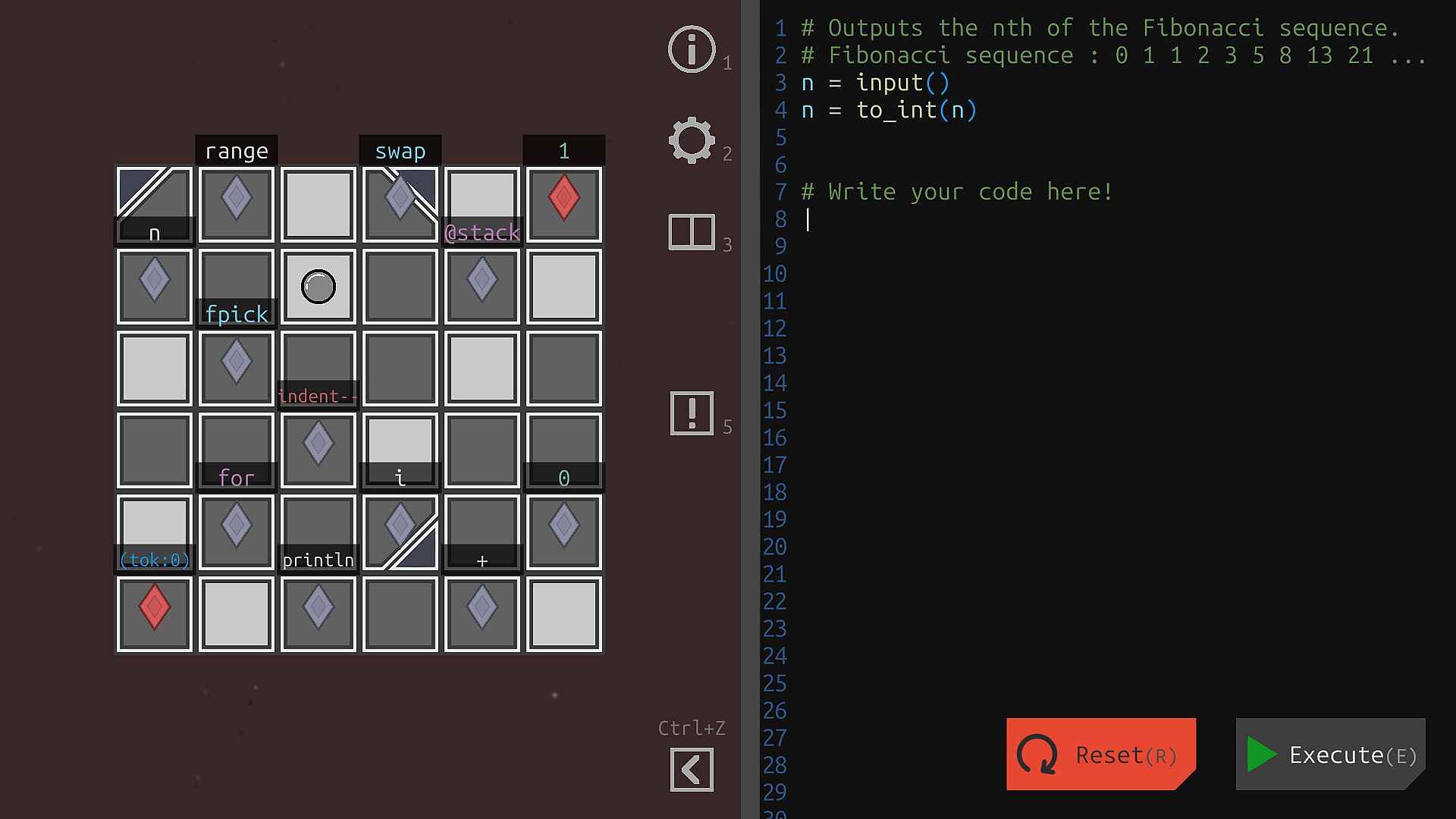
Récupérez des données effacées en programmant sous contraintes strictes dans cette simulation indie casual. Vous dirigez le joueur pour collecter des tokens et assembler un code source correspondant aux paires entrée-sortie imposées, comme multiplier les entrées par 10 pour obtenir des résultats précis. Chaque niveau restreint l'ordre et l'usage des tokens, incitant à des combinaisons ingénieuses de structures de contrôle.
Le langage Tolerance anime l'action avec une syntaxe inspirée de Python pour les variables, ifs et whiles, complétée par une instruction stack distinctive qui inverse l'ordre des opérandes - comme placer les nombres avant les opérateurs et affectations. Des références en jeu enseignent rapidement cette langue custom. Les programmeurs fans de puzzles mettront leurs compétences à l'épreuve face à ces restrictions sur PC.
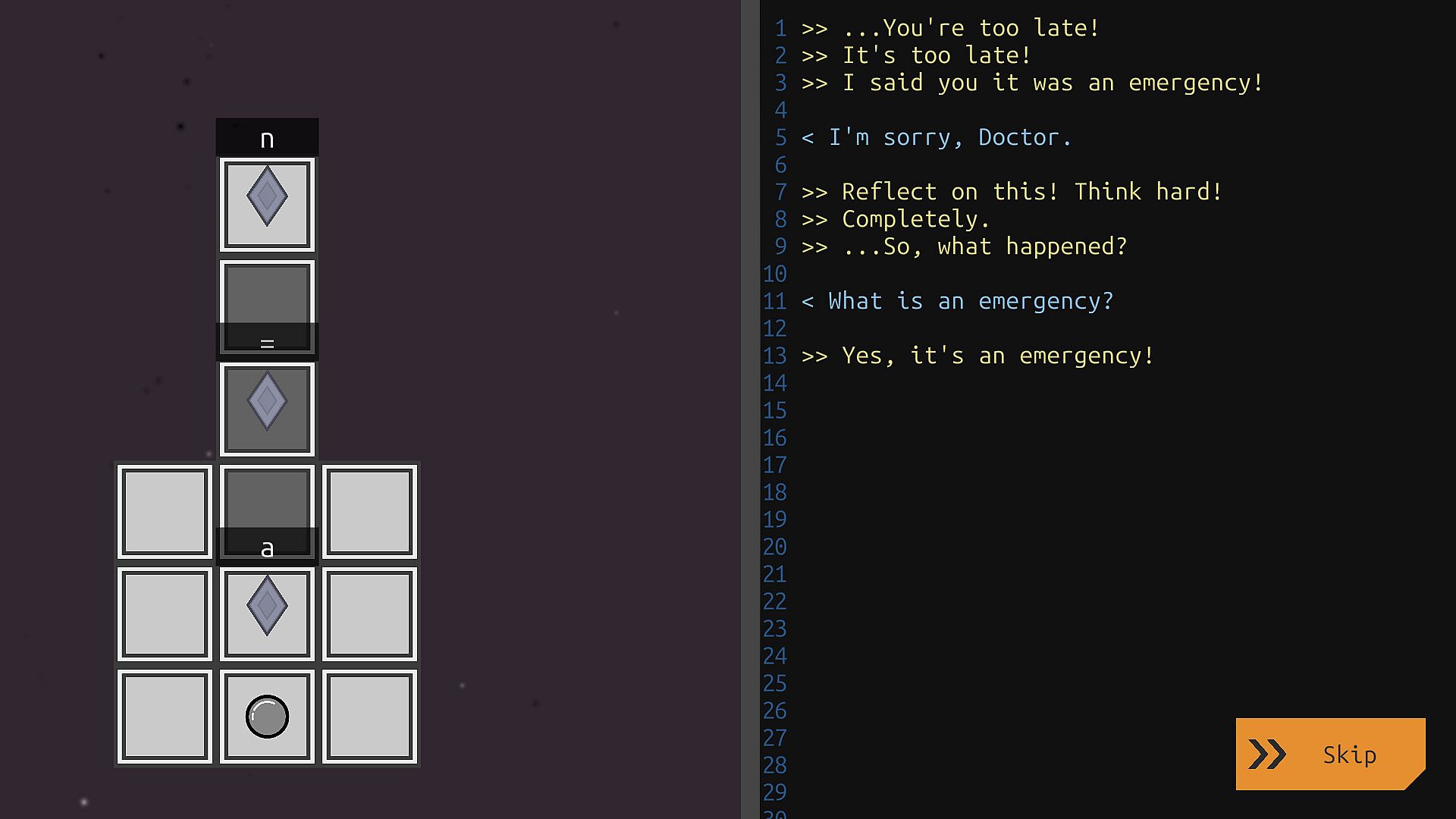
One day, your doctor intentionally deletes data from our project. You, an assistant who follows the incompetent doctor, are instructed by him to try to recover the deleted data.
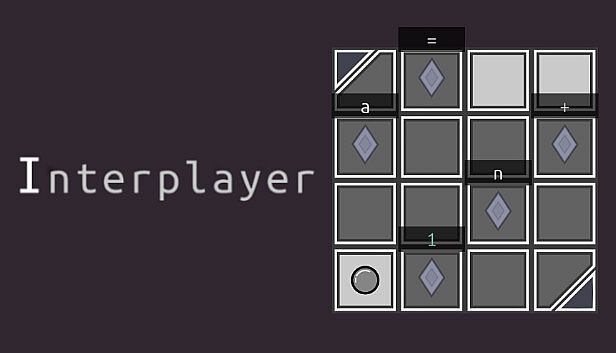
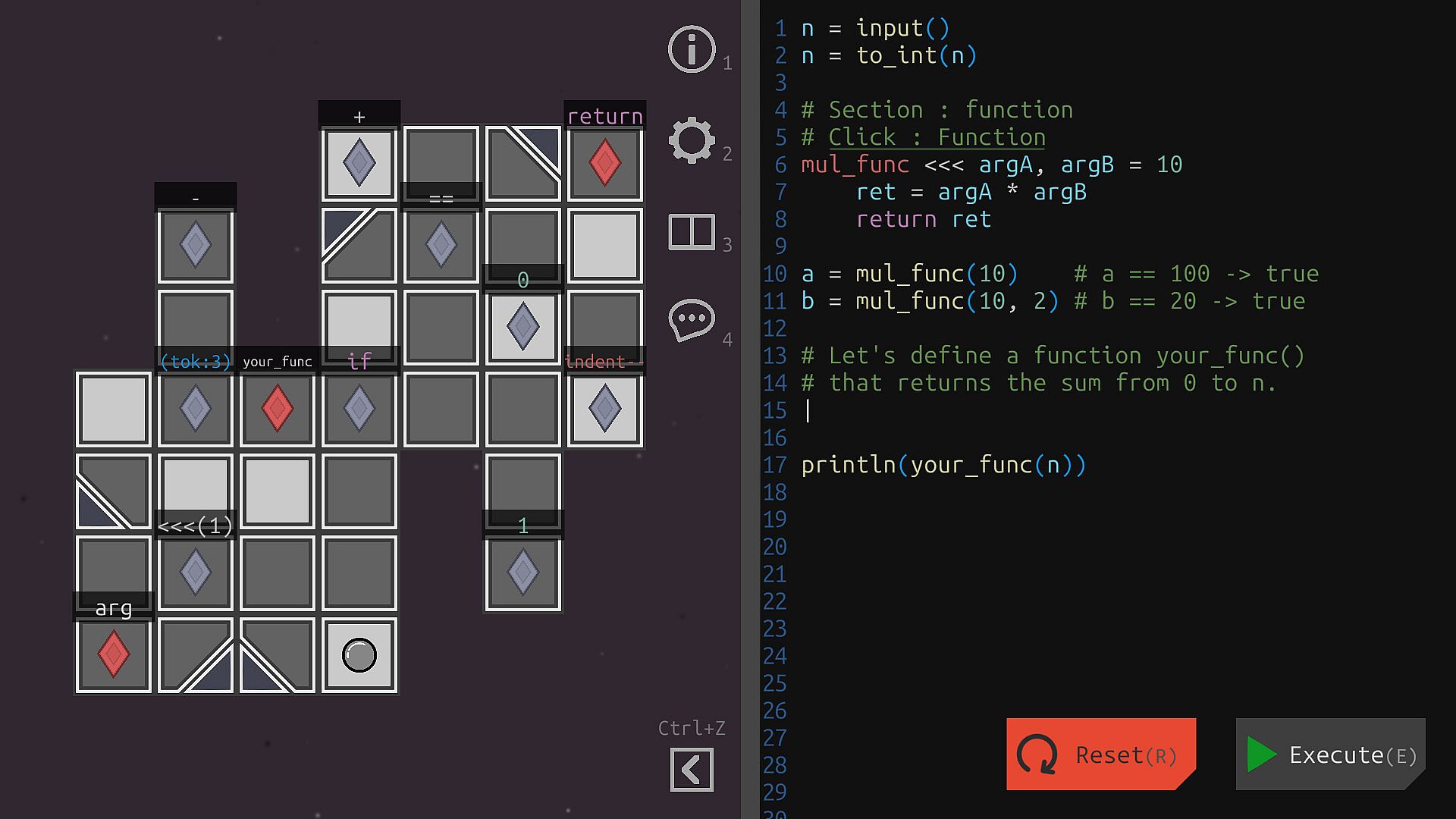
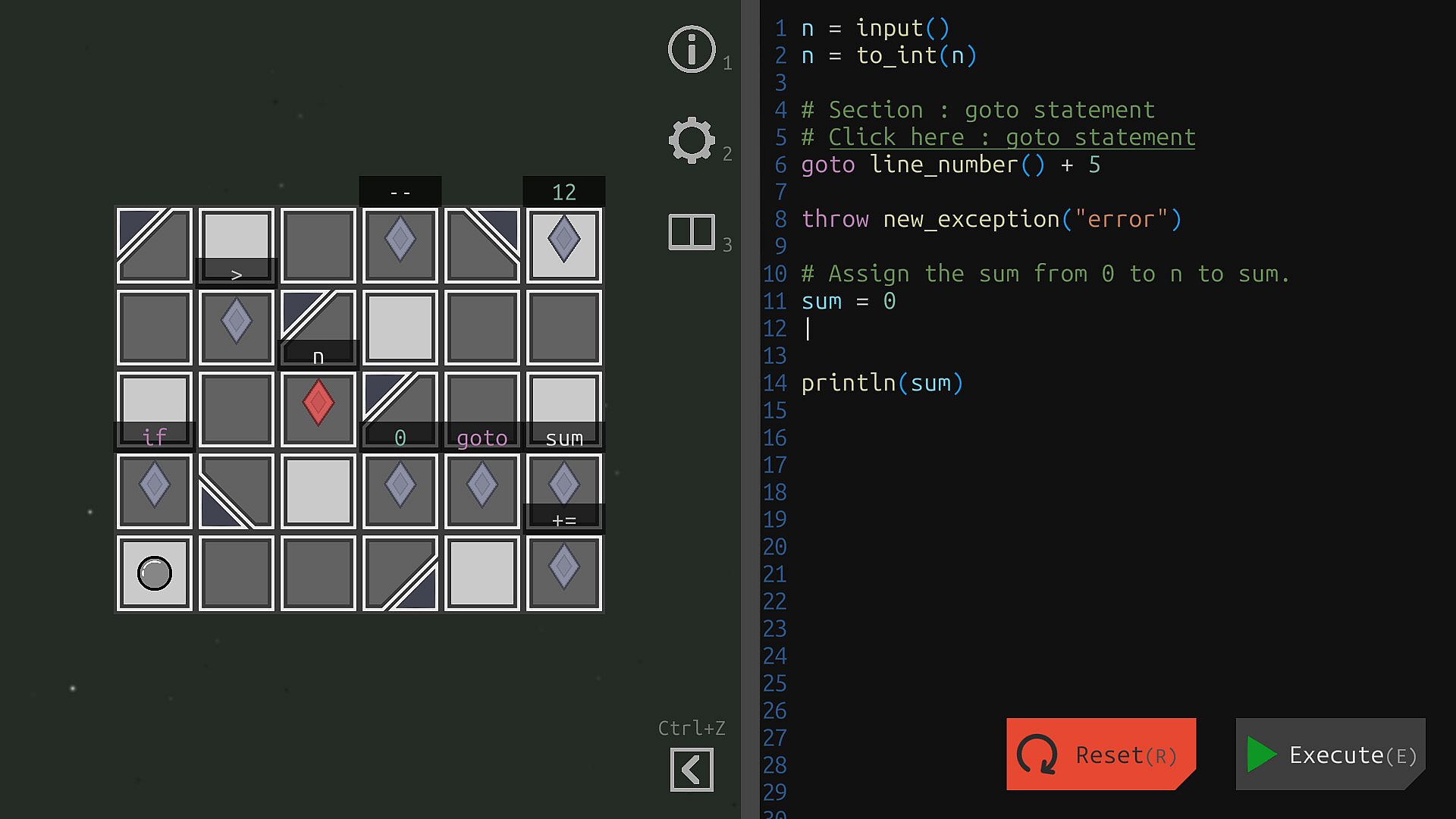
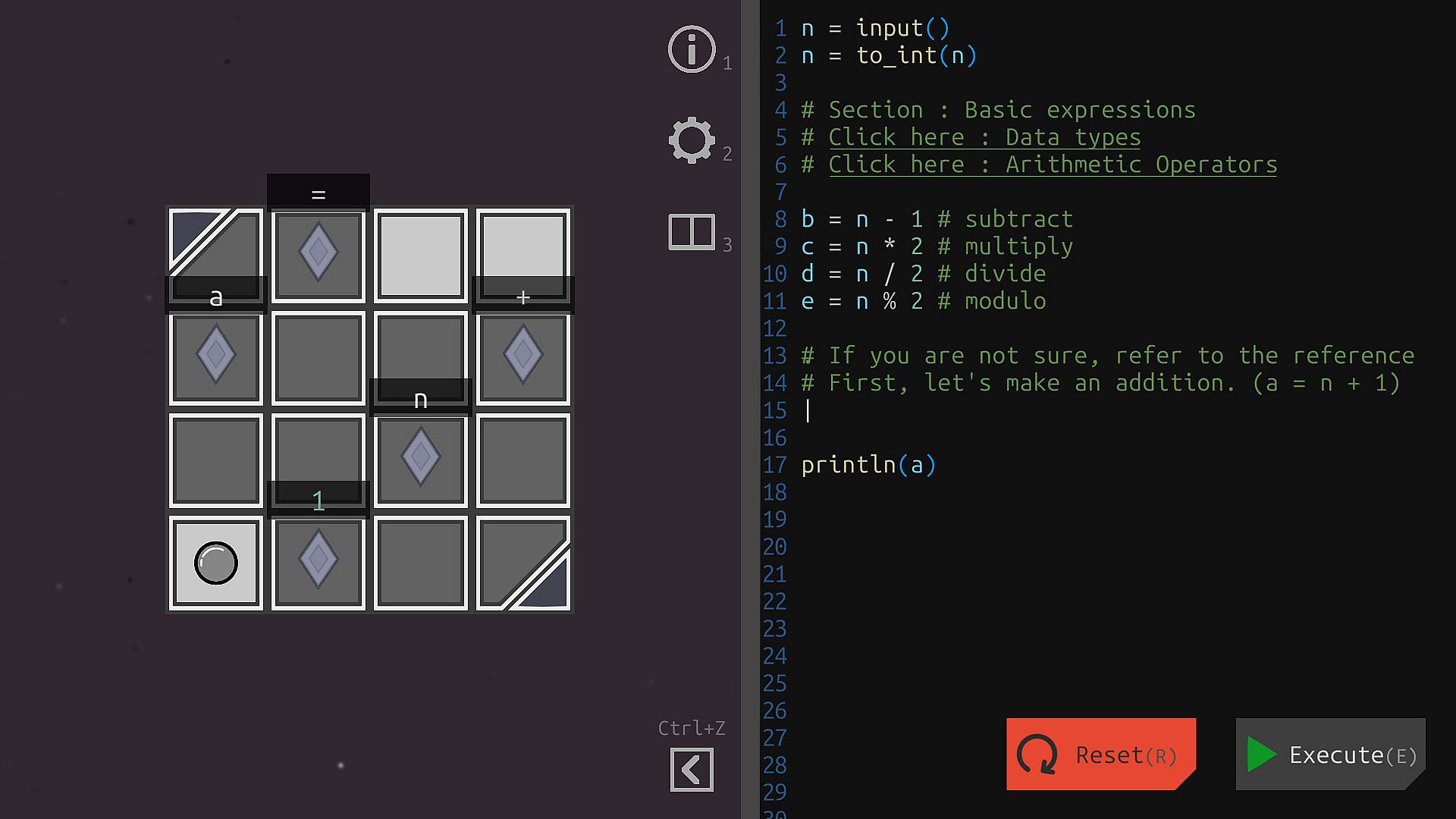
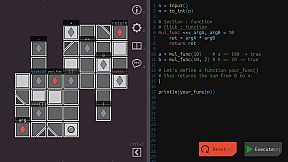
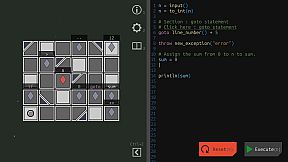
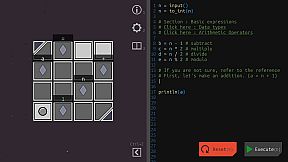
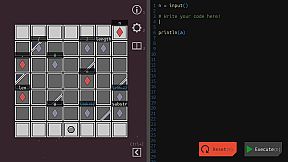
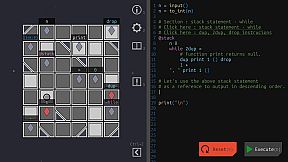
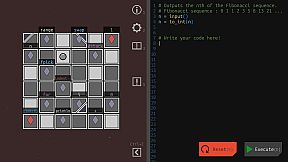
"Interplayer" is a game in which you write source code by moving the player around, picking up tokens and collecting them. Write source code that achieves the pairs of inputs and corresponding outputs set for each stage. For example, double the numerical value of the input and output it, convert it to an n-decimal number, etc....
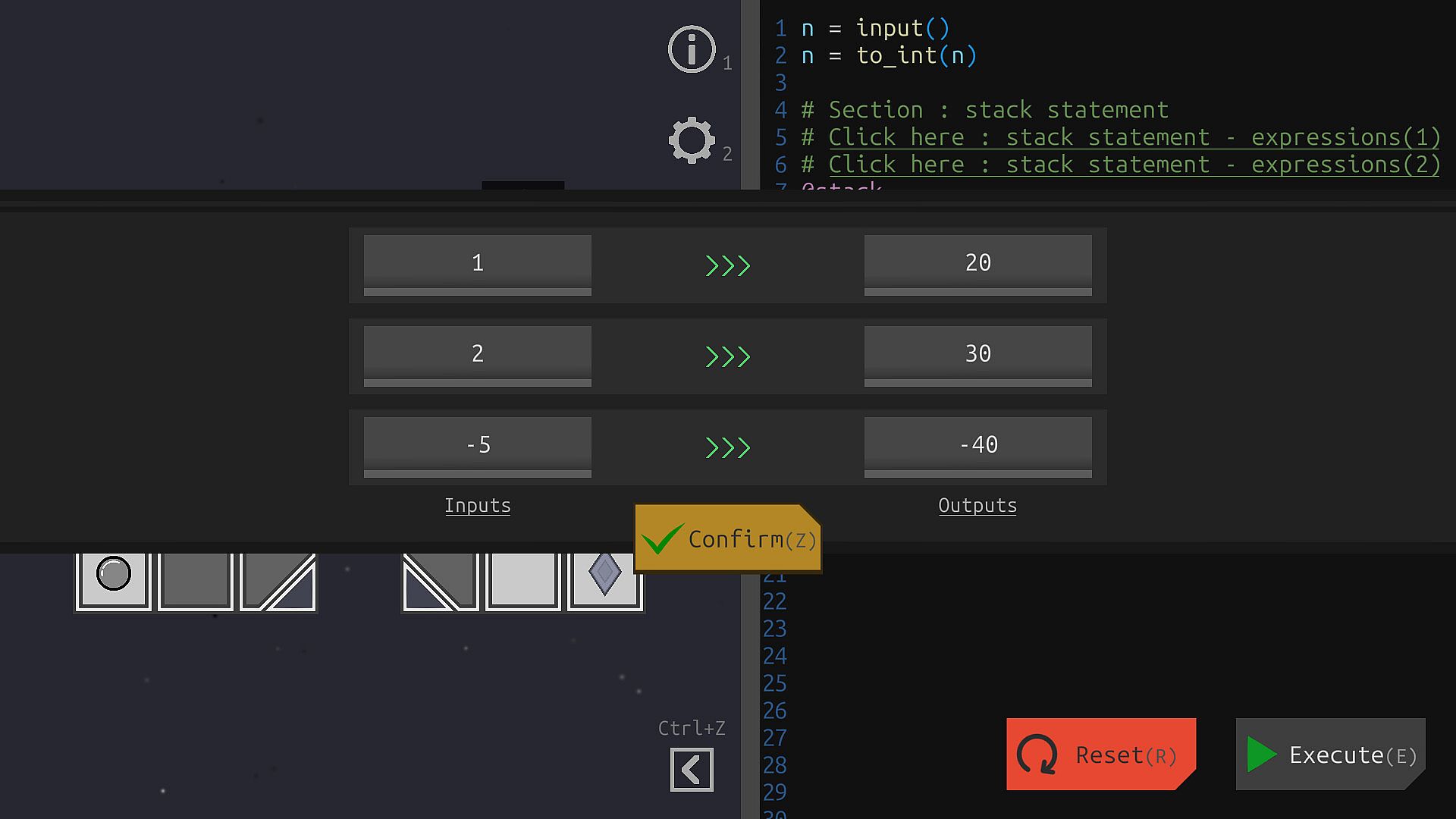
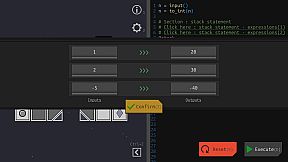
For example, output the input value multiplied by 10, etc...
Inputs [3, 6, 10] => Outputs [30, 60, 100]
Programmers these days have been programming by tapping on their keyboards and typing whatever letters they want. But what if we add constraints? With Interplayer, you program in tokens, and the order and number of times you can write tokens is constrained. How do you achieve the expected input/output pairs within these constraints? Experience a new approach to programming with "Interplayer".
Dedicated language specifically for this game
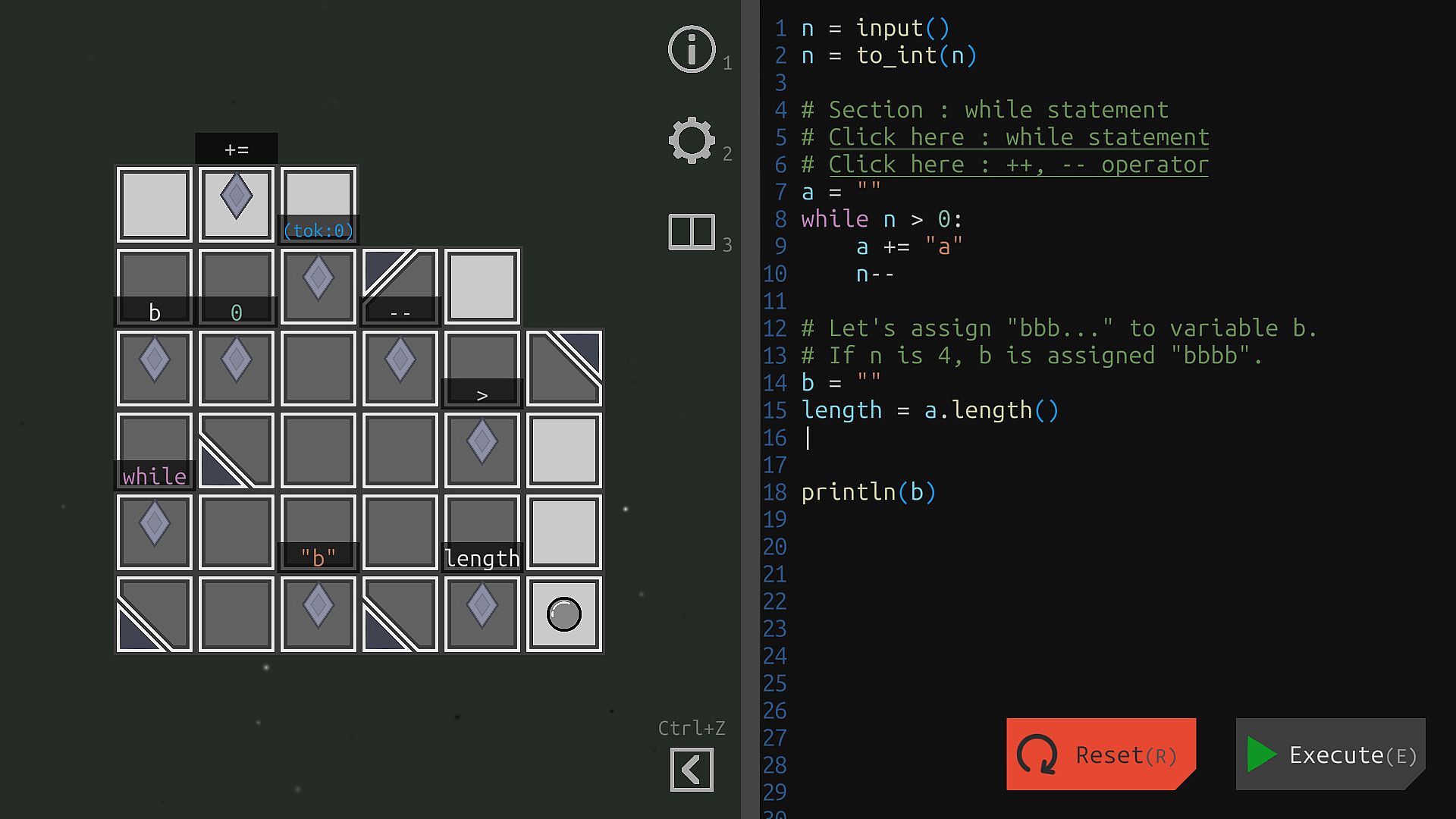
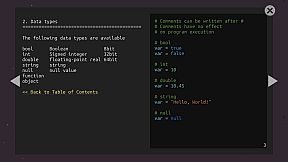
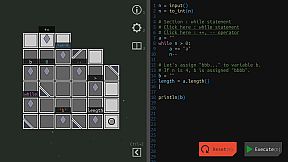
The language written in the game is tolerance language, a dedicated programming language created for this game. You will need to understand this unknown language by referring to the in-game references. But don't worry! Because the tolerance language has a highly readable syntax strongly influenced by Python, with only simple functions, and it is easy for programmers to understand them (except for the stack statement!). . For example, if the tokens "var," "=," and "1" are present in a stage, you can assign 1 to the variable var by writing var = 1. Other complex processes can be described in the game by combining various control statements such as "if" and "while".Unique stack statement
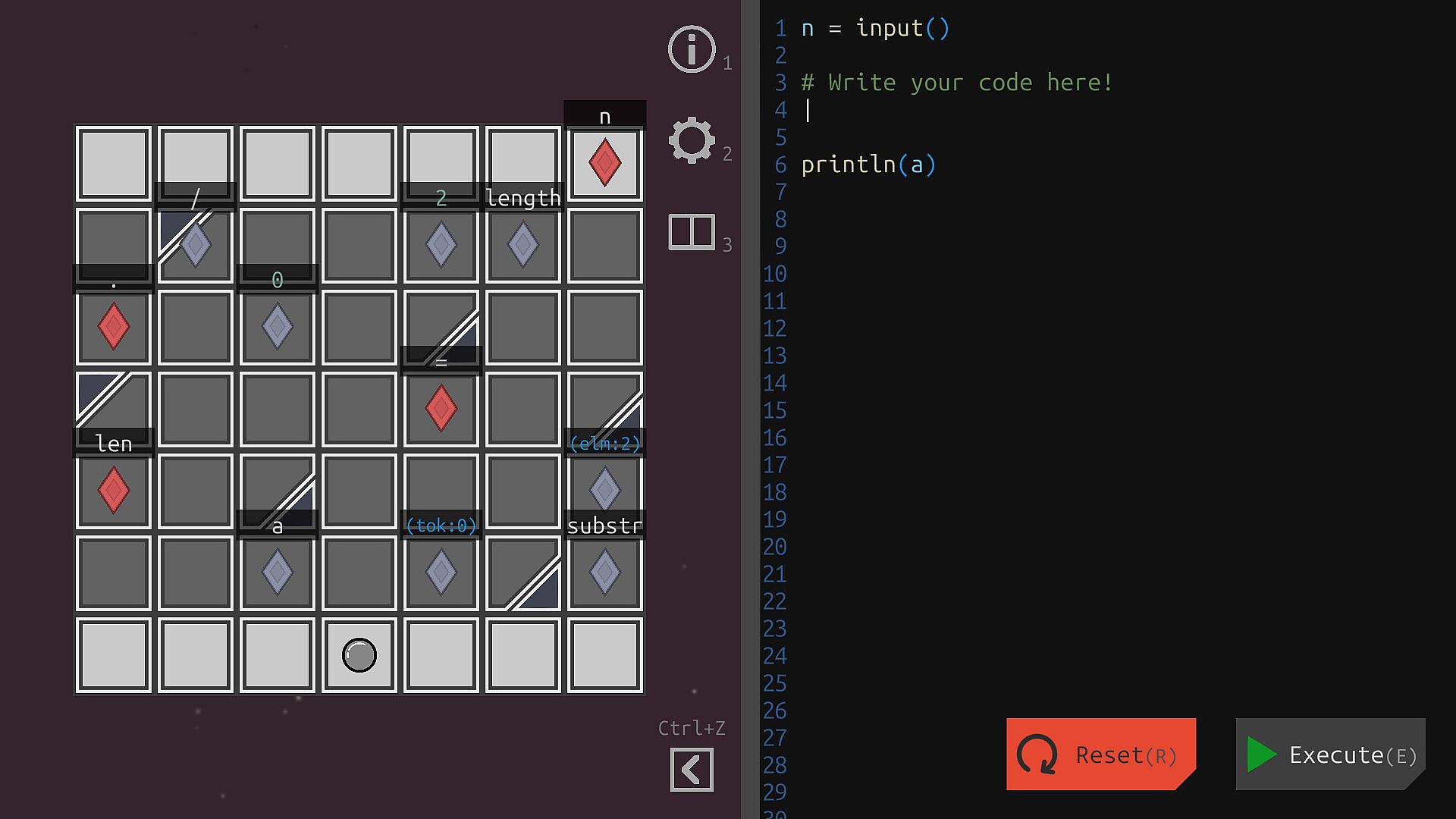
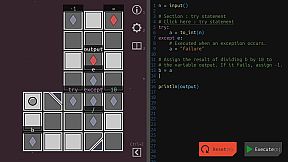
One of the unique features is the stack statement grammar, where a = 1 + 1, for example, is written as 1 1 + = a in the stack statement. In other words, the stack statement complicates the order in this game, which is about the order in which tokens are picked up.