




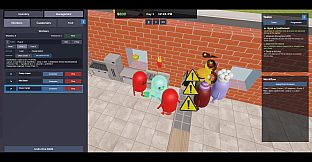
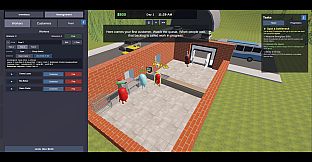
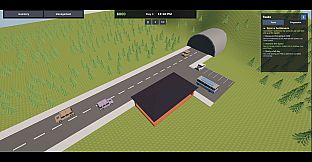
ISE Rush is a single player strategy simulation game on PC that blends restaurant management with principles from industrial and systems engineering. Players design and operate a fast food restaurant, applying real concepts like queueing theory and facilities planning to build efficient operations from the ground up.
Gameplay
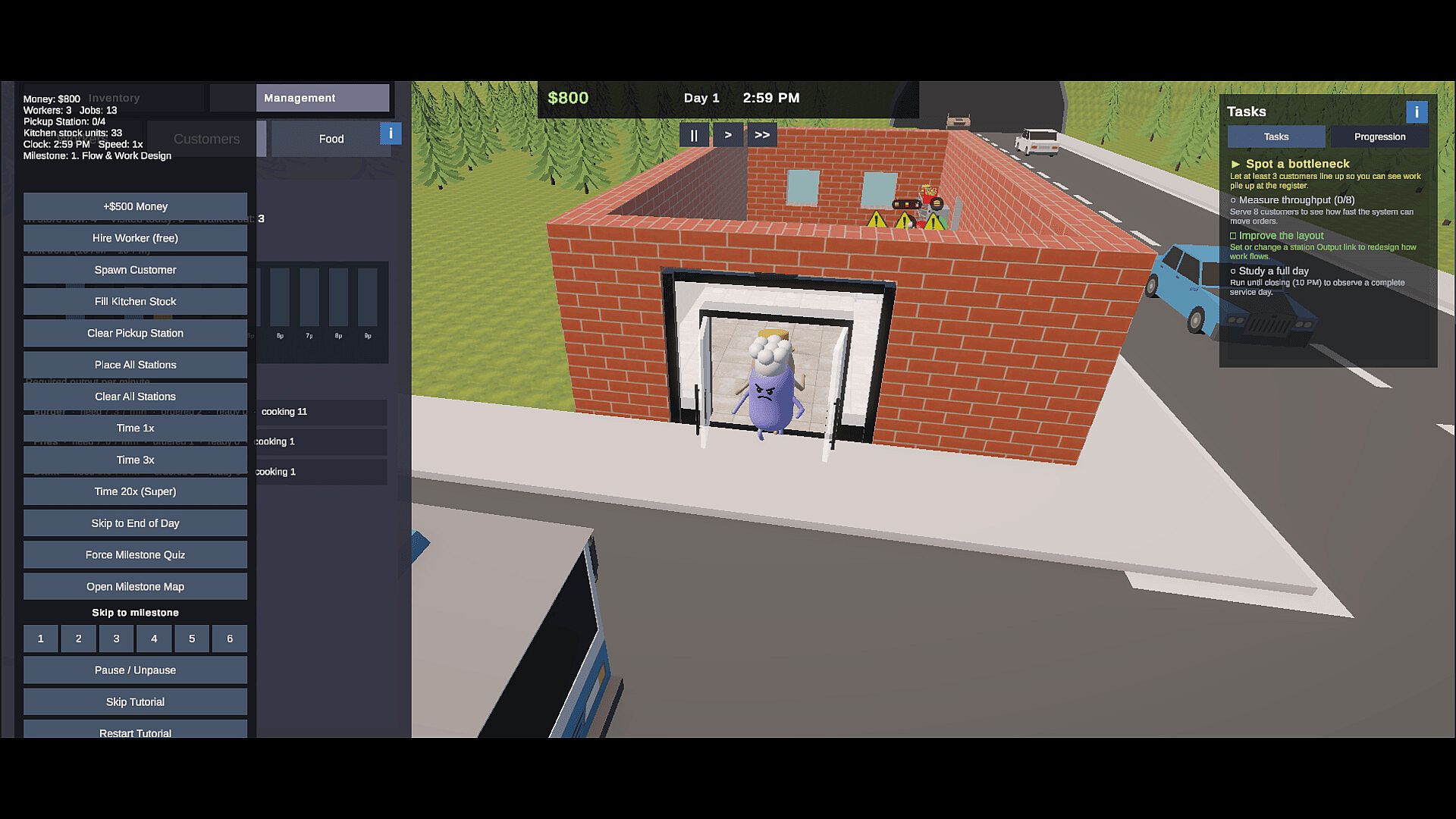
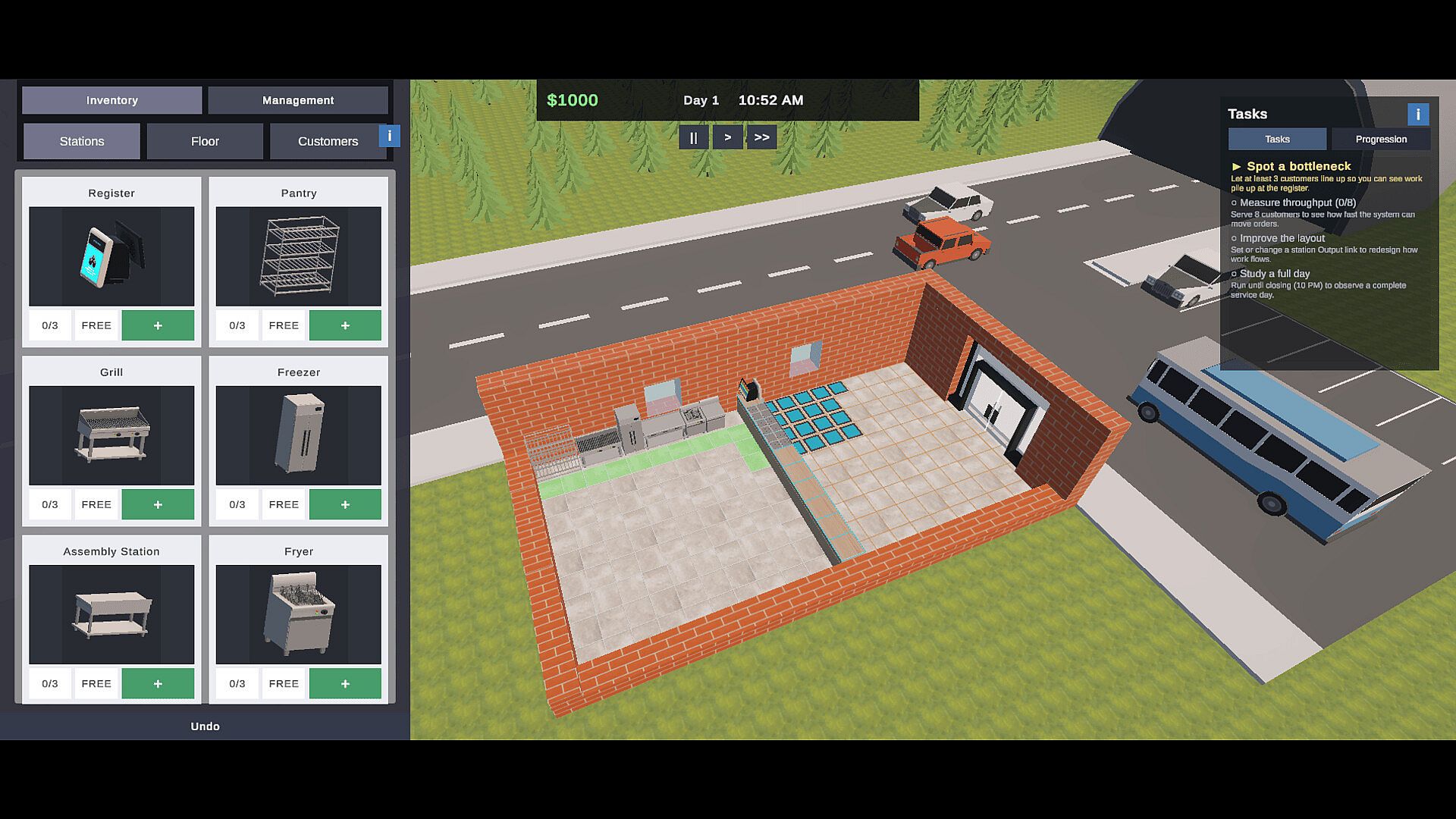
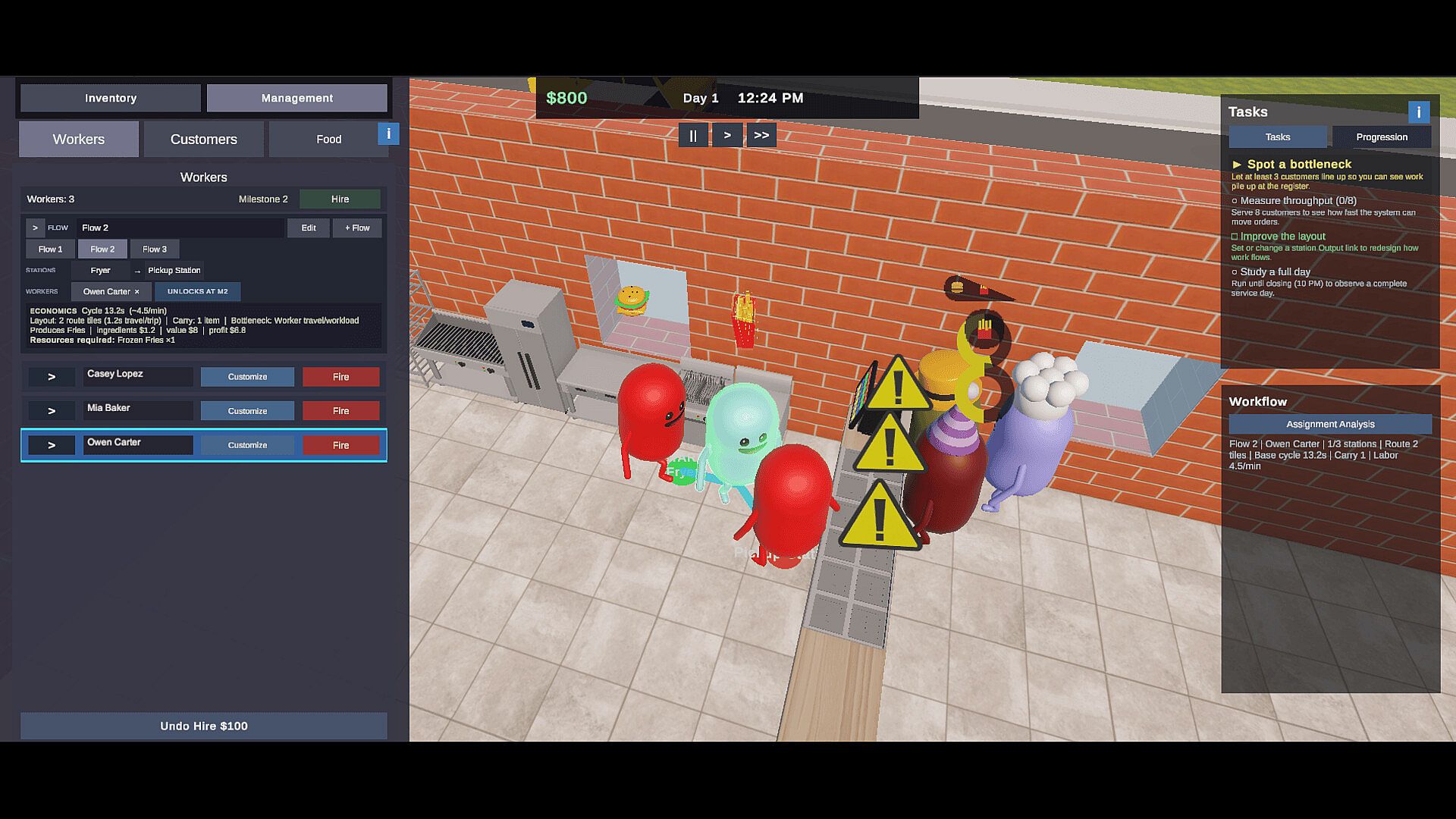
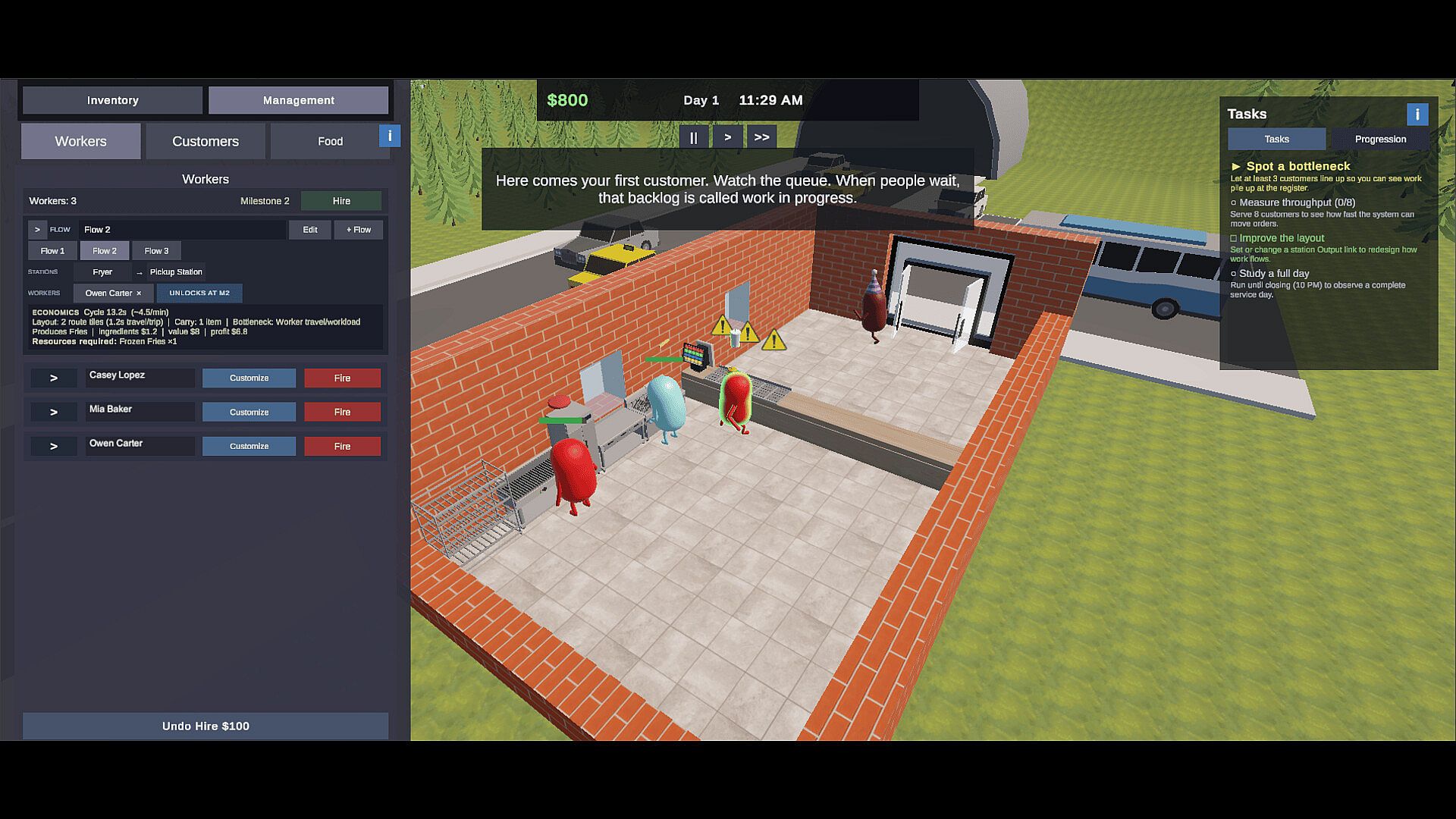
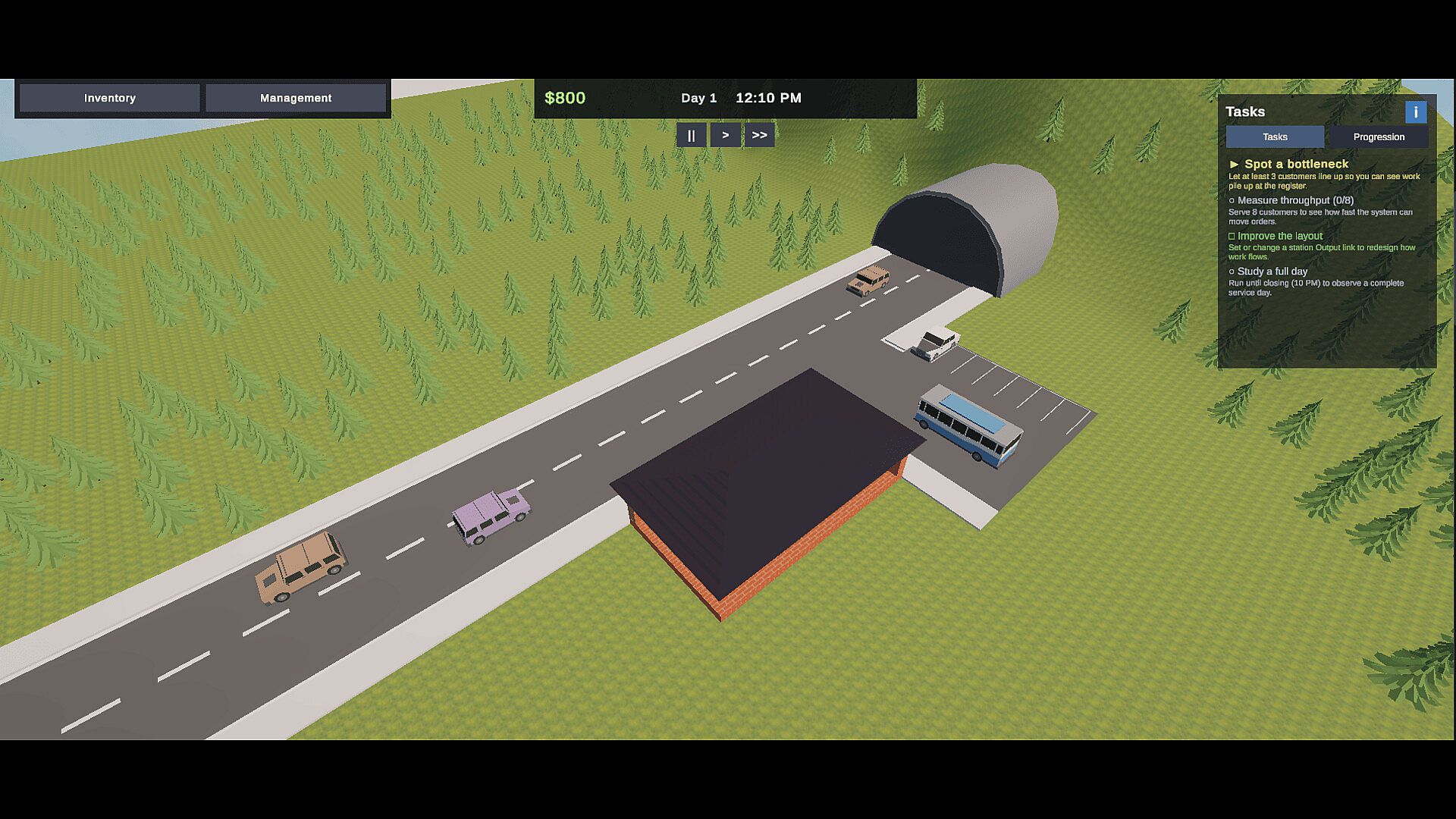
The core loop centers on constructing and refining a kitchen layout while assigning staff to stations that handle customer orders. Players track incoming demand in real time, ensuring food preparation flows without unnecessary delays or wasted steps. Bottlenecks appear naturally as customer volume rises, prompting adjustments to workstation placement, employee roles, or equipment upgrades.
Inventory management forms another key layer. Supplies must arrive on schedule from vendors, with decisions around stock levels and ordering frequency to avoid shortages during peak periods or excess that ties up resources. Equipment choices influence reliability and output speed, while quality controls help maintain consistency as the operation scales.
Progression ties directly to systems optimization topics. Early stages introduce basic layout and staffing challenges, then advance into more complex scenarios involving supply chain coordination and engineering economics. Each milestone encourages experimentation with different approaches to throughput and capacity, rewarding thoughtful redesigns over trial and error alone.
Game Modes
ISE Rush operates as a single player experience without separate competitive or multiplayer modes. The focus remains on iterative management within one growing restaurant, where players tackle successive challenges that build in complexity. Rush hour periods test the current setup under sudden spikes in demand, while overall growth requires balancing multiple variables at once.
Multiple valid strategies emerge naturally. One approach might emphasize expanded kitchen space and additional staff, while another prioritizes streamlined workflows, better supplier contracts, or targeted equipment investments. The game presents no single correct solution, allowing players to iterate based on observed performance metrics like order completion times and resource utilization.
Learning Through Systems
Topics drawn from industrial and systems engineering appear as integrated milestones rather than separate tutorials. Queueing concepts guide decisions on line management and service timing. Facilities planning influences how rooms and stations connect for minimal movement waste. Operations research elements surface when evaluating trade offs in capacity versus cost, and supply chain management becomes relevant as the restaurant expands its supplier network.
Quality and reliability factors add depth once basic operations stabilize. Players monitor consistency across shifts and address points of failure before they compound during high volume periods. Systems optimization encourages viewing the entire restaurant as an interconnected whole, where small changes in one area produce measurable effects elsewhere.
Is It Worth Playing?
ISE Rush targets players who enjoy deliberate simulation and strategy titles centered on process improvement. The educational framing around real engineering topics provides structure without requiring prior knowledge, making the experience accessible while still offering depth for those interested in optimization challenges.
Because the title remains in development with no released version or player reviews available yet, any assessment rests on the described systems and single player focus. Those drawn to management games that reward careful planning and iterative refinement will likely find the core loop engaging. Availability on PC through standard digital storefronts means interested players can follow updates as the project advances toward launch.












