

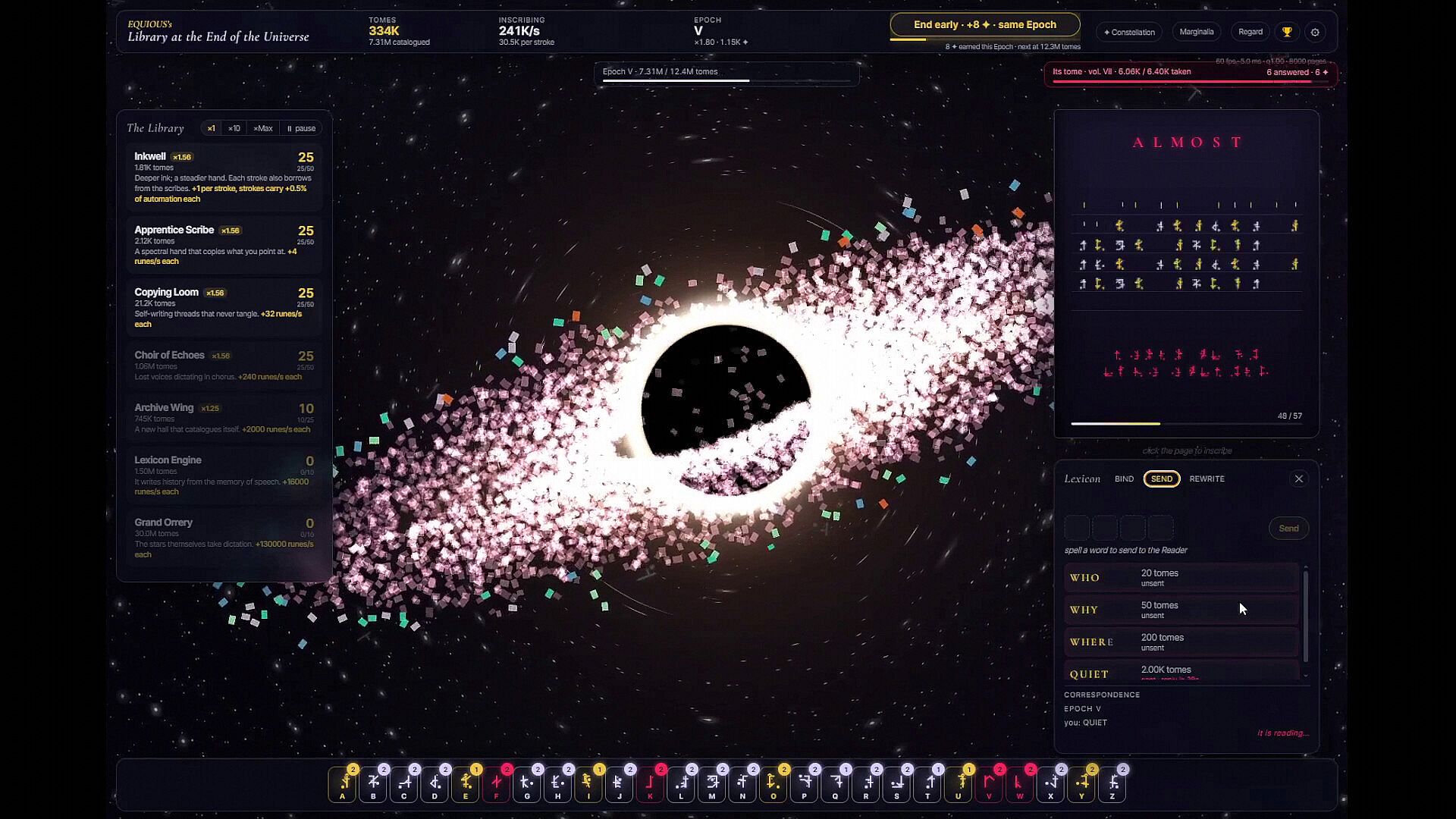
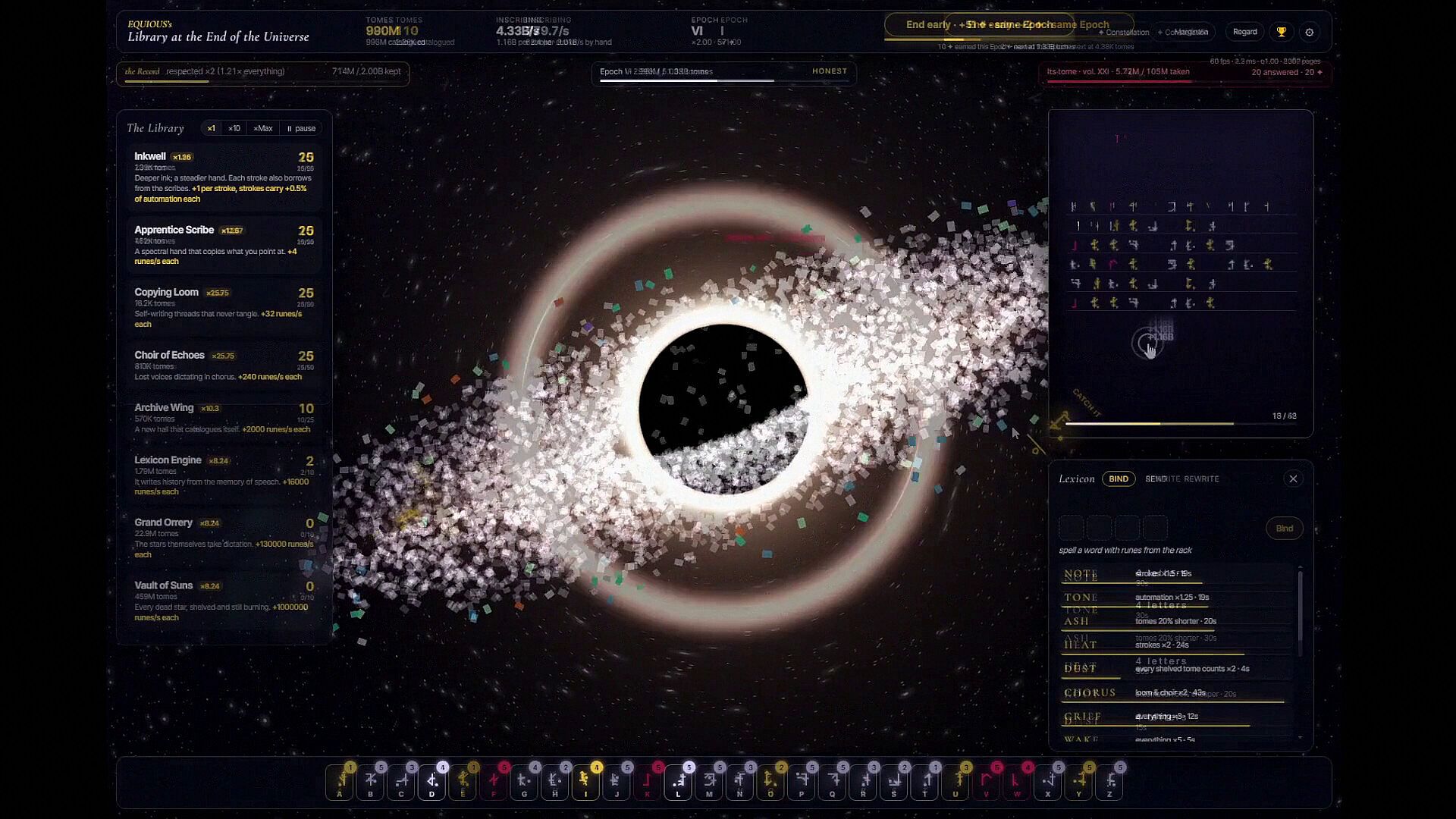
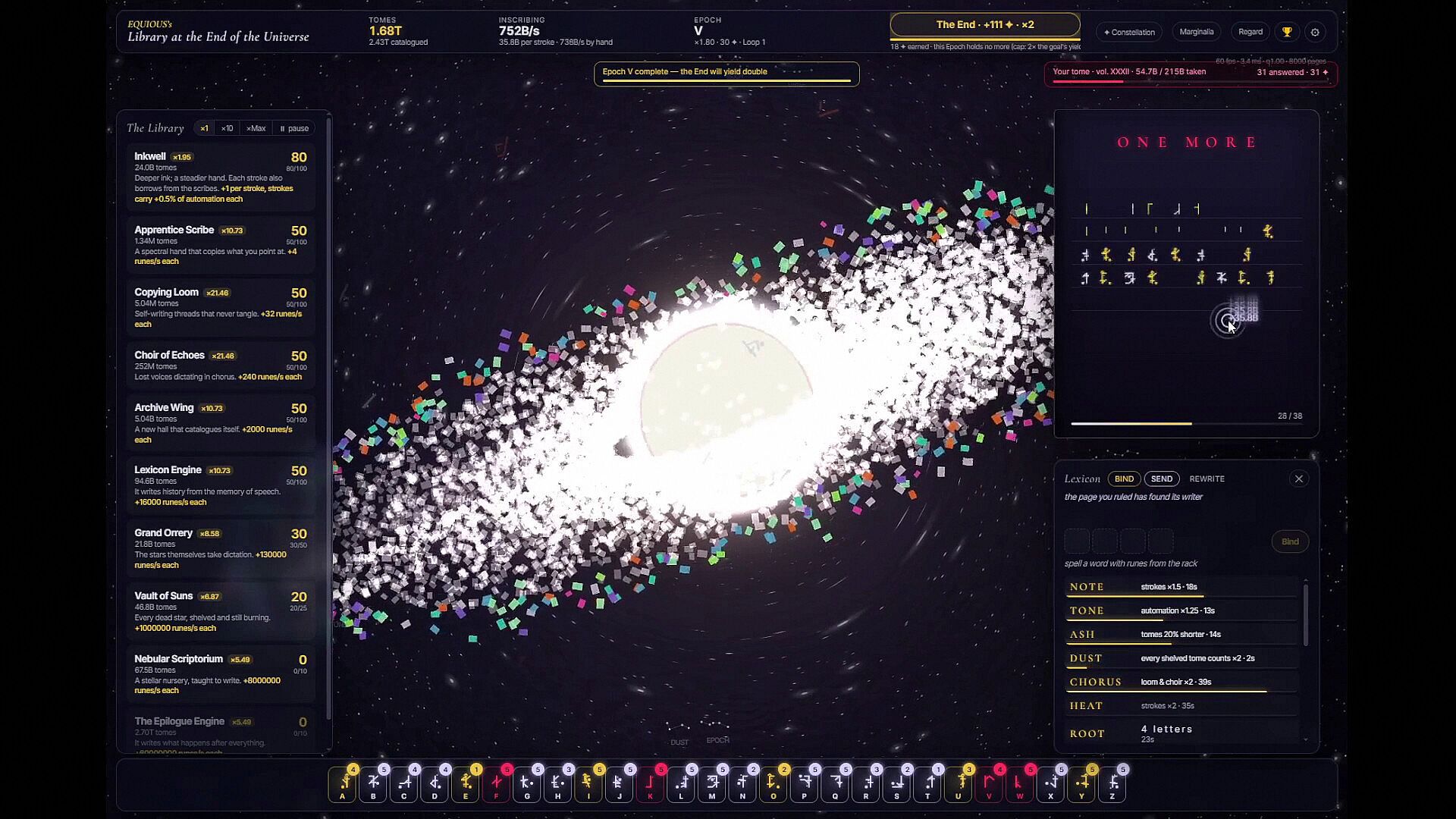
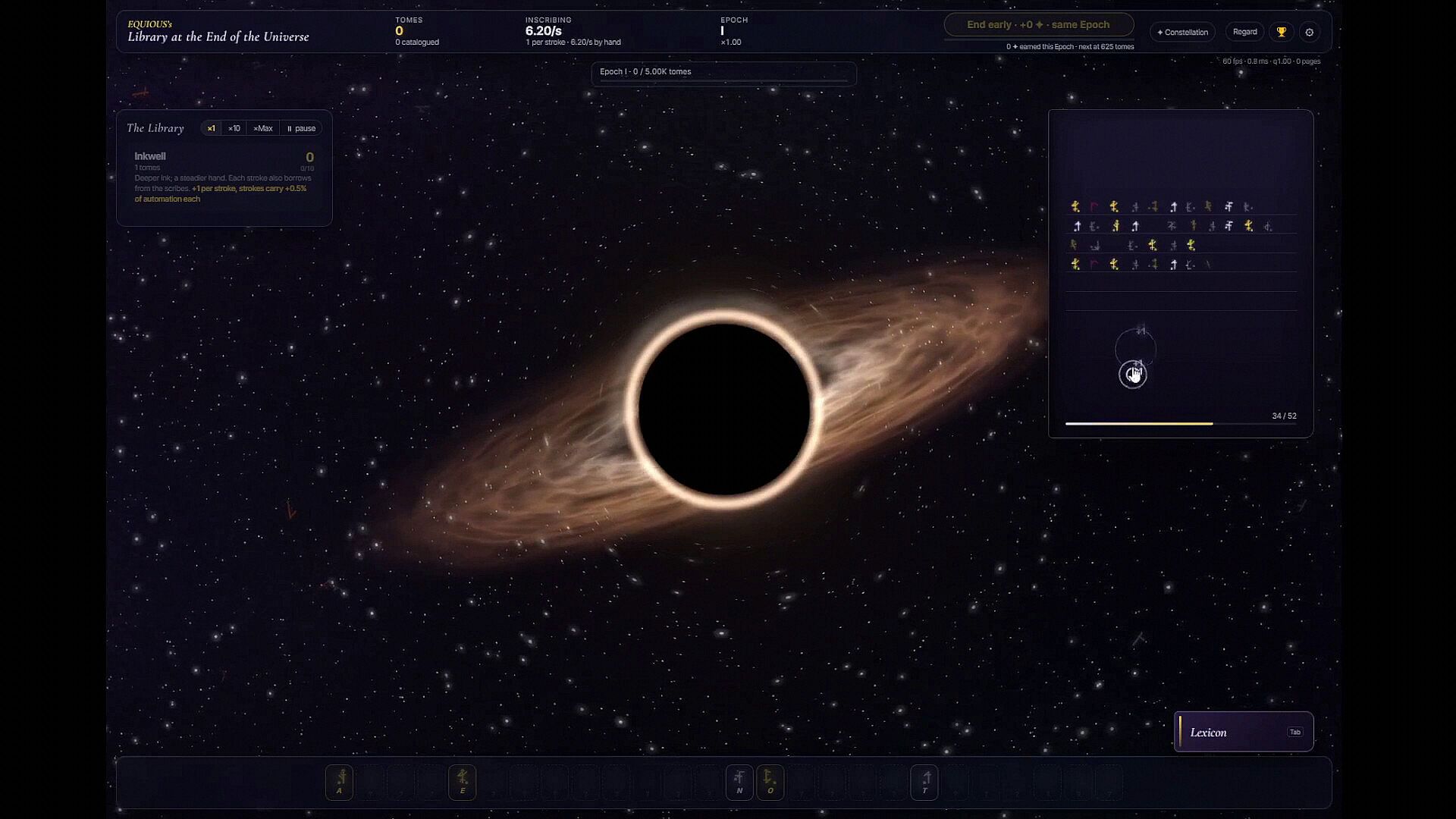

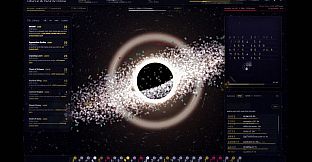


Library at the End of the Universe is an idle incremental game developed for PC in the indie and casual genres. Players take on the role of a curator cataloguing the final moments of a universe through rune inscription and word binding that alters fundamental rules.
Gameplay
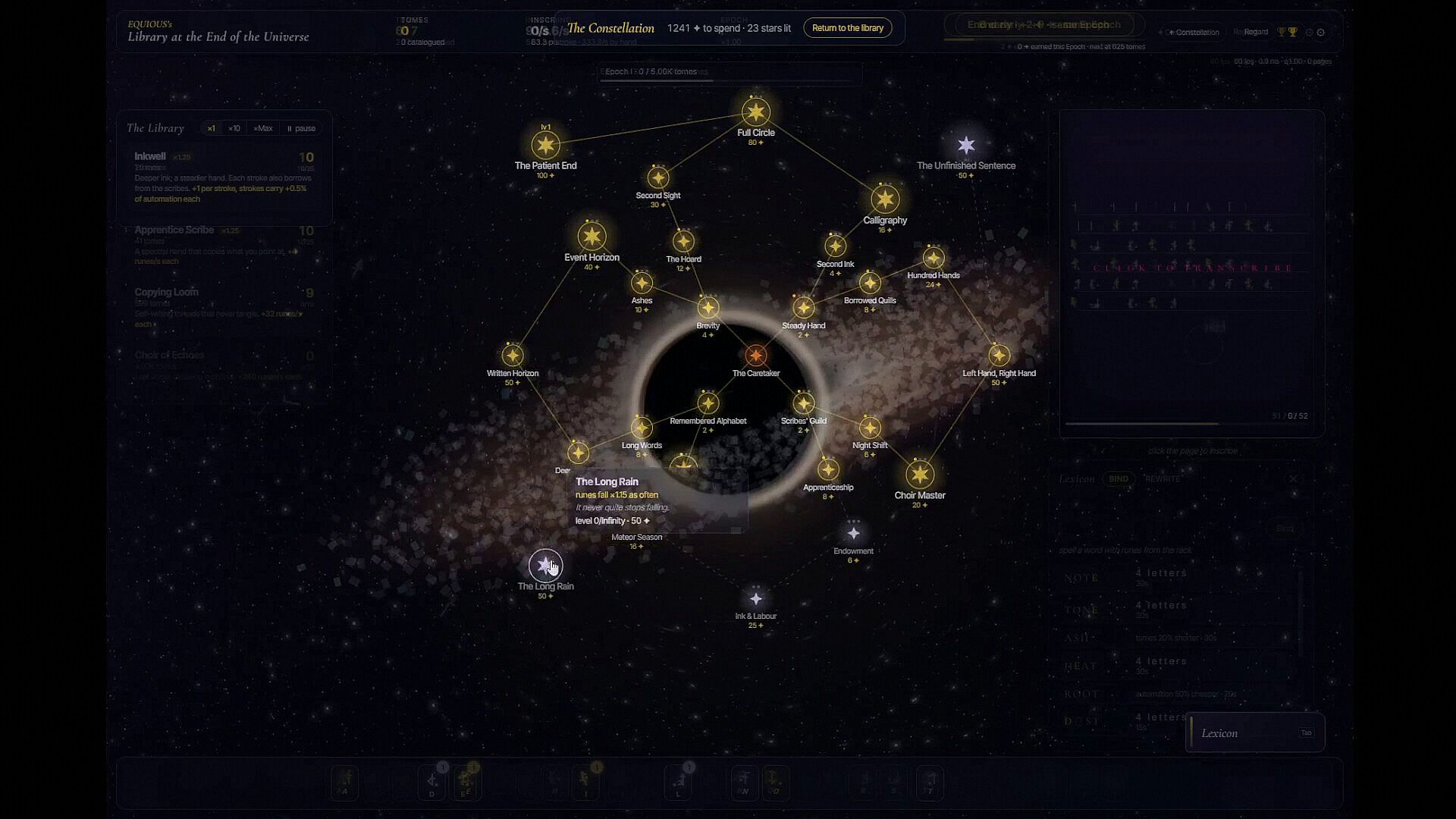
The core loop centers on manual rune inscription that players combine into words capable of bending established rules. These actions feed into a library system that continues generating content during periods of player absence. Progression unfolds across nine distinct epochs. Each epoch concludes with a collapse event that grants lasting advantages for subsequent cycles. Permanent multipliers come from 111 achievements that enhance future runs. A lifetime leaderboard records performance and seals once the final page is written. Offline progress tracks activity between sessions, supported by Steam Cloud saves. The game contains no micro-transactions.
Game Modes
Three primary playstyles accommodate different preferences while all leading to the same endpoint. Active play involves direct, hands-on rune inscription and word binding. Idle play relies on the library continuing its work autonomously. Hybrid play combines periods of direct input with extended automated phases. These approaches integrate into the epoch structure without separate named modes or branching paths.
Progression and Mechanics
Epochs serve as the main structural divisions, each building on the outcomes of prior collapses. Rune and word systems form the central mechanics, with binding actions creating rule alterations that influence ongoing library output. The presence of an observing entity adds a layer of narrative tension to the cataloguing process. All systems emphasize incremental growth through repeated cycles rather than one-time events or external content.
Is It Worth Playing?
This title suits players who enjoy idle incremental experiences focused on long-term progression and automated systems. The combination of manual inscription with persistent offline advancement and achievement-based multipliers provides steady advancement across multiple epochs. Single-player format and absence of micro-transactions keep the focus on core mechanics. Those seeking active engagement or idle accumulation will find compatible options in the active, idle, and hybrid styles. As the game remains in a coming-soon state, its final reception will depend on execution of the described systems upon release.