

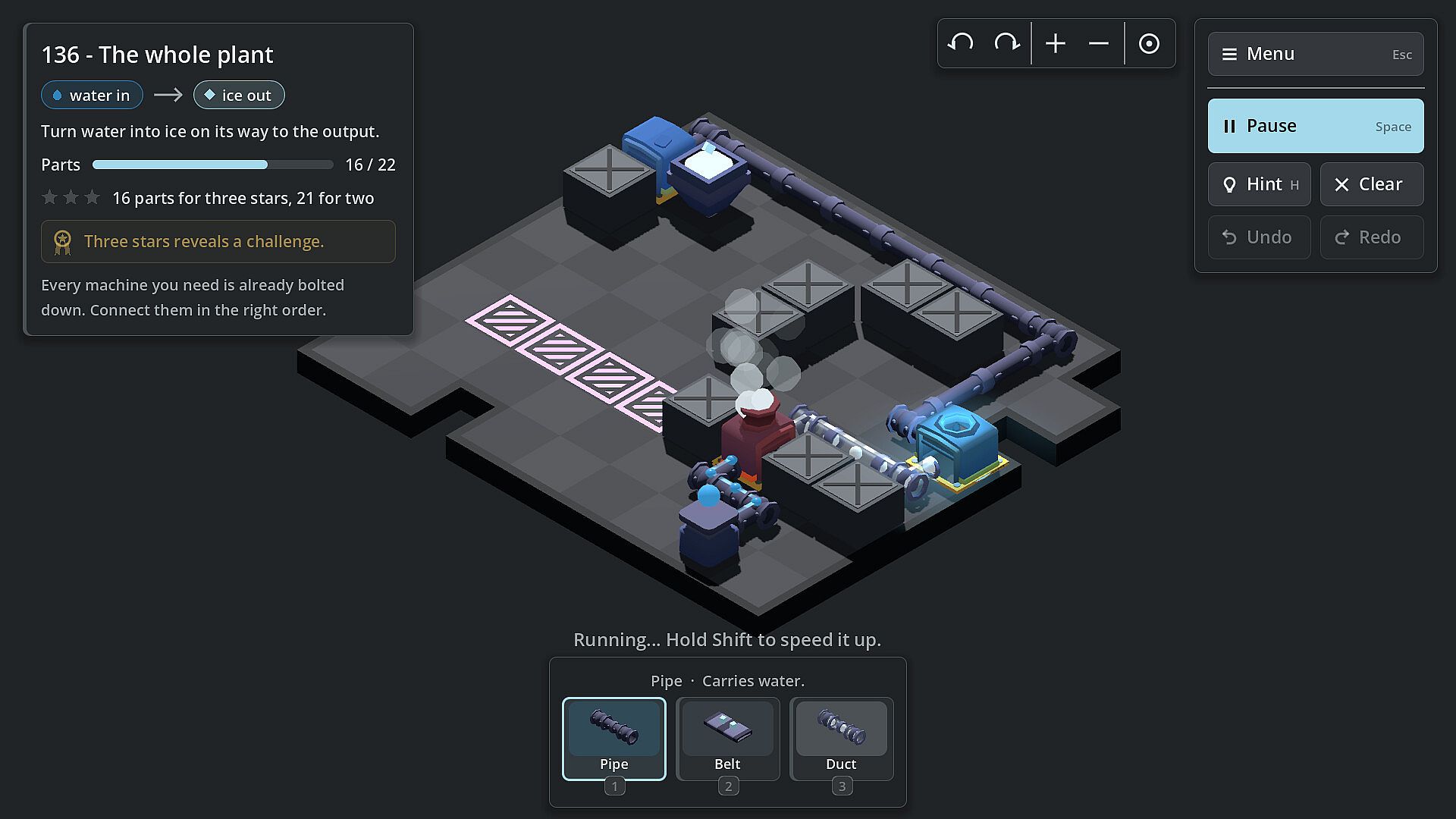
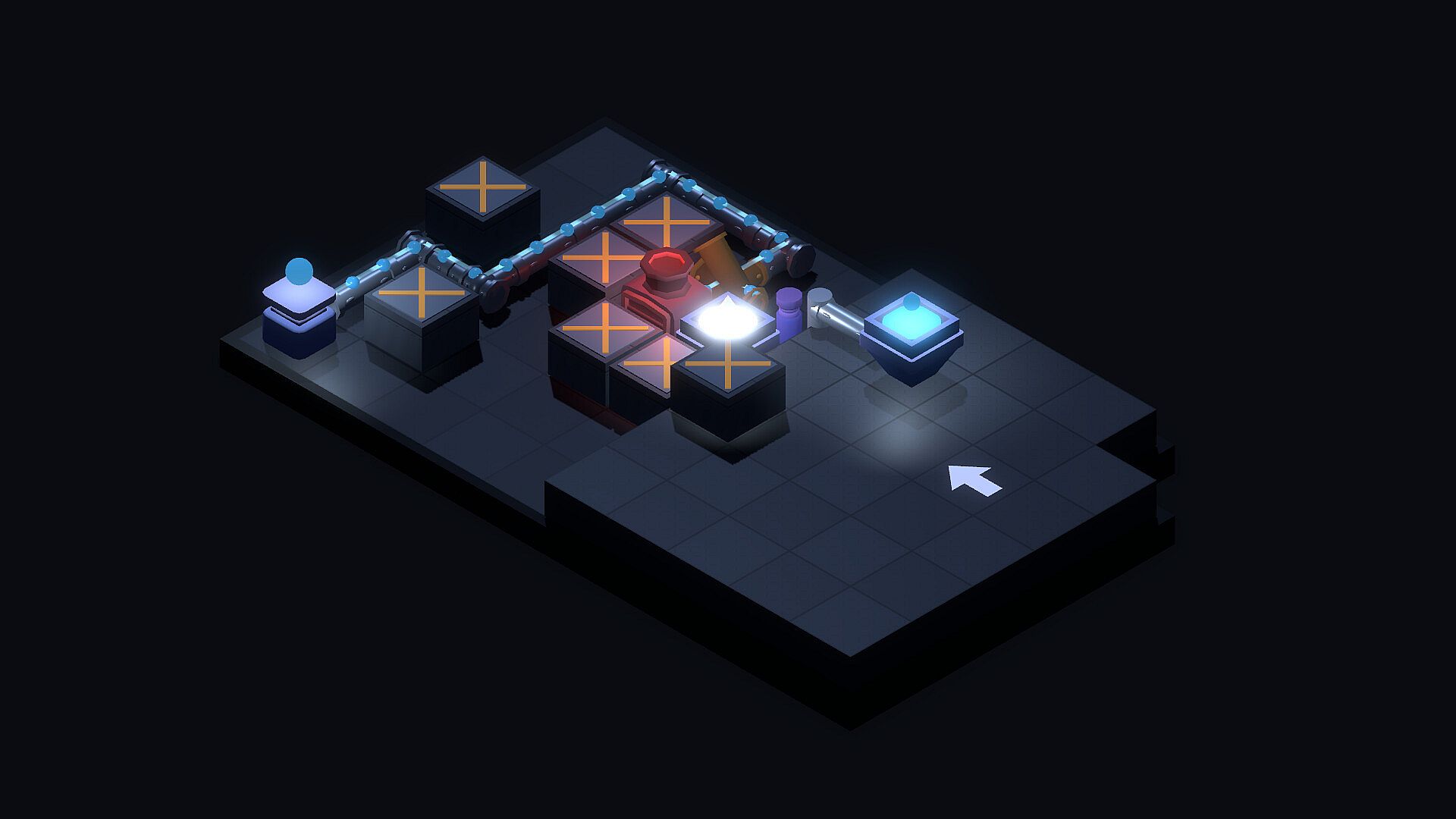


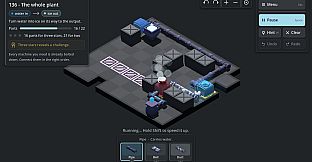


Matter of State is an indie puzzle game built around the movement and transformation of matter across three states: liquid water, steam, and ice. Players arrange a small set of devices and terrain pieces on compact boards to guide each form of matter to its required destination while respecting the physical rules that govern flow, rise, slide, and cooling.
Gameplay
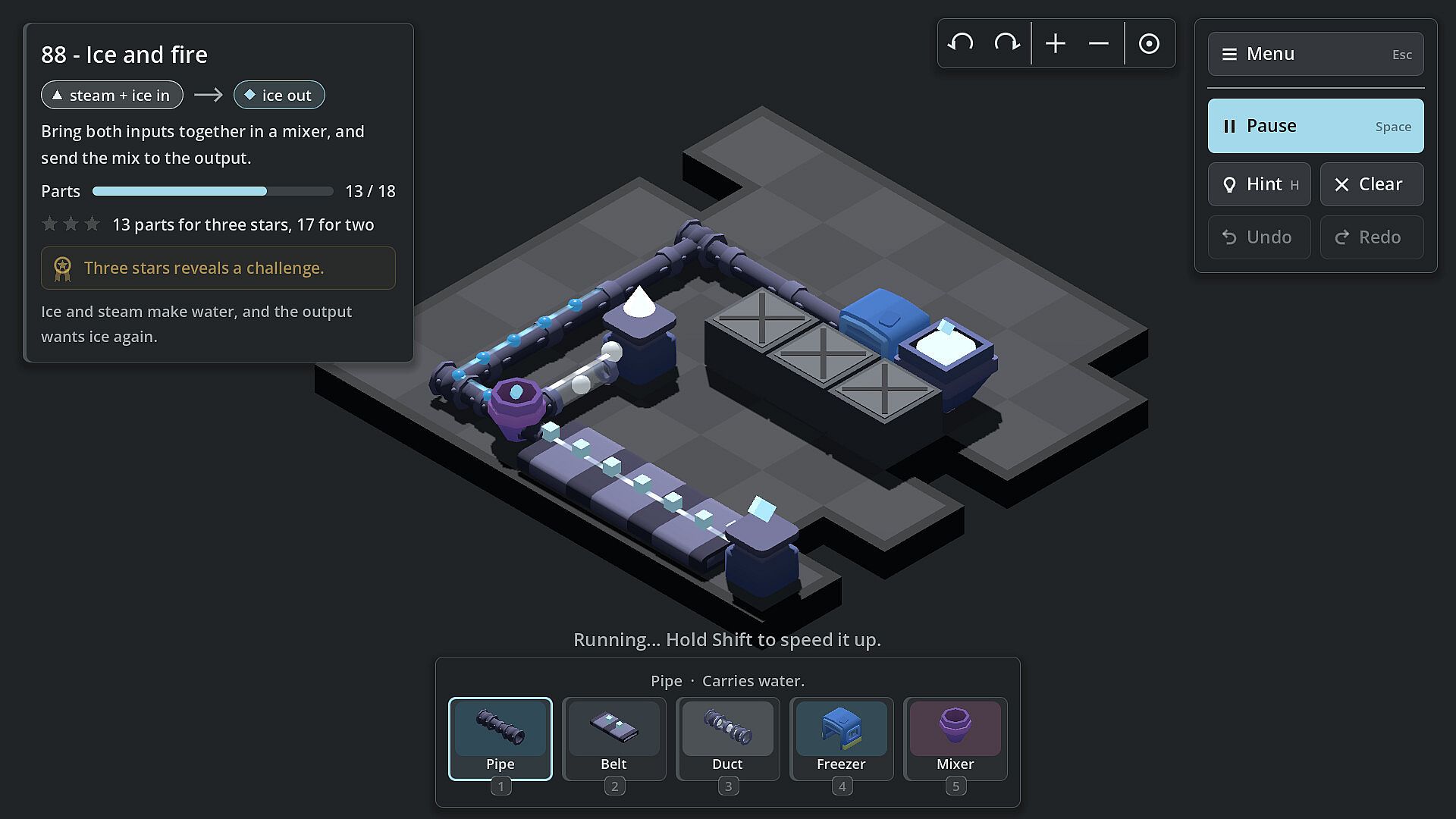
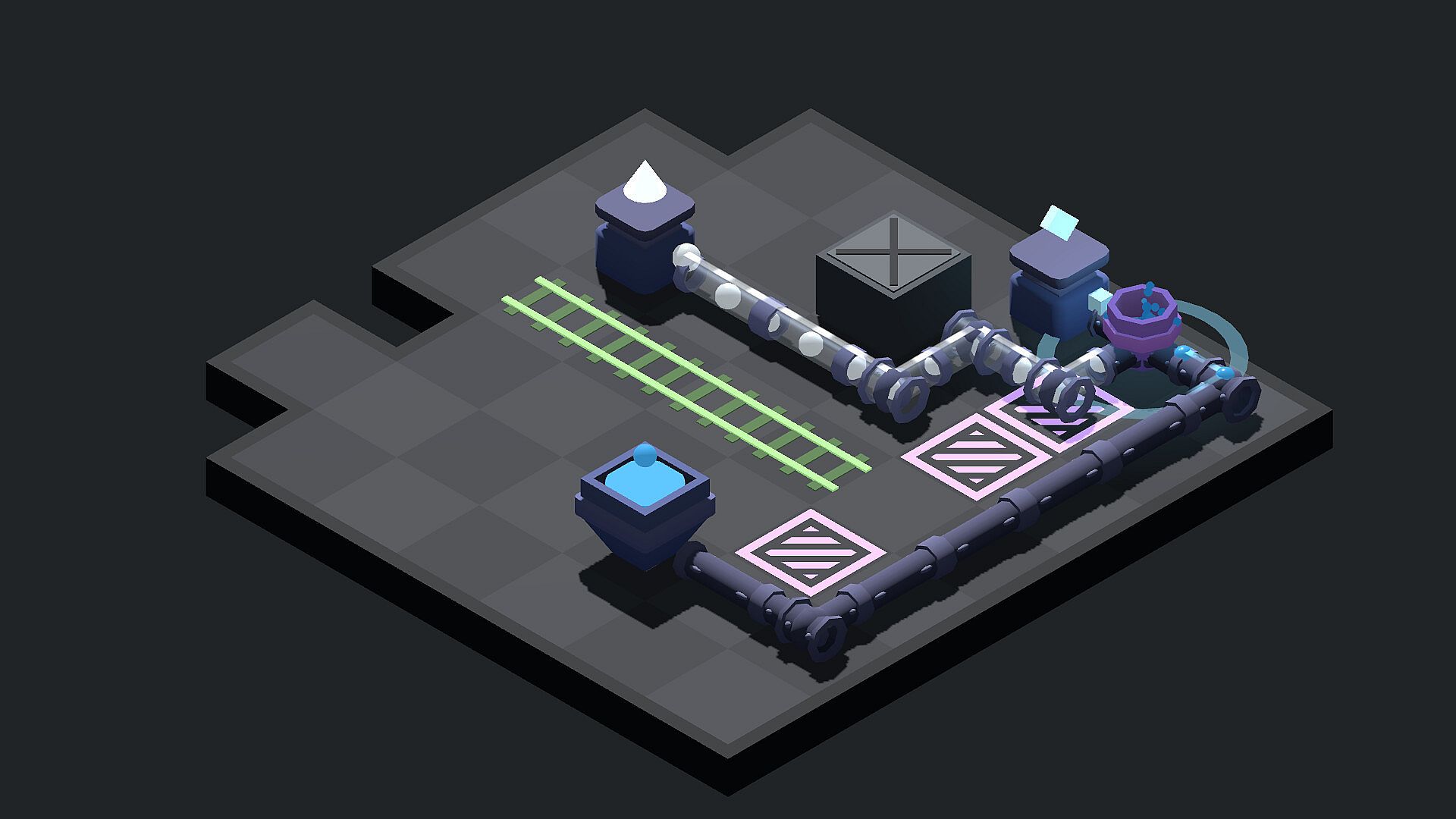
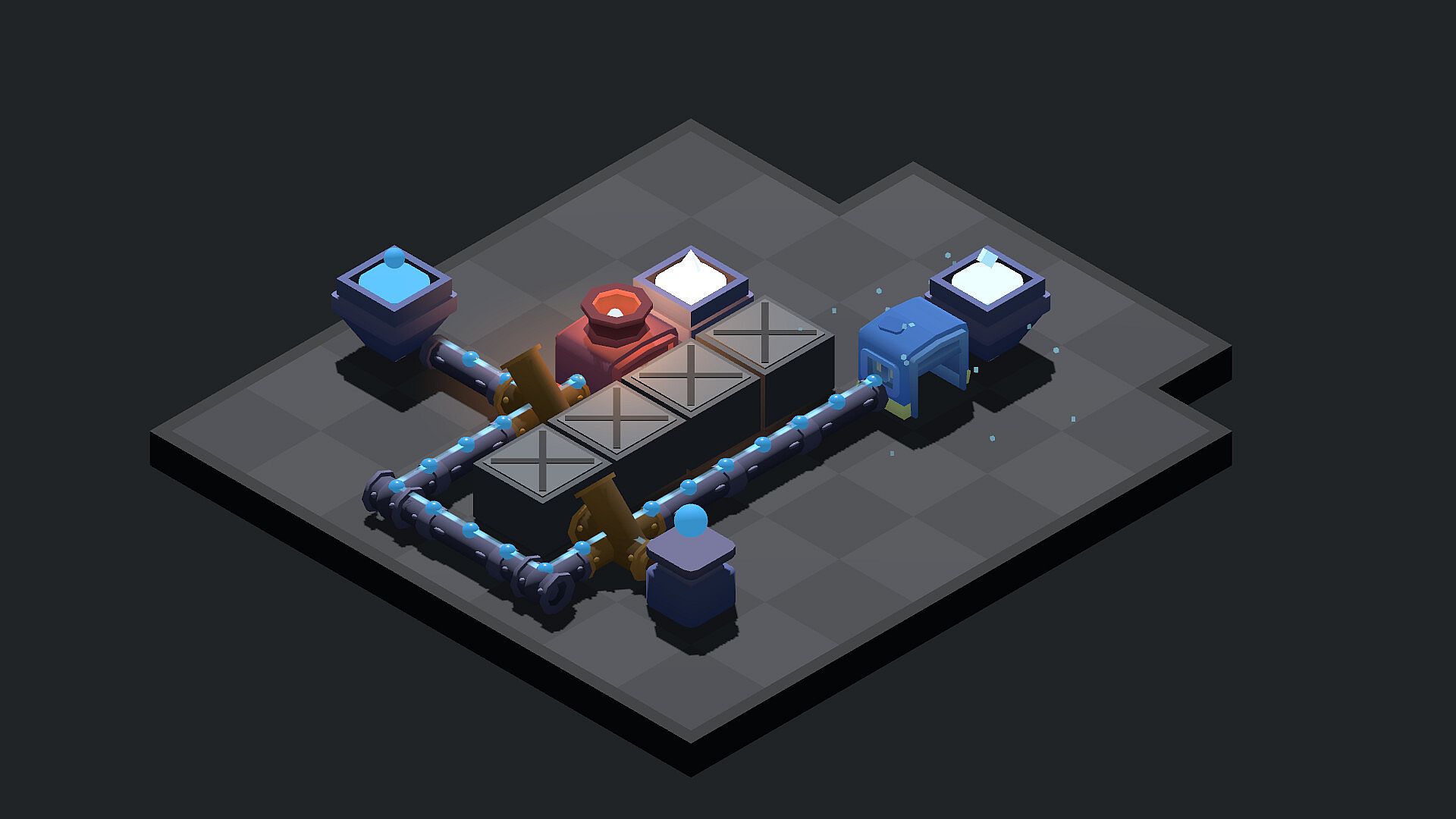
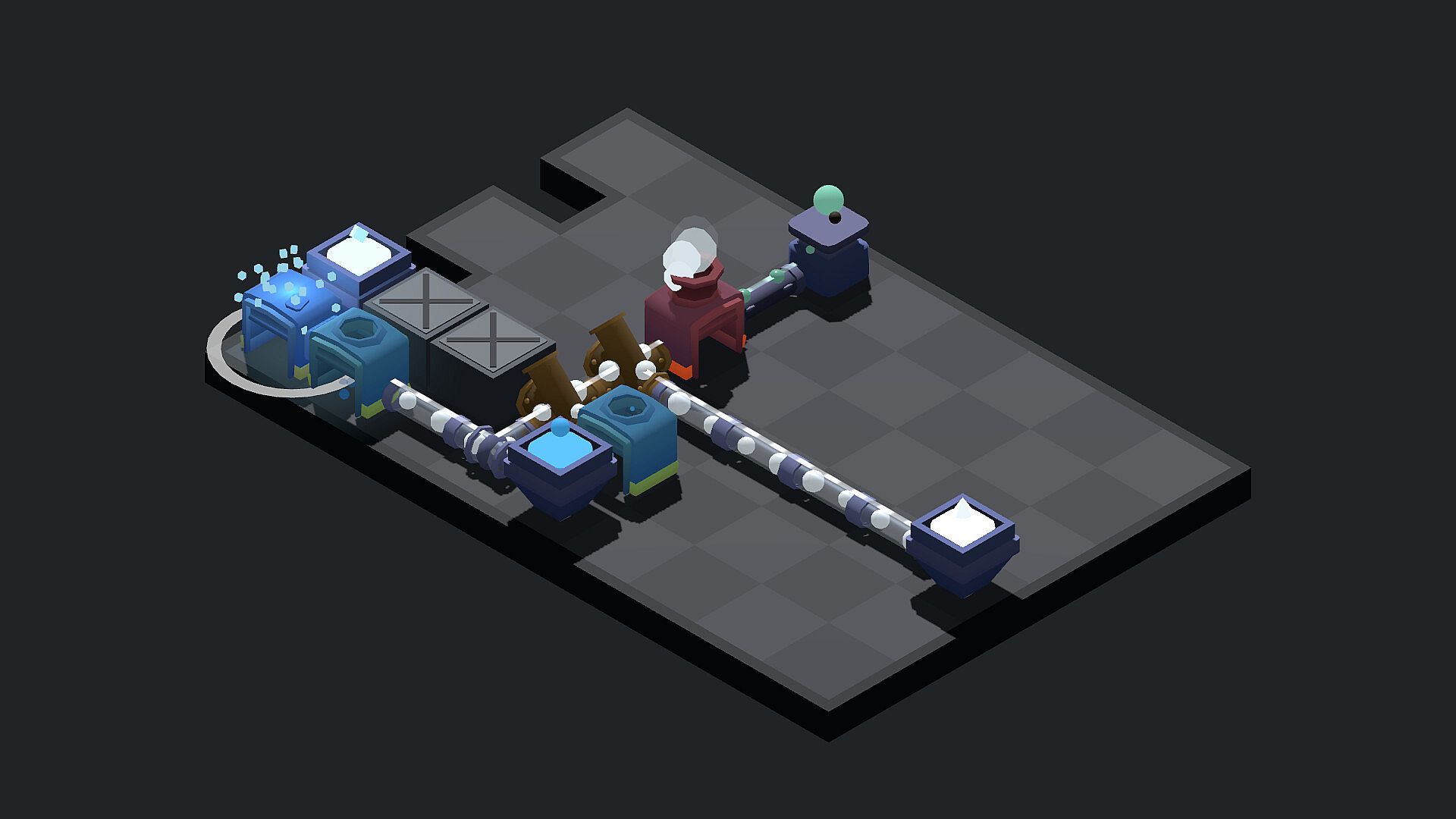
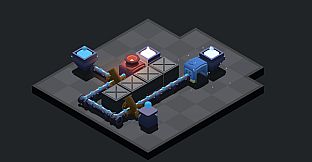
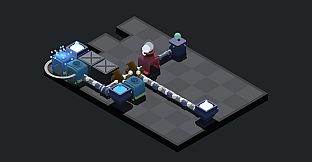
Every level presents a fixed board and a clear goal for where matter must end up and in what state. Water flows downward along open paths but cannot climb. Steam rises through ducts yet condenses after traveling five segments. Ice travels in straight lines along rails and cannot turn corners. Heaters convert water into steam so it can ascend steps. Freezers solidify water into ice that can cross rails. Hot floors perform boiling without consuming a device slot, provided the route avoids unwanted cooling. Condensers reverse the process when steam must return to liquid form.
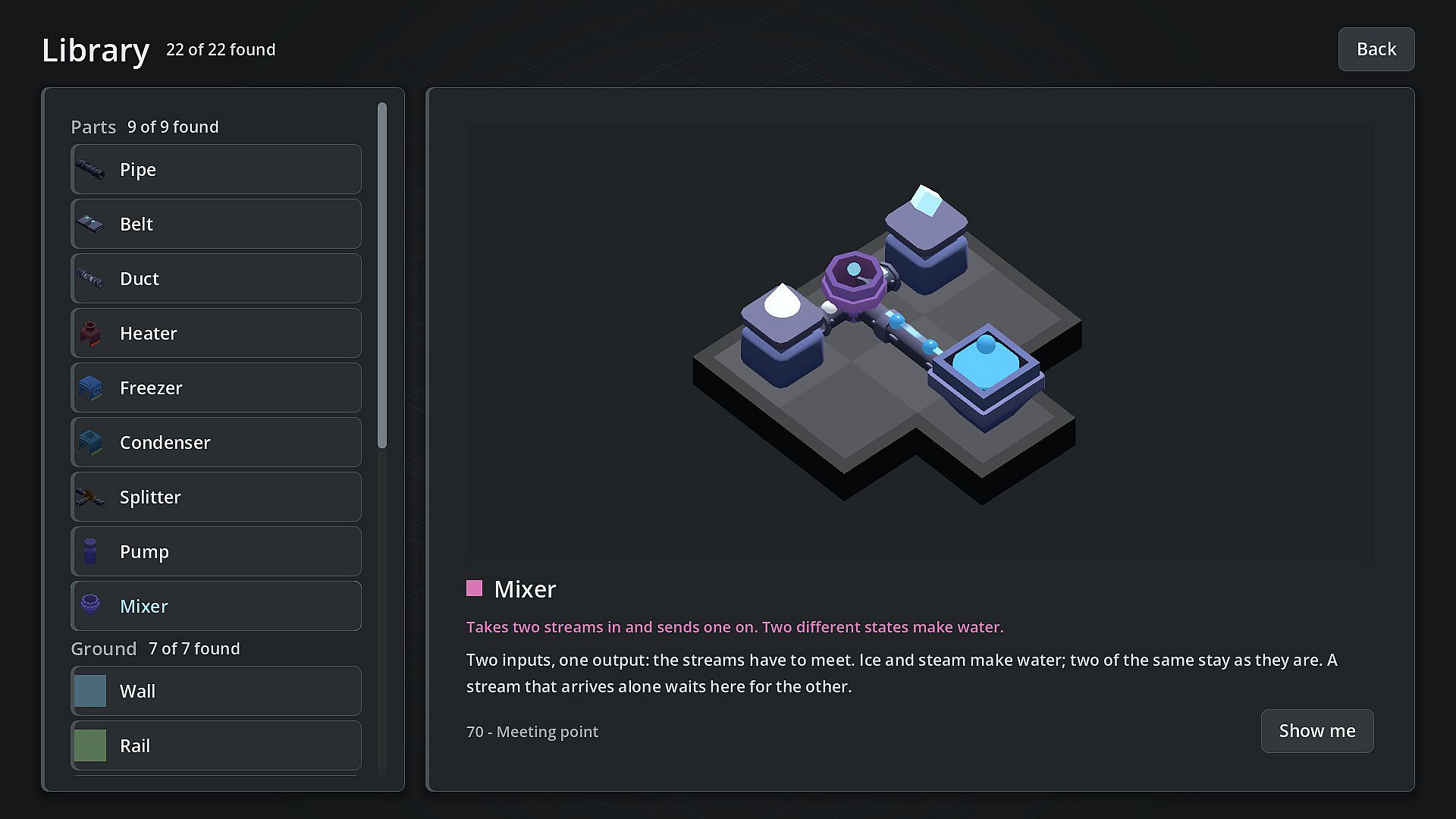
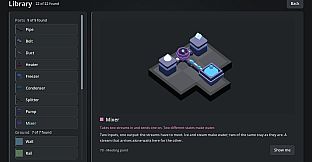
Core tools include heaters, freezers, and condensers, plus hot and cold floor tiles, elevated steps that only steam can scale, rails reserved for ice, and dedicated vents for steam. Later chapters introduce the mixer, which combines two input streams into a single output whose final state depends on the combination chosen. Fixtures appear already fixed to the board, forcing players to deliver matter in the correct state to activate them. Impurities such as brine, gritty ice, and sooty steam require an extra state change to purify before they can be used.
Boards remain small and tightly constrained. Multiple solutions exist for most puzzles, yet only a handful earn the maximum three stars. An in-game solver verifies every published solution, ensuring the optimal path is discoverable rather than random. Optional hidden challenges appear on most boards, and leaderboards display how each player's solution compares with the community. Stars collected unlock alternate visual styles for the board surface.
Game Modes
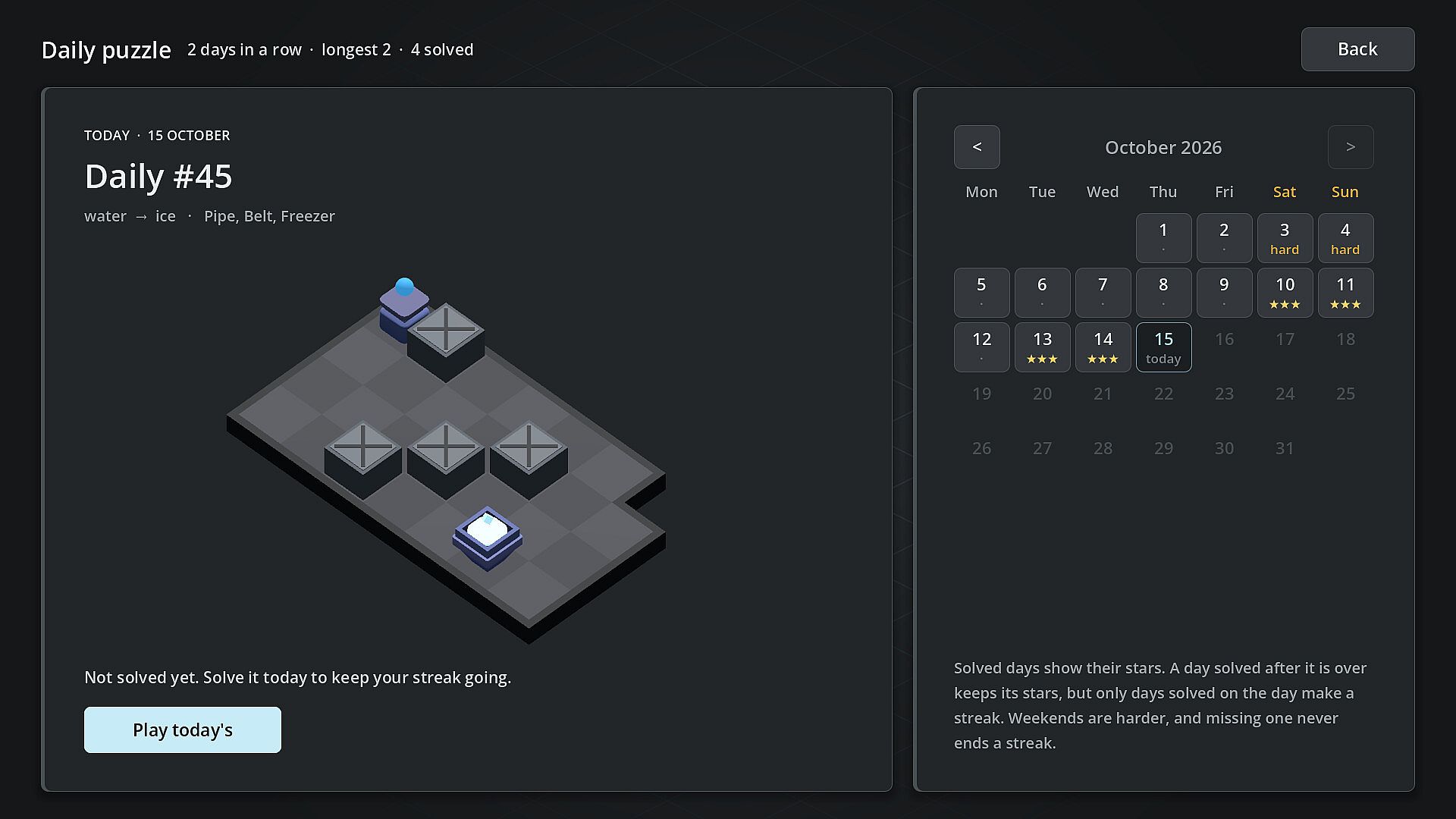
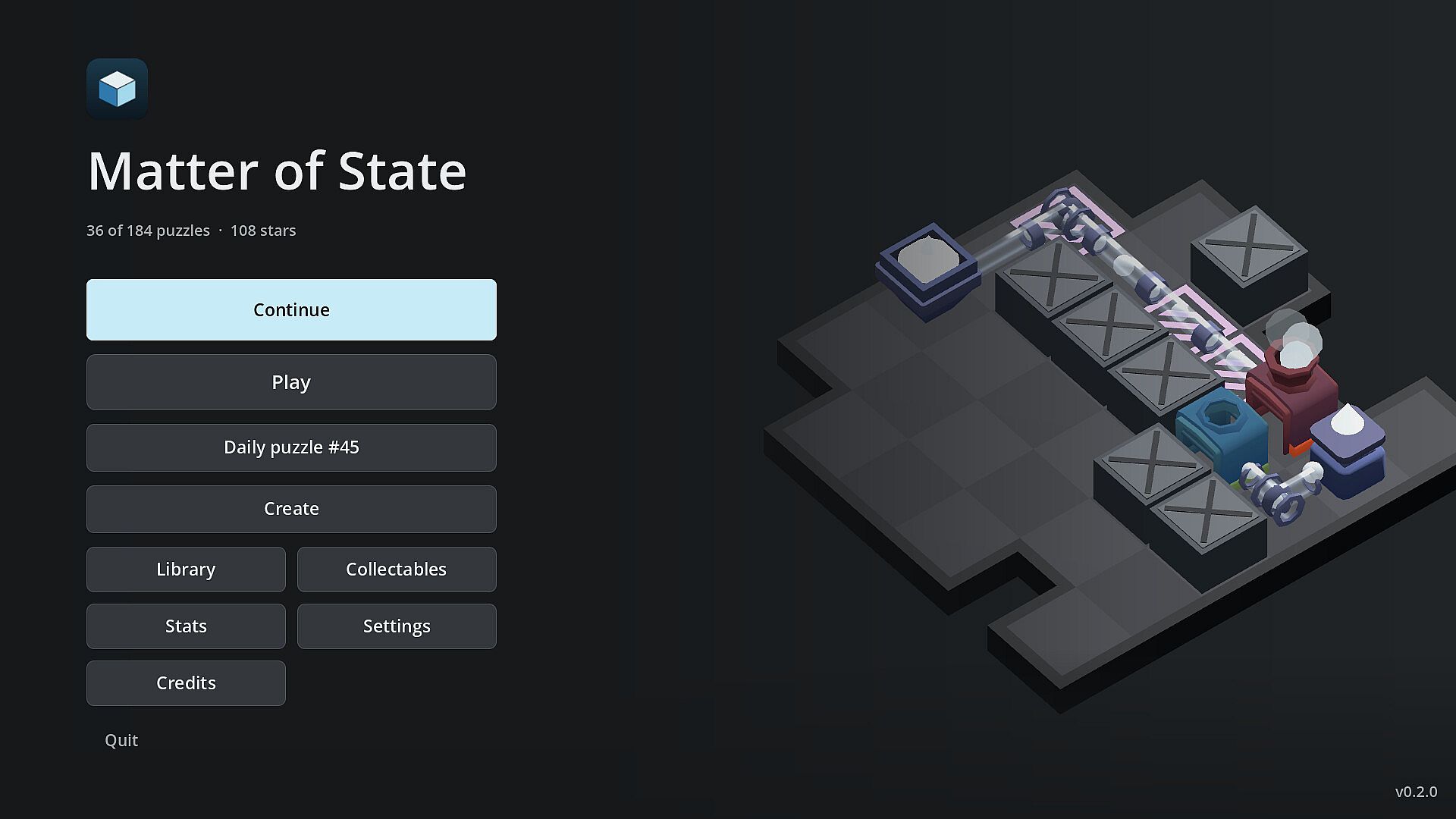
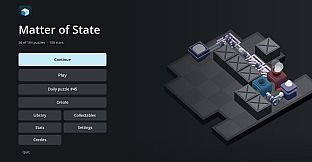
The main campaign consists of 184 puzzles spread across ten chapters. Each chapter adds new mechanics while maintaining the same core loop of routing and state conversion. A separate daily puzzle mode delivers one new board to every player each day. Completing the daily puzzle maintains a streak, and a calendar allows catch-up on missed days. Weekend dailies are larger and more demanding than weekday boards.
Players can also create and share their own puzzles through the built-in editor. Any level must be solved by its creator before it can be published to the Steam Workshop, guaranteeing that every shared board has at least one working solution. This creation mode supports the same full set of devices, terrain, and state rules used in the campaign.
Additional Features
A progressive hint system offers three levels of assistance when needed: a high-level idea, a list of the required components, and finally the placement of one tile at a time. Every stuck route receives a plain-language explanation. A comprehensive library displays every device and ground type in motion so players can study interactions before attempting a board. Standard undo, redo, and fast-forward controls support experimentation without penalty.
Full controller support is included, with the game designed to run comfortably on the Steam Deck. Matter is readable by shape as well as color for accessibility. A reduced-effects option and scalable interface accommodate different play styles and hardware. The game supports English, Italian, French, German, Spanish, Brazilian Portuguese, Polish, and Russian.
Is It Worth Playing?
Matter of State suits players who enjoy compact, rule-driven puzzles that reward careful observation of physical constraints rather than trial-and-error guessing. The emphasis on minimal solutions and verified optimal paths gives each board a clear sense of mastery once the three-star solution is found. Daily puzzles and the level editor extend the experience beyond the campaign for those who want ongoing challenges or wish to design their own boards.
The game contains no multiplayer components and focuses entirely on single-player puzzle solving. Its tight scope and consistent mechanics make it appropriate for short sessions or longer focused play. Players who appreciate logic puzzles built around clear, interacting systems will find the structure satisfying, while those seeking open-ended exploration or narrative elements may prefer other titles. The combination of campaign depth, daily variety, and creative tools provides substantial content for the right audience without unnecessary complexity.