


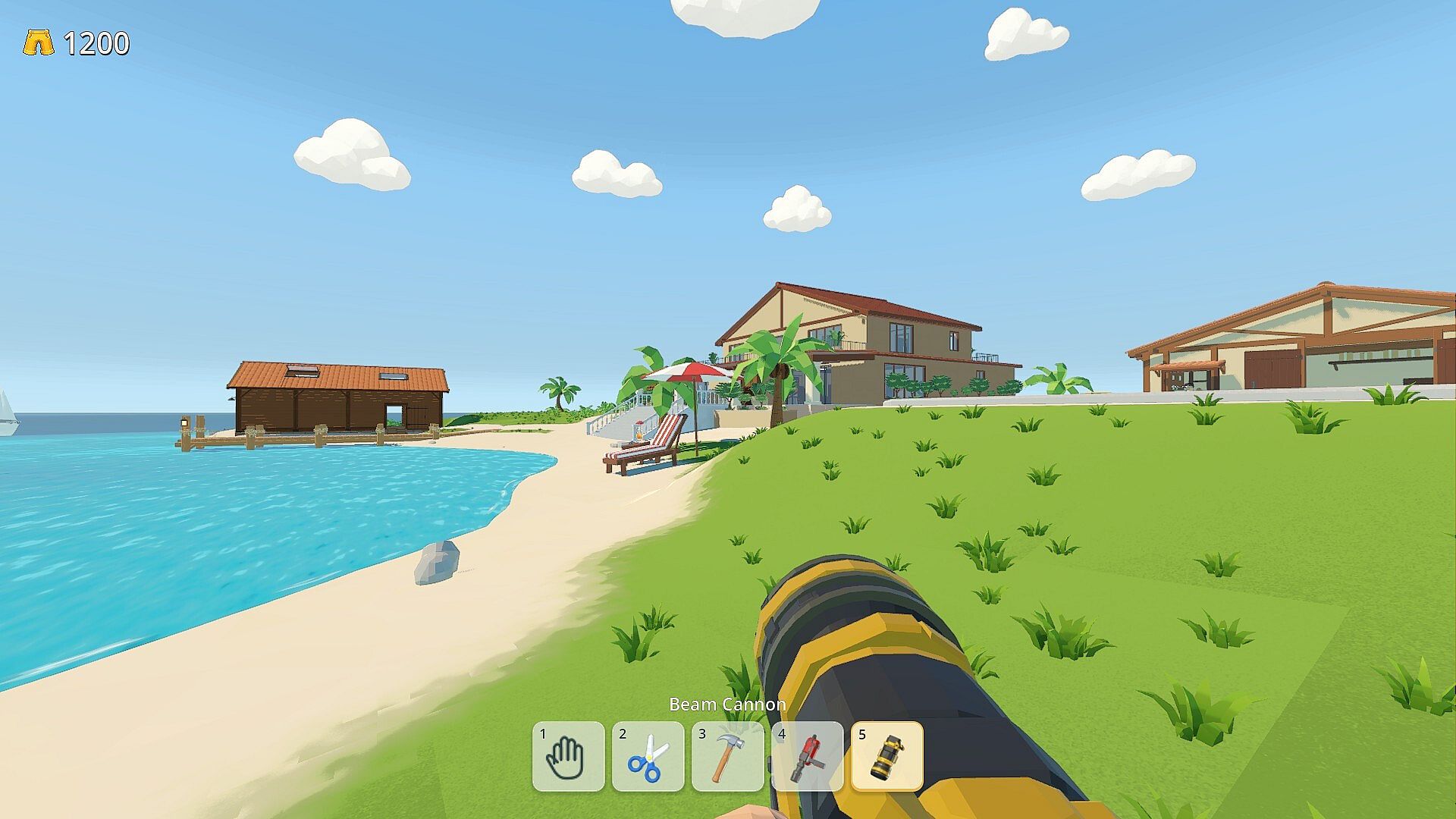


Money Burner is a first-person incremental simulation game set on a tropical island villa packed with valuables. Players take on the role of someone equipped with basic tools who progressively dismantles riches to fuel further destruction and expansion.
Gameplay
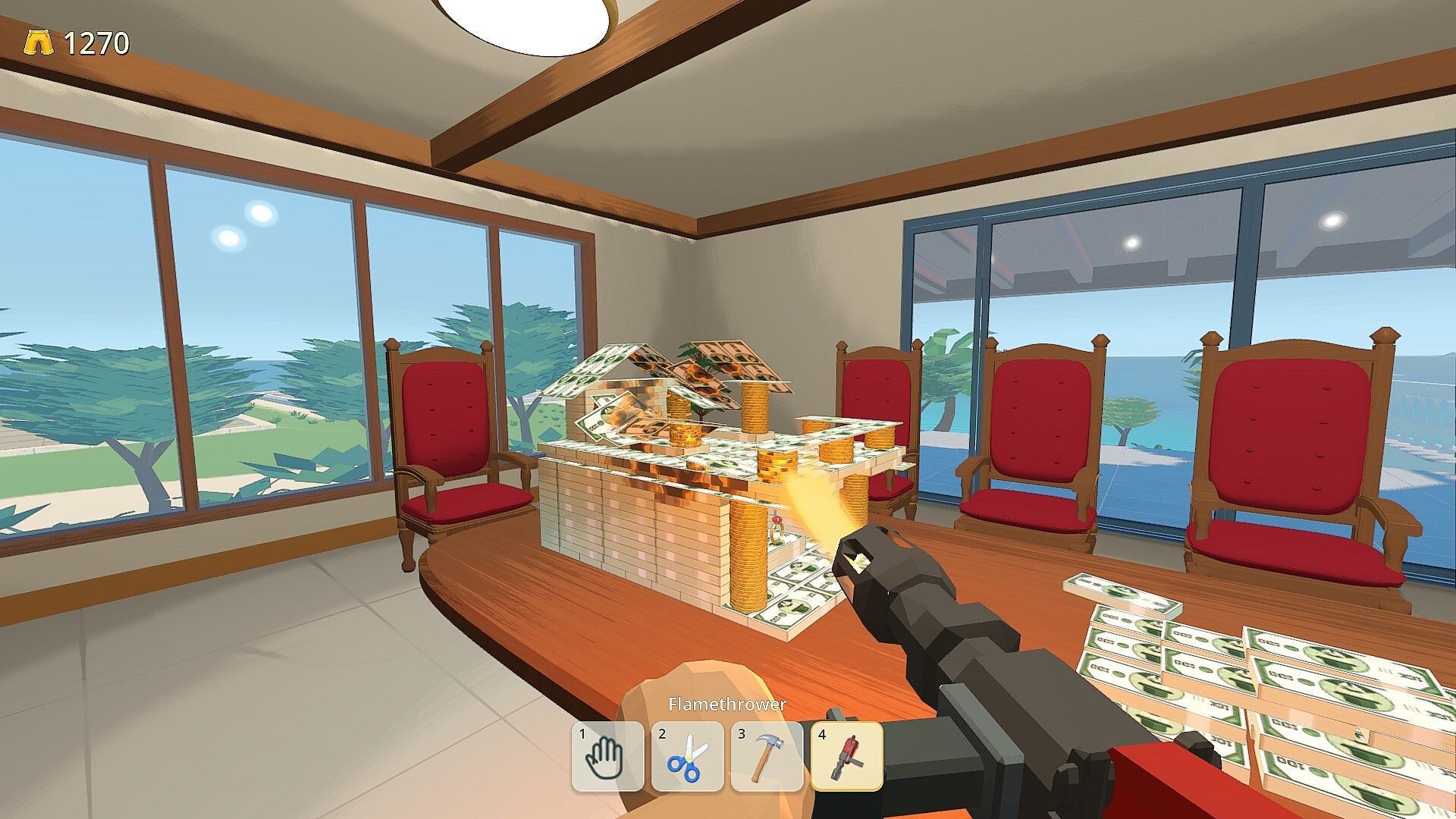
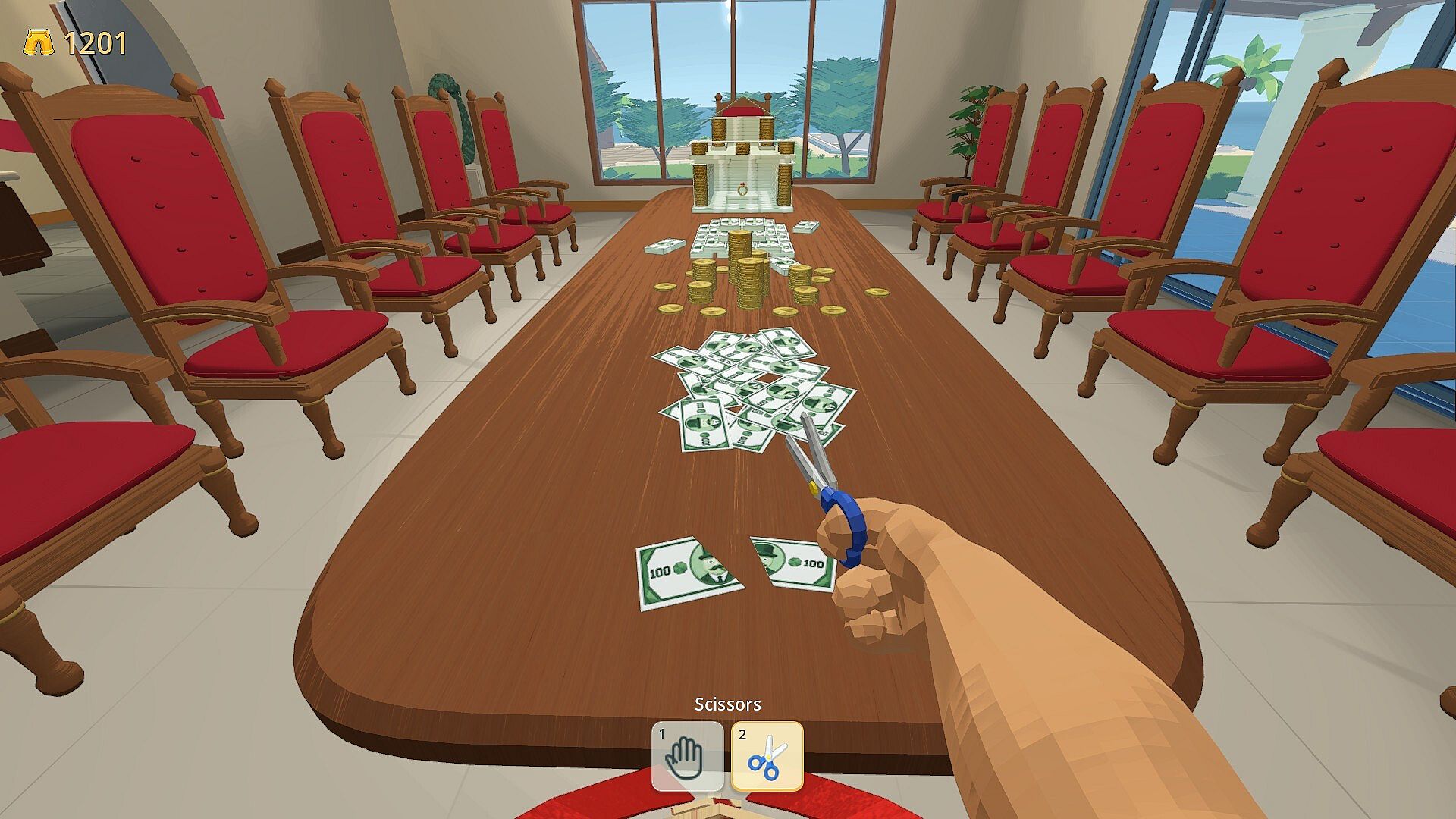
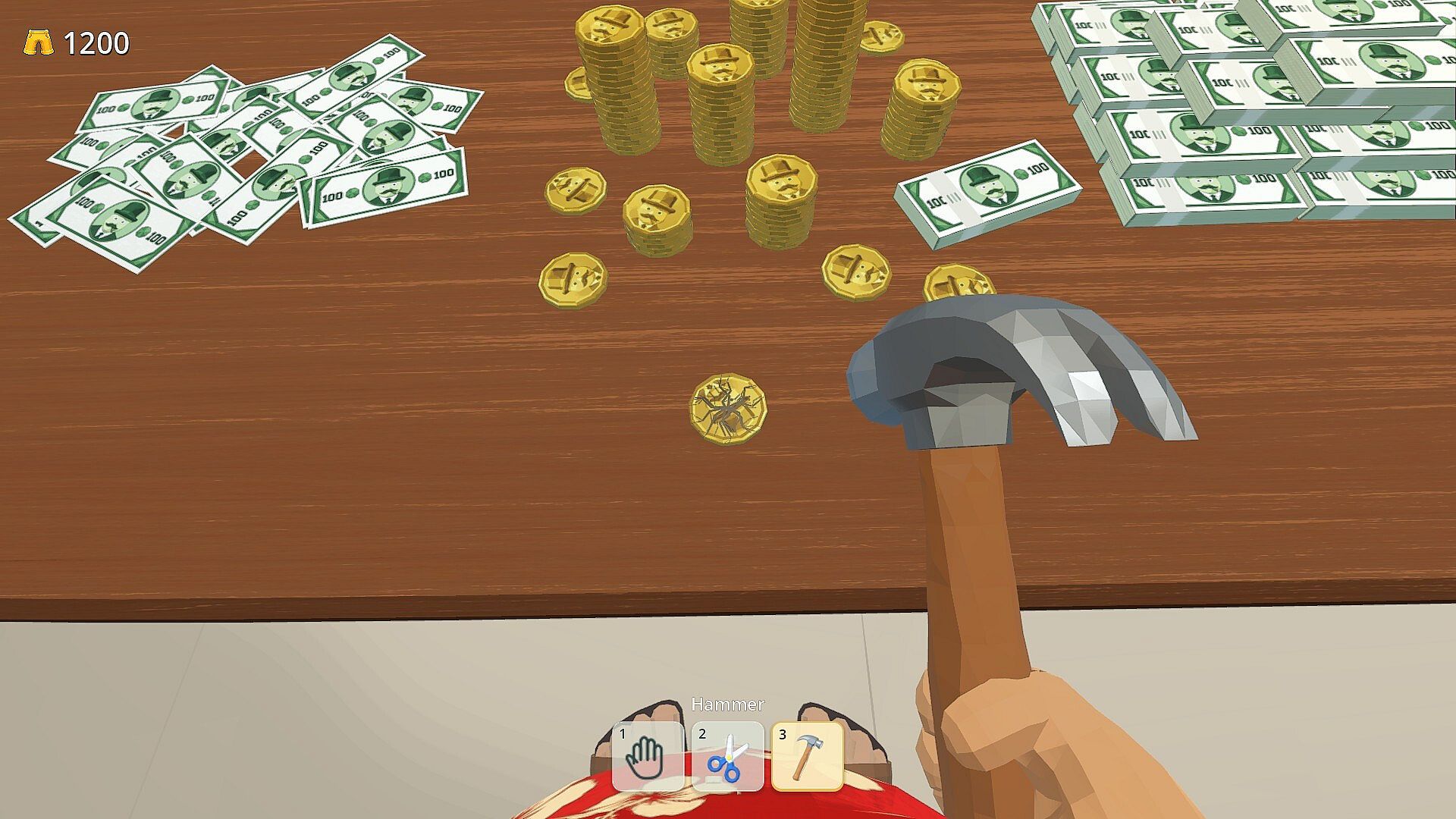
The core loop centers on destruction as the primary progression mechanic. Players begin with a simple pair of scissors to slice through stacks of banknotes. Each successful cut generates resources that unlock better tools and upgrades. Materials respond differently to various approaches, requiring players to adapt their methods. Paper yields to precise cuts, while gold demands heavier impact from a hammer. Fire becomes an option for sustained burning effects that clear areas more broadly.
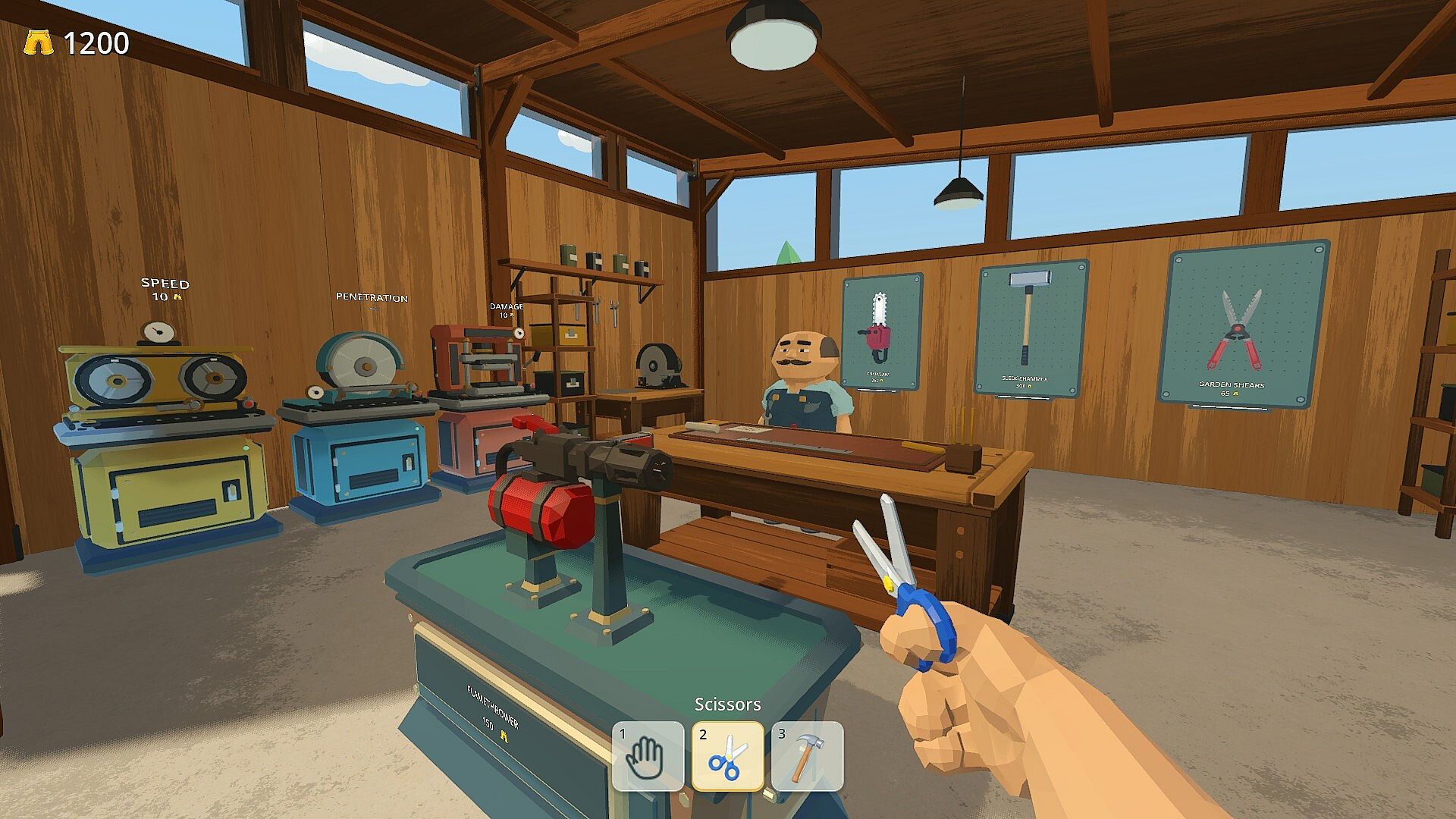
Upgrades focus on improving damage output and penetration to handle tougher items. The workshop serves as the hub for expanding the arsenal beyond initial tools. New options include flamethrowers for area effects, saws for rapid cutting, and a large laser cannon for high-impact clearing. Exploration involves locating sealed passages within the villa to access additional rooms filled with new valuables. These areas test upgraded capabilities and introduce fresh challenges in breaking down increasingly complex objects.
Progression builds through repeated cycles of targeted destruction. Players can focus on methodical disassembly of individual piles or shift to larger-scale efforts that affect entire sections of the house. Visual feedback shows paper splitting, metal fracturing, and charred remnants scattering as rewards accumulate for further improvements.
Game Modes
Money Burner operates as a single-player experience without separate named modes. The gameplay emphasizes an incremental structure where the same core activity scales through upgrades and new areas. Players control the pace by choosing between careful, piece-by-piece work or more aggressive, widespread destruction. This flexibility allows for different approaches within the unified villa setting, from methodical tool experimentation to rapid room-clearing sessions.
The absence of multiplayer or competitive elements keeps the focus on personal progression and experimentation with the growing set of tools. All activity ties back to the central villa environment, where exploration and upgrades drive continued engagement.
Progression and Tools
Tool acquisition follows a clear path from basic implements to advanced equipment. Early stages rely on scissors for fine work and hammers for resistant surfaces. Later stages introduce specialized items that handle volume or specific resistances more efficiently. The laser cannon represents one of the more powerful options for clearing large accumulations quickly.
Exploration rewards players with new targets that justify the investment in upgrades. Sealed sections open only after sufficient power is gained, creating a natural loop of destruction, reward, and expansion. This system encourages returning to earlier areas with better equipment to finish what was previously impossible.
Is It Worth Playing?
Money Burner suits players who enjoy incremental games built around a single satisfying loop of destruction and upgrade. The first-person perspective and focus on varied material interactions provide a tactile sense of progress through the villa. Those drawn to casual simulation titles that reward experimentation with tools will find the core systems align with that preference.
The game remains in a state where the described mechanics form the complete experience, with no additional content layers confirmed. It appeals most to individuals comfortable with repetitive yet escalating tasks in a contained environment rather than those seeking narrative depth or competitive play. Availability on PC makes it accessible for short sessions or longer focused playthroughs centered on maximizing destruction output.