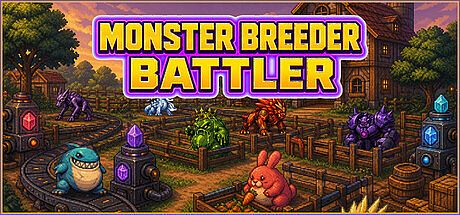


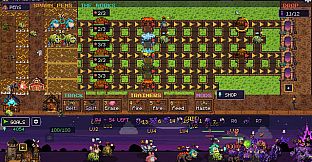
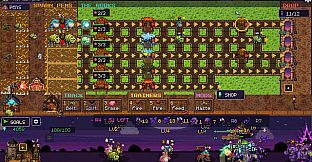
Monster Breeder Battler is a strategy simulation game for PC that combines monster breeding with lane defense. Players manage a production line on a single screen to create and enhance creatures that automatically engage waves of enemies below.
Gameplay
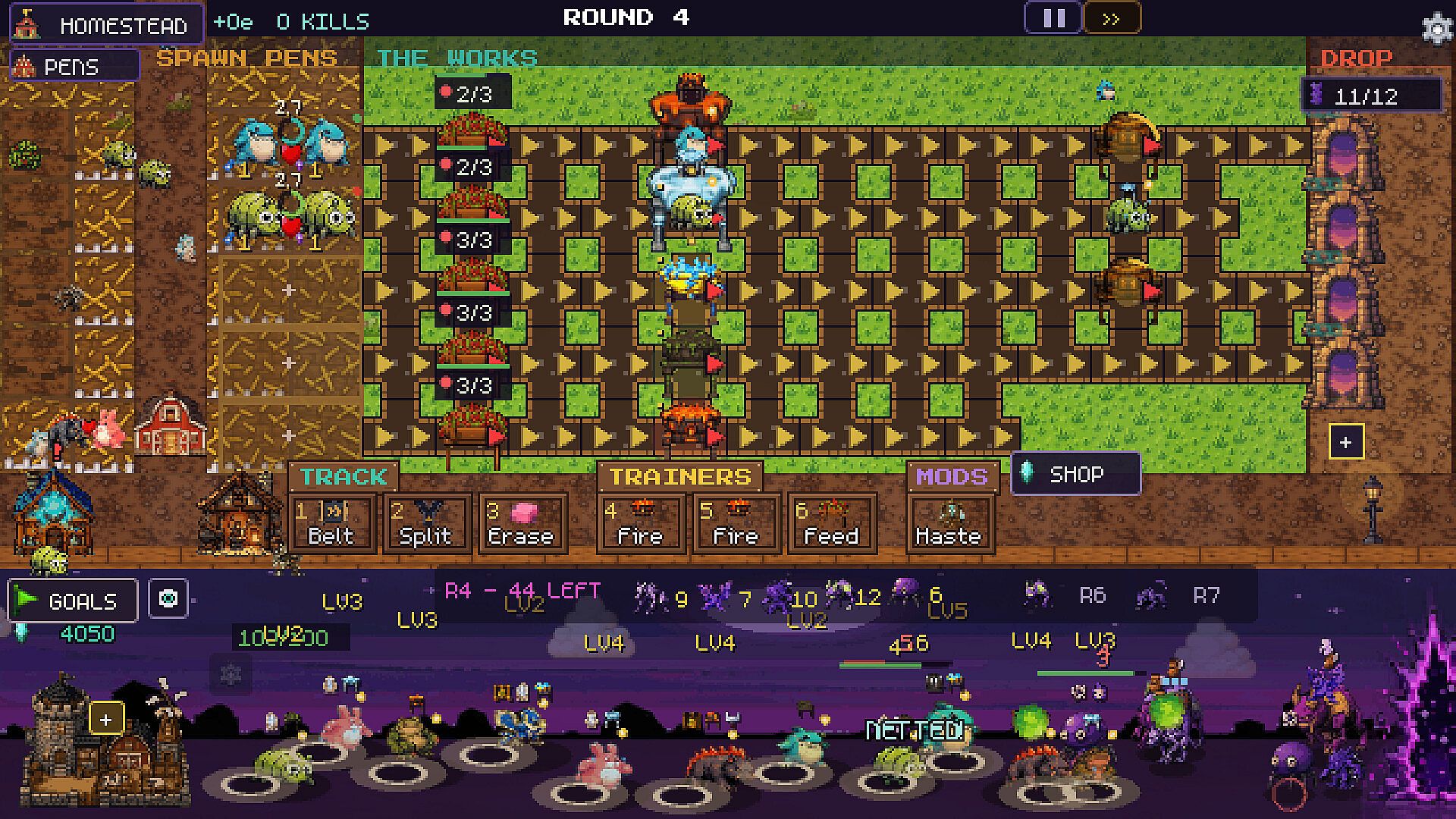
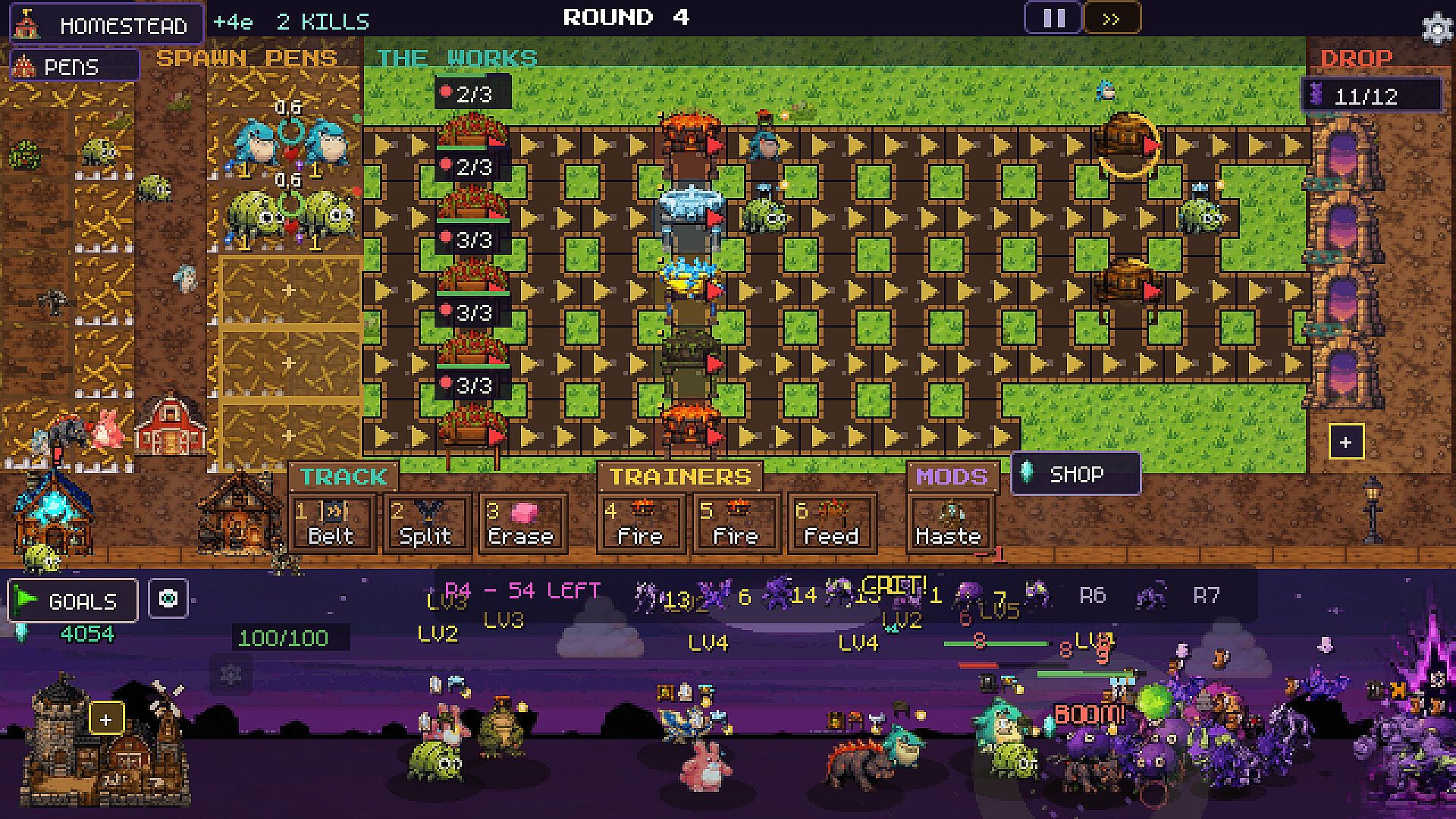
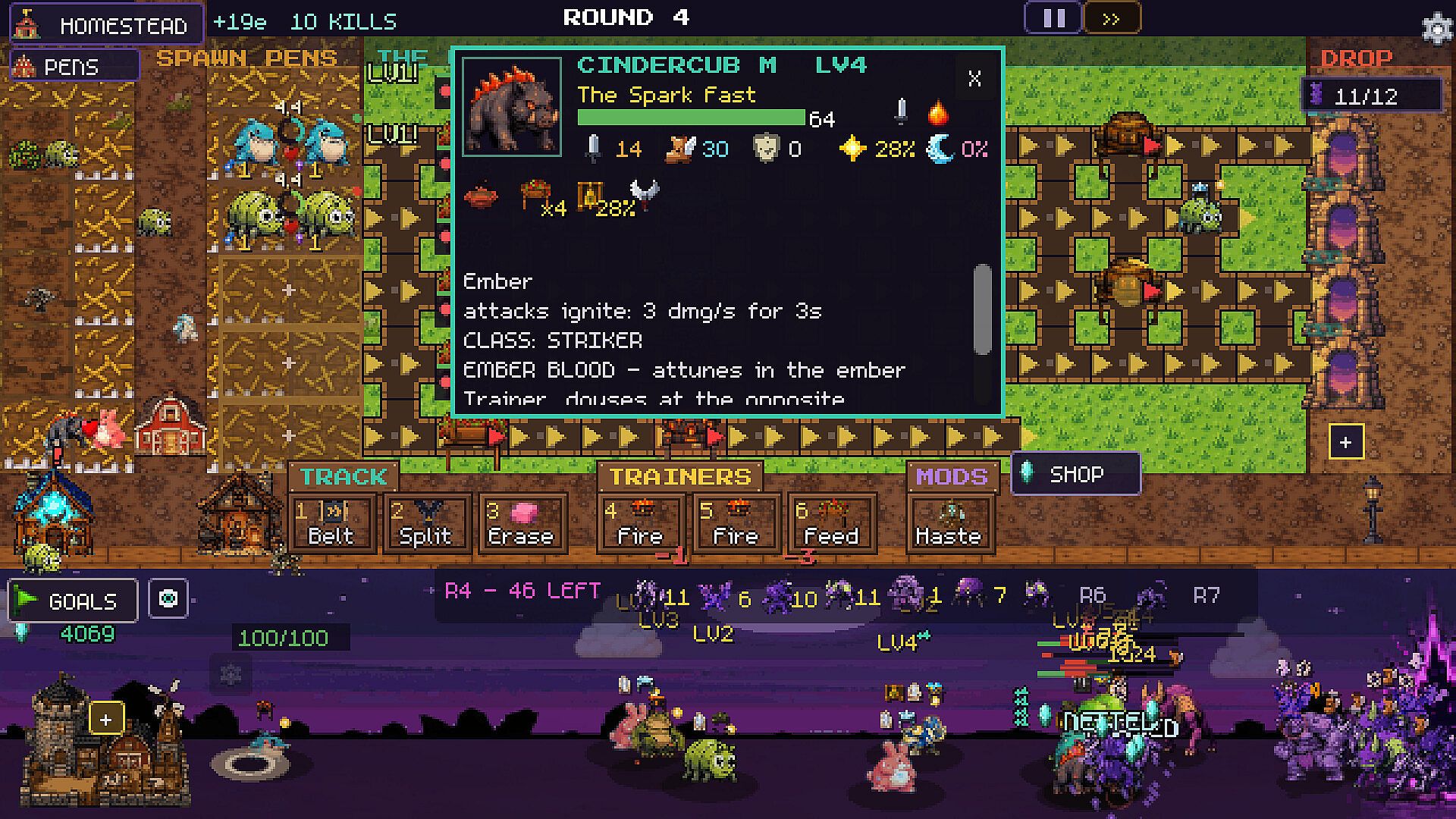
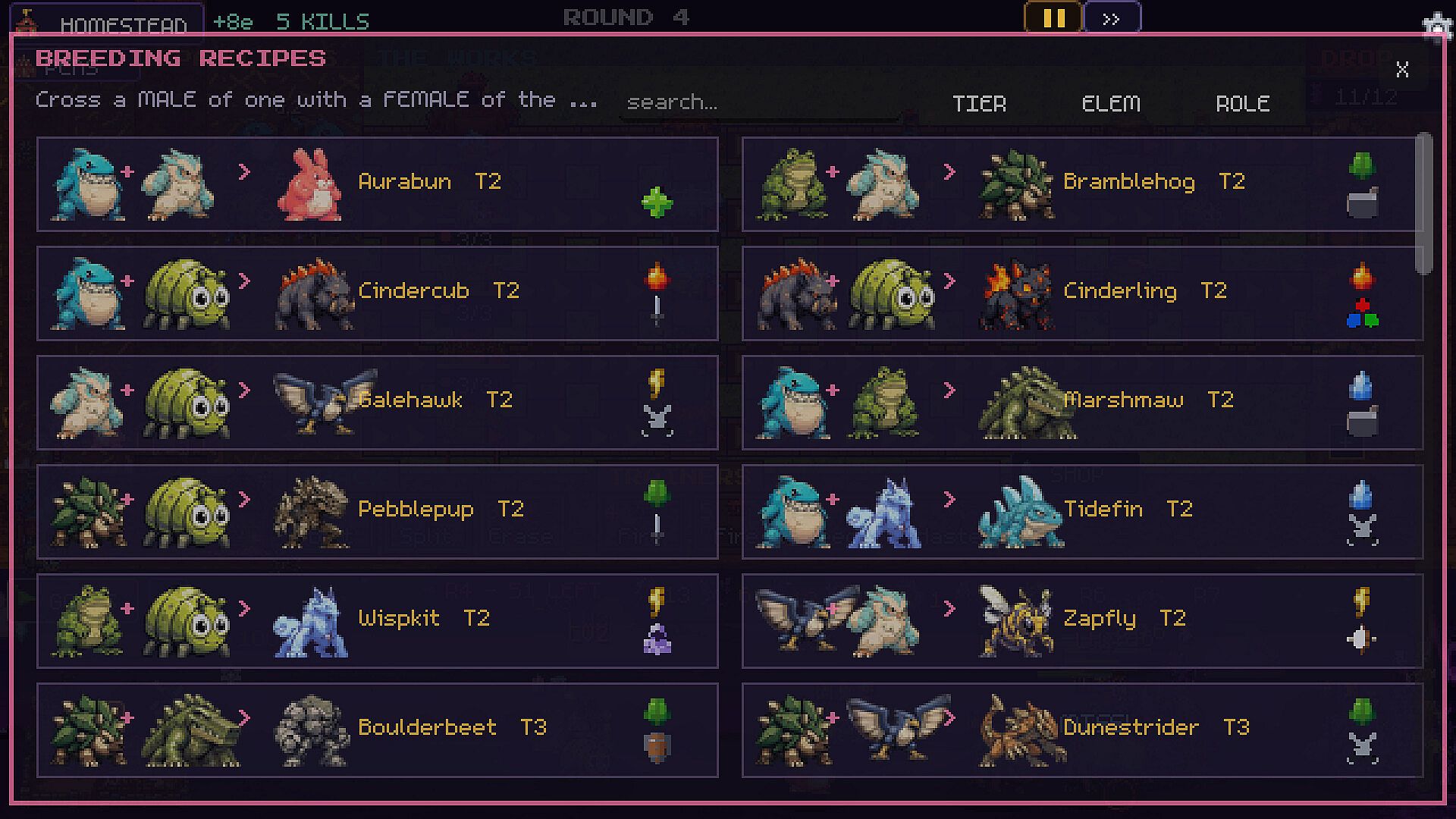
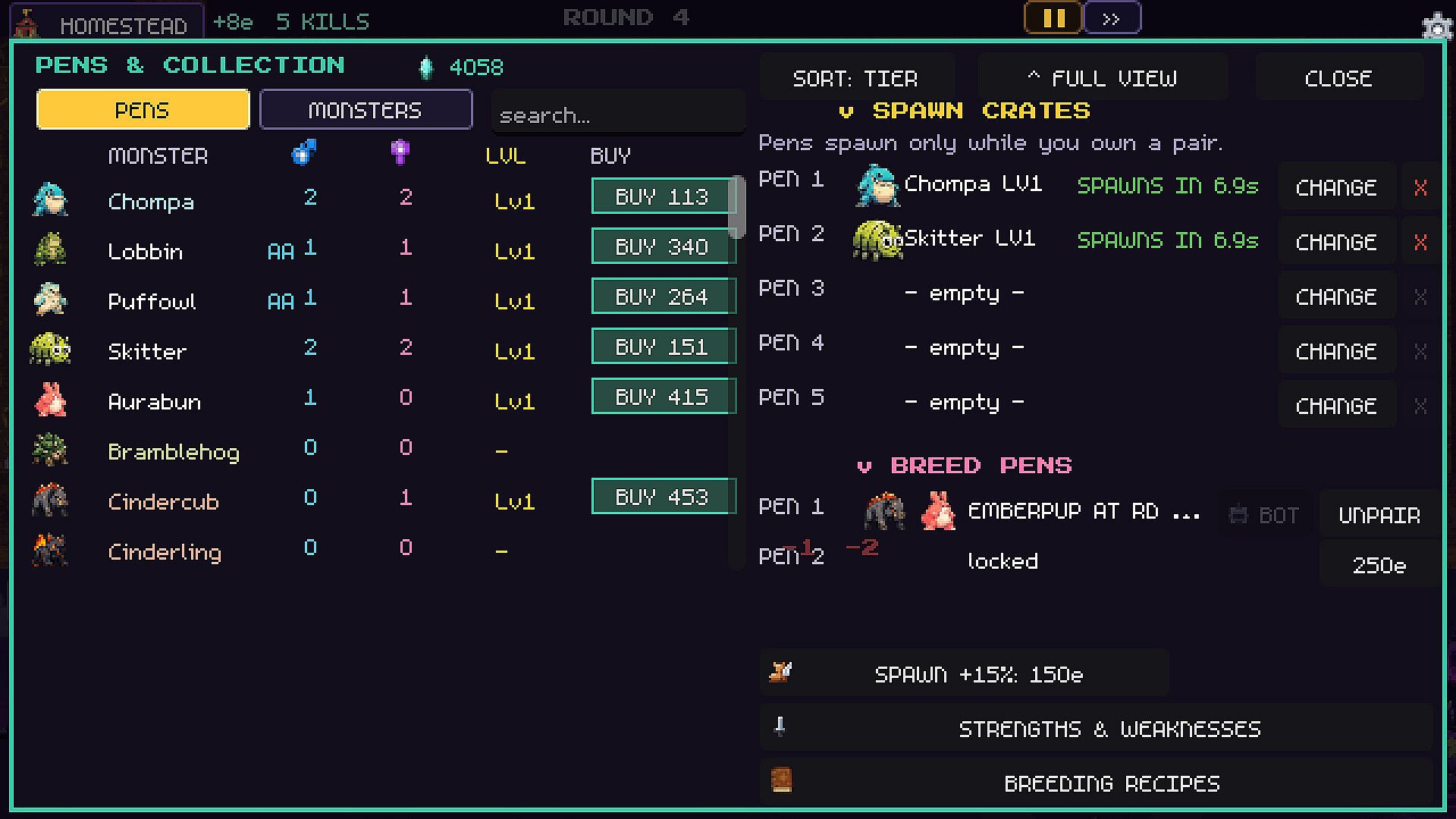
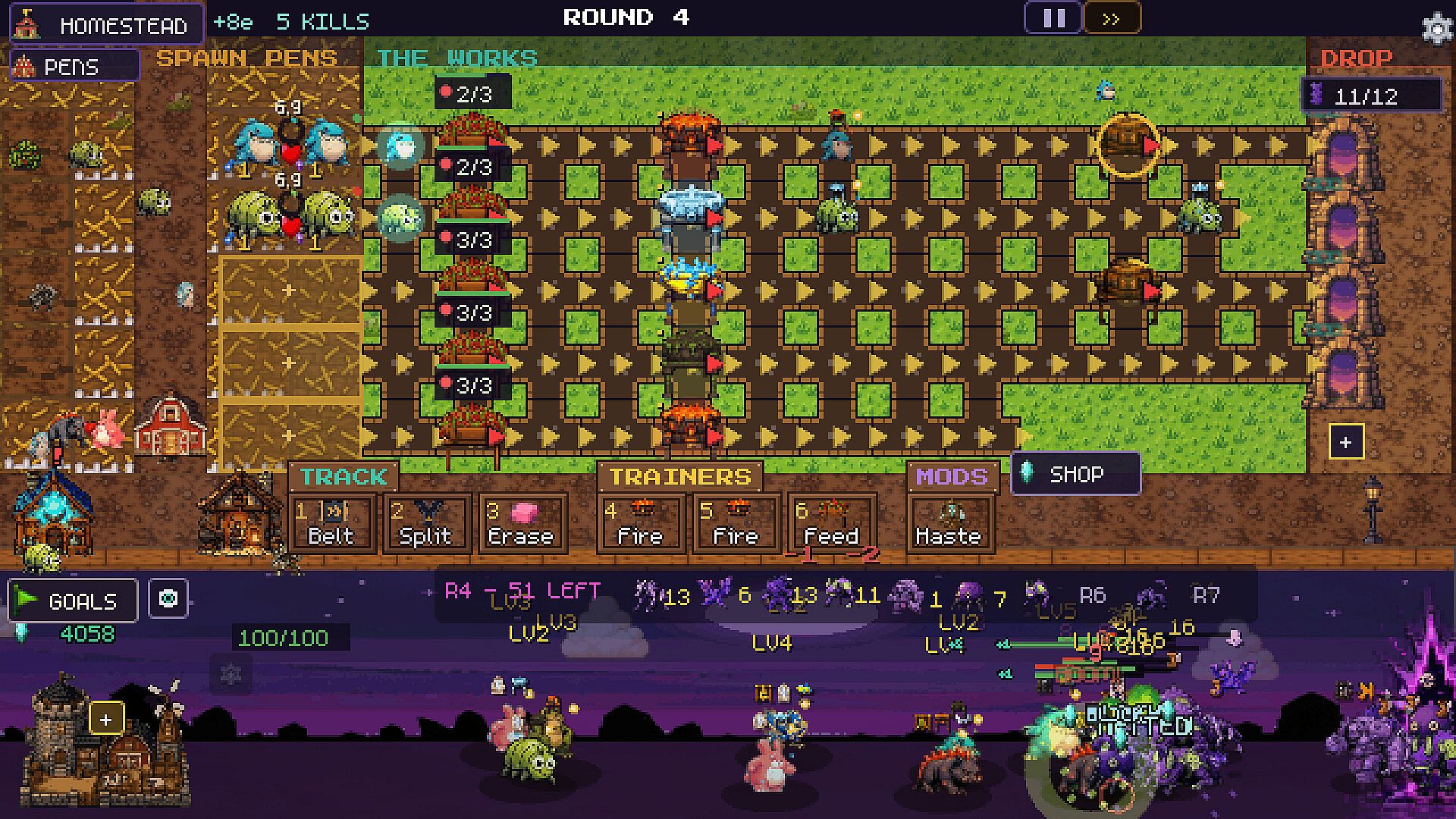
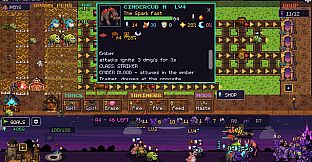
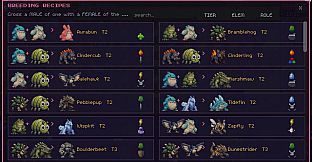
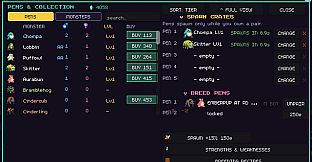
The core loop centers on a split-screen setup. The upper section serves as the ranch where players construct and optimize a production line using spawn crates, conveyors, Element Baths, and berry feeders. These machines breed monsters from four starter species and apply buffs based on the exact route each creature travels through the system. Fifty breedable species across five tiers result from a 46-recipe breeding tree, with the path determining final traits and capabilities.
Monsters descend into the lower lane to hold the line against shadow waves emerging from a rift. Throughput directly translates to defensive power, as every creation from the upper line contributes to the fight. Deaths remain permanent, so fallen monsters leave gaps that the production line must compensate for in subsequent efforts. Between waves, players receive advance previews of the next enemy composition and access a test bench for experimentation. This allows precise retooling of the line before committing to the next round.
Additional mechanics include rift debris that can obstruct the board, cleared either by spending essence or by directing critters into it. Castle upgrades provide ongoing support, while a run-buff tracker offers temporary advantages when the main line falls short. All visuals consist of hand-made pixel art rendered at 640x360 resolution within the Godot 4 engine.
Game Modes
Three difficulty settings shape the experience. Cozy Rancher offers a relaxed pace for learning the breeding systems and line management. Rancher presents standard challenges with balanced wave intensity. Nightmare Shift increases pressure through faster or denser enemy compositions.
Standard sessions run for fifteen rounds. Success seals the rift and records a victory. Players may instead continue into Endless mode to test how far the established production line can progress against escalating threats. Late waves feature rotating bosses such as the Gravetide Empress, the Rot Matron, and the armoured Void Colossus. Penny's Goal Board tracks twelve session objectives that award rewards upon completion, encouraging varied approaches across multiple runs.
Progression and Systems
Breeding forms the foundation of long-term strategy. Starting with four base species, players navigate the recipe tree to unlock higher tiers and specialized variants. Element Baths and feeders modify passing monsters, while conveyors dictate movement paths that influence final attributes. The system rewards careful planning, as route selection directly shapes combat effectiveness in the lane.
Resource management extends beyond breeding. Essence gathered during waves funds debris clearance or other interventions. Permanent losses force adaptation, pushing players to refine the upper line for greater output and resilience. Castle upgrades accumulate across runs, providing persistent benefits that support more ambitious Endless attempts.
Audio and Presentation
A 12-track original soundtrack accompanies gameplay, accessible through an in-game jukebox for custom listening. The pixel art style remains consistent across every species, machine, and enemy type, delivering a crisp, hand-crafted aesthetic suited to the focused single-screen format.
Is It Worth Playing?
Monster Breeder Battler suits players who enjoy deliberate strategy and iterative optimization in a compact format. The breeding tree and route-based buffs create meaningful decisions that carry directly into lane defense outcomes. Wave previews turn each retool into a calculated choice rather than a gamble, while permanent deaths add weight to line maintenance. Those drawn to indie simulation titles with clear feedback loops between production and combat will find the fifteen-round structure and Endless option provide repeatable depth. The three difficulty tiers accommodate different experience levels, and goal tracking adds structure without overwhelming the core systems. Availability on PC makes it accessible for sessions focused on refining a single production line against known threats.