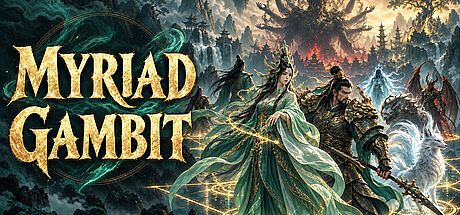



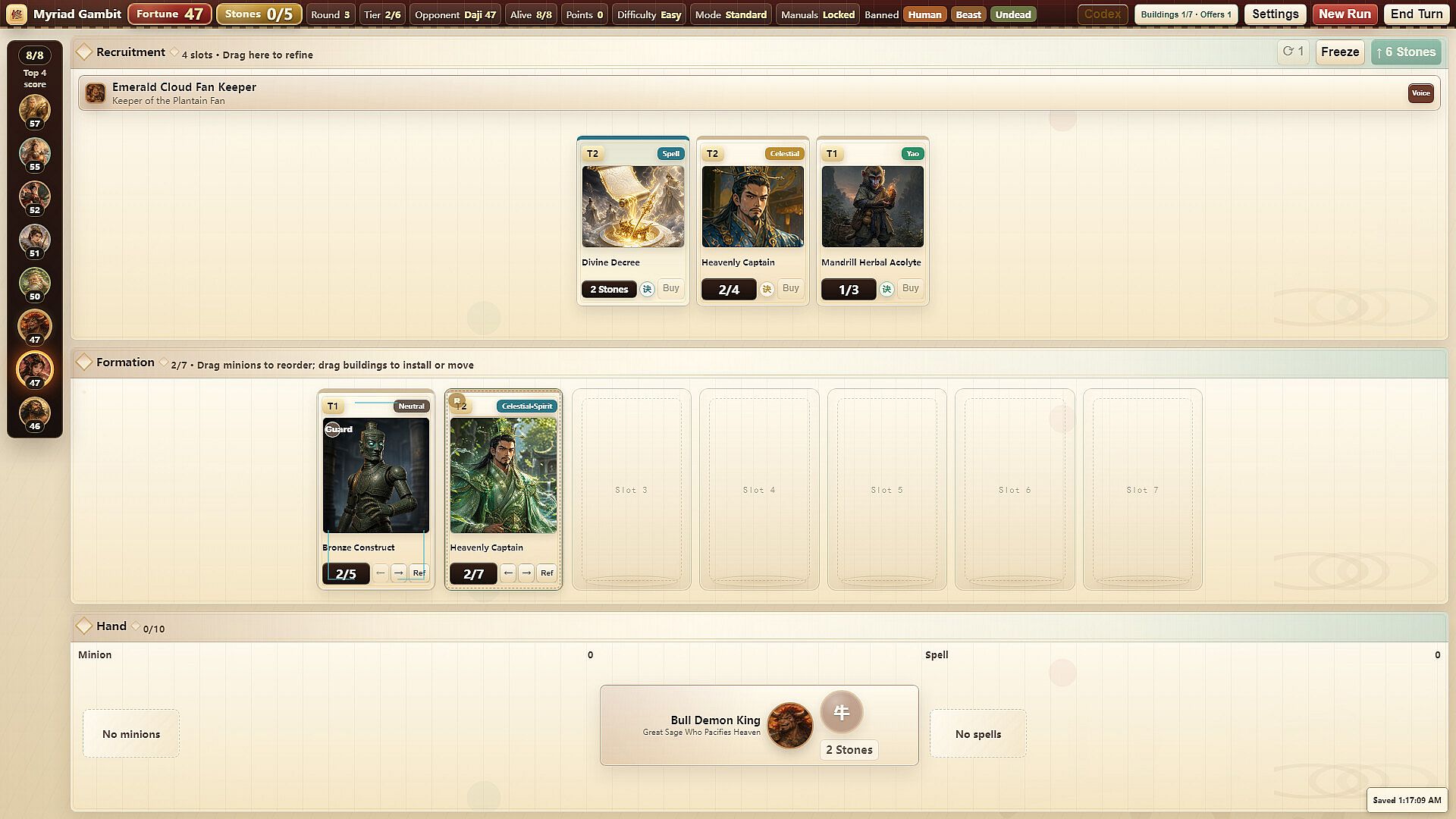
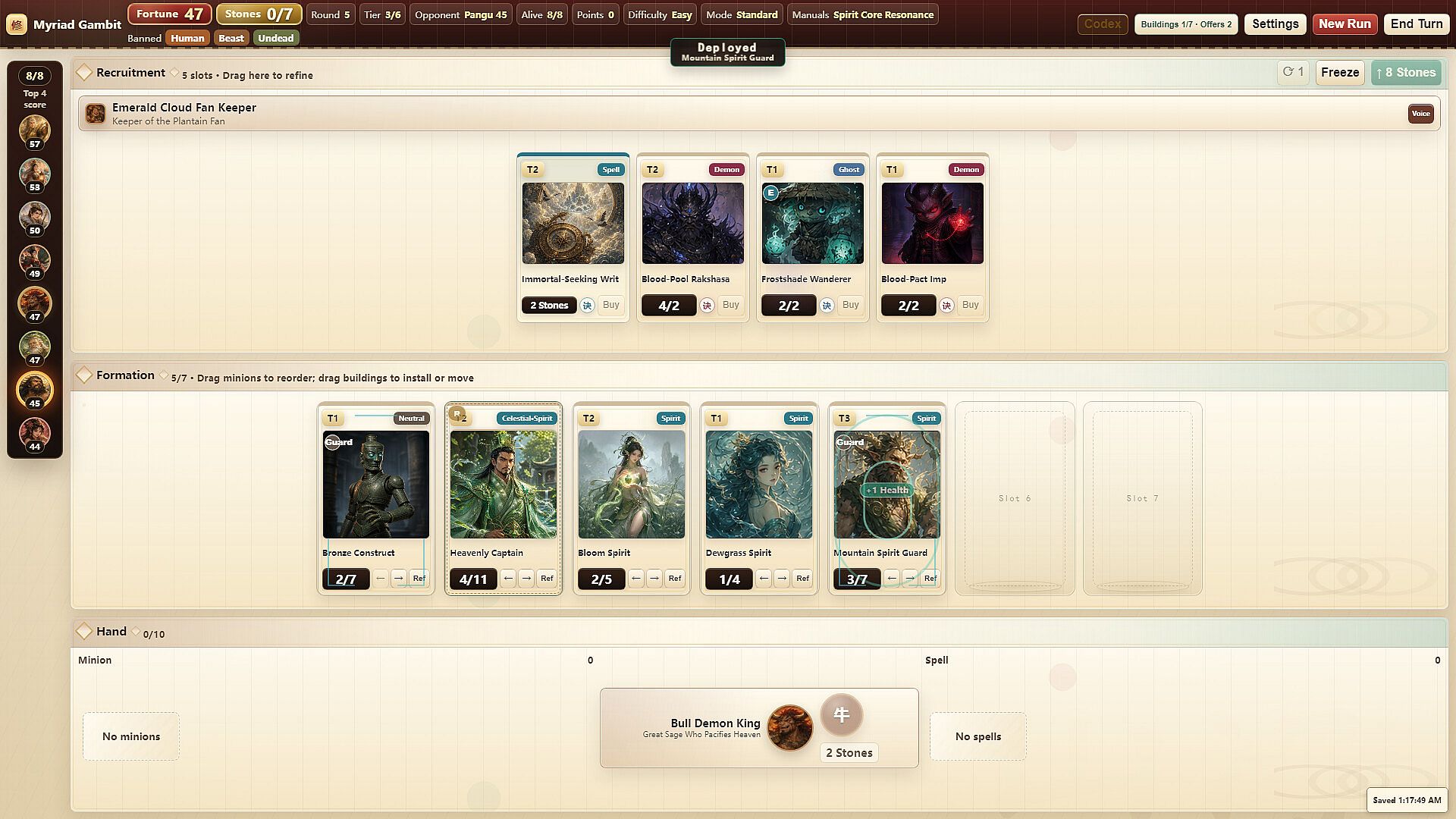
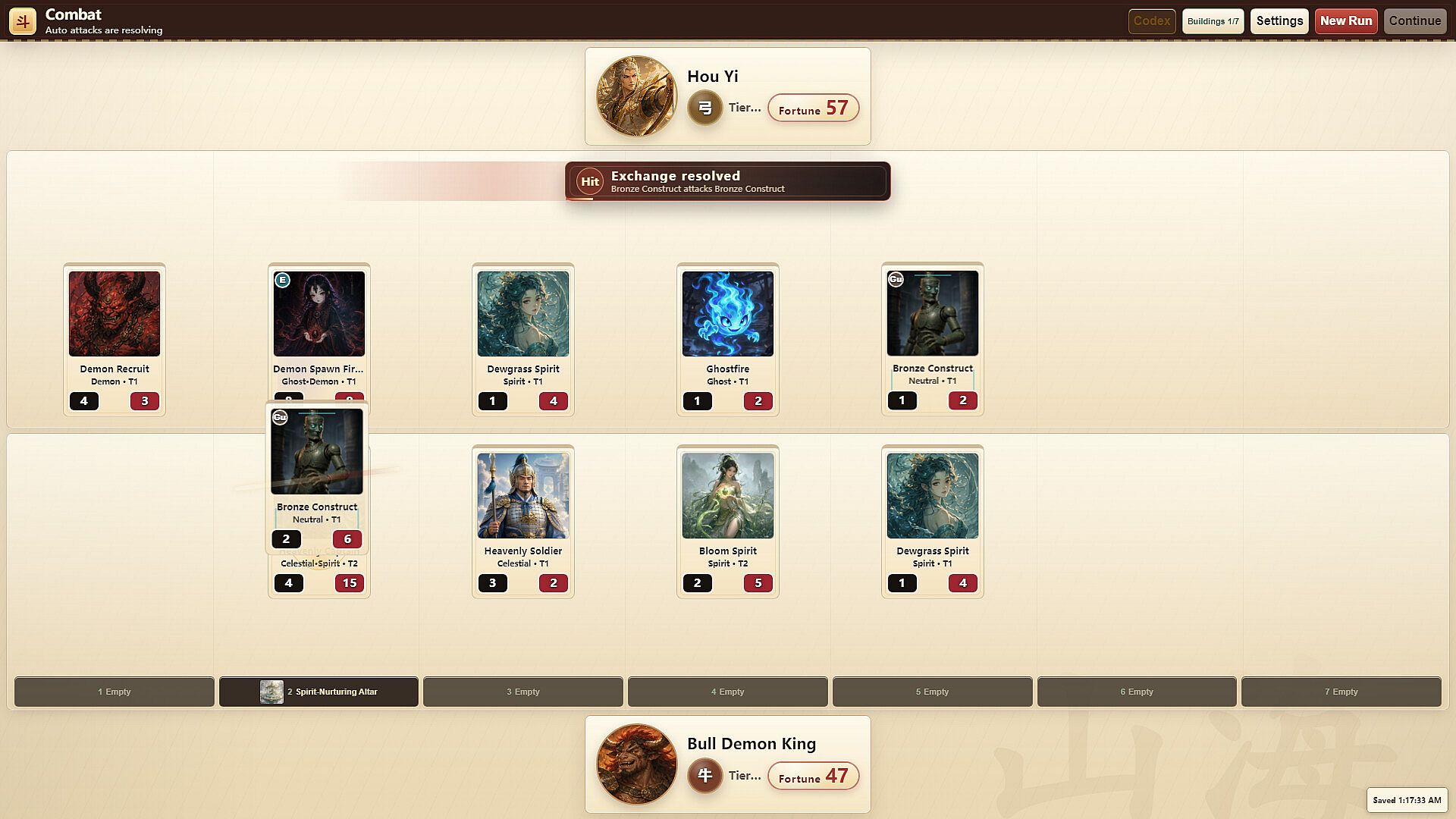
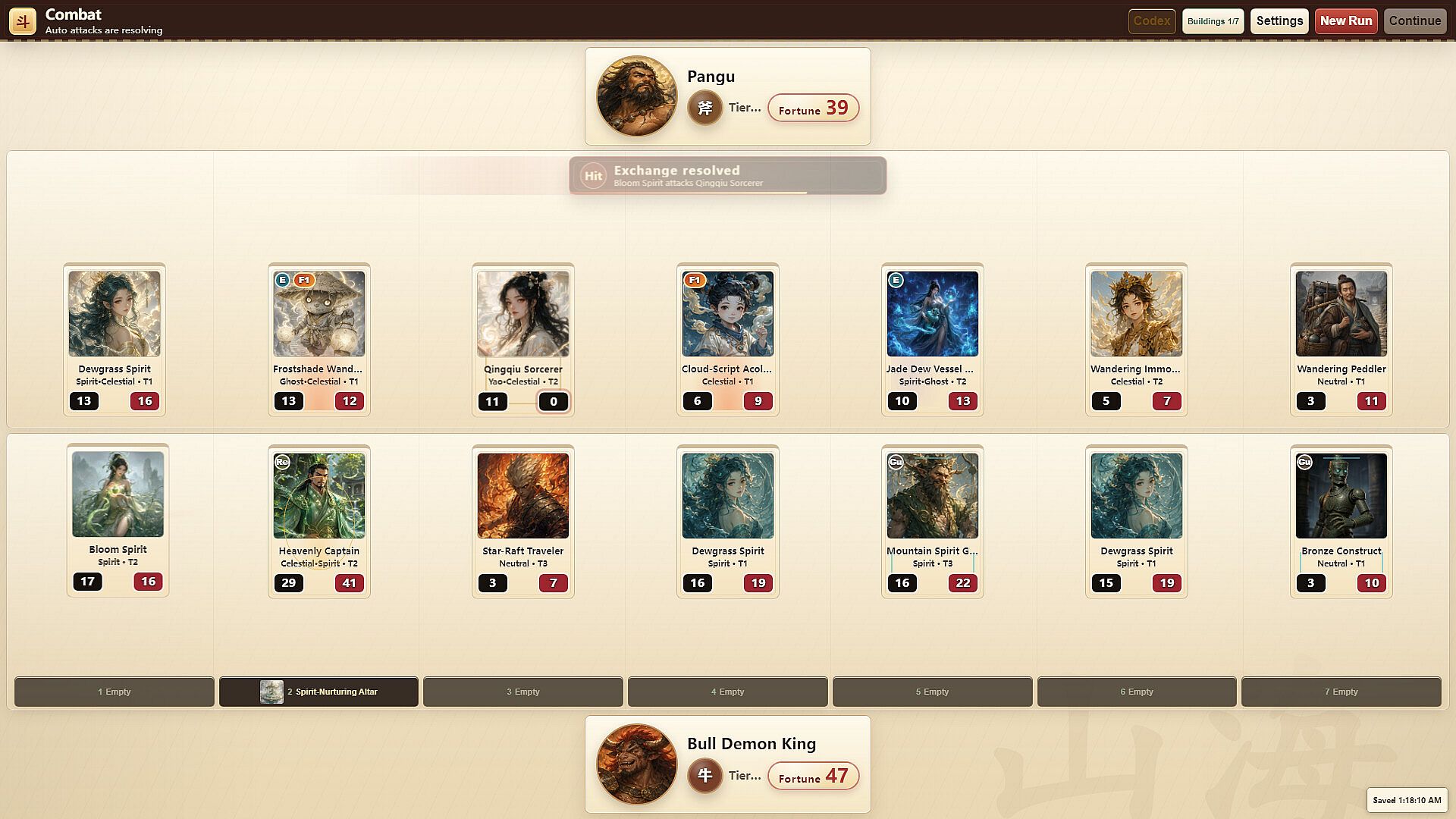
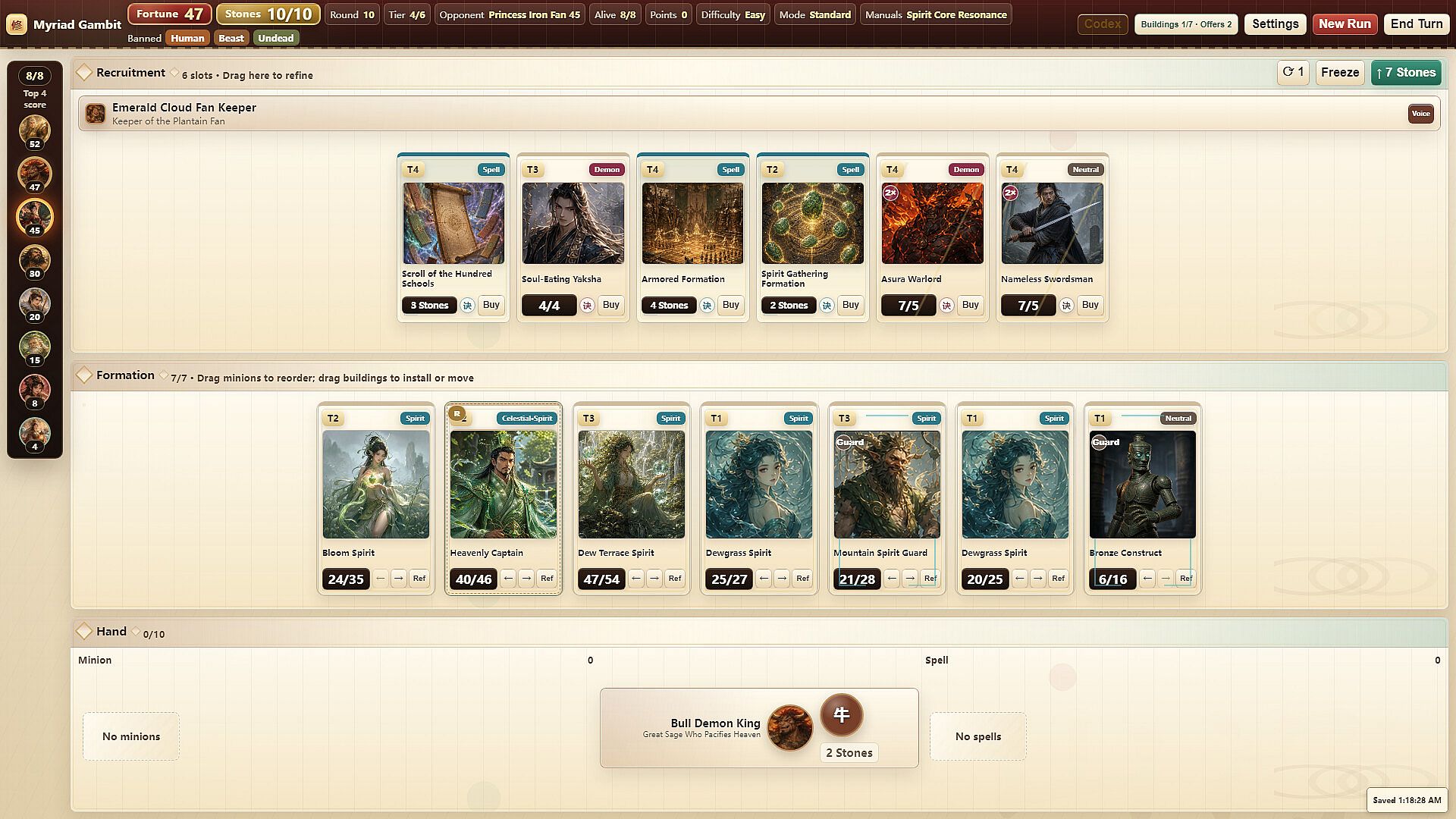




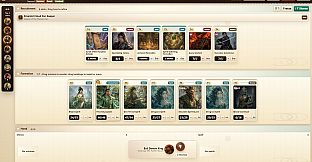

Myriad Gambit is a single-player strategy auto battler set in a world drawn from Chinese mythology. Players select one of twenty mythic heroes and build formations to outlast seven AI opponents across recruitment rounds and automatic battles. The core loop centers on spending Spirit Stones to recruit units and cast spells, advancing cultivation tiers, and refining a seven-slot formation between rounds until only one champion remains.
Gameplay
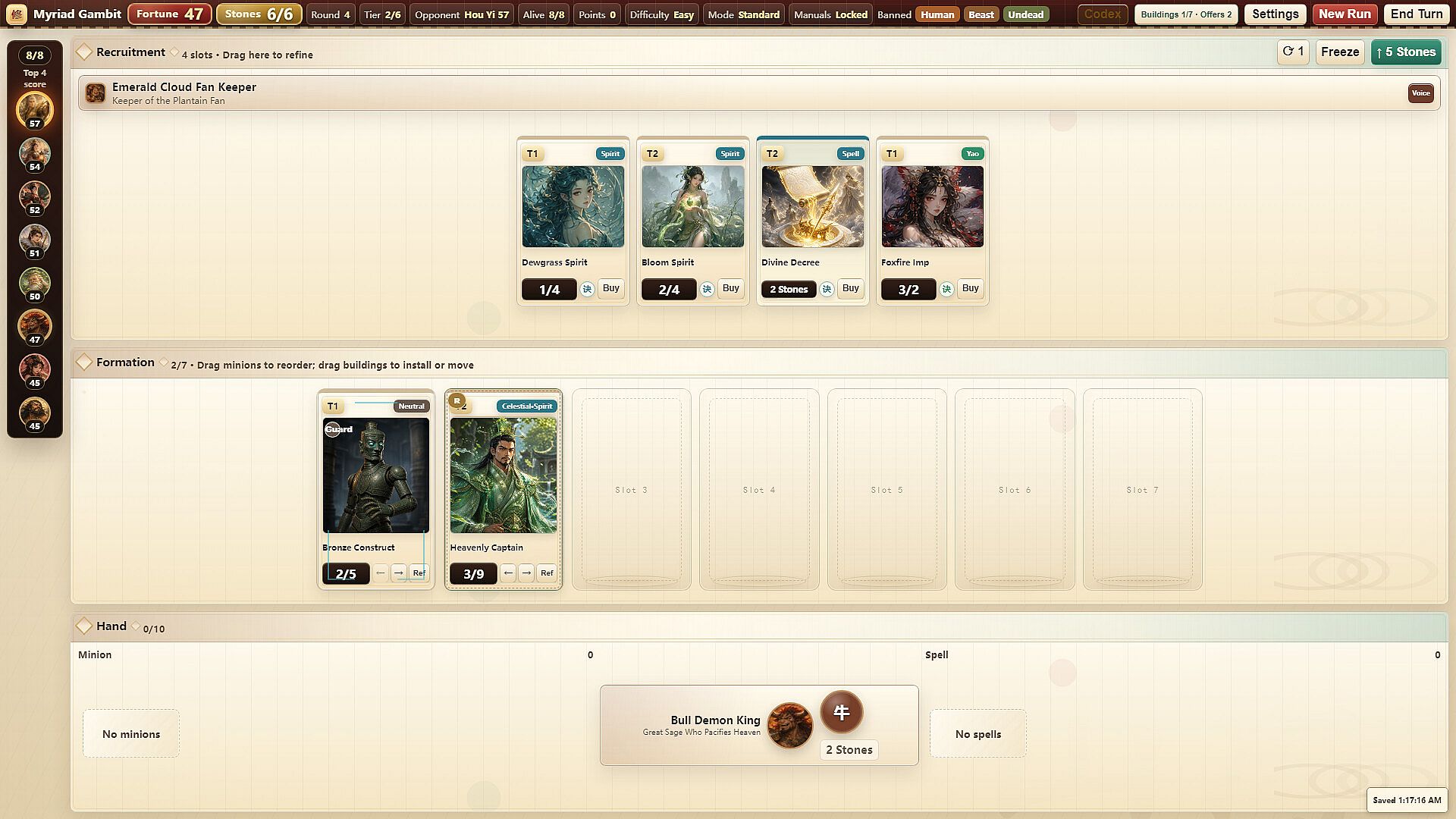
Each run begins with hero selection and proceeds through phases of recruitment, spell use, and automated combat. Recruits occupy seven fixed positions where adjacency and role assignment matter. Front slots often favor defensive units, while rear positions suit damage dealers that gain bonuses from neighboring allies. Three identical recruits can merge into a golden True Form, unlocking a reward that expands options for future rounds.
Eight tribes provide distinct growth mechanics: Celestials, Demons, Yao, Ghosts, Spirits, Undead, Humans, and Beasts. Three tribes are randomly excluded per run, forcing adaptation to the remaining pool plus a neutral set. Spells and cultivation manuals bolster recruits, while structures placed in dedicated slots allow compatible units to shift forms. Tribal synergies emerge through careful positioning and manual selection, rewarding experimentation across multiple attempts.
Cultivation progression ties directly to performance. Higher tiers grant stronger abilities and more Spirit Stones, shaping long-term strategy. The system encourages replay as players test different hero abilities against the same tribal exclusions and formation constraints.
Game Modes
A Hundred Schools mode introduces doctrines and opening stratagems that alter starting conditions and long-term incentives. This layer adds variety to standard runs without changing the fundamental auto-battler structure.
Four difficulty settings scale enemy strength and resource availability. Easy and Normal serve as entry points for learning mechanics, while Hard demands tighter formation management. Hell difficulty culminates in a multi-phase boss trial. After securing first place, players read an announced edict, choose a countermeasure, and adjust the formation before the final clash. Victory on Hell requires both the top ranking and a cleared trial.
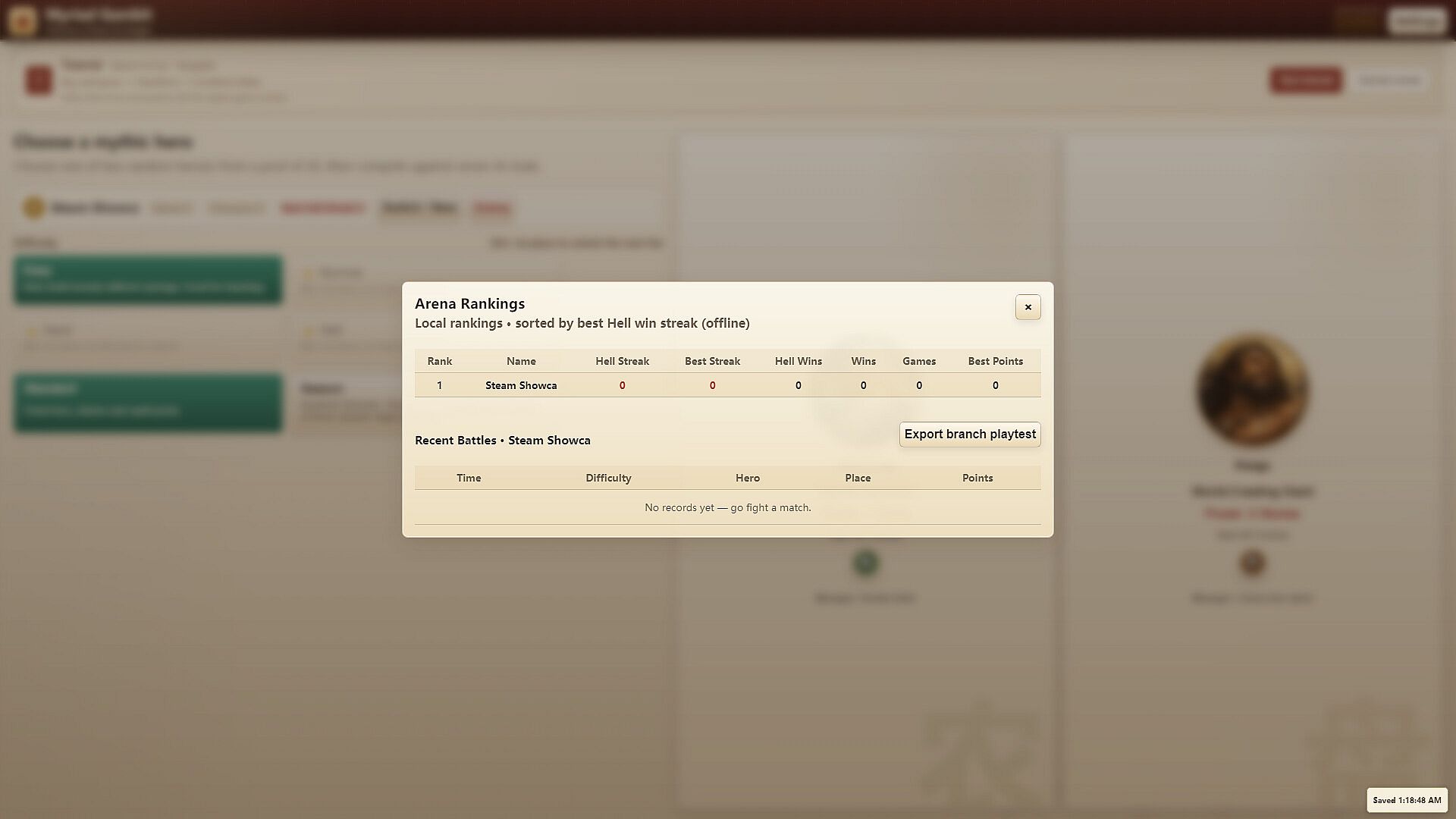
Local profiles track current and best streaks. A failed Hell attempt resets the active streak. Rankings sort profiles first by highest Hell streak, allowing comparison of saved device profiles. Automatic saves permit resuming interrupted runs, and battle-speed options plus adjustable visual effects support repeated play.
Key Systems and Features
One hundred forty base recruit cards populate the eight tribes and neutral pool. Heroes bring unique starting abilities that influence early recruitment priorities. Structures and form changes add another dimension, letting players convert compatible recruits into alternate versions mid-run.
Interactive tutorials replay with variations to reinforce positioning and synergy rules. The single-player PvE focus means all opponents are computer-controlled, with no multiplayer component. Interface text, rules, and subtitles support English and Simplified Chinese, while character voices remain in Chinese with English subtitles.
Is It Worth Playing?
Myriad Gambit suits players who enjoy deliberate formation building and iterative experimentation in an auto-battler format. The emphasis on tribal exclusions, True Form merges, and Hell boss trials creates meaningful decision points across runs. Local streak tracking and profile comparisons provide personal progression goals without external leaderboards.
Those seeking quick sessions benefit from adjustable battle speeds and automatic saves, while completionists can pursue Hell victories and higher difficulties. The offline design and focused scope make it accessible for repeated short or extended play sessions on PC. The combination of mythology-inspired visuals, structured progression, and replayable tutorials supports steady engagement for strategy and RPG fans who prefer single-player experiences.