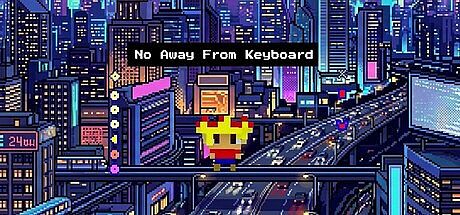



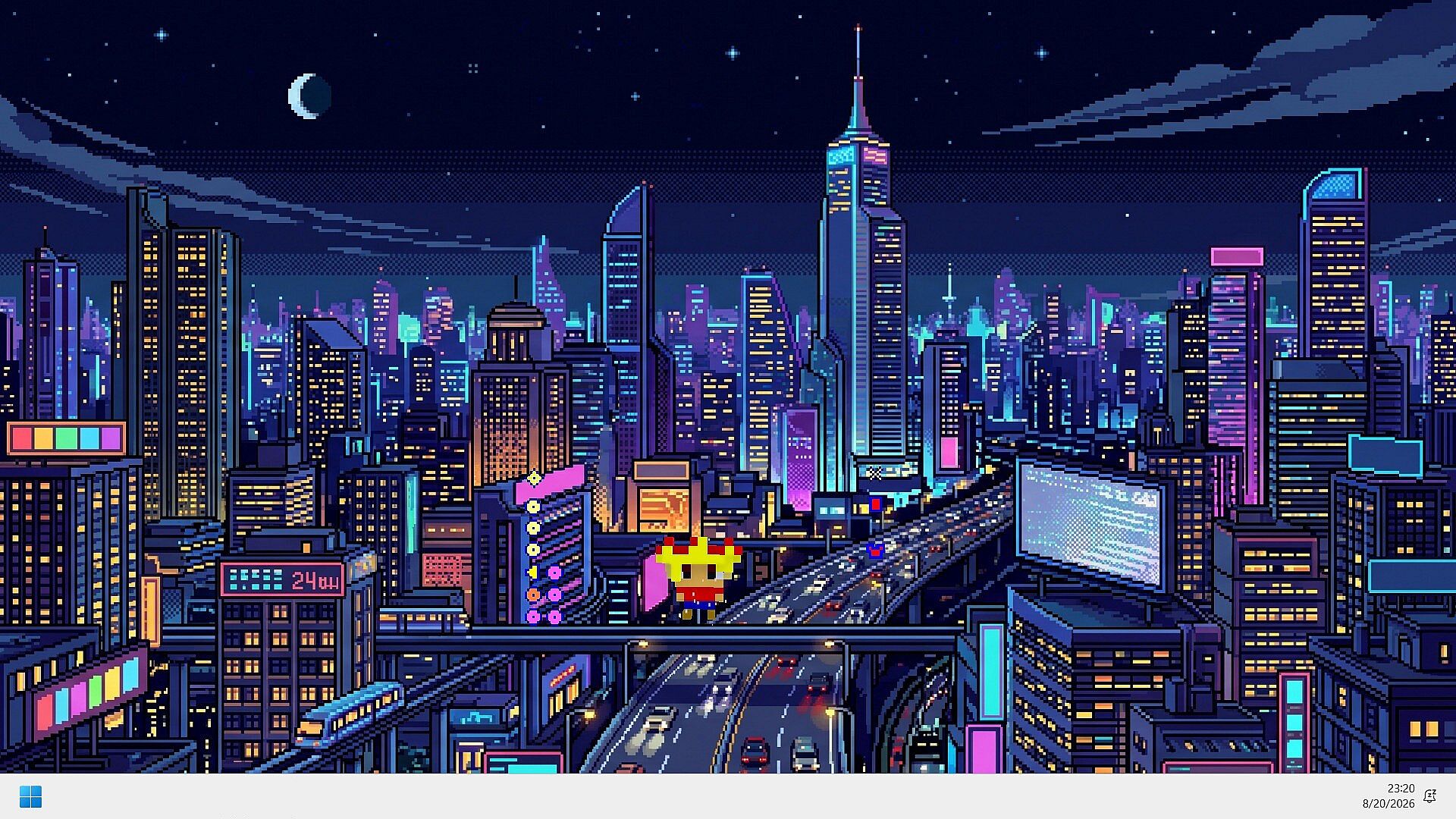


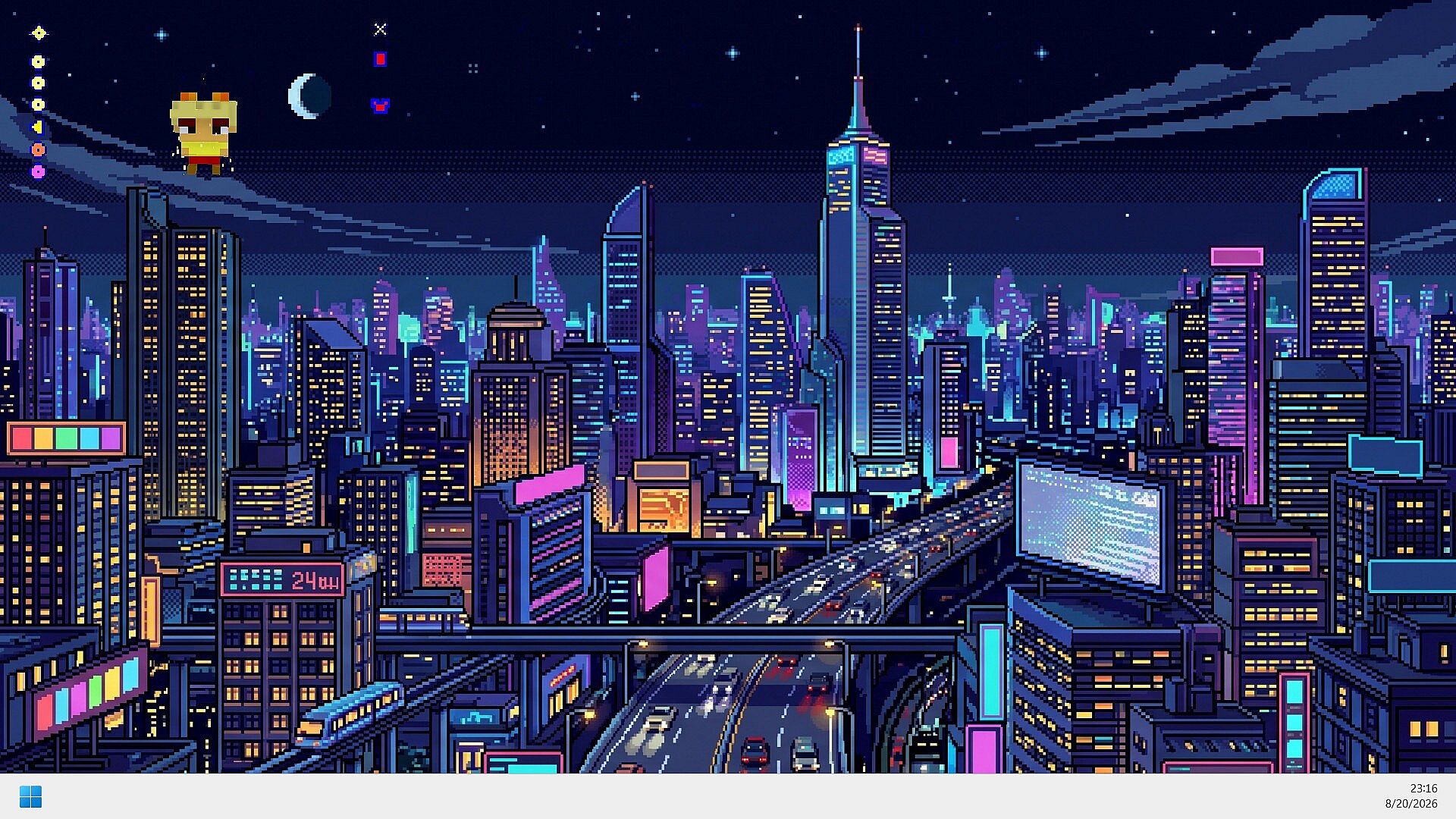
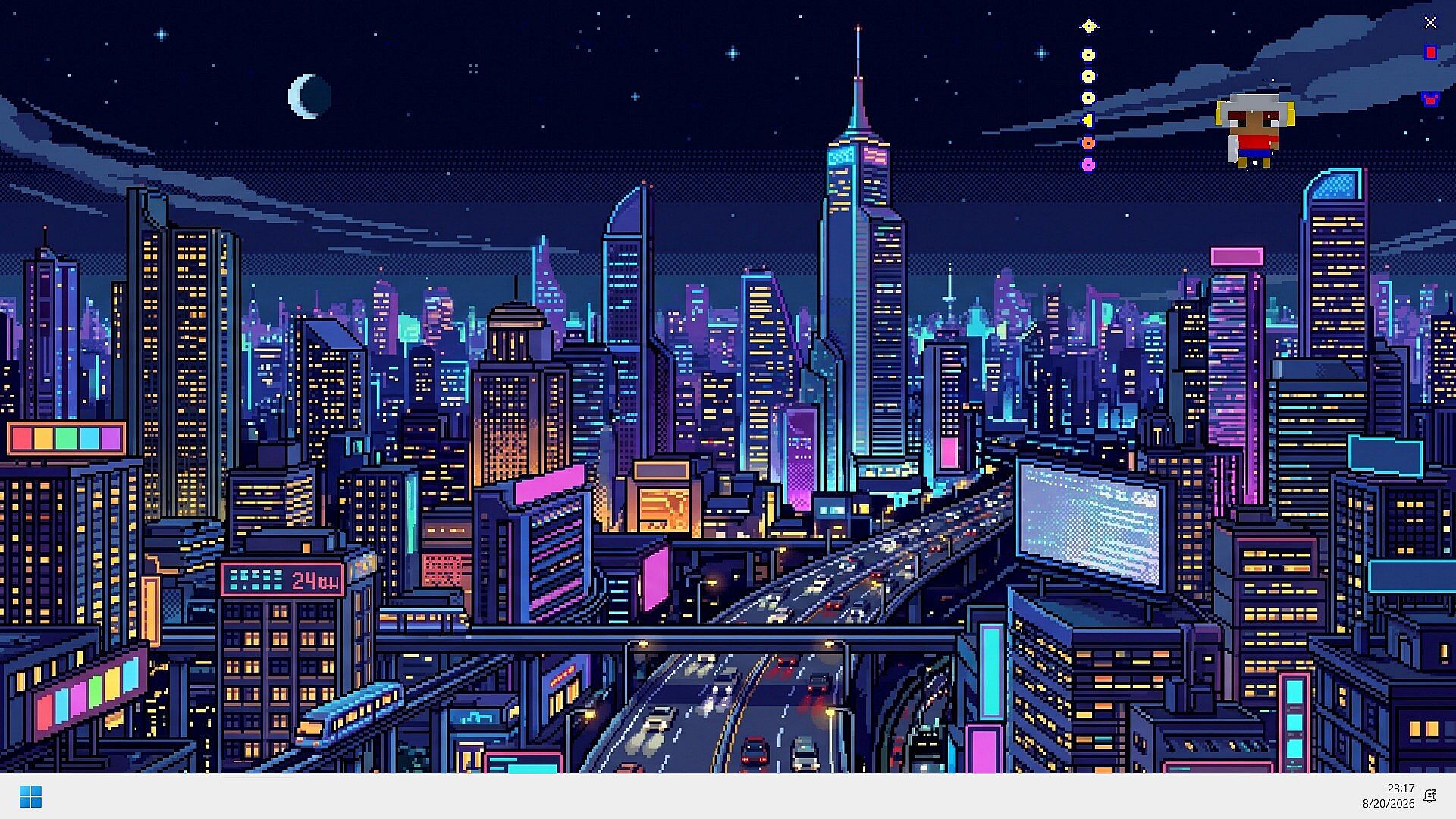





No Away From Keyboard is a casual indie game for PC that combines idle-style progression with active keyboard input and light online co-op. Players keep the title running in the background during work or study sessions, where every keystroke builds personal score while secret words typed on the keyboard unlock new costumes. The experience emphasizes staying engaged rather than stepping away, as extended inactivity leaves score vulnerable to other participants.
Gameplay
The core loop centers on continuous keyboard activity within a desktop window. Each press contributes directly to a running score total, turning routine typing into measurable progress. Hidden phrases scattered throughout the interface reward discovery with immediate costume changes that alter the on-screen appearance. These unlocks encourage experimentation with different word combinations during normal computer use.
Score accumulation happens passively once the game launches, yet active input accelerates gains and prevents loss. The system tracks presence through keystrokes, creating a simple but persistent incentive to remain at the desk. Costumes serve as visual markers of progress without altering core mechanics, focusing attention on consistent participation instead of complex upgrades.
Random rewards appear as clickable items that players claim on the spot, adding brief moments of direct interaction amid background running. This mix keeps the title suitable for multitasking while still requiring periodic attention to maintain momentum.
Game Modes
Online rooms support up to three participants at once, where collective effort multiplies score through shared bonus contributions. Players coordinate in these small groups to maximize totals and access additional rewards that appear during sessions. The format favors short bursts of teamwork rather than large-scale matches.
Private rooms allow invited friends to join exclusive sessions away from public view. These spaces maintain the same scoring and reward systems but limit access to chosen participants, supporting focused collaboration without external interference. Global leaderboards track overall performance across all rooms, highlighting the most consistent keyboard users over time.
Single-player operation runs independently when no others are present, preserving the idle scoring and costume unlocks without multiplayer elements. The design accommodates both solo background use and occasional group play in the same application.
Key Mechanics
AFK detection forms a central risk-reward element. Prolonged absence allows nearby players to claim portions of unattended score, shifting the focus toward sustained activity. This rule applies equally in public and private rooms, reinforcing the need for regular input throughout a session.
Secret word discovery operates as an optional layer on top of standard typing. Finding and entering these phrases grants cosmetic variety without affecting score rates or competitive standing. The feature rewards curiosity during extended play periods.
Click-to-claim rewards introduce occasional direct engagement points that appear at random intervals. Claiming them adds to the bonus pool available in group settings, tying individual actions to collective benefits.
Is It Worth Playing?
The game remains in a pre-release state with no user reviews available yet. Its appeal lies in the unusual combination of background idle running and enforced keyboard presence, which suits users who spend long hours at a computer and want light progression tied to normal typing habits. Those seeking deeper strategy or traditional gameplay loops may find the systems too minimal.
Online co-op elements work best for small friend groups interested in shared score building and leaderboard competition. The three-player limit keeps interactions manageable and prevents overcrowding. Private rooms add flexibility for consistent play partners without public exposure.
Overall suitability depends on tolerance for AFK penalties and enjoyment of simple, persistent mechanics over complex systems. The title targets casual audiences comfortable with background applications that reward ongoing desktop activity rather than dedicated play sessions. Early adopters who value unique idle twists and small-scale multiplayer may find it a worthwhile addition once released.