


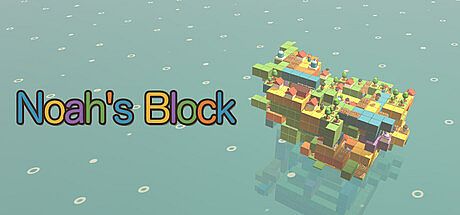


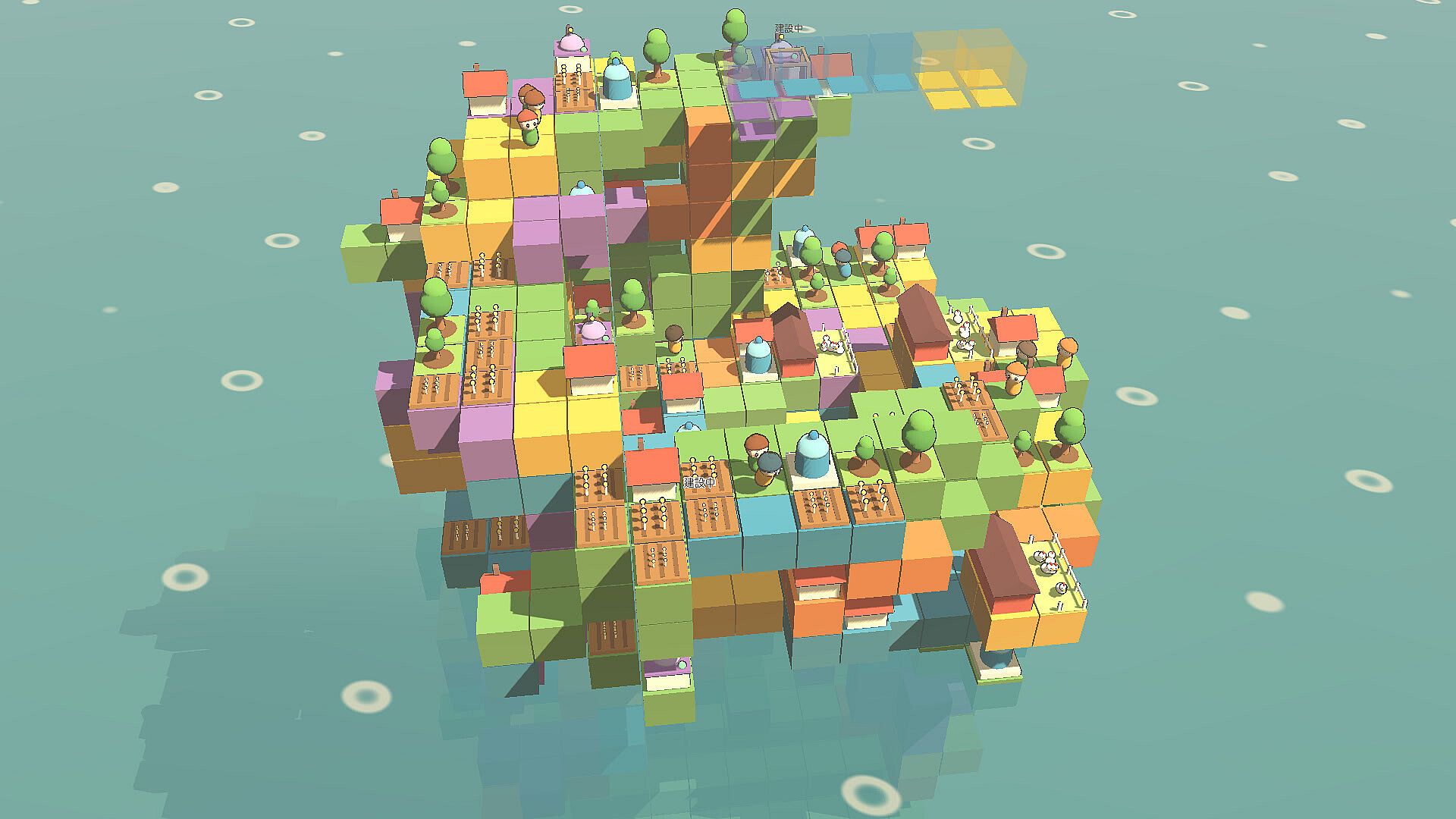
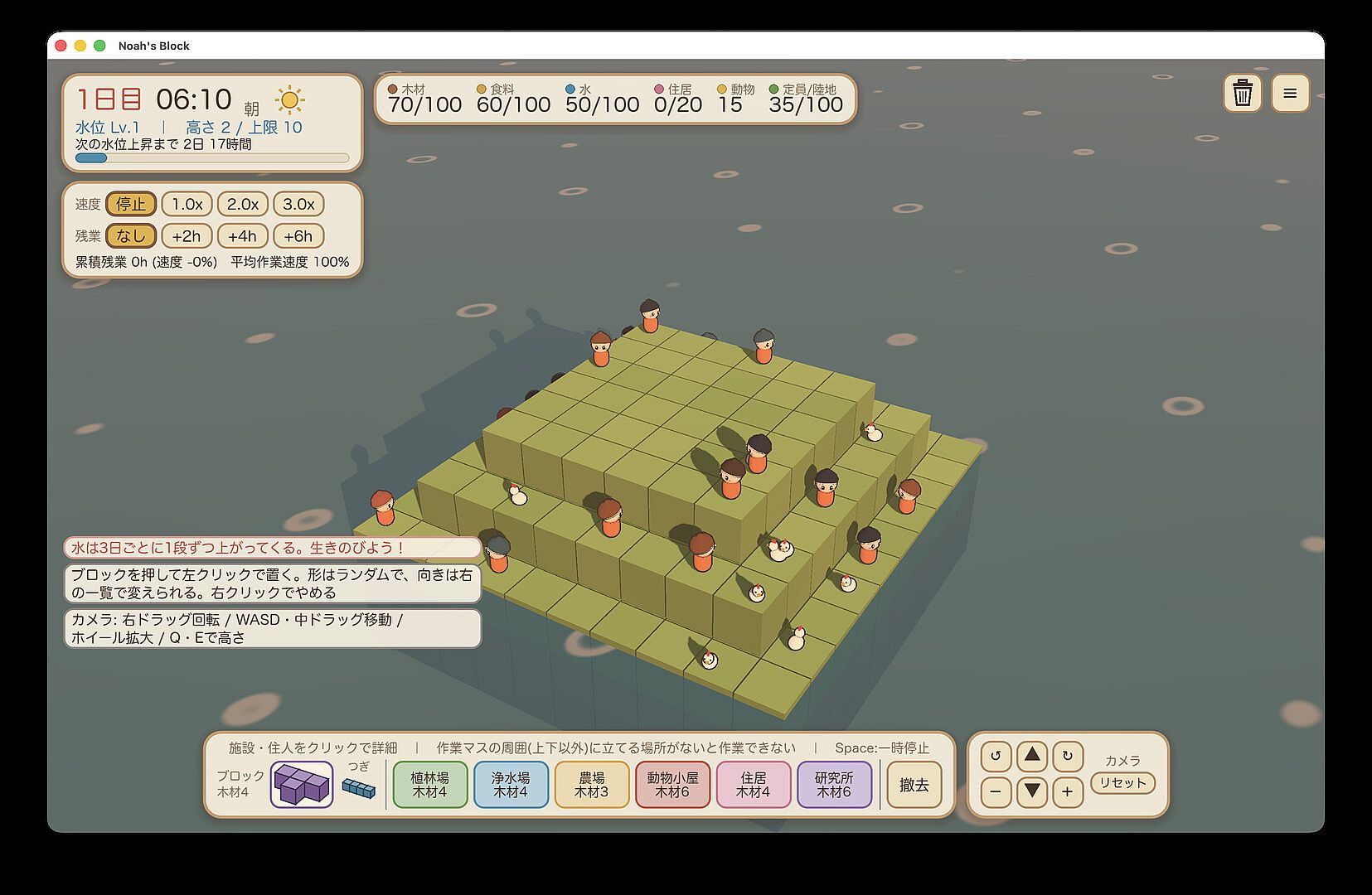
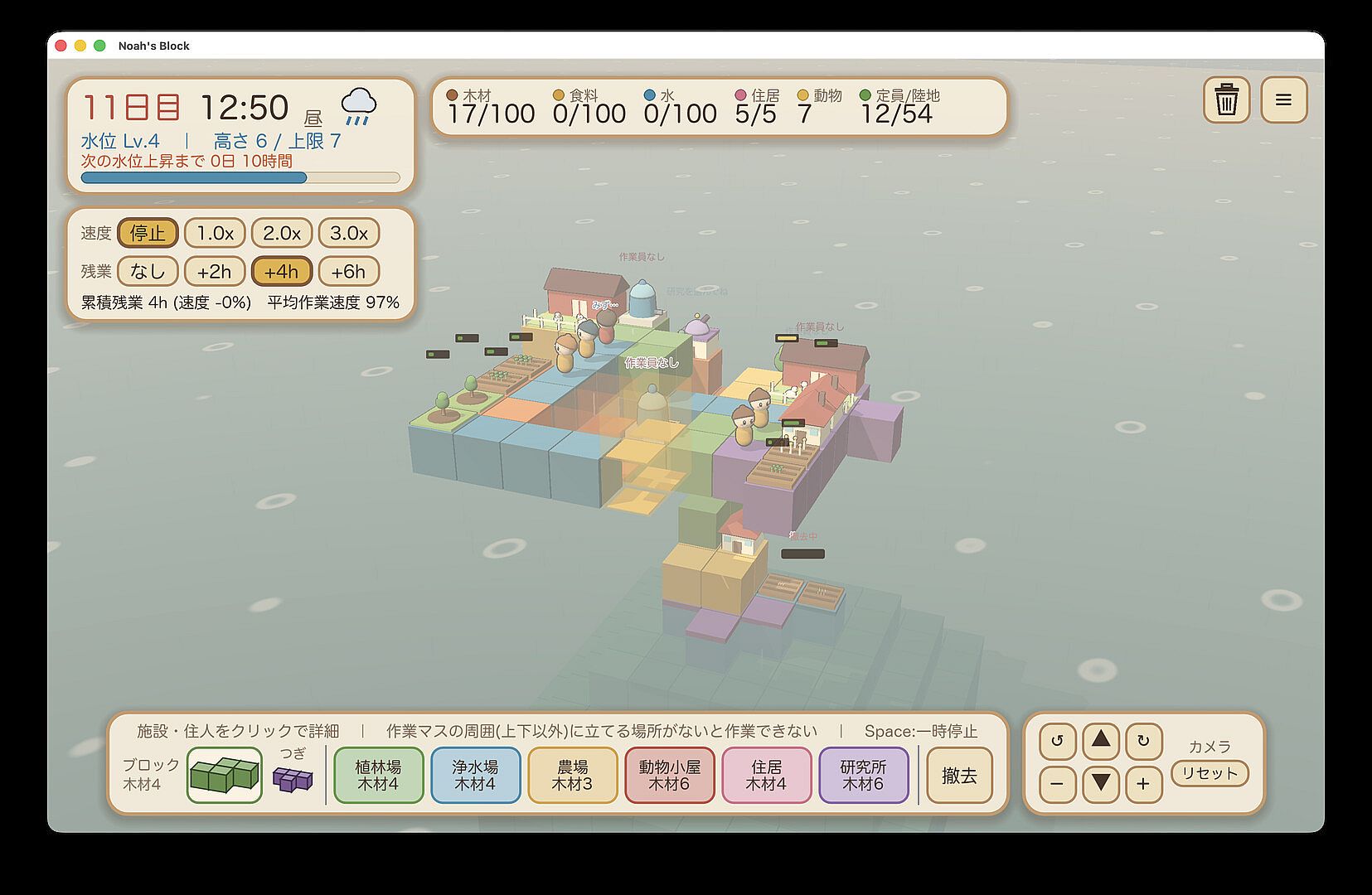
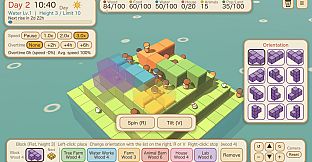
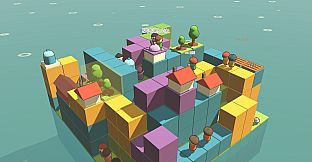
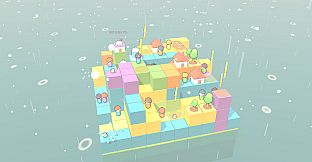
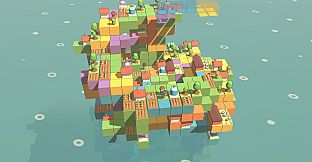
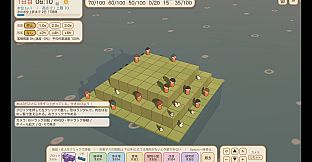
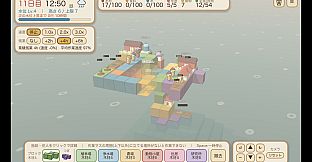
Noah's Block is a strategy indie casual simulation game for PC in which players stack blocks to raise land above a rising flood. The core premise draws from the biblical story of Noah but replaces the ark with direct land construction through 3D block placement. Random block shapes arrive one at a time, and players rotate and position each one to expand stable ground while villagers automatically handle the building labor once a block is placed.
Gameplay
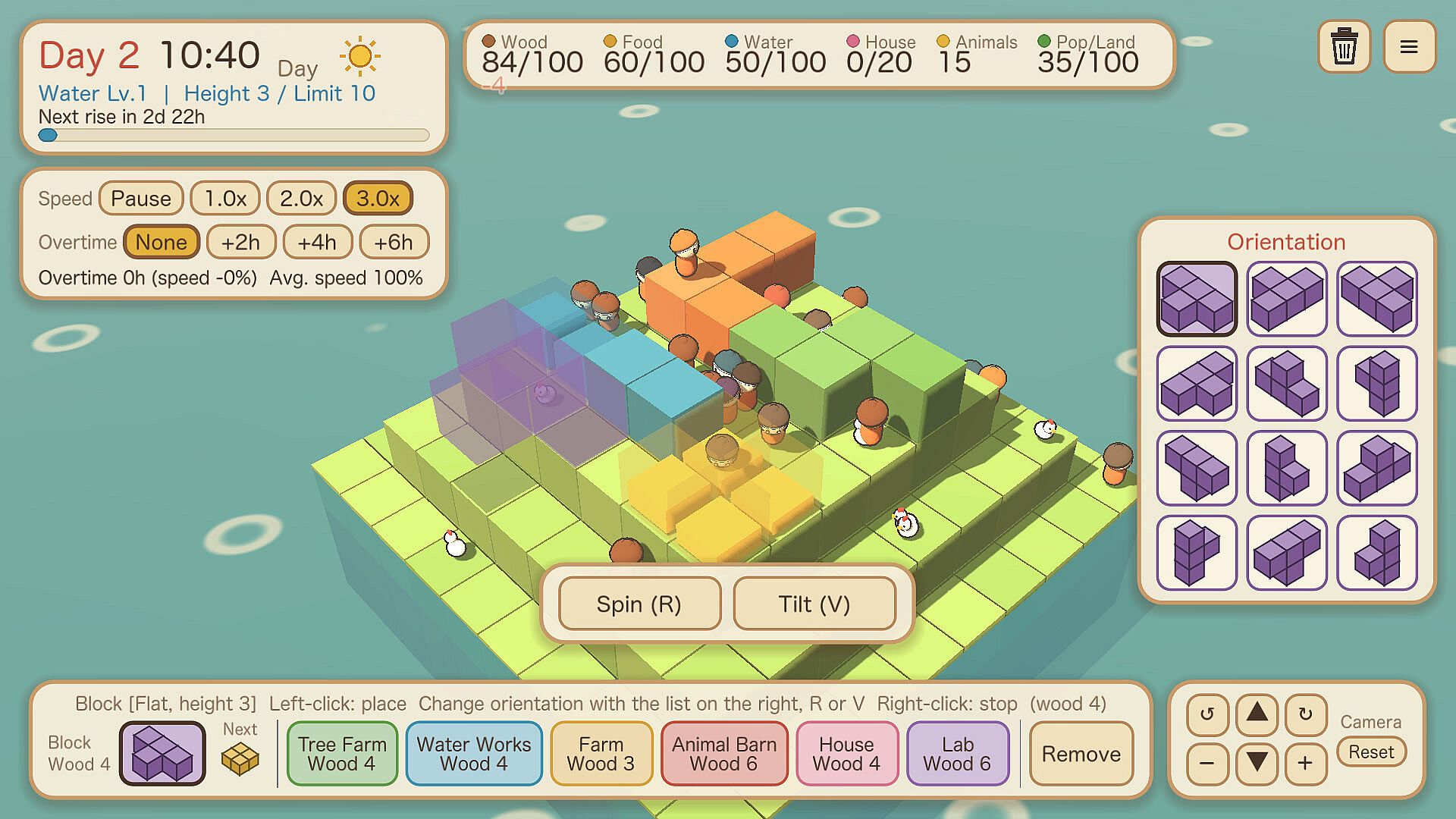
The central loop revolves around careful block stacking in full three dimensions. Each new block has a random shape, so players must decide its orientation and exact spot to maintain structural integrity. Stacking too aggressively for the current land base causes collapses that send blocks tumbling into the water below. This creates constant tension between building upward for height or spreading outward for stability.
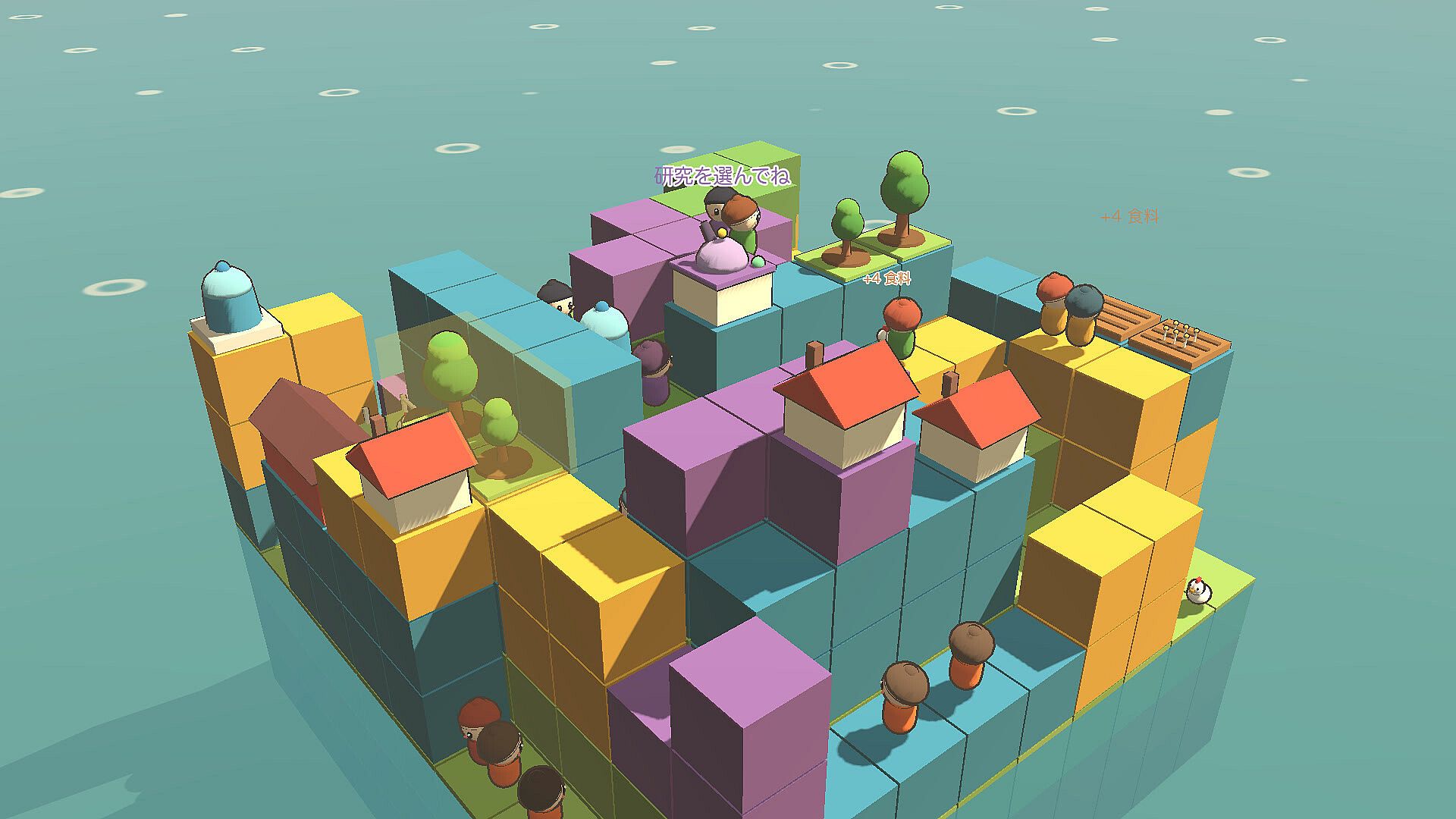
Villagers require ongoing support to remain productive. They lose strength without sufficient water and food, so players construct tree farms, water works, and regular farms to sustain the workforce. Work occurs between 8 AM and 6 PM, with an option to request overtime during critical periods. Repeated overtime shifts reduce villager effectiveness over successive days, forcing players to balance short-term progress against long-term labor capacity.
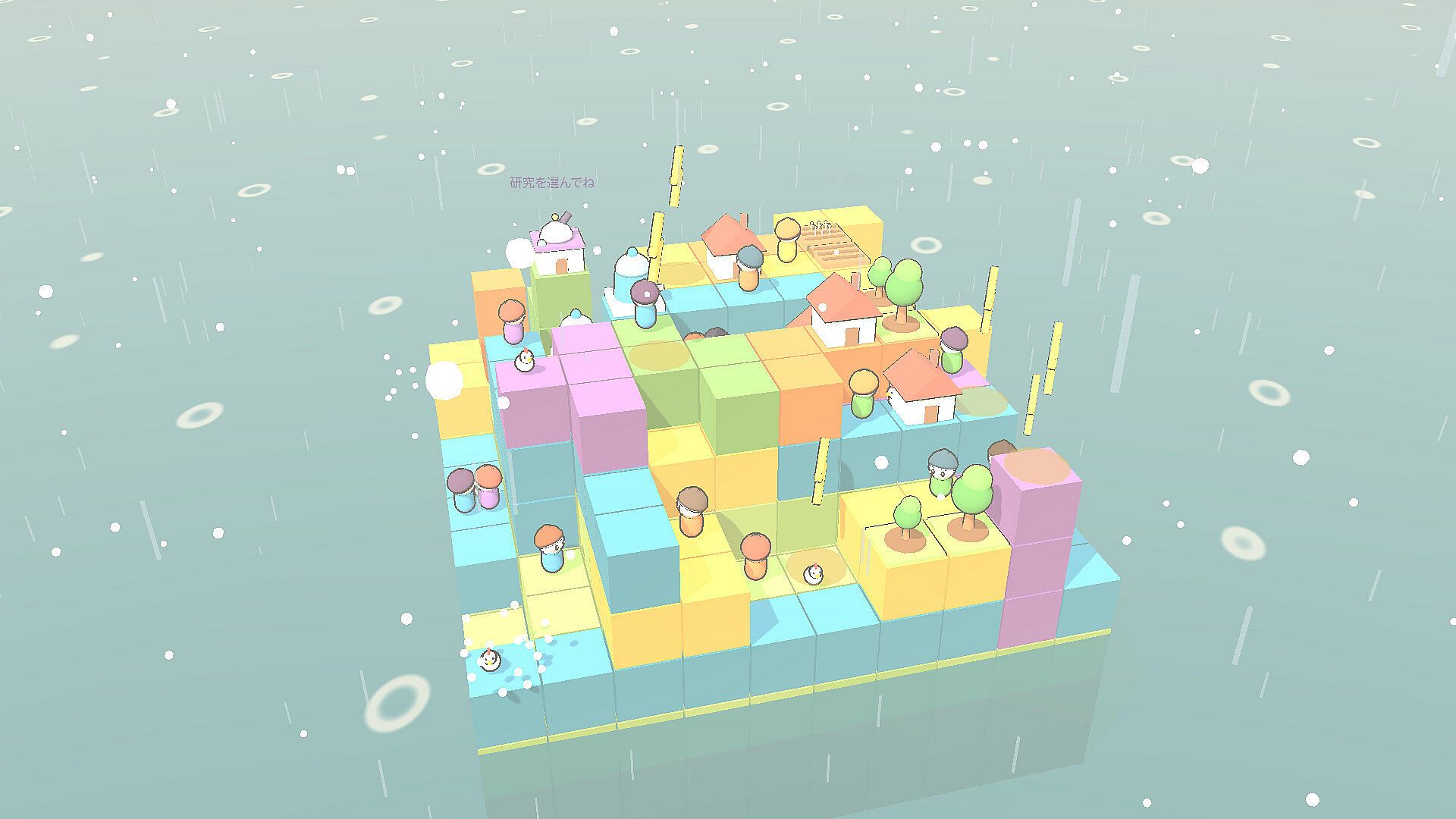
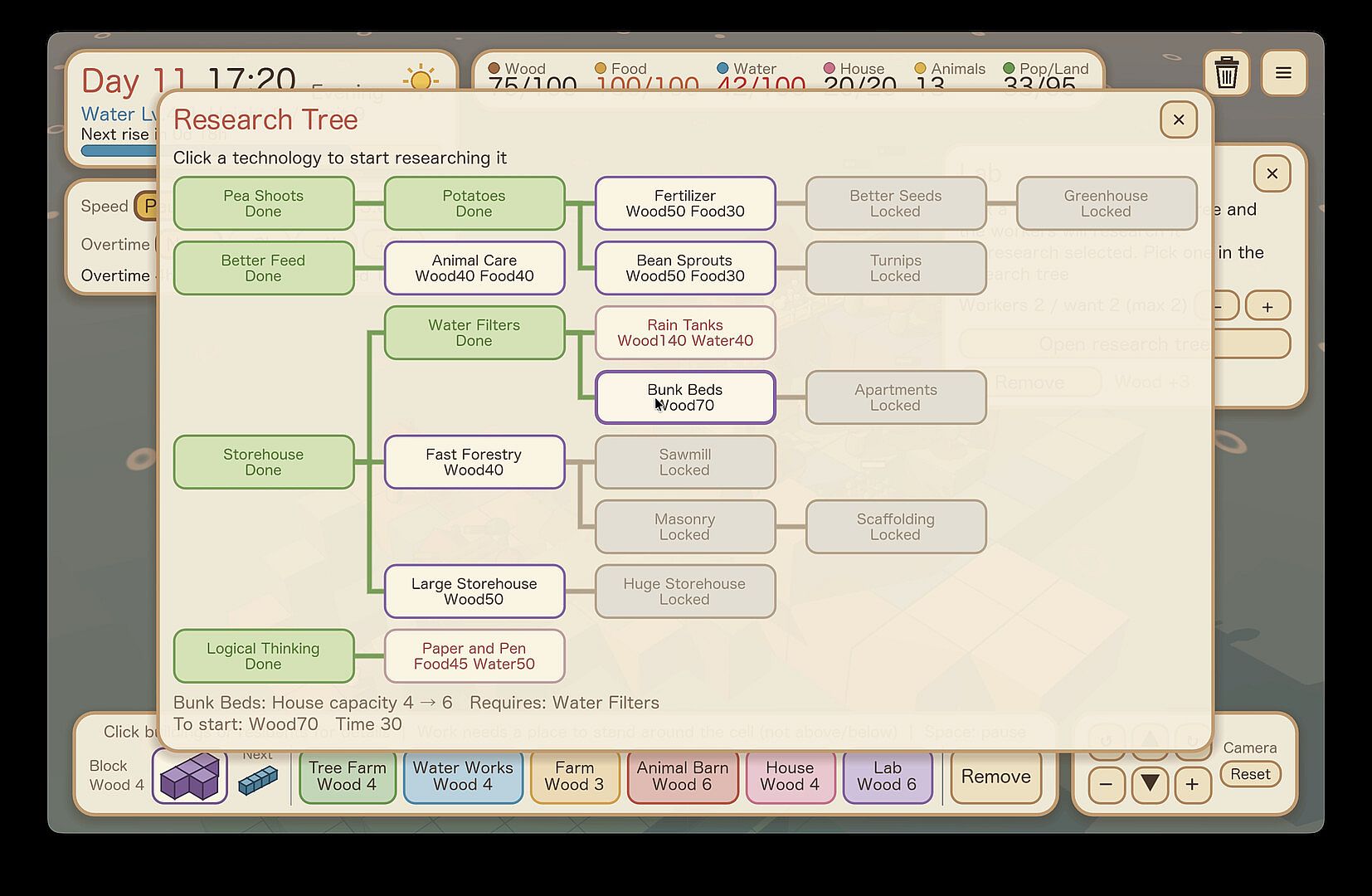
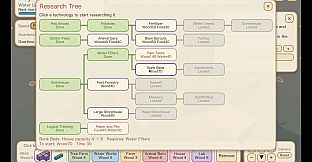
Research at a dedicated lab unlocks improvements across more than twenty topics. Examples include new crop varieties, water filters, storehouses, bunk beds, and advanced building techniques that make construction more efficient. These upgrades directly support survival as weather conditions intensify daily with added rain, snow, and lightning strikes that threaten the growing settlement.
Game Modes
The game centers on a single continuous survival experience without separate named modes. Players progress through escalating flood levels and harsher weather by expanding their town, sustaining villagers, and completing research. The random block shapes and placement decisions form the primary challenge each session, while resource management and research choices determine how well the settlement withstands later threats.
Progression ties directly to daily cycles and research milestones. Early sessions focus on basic land expansion and simple farms, while later stages demand taller, more stable structures alongside specialized facilities to handle extreme conditions. The absence of distinct game modes keeps the emphasis on adapting the same core systems to increasingly difficult circumstances.
Core Mechanics and Progression
Block placement serves as the foundation for all other systems. Players evaluate each incoming shape, choose its rotation, and commit it to the structure, after which villagers complete the physical work. Structural failure remains a constant risk when height outpaces base width, encouraging deliberate planning over rapid stacking.
Resource chains link directly to villager performance. Tree farms and water works supply materials and hydration, while regular farms provide food. These facilities must be positioned on stable land and maintained through research upgrades. The day-night work schedule adds rhythm, with overtime offering temporary boosts at the cost of future fatigue.
Research expands options gradually. Unlocking better techniques reduces collapse risks, improves resource yields, and adds resilience against weather events. More than twenty distinct topics allow varied paths depending on whether players prioritize height, spread, or villager efficiency.
Is It Worth Playing?
Noah's Block suits players who enjoy deliberate building combined with resource management and light survival pressure. The random block shapes introduce replayability through varied placement puzzles, while villager needs and research create meaningful long-term decisions. Weather progression provides a clear sense of advancement without overwhelming complexity.
The game runs on PC and supports streaming or video sharing on any platform. Its casual and simulation elements make it accessible for shorter sessions, yet the stacking mechanics and escalating challenges reward careful planning across multiple in-game days. Those drawn to indie strategy titles focused on construction and upkeep will find a focused experience centered on raising land against the flood.











