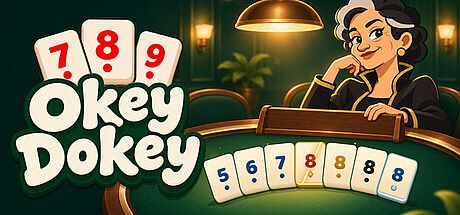


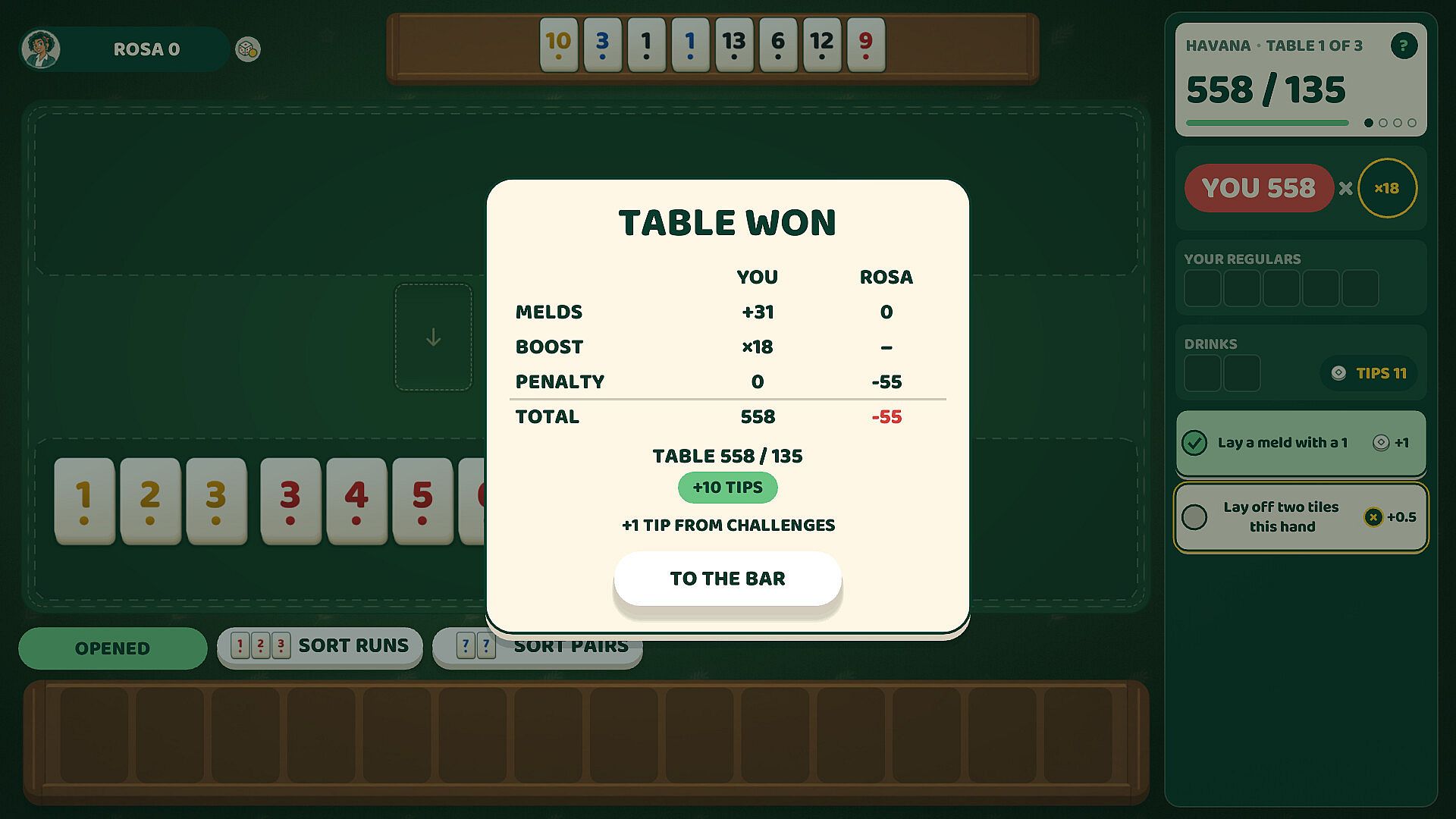
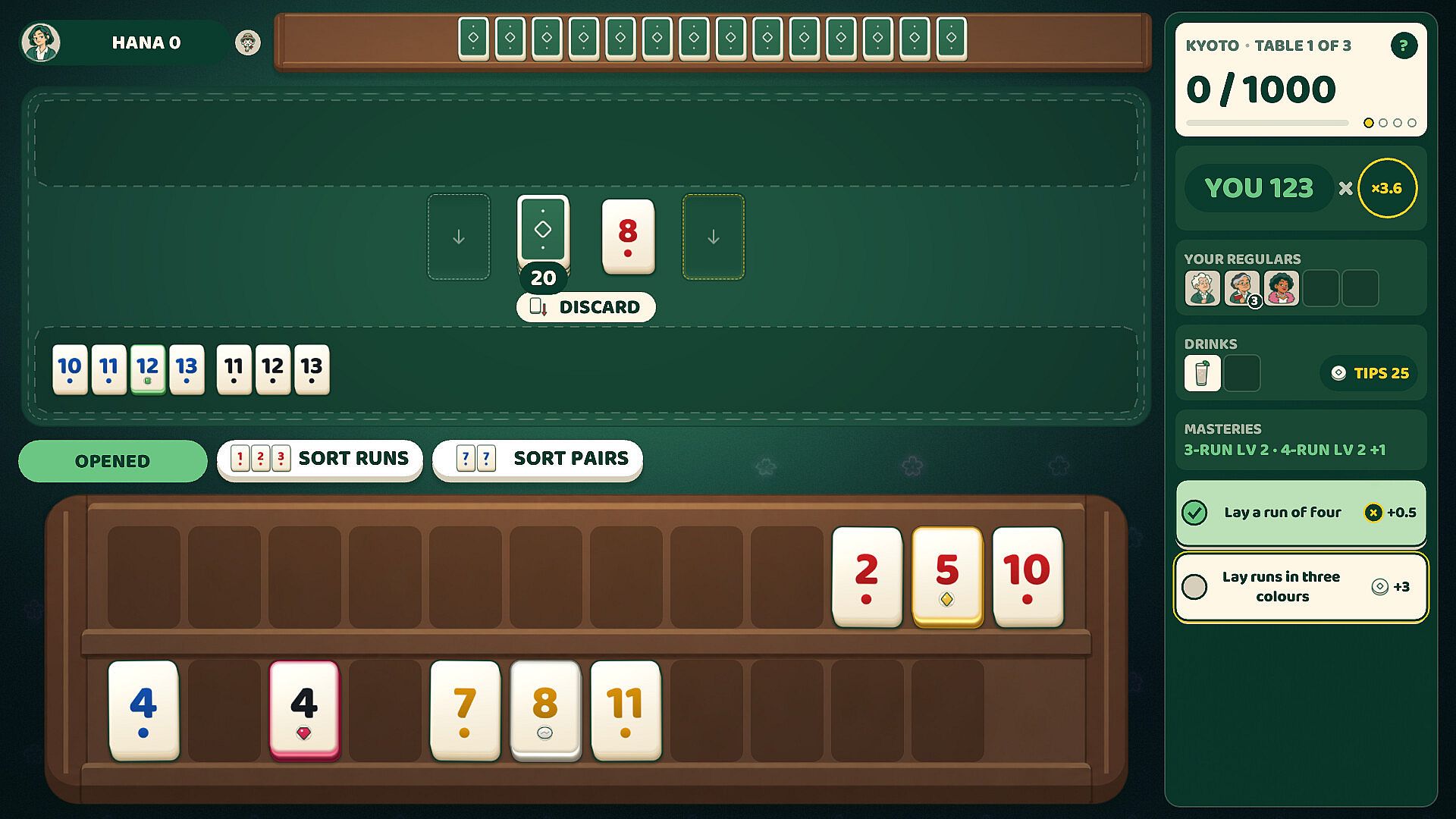
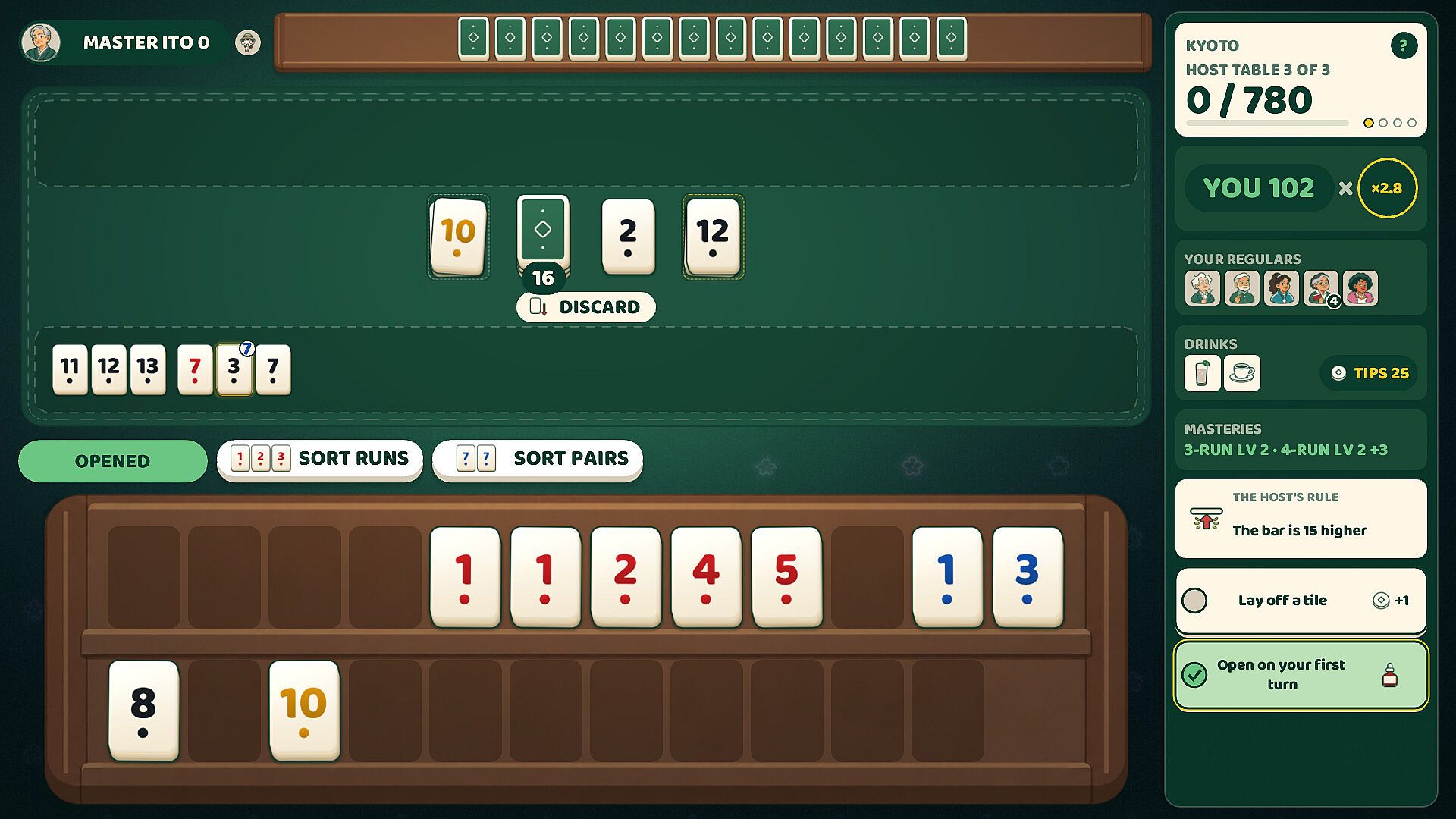
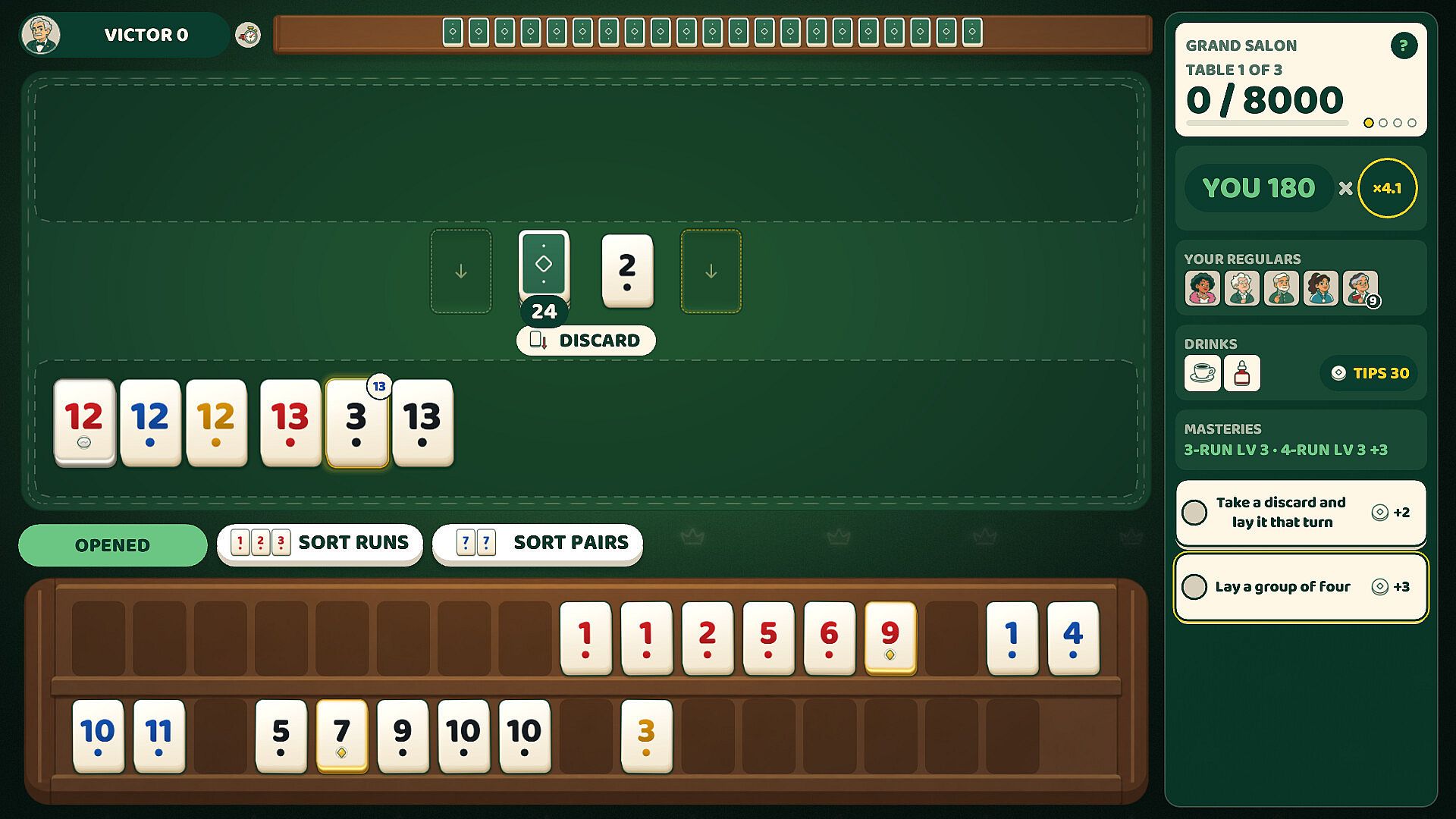
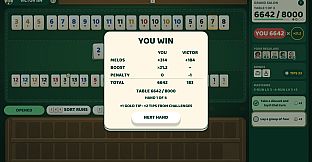
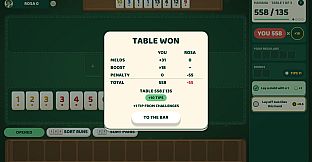
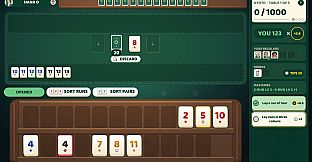
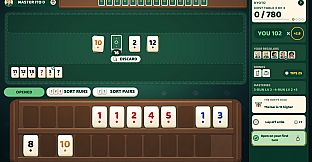
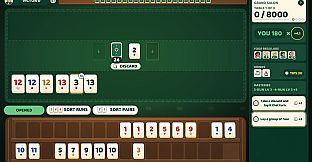
Okey Dokey is a single-player strategy indie casual game for PC that transforms the traditional Turkish tile game 101 Okey into a roguelite experience. Players progress through a series of hands against AI opponents, building runs and groups while managing a growing rack of tiles and stacking scoring boosts through special items and choices.
Gameplay
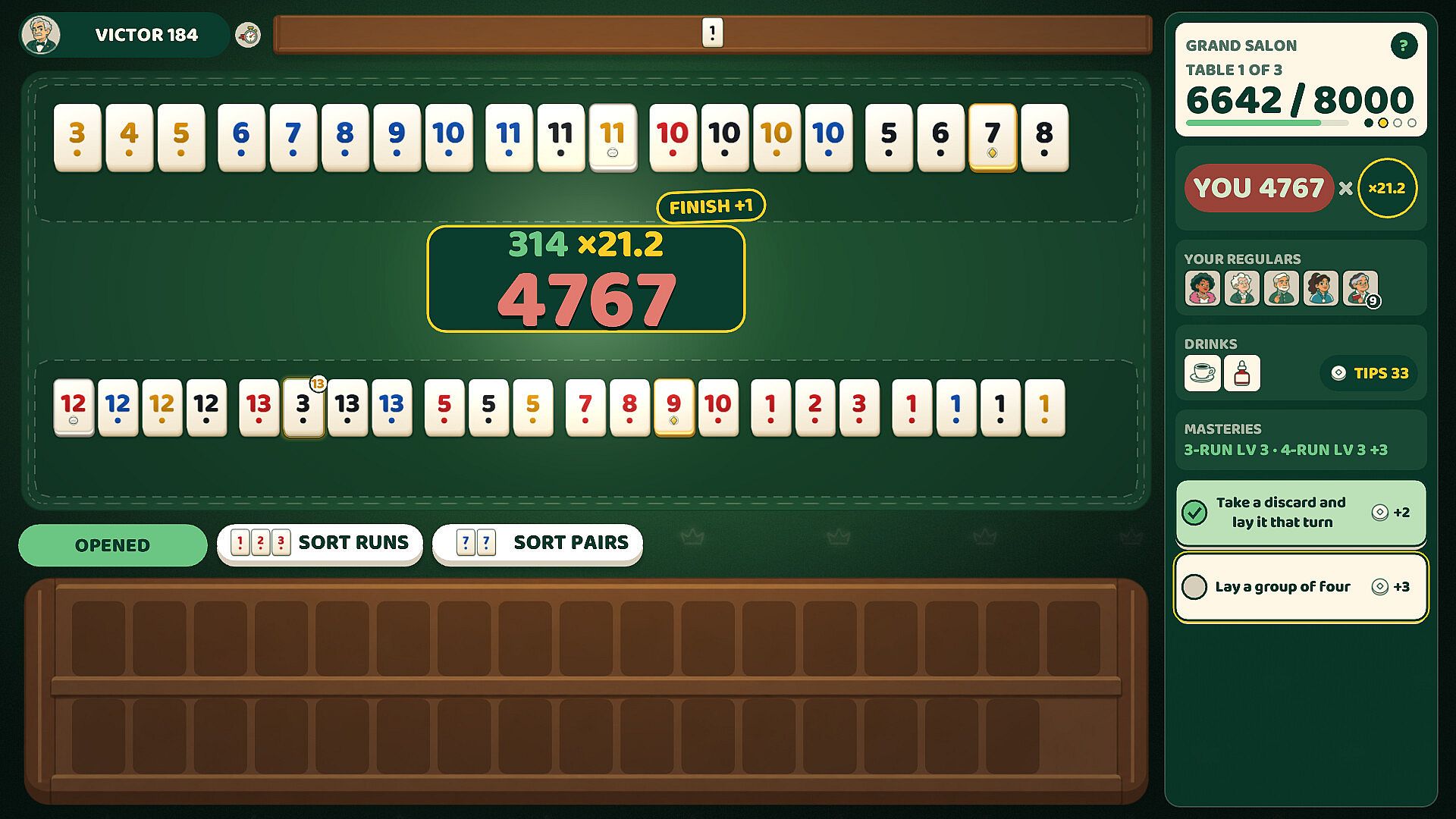
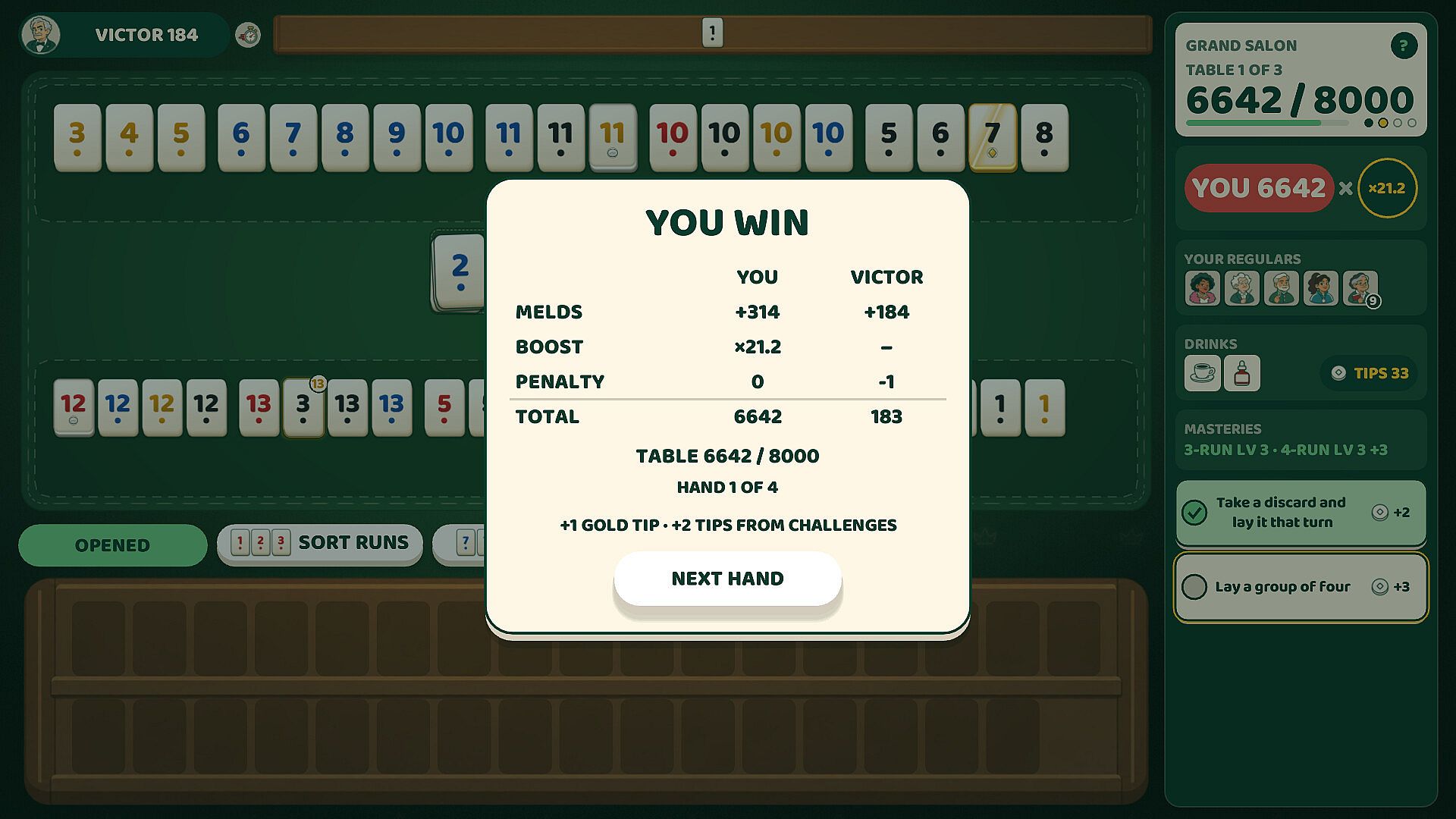
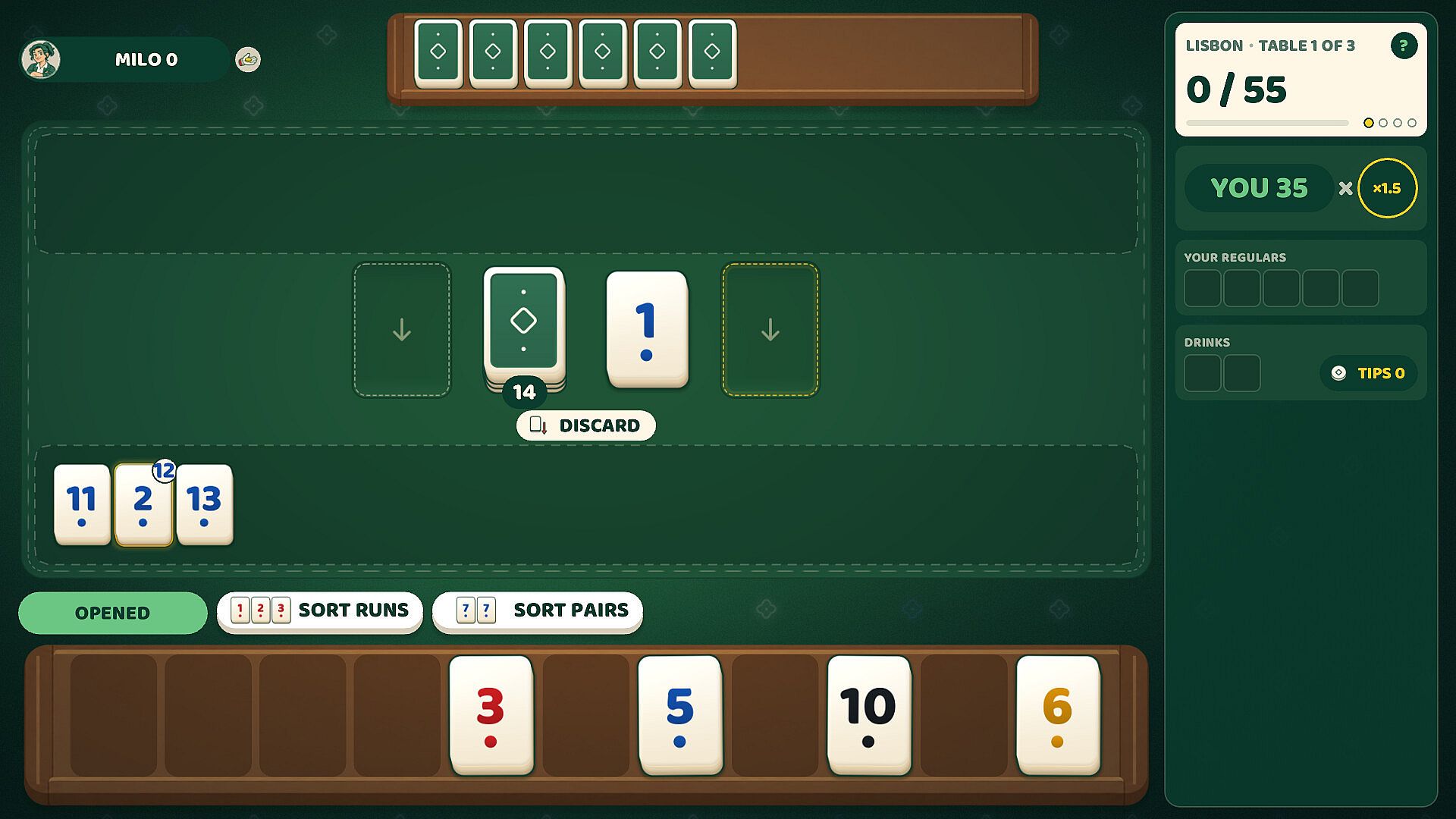
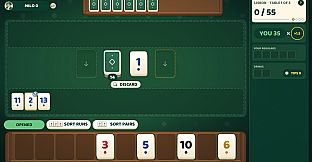
The core loop centers on quick duels in each hand. Players draw tiles, form runs of three or more consecutive numbers in one color or groups of the same number across different colors, and use the okey as a wild tile to complete sets. The goal in every hand is to empty the rack before the rival does, with scoring based on points multiplied by boosts minus penalties for remaining tiles.
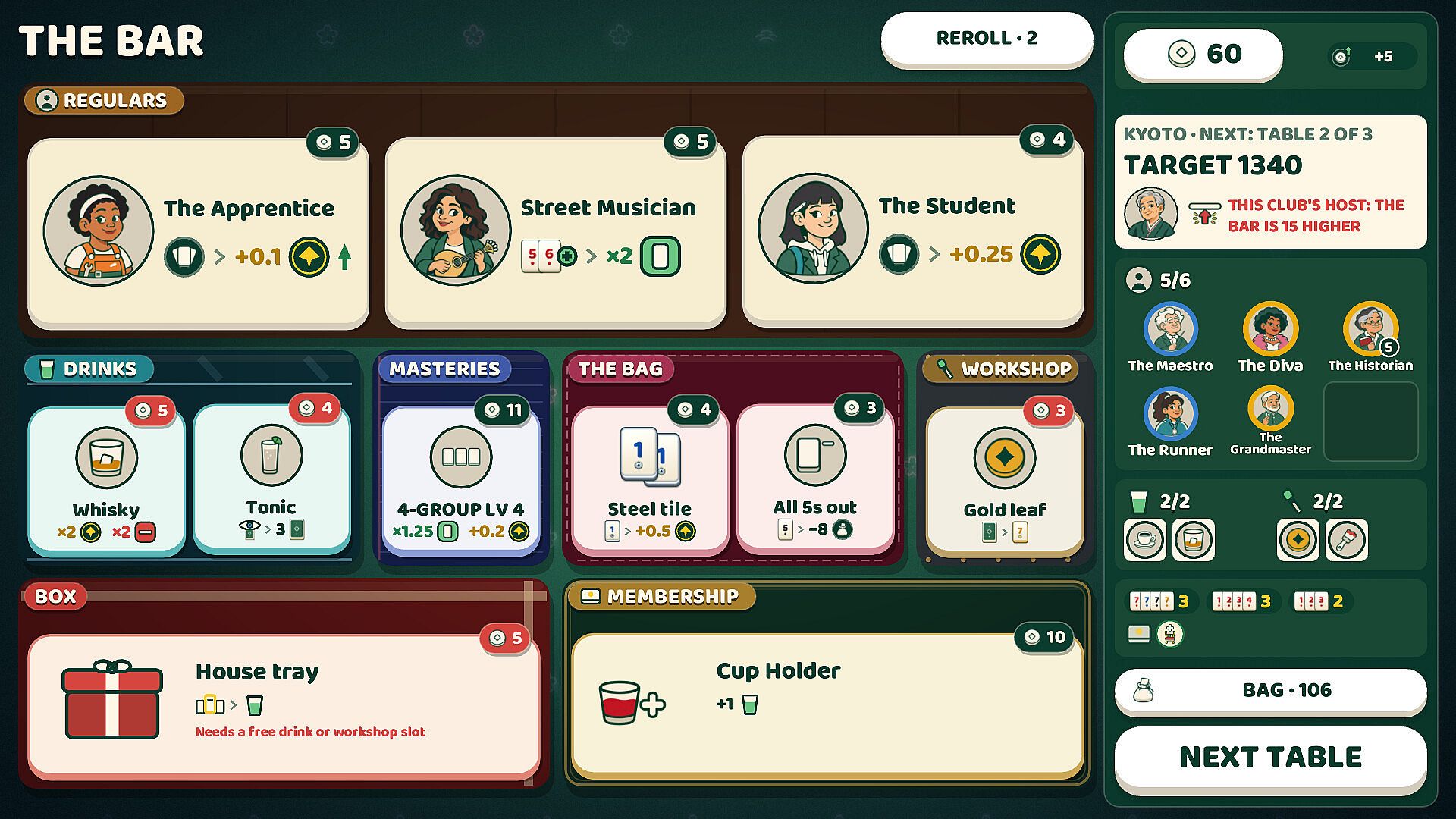
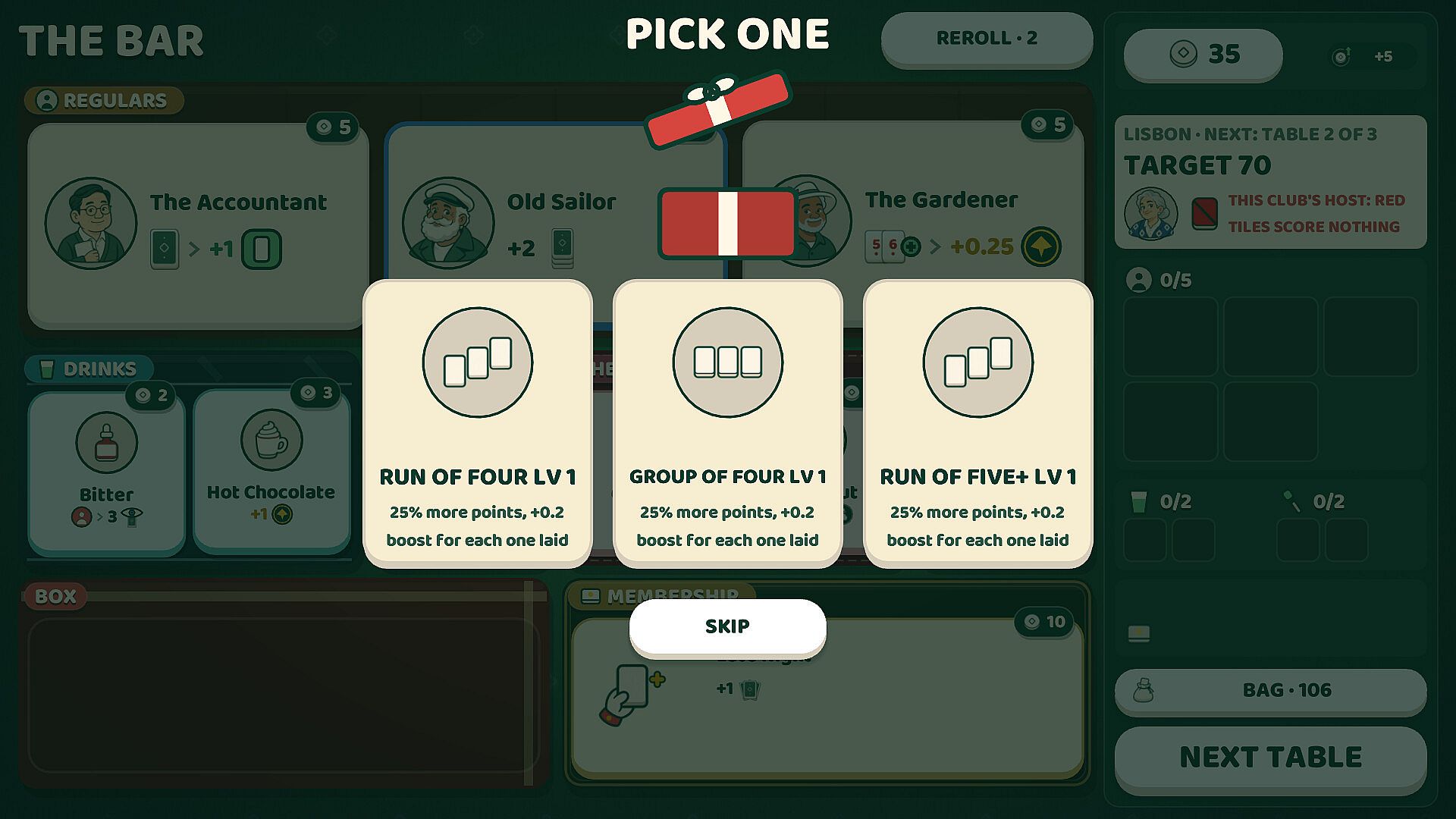
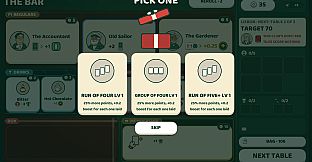
Progression builds across a tour structure. Early hands start with a small six-tile rack and limited table space, teaching the basics through direct play. As players advance through clubs, the rack size increases along with the draw pile and overall stakes, culminating in full 21-tile rounds that mirror standard 101 Okey rules. Boosts come from strong finishes such as laying a group of four, a run of five, ending with the okey, or going out on the same turn the hand opens. Regulars at the bar provide scoring adjustments, while one-use drinks offer tactical options in tight situations. The tile bag can be customized in a workshop with materials like gold, glass, marble, ruby, steel, and lucky variants that alter play in specific ways.
Masteries, memberships, and boxes grant run-long perks, but nothing carries over permanently between full tours. This keeps every attempt focused on skill and adaptation rather than accumulated power. Adjustable game speed and a reduce-motion option support comfortable sessions for different play styles.
Game Modes
The main experience follows a structured tour across six clubs, each featuring three tables with distinct score targets reachable in up to four hands. Each club introduces new rivals and a house rule from the host that modifies standard play. Eighteen unique opponents appear throughout, each with individual quirks that influence strategy at their table.
After completing the tour, an endless mode becomes available for continued play. Additional systems include twenty-four hand challenges that test specific skills, six varieties of bets placed with in-game tips, and a choice between easy or hard routes through the clubs. Five difficulty tiers and four starting tile bags allow customization of the starting conditions for each run.
House rules add variety across the sixteen total options, bending mechanics like scoring or tile placement in targeted ways without altering the fundamental rummy-style foundation.
Progression and Customization
Unlocks focus on expanding options rather than granting direct advantages. Forty-one regulars, twelve drinks, eleven workshop crafts, and six special tiles provide new tools and scoring twists that players can incorporate into future attempts. The emphasis remains on adapting to each rival and table setup through smart tile management and timely use of available boosts.
Every bet uses only in-game tips, keeping the experience free of real-money elements or microtransactions. This design supports repeated runs where outcomes depend on player decisions during the hands themselves.
Is It Worth Playing?
Okey Dokey suits players who enjoy strategic tile games combined with roguelite structure and single-player progression against varied AI opponents. The short-hand format keeps individual sessions focused, while the club tour builds tension through increasing complexity and rival personalities. Features such as adjustable speed, reduce-motion support, and skill-based wins without permanent power carryover make it accessible for casual sessions yet deep enough for repeated attempts.
Those familiar with 101 Okey will recognize the core rules of runs, groups, and the wild okey tile, now wrapped in a tour format with escalating stakes. Newcomers receive guidance through the initial small-rack hands. The absence of real-money gambling or microtransactions further supports straightforward play focused on the mechanics. For fans of indie strategy titles that reward careful planning and adaptation over multiple runs, the game offers a distinctive take on the genre with clear systems for building and executing strong finishes.