


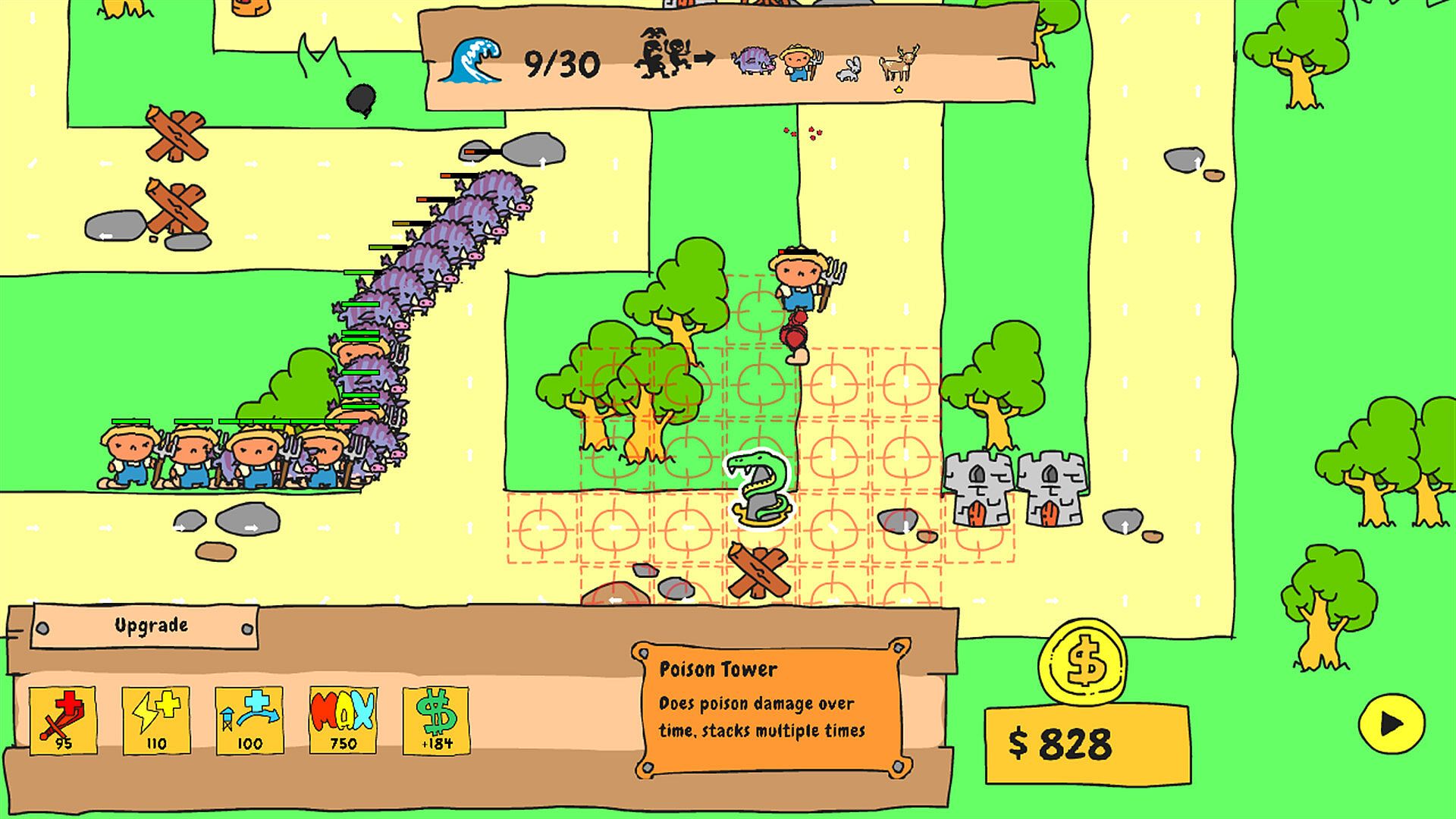
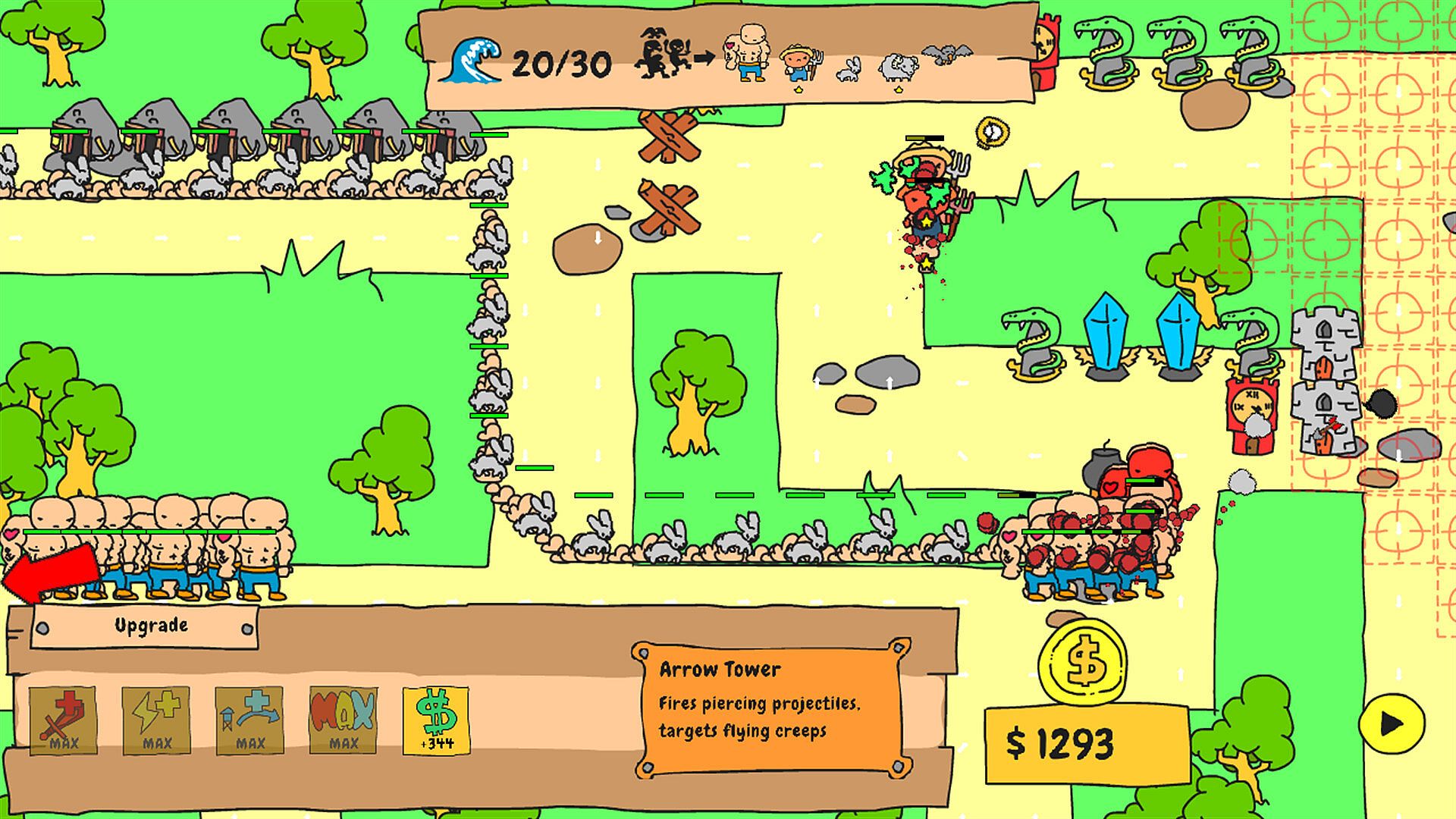
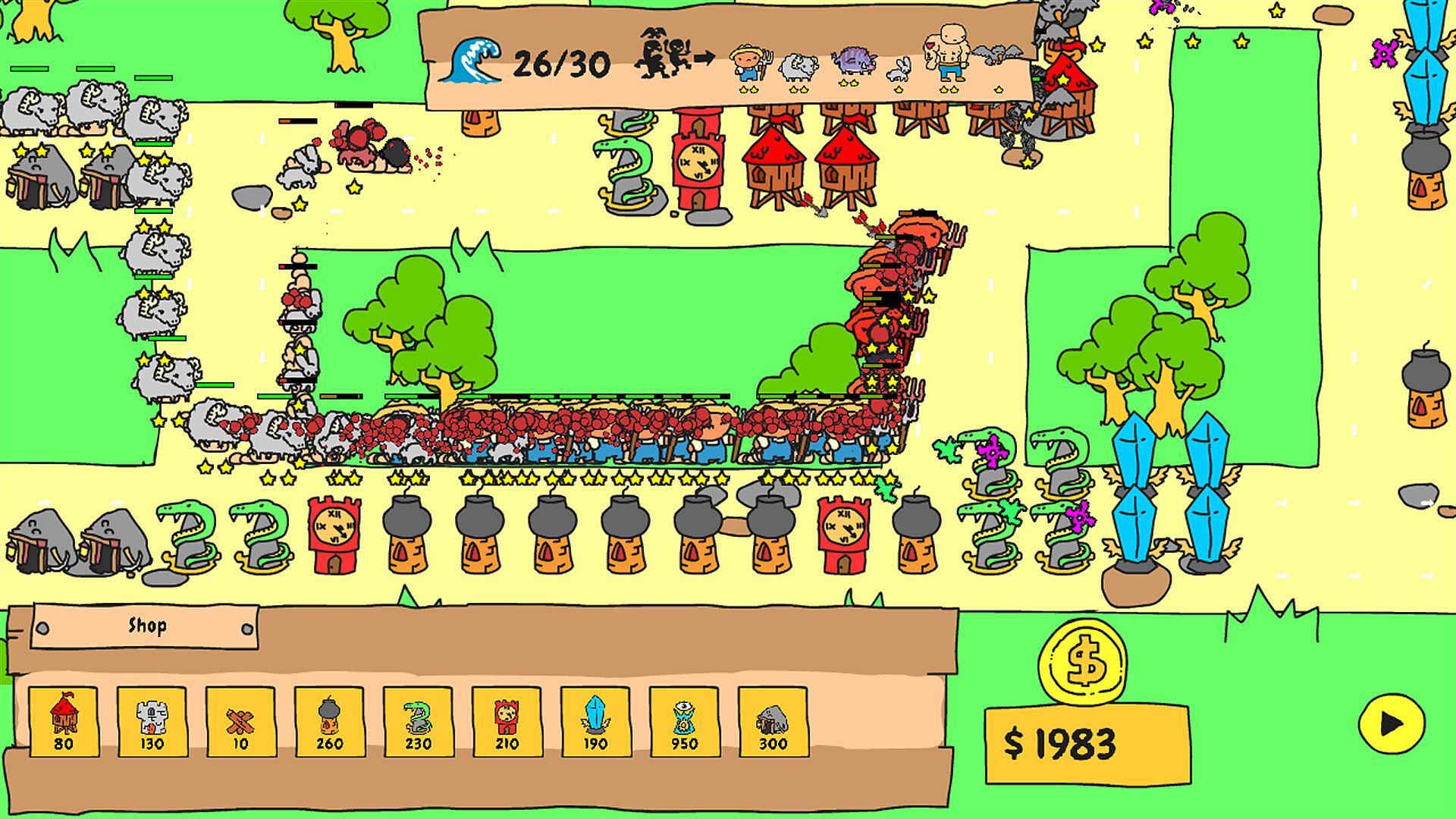
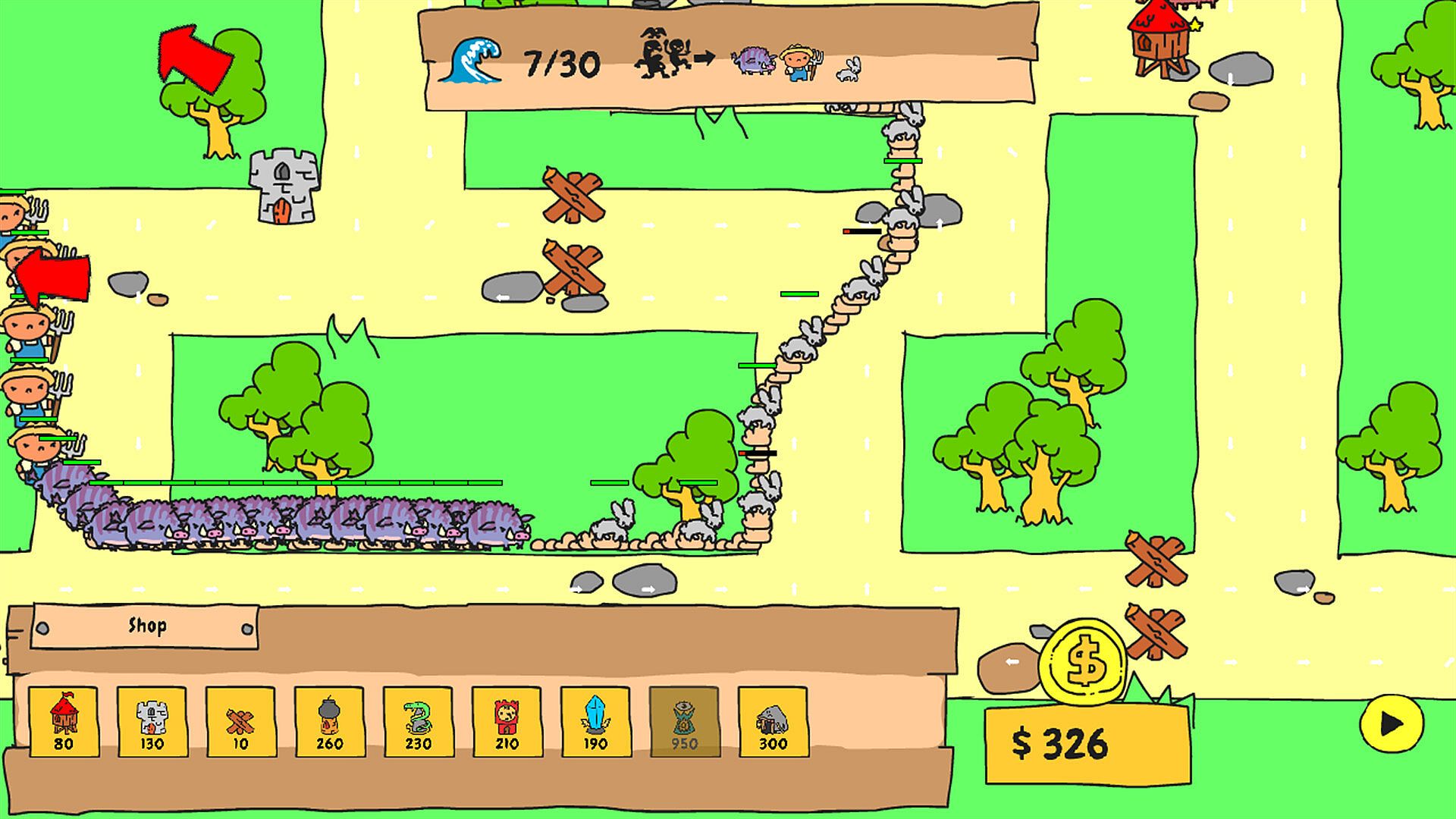
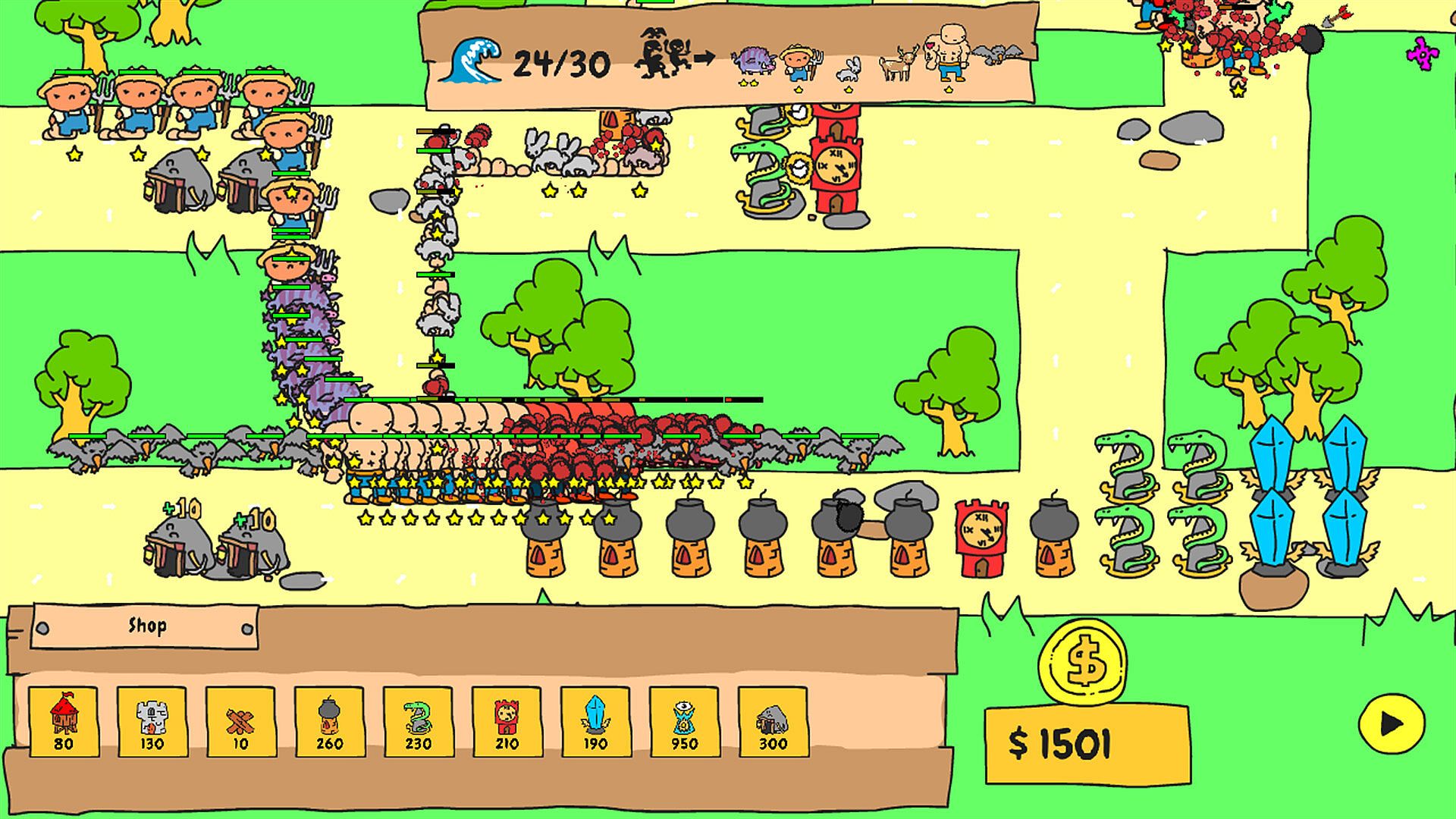




OrdinaryTD is a strategy indie tower defense game for PC in which players construct defensive structures to safeguard a central core from advancing enemy forces. The experience centers on methodical placement and upgrading of towers across varied maps, with an emphasis on adapting to enemy behaviors and wave compositions rather than complex narratives or additional layers.
Gameplay
The core loop involves positioning towers to intercept waves of enemies that advance toward the core. Towers come in nine varieties, each suited to distinct tactical purposes such as area control or targeted damage. Enemies include ground units, flying types, invisible threats, and bosses, each carrying specific weaknesses or resistances to damage categories. Waves arrive in large, multi-stage formations from multiple directions, requiring players to anticipate and adjust defenses accordingly.
Dynamic pathfinding allows towers to influence and redirect enemy movement paths as the layout changes. Individual upgrades for damage output, attack speed, and range provide granular control over each tower's performance. Fast-forward controls help accelerate slower phases while maintaining oversight of the battlefield. Four distinct environmental settings house the twenty campaign maps, each presenting unique terrain considerations that affect placement options and enemy approaches.
Game Modes
The primary content consists of a campaign structured around twenty maps divided across four settings. Players progress through these maps by defending the core against escalating threats, with success depending on efficient tower placement and timely upgrades. No additional named modes appear in the available details, keeping the focus on this single-player campaign progression.
Key Mechanics
Enemy variety drives much of the strategic depth. Ground forces follow standard paths while flying units bypass certain ground-based defenses, invisible enemies demand specific detection or area effects, and bosses require concentrated firepower. The multi-directional and multi-stage wave design encourages layered defenses rather than linear setups. Upgrades apply individually, allowing fine-tuning without overhauling entire builds. Path redirection through tower placement adds a reactive element, turning static defenses into tools that reshape the battlefield over time.
Is It Worth Playing?
OrdinaryTD suits players who enjoy classic tower defense fundamentals with a few targeted twists like dynamic pathfinding and enemy-specific resistances. The campaign structure offers a contained experience built around twenty maps in four settings, supported by nine towers and upgrade systems that reward experimentation with positioning and composition. With its single-player focus and straightforward mechanics, the game appeals to those seeking deliberate, map-by-map progression without extraneous features. Since the title remains unreleased with no player feedback available yet, potential buyers may wish to monitor its launch for confirmation of how the listed systems perform in practice. Fans of the genre who value clear tactical roles and wave management will find the described elements align with established expectations in the category.