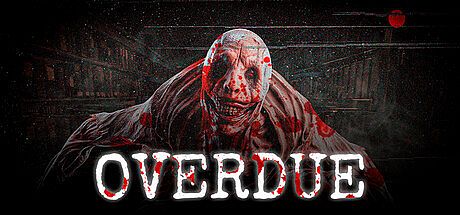


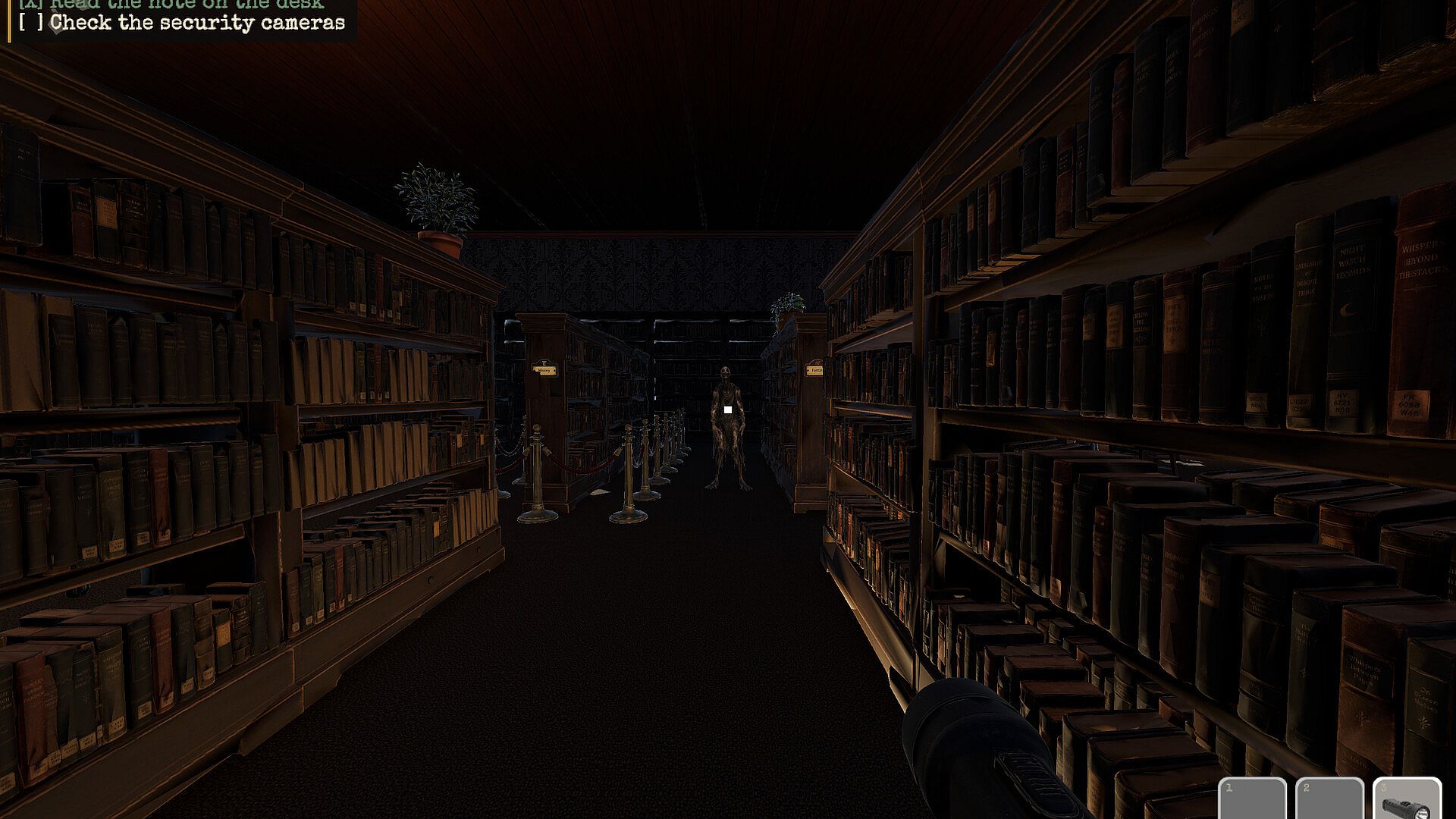
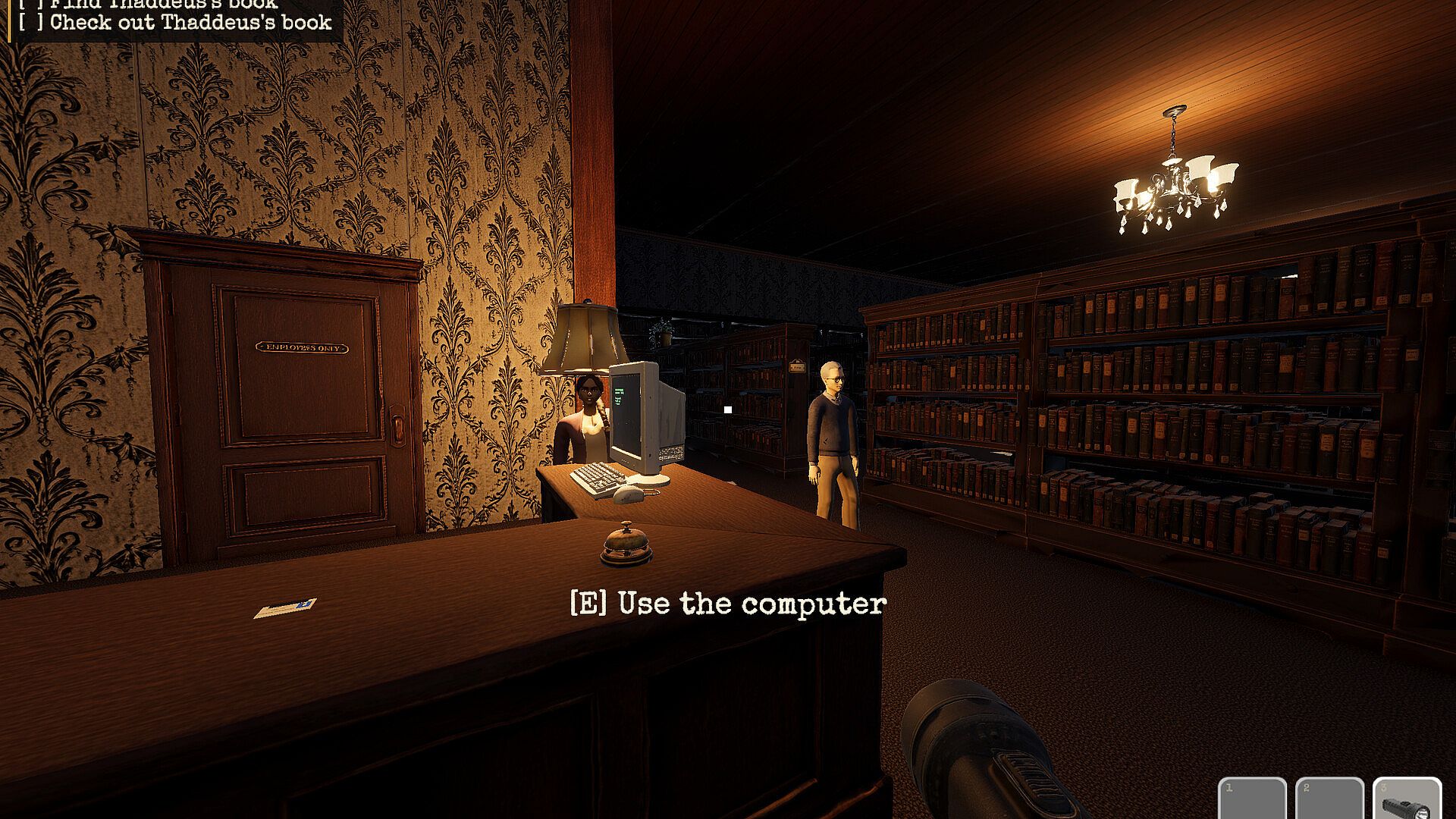
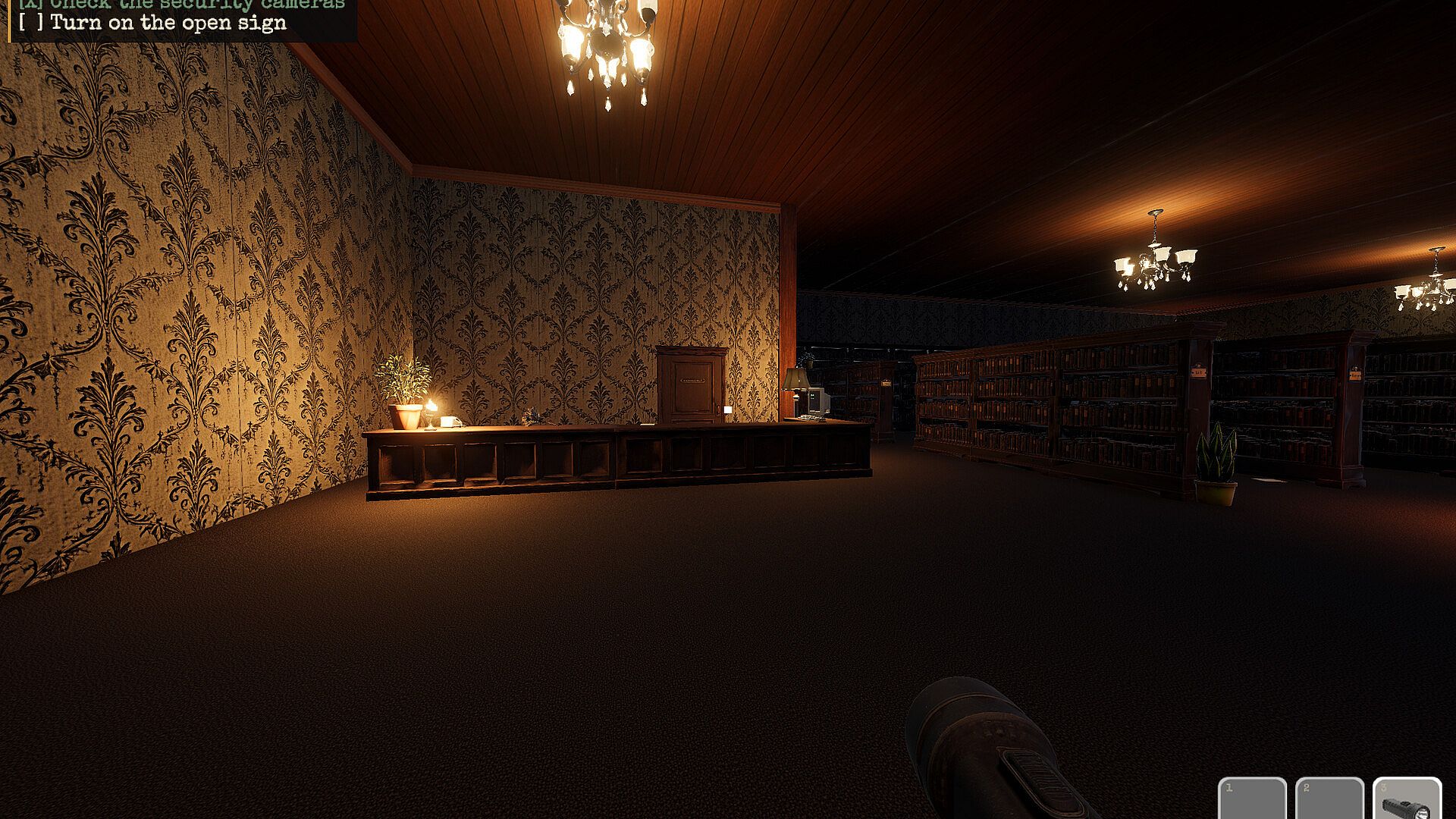
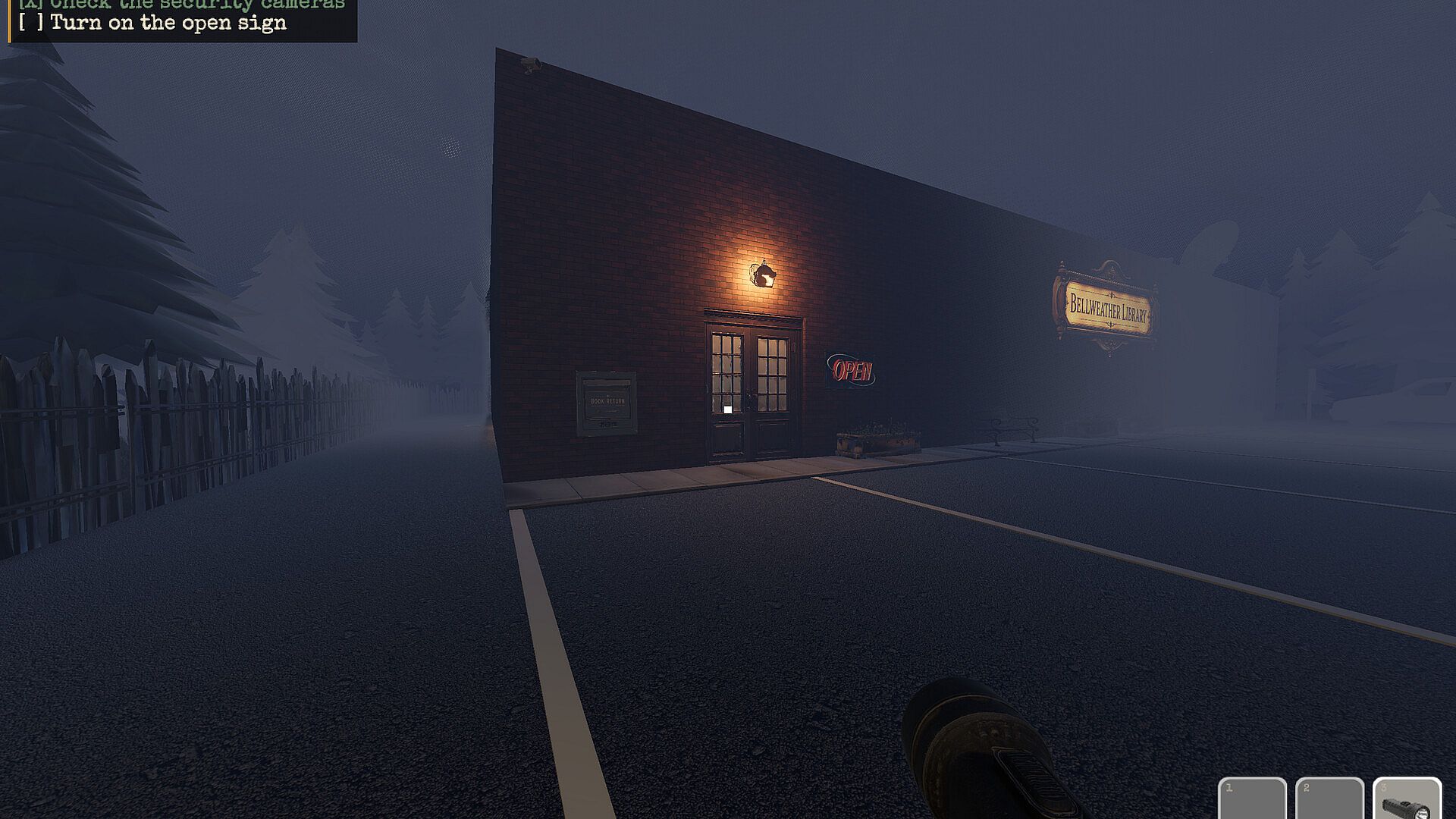
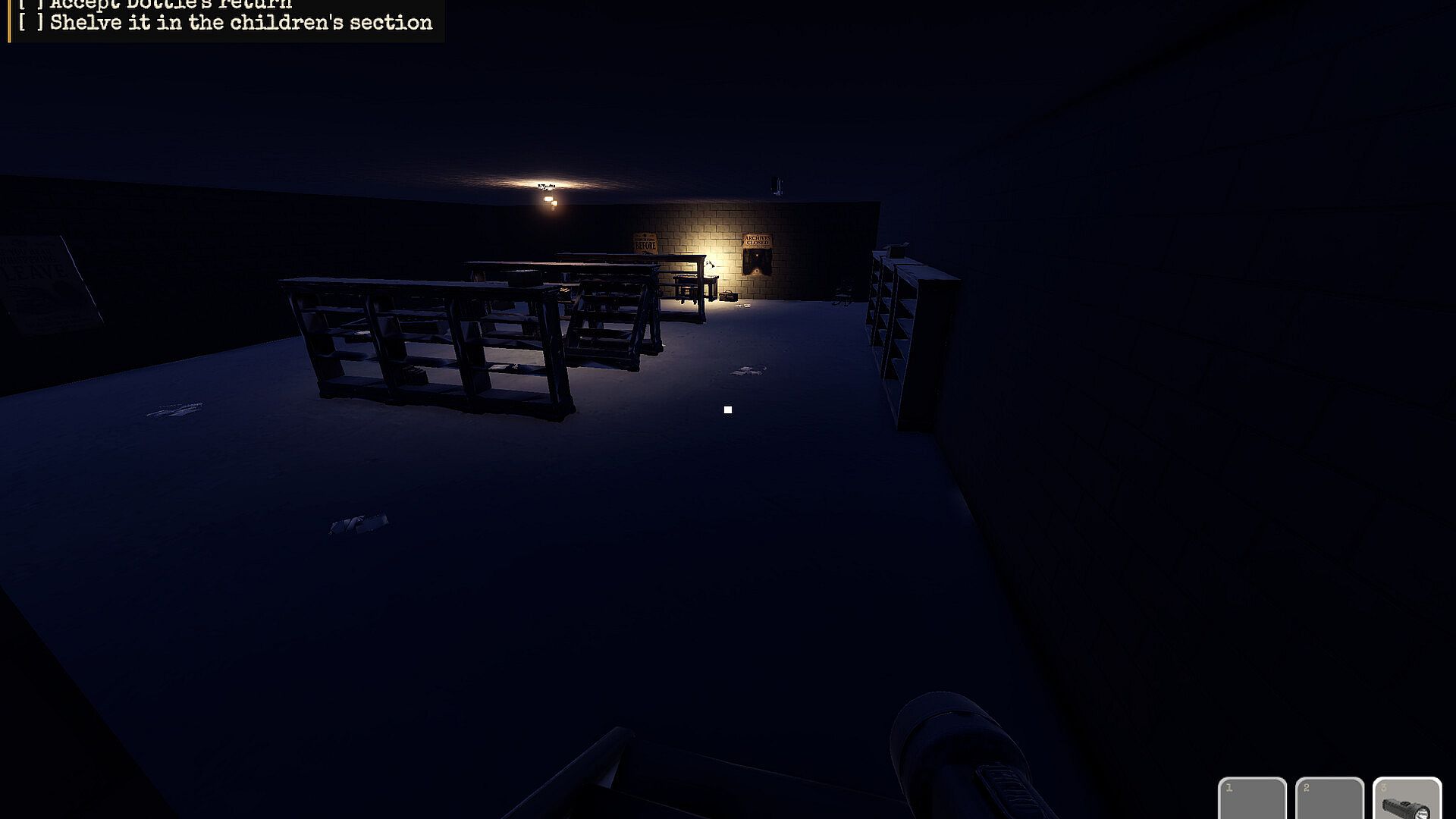
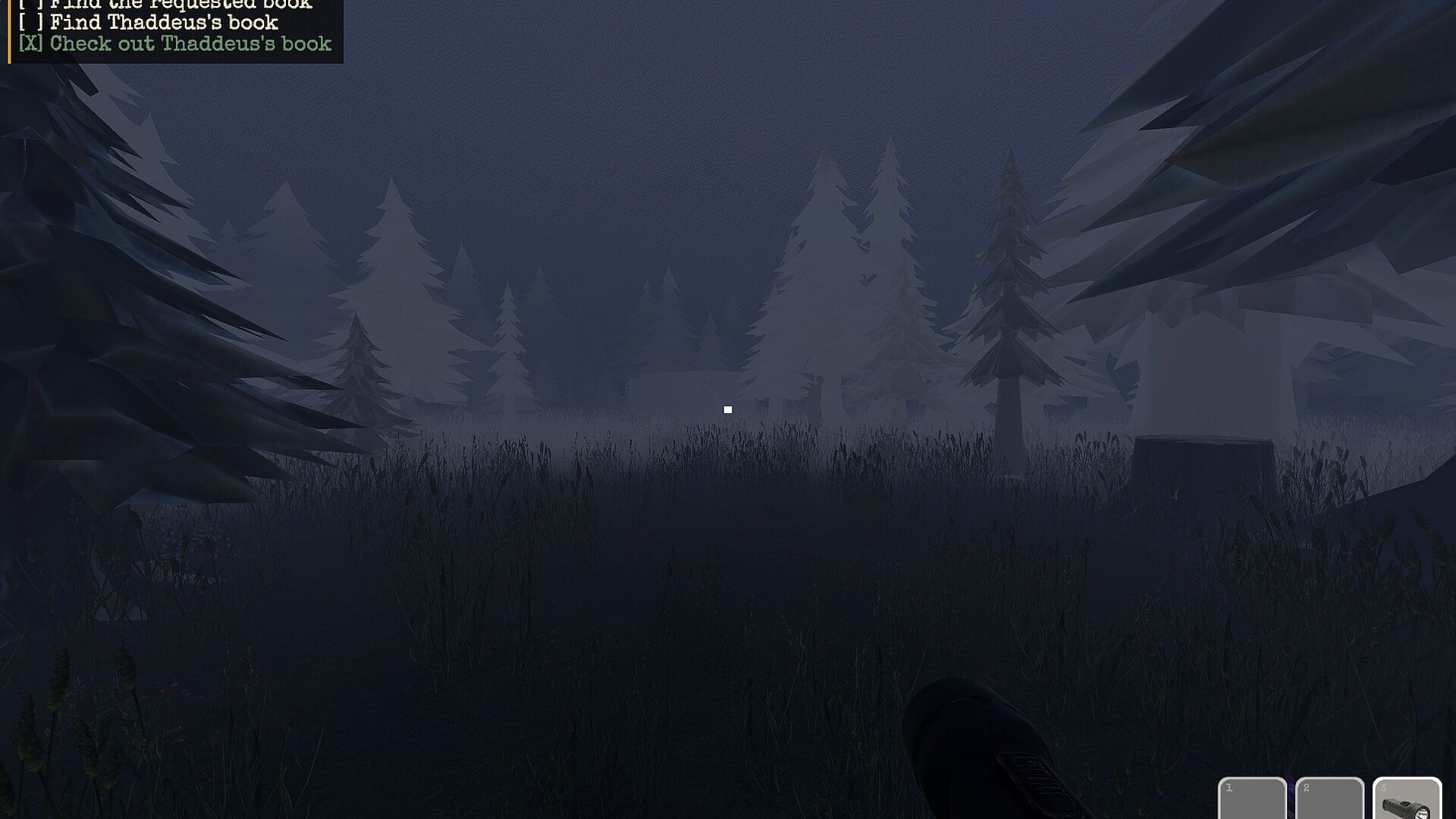
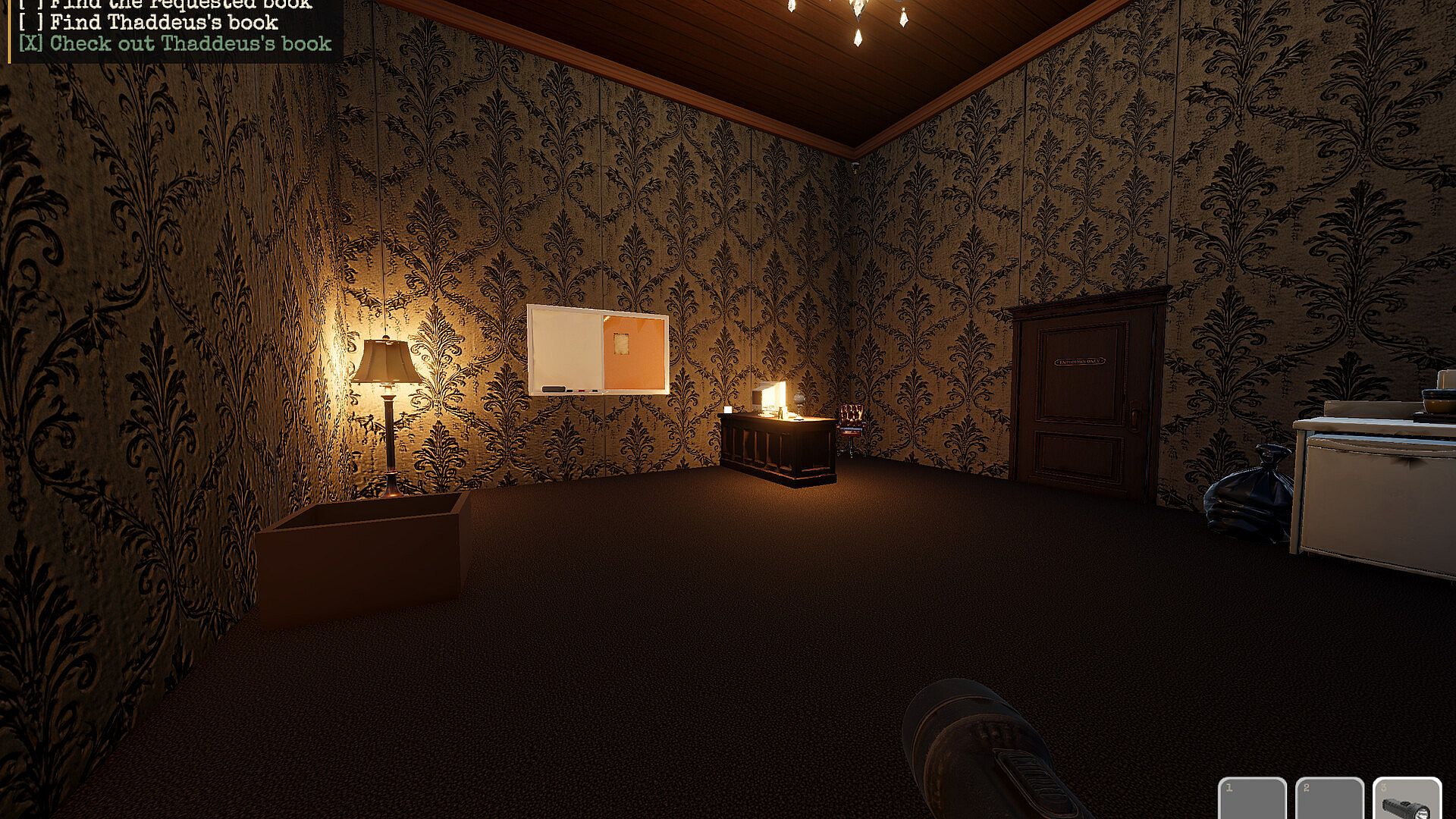
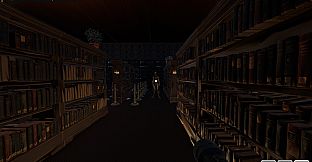
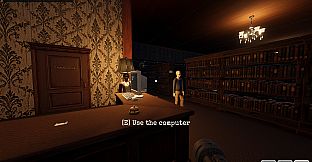
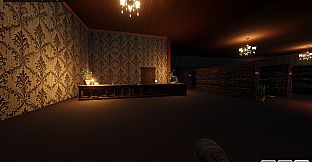
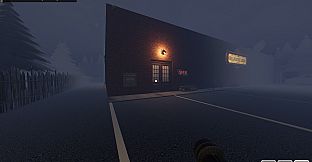
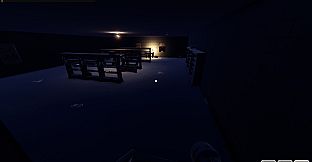

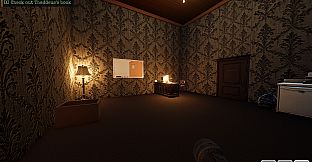
Overdue is an indie simulation horror game set in a small-town public library during the year 2000. Players take on night shift duties that include scanning library cards at an old CRT terminal, locating requested materials in the stacks, shelving returns from the chute, and securing the building at closing time. The core loop centers on completing these tasks while monitoring the environment for subtle changes and capturing photographic evidence of anomalies to earn additional pay.
Gameplay
The experience emphasizes realistic library operations mixed with growing tension. Workers handle front desk duties, search the shelves for specific items, and manage the return system. A key element involves photographing anything that appears altered after turning away, as the employer requires visual documentation of these occurrences without explanation. The setting recreates early 2000s technology through card catalogs, polaroid cameras, and terminal interfaces, with no modern mobile devices present.
Rules posted at the desk grow stricter each shift. Certain books must go to a cellar bin rather than the shelves. Specific areas like shelf nine remain off limits. Patrons become increasingly unusual after dark, and sounds such as crying or knocking require careful interpretation to avoid breaking protocol. The game supports proximity-based voice communication during co-op sessions, allowing players to track teammates by sound alone when they fall silent.
Game Modes
Overdue offers online co-op for up to four players or solo play. Sessions run across three nights that increase in difficulty, incorporating player choices that influence the outcome and lead to a finale. Night-by-night progress saves allow continuation without restarting entire shifts. Solo mode functions as a complete experience equivalent to staffed shifts under the in-game rules.
Atmosphere and Setting
The year 2000 commitment shapes every detail, from the visual style of monitors and film cameras to the absence of contemporary conveniences. The library itself serves as the primary location, with expanding instructions on the desk note that dictate safe procedures. These guidelines cover handling damaged items, restricted zones, and responses to late-night disturbances, creating a framework where adherence offers temporary security amid escalating oddities.
Is It Worth Playing?
Overdue suits players who enjoy task-oriented horror with co-op elements or solo challenges. The focus on procedural work combined with anomaly detection and rule adherence delivers a grounded simulation that builds unease through routine rather than constant action. Those interested in short, escalating campaigns with meaningful choices will find the three-night structure engaging. The game supports both group play with voice proximity features and independent runs, making it accessible for different preferences in the indie horror simulation genre.