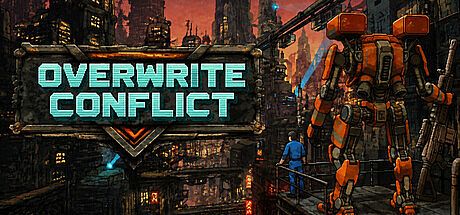


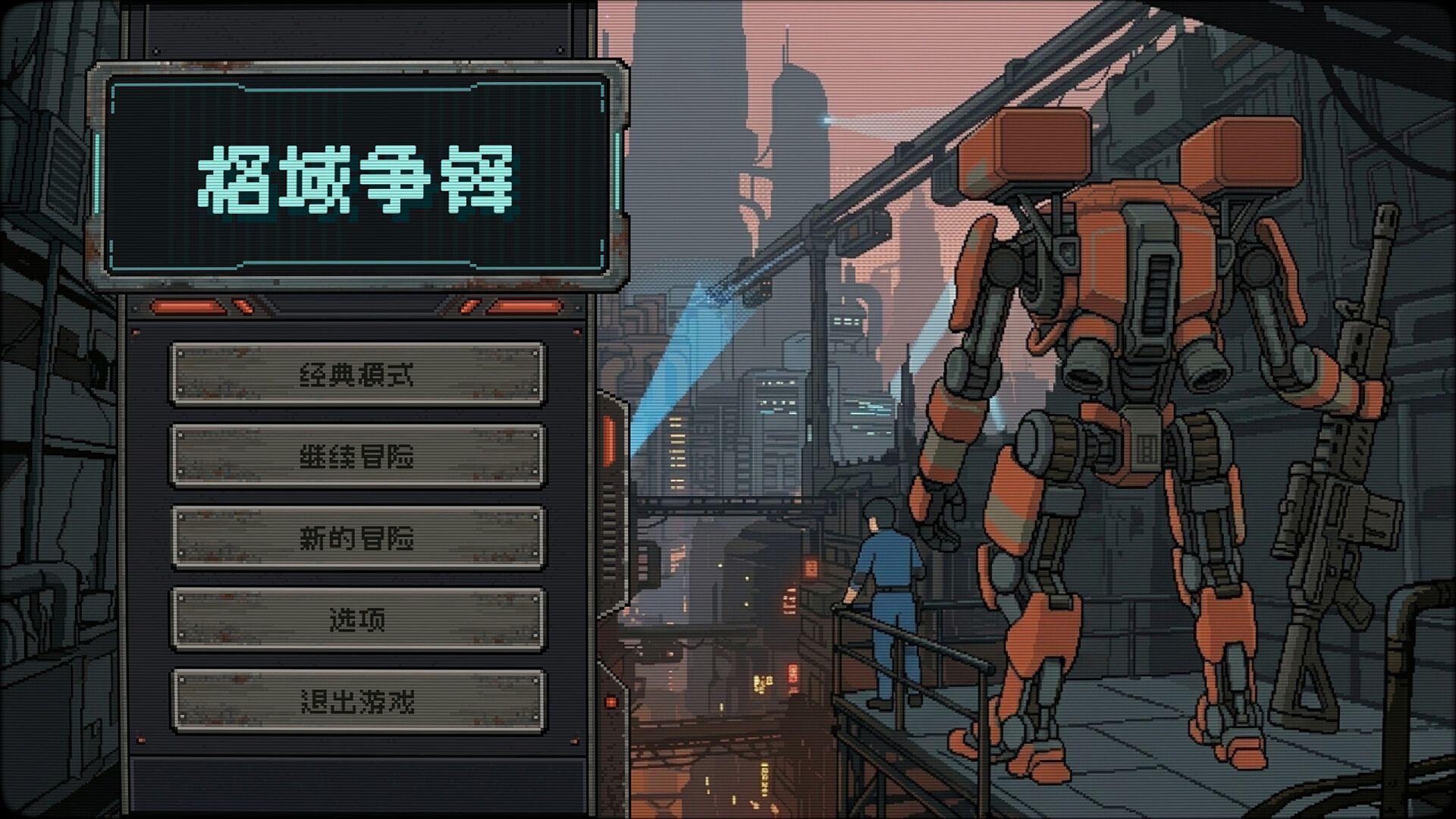
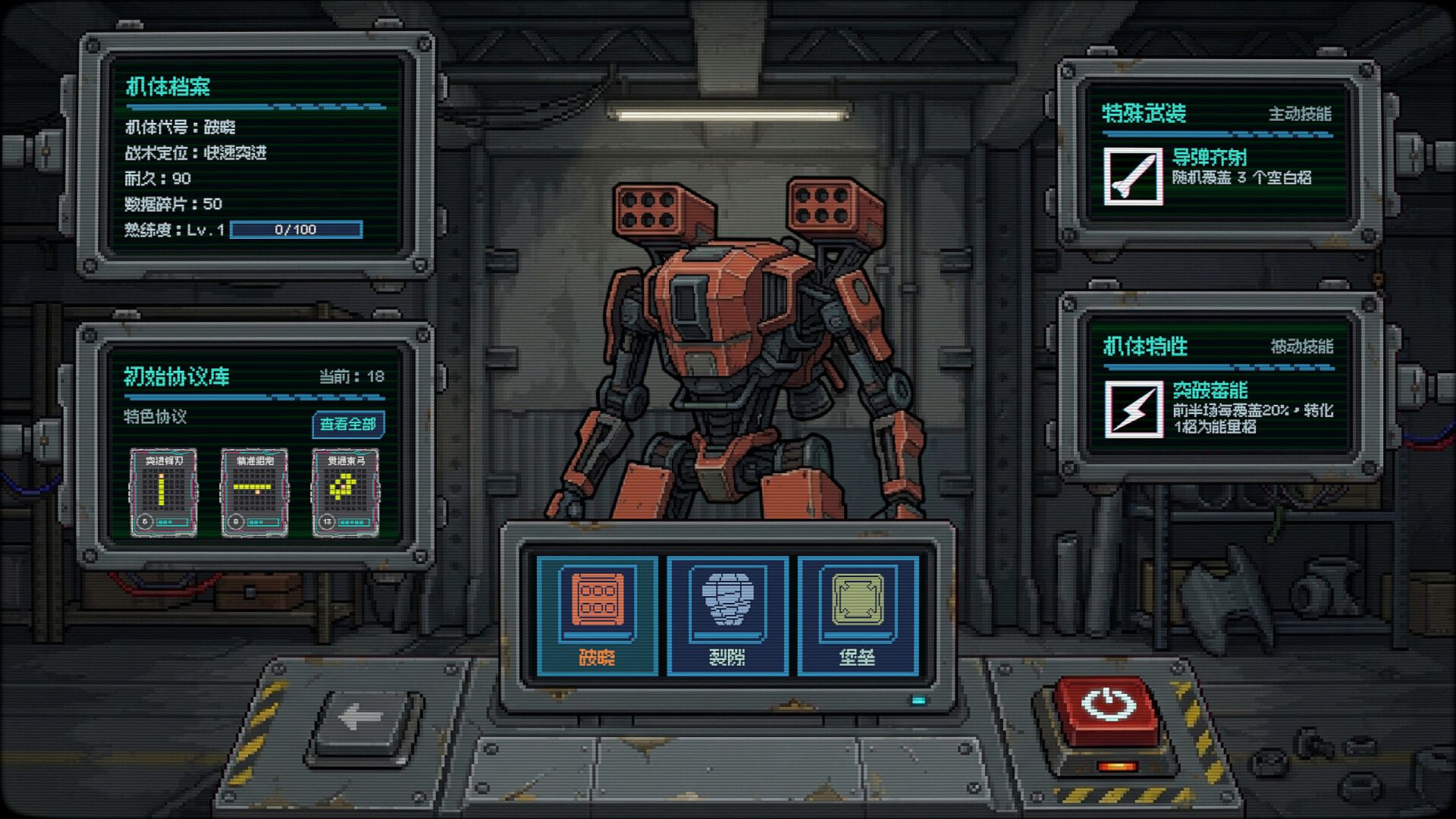
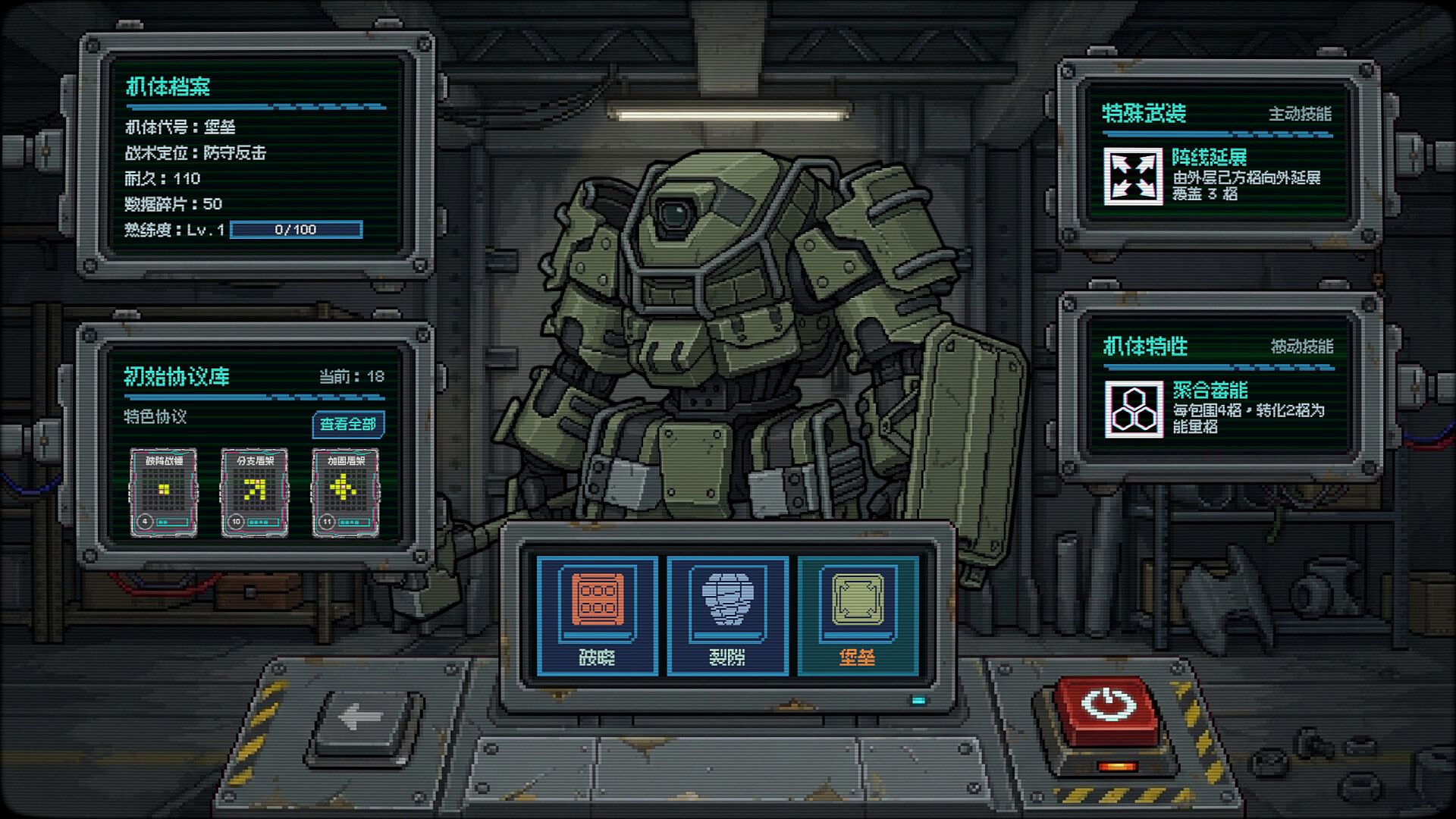
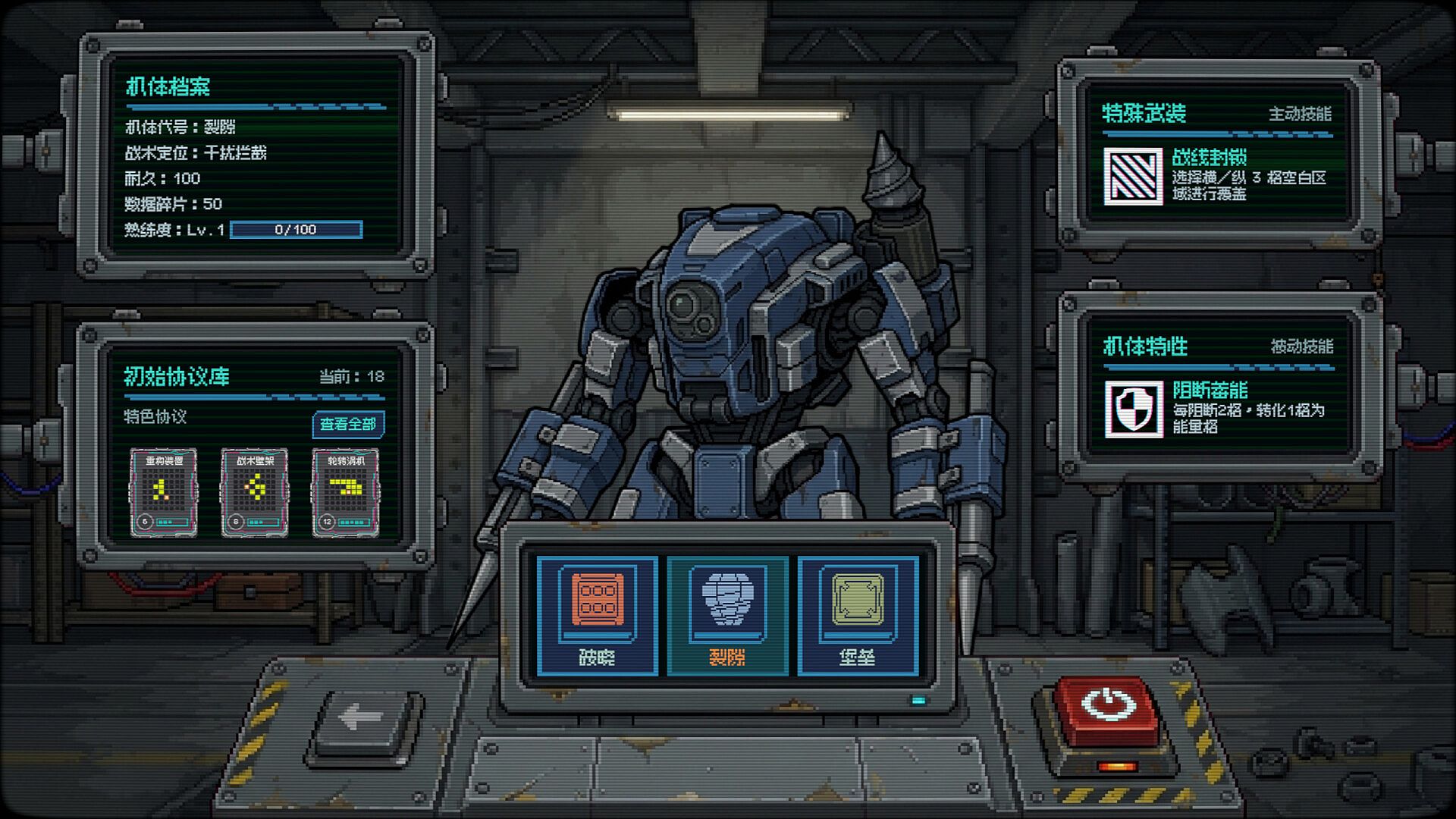
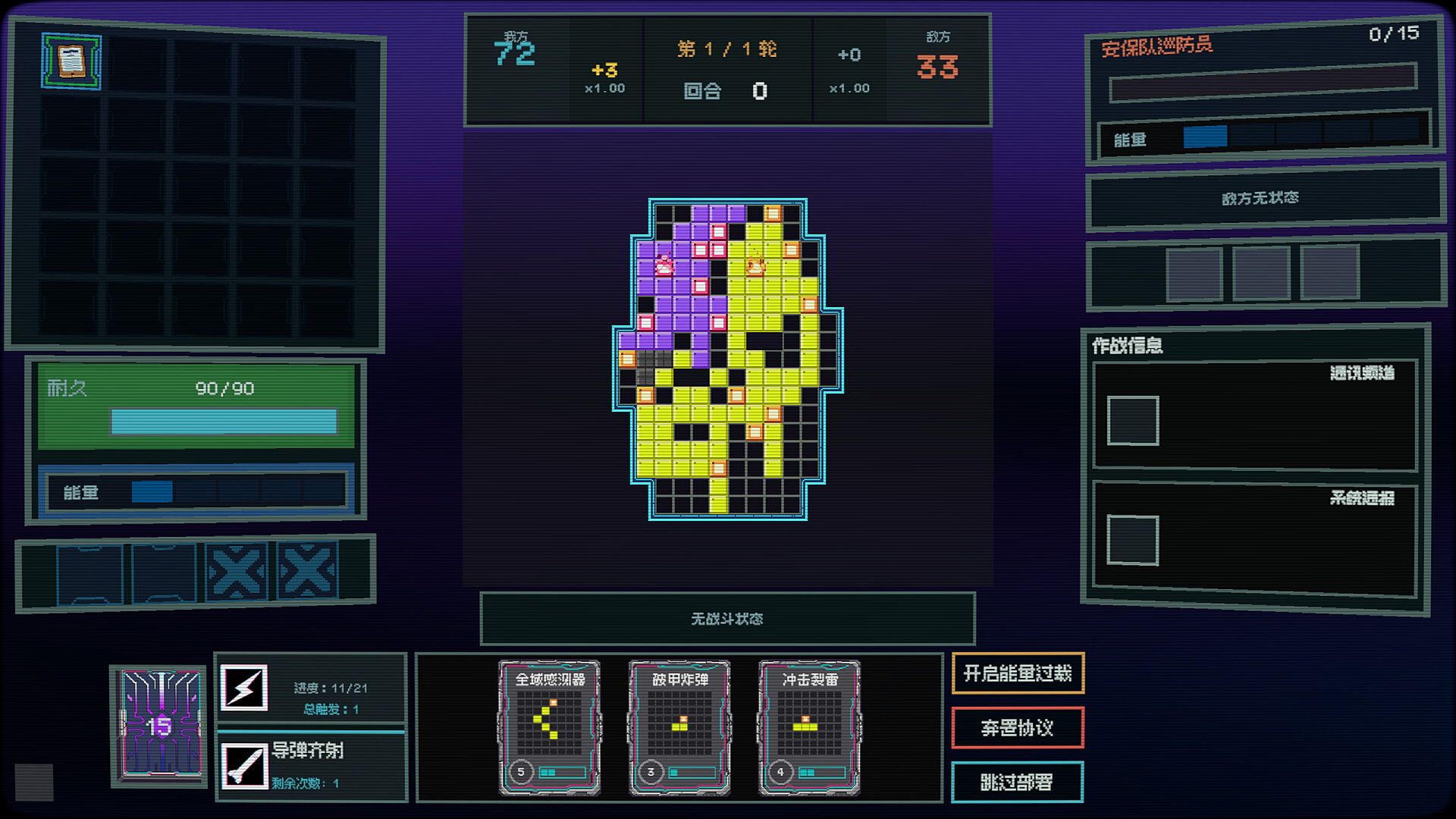
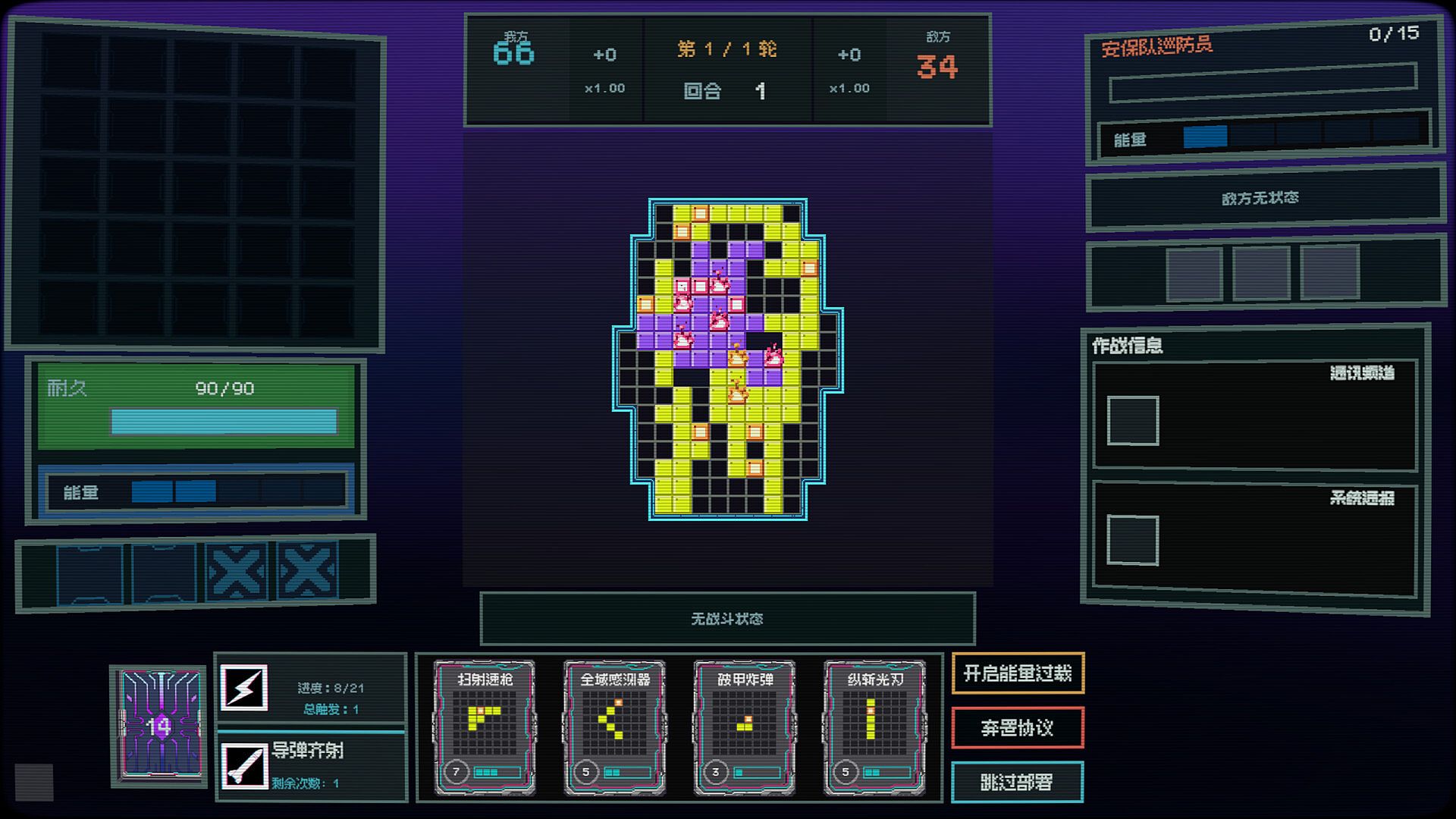
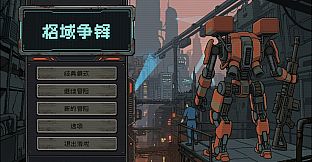


Overwrite Conflict is a turn-based tactics roguelike that combines territory control and deckbuilding on a shared grid battlefield. Developed as an indie strategy title for PC, it places players in control of a mech during procedurally generated runs through a near-future corporate conflict. The core loop revolves around deploying shaped Protocols to claim space, block opponents, and convert coverage into direct damage once scoring resolves each turn.
Gameplay
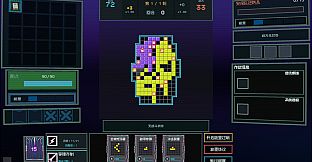
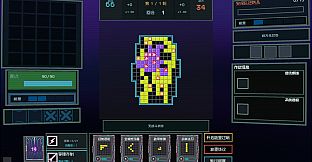
Combat unfolds on a shared grid where the player and opponent deploy multi-tile Protocols simultaneously. Each Protocol carries a distinct shape, footprint, energy cost, and effect, making placement, rotation, and orientation critical decisions. Effective coverage determines the Tactical Score, and the resulting gap inflicts hull damage on the enemy mech. Players must weigh immediate territorial gains against restricting enemy movement or conserving resources for future turns.
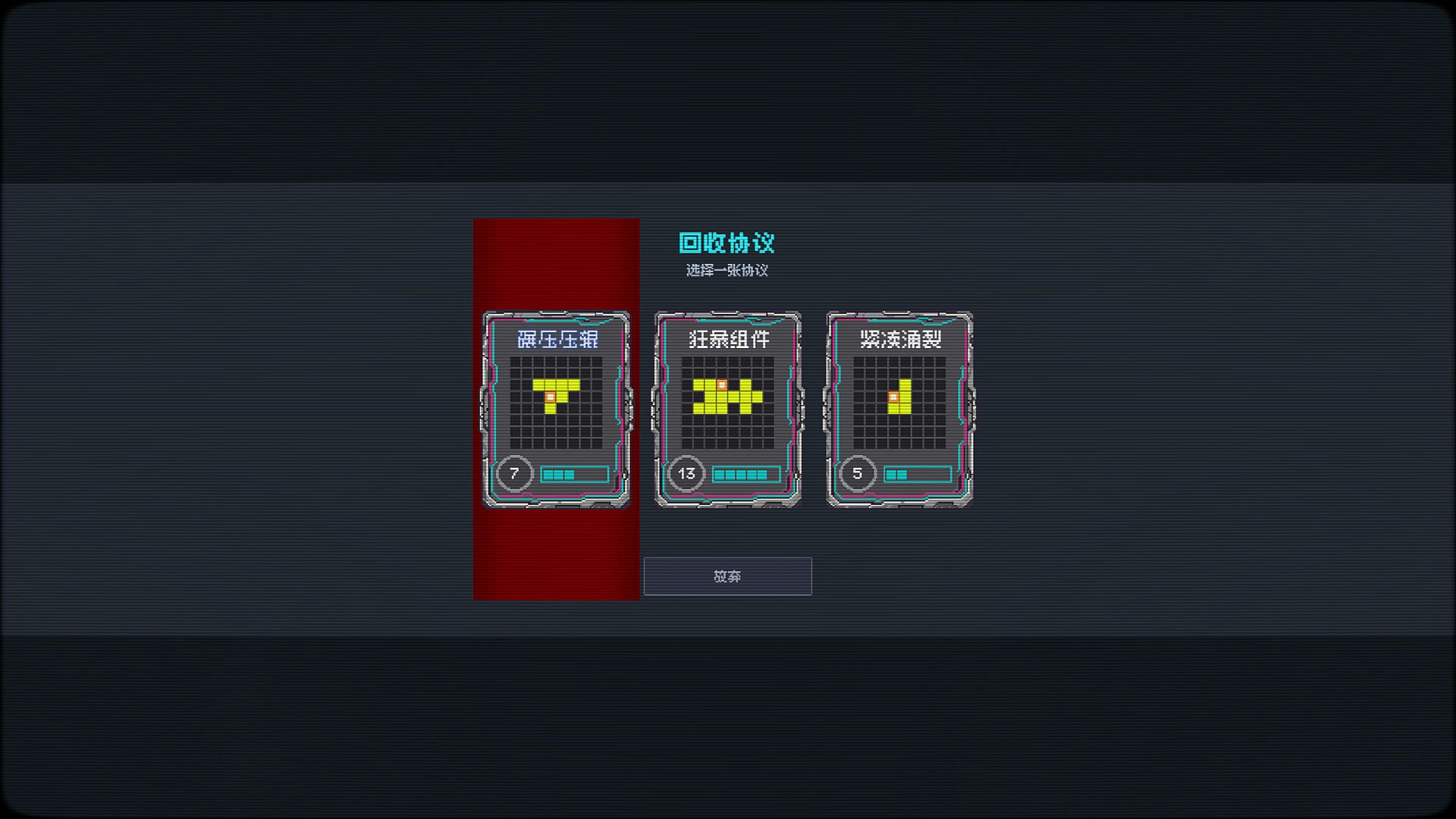
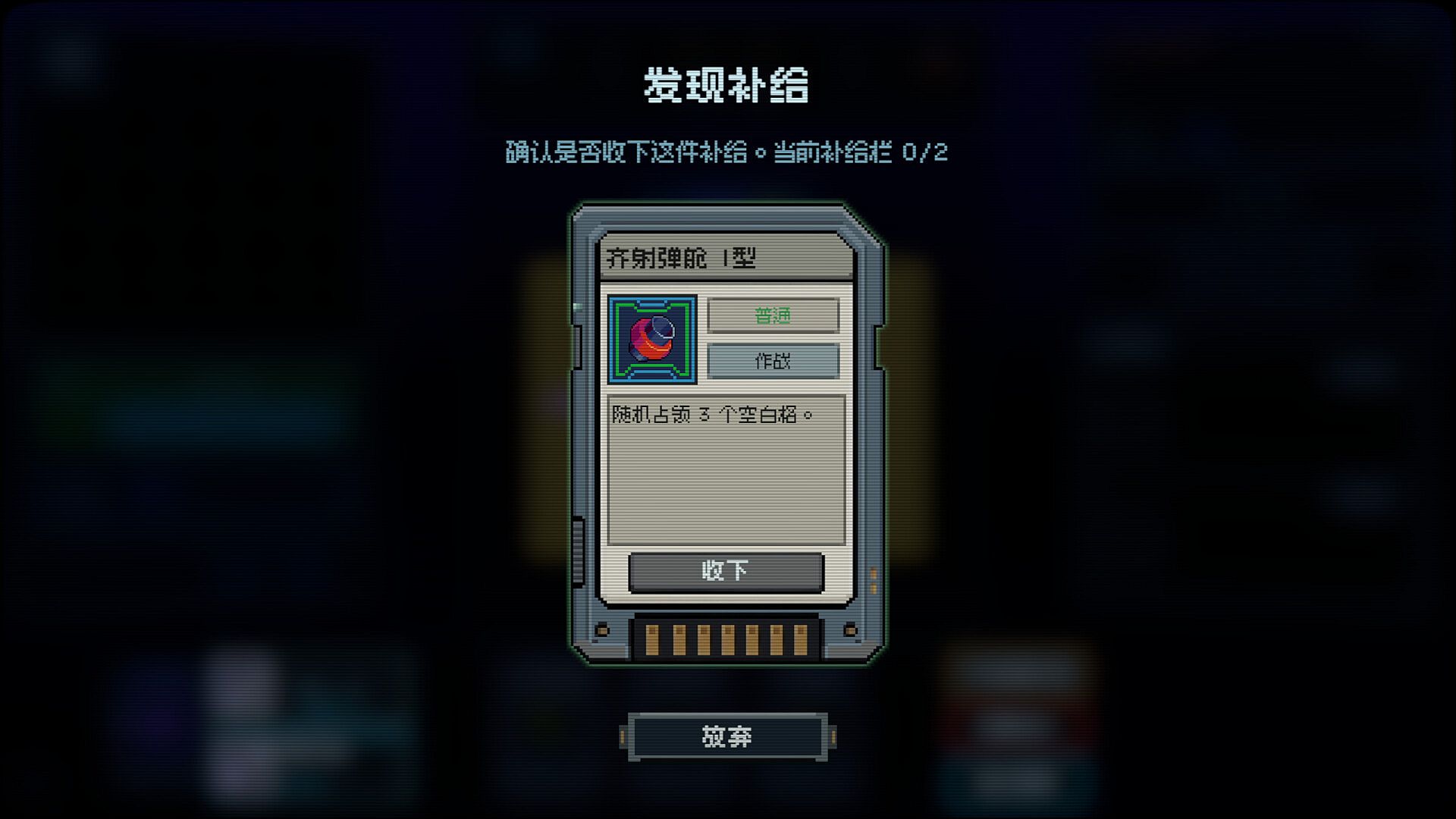
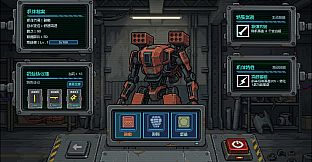
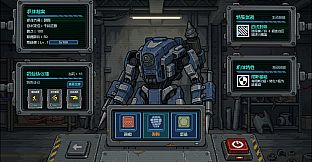
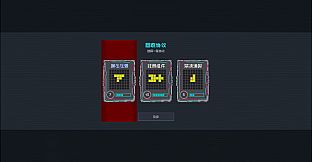
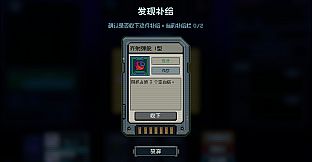
Deckbuilding centers on these Protocols rather than traditional stat-based cards. New ones are acquired during runs and can be removed, modified, or fused at shops, rest sites, or events. Synergies emerge when Protocols interact with mech abilities, Components, and Supplies, allowing builds focused on rapid low-cost chains, energy stacking, area denial, or layered defense. Different mechs offer unique starting affinities and abilities, which steer the same Protocol pool toward varied strategies.
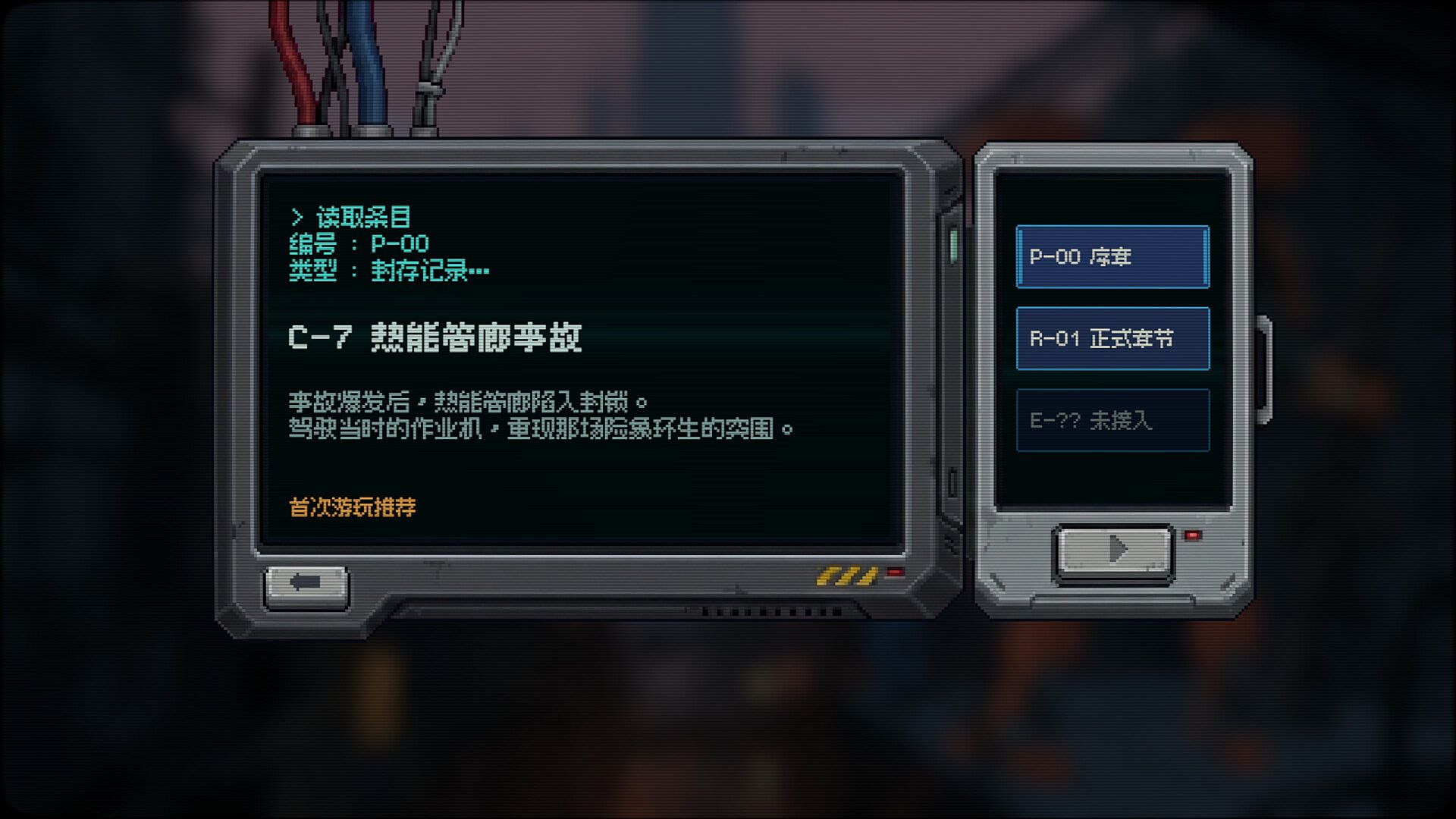
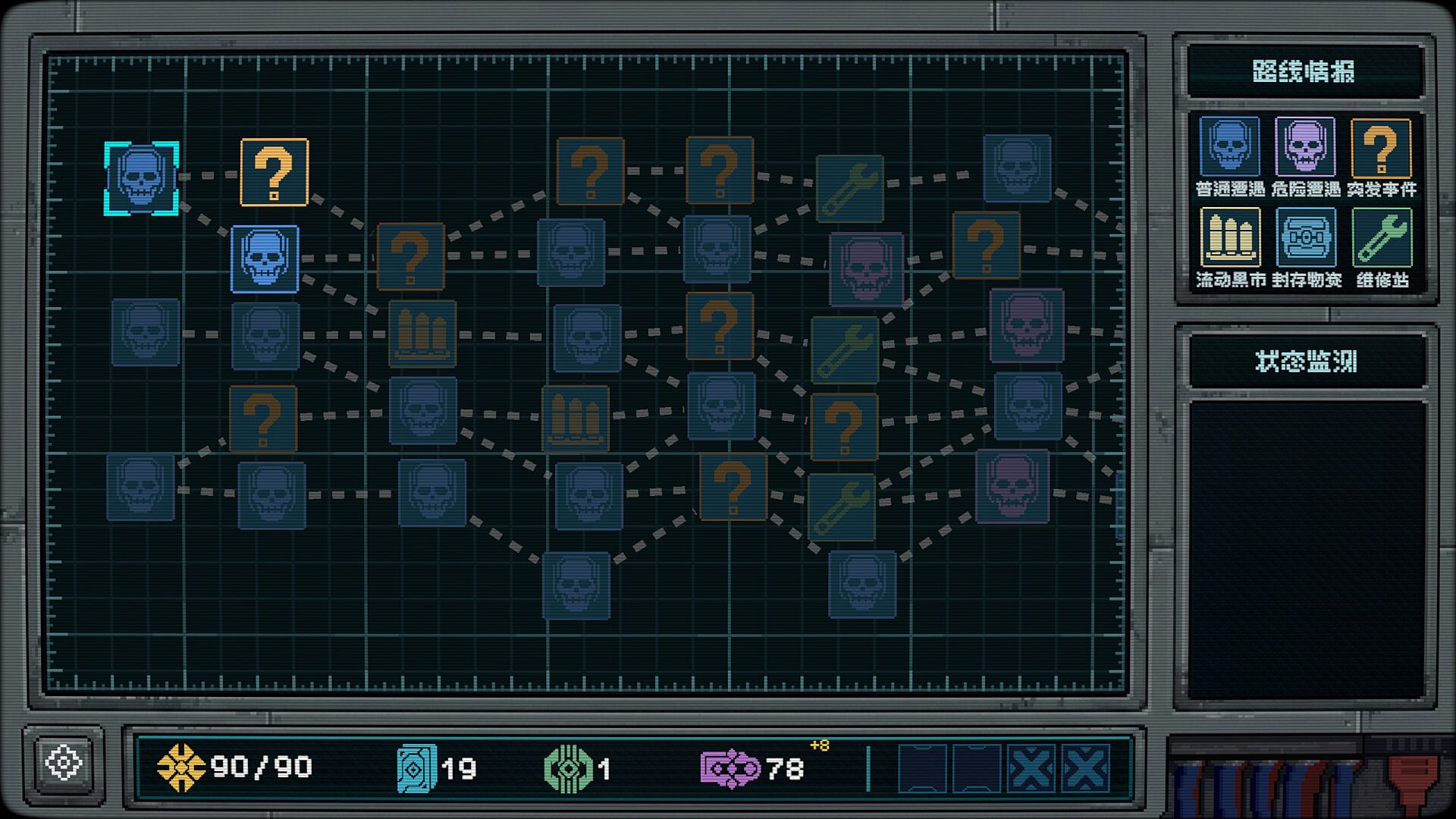
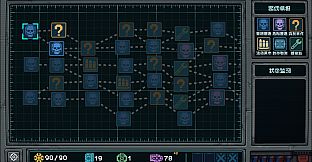
Runs follow procedurally generated branching maps filled with standard battles, elite encounters, shops, rest sites, supply caches, and random events. Choices influence available rewards and build paths leading to chapter bosses. Limited hull integrity and resources force ongoing adaptation as players navigate blockaded zones and assess risks at each node.
Game Modes
The game operates entirely in single-player format through its roguelike structure. Runs consist of navigating branching maps with varied encounter nodes that include combat, resource management, and narrative events. Completion of runs unlocks additional Protocol pools, Component slots, and build options for subsequent attempts.
Within each run, battles emphasize simultaneous deployment on the shared grid, with scoring and damage resolution occurring after placements. No separate competitive or cooperative modes exist beyond the core single-player experience against AI opponents. Randomized enemy compositions and rewards support repeated playthroughs with different mechs and tactical approaches.
Story and Setting
The narrative unfolds in a near-future world ruled by megacorporations that accelerated automation to replace both workers and soldiers. This drive for military technology triggered an energy war fought primarily with mechs. After the conflict, repurposed military systems continued to displace labor, leaving behind sectors where mutual-aid networks support those seeking to uncover truths about technological control.
Players assume the role of a freelance technician who once viewed technology as a force for positive change. Conscripted during the war for communications and electronic warfare duties, the character was later discharged and flagged for recovery following an incident. Escaping lockdown, the technician begins tracing events back to their origins while questioning the true beneficiaries of corporate automation.
Is It Worth Playing?
Overwrite Conflict targets fans of turn-based tactics roguelikes who enjoy spatial reasoning, placement puzzles, and emergent buildcrafting. Its simultaneous grid deployment and coverage-based scoring create a distinct combat rhythm compared to traditional card or unit-focused systems. The procedural runs and mech variety encourage experimentation across multiple attempts.
As an upcoming release with no user reviews available yet, reception remains untested. The described mechanics emphasize trade-offs in every placement and long-term resource decisions, which may appeal to players who prefer deliberate strategy over fast-paced action. Those drawn to indie strategy titles with strong thematic integration around labor and corporate power will find the setting and character background add context to the tactical decisions.