





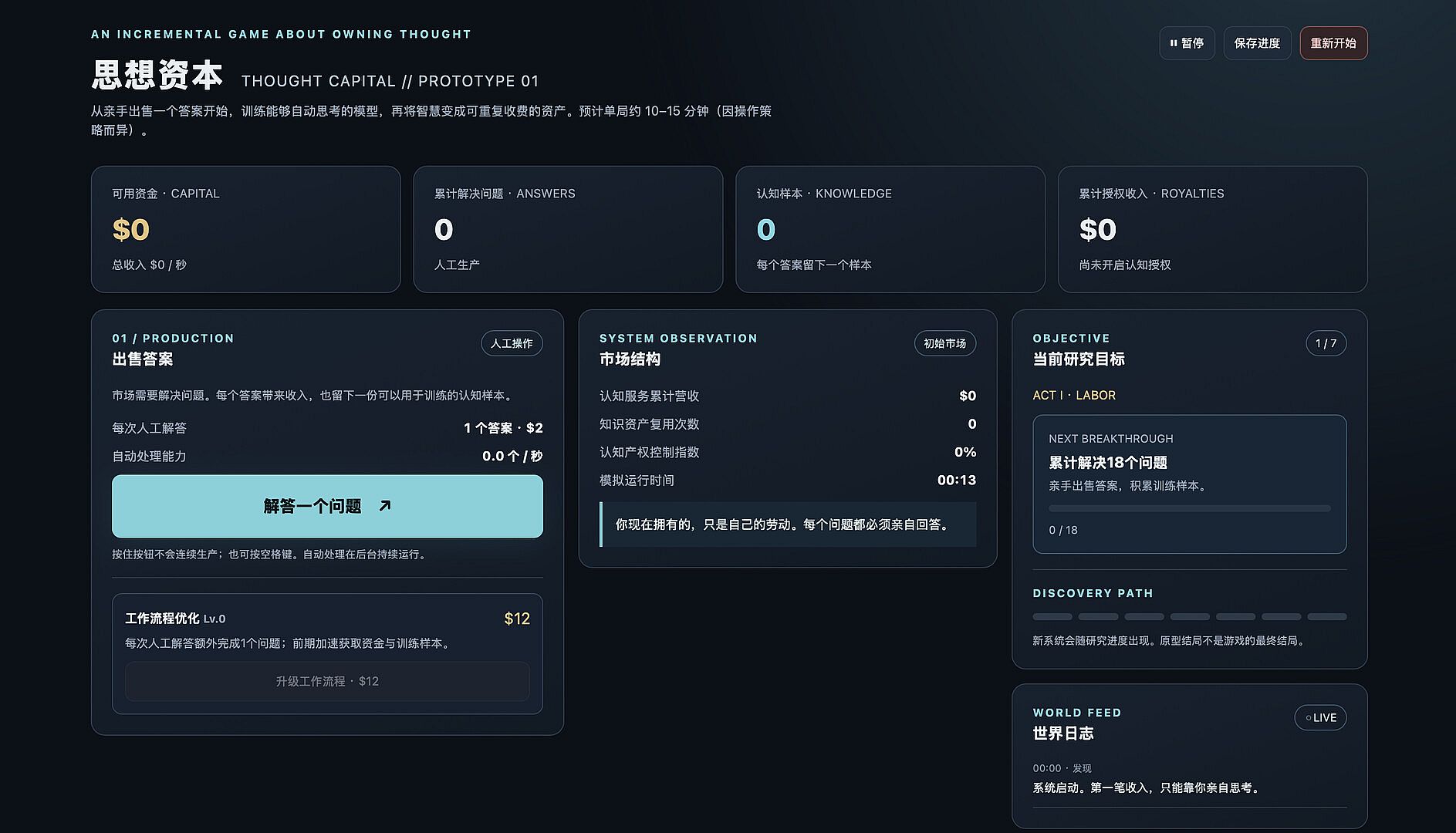






Pay to Think is an incremental strategy simulation game that places intelligence at the center of its core loop. Players begin with a modest 100 points of human intelligence and must convert that limited resource into earnings through personal creative and technical work before scaling into automated systems.
Gameplay
The experience opens with the player handling all initial tasks directly. This includes writing prose, producing artwork, creating videos, and developing software using the starting intelligence allocation. Earnings from these efforts accumulate until sufficient capital exists to acquire the first computer hardware. At that stage, an intelligent model matching the player's own capacity takes over routine operations, freeing the player to focus on expansion decisions.
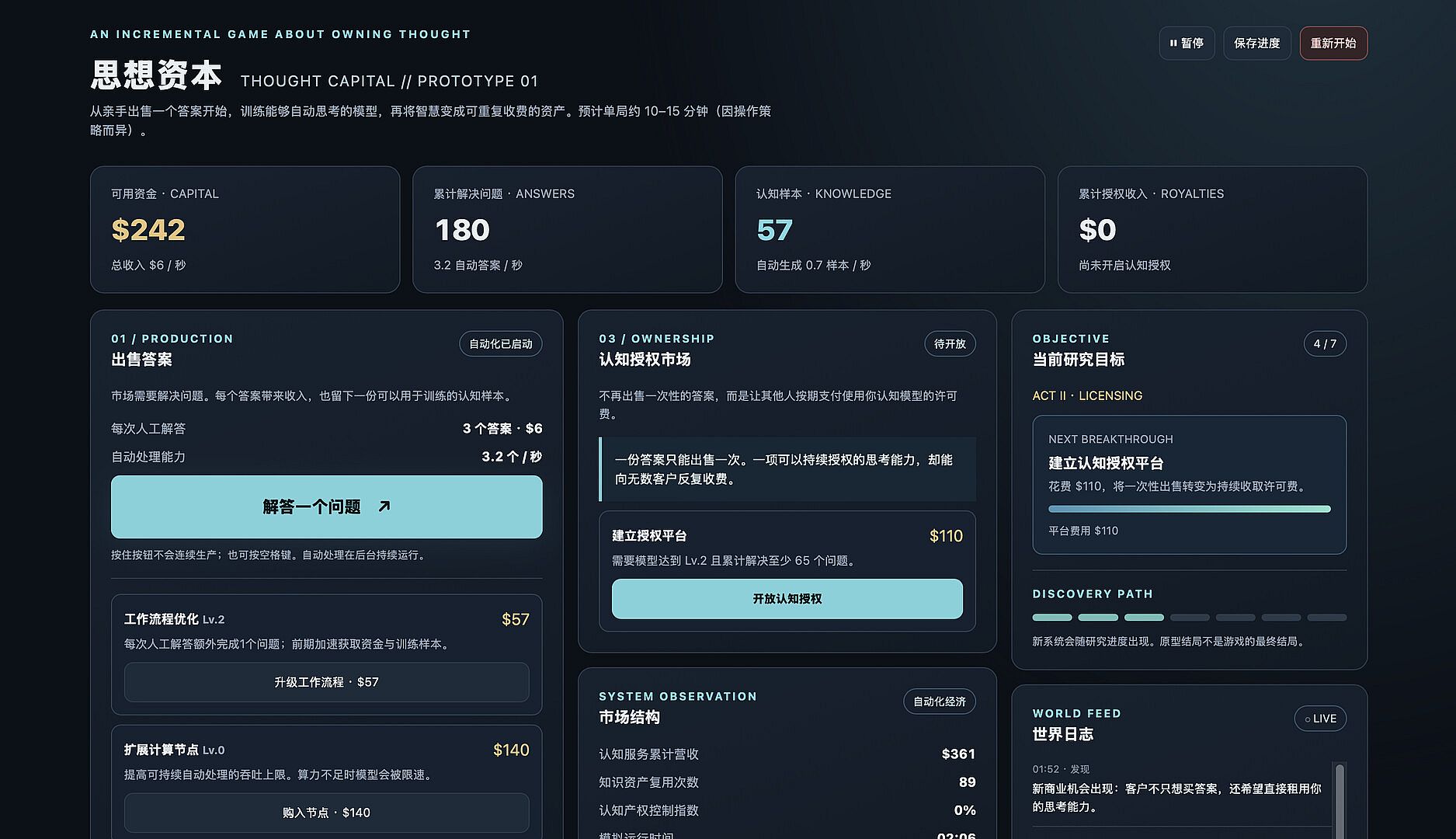
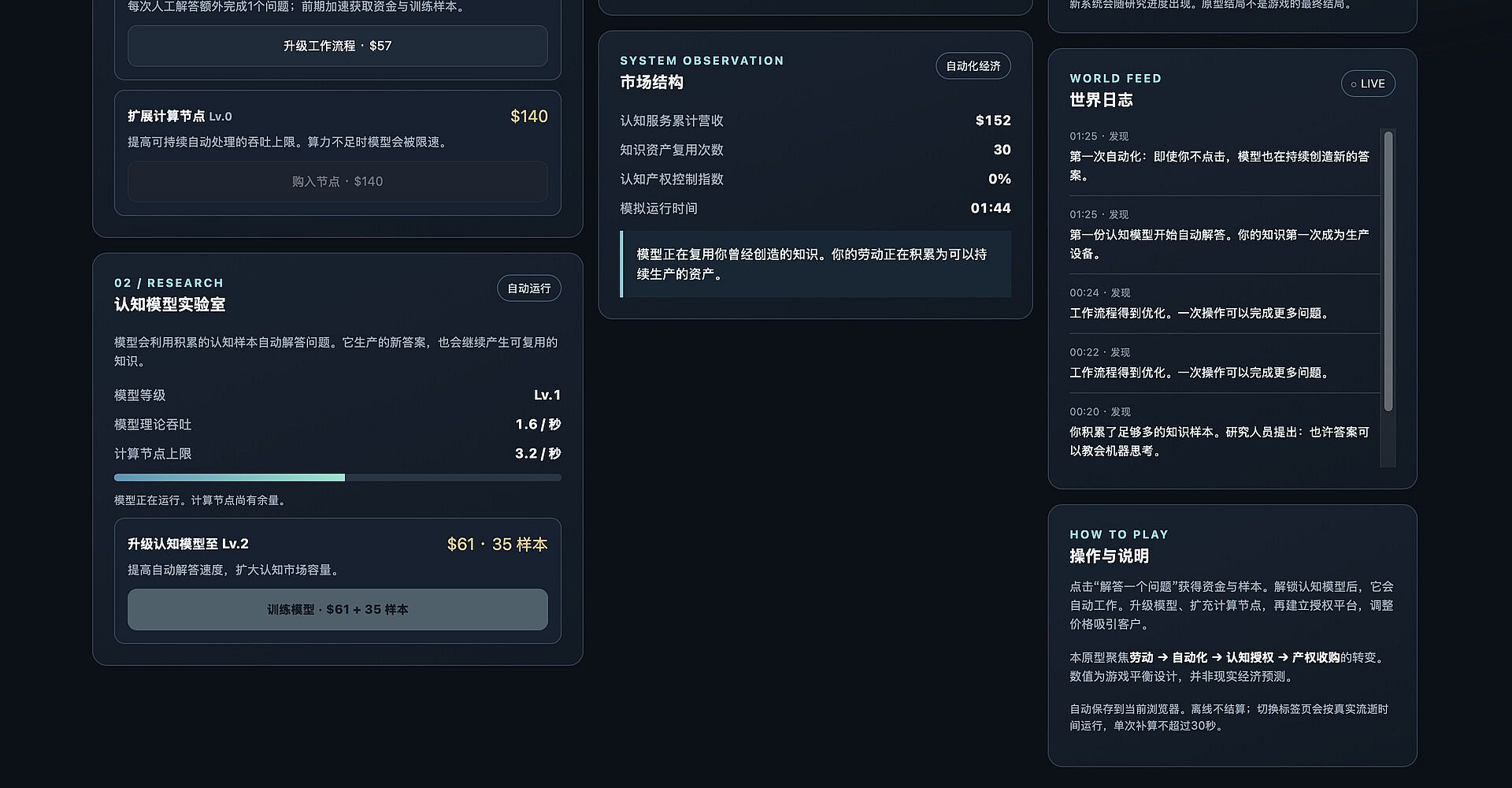
Subsequent progress follows a clear cycle of reinvestment. Revenue funds additional computing power, which trains more capable models. Those models generate higher returns, enabling further hardware upgrades or algorithmic improvements. Players allocate limited resources between immediate production boosts and longer-term advancements such as model compression or efficiency optimizations. Each choice shifts the overall growth rate and unlocks access to new revenue streams as intelligence transitions from a personal trait into a scalable industrial output.
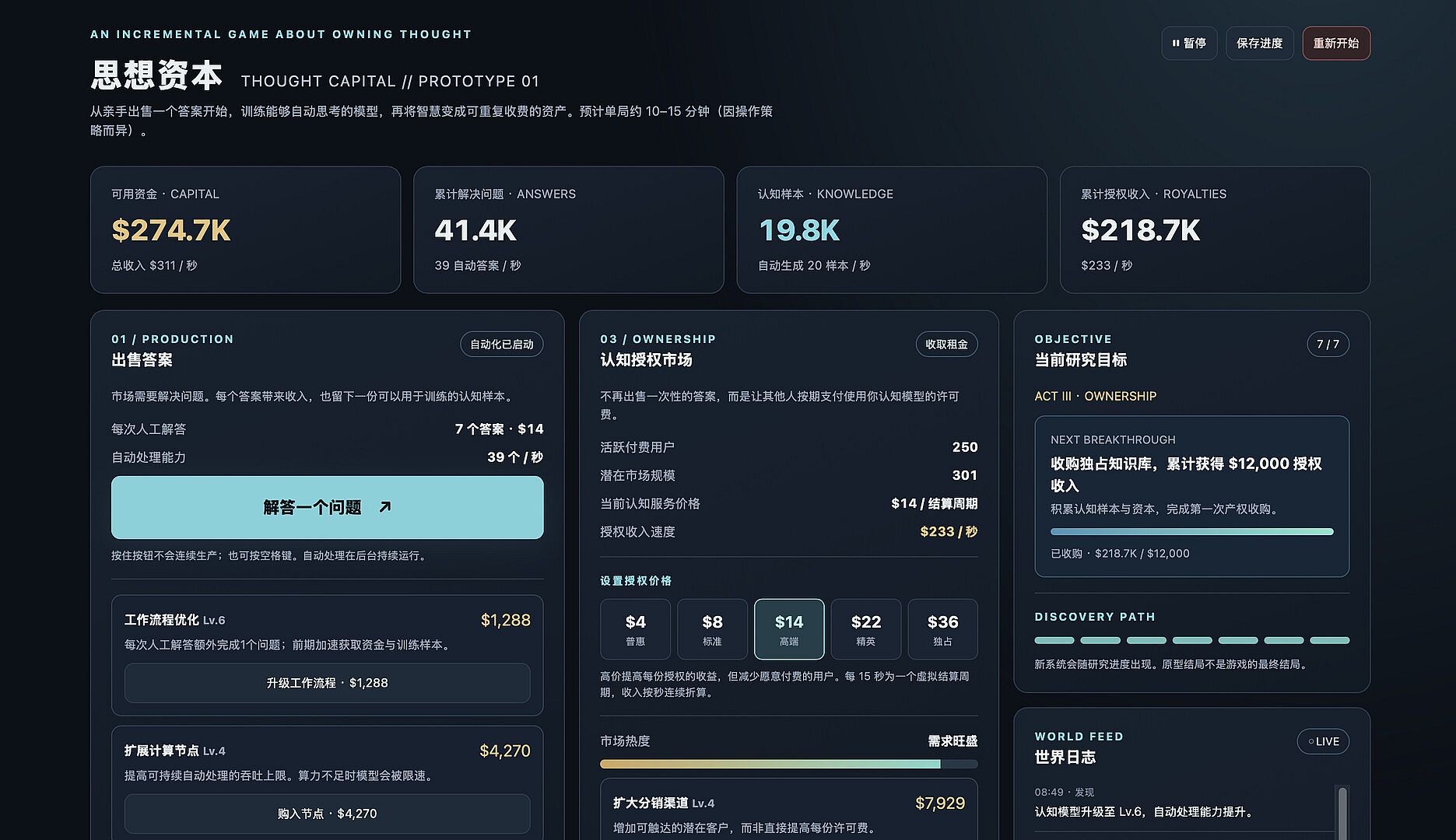
Automation gradually replaces manual effort. Tasks once performed by the player become machine-driven processes running at high frequency. The setup expands from a single machine into larger facilities, with commodities including text, images, video, software, and eventually intelligence itself becoming tradable outputs. The numbers involved grow exponentially, moving well beyond early milestones where a few thousand dollars represented significant achievement.
Game Modes
Pay to Think operates as a single-player experience centered on incremental progression. Within that framework, players navigate branching investment paths that emphasize different priorities. One approach focuses on steady hardware expansion to maximize current output. Another directs resources toward research and model refinement for accelerated future gains. The game presents these as ongoing strategic choices rather than discrete selectable modes, allowing the same session to shift emphasis as circumstances change.
Progression remains continuous and open-ended. Early stages require active participation to build the initial foundation, while later stages shift toward oversight of automated systems. No separate multiplayer or competitive elements appear in the design.
Core Mechanics and Progression
The central system revolves around balancing production, training, and optimization. Computing resources serve dual purposes: they can drive immediate revenue generation or support the development of superior intelligence models. Breakthroughs in capability open entirely new categories of work that machines can handle at scale. This creates a compounding effect where early manual labor gives way to industrial-level output measured in vastly larger quantities.
Resource management stays grounded in concrete decisions. Players decide when to prioritize short-term cash flow versus long-term capability growth. Hardware upgrades, algorithm tweaks, and model scaling each carry trade-offs that affect the pace and direction of expansion. The simulation continues without artificial caps once the player surpasses human-scale limitations.
Is It Worth Playing?
Pay to Think suits players who enjoy incremental games built around exponential growth and resource allocation decisions. The loop rewards careful planning of investments and patience through the early manual phase before automation takes hold. Those drawn to simulation titles that explore themes of technological scaling and economic systems will find the core loop consistent with the provided premise. The game remains available on PC with no additional confirmed updates or seasonal content at this time. Individuals seeking short sessions or action-oriented gameplay may prefer other genres, while fans of idle and strategy simulations can expect a focused experience centered on intelligence as capital.











