





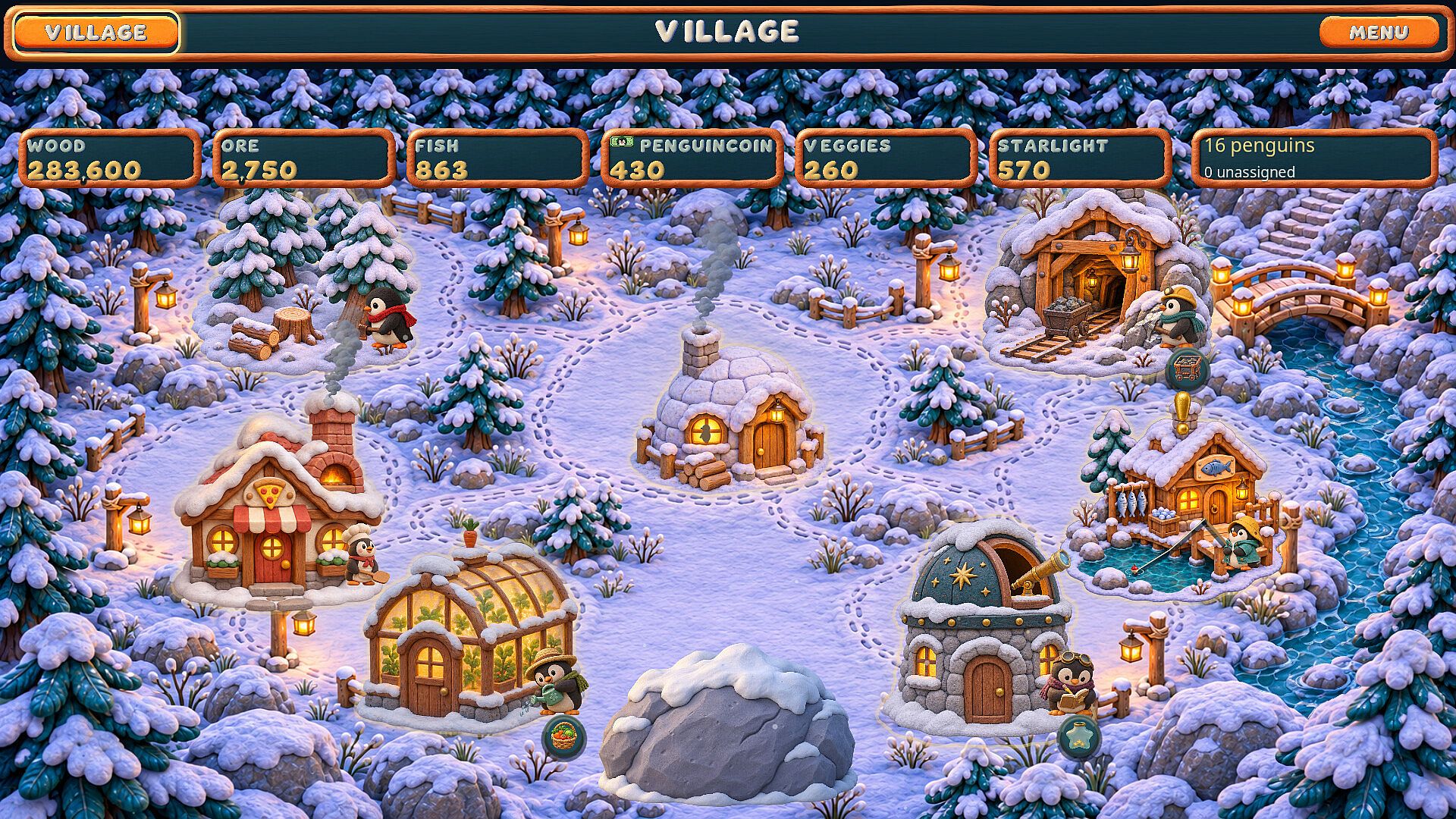


Penguinstead is a cozy incremental simulation game set in a snowy abandoned village where players restore buildings and recruit penguins through steady resource gathering and upgrades. This single-player experience on PC blends casual simulation elements with satisfying click-based activities across multiple locations, encouraging players to build routines that keep progress moving even when switching between tasks.
Gameplay
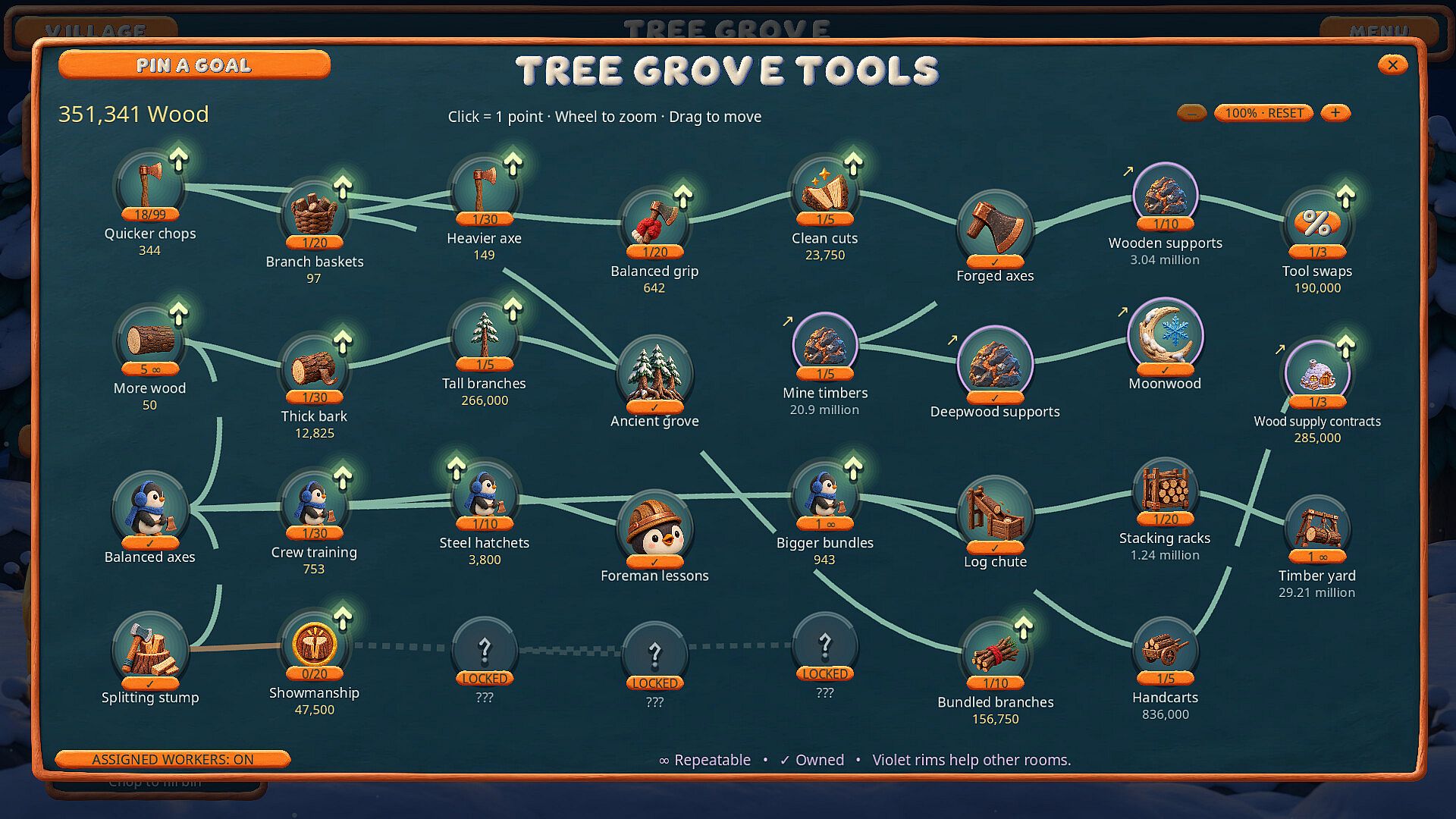
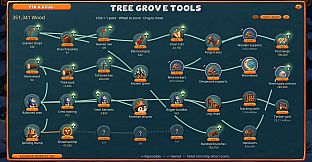
The core loop centers on visiting different areas in the village to collect resources, complete tasks, and invest in improvements that boost overall output. Players gather materials like wood or fish, restore structures, and hire penguins who contribute automatically while the game remains open. Upgrades come from branching options in shops, allowing customization of worker efficiency and cross-room benefits that link activities together for greater synergy. Automation features unlock gradually, reducing manual input over time while preserving the need for player decisions on where to allocate gains. Progress saves between sessions, though resources stop accumulating when the game closes, which keeps the focus on active play periods rather than pure idle accumulation.
Visuals feature soft snow, warm window lights, colorful effects, and claymation-style penguin characters that add personality to the setting. Penguins engage in chats that reveal jokes, disagreements, and bits of wisdom, alongside discoverable village memories that flesh out the community without interrupting the main activities.
Game Modes
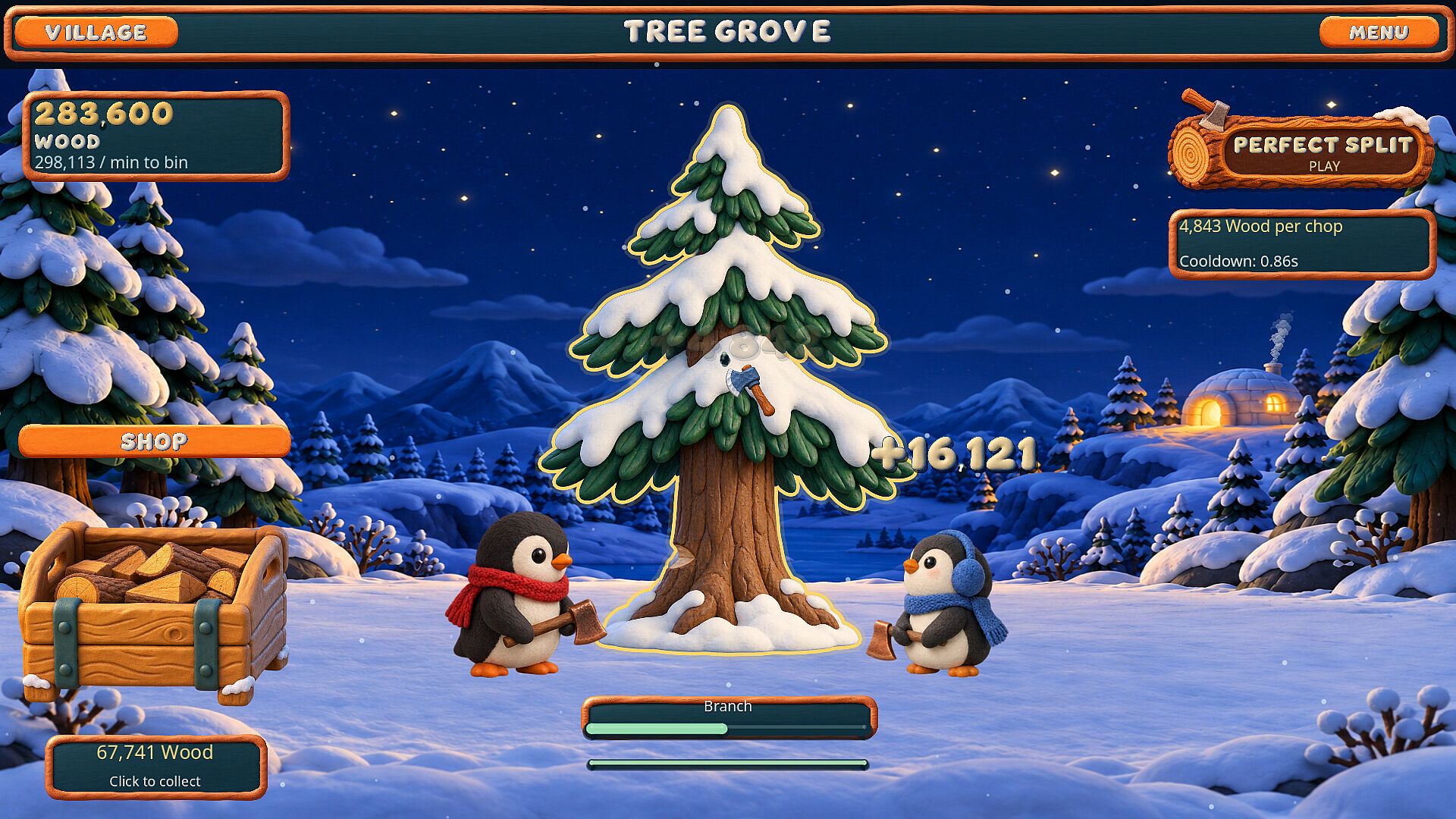
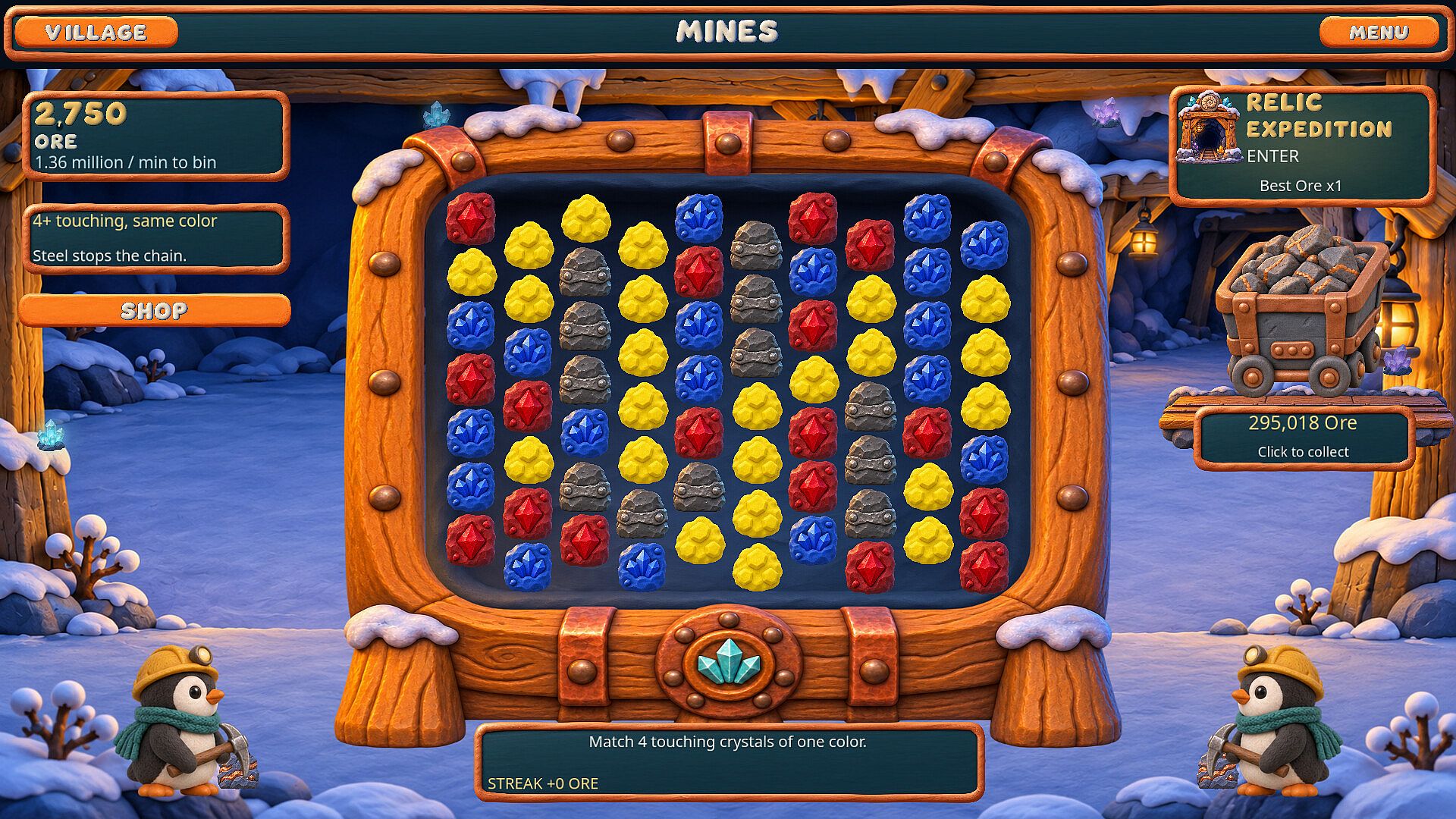
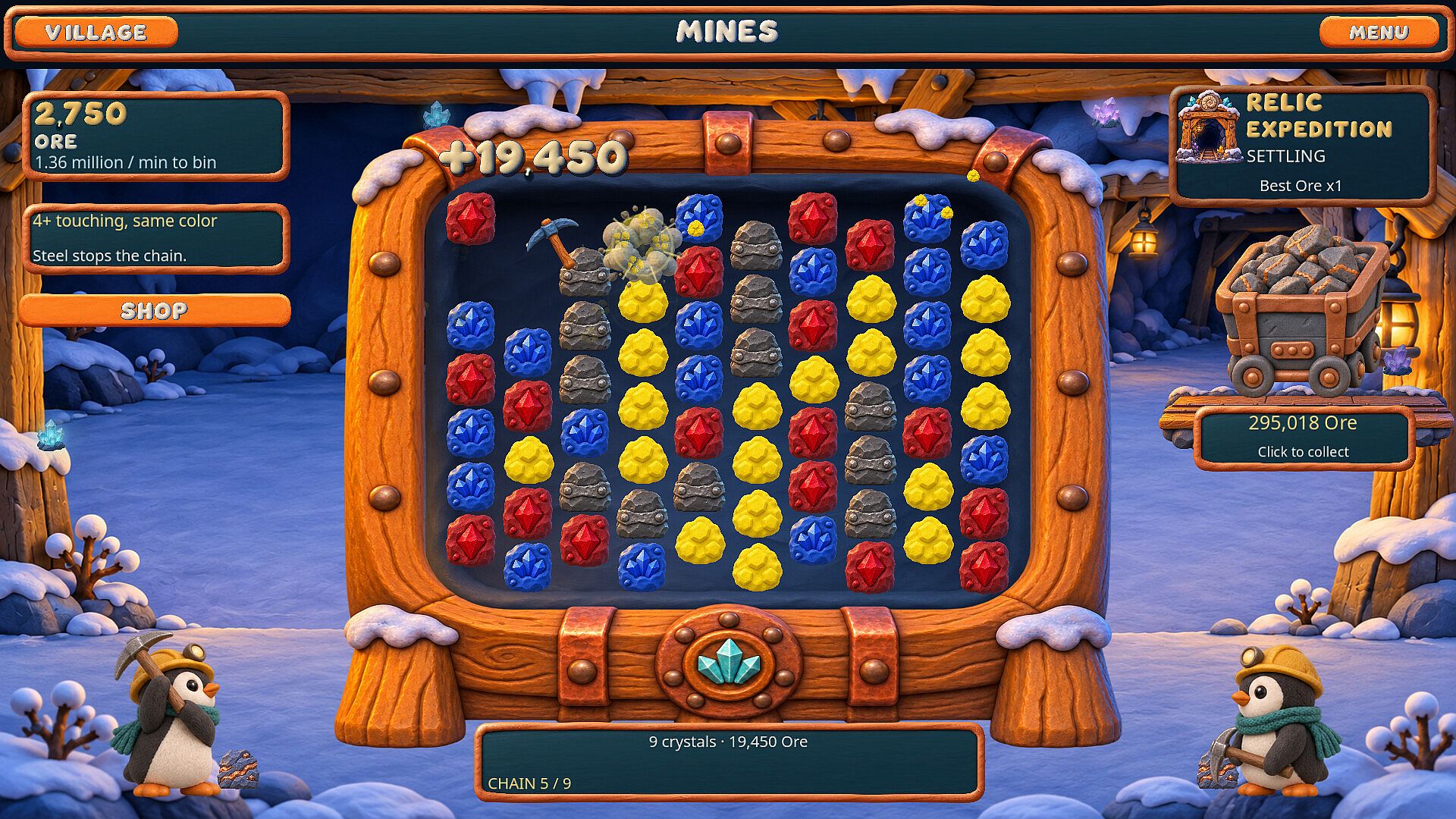
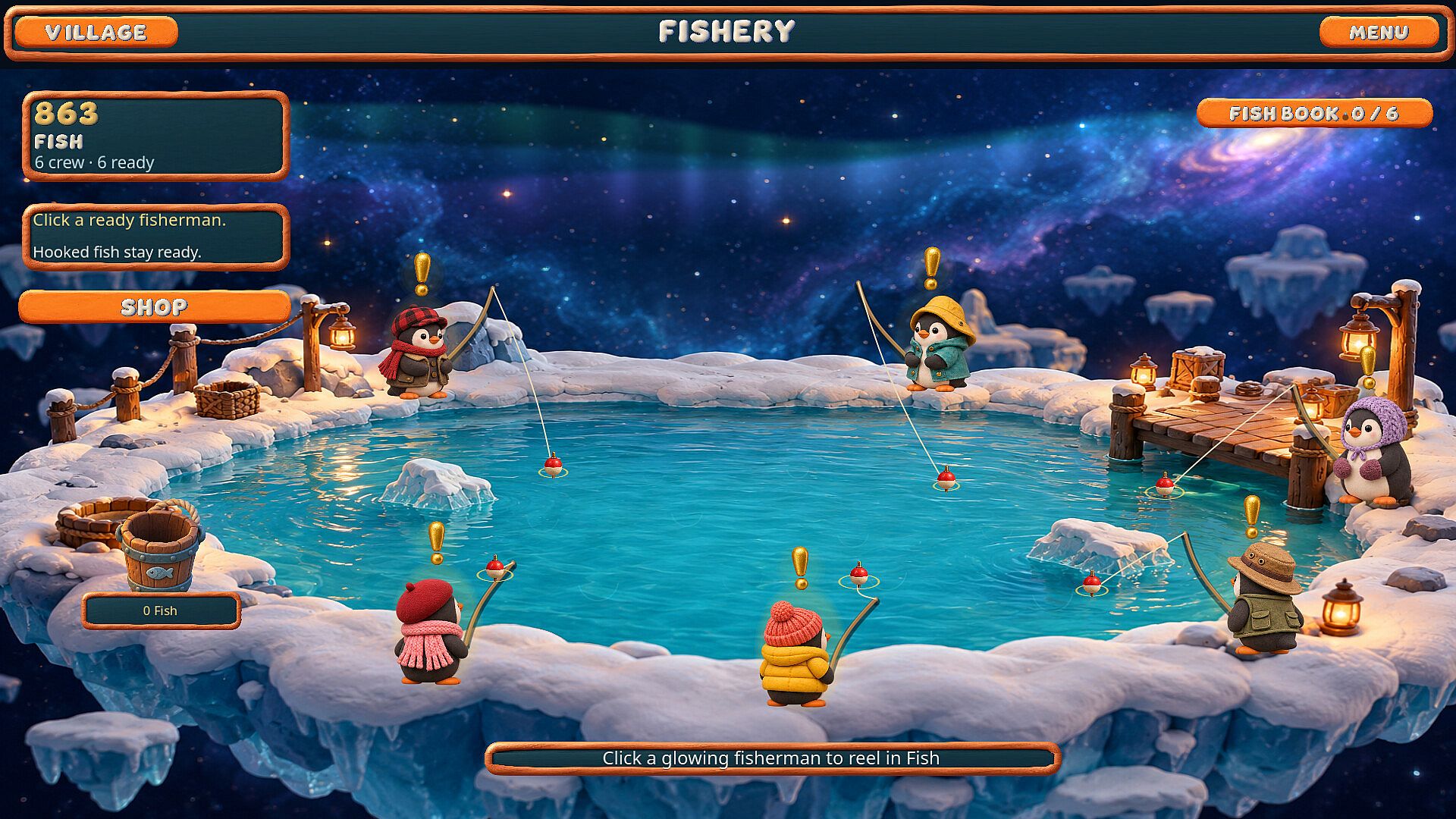
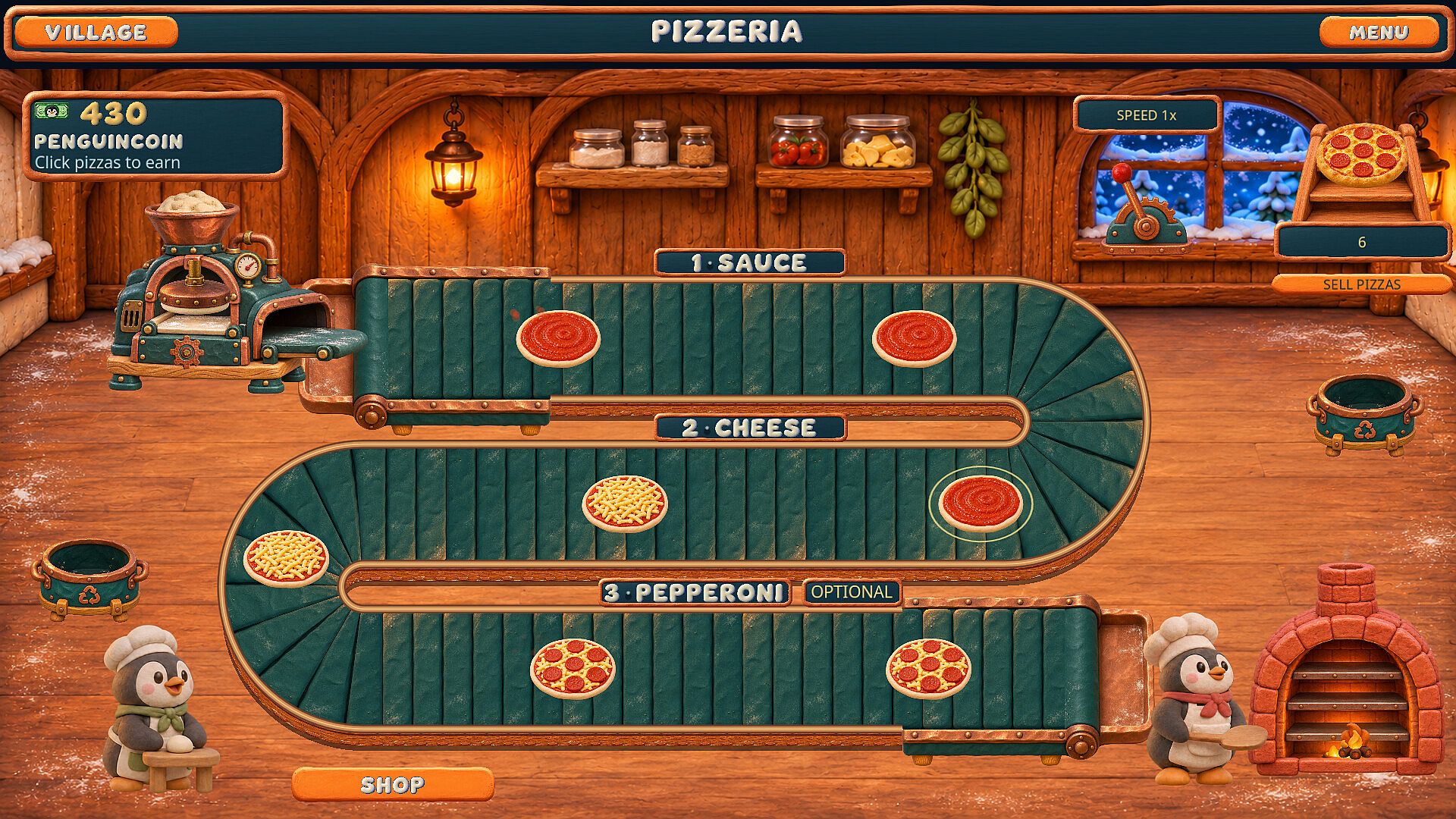
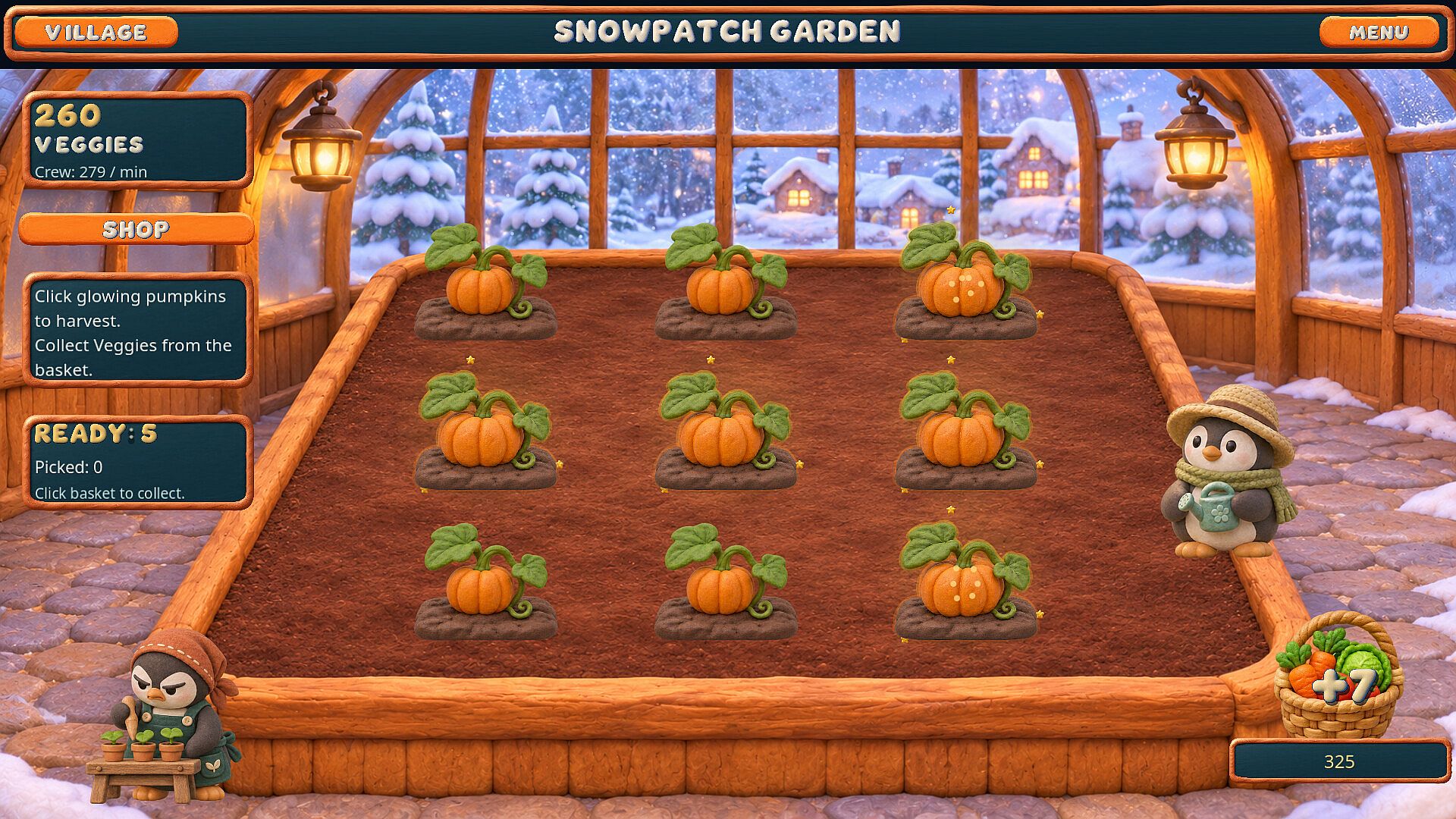
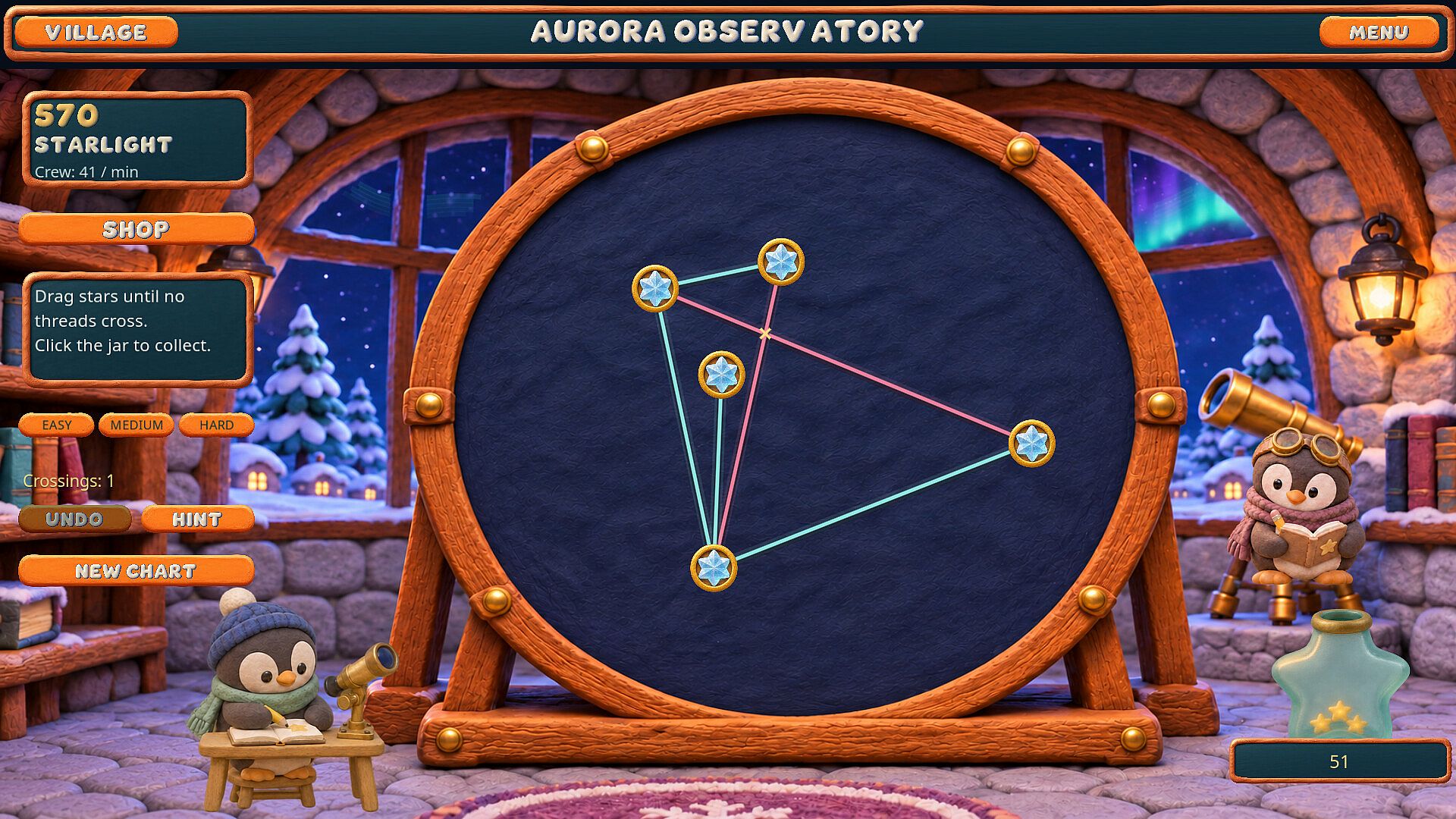
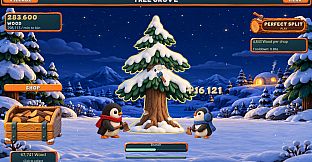
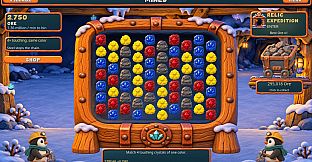
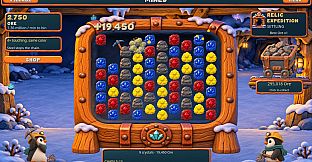
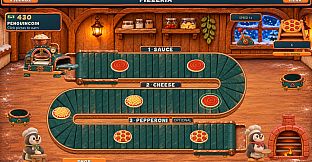
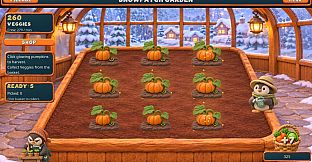
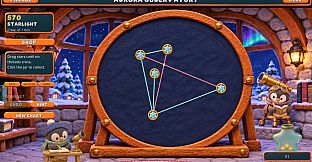
Six distinct rooms provide varied activities that form the heart of progression. The Tree Grove involves chopping wood and filling collection bins while upgrading tools for the crew. The Mines feature connected crystals that trigger colorful cascades, with special stones enabling chain reactions from single clicks. The Fishery requires watching for bites and reeling in catches to support a lakeside team. The Pizzeria keeps pizzas moving on a conveyor belt, where players click to add toppings before items pass by. The Garden focuses on tending a pumpkin patch and harvesting glowing crops. The Aurora Observatory involves untangling connected stars to earn rewards under a clear night sky.
Occasional bonus challenges appear in these rooms, such as aiming for a Perfect Split in the grove, uncovering relics or racing through Crystal Rush in the mines, attempting the Golden Bobber fishing challenge, handling pizza-making and slicing tasks, or managing the Pumpkin Patrol in the garden. Stronger performances in these bonuses enhance production rates across the village.
Village Development and Penguins
Restoring the settlement involves balancing efforts across rooms to unlock new destinations and improvements. Some upgrades benefit multiple areas, promoting a connected approach where gains in one spot support others. Penguins serve as both workers and companions, with their ongoing contributions visible as players move between locations. The system rewards consistent engagement through incremental growth, turning small collections into larger capabilities over repeated visits.
Is It Worth Playing?
Penguinstead suits players who enjoy cozy incremental and simulation games that emphasize steady progress through varied mini-activities rather than high-stakes action or complex strategy. The mix of clicking mechanics, automation unlocks, and light narrative touches through penguin interactions creates a relaxing loop ideal for short or extended sessions. As a single-player title currently listed as coming soon with no user reviews available yet, its appeal depends on interest in the described room-based systems and village restoration theme. Those drawn to casual PC experiences with personality-driven characters and satisfying resource loops will likely find it a good fit once released.











