






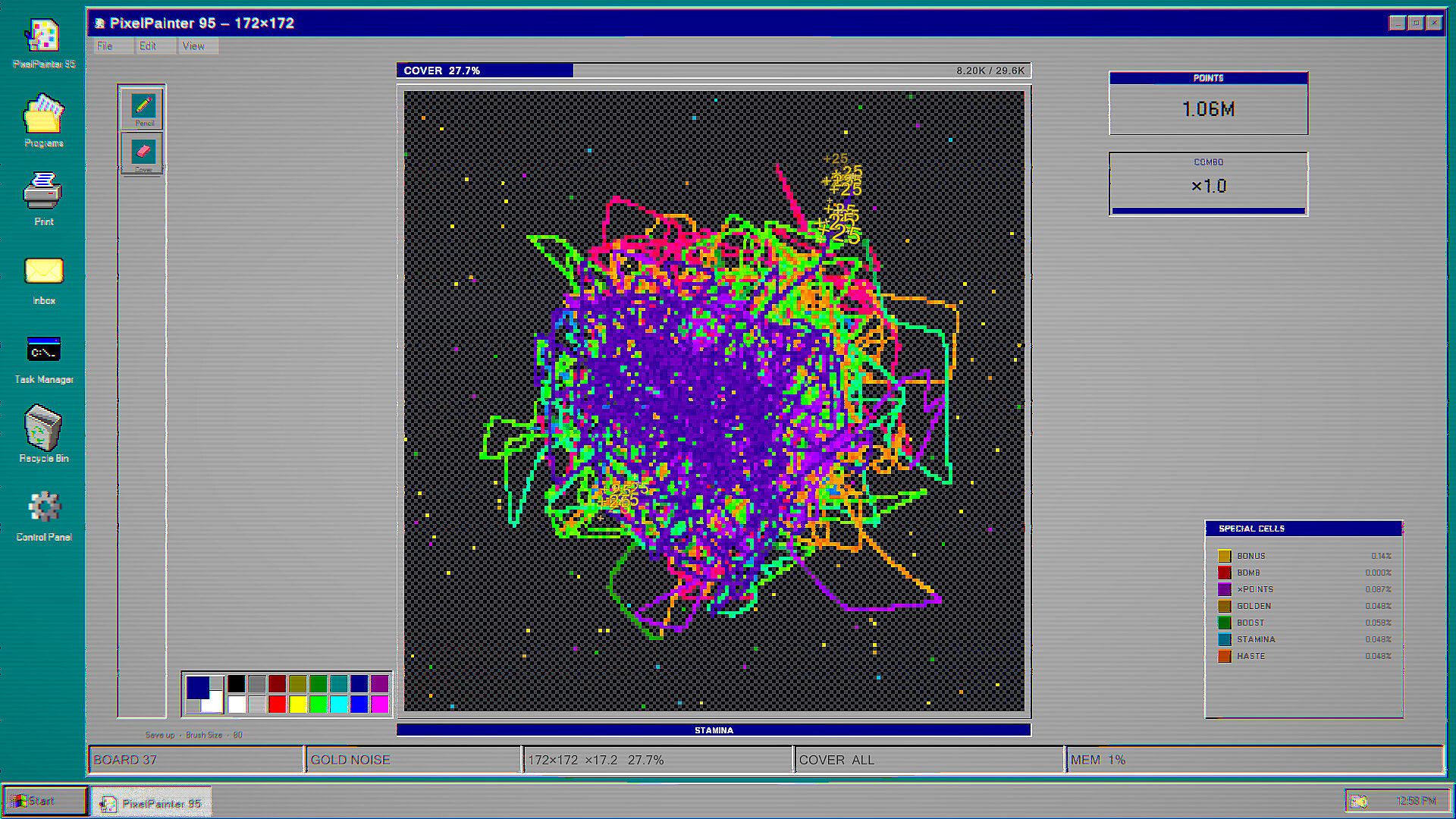
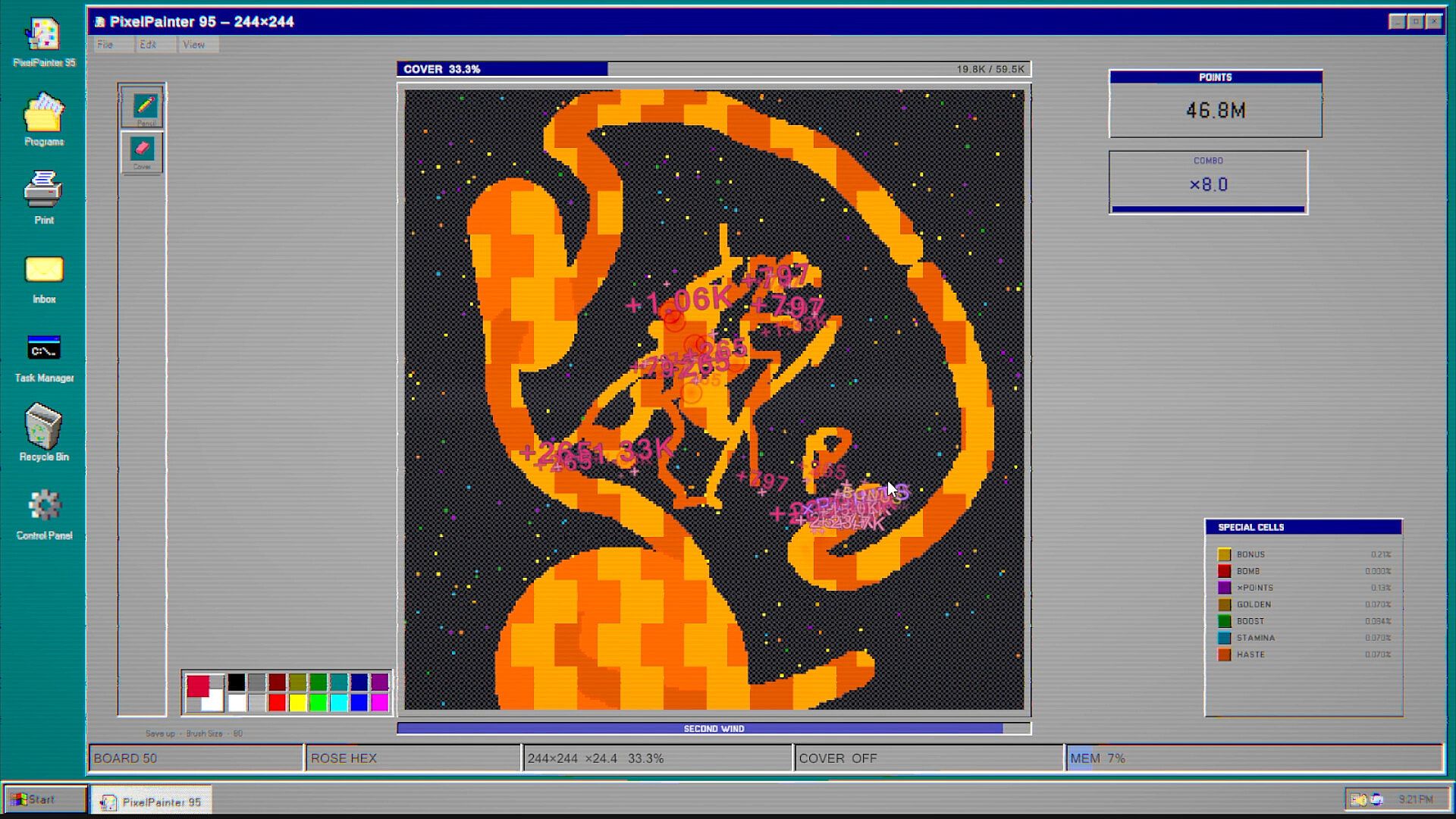
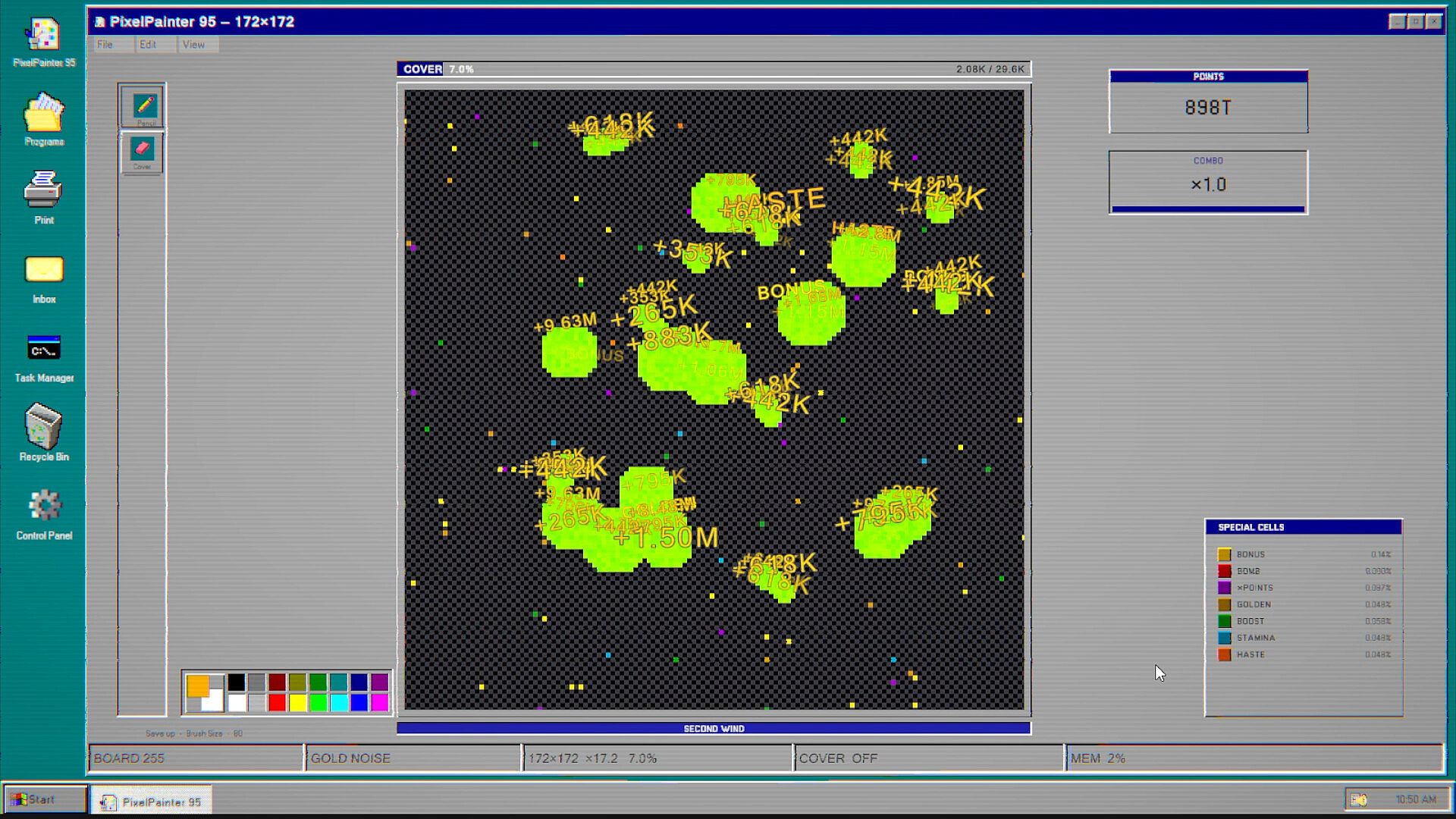
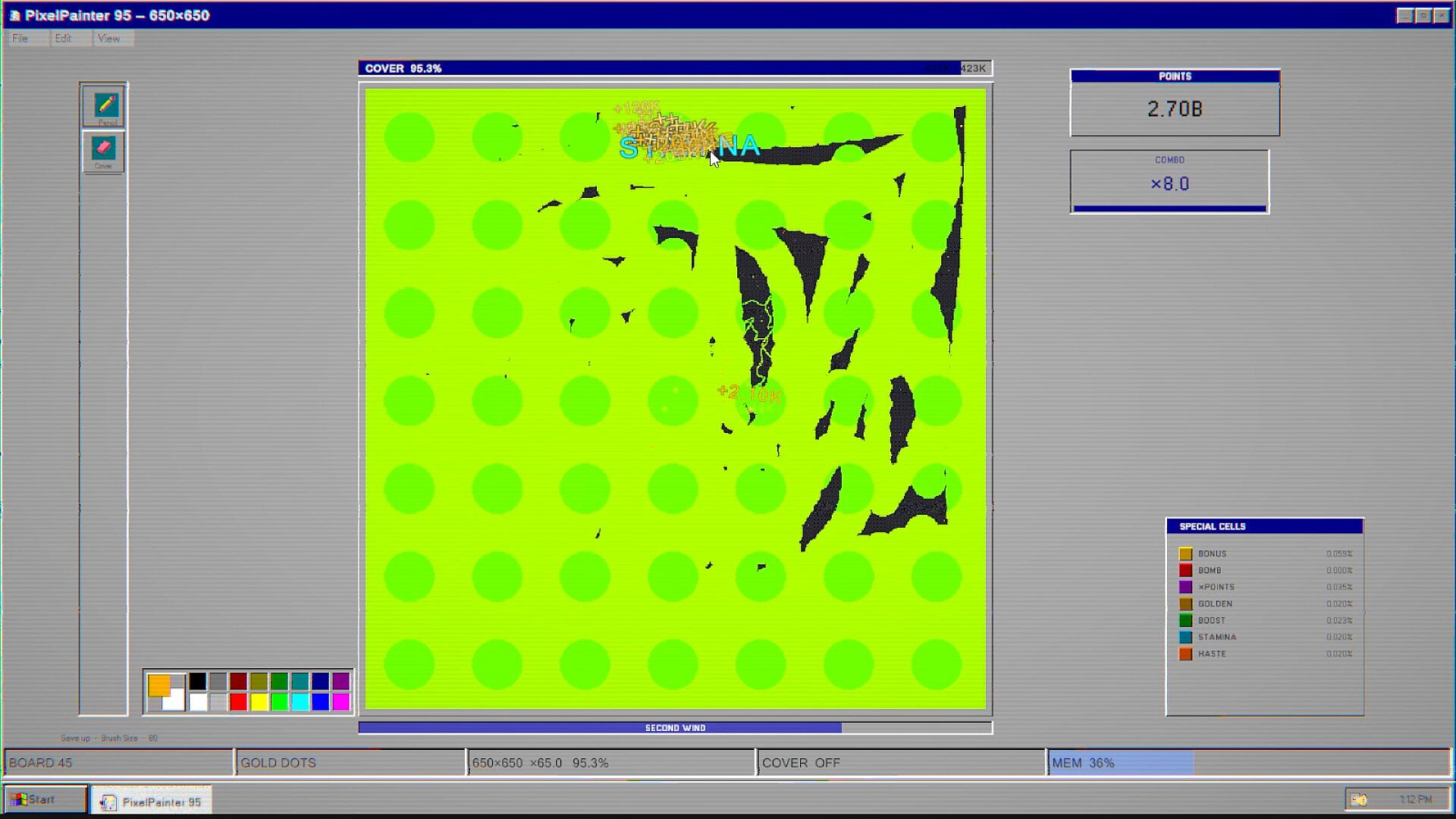
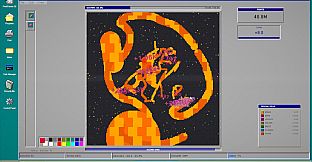
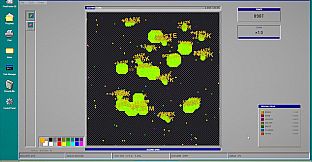
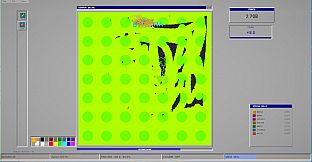
PixelPainter 95 is an incremental simulation game for PC that places players inside a 1995 desktop environment. The core experience revolves around filling canvases with color, expanding the workspace over successive runs, and setting up automated systems to maintain progress even when the game is closed.
Gameplay
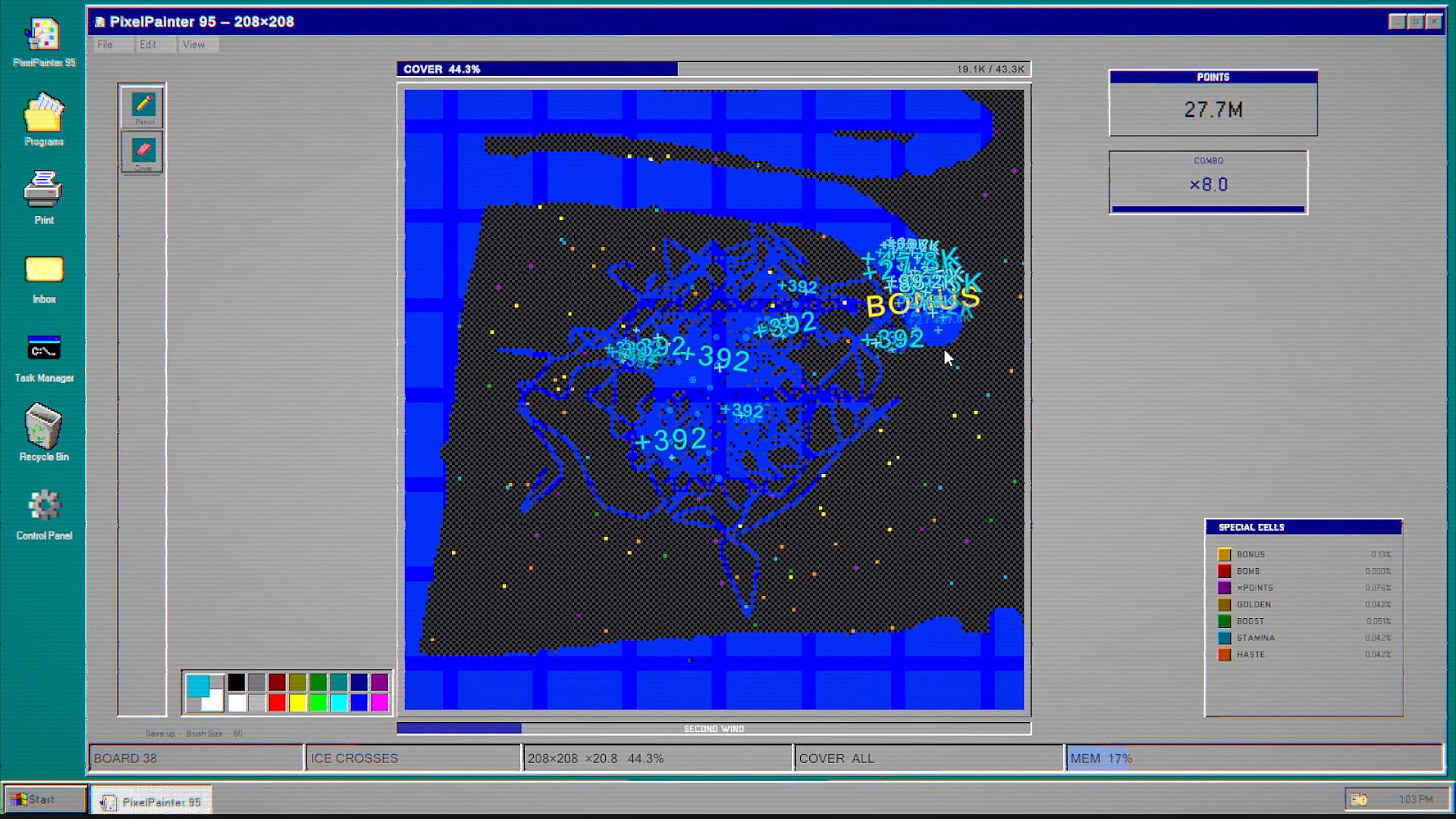
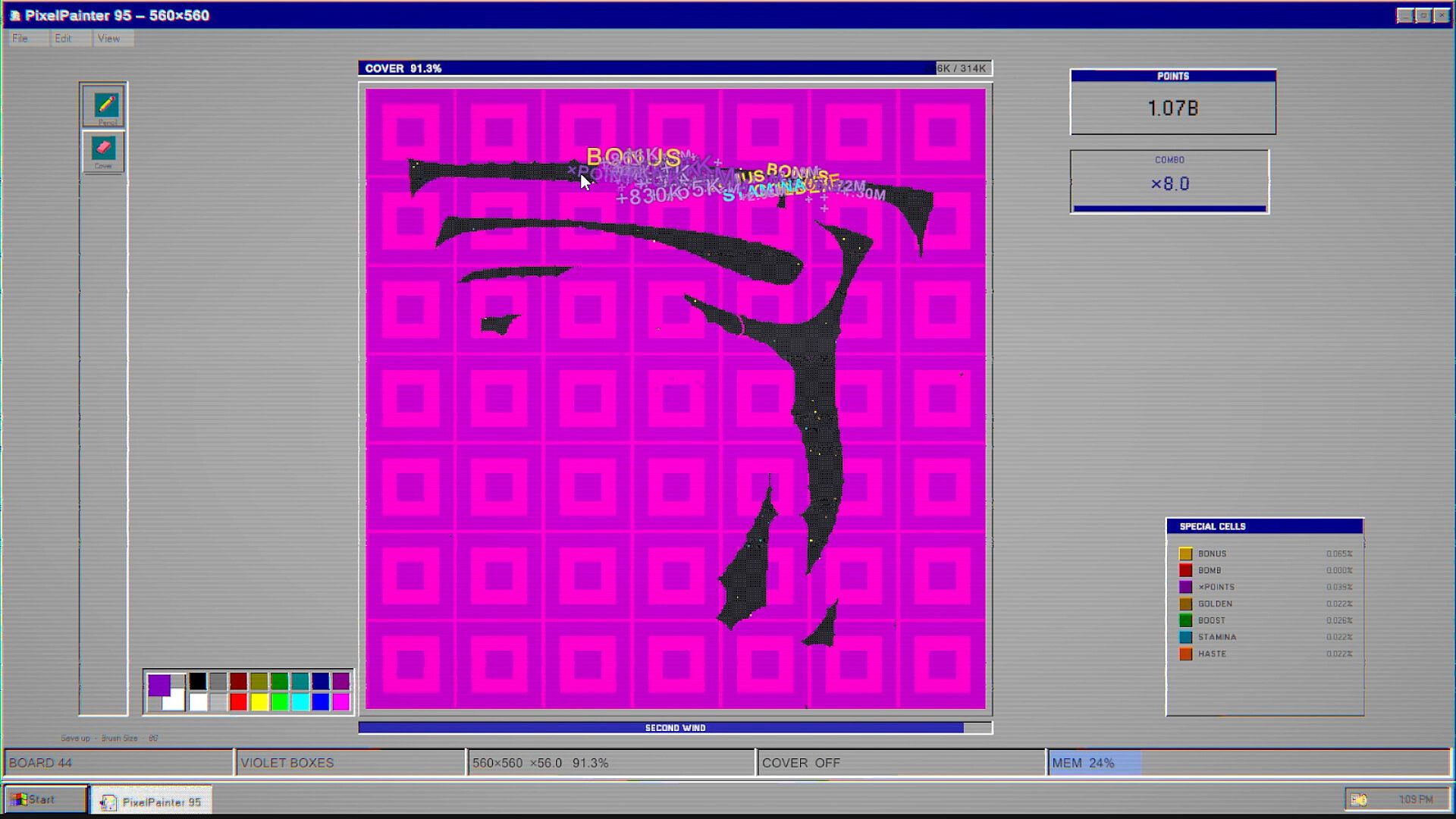
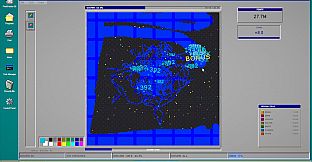
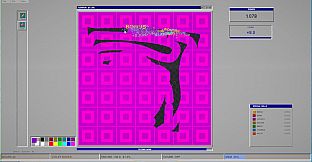
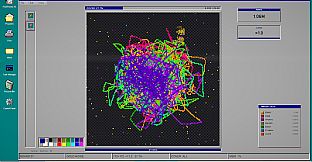
Players begin by painting individual tiles on a canvas to earn points. These points purchase upgrades such as wider brushes, buckets that cover larger areas, and other tools that automatically handle empty space. The process repeats across multiple pages, with each completed canvas unlocking a larger one that features new colors and patterns. The growing size eventually exceeds the visible window, requiring careful management of the workspace.
Automation plays a central role. Players can hire painters that continue filling leftover tiles independently and keep working during offline periods. Once a page reaches completion, the option to print it becomes available. Printing carries forward improvements like an enhanced brush and pre-hired painters into the next run, creating a stronger starting position for subsequent attempts.
Hidden reward tiles scattered across blank areas provide additional incentives to explore each canvas thoroughly. The entire setup unfolds within the visual frame of a 1995 computer desktop, reinforcing the retro simulation theme through interface elements and presentation.
Game Modes
PixelPainter 95 operates as a single-player incremental experience without distinct named modes. All activity centers on the repeated cycle of painting, upgrading, expanding the canvas, and printing for carryover benefits. Progression builds naturally through these interconnected systems rather than through separate competitive or cooperative formats.
The focus remains on steady advancement across increasingly large canvases. Tools and automation options expand the ways players can approach each page, but the underlying loop stays consistent from one run to the next.
Progression Systems
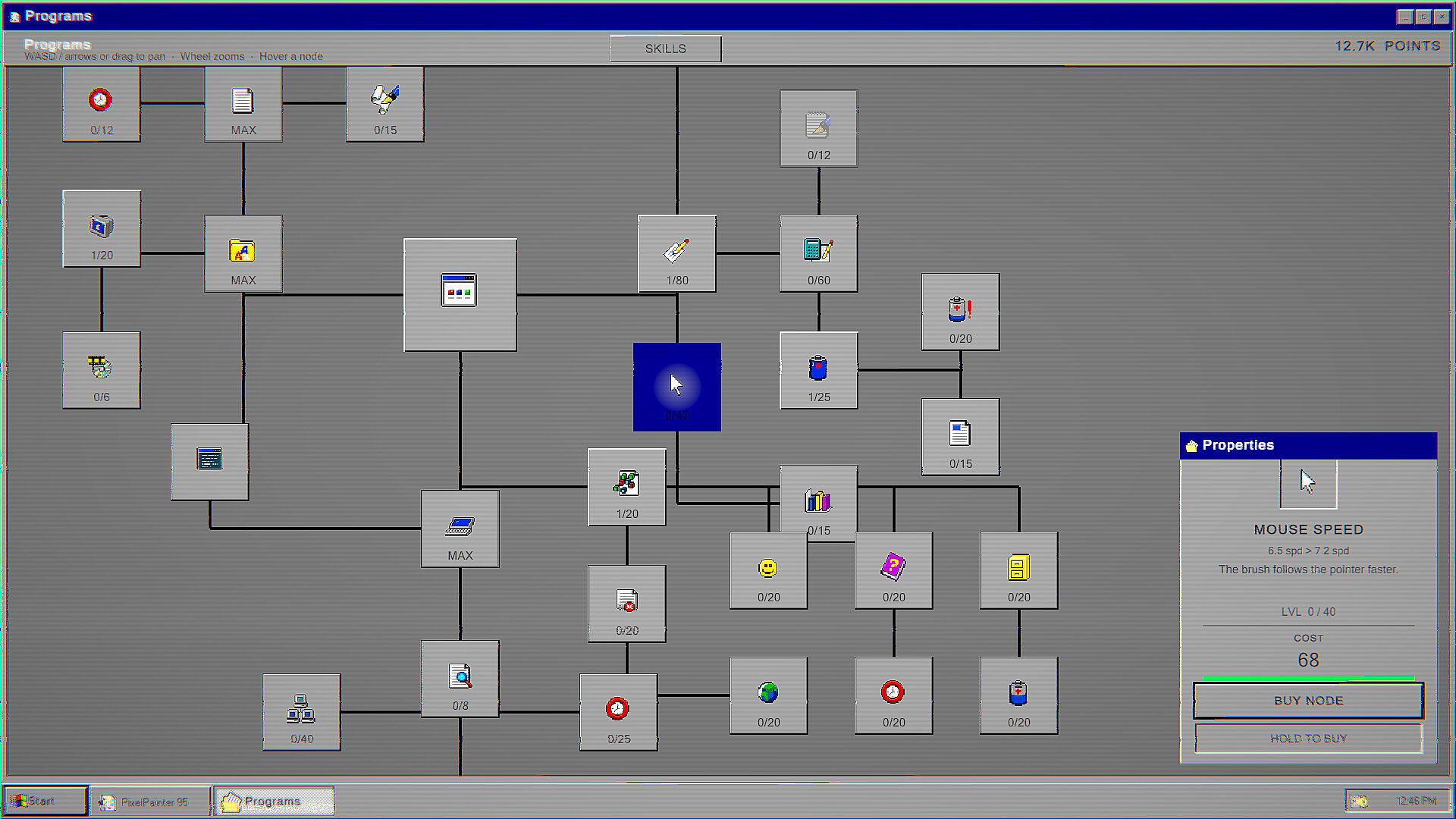
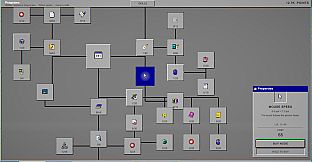
A tree of programs, brushes, buckets, painters, and additional tools forms the main upgrade path. Spending points earned from painting unlocks these items in sequence, allowing for deeper automation and efficiency on later pages. Reward tiles hidden in the canvas offer one-time bonuses that encourage full coverage before moving forward.
Printing finished pages serves as the key reset mechanic. Each print strengthens the next attempt by providing immediate access to better starting equipment and helpers. This structure supports both short sessions focused on quick completions and longer play focused on optimizing automation setups.
Is It Worth Playing?
PixelPainter 95 suits players who enjoy incremental and idle simulation games. The combination of manual painting, automation through hired painters, and the printing system for stronger restarts creates a clear loop that rewards consistent engagement. The 1995 desktop presentation adds a distinctive visual layer that sets it apart from more abstract incremental titles.
Those who prefer active clicking mixed with passive progress will find the offline painter functionality particularly relevant. The game remains accessible on PC and requires no additional purchases beyond the base title. Its casual simulation focus makes it a steady option for relaxed play sessions rather than intense competitive experiences.











