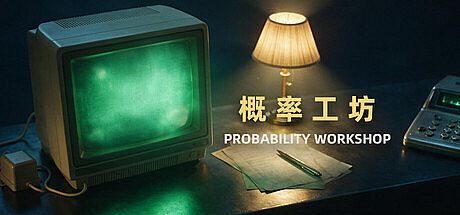


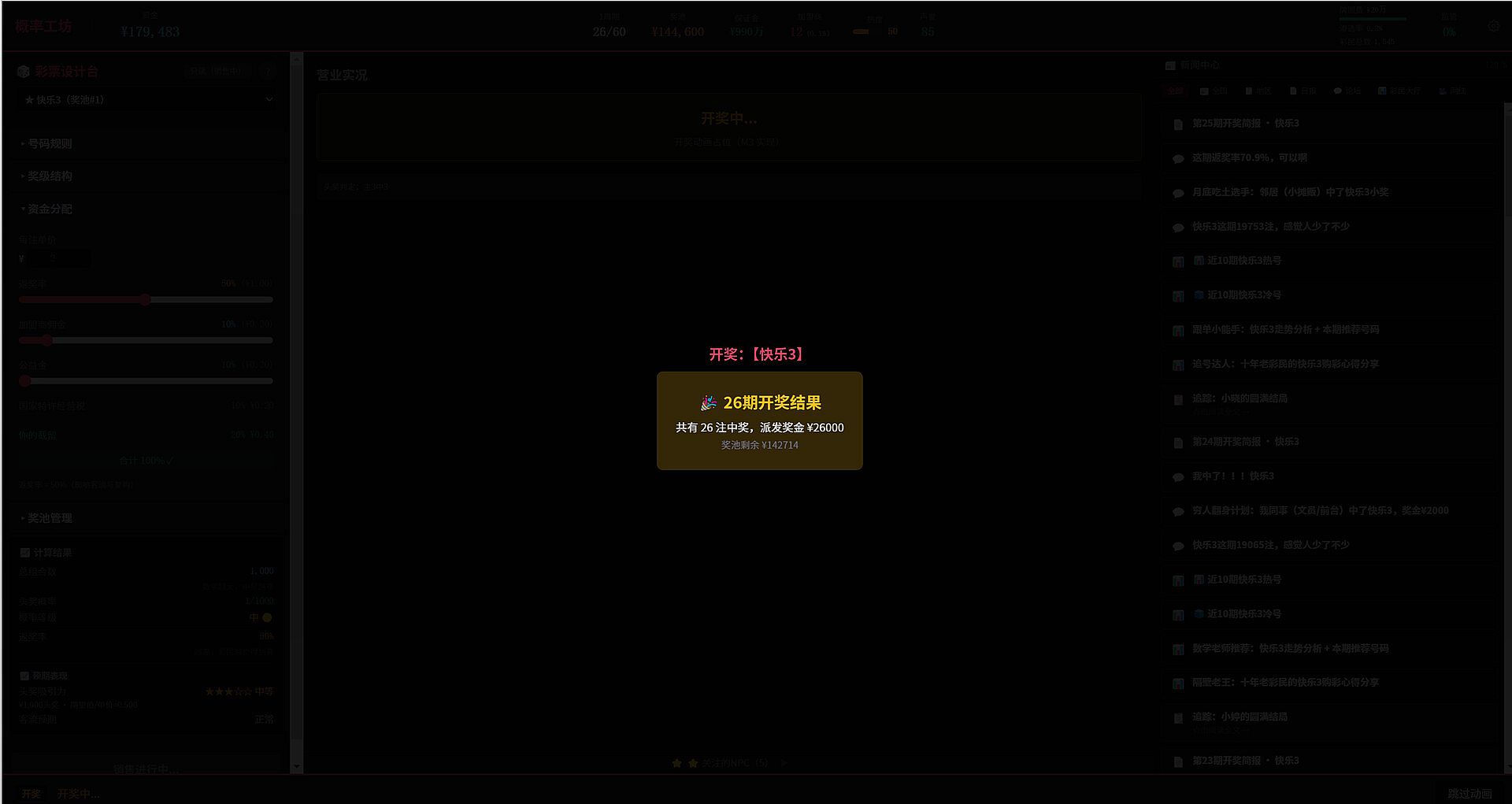
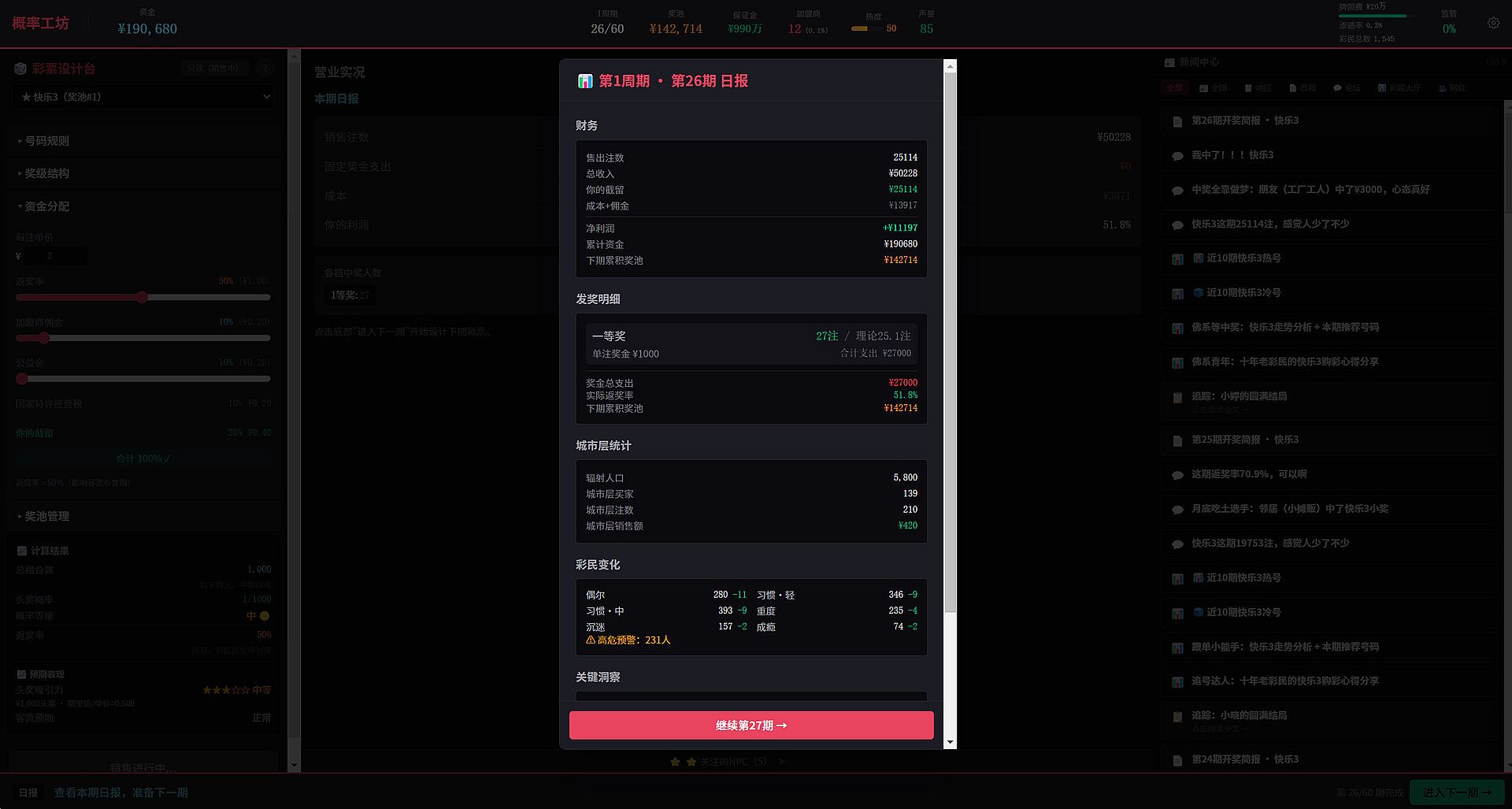
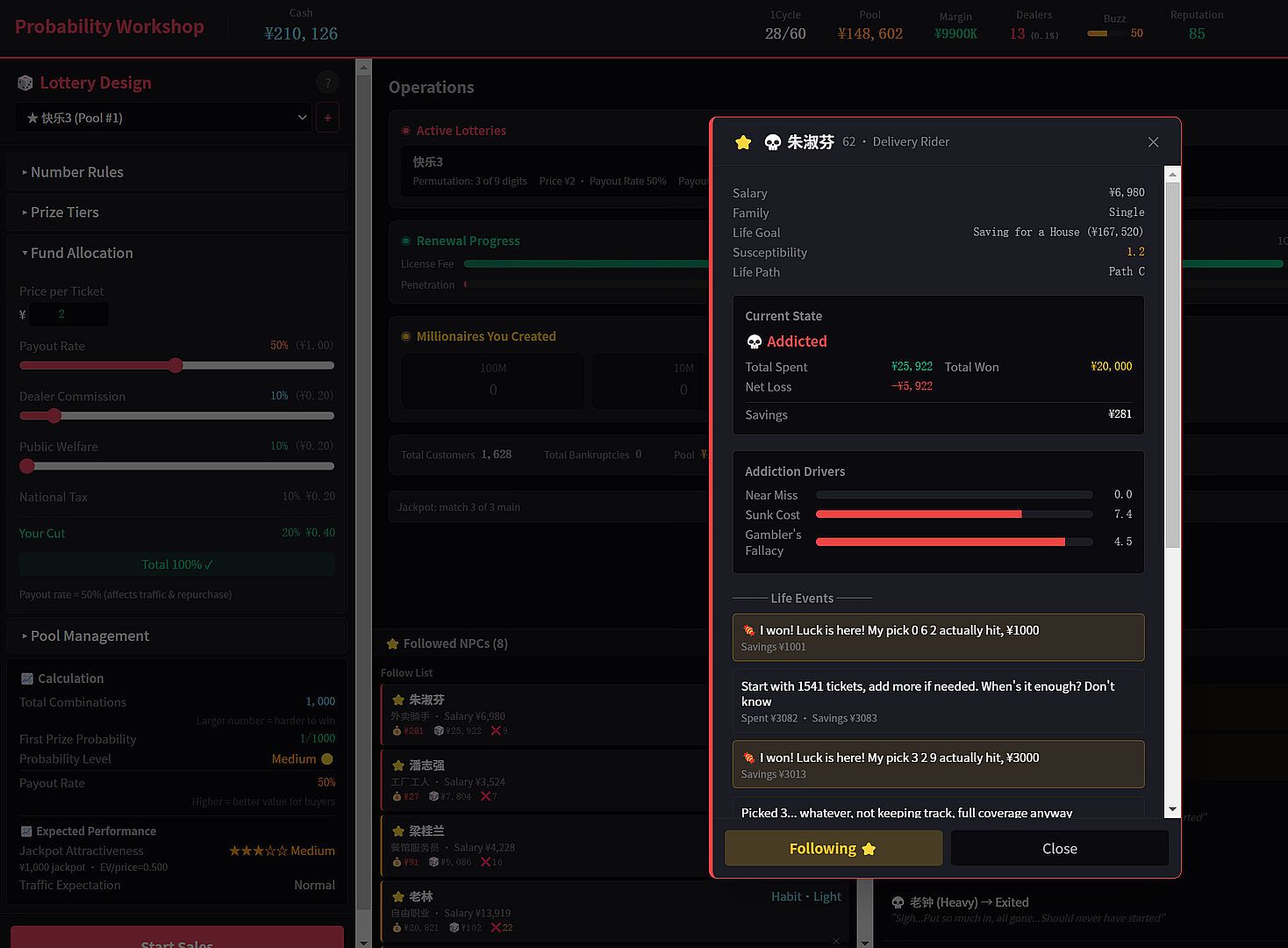
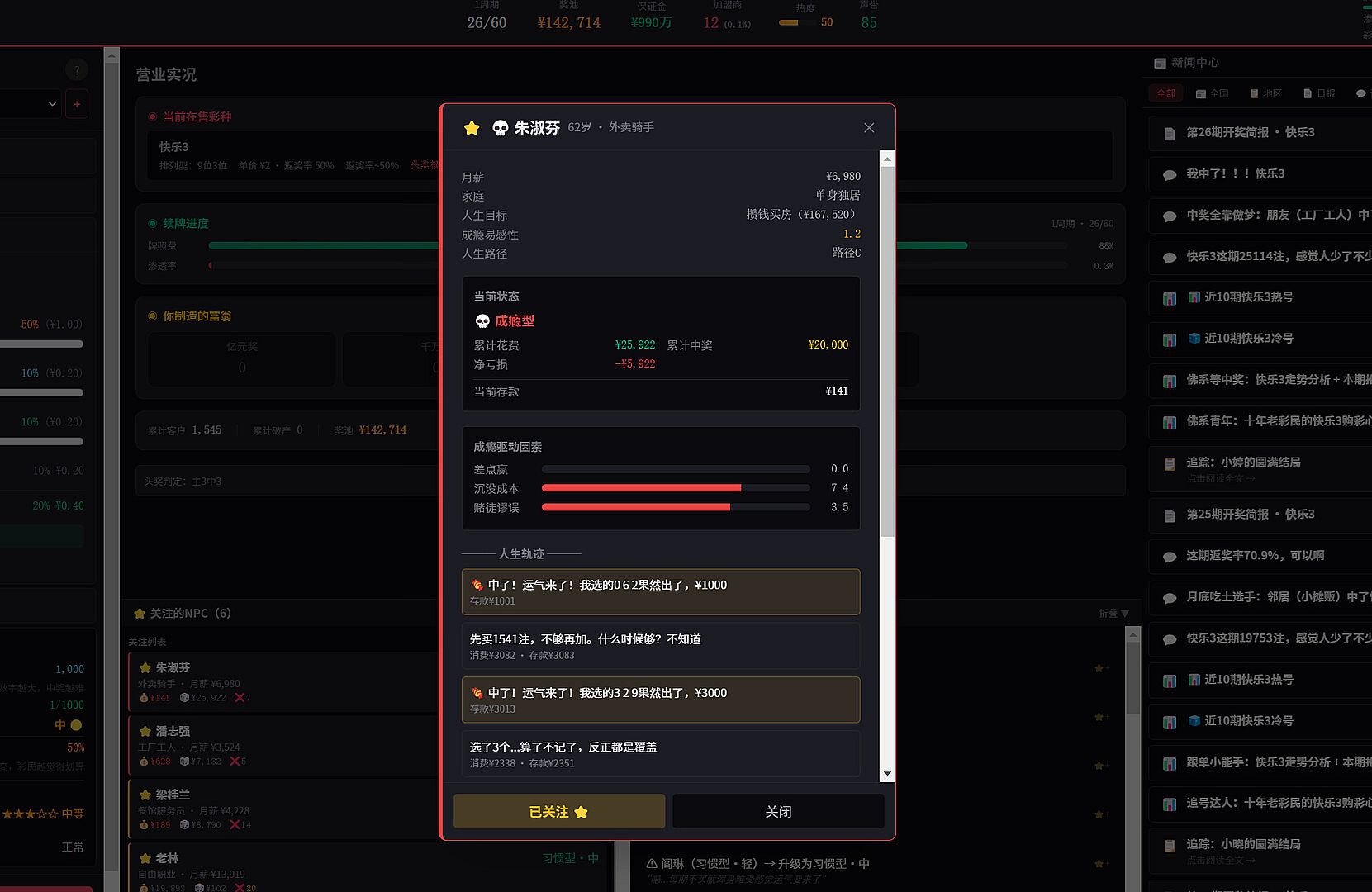
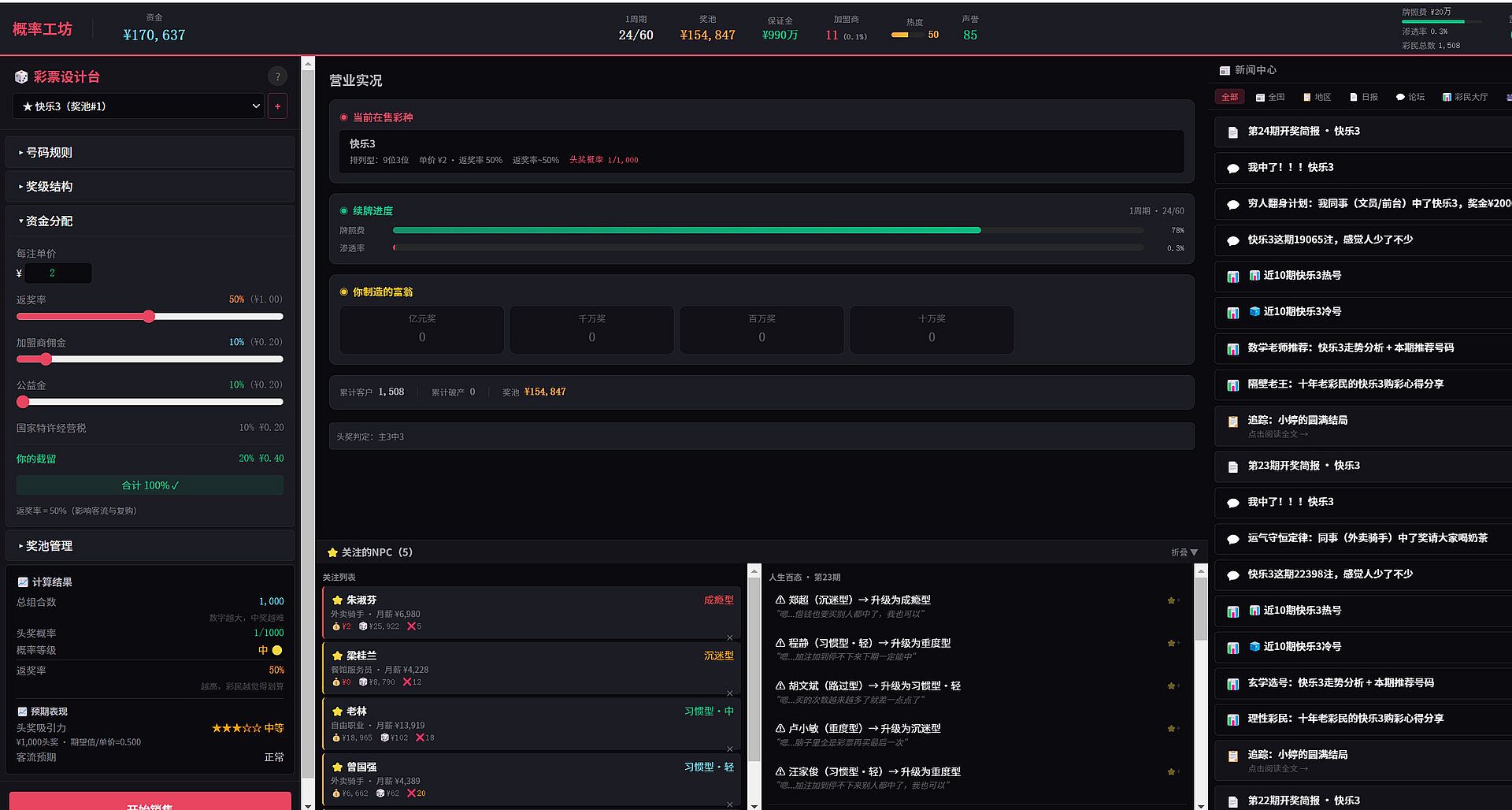
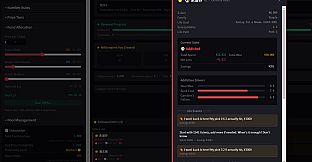
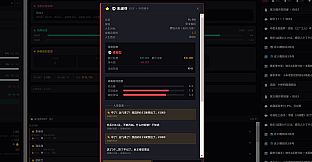
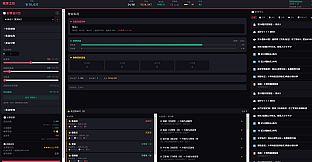
Probability Workshop est un jeu de simulation solo sur PC qui place le joueur à la tête d'une loterie, du point de vue de l'organisateur et non du parieur. L'expérience repose sur la conception des règles, le réglage des paramètres financiers et l'observation des effets à long terme sur les revenus de l'entreprise ainsi que sur la vie des PNJ dans une ville.
Gameplay
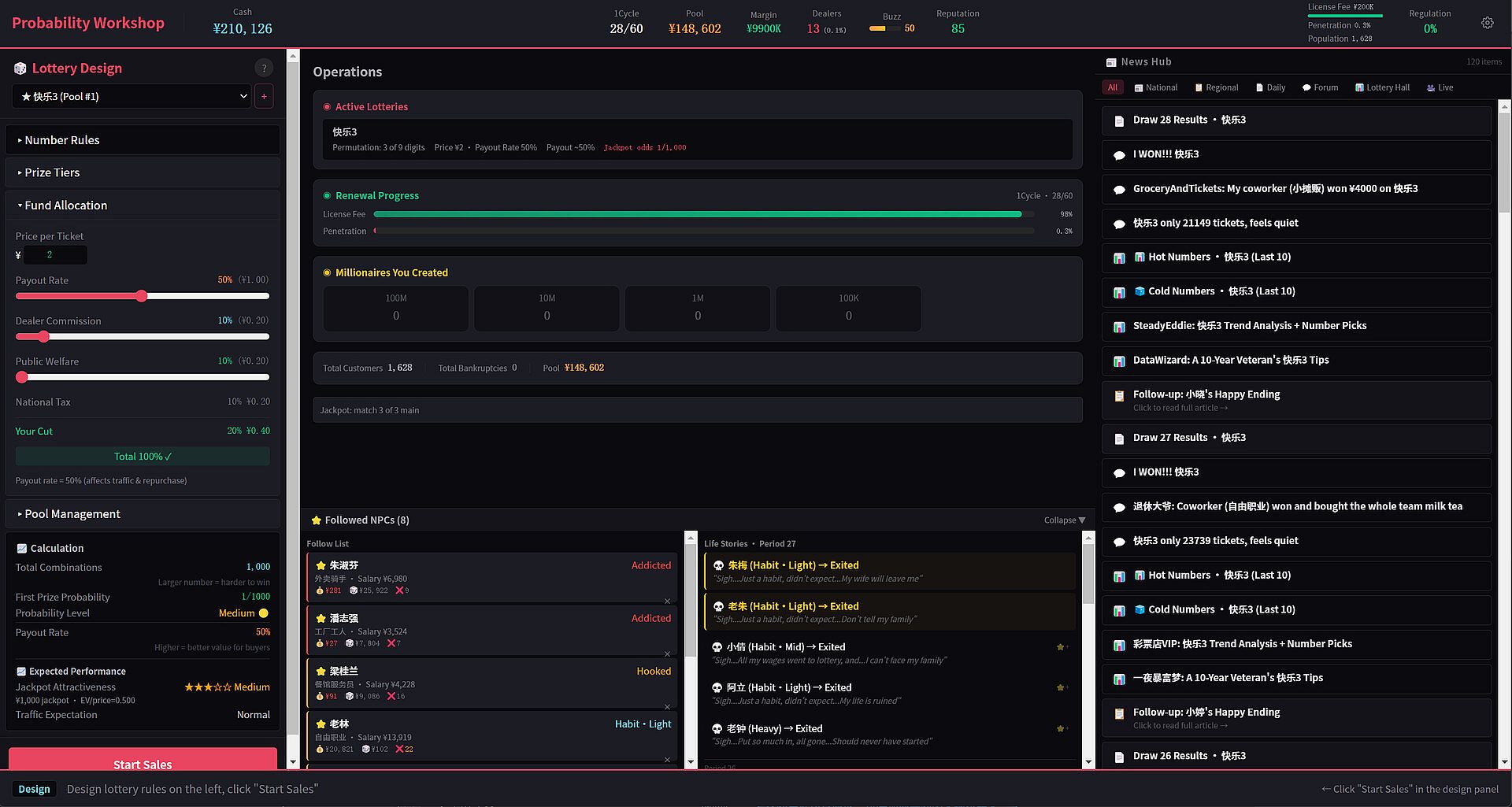
Le cœur du jeu consiste à créer et affiner des offres de loterie tout en équilibrant plusieurs flux financiers. Le joueur définit les structures de gains et les pourcentages de redistribution qui influencent la fidélisation et les marges. Les fonds sont répartis entre les cagnotte, les commissions opérationnelles, les contributions d'intérêt public et les bénéfices conservés, selon un processus de décision permanent à quatre axes. L'expansion passe par le développement d'un réseau de points de vente, en recrutant et en gérant des franchisés afin d'accroître la couverture urbaine.
Chaque cycle s'étend sur soixante périodes et impose le paiement ponctuel des droits de licence pour éviter la fermeture. La surveillance réglementaire renforce la pression : toute tentative de dissimulation des probabilités réelles peut entraîner l'arrêt de l'activité. Les déficits de cagnotte doivent être comblés sur fonds propres, ce qui rend les choix de distribution plus risqués. Le comportement des clients évolue naturellement : la plupart effectuent des achats occasionnels, tandis qu'un petit groupe développe des habitudes qui génèrent l'essentiel des recettes.
Game Modes
Le joueur conçoit trois formats principaux de loterie. Les loteries Pick-3 permettent de créer des tirages simples à base de numéros, avec des paliers de gains personnalisables. Les tirages quotidiens proposent des événements récurrents qui favorisent la répétition grâce à une programmation régulière. Les jackpots progressifs accumulent les gains sur plusieurs cycles, augmentant les enjeux et l'engagement à long terme.
Chaque format autorise des ajustements indépendants des taux de redistribution et de la répartition des gains. Ces choix influencent directement la réaction des différents groupes de PNJ au fil du temps, des acheteurs occasionnels à ceux dont l'implication s'intensifie. Le système suit les trajectoires individuelles sans jugement moral, en se contentant d'indiquer les gains nets générés par chaque client.
Business Management and NPC Dynamics
Le développement du réseau de distribution repose sur un recrutement stratégique pour toucher les zones mal desservies et maintenir le volume. Le respect des licences et les décisions d'allocation des fonds créent une tension permanente : une maximisation rapide des profits peut fragiliser la clientèle. L'évolution des PNJ suit des schémas observables : la curiosité initiale conduit certains à des achats réguliers, tandis que d'autres atteignent un point d'épuisement financier qui réduit leur activité future.
Les statistiques intégrées à la simulation montrent qu'une minorité de participants génère la majeure partie des revenus et que de nombreux gagnants de jackpots connaissent ensuite un déclin. Le joueur peut examiner ces parcours en détail et relier ses choix de règles aux résultats concrets, tant en termes d'accumulation de richesse que de trajectoires personnelles.
Is It Worth Playing?
Probability Workshop n'est pas encore sorti et ne dispose d'aucun avis utilisateur pour l'instant. La simulation s'adresse aux amateurs de gestion de type tycoon qui souhaitent combiner mécanique des probabilités et observation indirecte des comportements. Son approche solo et son accent mis sur la conception des règles plutôt que sur la compétition directe conviennent aux joueurs qui recherchent une prise de décision réfléchie et aux conséquences mesurables dans un cadre commercial limité. La disponibilité dépendra du calendrier définitif de sortie et des configurations requises, qui indiquent des besoins matériels modestes pour les plateformes Windows.