




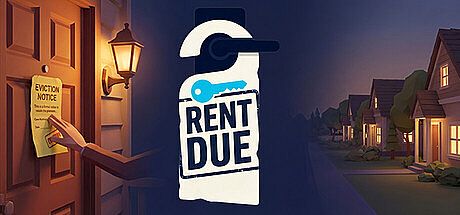





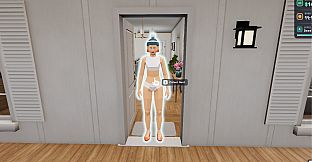
Rent Due est un jeu de simulation indépendant en vue subjective, actuellement en accès anticipé sur PC. Le joueur incarne un propriétaire immobilier qui bâtit son empire de A à Z, en gérant l'achat, l'aménagement, la location et l'entretien de biens dans une ville dotée d'une économie vivante.
Gameplay
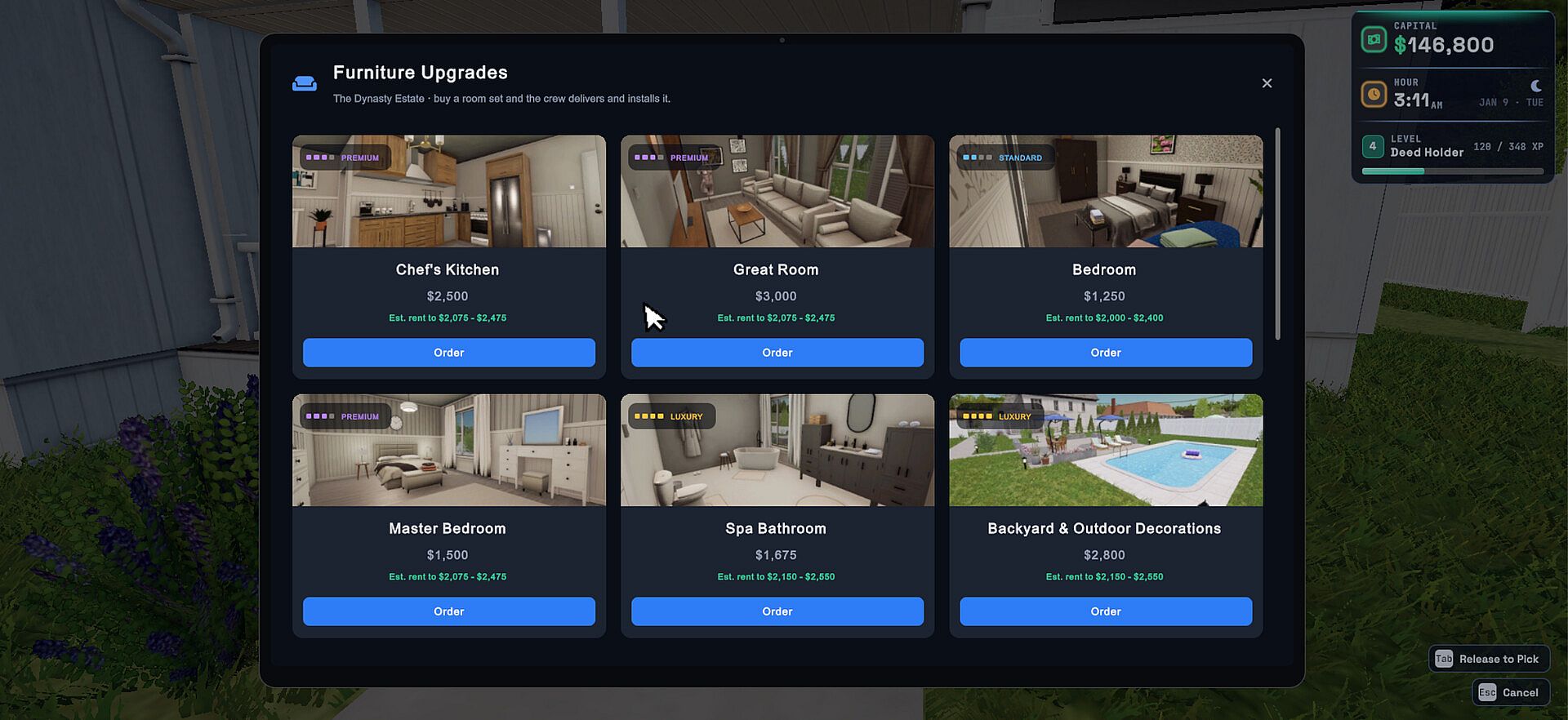
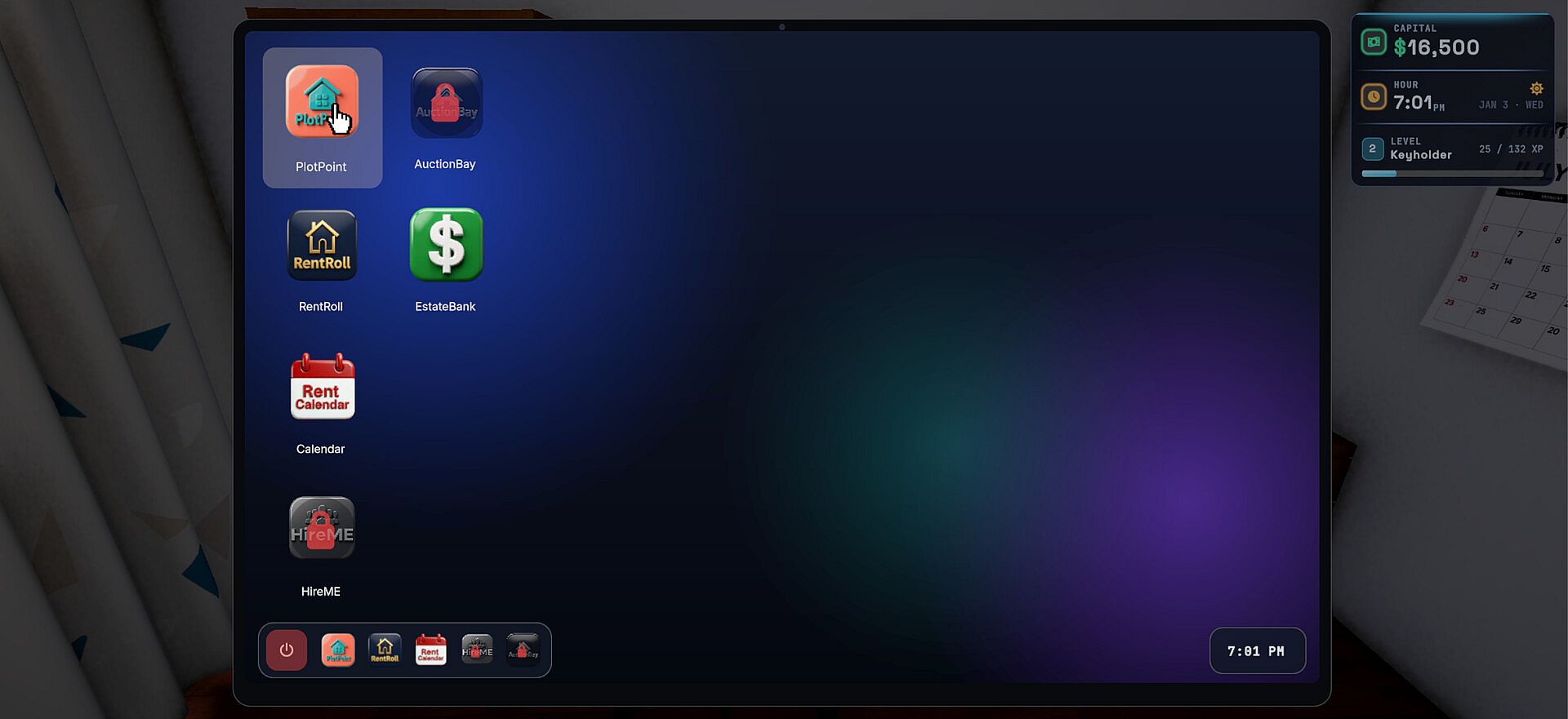
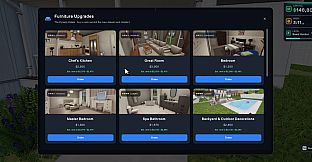
Le cœur du jeu repose sur la gestion concrète des biens. On commence avec un budget limité et un ordinateur portable pour consulter les annonces sur la plateforme interne PlotPoint. Chaque acquisition nécessite une visite préalable afin d'évaluer l'état du logement. Une fois le bien acquis, le joueur l'aménage pièce par pièce : des choix comme la modernisation de la cuisine influencent directement le loyer potentiel. Les enchères offrent une autre voie d'acquisition pour les biens saisis, à des prix compétitifs.
Le financement s'effectue via des prêts d'EstateBank, dont le montant augmente avec la taille du portefeuille. Les intérêts sont prélevés chaque mois et les remboursements s'effectuent automatiquement, ce qui oblige à maintenir un flux de loyers suffisant. La fixation des loyers se fait à l'aide de cartes qui influencent la vitesse de candidature des locataires : des tarifs bas attirent rapidement des profils, tandis que des loyers plus élevés ralentissent la demande mais peuvent générer de meilleurs revenus si le quartier le permet.
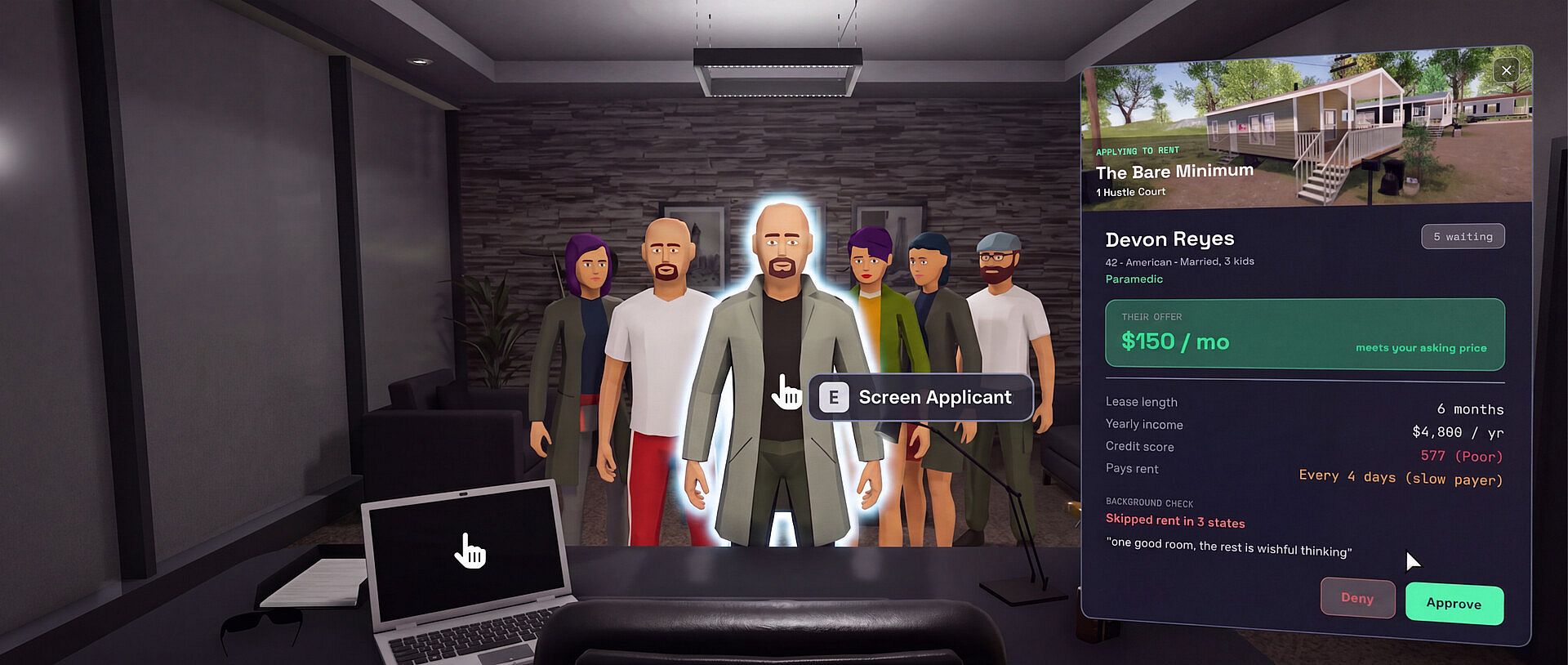
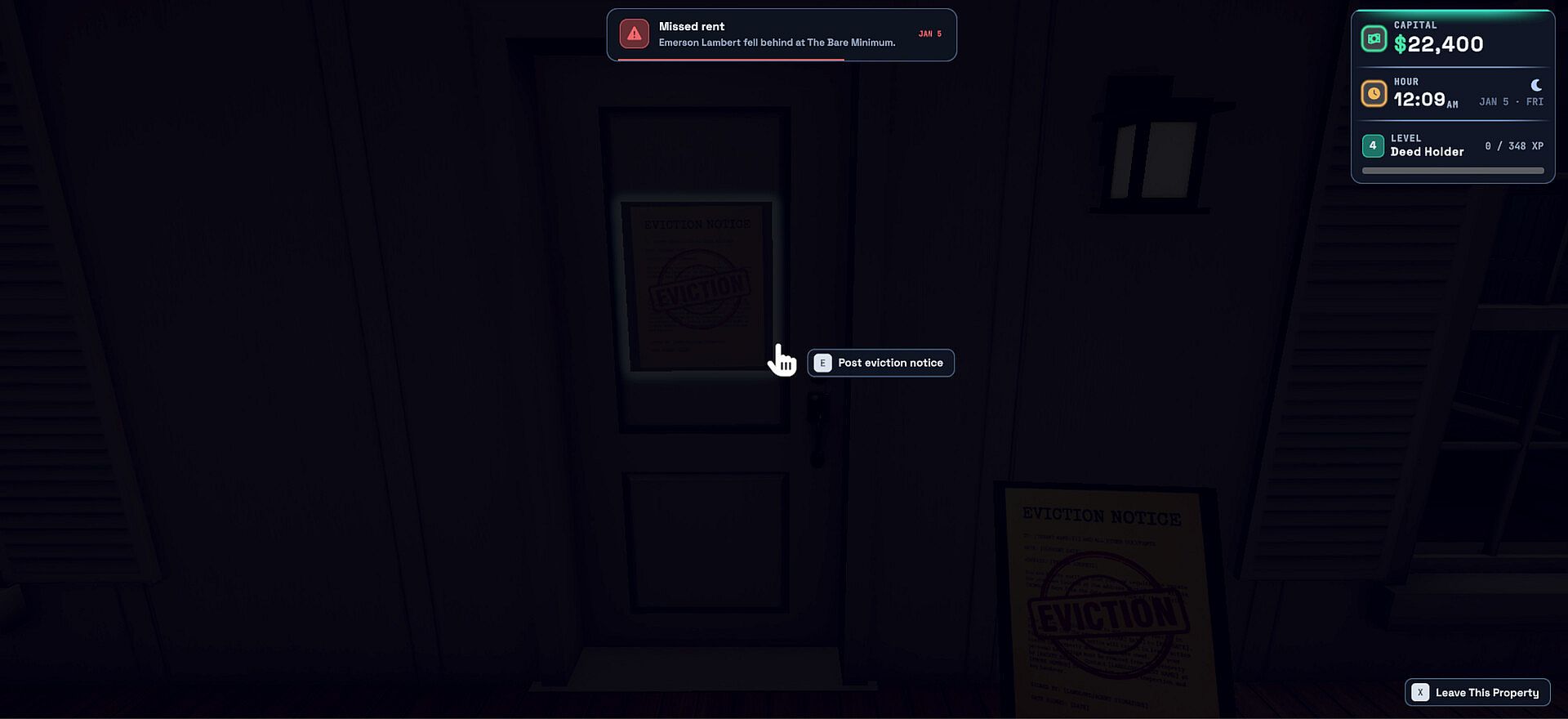
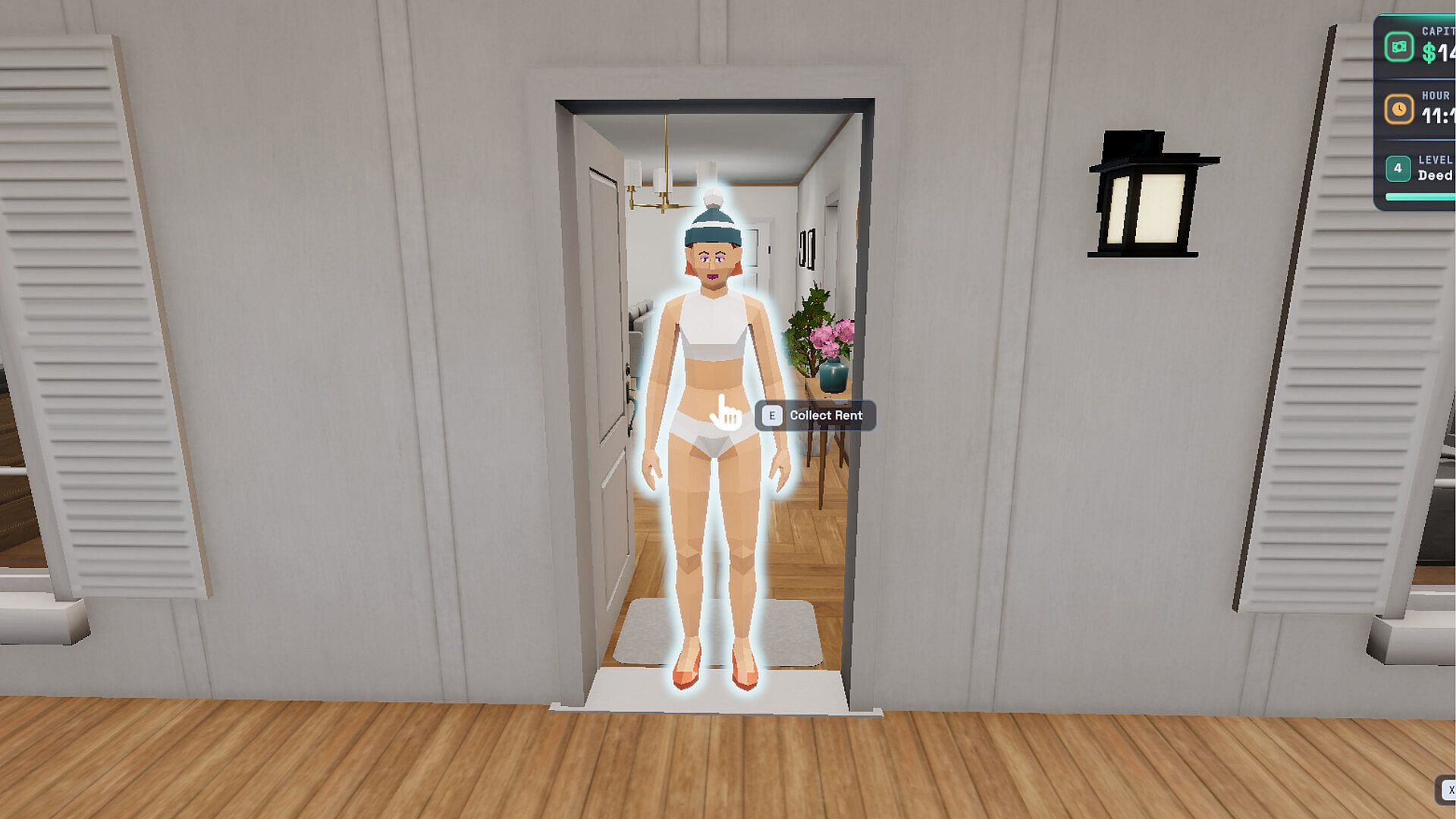
Les interactions avec les locataires se déroulent en face à face au bureau. Les vérifications de dossier révèlent emploi, revenus, cote de crédit et parfois des antécédents inhabituels. Les meilleurs candidats paient régulièrement sur des cycles courts, tandis que d'autres retardent leurs versements, obligeant le propriétaire à suivre les échéances sur un calendrier mural. Le recouvrement s'effectue en personne, et le non-paiement peut entraîner une utilisation des fonds accumulés par les locataires. Les expulsions suivent une procédure formelle avec affichage des avis, bien que les locataires puissent contester devant le tribunal si les motifs sont insuffisants.
À mesure que l'activité se développe, il devient possible d'embaucher des gestionnaires immobiliers. Ces employés occupent des postes de recouvrement, de location ou d'expulsion, chacun avec ses performances, ses frais et ses risques d'erreurs ou de détournements. Un cycle jour/nuit rythme le monde, tandis qu'un système d'exploitation interne gère les tâches administratives. La création de personnage permet de choisir un propriétaire masculin ou féminin avec de nombreuses options de tenue, et la progression s'échelonne du statut de Sous-locataire jusqu'à celui de Roi des Cimes, sous la tutelle d'un oncle.
Modes de jeu
Rent Due se joue exclusivement en solo, sans mode multijoueur ni compétitif. L'expérience repose sur une simulation de carrière continue où le joueur étend son parc immobilier dans un quartier. La progression est liée à la croissance du portefeuille, à l'augmentation de la ligne de crédit et à l'élévation de rang, plutôt qu'à des parties distinctes ou des campagnes.
Toutes les activités s'intègrent dans une boucle unique : acquisition de biens, sélection des locataires, perception des loyers et gestion du personnel. Les enchères introduisent ponctuellement des sessions de mise aux enchères tendues, mais elles s'inscrivent dans le flux du mode solo plutôt que de constituer un mode à part. Le jeu met l'accent sur l'implication personnelle à chaque étape, du premier prêt jusqu'à l'embauche de spécialistes en fin de partie.
Construction et gestion des biens
La réussite repose sur une sélection et une personnalisation minutieuses des propriétés. Commencer par de petits logements à rénover permet d'améliorer progressivement leur attractivité et leur rentabilité. Lorsque les annonces se font rares, la maison des ventes propose des biens saisis à prix réduit, où les enchères peuvent devenir personnelles. Un logement bien aménagé génère un revenu régulier, mais l'économie intègre des facteurs réalistes comme les dégradations lors des déménagements, les dépôts de garantie et les éventuels litiges.
La stratégie de tarification interagit avec la réputation du quartier. Les annonces qui se louent rapidement récompensent des loyers compétitifs mais raisonnables, tandis que des tarifs trop élevés laissent les logements vacants plus longtemps. Le système suit automatiquement les cycles de paiement et les retards, obligeant le joueur à équilibrer expansion et service de la dette. Cela crée un rythme régulier entre repérage, rénovation, location et perception, qui structure le quotidien du jeu.
Est-ce que ça vaut le coup d'y jouer ?
Rent Due s'adresse aux amateurs de simulations détaillées centrées sur la gestion économique et les interactions directes. La perspective subjective lors des recouvrements, des entretiens et des expulsions le distingue des titres plus abstraits en exigeant une implication personnelle à chaque étape. Son statut d'accès anticipé signifie que l'expérience continue d'évoluer, avec encore des possibilités d'amélioration sur des systèmes comme l'IA des gestionnaires ou l'équilibre économique.
Les joueurs attirés par la mécanique de propriétaire trouveront de la profondeur dans le processus de sélection des candidats, le suivi des crédits et la délégation au personnel. Le jeu récompense la construction patiente d'un portefeuille et les décisions financières avisées, tout en pénalisant les mauvais choix de locataires ou le suivi négligé des paiements. Disponible sur PC en accès anticipé, il offre aux passionnés de simulation l'occasion de bâtir leur propre empire immobilier dès les premiers instants.












