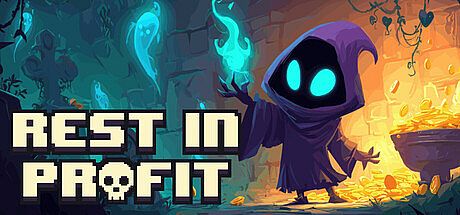


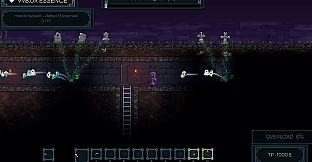
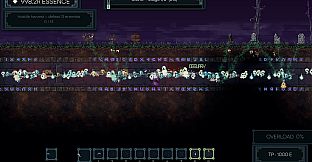
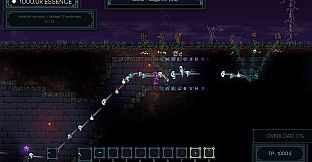
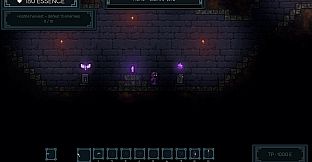
Rest in Profit is an indie casual incremental game for PC that casts players as a shabby necromancer building a soul-harvesting business beneath a sprawling graveyard. The core loop centers on clearing procedural crypt corridors, placing collectors to gather drifting souls, and optimizing rune layouts to multiply their value through bounces in a central chamber. Death becomes a steady source of profit as players expand operations across endless generated spaces while managing occasional threats from below.
Gameplay
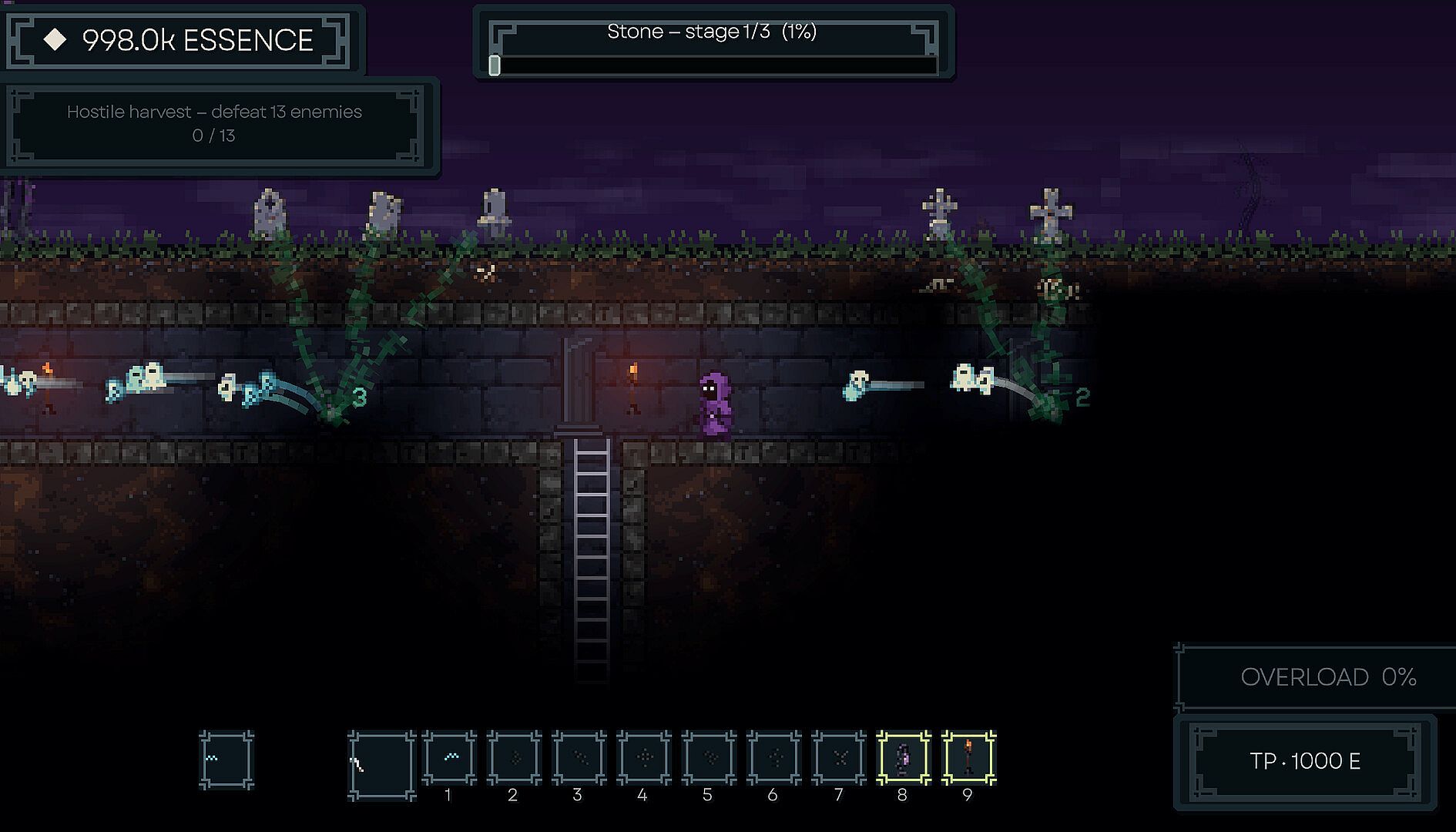
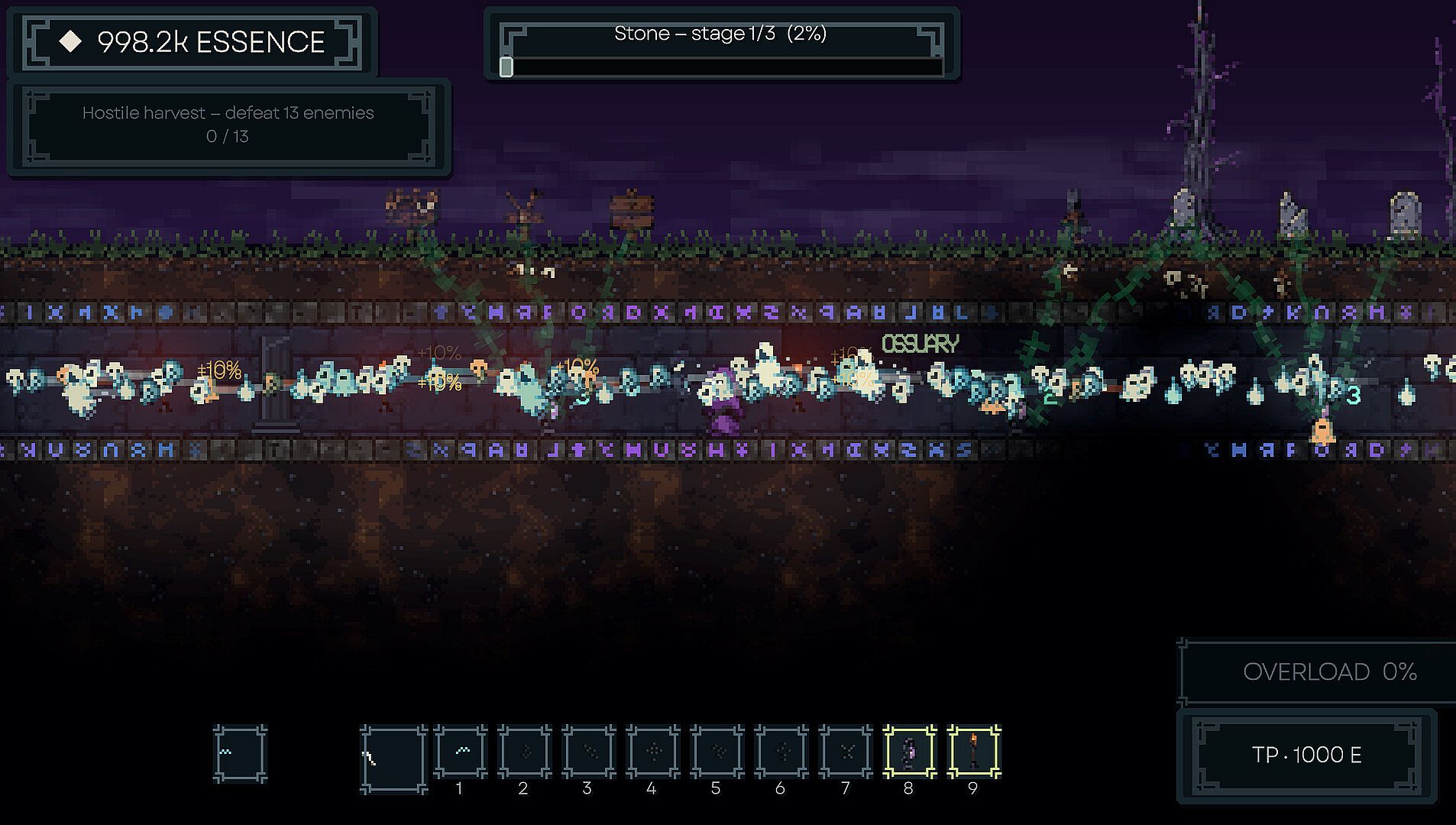
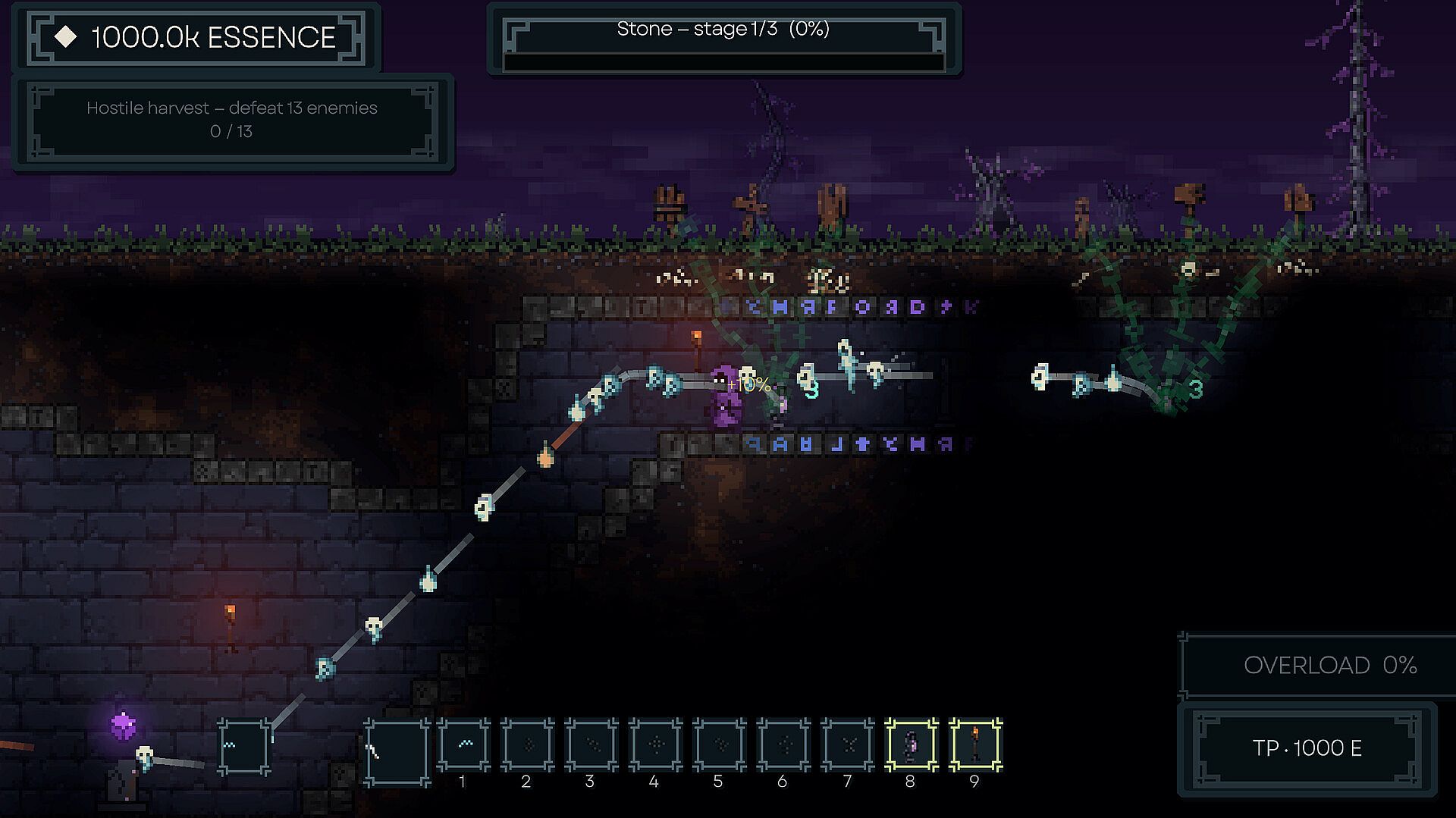
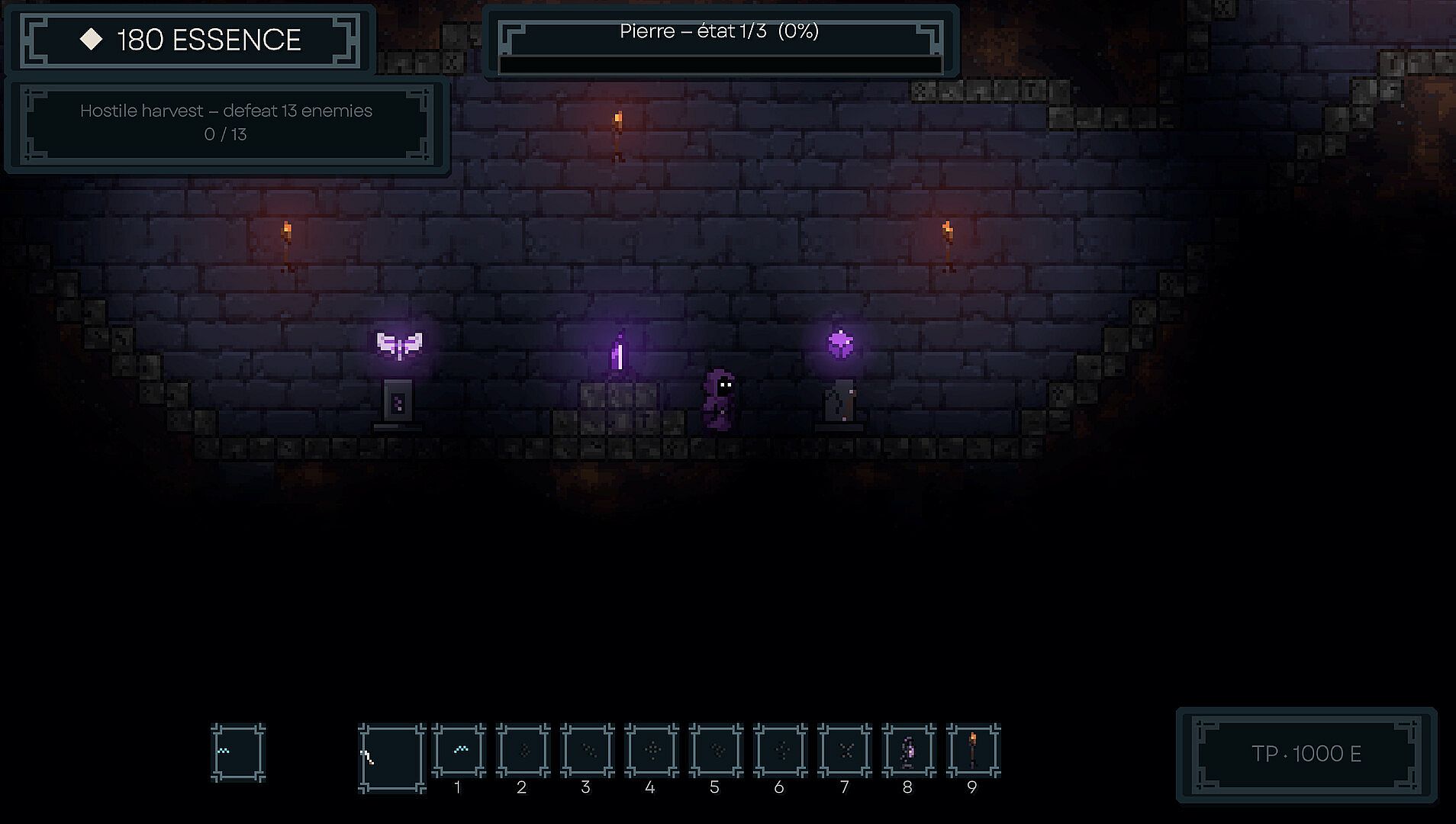
The experience begins with blocked passages in sideways-running crypt corridors filled with rubble, cursed planks, and sealed walls. Each obstacle requires a specific spell to clear, after which a soul collector can be positioned under clusters of graves. Souls emerge naturally and flow toward a central point without direct control. In the Stone Room, players arrange runes on the walls to send these souls ricocheting before absorption. Every bounce increases value, and different runes balance the number of bounces against the final worth, encouraging experimentation rather than a fixed setup.
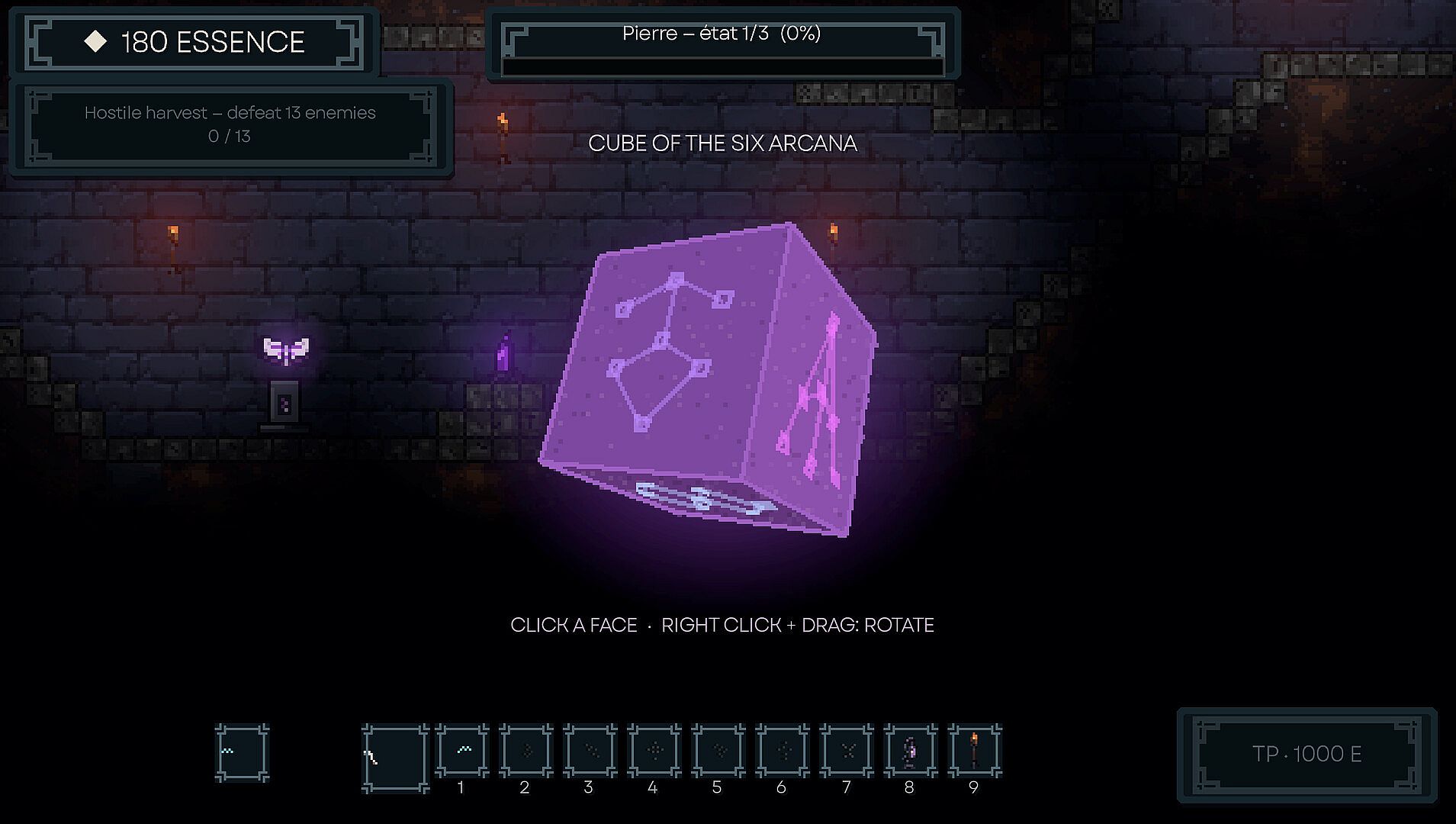
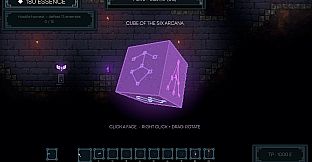
Progression ties into the Power Cube, whose six faces handle distinct upgrades purchased with essence. These cover collection speed, access to rarer souls, spell improvements, rune network expansion, soul movement efficiency, and translocation options. Spending decisions focus on addressing current bottlenecks in the operation. Incursions from neighboring entities arrive in waves and target collectors, requiring defensive placements such as shard sentinels, bone barricades, and frost snares, with an Overload ability reserved for critical moments.
Further exploration unlocks richer areas with stronger threats. Corridors generate procedurally from a seed, leading through four distinct biomes that scale in difficulty and reward. When the central stone fills, players trigger a Fracture to convert progress into shards and restart with advantages for faster growth. The system supports idle advancement, with souls continuing to accumulate even when the player steps away.
Game Modes
Rest in Profit operates as a single continuous incremental experience built around procedural generation and repeated prestige-style resets via the Fracture mechanic. Players advance through expanding crypt layers without separate campaign or versus structures. The focus remains on optimizing the rune network and upgrade paths across multiple runs, where each restart emphasizes different branches of the Power Cube based on prior outcomes. Procedural corridors ensure variety in layout and grave density, while the four biomes introduce shifting environmental challenges that influence collector placement and defense strategies.
Core Mechanics and Progression
Hand-drawn pixel art depicts the necromancer and the underground environment with a consistent dark fantasy tone. The wizard character carries a distinct attitude that fits the theme of turning graves into a functional enterprise. Thousands of souls can appear on screen simultaneously during peak operation, highlighting the scale of the business. Rebuilding rune configurations after new unlocks provides ongoing decision-making depth, as no single layout proves universally optimal across different upgrade focuses or biome conditions.
Defense elements integrate directly into the loop, forcing players to balance expansion with protection against waves that can destroy collectors. The endless corridor generation keeps each run distinct while the shard system rewards pushing deeper before resetting. This structure suits players who enjoy watching numbers grow over time and refining systems rather than direct moment-to-moment control.
Is It Worth Playing?
Rest in Profit suits fans of idle incremental games who appreciate pixel art, procedural environments, and systems that reward thoughtful upgrades over twitch reflexes. The combination of soul collection, rune bouncing, and defensive management creates a loop that evolves with each prestige cycle. With a planned release in November 2026 and no reviews available yet, the title remains an upcoming option for those seeking a fresh take on the genre on PC. Its single-player focus with some online co-op support aligns with players looking for a solo management experience that continues progressing offline.