







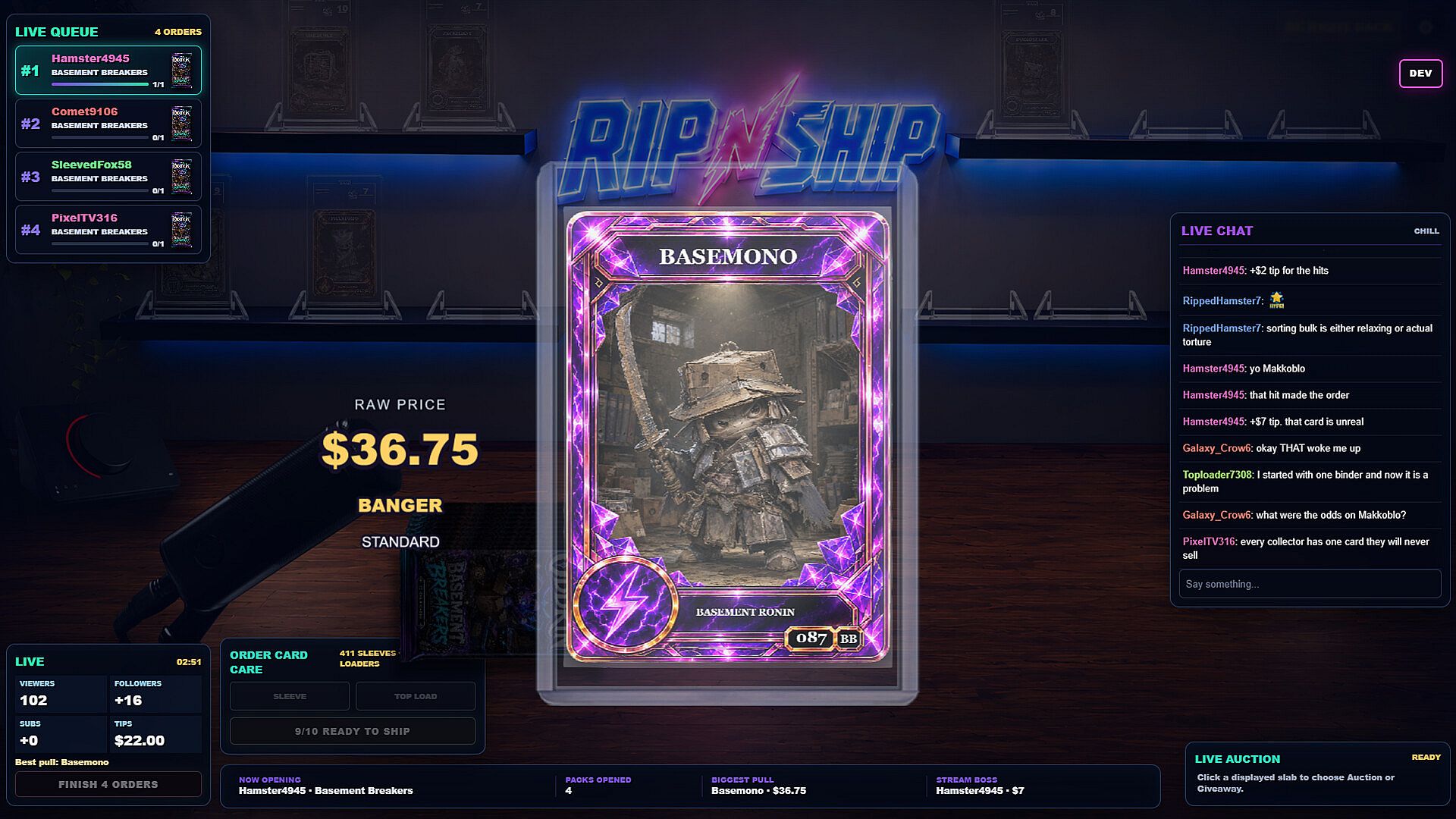
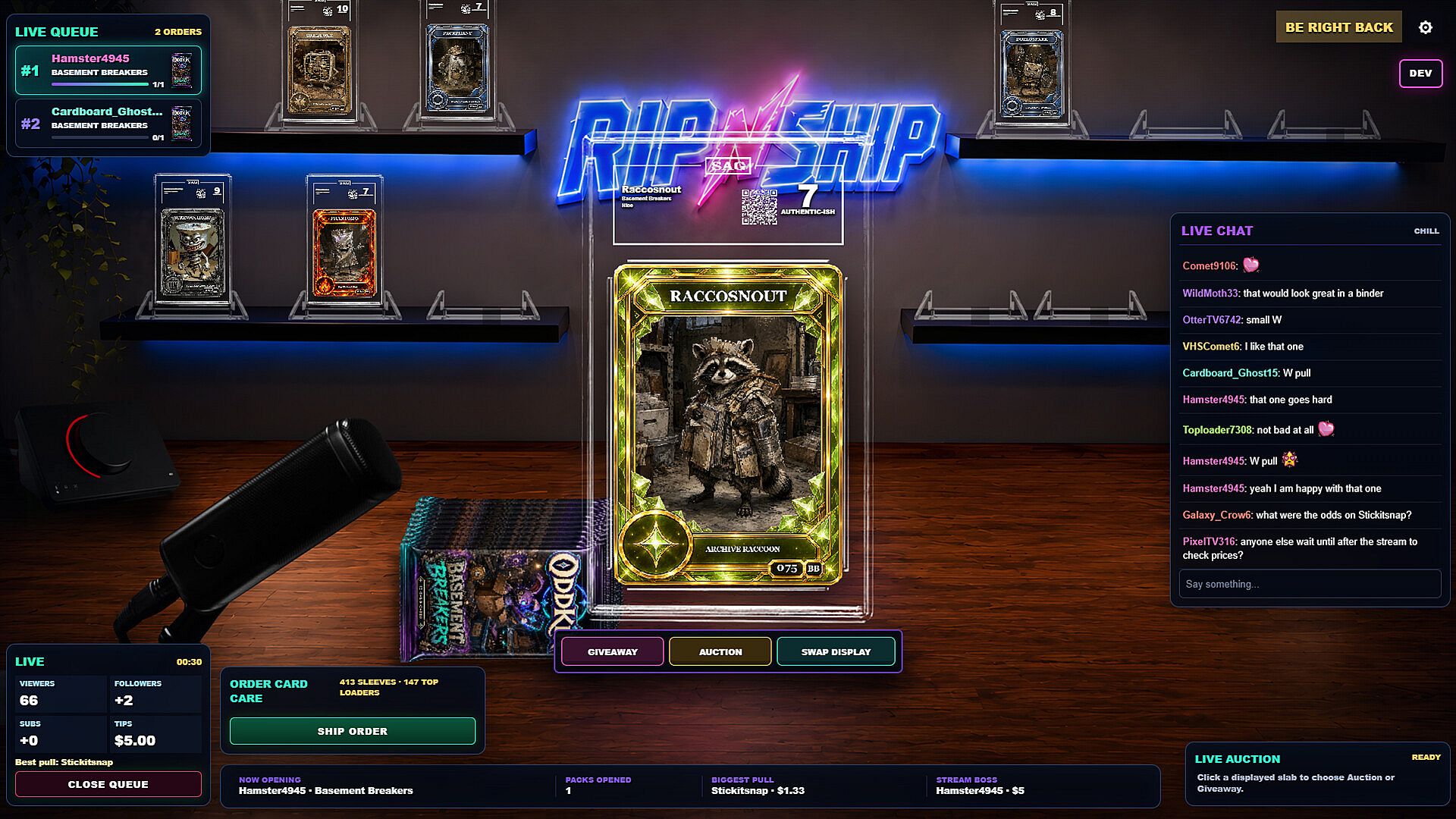
Rip N Ship Simulator est un jeu de simulation casual qui vous plonge dans la peau d'un card breaker qui monte son activité de live streaming de A à Z. L'expérience tourne autour de l'ouverture de paquets de cartes en direct, de la gestion des commandes des spectateurs et du passage d'un setup de sous-sol à une chaîne complète centrée sur les gros pulls et l'engagement du public.
Gameplay
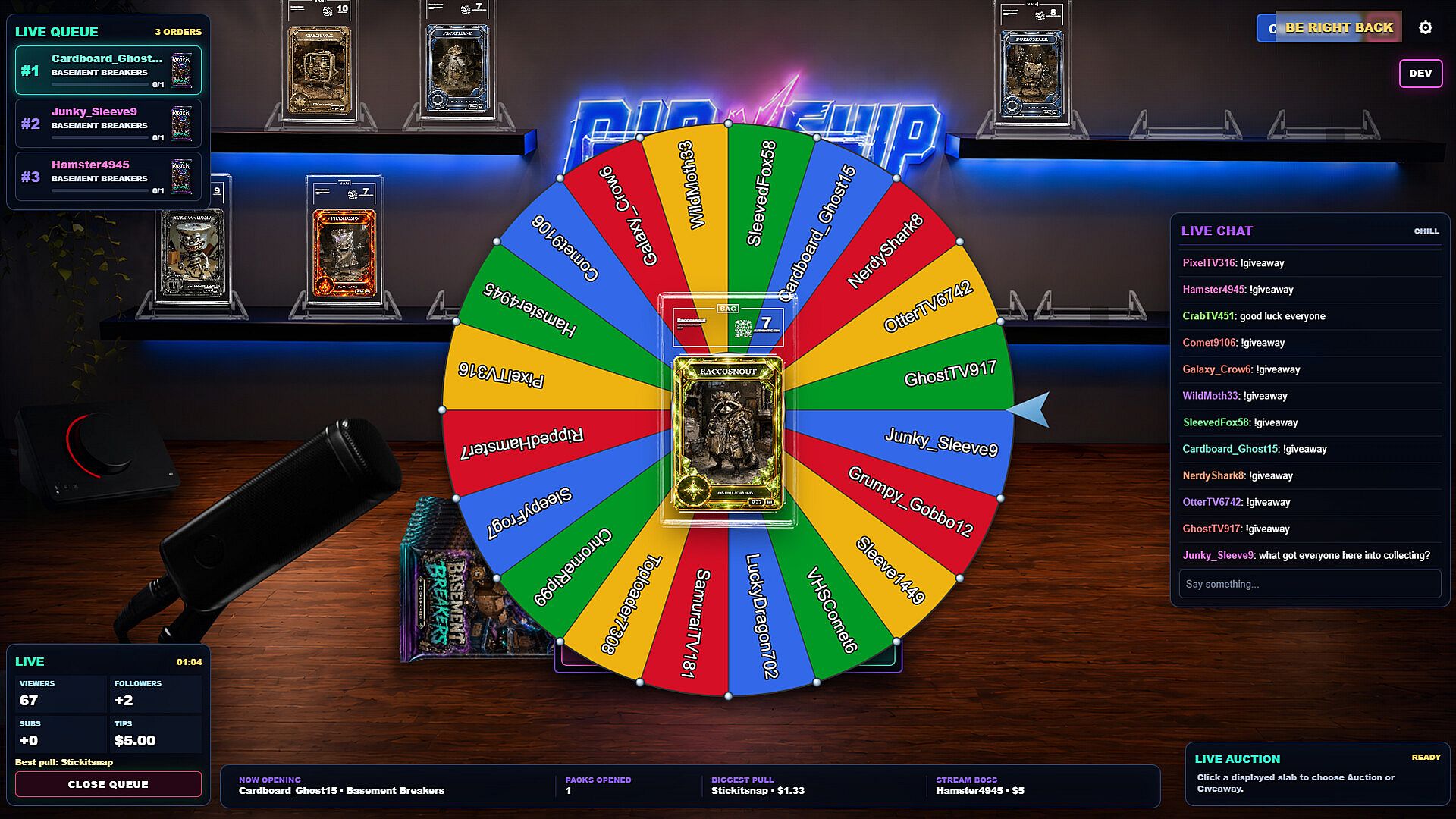
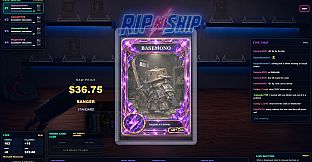
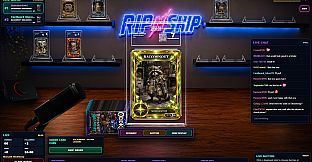
Vous commencez avec un bureau basique, une petite collection et quelques spectateurs. La boucle principale consiste à lancer un live pour ouvrir des paquets, traiter les commandes via une file d'attente en direct, réagir aux pulls marquants et interagir avec le chat pour développer l'audience. La progression repose sur la réputation, le déblocage de matériel plus performant et l'agrandissement de l'espace physique au fur et à mesure que la chaîne gagne des abonnés et du soutien.
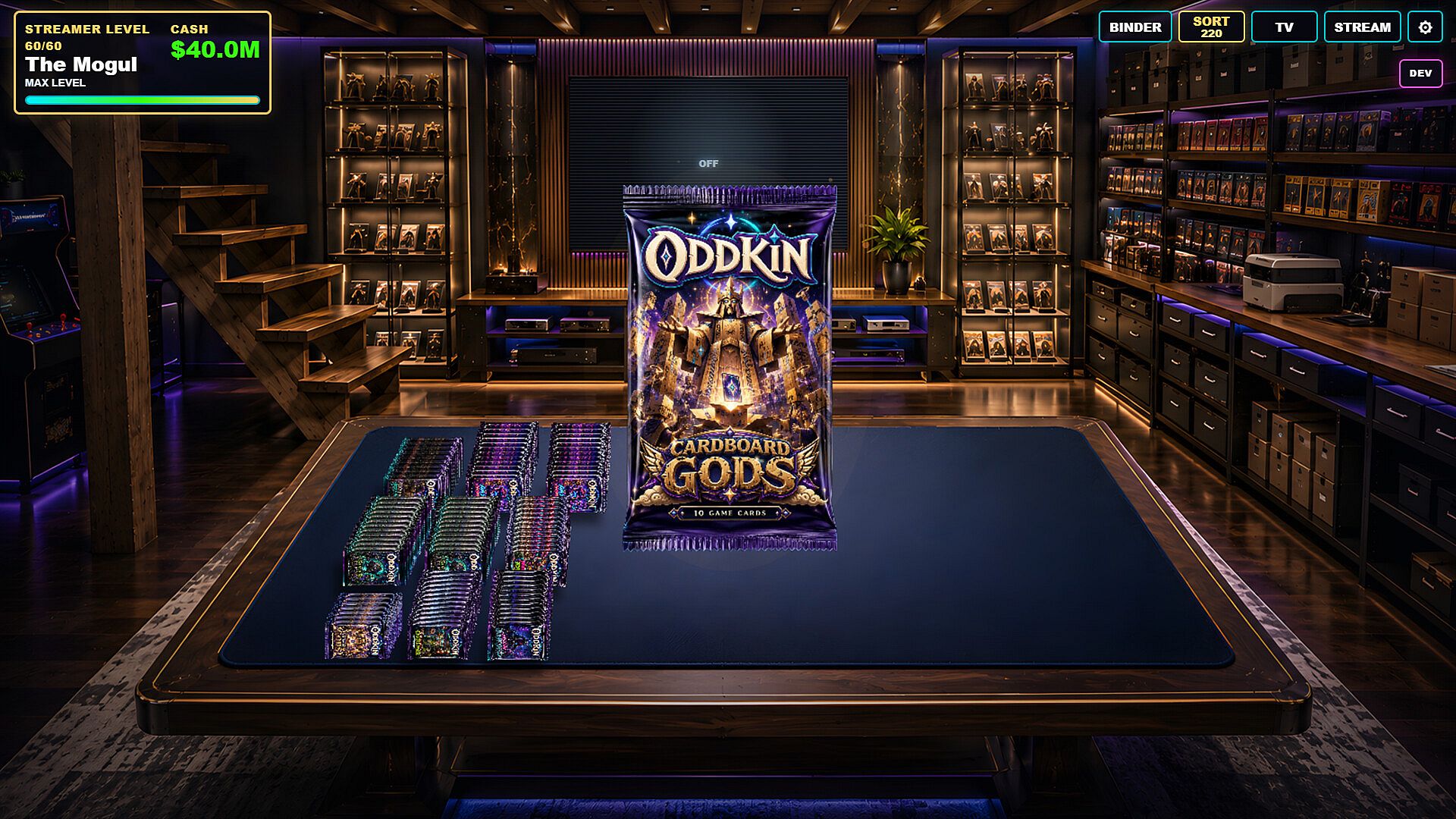
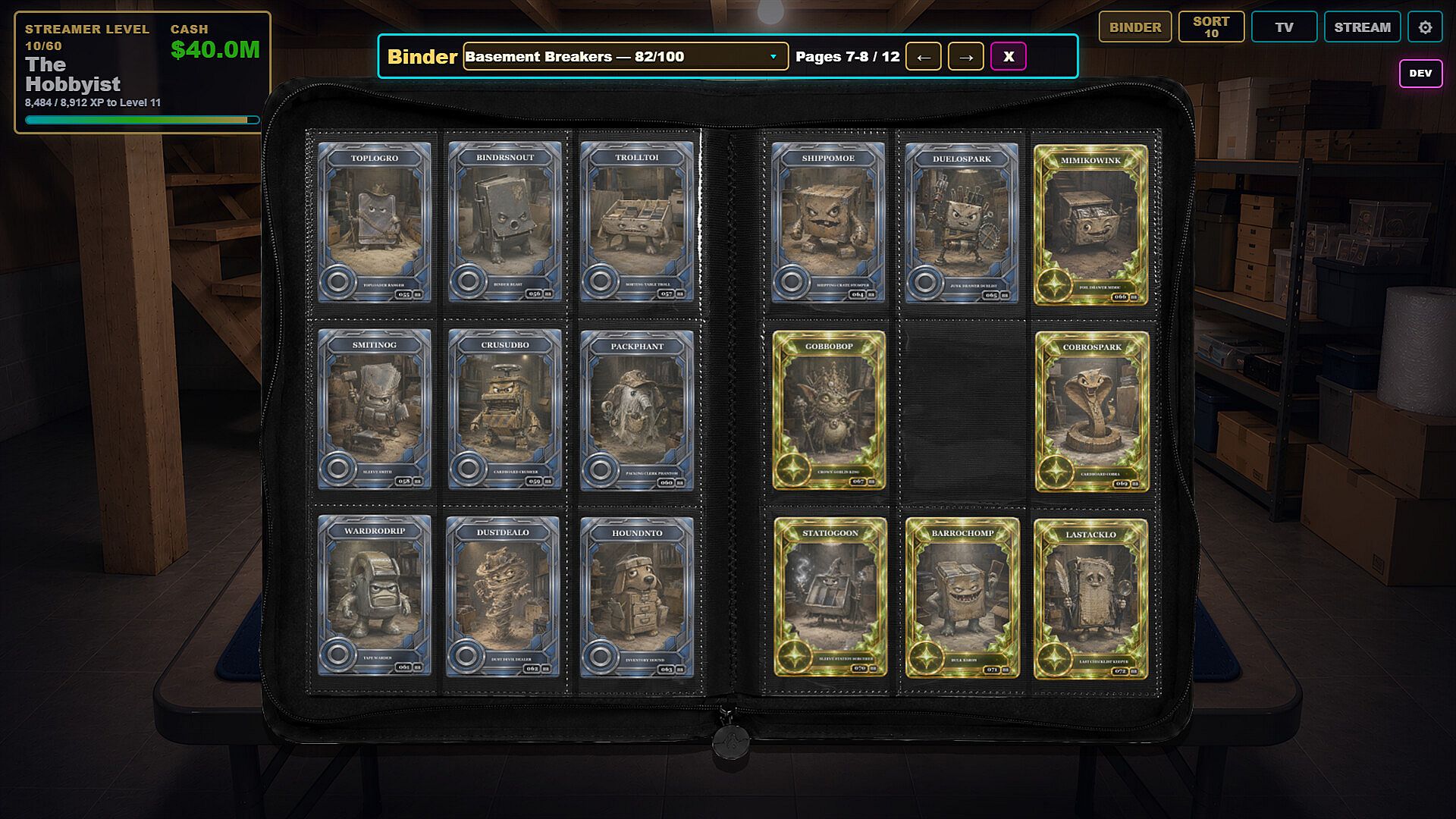
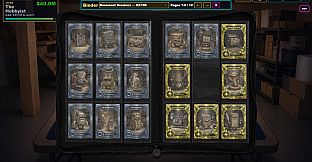
La gestion des cartes occupe une place centrale : trier les arrivées, traiter les doublons et le stock en vrac, compléter un classeur et envoyer les cartes phares en grading. La vente de cartes rapporte de l'argent pour financer les améliorations et renouveler l'inventaire. L'outil Card Studio permet de créer des cartes, des paquets et des sets personnalisés pour un usage personnel ou le partage.
L'amélioration du setup se fait progressivement via le déblocage de scènes et de pièces. Un meilleur éclairage, des caméras et des options d'affichage renforcent la qualité du stream, tandis que les slabs de la collection personnelle peuvent être mis en valeur lors d'événements. Tous les systèmes s'articulent pour reproduire les exigences d'une chaîne de card breaking régulière.
Game Modes
Le Streamer Mode constitue l'expérience principale. Il regroupe le chat simulé, l'activité des spectateurs, la croissance des followers, les abonnements, les dons, les raids, les achats, les alertes, les giveaways, les enchères et les commandes clients au sein d'une seule session cohérente. Les joueurs traitent les demandes de paquets en temps réel, présentent les slabs de leur collection et lancent des giveaways ou des enchères directement depuis l'interface du stream.
En dehors des lives, le jeu passe en mode hors-ligne centré sur la gestion de la collection et de l'activité. Cela inclut l'organisation du classeur, le traitement des doublons, le tri du stock en vrac, le grading et la vente de cartes pour financer la croissance. La progression des scènes et des pièces s'effectue également ici, de même que l'utilisation du Card Studio pour créer du contenu personnalisé.
Progression and Customization
La progression dépend de la régularité des streams et de la gestion intelligente de l'inventaire. Les gros pulls réussis et la satisfaction des spectateurs génèrent davantage de commandes, de pourboires et de raids qui augmentent la visibilité. Le déblocage de nouvelles scènes élargit l'espace de travail et les options d'équipement, tandis que des setups améliorés permettent des streams de meilleure qualité.
La personnalisation ne se limite pas aux améliorations physiques. Le Card Studio permet de concevoir des cartes, des paquets et des sets originaux qui s'intègrent à la collection et au flux de streaming. Cette fonctionnalité offre une liberté créative dans le thème du card breaking sans recourir à des outils externes.
Current State and Updates
Le jeu est toujours en Early Access et le développement se concentre sur l'enrichissement du Streamer Mode, l'amélioration des systèmes de progression, l'équilibrage et l'ajout de nouvelles interactions. Les systèmes de cartes et les options de personnalisation continueront d'évoluer dans les futures mises à jour. La version actuelle propose déjà l'ensemble des fonctionnalités listées, dont les interactions simulées avec les spectateurs et les outils de gestion de collection.
Is It Worth Playing?
Rip N Ship Simulator s'adresse principalement aux joueurs attirés par les simulations centrées sur la culture des cartes à collectionner et la création de contenu. L'association de l'ouverture de paquets, de la gestion des commandes et de la simulation d'audience forme une boucle ciblée qui récompense l'attention aux détails et une croissance régulière. Ceux qui aiment organiser une collection, réagir à des résultats aléatoires et développer une activité virtuelle trouveront les systèmes captivants dès le départ.
Le titre étant en Early Access, l'expérience continue d'évoluer avec des ajouts prévus sur la présentation, les mécaniques et le support du contenu créé par les joueurs. Ceux qui recherchent un produit finalisé et poli peuvent préférer attendre les prochaines mises à jour, tandis que les amateurs du genre peuvent participer au développement en cours en donnant leur avis sur les fonctionnalités existantes. La simulation offre une représentation directe des opérations de card streaming sans complexité superflue.












