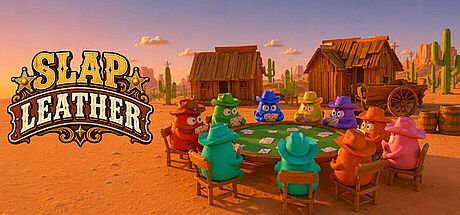



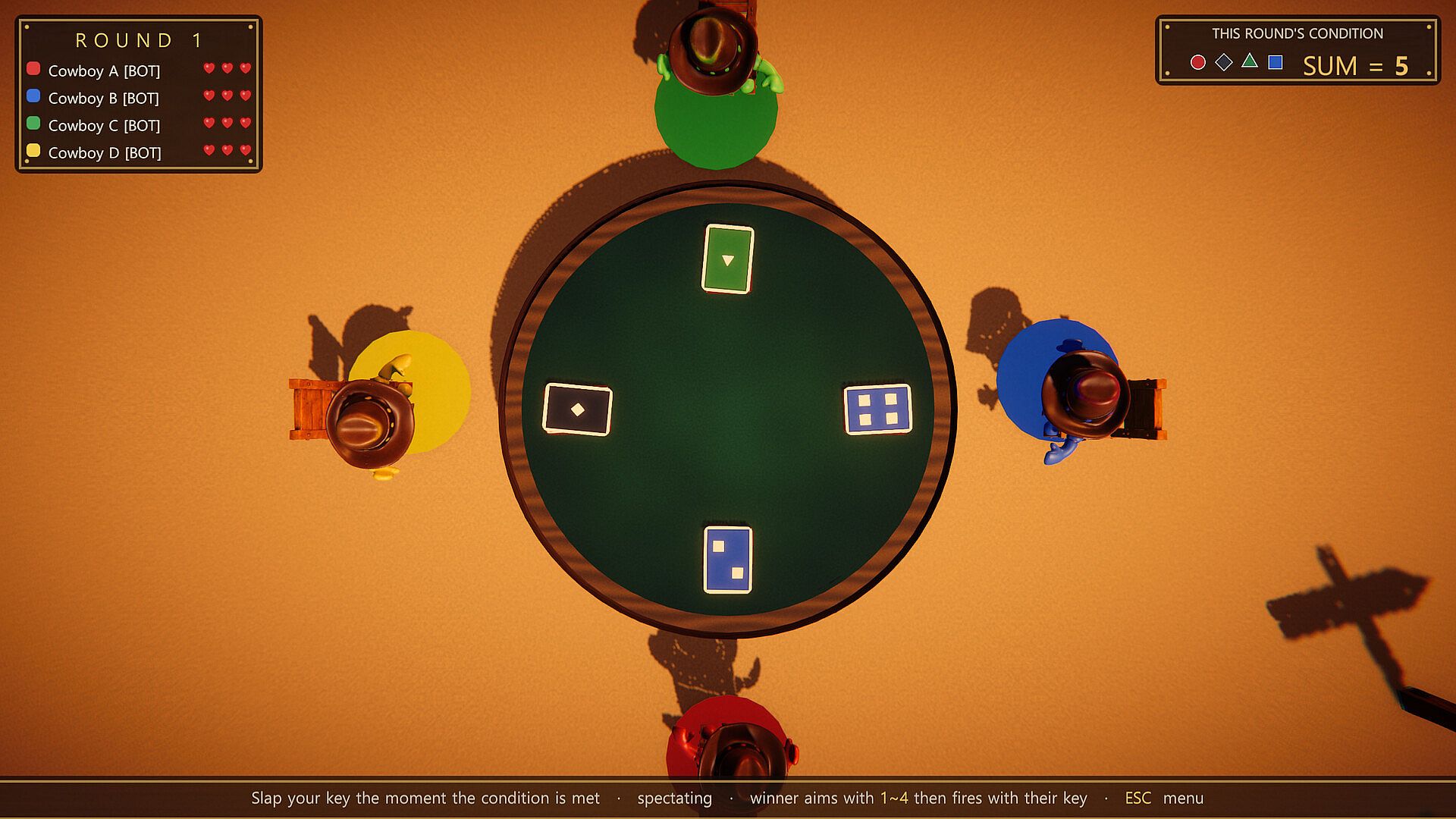
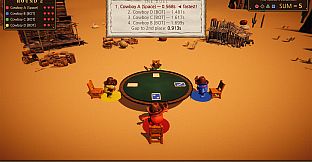
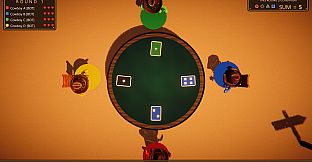
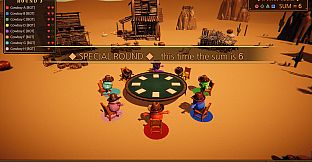
Slap Leather is a casual indie game built around quick reflexes and social tension in a western frontier setting. Players watch cards flip onto a table and react the instant one color's values reach a hidden target sum, then compete in a draw where the fastest participant decides who gets eliminated. The experience blends card counting under pressure with millisecond-precise timing that determines every outcome.
Gameplay
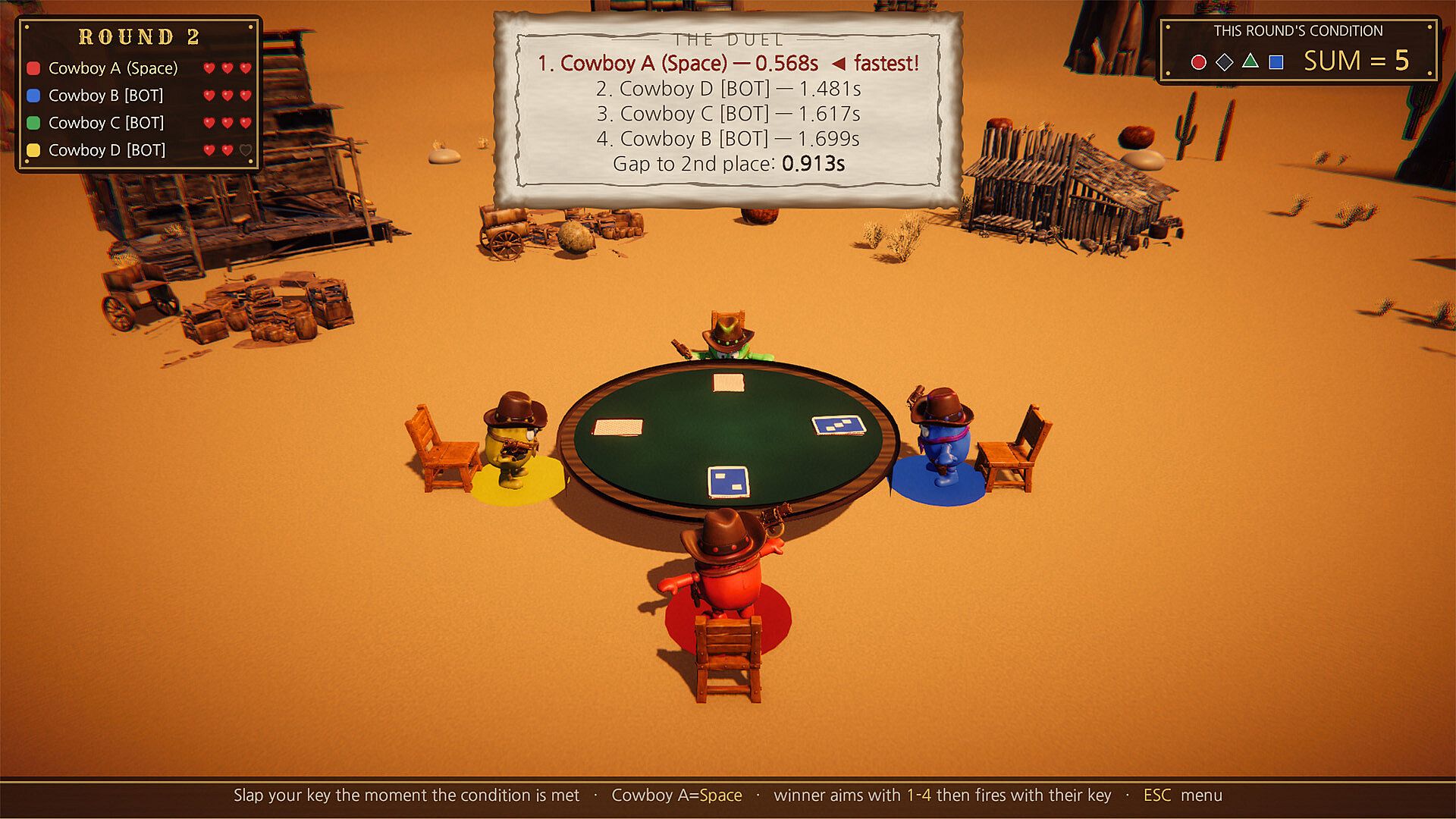
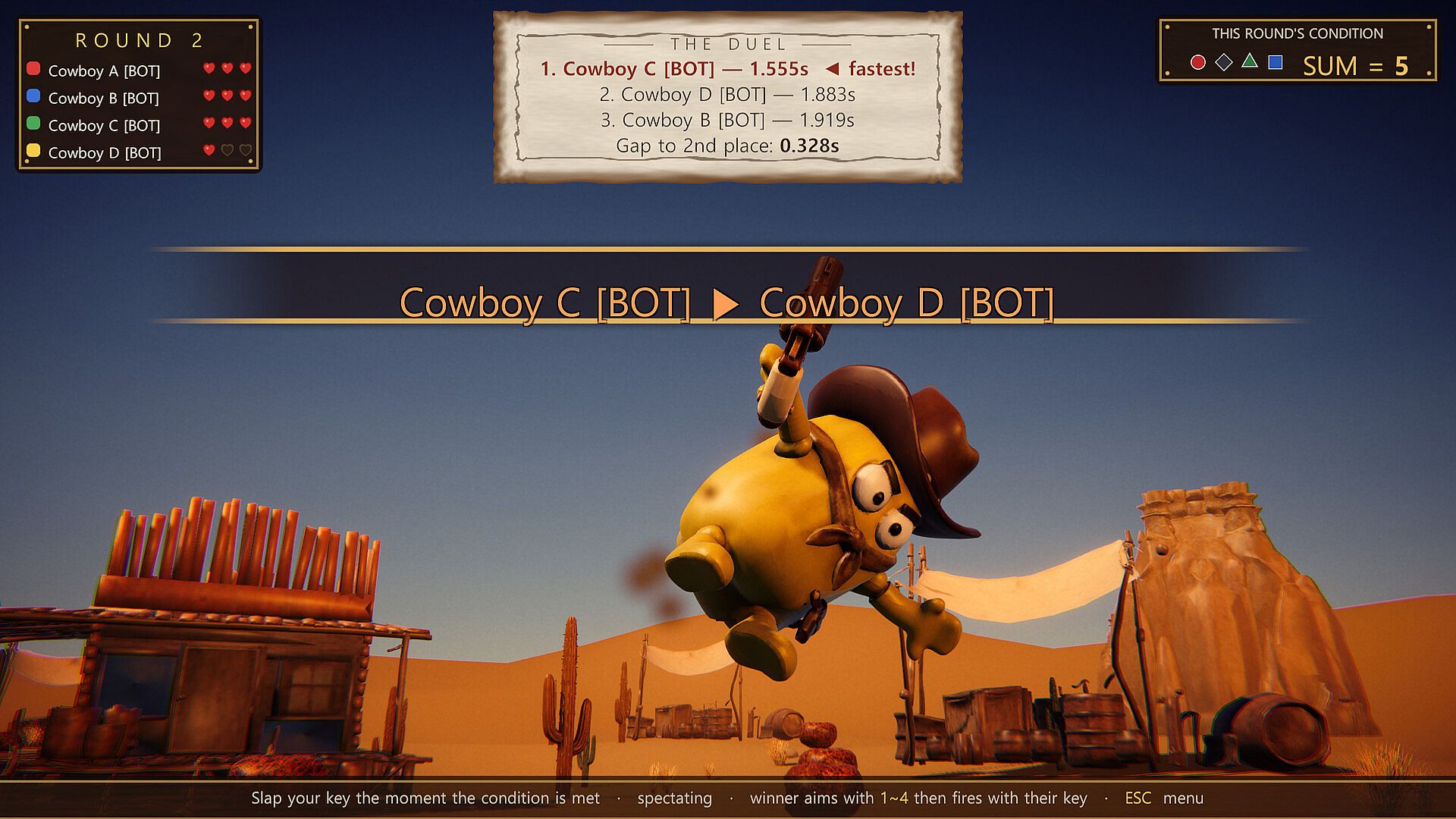
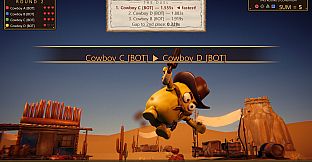
The core loop centers on observation and reaction without any on-screen indicators for the target sum. Cards appear one by one in four colors, and participants must track totals mentally until the right moment arrives. Slapping the reaction key too early triggers a penalty that leaves the offender vulnerable to the rest of the table. Successful slaps reveal exact reaction times ranked from slowest to fastest, after which only the quickest player draws and selects a target for elimination. This structure creates repeated cycles of anticipation, risk, and immediate consequence.
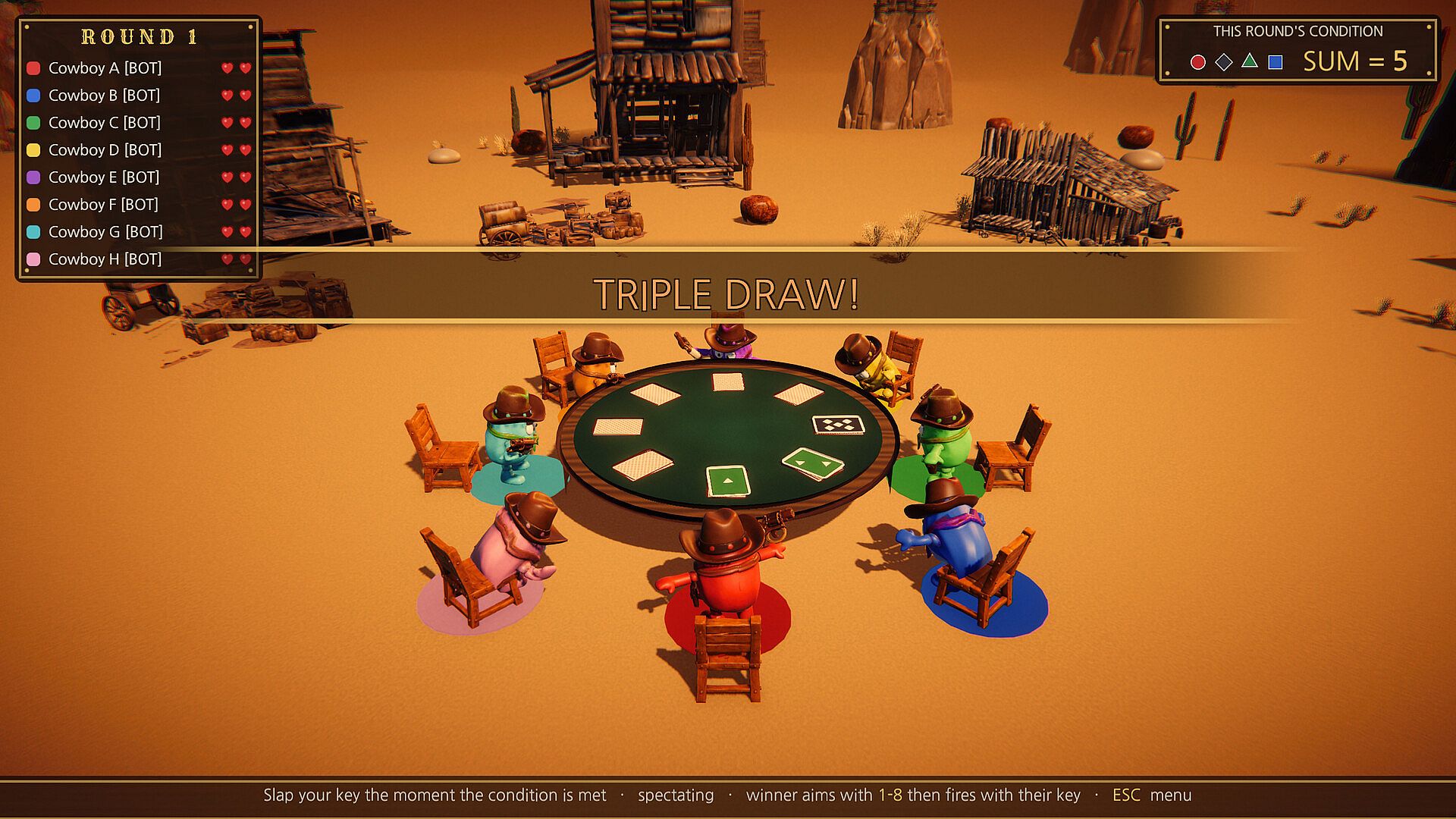
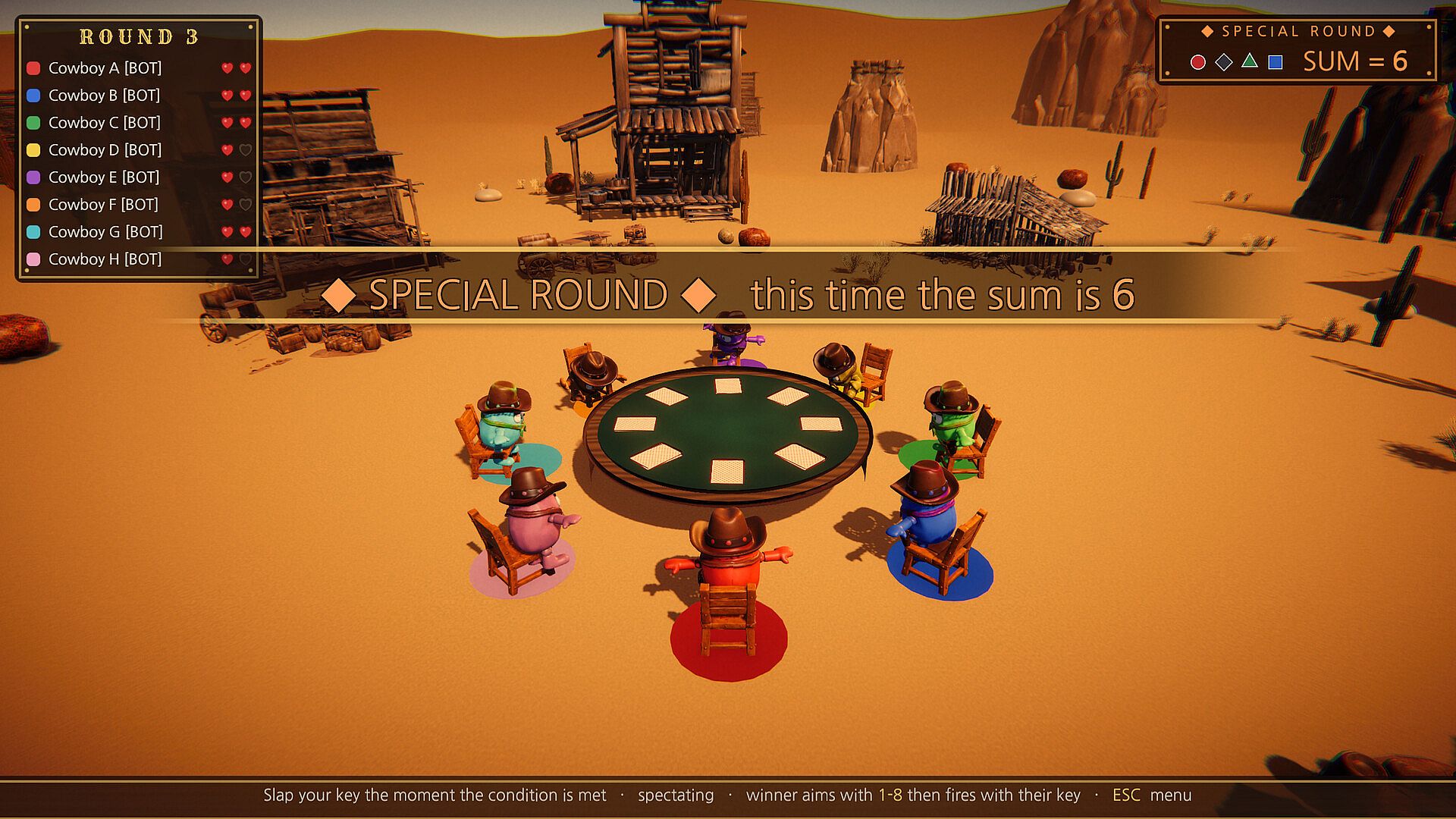
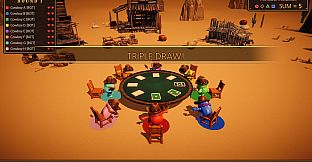
Timing relies on direct input timestamps rather than frame-based polling, so small differences in response speed matter directly. Special rounds shift the target sum without warning, forcing players to adapt beyond memorized patterns. When three or more participants tie at the exact same millisecond, a triple draw occurs where all tied players act simultaneously. Bots fill seats for solo sessions or incomplete groups, maintaining the same timing rules on their own simulated reactions.
Game Modes
Local multiplayer supports up to eight players sharing one keyboard, allowing groups to gather around a single PC for sessions. Online play connects friends through direct invites, with each client evaluated against its own screen timing to remove network advantages. Remote Play Together extends local-style sessions to distant participants without requiring additional hardware. Solo play against bots provides practice or standalone matches where the same mechanics apply without human opponents.
Procedural elements dress the desert environment with wagons, tumbleweeds, and other frontier details that change between rounds. The game supports twelve languages for interface and text, broadening accessibility across regions. No additional named modes exist beyond these core formats and the variable special rounds that alter the target sum.
Multiplayer Dynamics
Betrayal emerges naturally once reaction times become public knowledge, as the fastest player gains the power to choose any target. Party fouls punish premature slaps by exposing the offender to collective retaliation. The setup encourages repeated tables among the same group, where grudges from prior rounds influence later decisions. Up to eight participants create crowded, unpredictable sessions whether played locally or online.
Is It Worth Playing?
Slap Leather suits players who enjoy reaction-based party games and local or small-group multiplayer on PC. Its emphasis on mental tracking combined with precise timing rewards focus and quick decisions without relying on complex controls or long sessions. The game remains in a coming-soon state with no user reviews available yet, so expectations should center on the described mechanics rather than established community feedback. Those seeking casual western-themed experiences with friends or solo bot matches will find the core loop directly matches the listed features. Availability is limited to PC through standard digital storefronts once released.