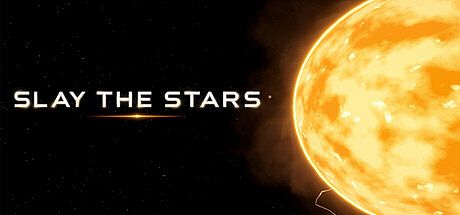


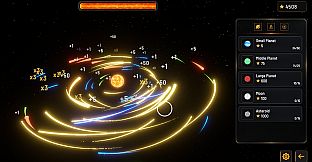
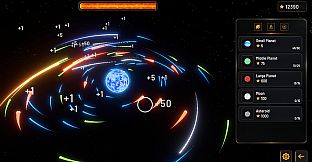
Slay the Stars is a casual indie game for PC where players build solar systems from scratch, manage orbiting bodies, and trigger supernovas in a loop of expansion and reset. The experience centers on incremental growth and permanent progression through repeated runs, appealing to those who enjoy relaxed yet engaging management mechanics without complex controls or competitive elements.
Gameplay
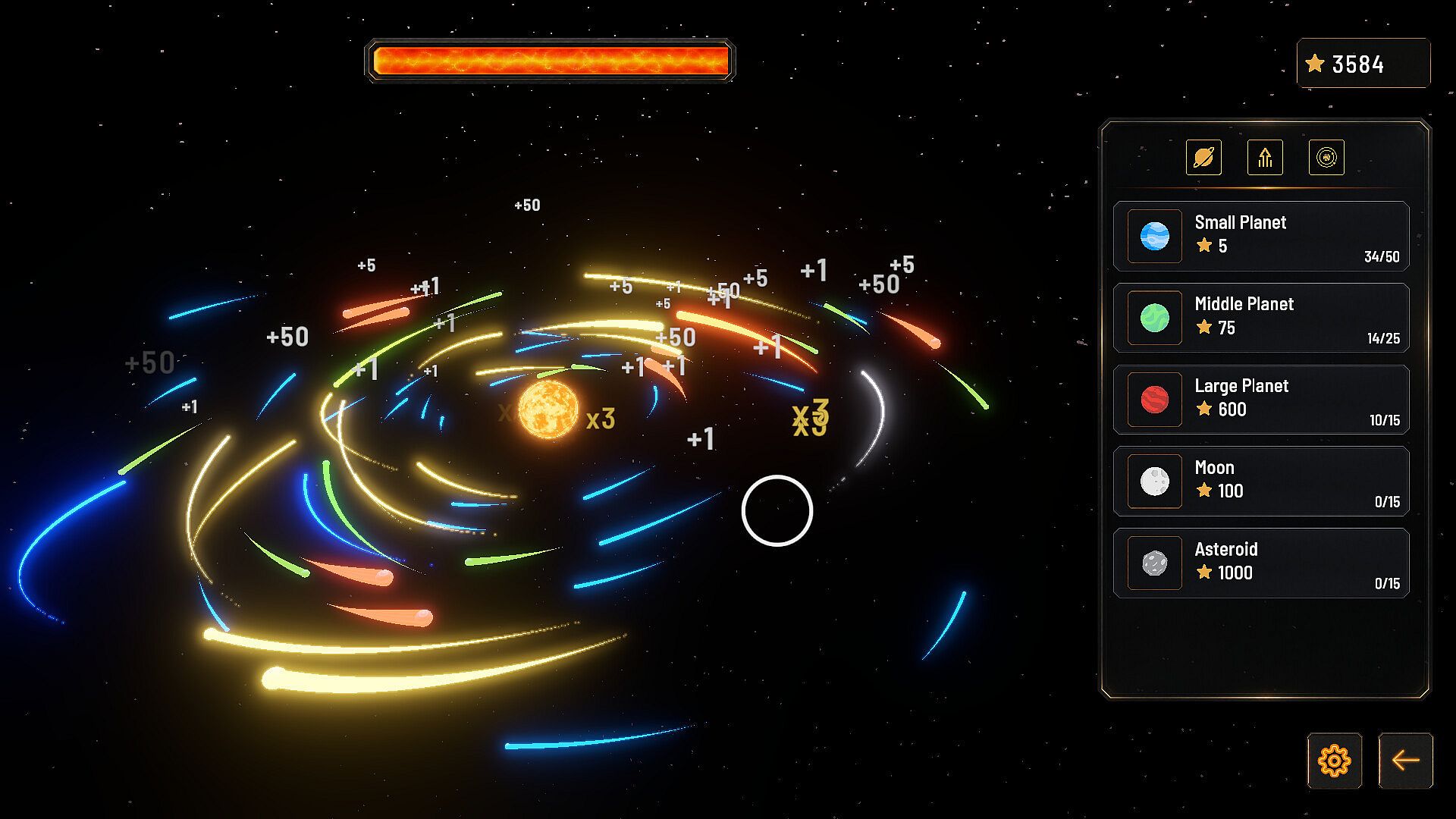
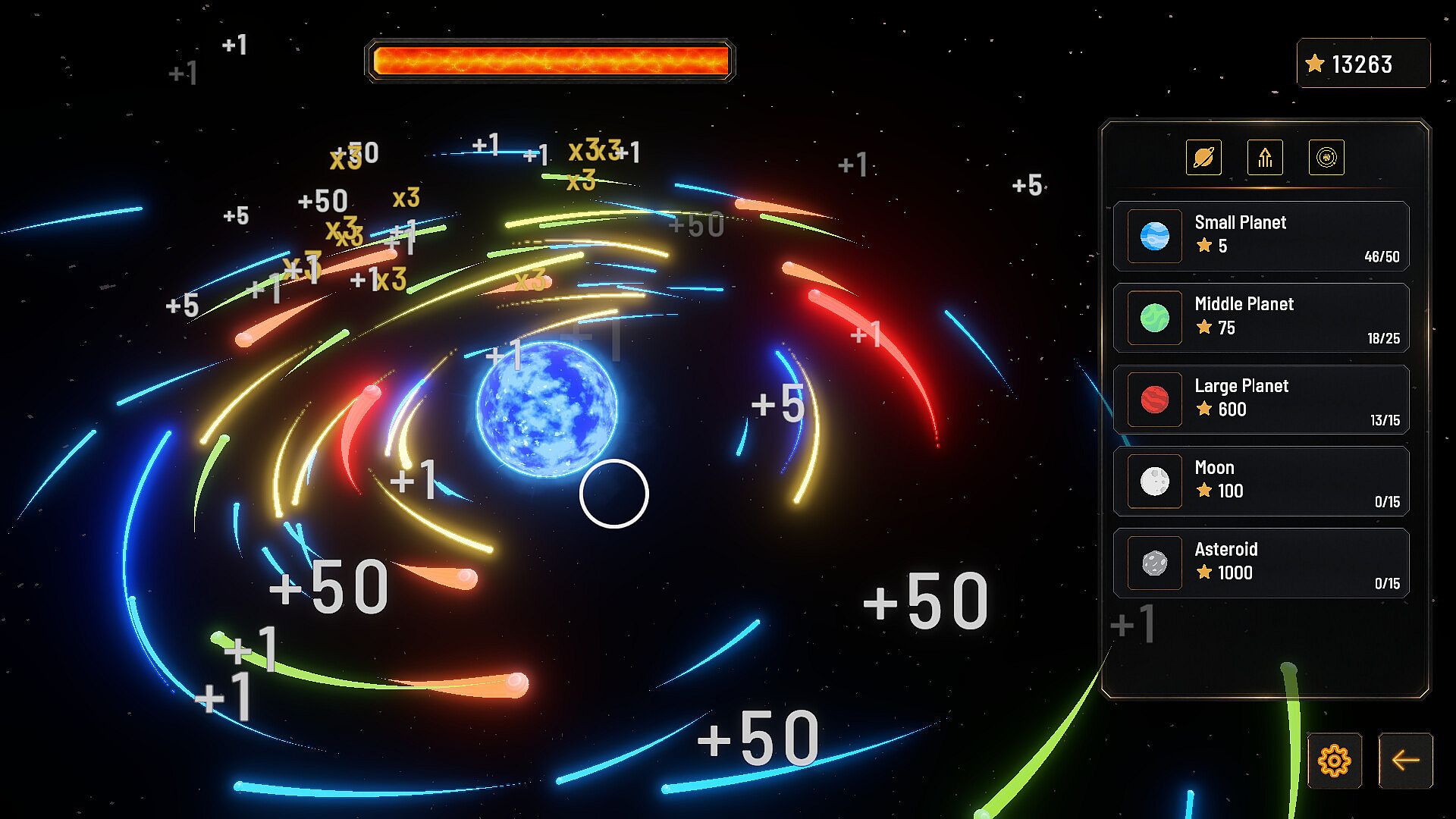
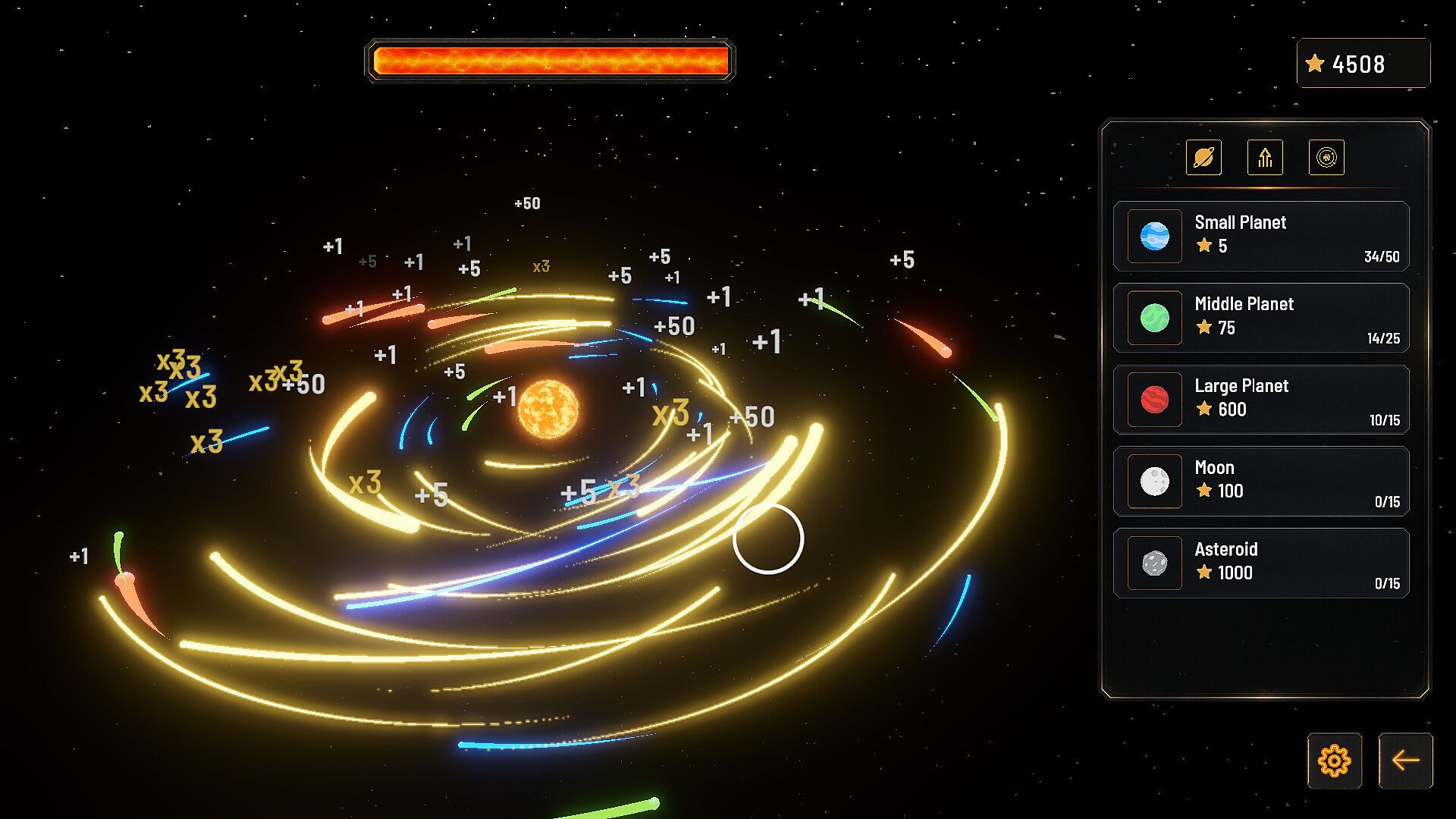
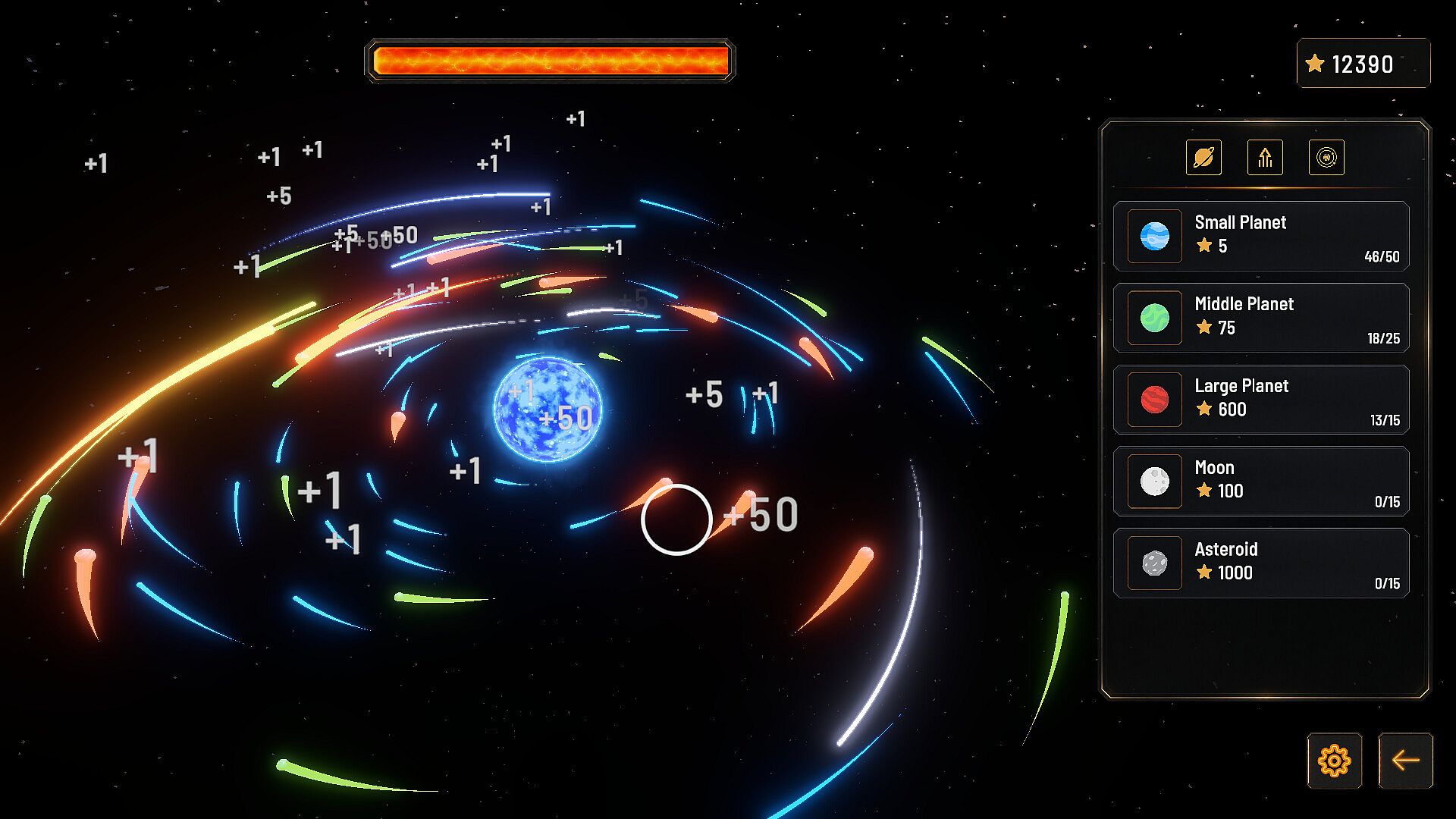
The core loop begins with a single star and one orbiting planet. Completed orbits generate Year Score, which players spend to add new planets, asteroid belts, comets, and additional celestial objects to the system. Clicking on planets provides a temporary speed boost to finish their orbits quicker, helping maintain momentum as the number of moving elements increases.
Each added object contributes to the overall mass, gradually filling a Supernova Bar. When the bar reaches capacity, players can initiate the supernova event. This pulls the entire system inward in a destructive explosion that clears the board but rewards Supernova Points for use in a Skill Tree of permanent upgrades. New runs start with an upgraded star, allowing faster builds, larger systems, and access to additional object types over time.
The mechanics emphasize timing and multitasking as the system grows more chaotic, rewarding careful attention to multiple orbits while balancing mass accumulation. The process repeats with each supernova, focusing on efficiency improvements through the Skill Tree rather than one-time achievements.
Game Modes
Slay the Stars operates as a single-player experience with no multiplayer components. The primary activity revolves around the repeated cycle of system construction, mass management, and supernova detonation across successive runs. This structure supports ongoing experimentation with different object combinations and upgrade paths without separate named modes or variations.
Players engage in the same foundational loop each time, with differences arising naturally from Skill Tree choices and the expanding range of available celestial bodies. The design keeps the focus on personal progression and system optimization rather than distinct game types or competitive formats.
Progression System
Permanent upgrades purchased with Supernova Points form the backbone of long-term advancement. These enhancements enable quicker Year Score accumulation, support for more objects per run, and access to specialized celestial bodies that alter mass gain or orbit dynamics. The Skill Tree encourages strategic spending to refine future attempts at larger and more efficient systems.
Each run builds on the last through these upgrades, shifting the challenge from basic survival of the growing system to deliberate optimization. The loop rewards consistent play by unlocking greater scale and complexity without requiring external resources or timed events.
Is It Worth Playing?
Slay the Stars suits players who prefer casual single-player management games with a clear cycle of building, resetting, and upgrading. The straightforward controls and focus on orbit timing and mass balance create an accessible entry point, while the Skill Tree adds depth for those seeking repeated runs and incremental improvements.
With a planned release in November 2026 and no user reviews available yet, the game appeals most to fans of relaxed roguelite-style progression in a space-themed setting. Those drawn to the described mechanics of system expansion and supernova resets will likely find the core loop engaging for short or extended sessions on PC.