




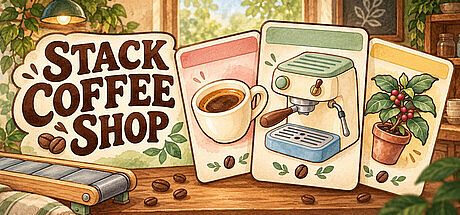


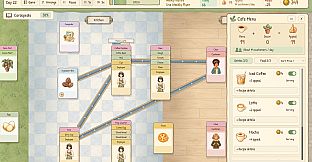
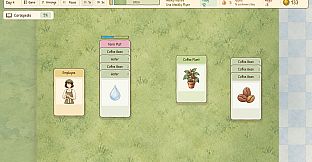
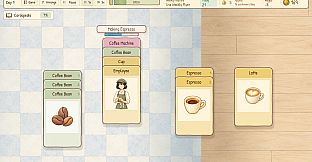
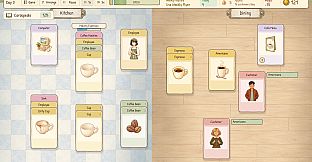
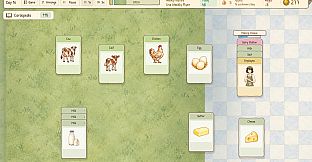
Stack Coffee Shop is a strategy simulation game for PC in which players build and manage a coffee shop entirely through card stacking mechanics. The experience begins in a backyard setting and expands into a full operation that covers growing ingredients, preparing menu items, serving customers, and creating automated systems.
Gameplay
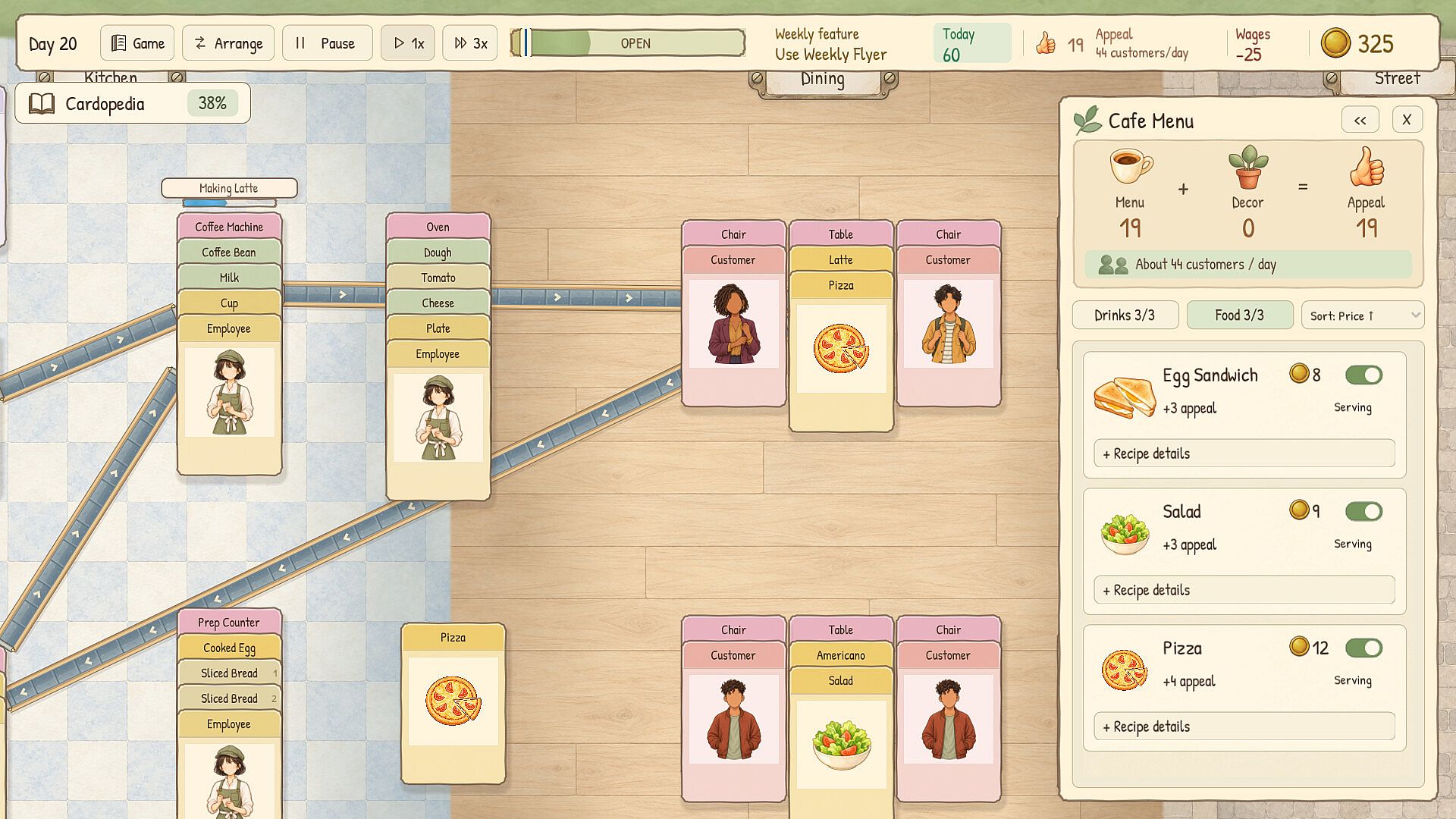
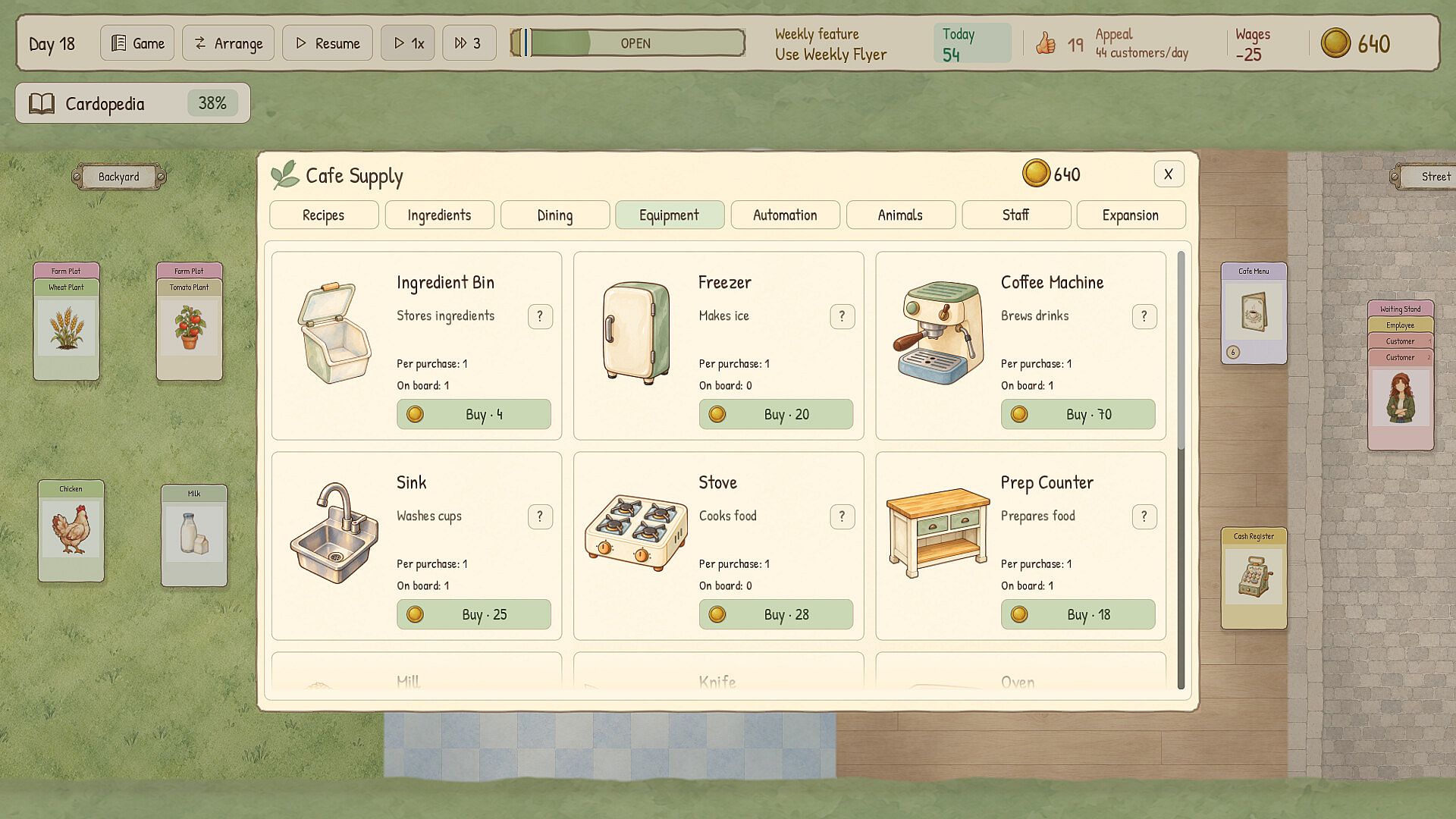
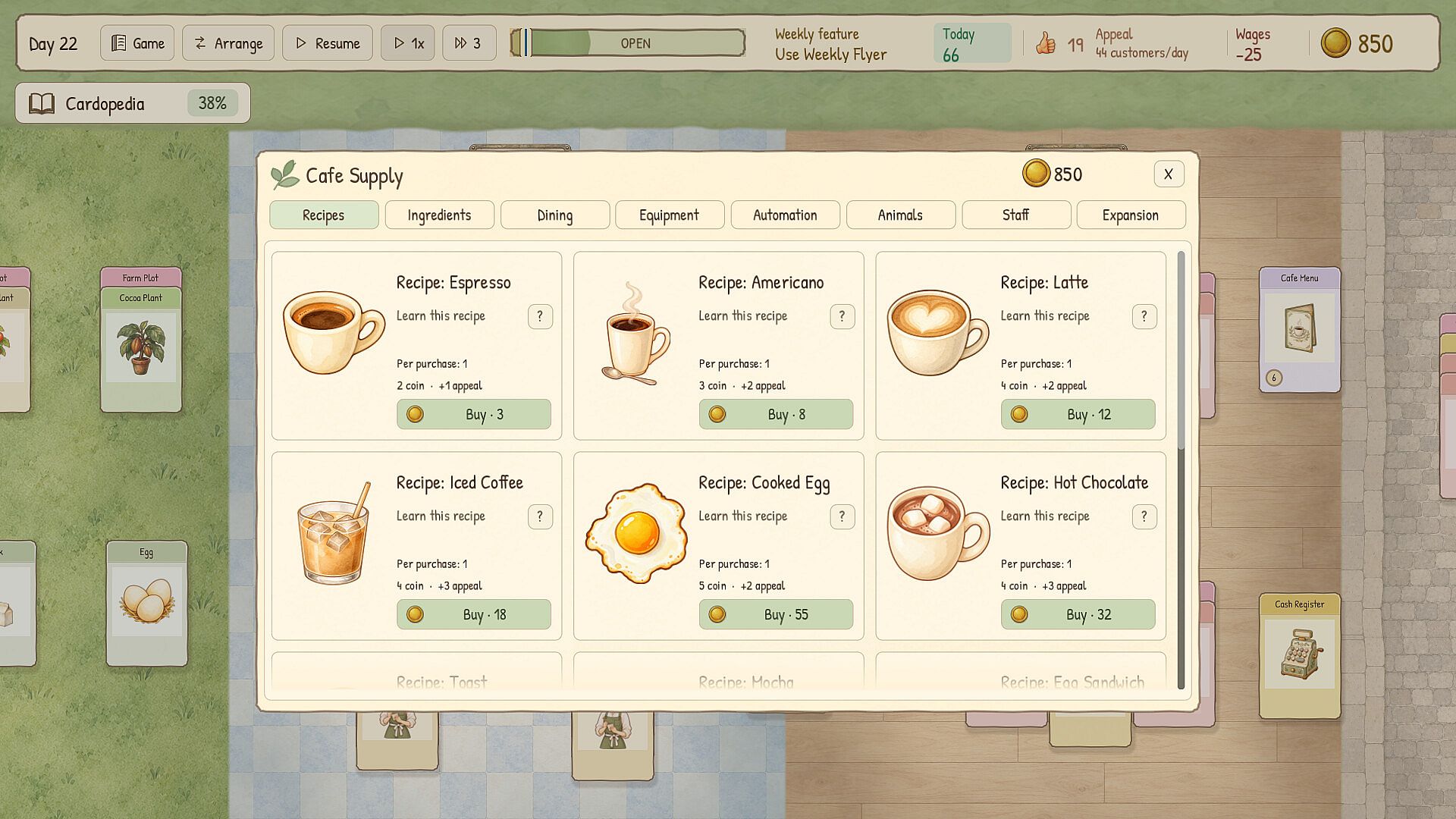
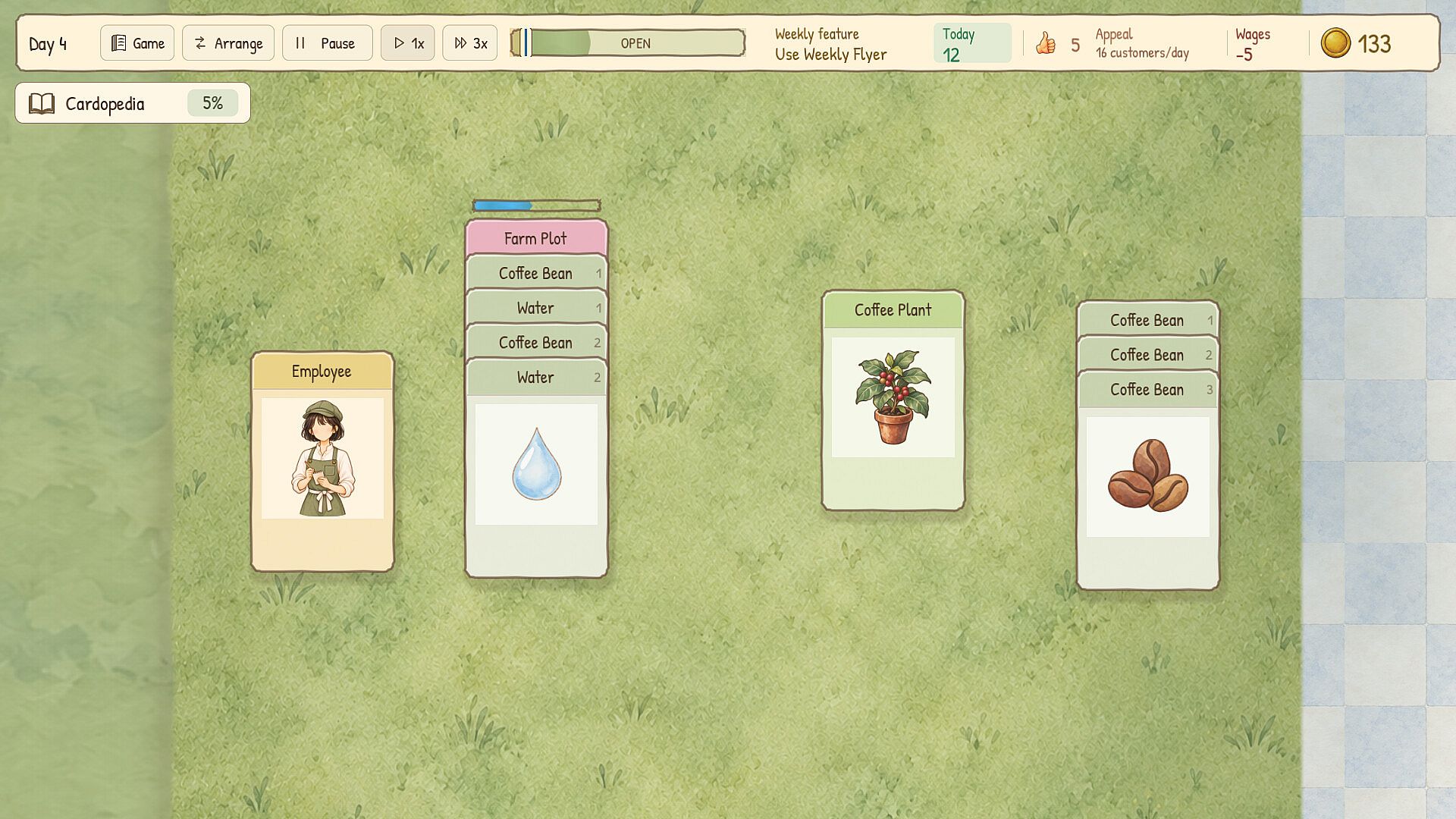
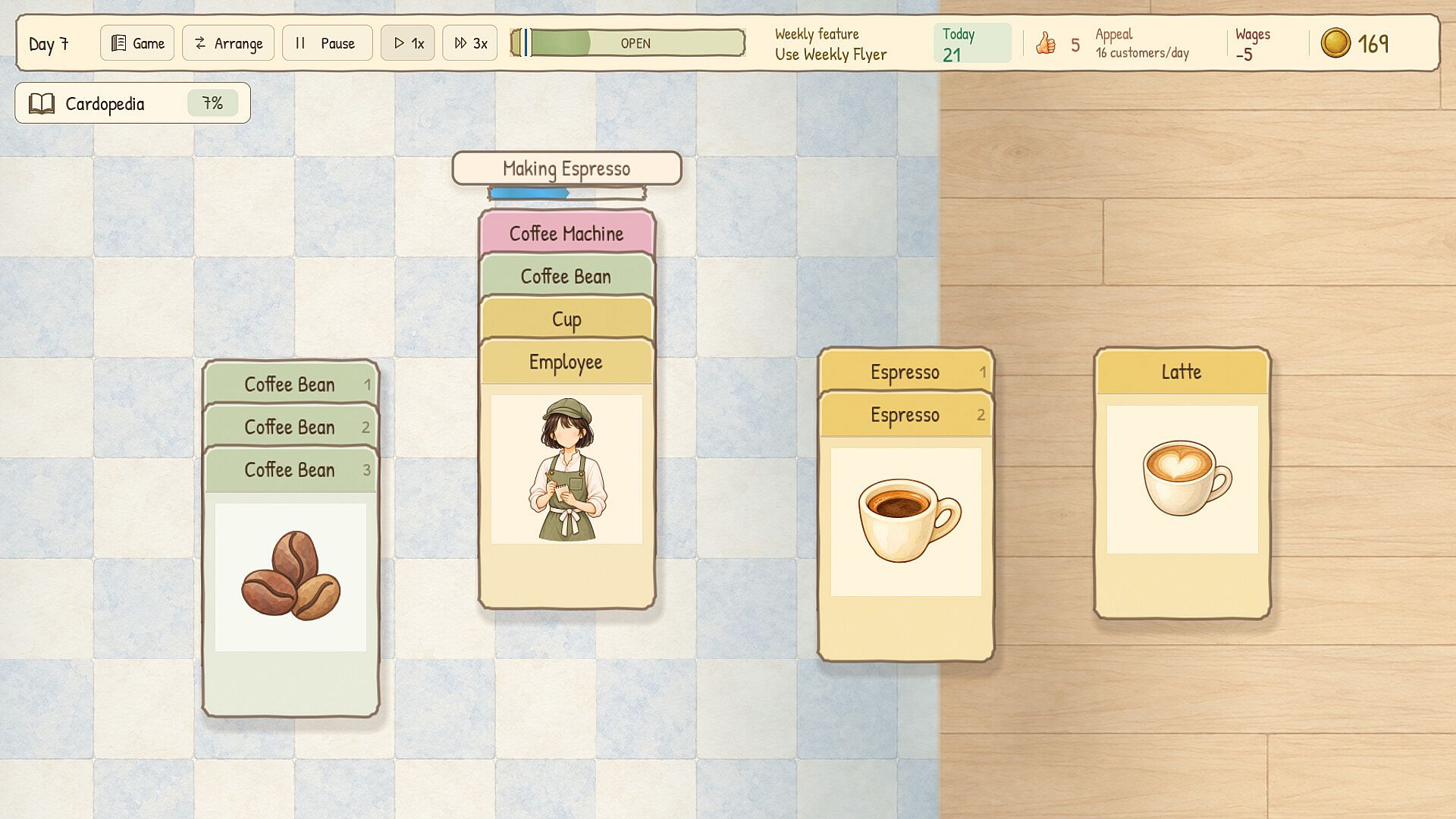
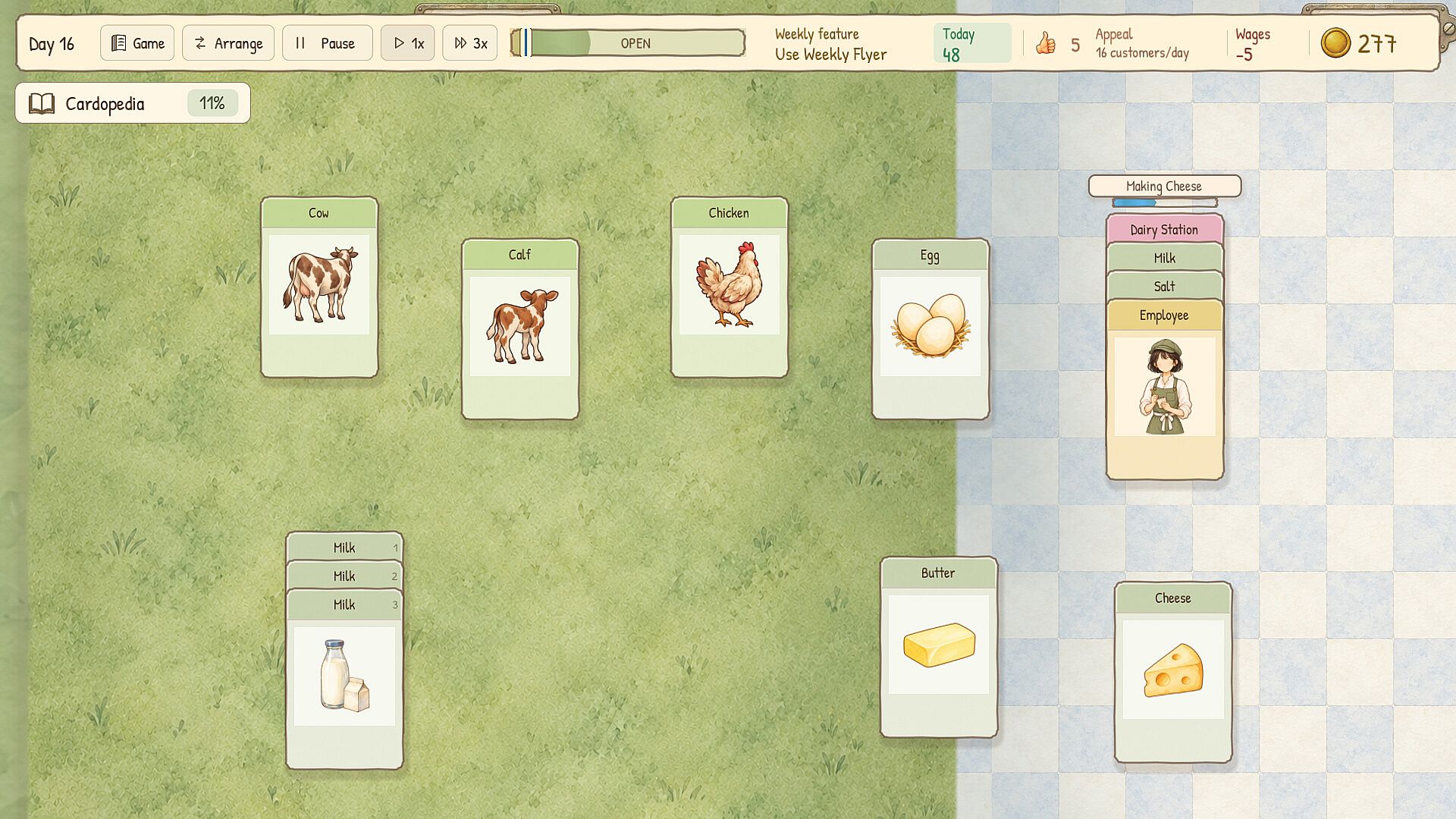
The core loop centers on stacking cards to handle every stage of the business. Players plant and tend crops such as coffee, cocoa, wheat, and vegetables while also raising animals for milk and eggs. These raw materials move from the backyard into the kitchen area, where they combine with equipment to produce drinks and food items. Early recipes start simple with an espresso and expand to include lattes, Americanos, and various food options as new ingredient combinations and tools become available.
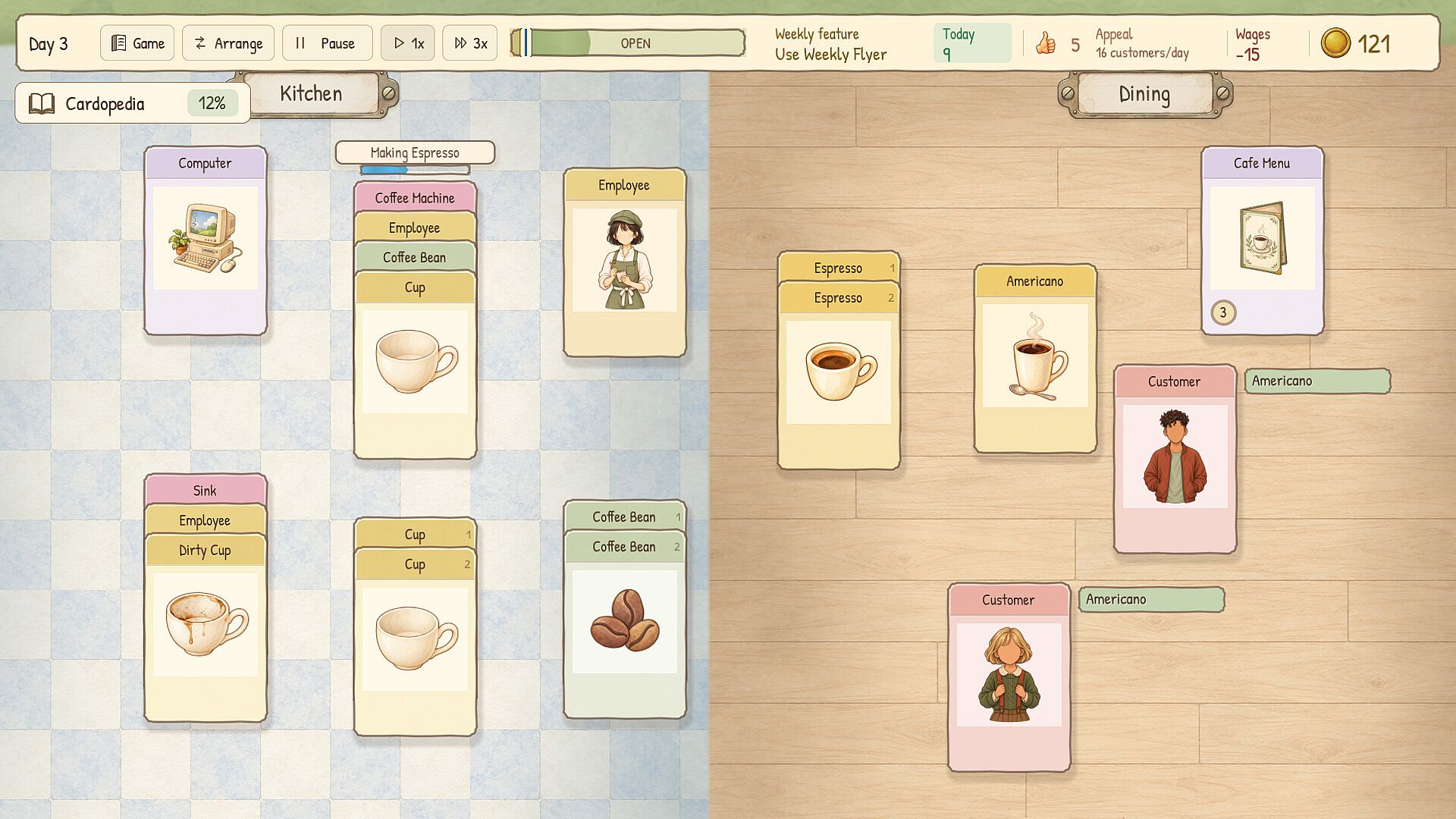
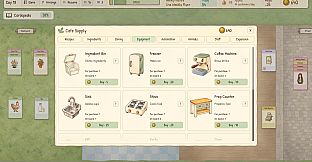
Daily operations require preparation before customers arrive, including stocking ingredients and ensuring clean cups are ready. Players hire staff, position tables, and respond to increasing customer volume. The card stacking system ties these actions together, turning individual steps into connected sequences that players refine over time.
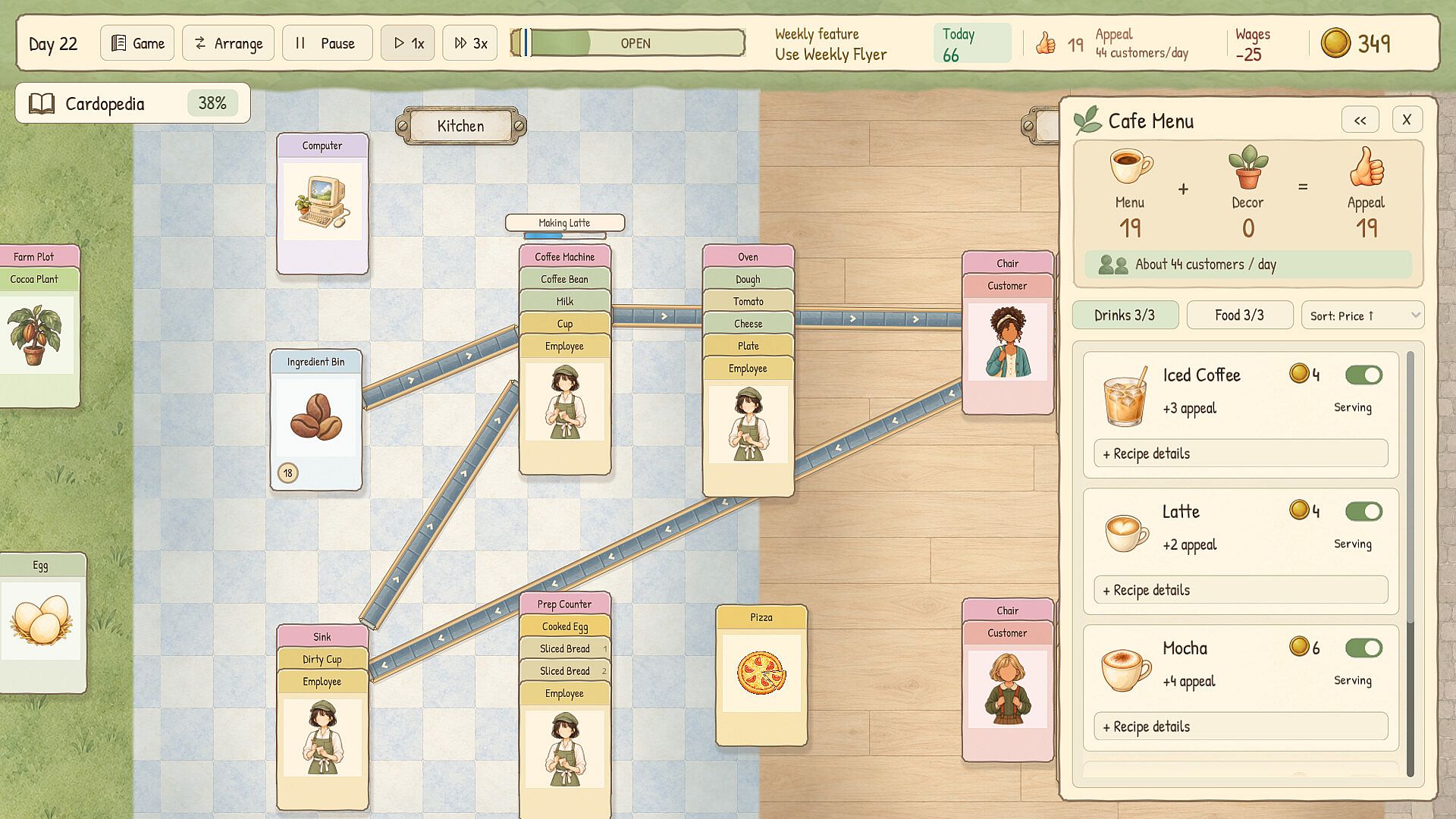
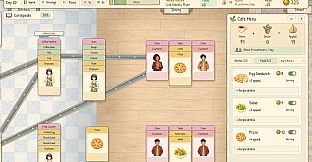
Automation forms a key part of progression. Conveyor belts transport ingredients, deliver completed orders, and return used cups for cleaning. Experimentation with layouts allows separate tasks to merge into a single efficient workflow designed by the player. The single-player focus keeps attention on internal management and optimization rather than external competition.
Game Modes
Stack Coffee Shop operates as a single-player experience with no separate multiplayer or competitive modes confirmed at this stage. The primary activity involves progressing through the business stages in one continuous campaign. Players advance by expanding the backyard production, broadening the menu, scaling service capacity, and refining automation setups. All elements remain within the same core loop, where success depends on how effectively cards are stacked and systems are linked.
Progression rewards thoughtful arrangement of growing areas, kitchen stations, and customer spaces. As the shop grows, the emphasis shifts from manual card placement to observing and adjusting automated flows. This structure supports repeated play sessions centered on redesigning the overall operation for better results.
Core Mechanics and Progression
Card stacking serves as the unifying mechanic across all activities. Each stack represents a sequence of actions that players build and modify. Growing cards feed into preparation cards, which then connect to service and cleaning cards. The system encourages testing different orders and connections to discover efficient paths from harvest to customer.
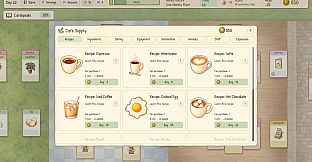
Menu development adds depth through recipe experimentation. Basic drinks unlock further options when ingredients and equipment align in new ways. Customer management requires balancing preparation speed with table space and staff availability. Automation via conveyors reduces direct intervention once setups stabilize, allowing focus on larger expansions.
The backyard-to-table theme keeps every element grounded in the coffee shop theme. Resources harvested outside directly influence what appears on the menu inside, creating a closed production cycle that players control end to end.
Is It Worth Playing?
Stack Coffee Shop targets players who enjoy management simulations built around automation and incremental system building. The card stacking approach offers a distinct way to handle familiar coffee shop tasks without relying on real-time timers or direct control. Those who appreciate designing efficient layouts and watching automated processes run will find the core loop engaging.
Because the game remains in development with a planned release in Q2 2027, no player reviews or long-term update history exist yet. The single-player structure and emphasis on creative setup experimentation align with the interests of simulation fans who prefer thoughtful planning over fast-paced action. Potential buyers can follow development updates to see how the mechanics evolve before launch.











