






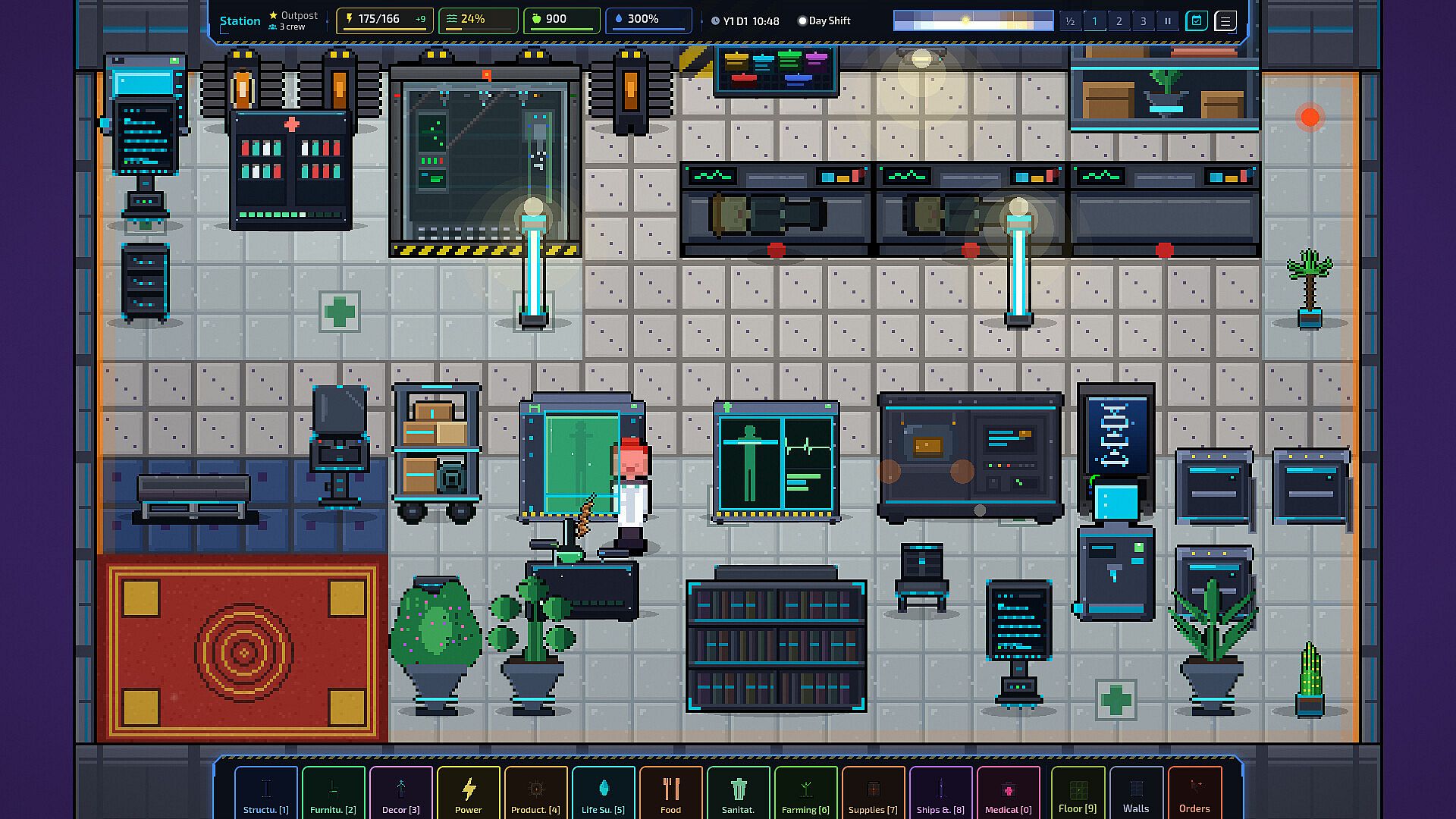
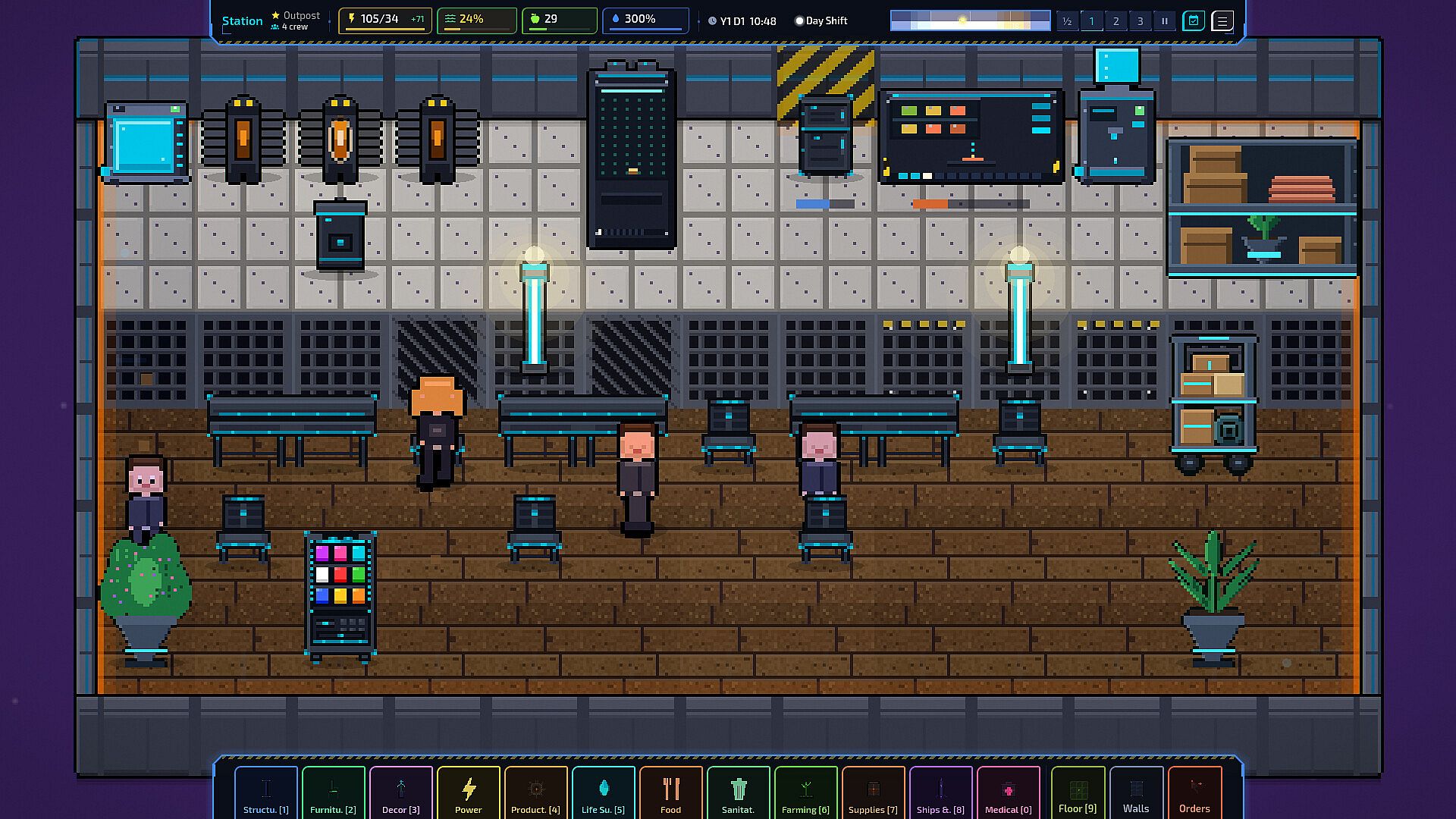
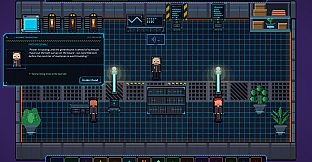
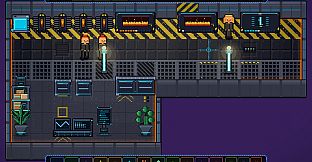
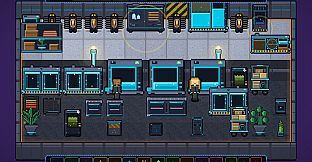
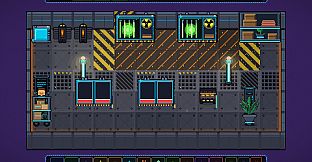
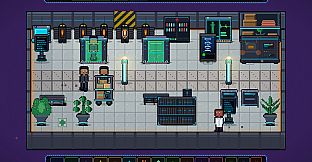
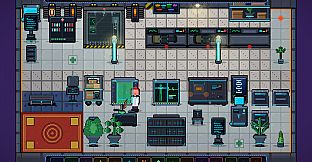
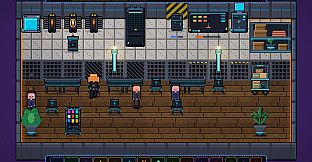
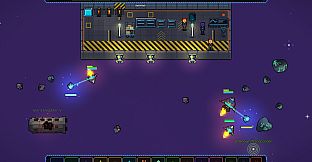
Starbound Settlers is a strategy, indie, and simulation game focused on colony management aboard a remote space station. Players take charge of a small crew far from any support, handling planning, resource allocation, and daily operations to keep the station functional and the settlers content.
Gameplay
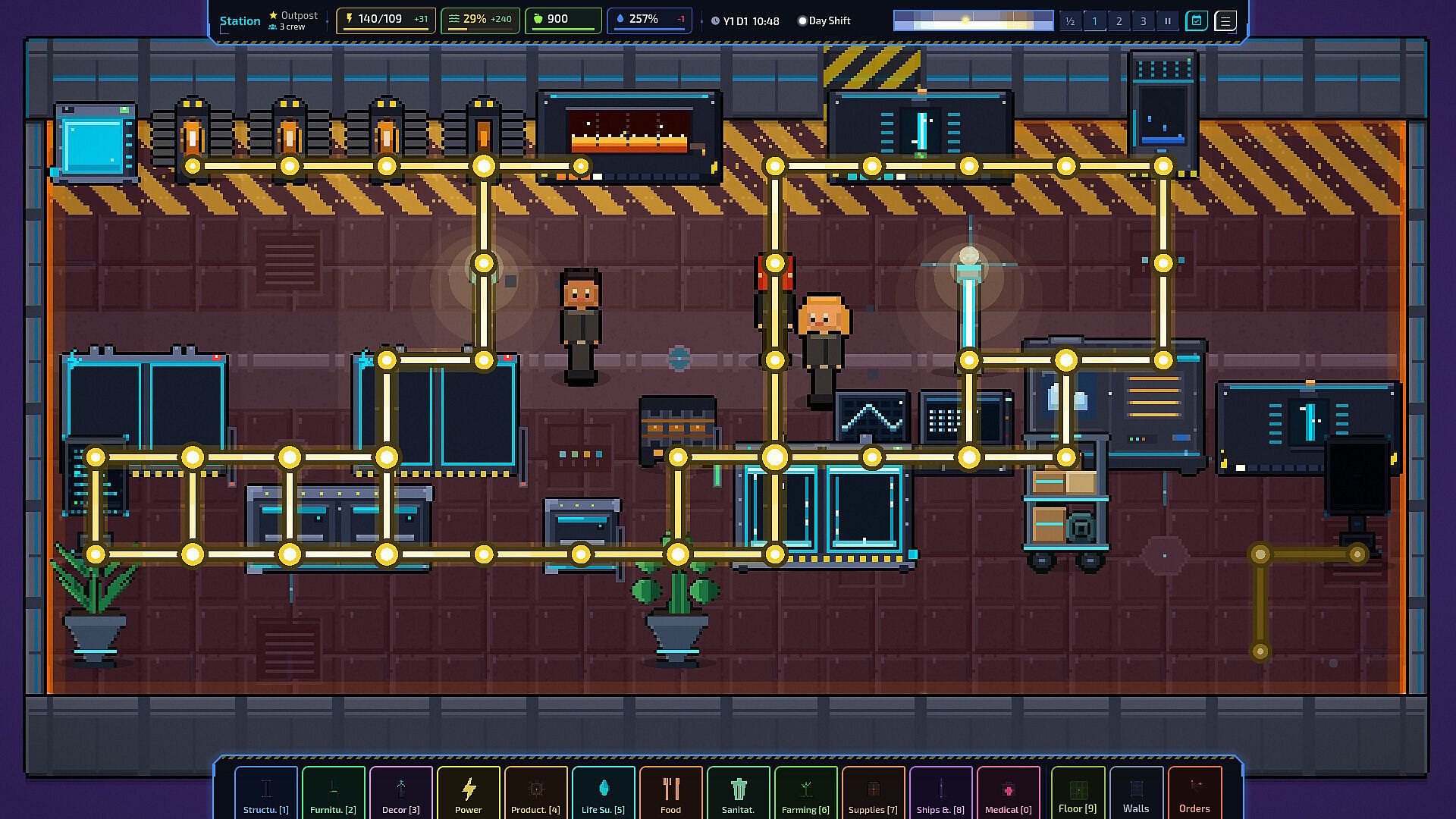
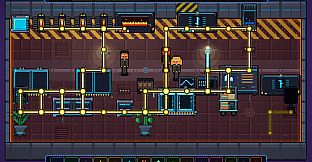
The core loop centers on station design and settler oversight. You lay out rooms and infrastructure while directing the crew through their tasks. Power, water, air, and heat must be routed manually with wires, pipes, and ducts painted across the floor, as nothing operates without a live connection to these systems.
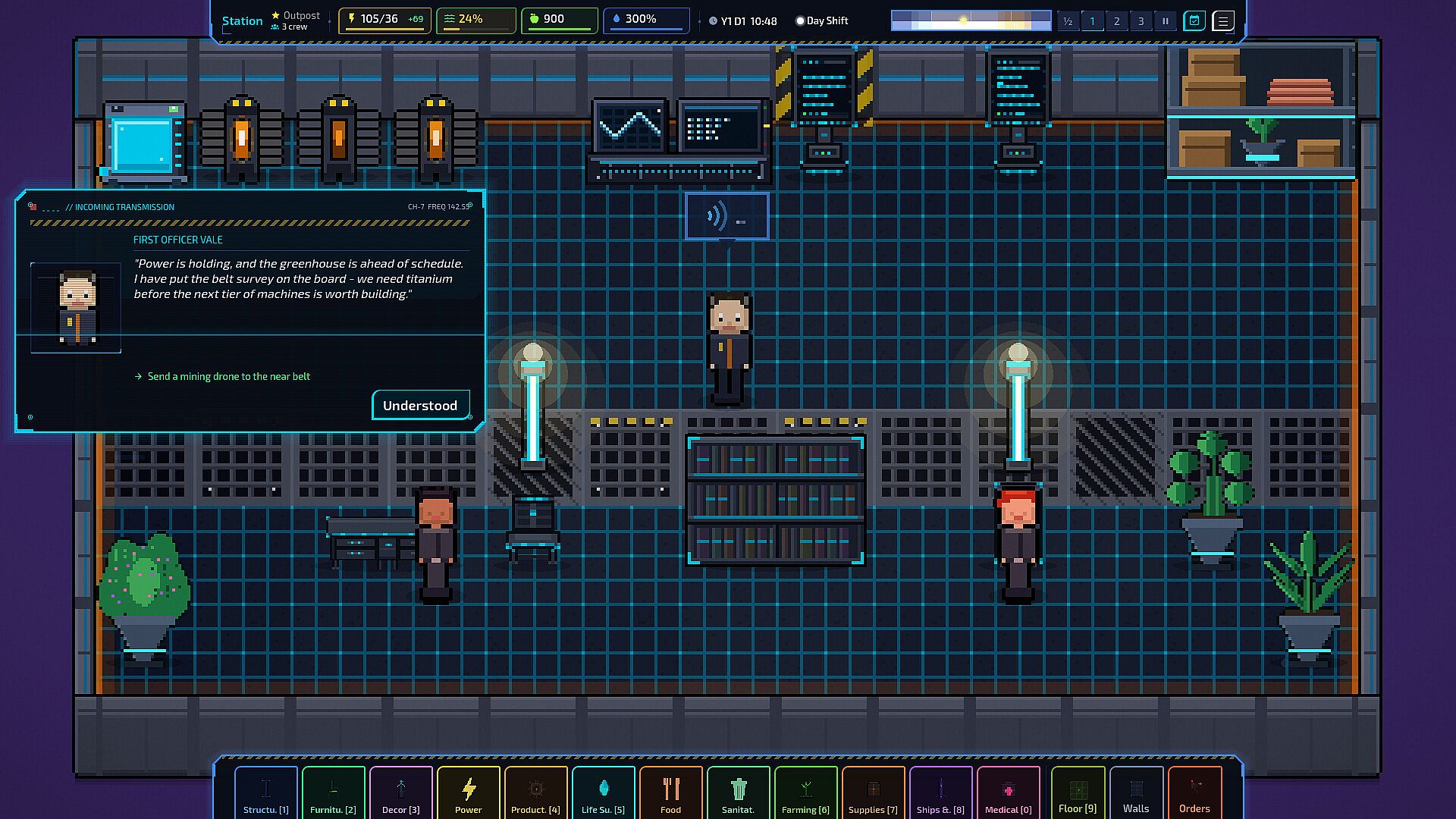
Each settler maintains nine distinct needs that range from hunger and hygiene to other personal requirements. Sixteen traits combined with unique backstories shape their skills, preferences, and reactions to conditions. Overworking them risks breakdowns that disrupt station efficiency.
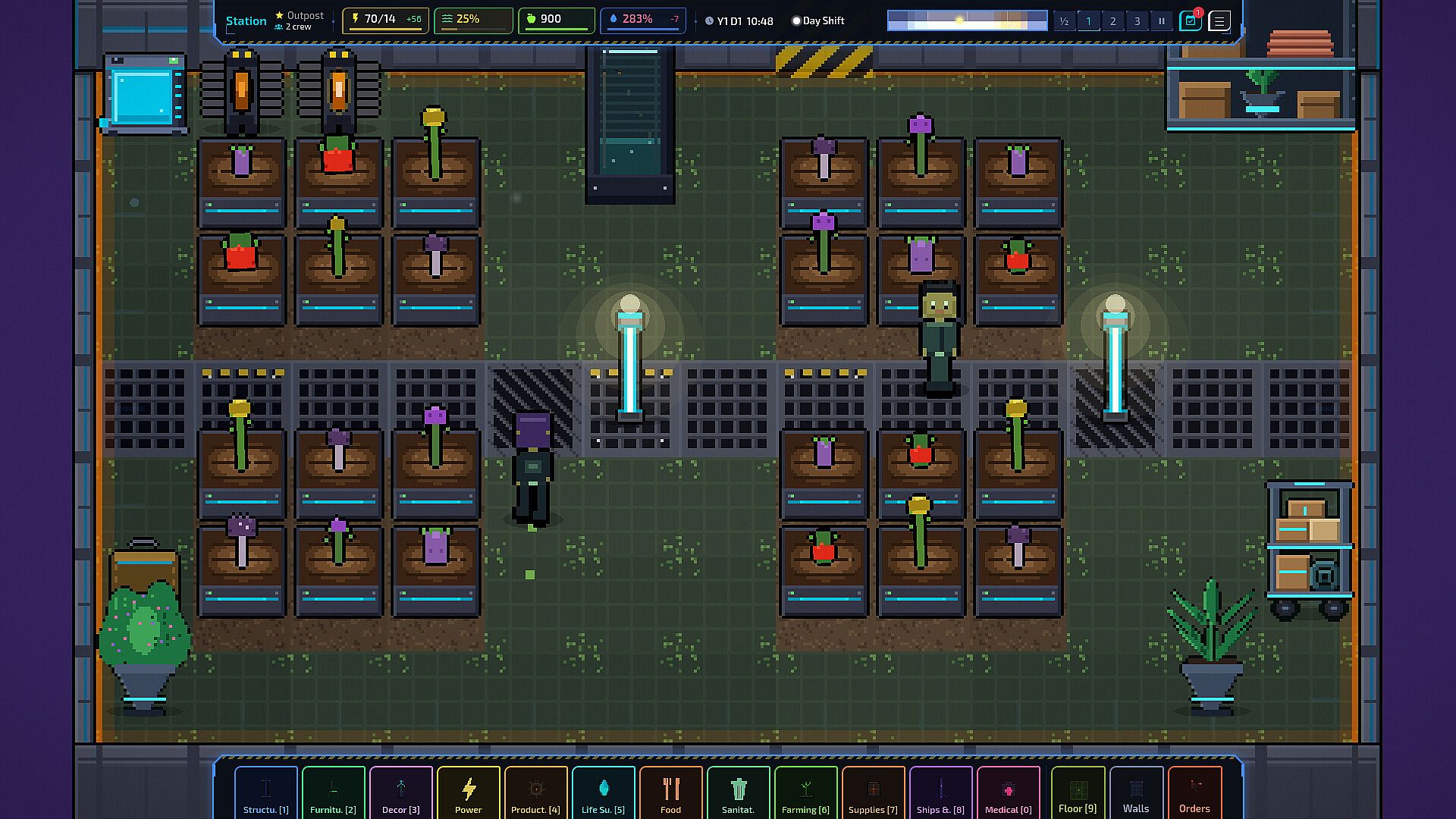
Food production relies on thirteen crops, some harvested for the kitchen or medicine while others like Breathleaf generate oxygen and Dreamfern aids crew rest. Eight varieties of livestock, including traditional animals and exotic options such as space beetles or moon rabbits, require breeding, feeding, and quarantine protocols when illness appears.
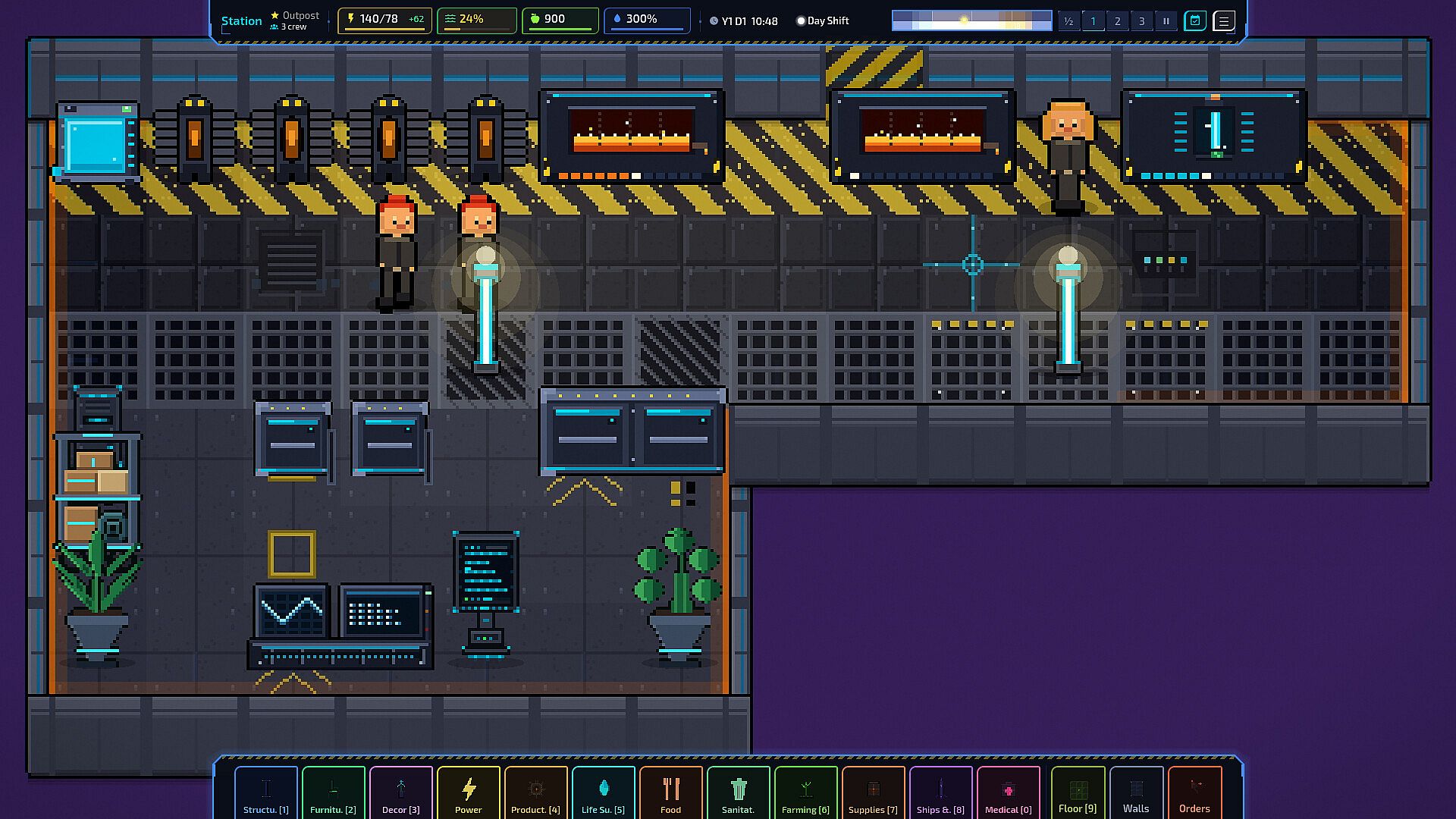
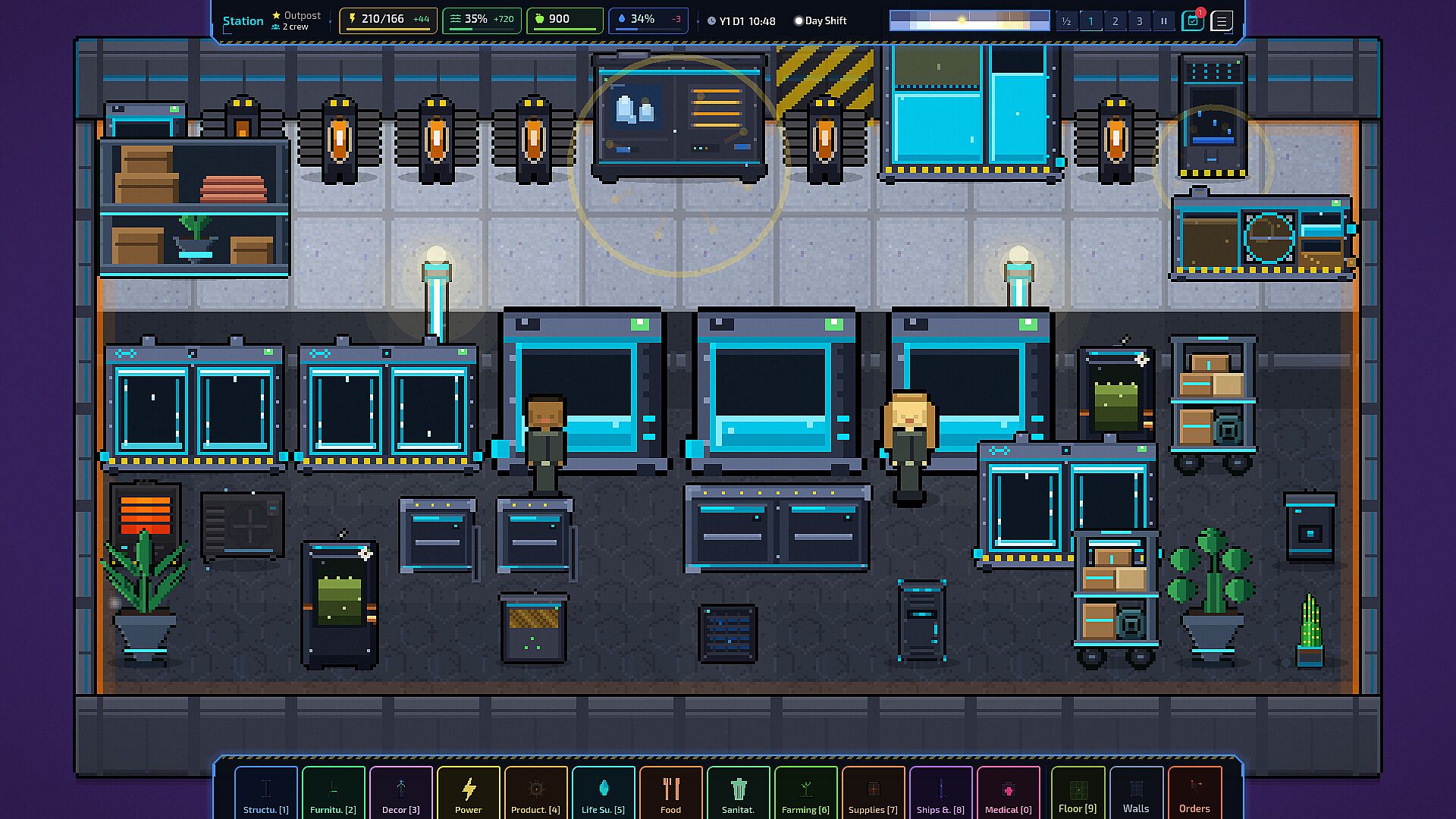
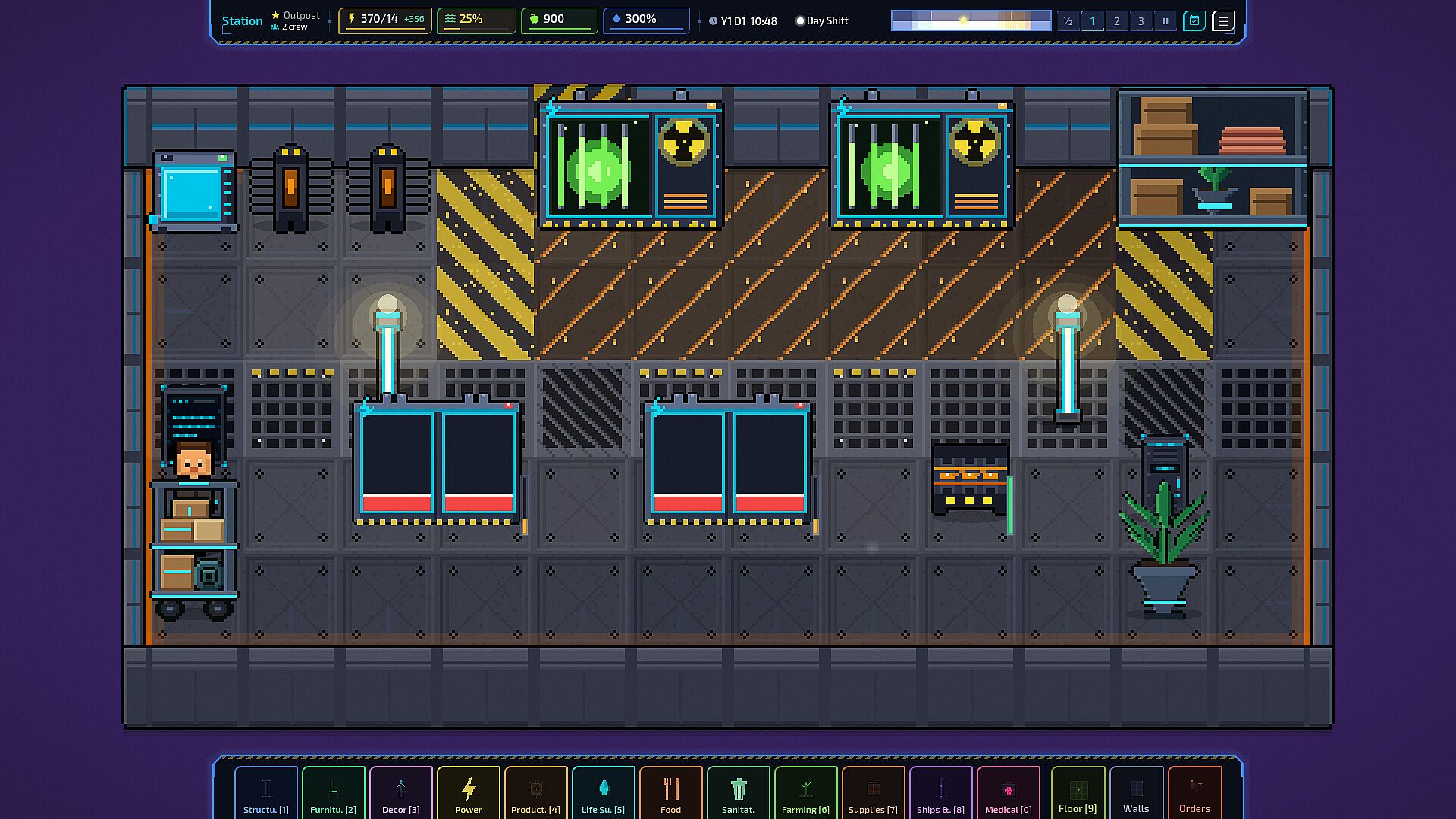
Machines process one recipe at a time, with crew members transporting inputs and outputs. Smelting turns ore into bars of iron, copper, titanium, and gold, which then feed into electronics production for higher-tier equipment. Life support systems demand constant attention, as air and water must be manufactured or recycled, and any power loss immediately threatens these essentials.
Game Modes
Starbound Settlers operates as a single-player sandbox experience. You define your own objectives, whether expanding the station, advancing through technology tiers, or simply sustaining operations amid ongoing challenges. There are no preset victory conditions or competitive structures, allowing focus on long-term station viability and settler well-being.
Research and Expansion
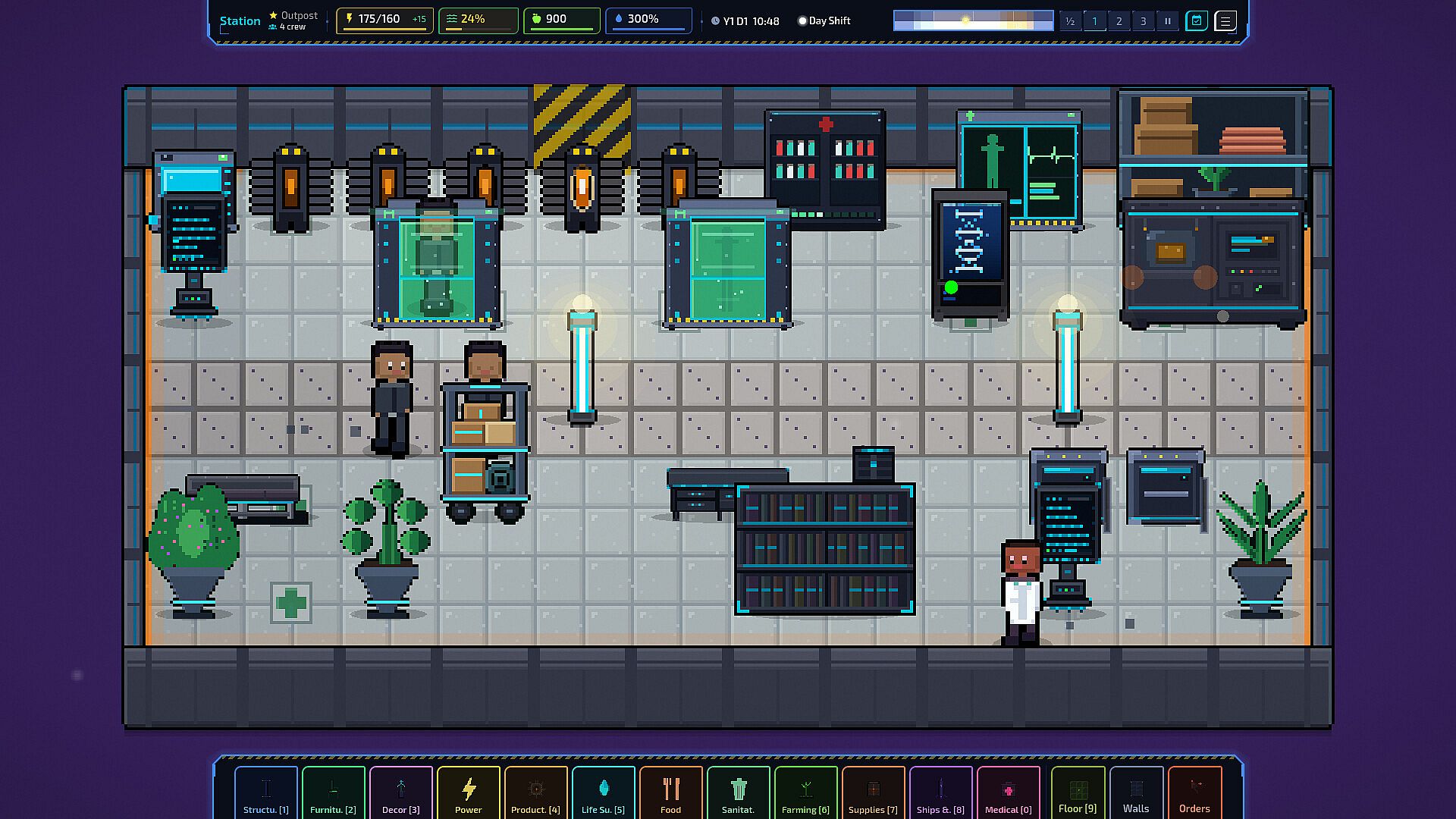
Progression occurs through a scientist working at a research console to generate points. These points are spent in the Star Atlas, a star-chart layout containing 89 technologies. Each unlock grants access to new machines, ships, or rooms that expand station capabilities.
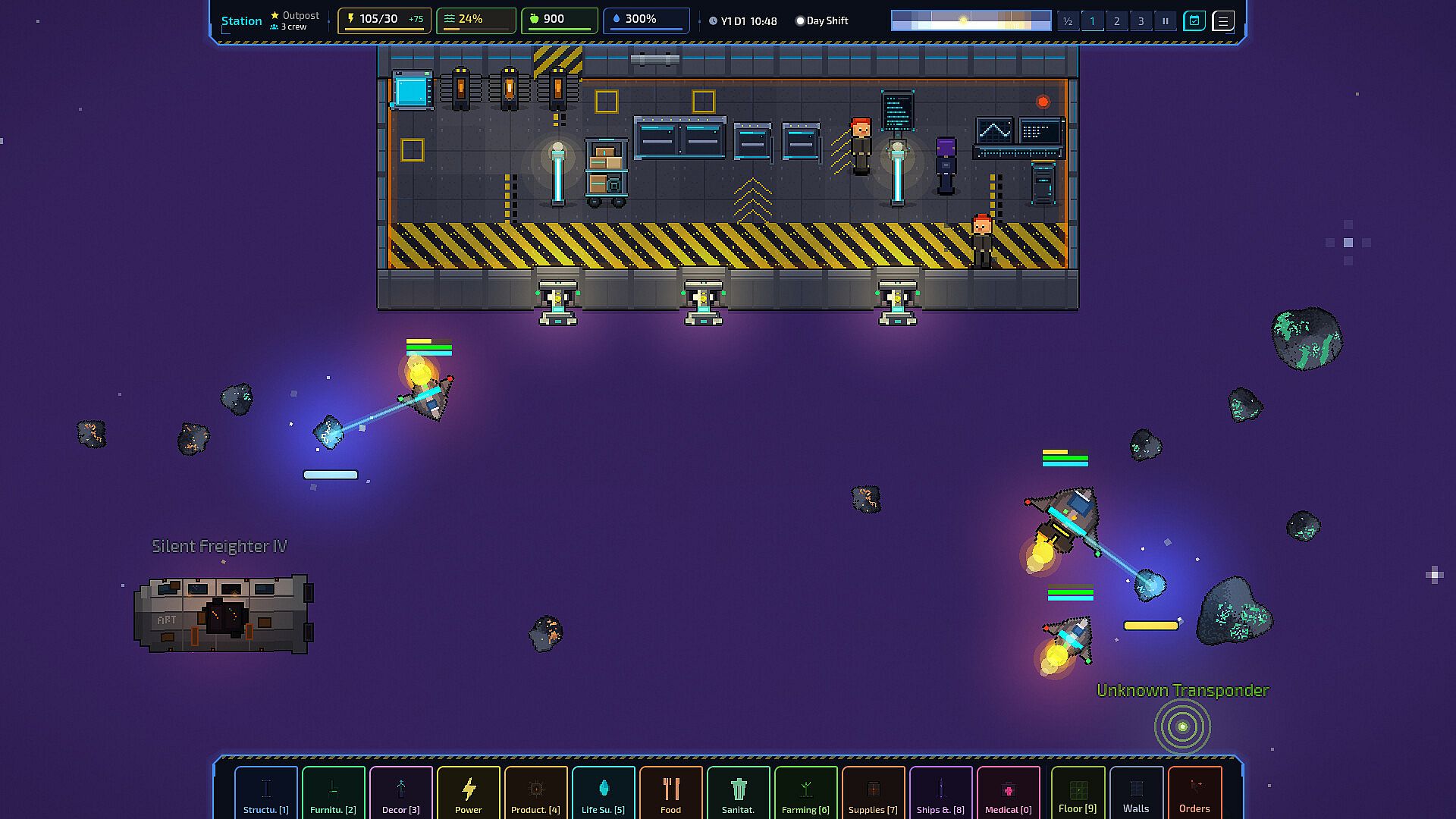
External resources supplement internal production. Drone fleets mine asteroid belts for ores unavailable on site, while scouts venture farther to investigate derelicts and signals that may yield additional opportunities.
Challenges and Maintenance
Station life includes constant risks from fires that spread from overheated machines, pipe bursts causing floods, and hull breaches that expose areas to vacuum. The station continues running during these events, requiring quick intervention to restore stability.
Resource chains form the backbone of survival. Ice melts into water, used resources are recovered, and oxygen is extracted from the atmosphere, all powered by systems that fail first during blackouts. Livestock and crops add layers of management, with sick animals isolated and farms scaled to support the crew.
Is It Worth Playing?
Starbound Settlers suits players who enjoy detailed colony simulation with interconnected systems for infrastructure, settler psychology, and production chains. The emphasis on manual routing of utilities and individual settler tracking creates a hands-on management style that rewards careful planning over automation. Those seeking open-ended station building without rigid storylines or multiplayer elements will find the self-directed goals align with sustained play sessions. The combination of needs management, trait interactions, and environmental hazards provides ongoing depth for fans of the genre.











