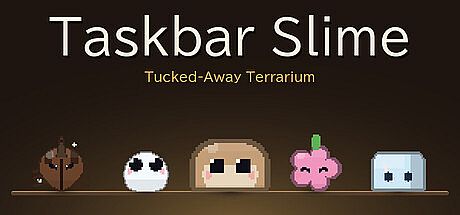




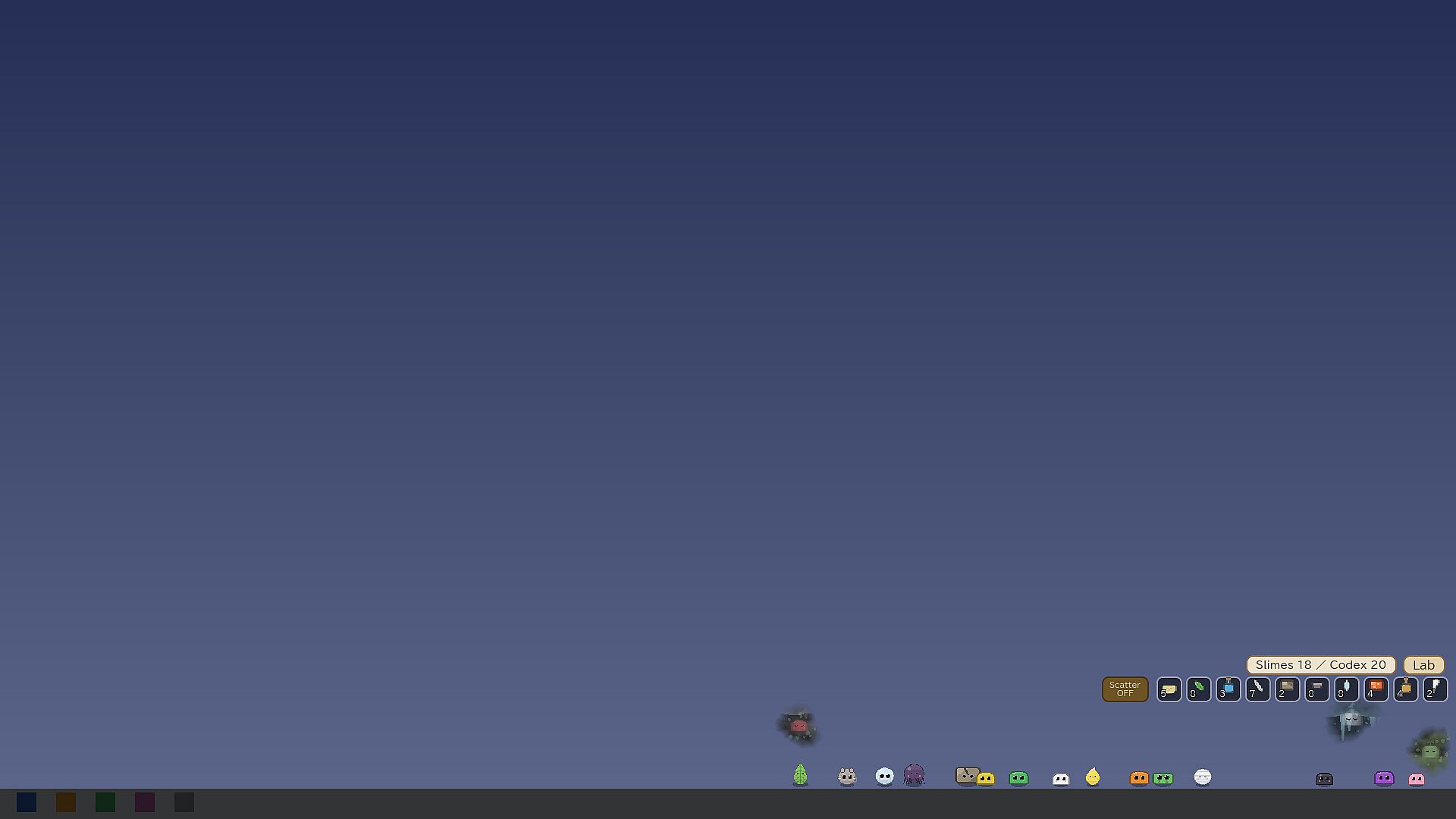
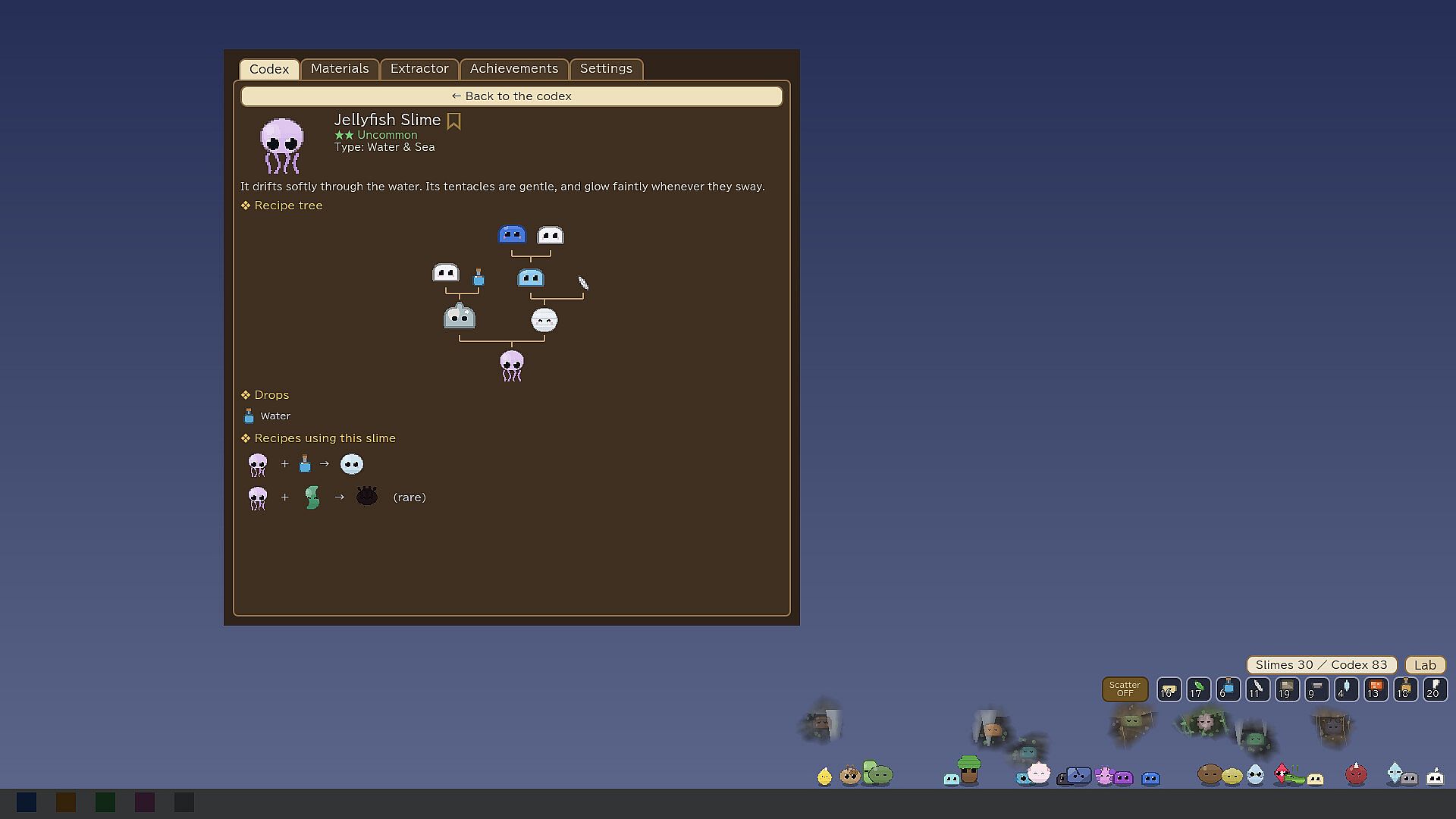
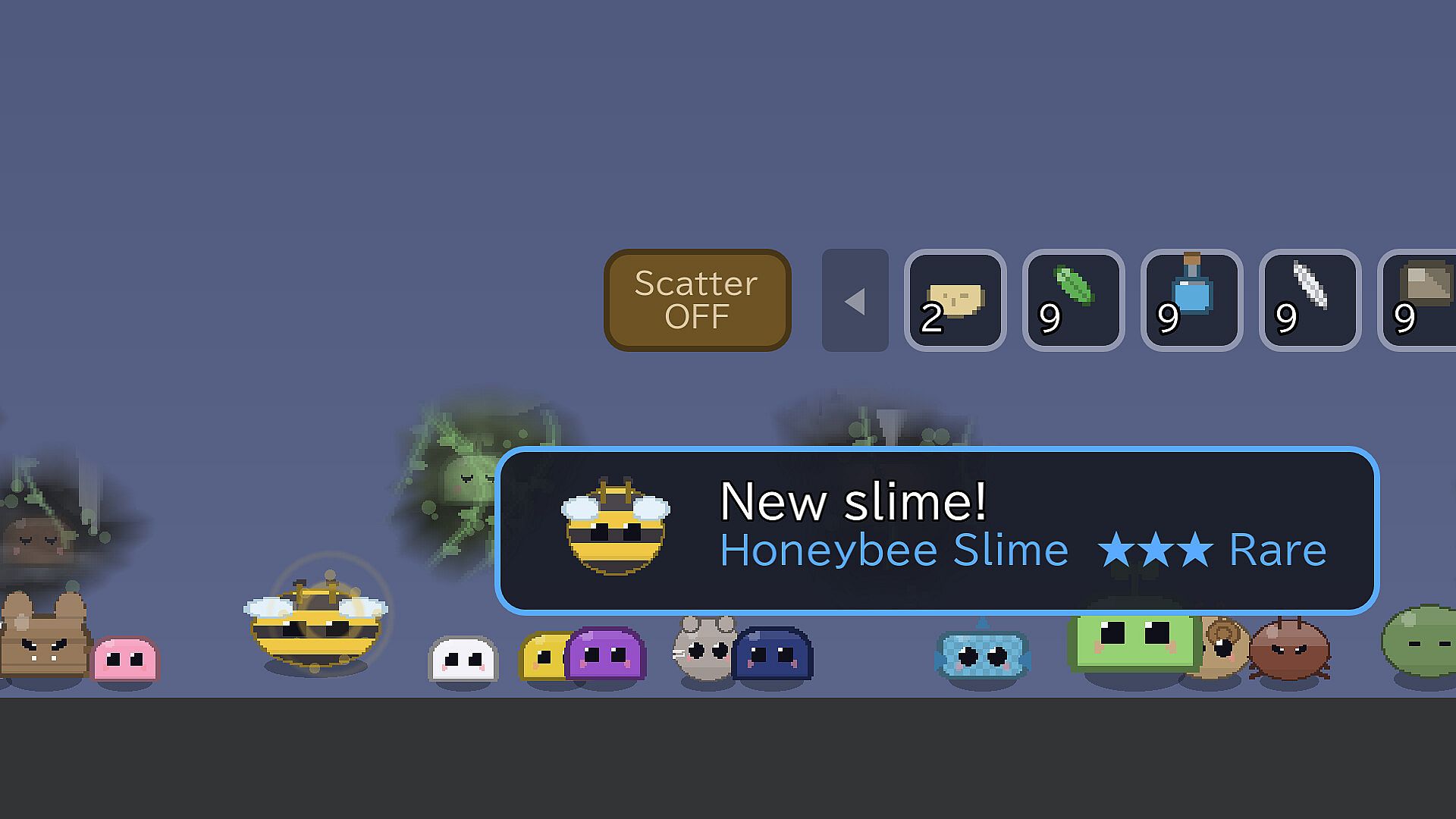

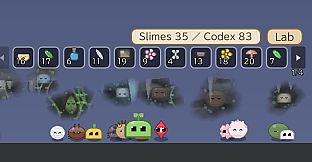
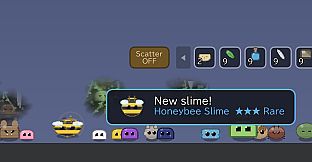
Taskbar Slime: Tucked-Away Terrarium is an indie casual simulation idle game for PC that places a small terrarium directly in the corner of the taskbar. Players observe slimes as they live quietly in this tucked-away space, with the creatures sensitive enough that a touch causes one to split into two while they otherwise wobble gently at the edge of attention.
Gameplay
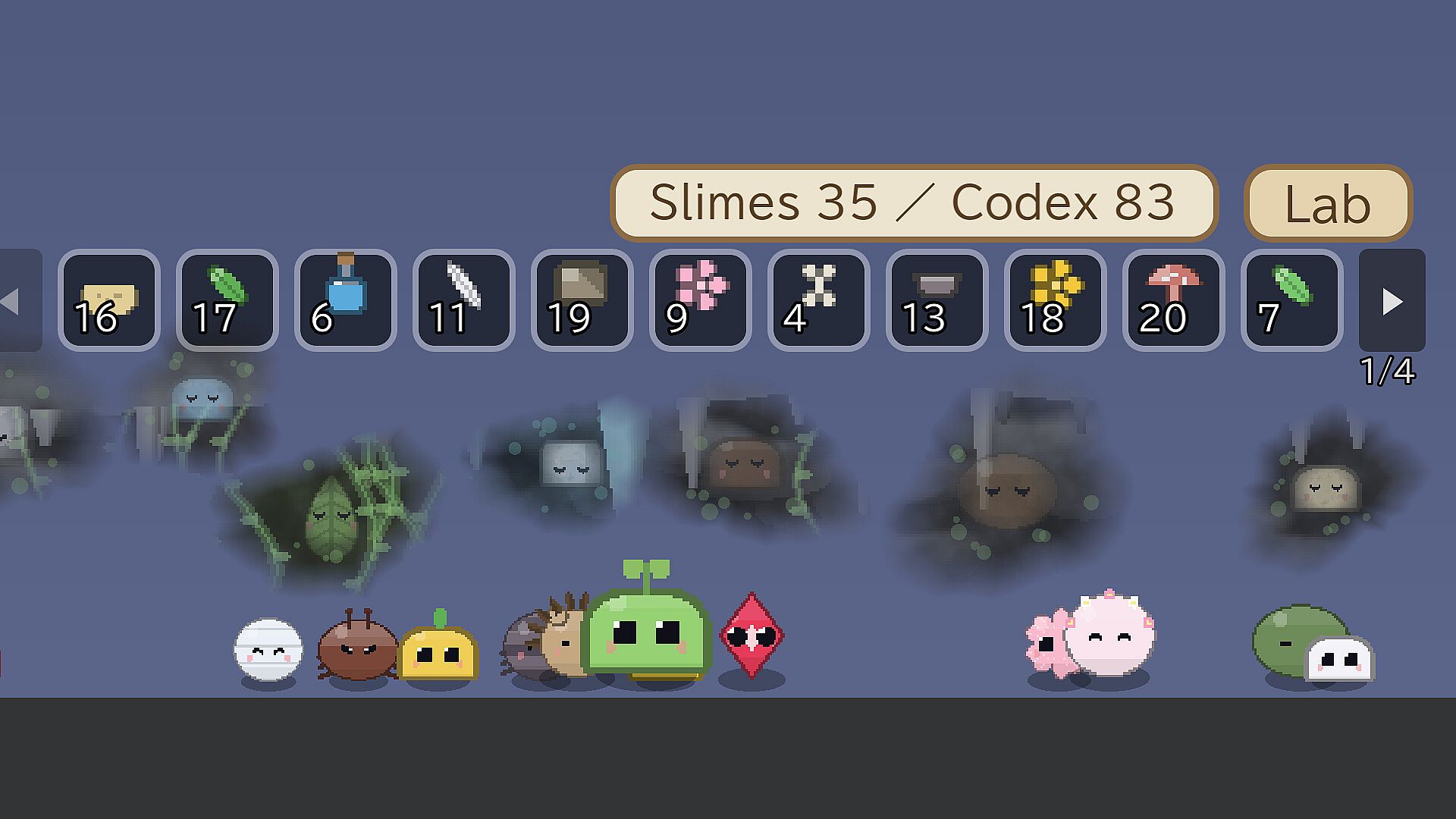
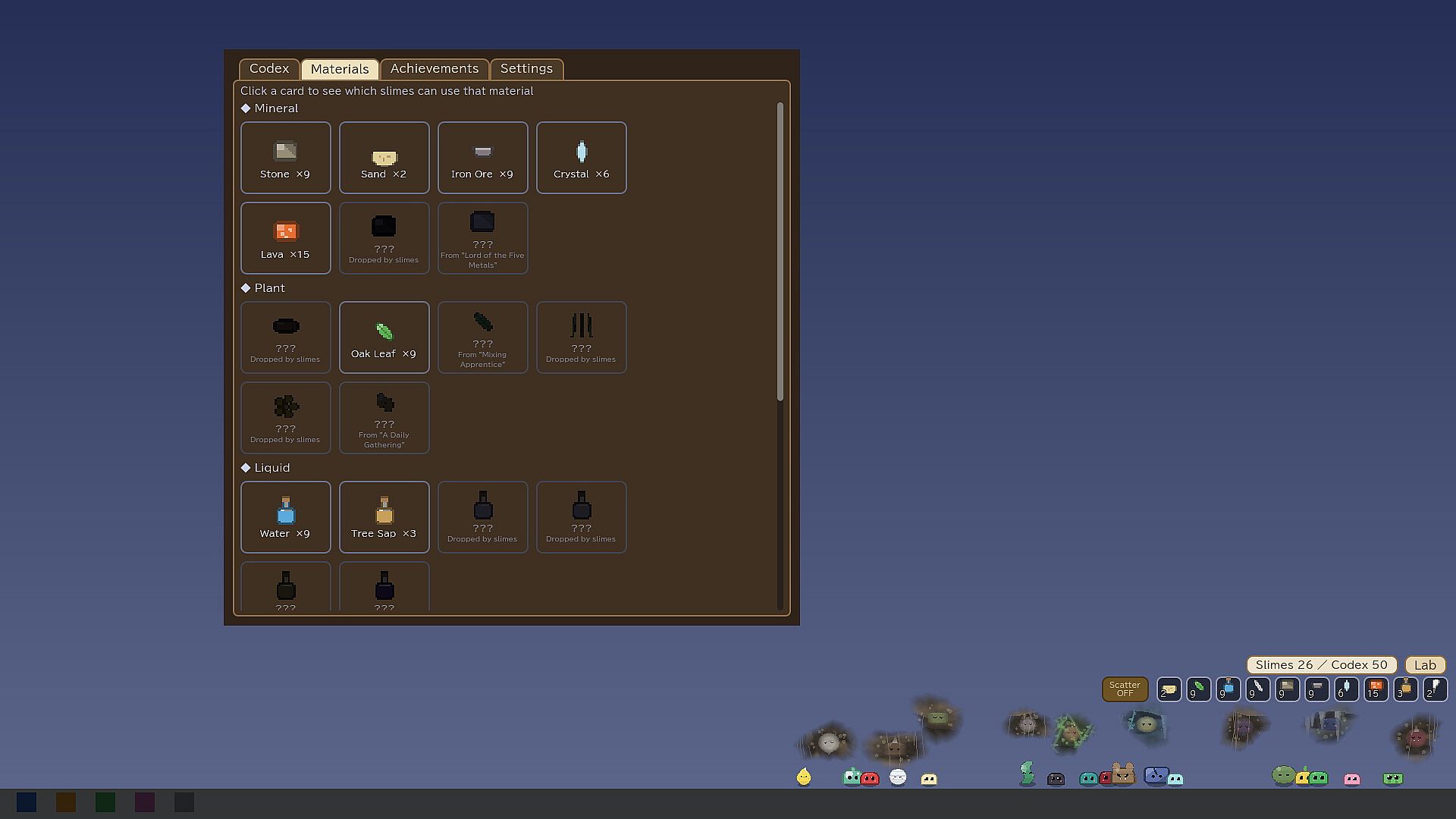
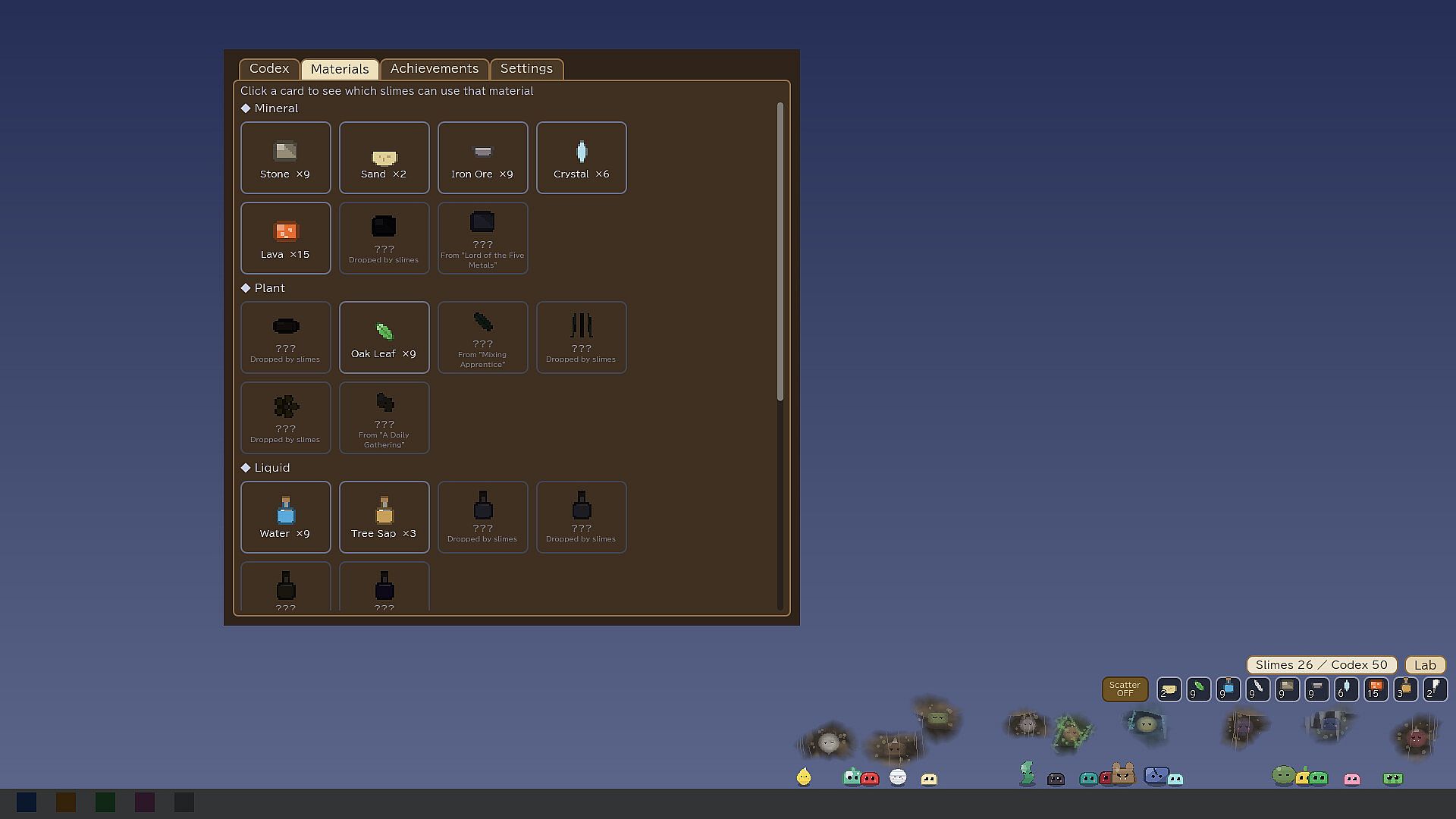
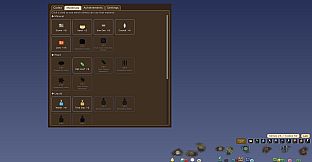
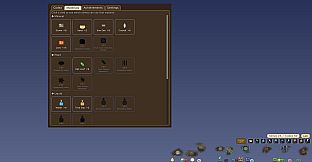
The core loop centers on passive observation combined with occasional direct interaction. Slimes produce materials on their own over time, eliminating any need for active farming or resource gathering outside the terrarium. Materials such as stone, an oak leaf, water, or a bird's feather sit on a shelf ready for use. Handing one to a slime triggers a transformation, and the outcome depends on the slime's current color or type, so the same item creates different results across individuals.
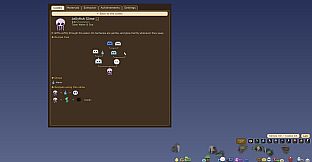
Left undisturbed, the slimes interact naturally by bumping into one another. These collisions lead to mixing, growth in size, or complete changes into new forms. Fresh varieties continue to appear through this process even during periods of minimal player input. The system supports a relaxed pace where progress accumulates in the background while the player works or steps away from the computer.
Pixel art renders the slimes in a compact window that remains visible without interfering with other desktop tasks. The design keeps the experience contained and non-intrusive, with the terrarium functioning as a persistent desktop companion rather than a full-screen title.
Game Modes
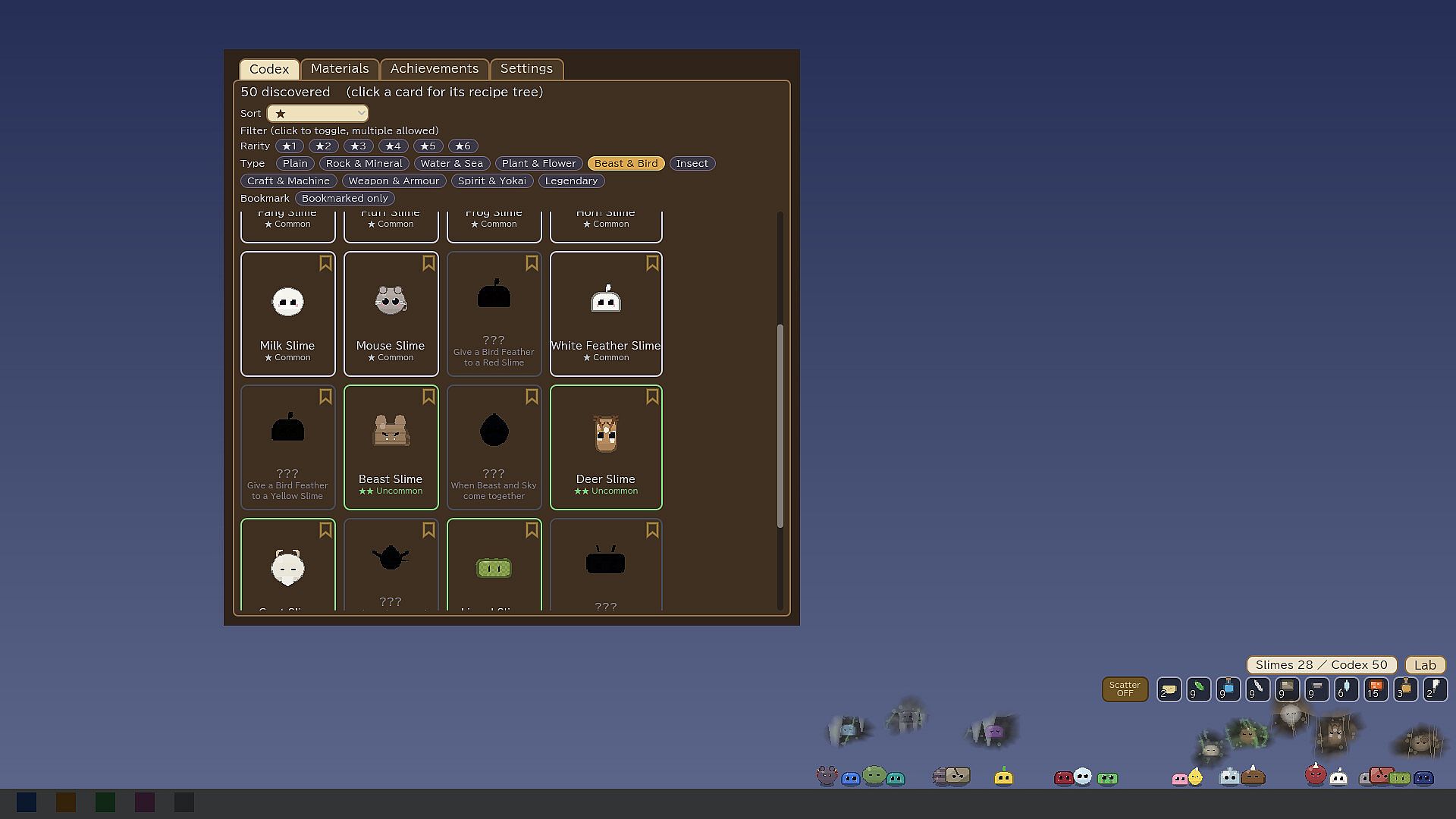
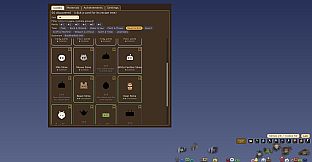
The game operates as a single continuous idle simulation without separate named modes or competitive structures. All activity unfolds within the taskbar terrarium itself, blending passive watching with targeted material hand-outs. Collection of new slime types drives the main progression through the codex, where every discovered variety receives an entry. Over 300 kinds exist in total, encouraging gradual completion at whatever speed suits the player.
Interactions remain optional at every stage. A player can focus entirely on observation while the slimes evolve independently, or intervene selectively with materials to steer specific changes. This unified approach keeps the experience cohesive and suited to short or extended sessions without switching between distinct gameplay styles.
Collection and Progression
The codex serves as the central record of progress. Each new slime type encountered adds to the collection automatically, building toward a complete set. Because slimes generate their own materials and evolve through natural mixing when unattended, advancement continues steadily even without constant attention. The over-300 varieties provide substantial depth for collectors who enjoy uncovering variations through repeated passive observation and selective interventions.
Materials dropped by the slimes replenish slowly and consistently, supporting repeated experiments with transformations. Different combinations yield unique outcomes based on the recipient slime, adding layers of discovery within the compact interface. The system rewards patience and curiosity rather than rapid grinding or optimization.
Is It Worth Playing?
This title suits players who enjoy idle simulation games and desktop companion experiences that run quietly alongside other activities. The focus on gentle observation, organic evolution, and incremental collection appeals to those seeking low-pressure entertainment that fits into a workday or background routine. With no reviews available at this stage and the game listed as coming soon, its appeal rests on the described mechanics of taskbar-based slime watching and material-driven changes.
Anyone drawn to casual indie titles centered on creature collection and passive systems will find a match in the relaxed pace and persistent growth. The single-player format and emphasis on watching at one's own speed make it a niche option for fans of simulation games that prioritize atmosphere and discovery over action or competition.