





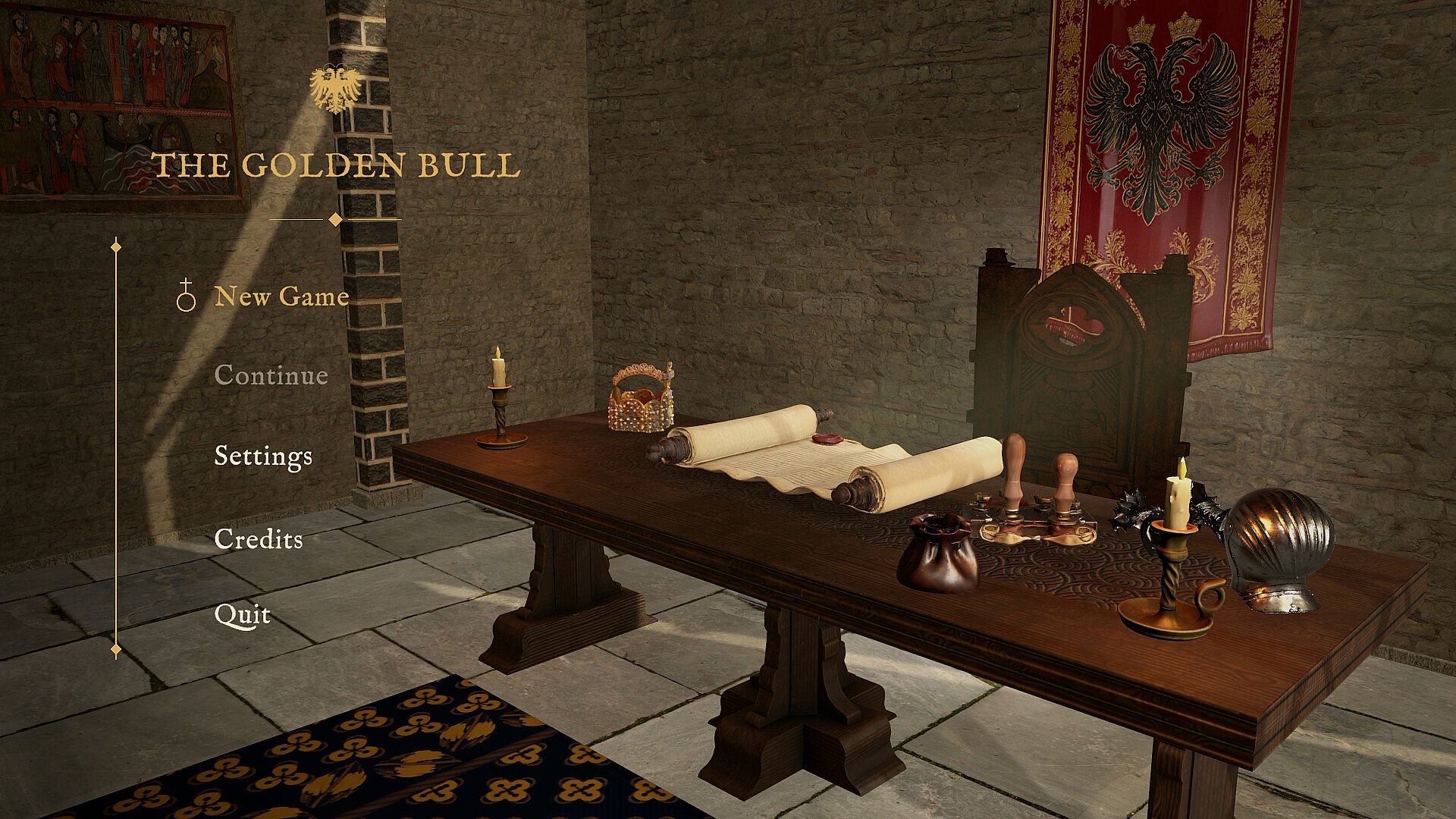
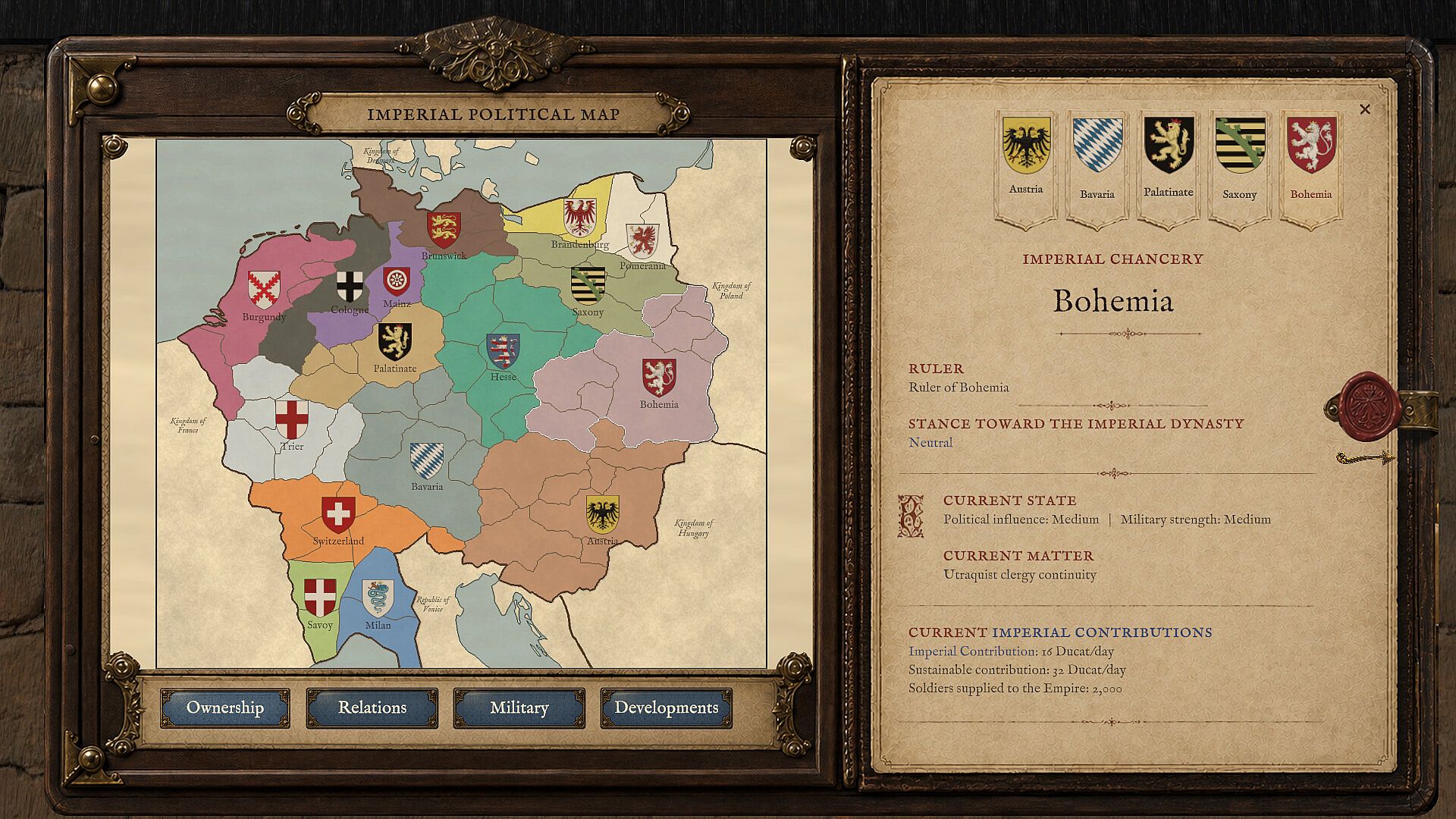


The Golden Bull is a single-player political sandbox simulation game that places players in the role of Austria's ruler within the Holy Roman Empire. Developed as an indie title blending RPG and simulation elements, it focuses on governance from a throne room perspective. Players manage the empire's affairs through direct decisions on diplomacy, internal conflicts, finances, and military matters while navigating the complex web of competing states.
Gameplay
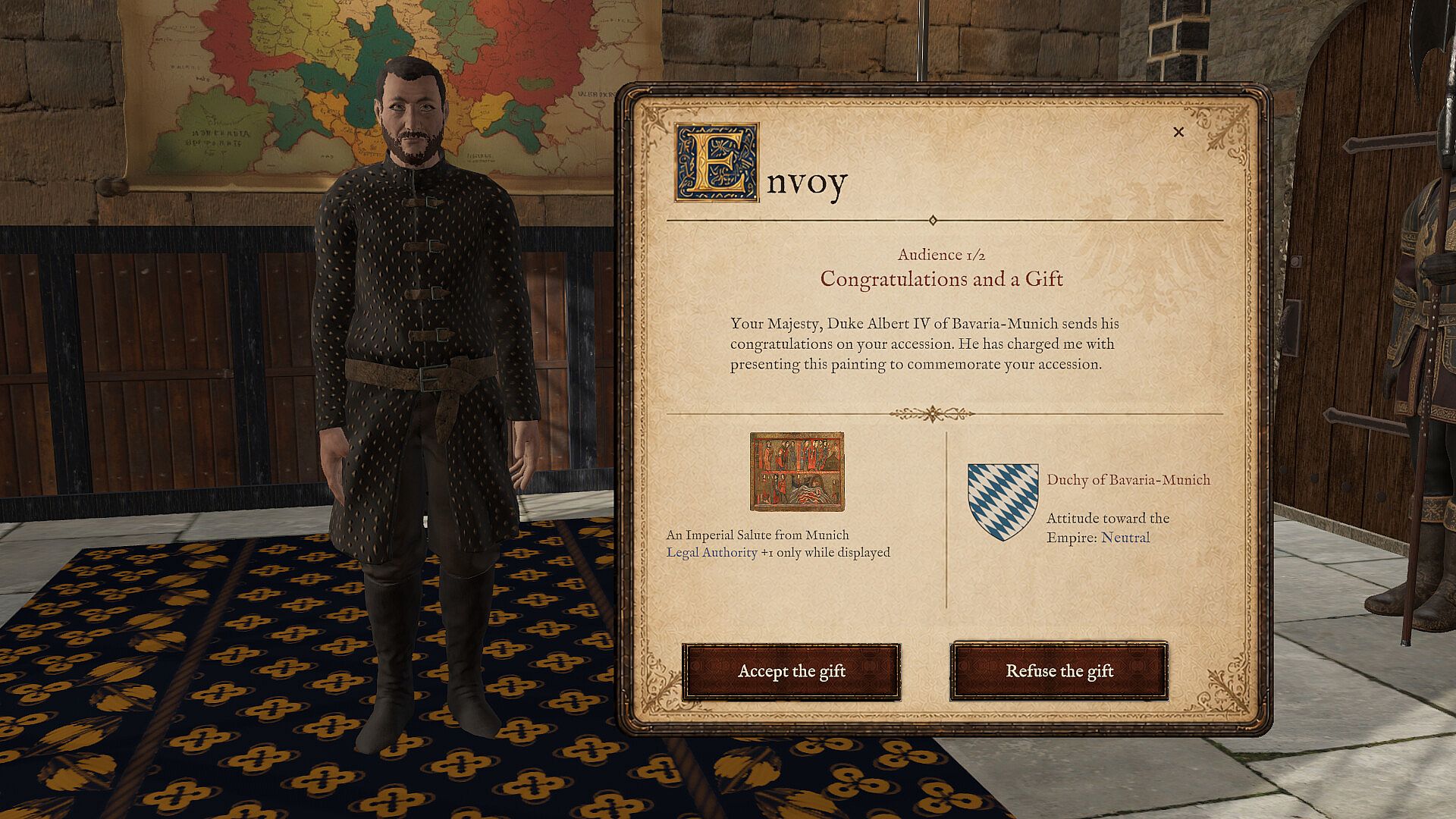
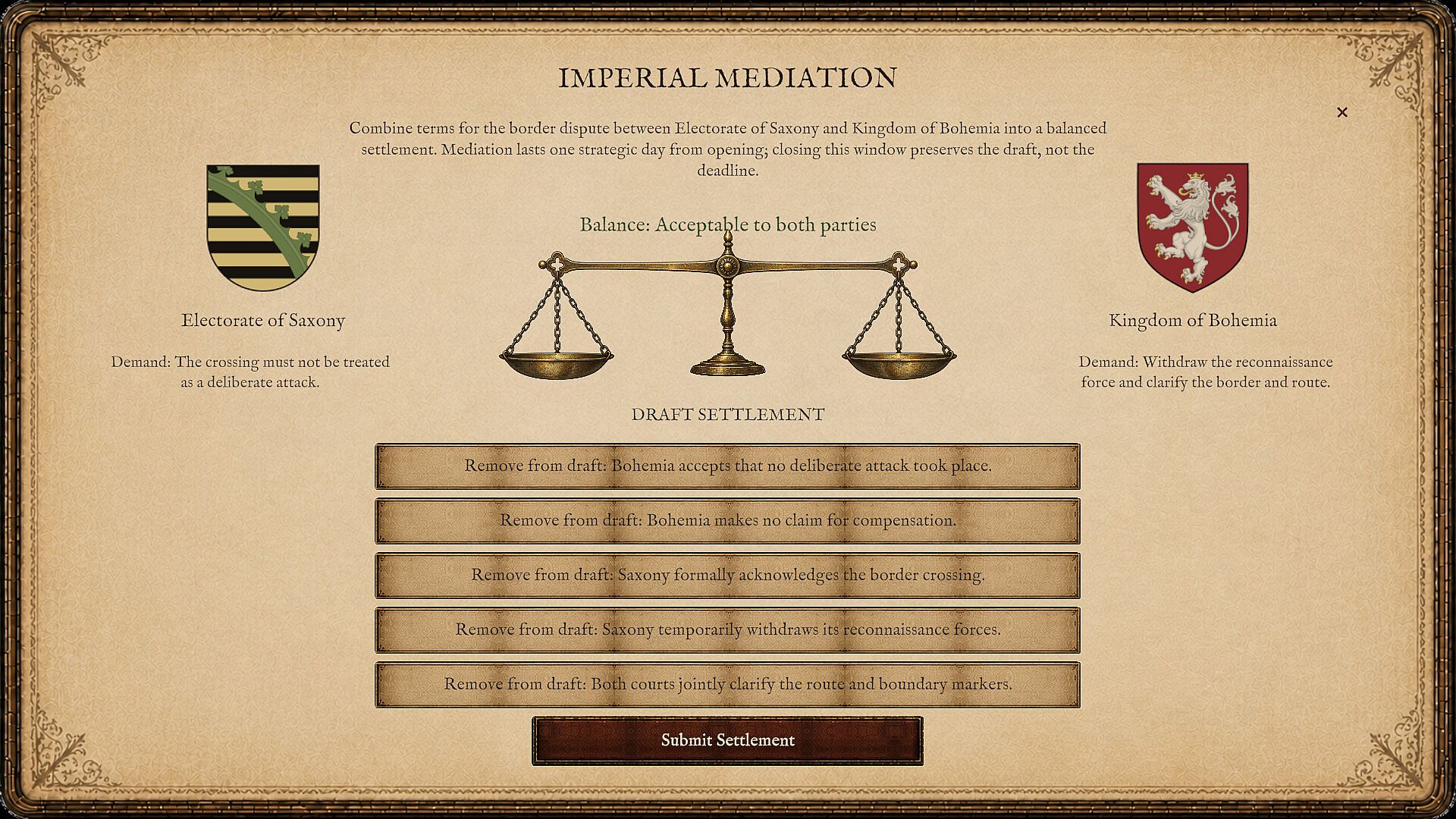
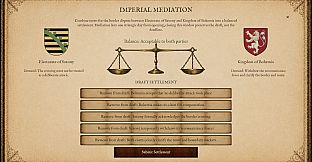
Core gameplay revolves around ruling from the throne room as Austria's leader. Envoys arrive with requests and reports, requiring careful attention to maintain balance among the empire's states. Interventions in disputes between states form a key part of daily management, where choices influence alliances and tensions across the realm.
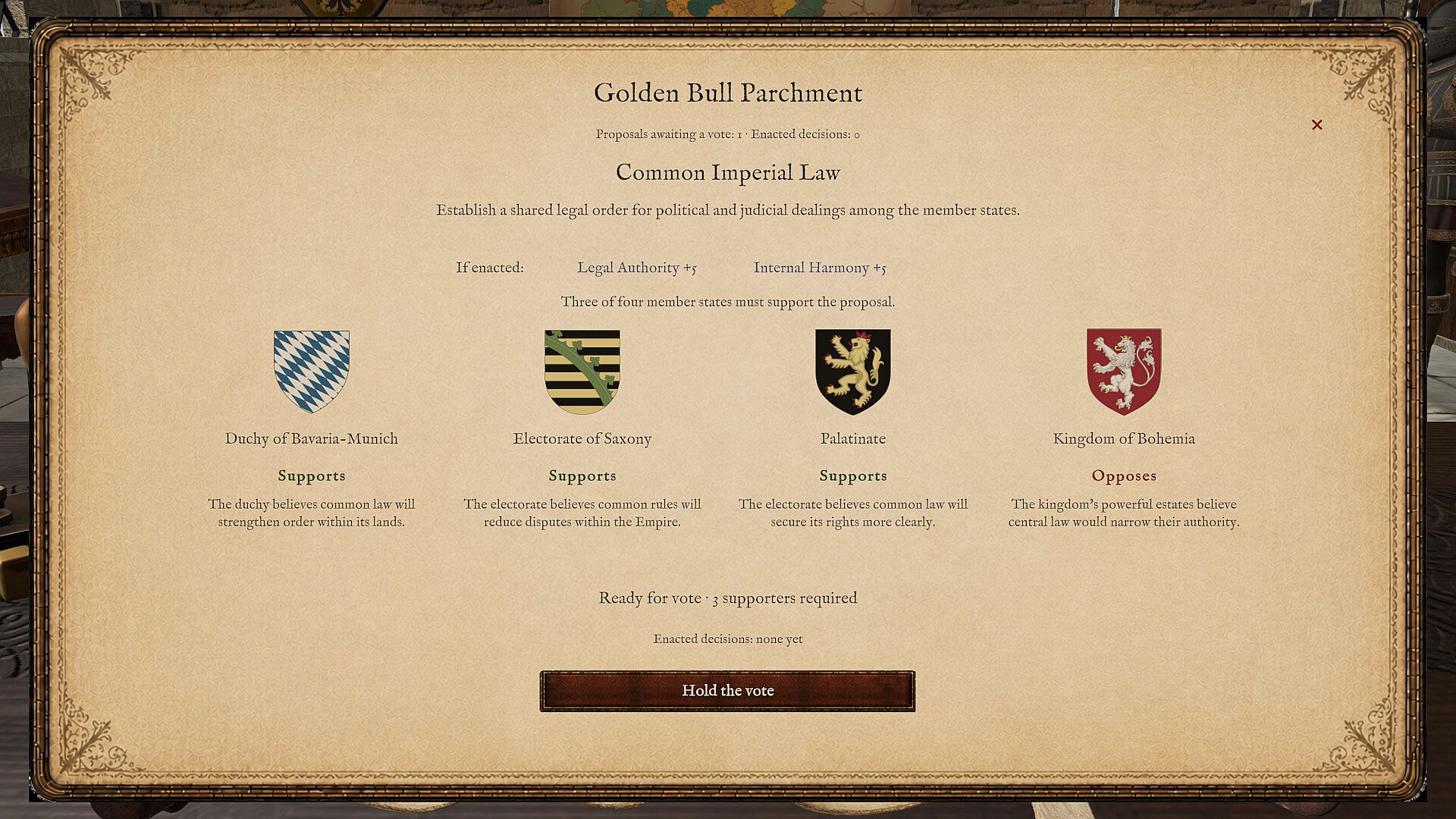
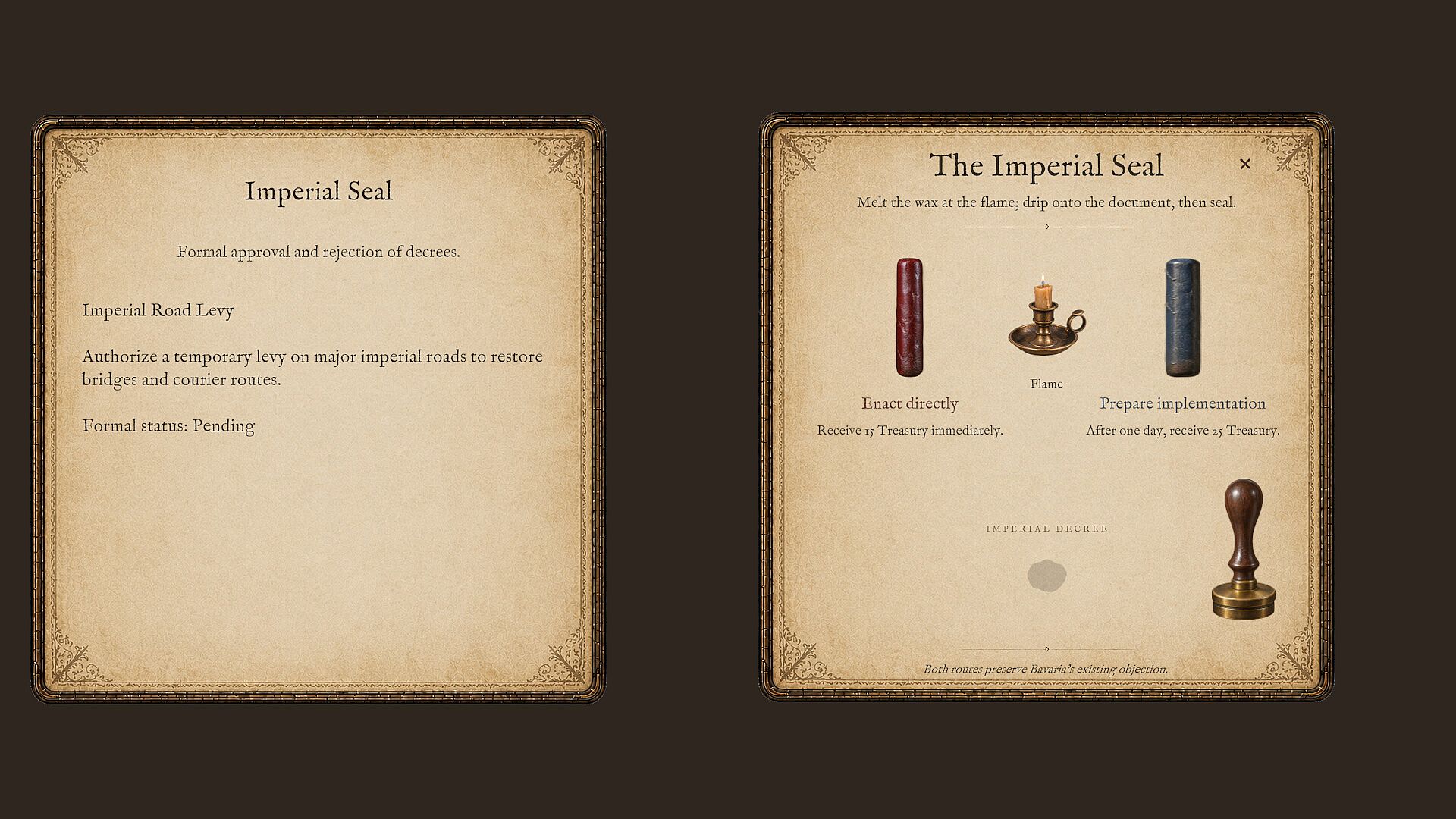
Treasury oversight demands attention to income and expenditures, while armed forces require strategic allocation to deter threats or support ambitions. Decisions on war and peace carry long-term consequences, affecting the stability of the entire empire. The ruler shapes policy by bringing laws before a vote through Golden Bull decrees, each one altering the empire's direction in meaningful ways.
Progress comes from holding competing interests together under one crown. Every choice reveals more about the ruler's approach, whether favoring central authority or allowing greater autonomy for individual states. The simulation emphasizes thoughtful deliberation over rapid action, rewarding players who weigh short-term gains against empire-wide stability.
Game Modes
The experience centers on a single-player campaign structure with no separate multiplayer or co-op options. All activity unfolds in one continuous session of governance, where players guide the Holy Roman Empire through evolving challenges. The focus remains on personal decision-making without external matches or competitive elements.
Within this framework, the game supports varied play styles through the ruler's choices. Some sessions emphasize diplomatic maneuvering and decree passage to foster unity, while others explore military buildup or economic management to address immediate crises. The single continuous mode allows for different paths based on priorities, such as pursuing centralization or preserving state independence.
Key Mechanics and Systems
Envoys and state disputes create ongoing interactions that test diplomatic skill. Each encounter presents options that ripple outward, potentially strengthening or fracturing relationships. Treasury and military management tie directly into these events, as resources determine what responses are feasible.
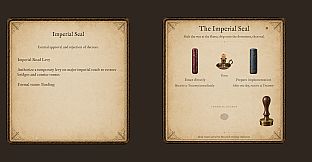
Golden Bull decrees serve as the primary tool for systemic change. Bringing a law to vote involves presenting proposals that the empire's states consider, with outcomes depending on the current political climate built through prior decisions. Success or failure here directly impacts the empire's structure and the ruler's authority.
The simulation tracks the tension between unity and fragmentation. Players observe how their actions influence whether the empire moves toward a stronger central government or remains a loose collection of states pursuing individual interests. This ongoing dynamic drives the core loop of hearing reports, making interventions, and issuing decrees.
Is It Worth Playing?
The Golden Bull suits players interested in deep political simulation and strategic decision-making within a historical setting. Its single-player focus delivers a self-contained experience centered on empire management, ideal for those who enjoy weighing options in governance without time pressure from other participants.
Reception centers on its niche appeal for fans of indie strategy titles that prioritize simulation depth over action or narrative linearity. The game remains in active development with its core systems intact, offering a complete sandbox for exploring different ruling approaches. Those drawn to titles involving resource allocation, diplomacy, and long-term empire building will find the mechanics align closely with that style.
Overall, it stands as a worthwhile choice for dedicated players seeking a thoughtful political sandbox rather than broad entertainment. The emphasis on decree voting and state interactions provides consistent engagement for sessions focused on strategy and consequence.












