







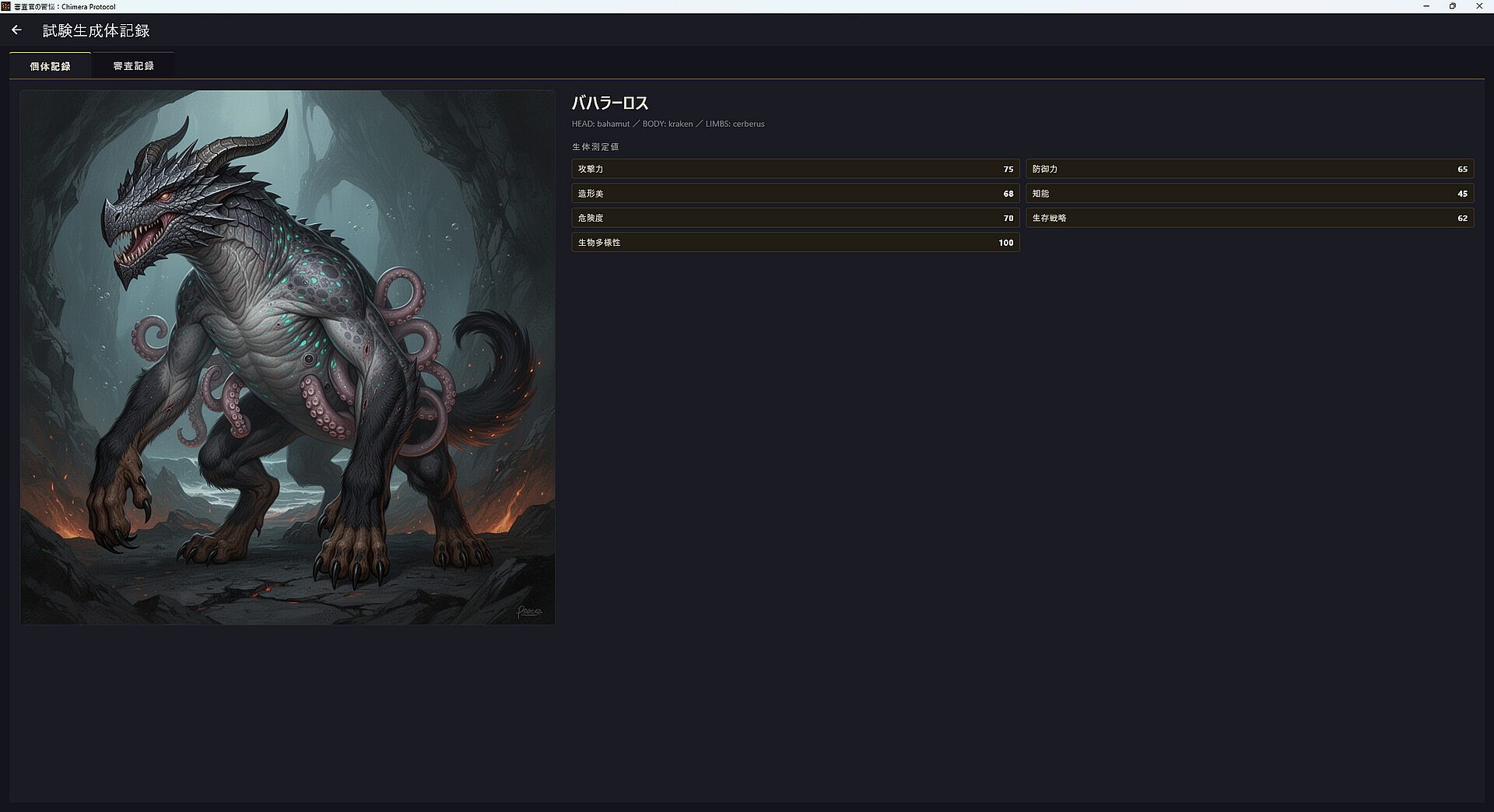









The Judge's Quandary: Chimera Protocol is a strategy indie card game for PC in which players build chimeras by combining monster parts and present them to a panel of judges for approval.
Gameplay
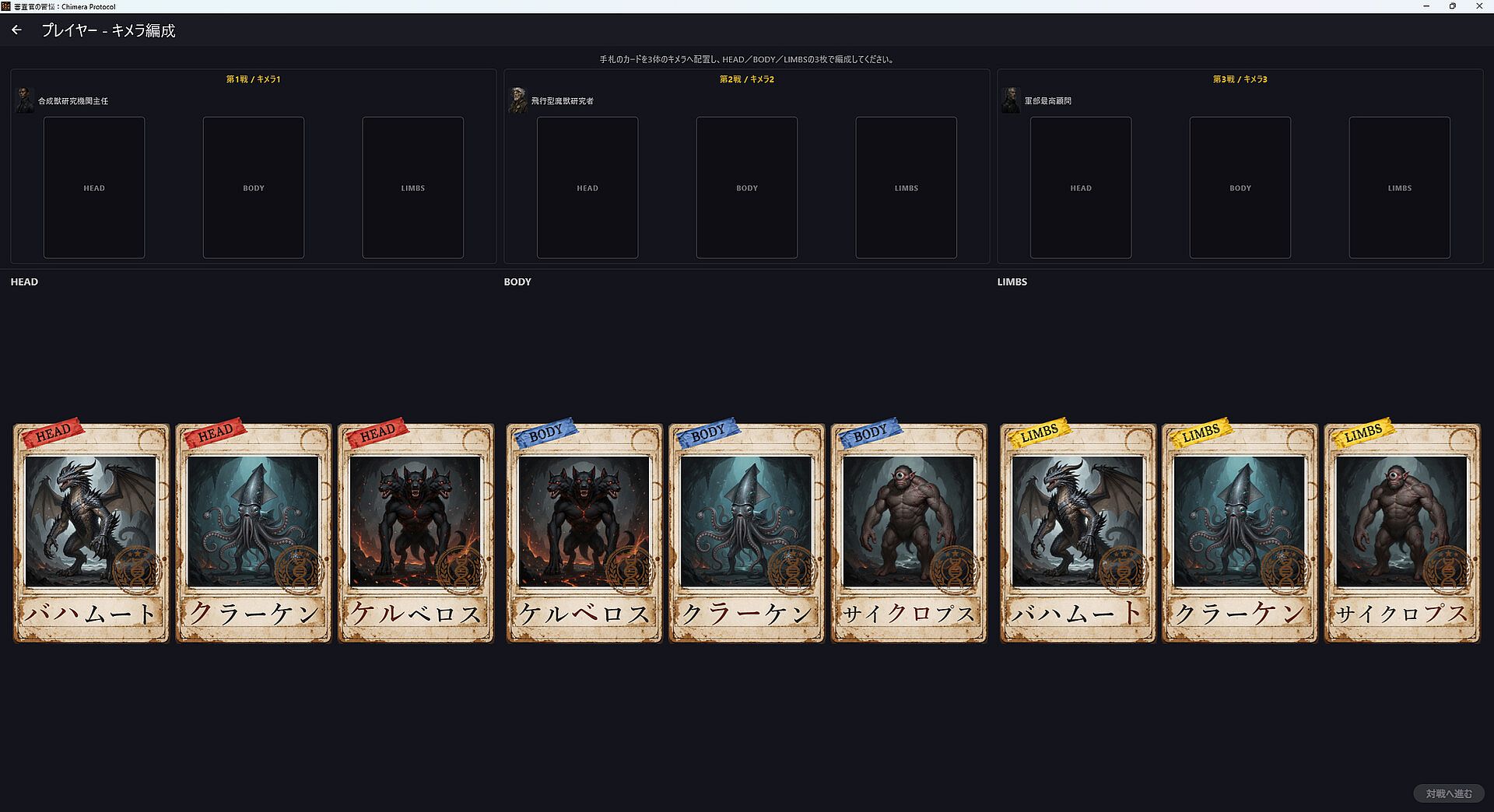
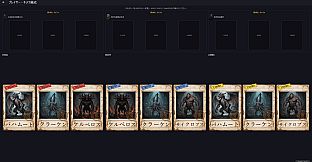
Players select monster cards to form the head, body, and limbs of each chimera. The specific combination determines both the visual appearance and the abilities of the resulting creature. A single match requires the creation of three distinct chimeras. Each completed specimen is then assigned to one of three rounds. The order of presentation matters because different judges evaluate each round. Success comes from matching the strengths of each chimera to the announced evaluation criteria of the judges assigned to that round.
Characteristics such as attack power, defensive capability, aesthetic appeal, danger level, survival strategy, and biodiversity all factor into the scoring. Judges apply their own priorities rather than following a single uniform standard. One judge may reward raw offensive output while another favors balanced traits or even the sound of the chimera's name. After each round the judges record their assessments, and the player who wins two rounds claims the match.
Game Modes
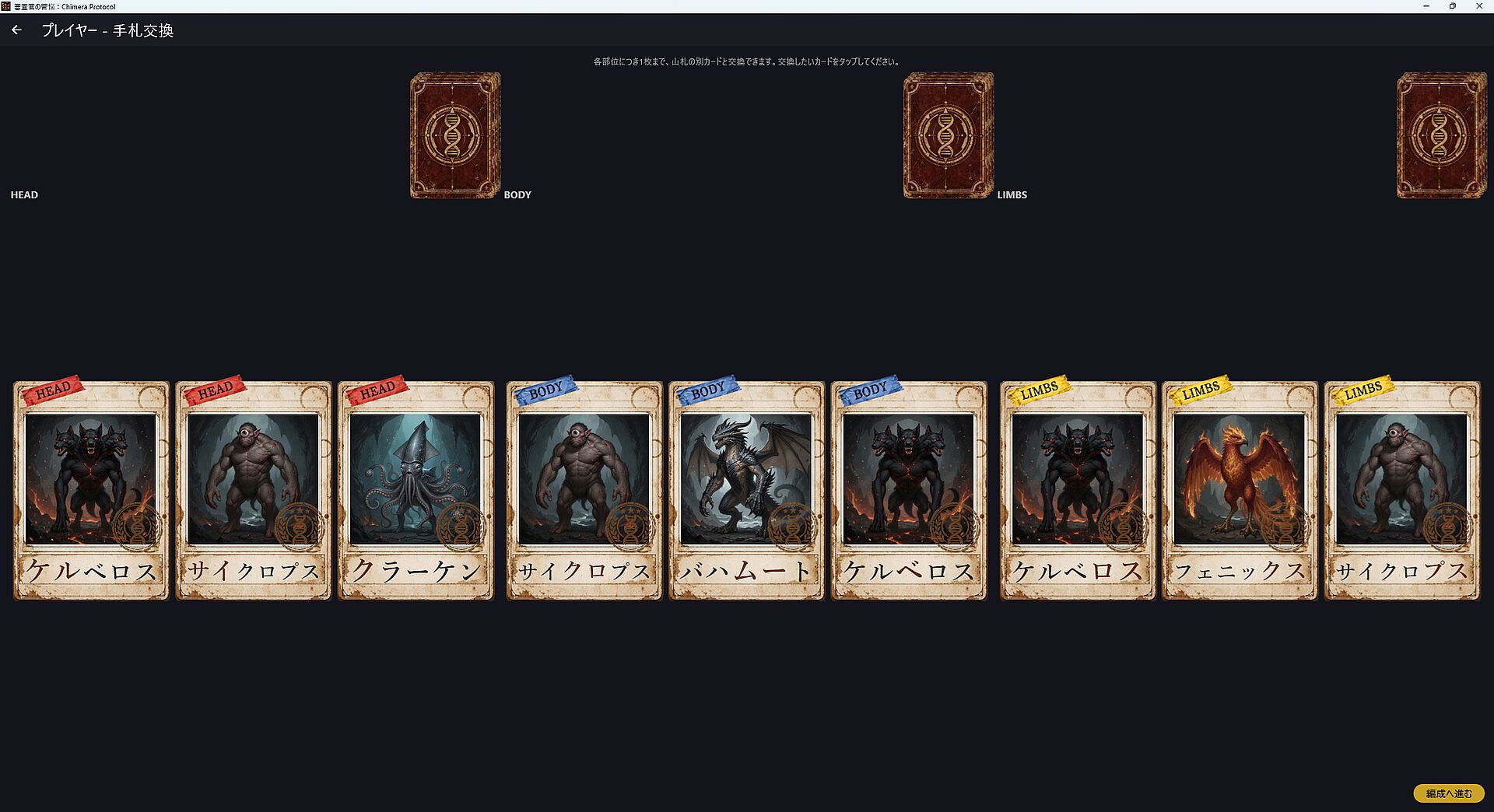
The core experience centers on competitive matches structured around three rounds and three chimeras. Before each match the evaluation criteria for the participating judges are revealed, allowing players to plan combinations in advance. The hand of cards available each round determines the possible heads, bodies, and limbs that can be assembled. Strategic decisions include which three chimeras to build and which one to assign to each judge. The format emphasizes both card selection and the sequencing of presentations rather than simple maximization of any single statistic.
The Role of the Judges
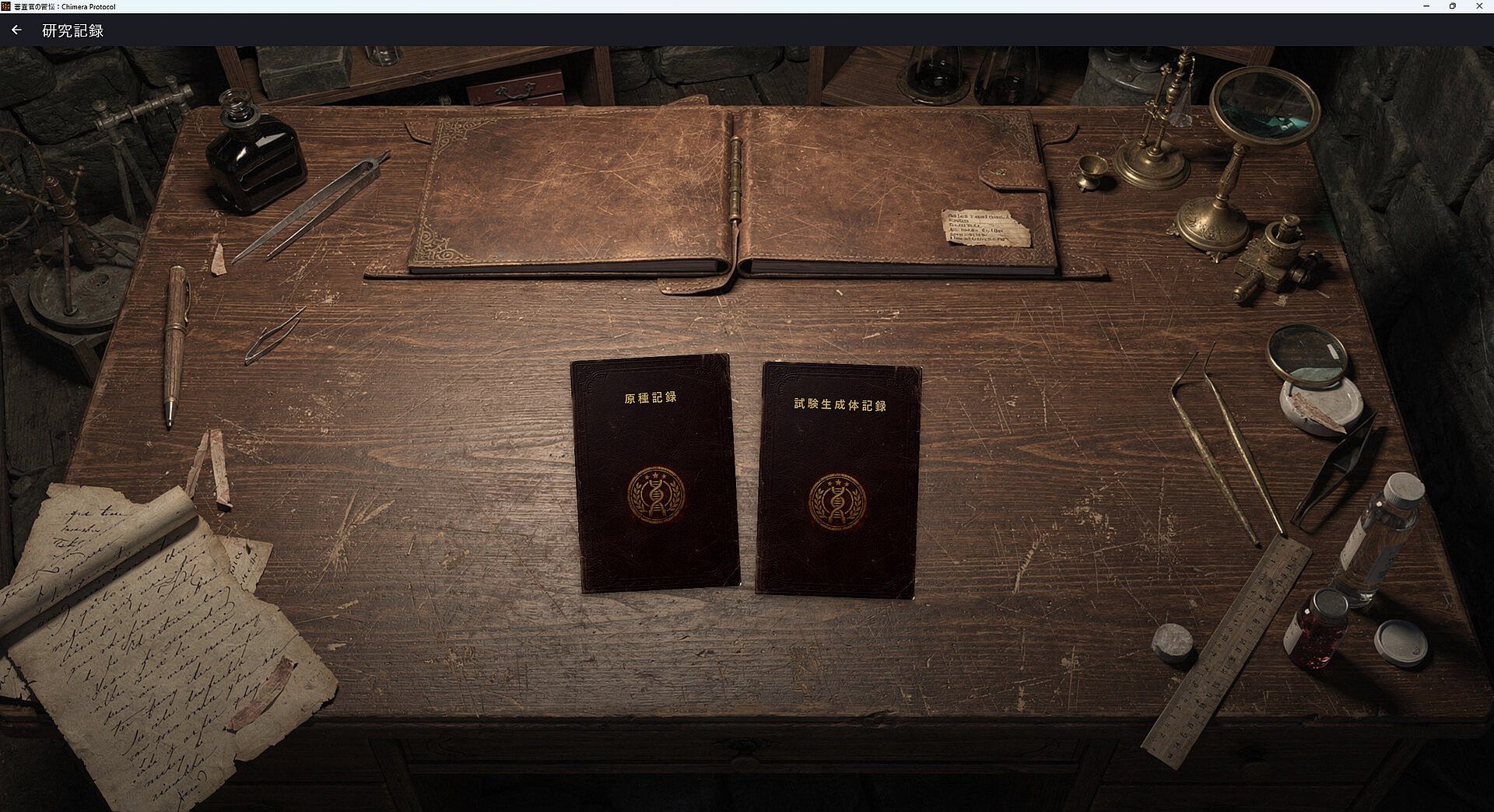
Each judge maintains consistent standards rooted in their area of expertise. Some focus on combat effectiveness while others examine visual presence or ecological considerations. Their evaluations remain fixed once the criteria are announced, so players must adapt their creations to those known preferences. The system records every assessment, providing a clear record of how each chimera performed against the panel. This structure rewards careful study of the judges' values and precise allocation of limited card resources across the three rounds.
Creating Your Chimeras
Monster cards supply the raw material for every specimen. The head of one creature paired with the body of another and the limbs of a third can produce dramatically different results in both appearance and function. Players must decide which combinations best align with the judges' announced priorities for each round. Because only three chimeras are created per match, every card choice carries weight. The final step of assigning each finished chimera to a specific round adds another layer of planning that separates strong play from weaker attempts.
Is It Worth Playing?
The game suits players who enjoy strategic card games that reward observation and adaptation over raw power. The judging system introduces a distinctive layer of decision making that changes with each match. Those who appreciate planning combinations and matching creations to specific criteria will find repeated depth in the three-round structure. The indie presentation keeps the focus on the core loop of card selection, chimera assembly, and judge evaluation without additional layers that might distract from the central competition. For strategy enthusiasts seeking a fresh twist on competitive card play, the title offers a focused experience built around its unique evaluation mechanic.