





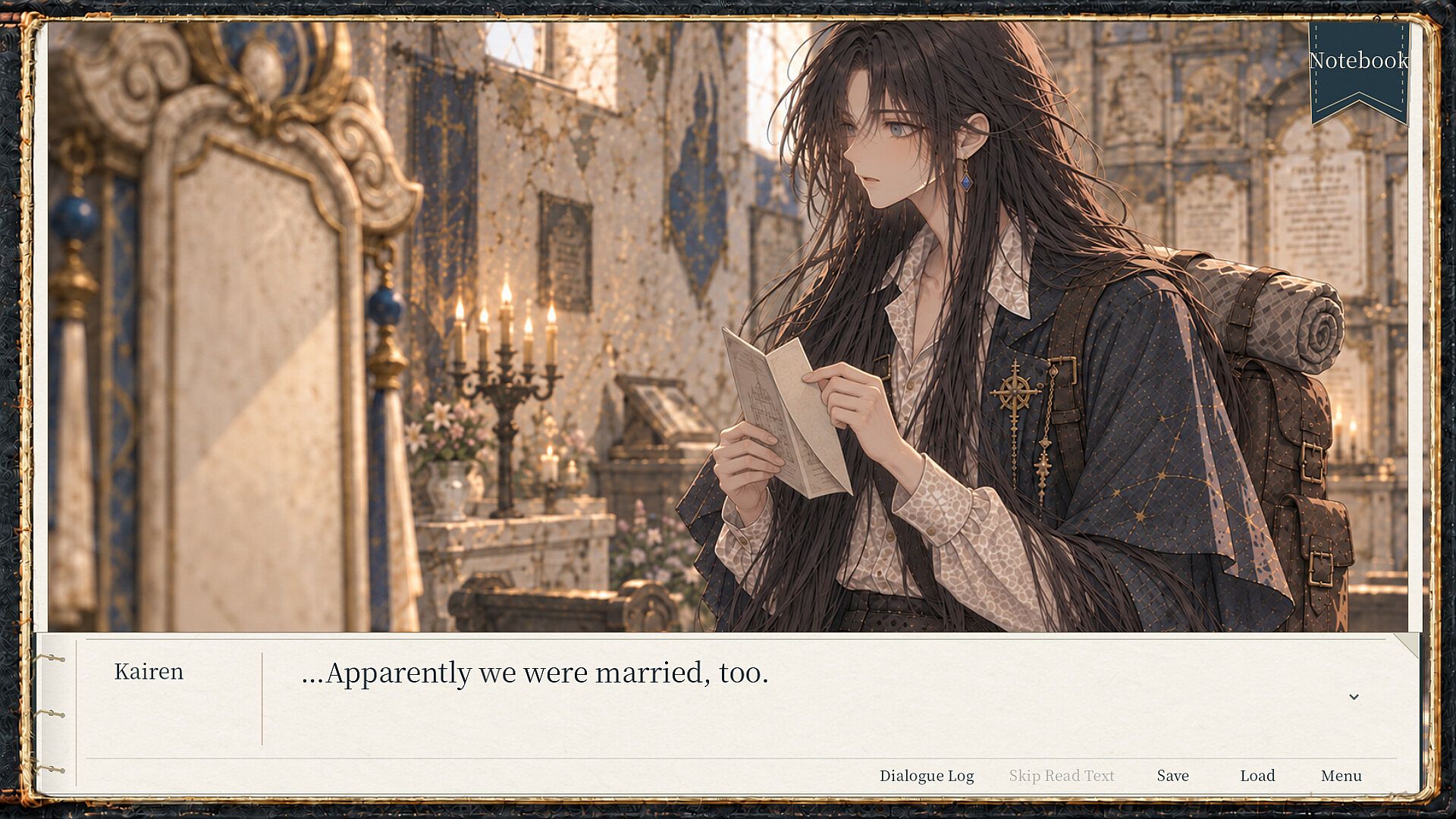
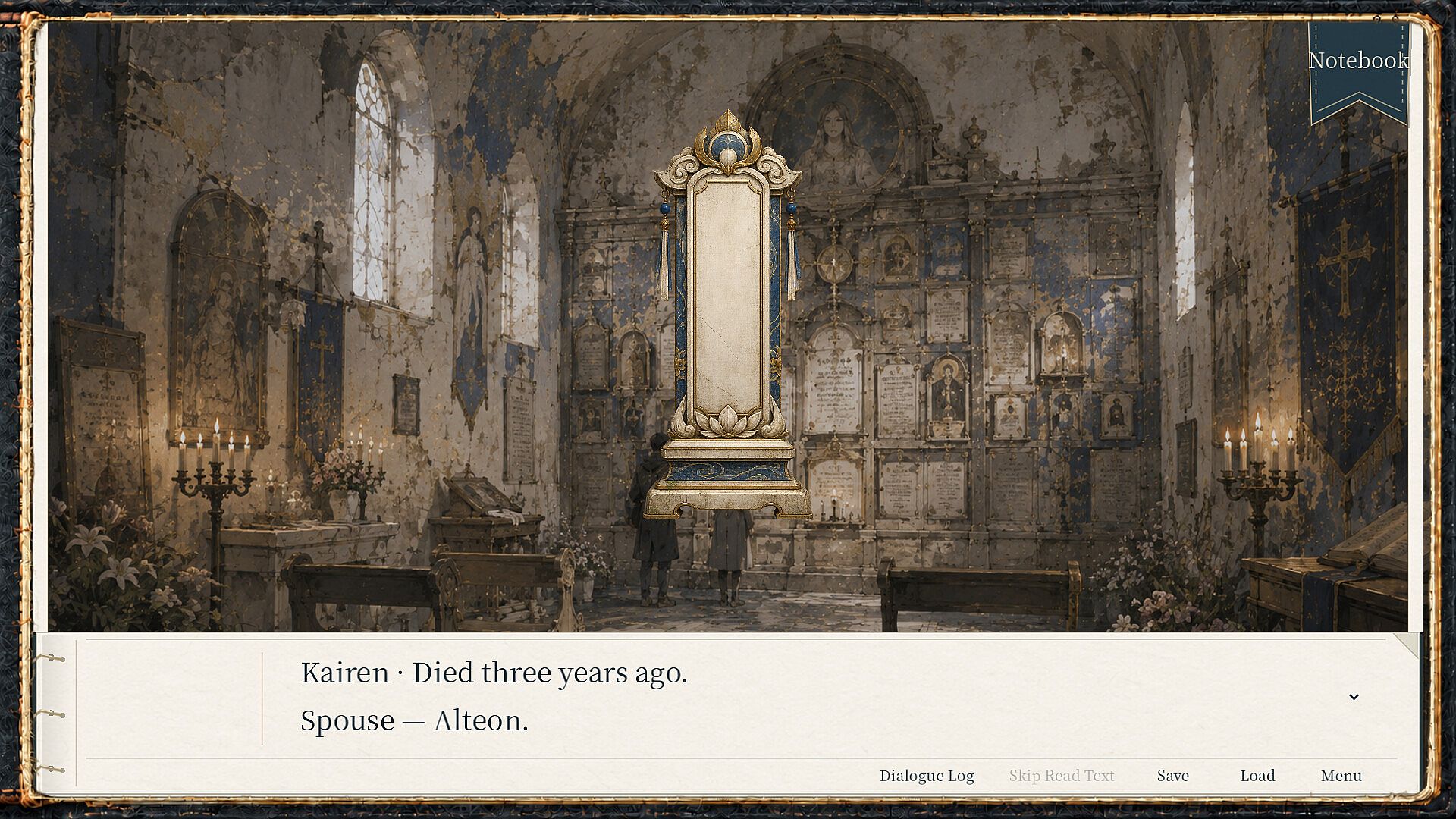
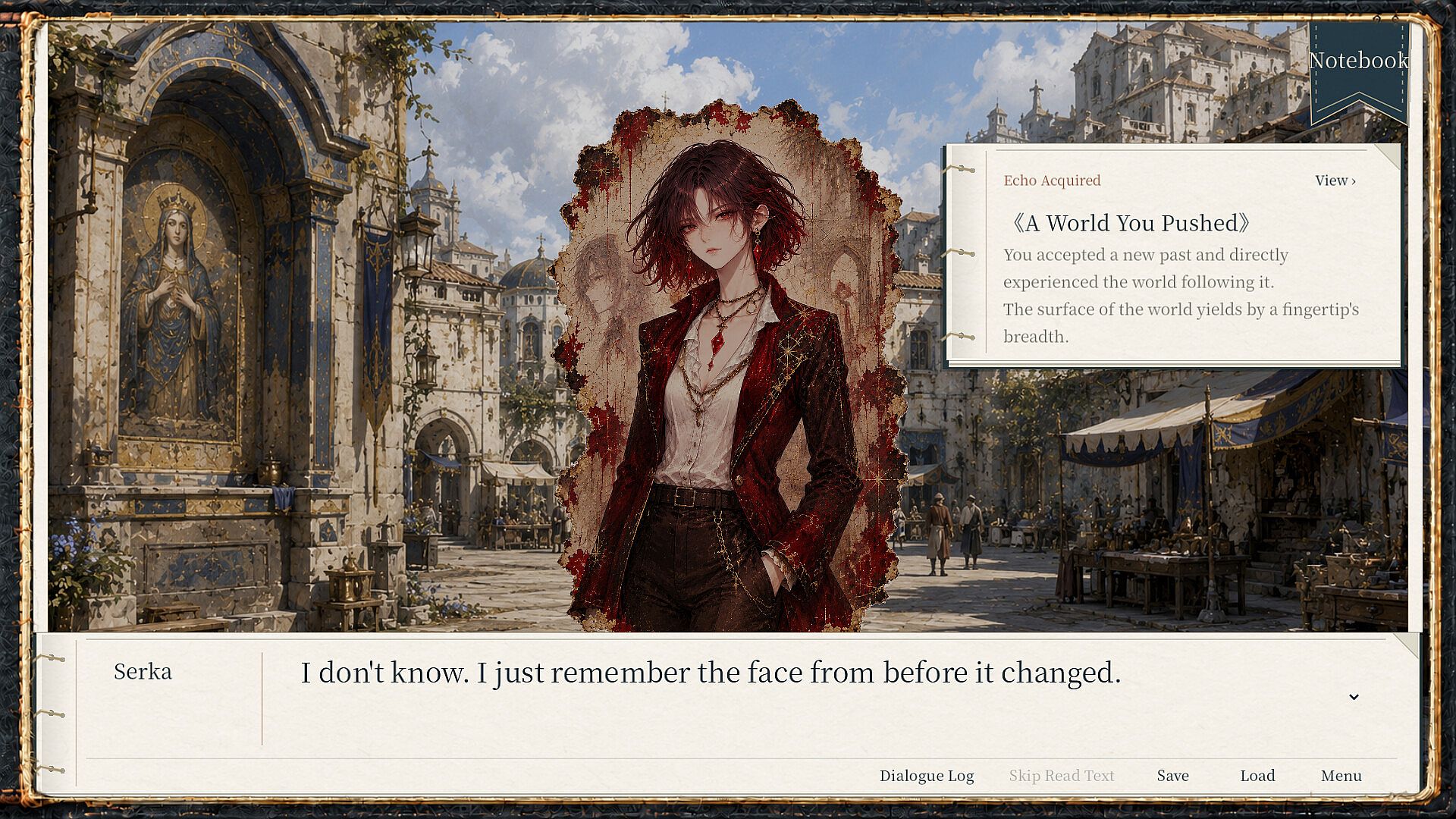
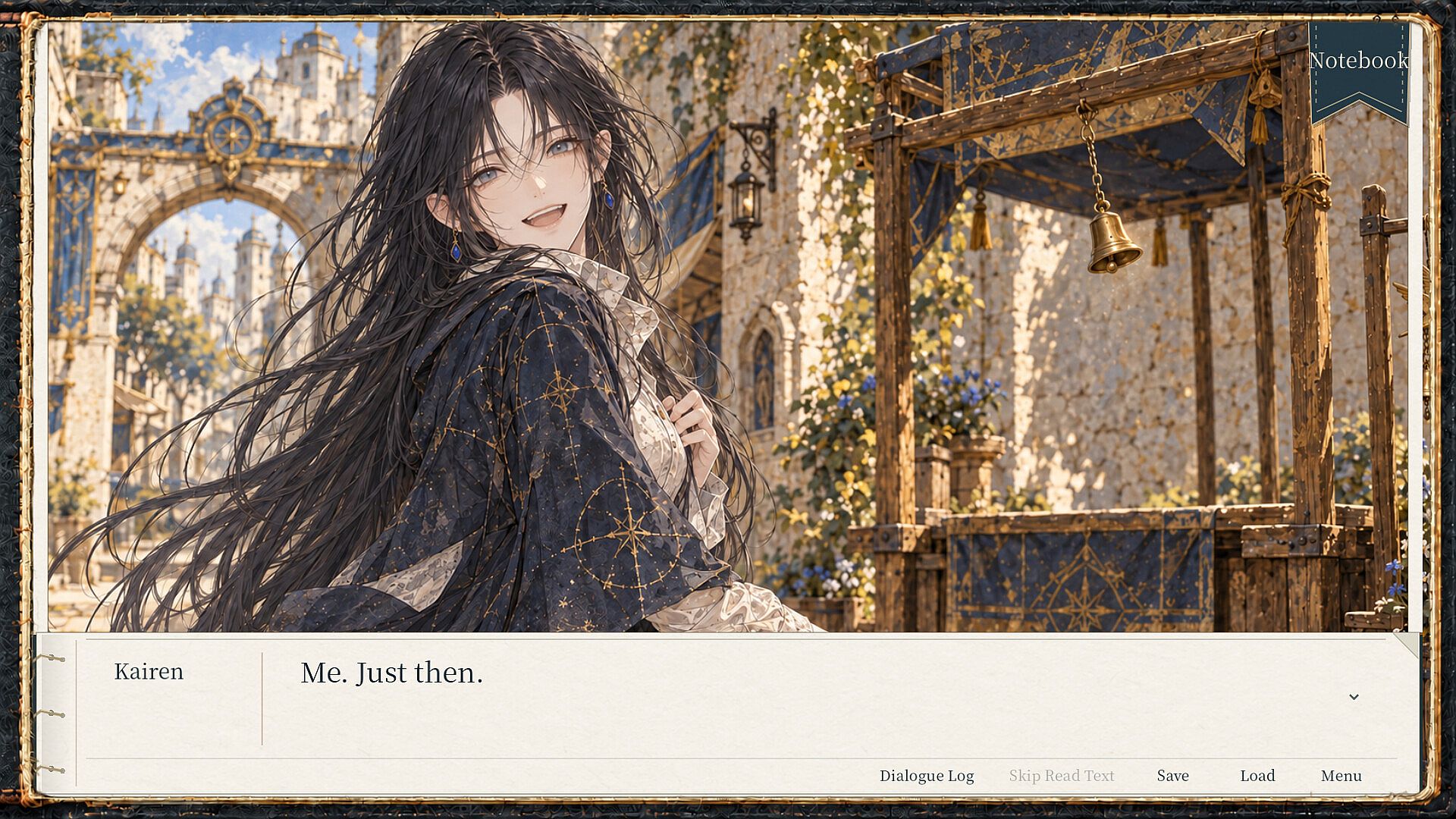

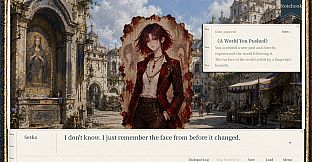

They Say You're Dead is an indie adventure game presented as a mystery visual novel. Players step into the role of Alteon, traveling with Kairen through a city where records and memories shift based on what people accept as true. The core premise centers on investigating Kairen's apparent death three years earlier, even though she stands beside the player in the present. Inscriptions list her as married to Alteon, yet neither character recalls the event or the intervening years.
Gameplay
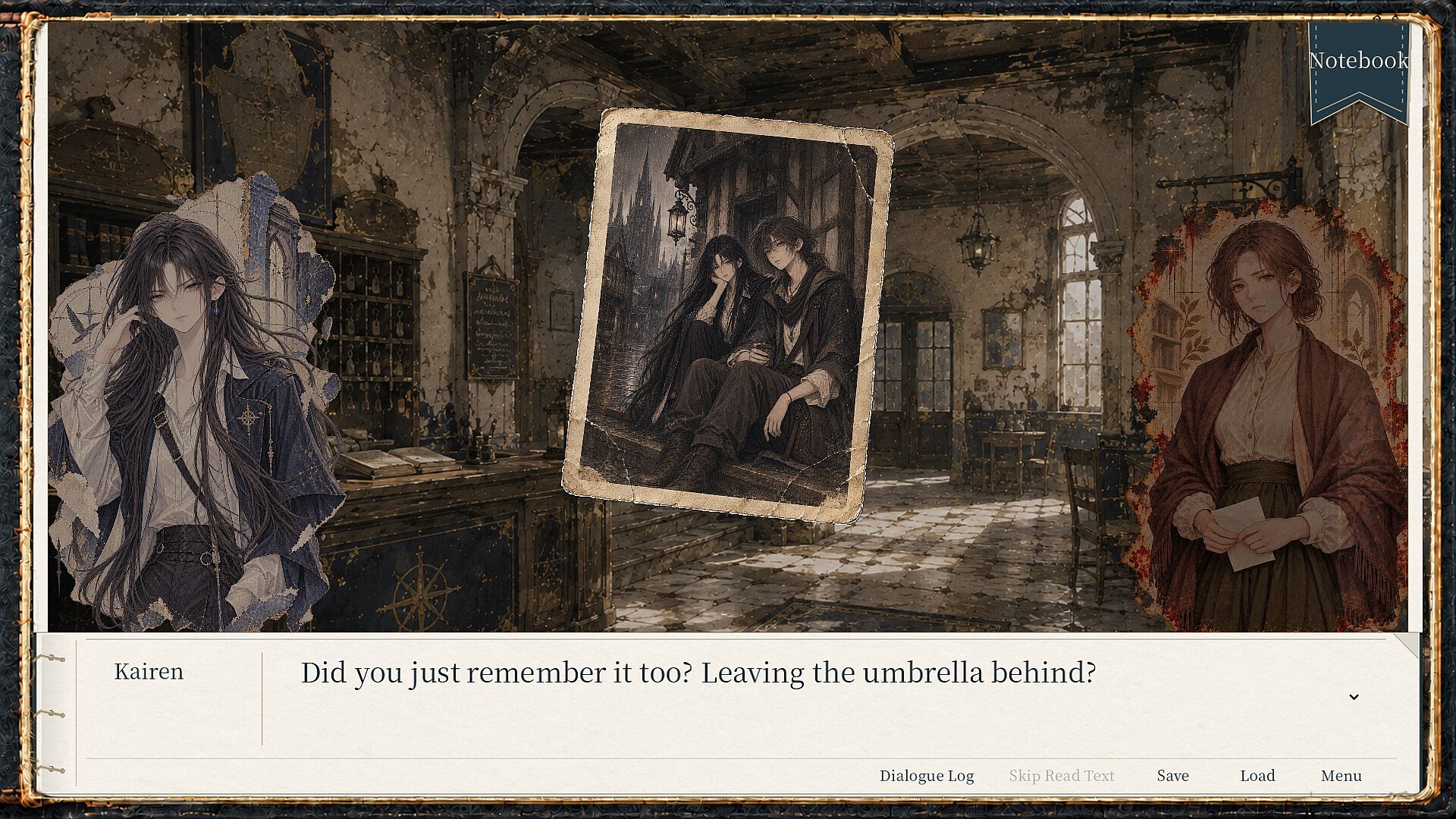
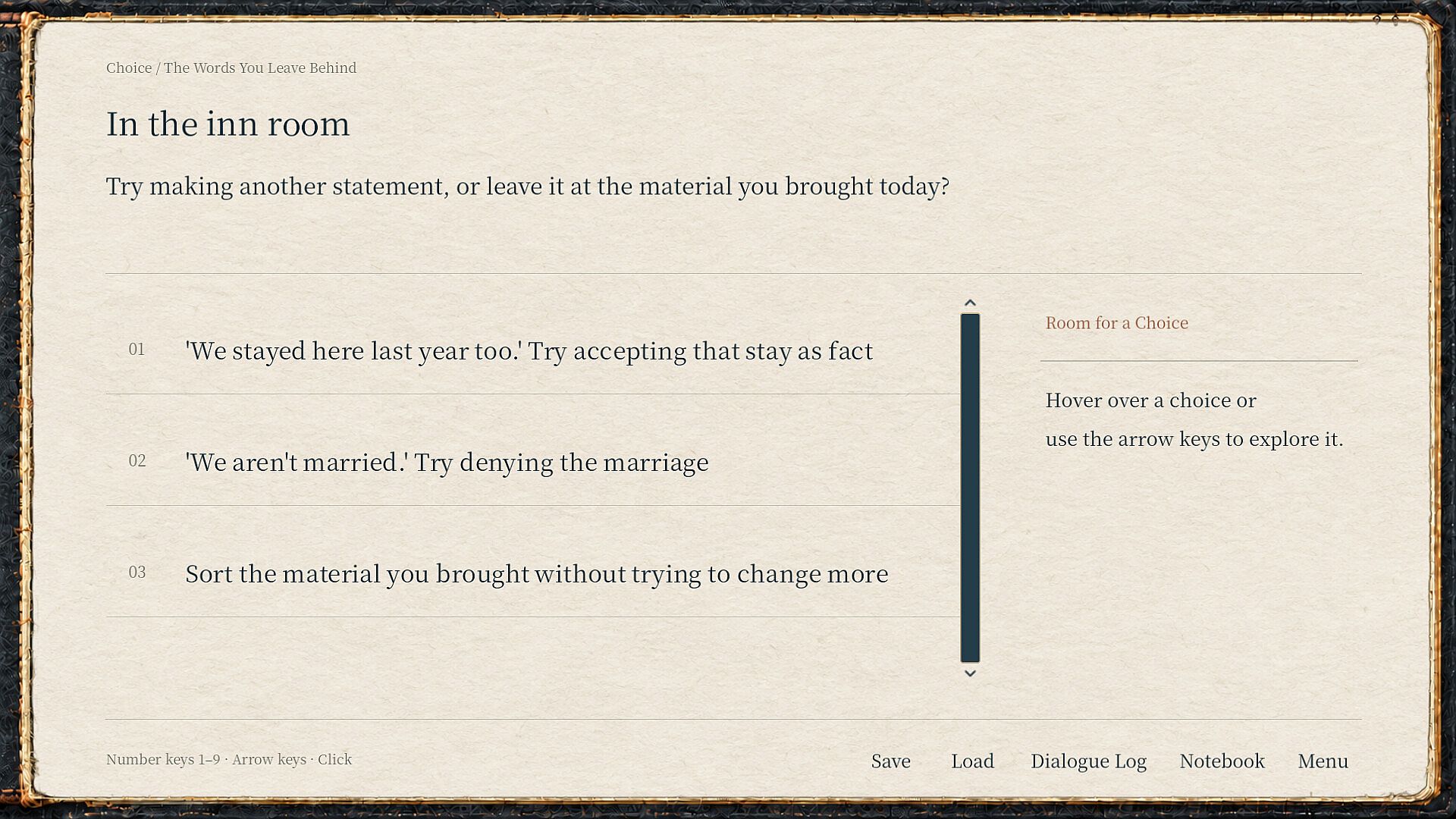
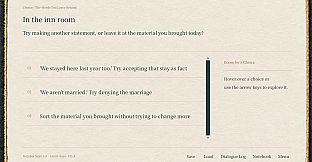
Progression relies on dialogue choices and decisions about historical records. When an innkeeper mentions a past stay in the same room, accepting the detail triggers new memories for both characters, complete with sensory details like rain on skin. Rejecting it alters physical evidence, such as a photograph where figures move apart. These selections ripple outward, changing how other residents describe events and how documents appear in later scenes. The system encourages players to weigh evidence, request additional details, or leave inconsistencies unresolved. Kairen comments directly on alterations that affect her own history, adding tension to each decision. The narrative responds dynamically, with traces of prior realities lingering in conversations or objects that no longer match the current state of the world.
Game Modes
The experience runs entirely in single-player mode. There are no cooperative, competitive, or multiplayer options. All interaction stays within the visual novel structure, where players advance through text, select responses during conversations, and observe the consequences of those choices across multiple playthroughs. The demo covers the prologue and the full first part, allowing players to test the core decision mechanics before the complete release.
Narrative Structure and Endings
Conflicting accounts from city residents form the backbone of the story. Some people remember versions of events that contradict the records the player has shaped. These discrepancies create branching paths that lead to different conclusions about the past and the characters' future. Multiple endings arise from the cumulative weight of accepted or rejected explanations. The world itself adapts, with belief functioning as a literal force that rewrites physical and social details. Kairen's stated desire to live independently after the journey adds personal stakes to choices that bind the two characters together in official documents.
Is It Worth Playing?
Players who enjoy choice-driven narrative games with reactive worlds will find a focused experience here. The mechanics of altering records and memories deliver consistent feedback without requiring combat or resource management. Because the title remains in development with a demo available, interested players can evaluate the writing and decision systems directly. The single-player format suits those seeking a contained story that rewards careful attention to dialogue and evidence. No additional modes or updates have been confirmed beyond the initial release plan.











