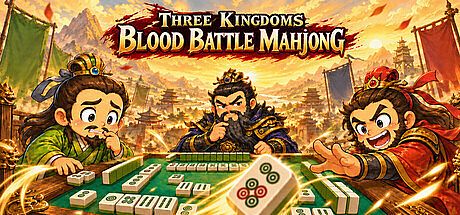



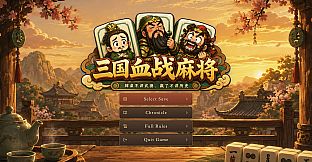
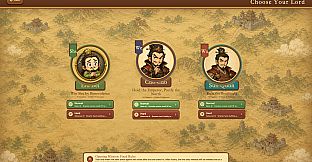
Three Kingdoms: Blood Battle Mahjong is a single-player turn-based strategy game that blends the rules of Sichuan Blood Battle Mahjong with the rivalries of the Three Kingdoms era. Players select one of three lords and build squads of officers to fight for control across campaign routes filled with historical and alternate-history encounters.
Gameplay
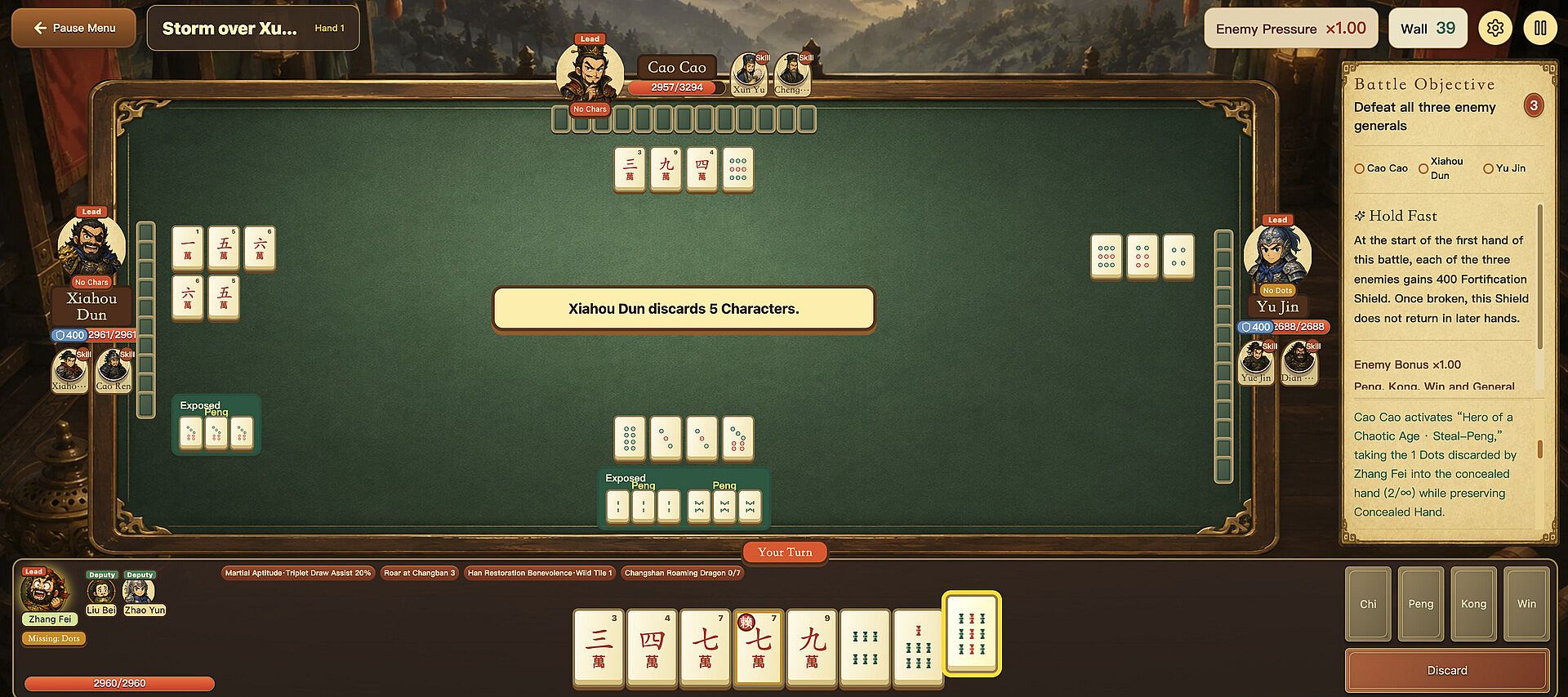
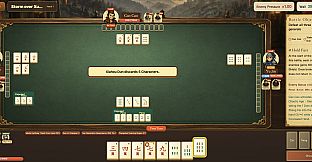
The core loop centers on four-player mahjong hands adapted for one-on-one battles between squads. Each hand follows Sichuan Blood Battle rules with Characters, Dots, and Bamboo tiles. Players exchange three tiles at the start, declare a missing suit that must be discarded first, and compete using Peng, Exposed Kong, Concealed Kong, Added Kong, wins by discard, and self-drawn wins. When one player wins a hand, the others continue playing until the wall runs out or additional wins occur.
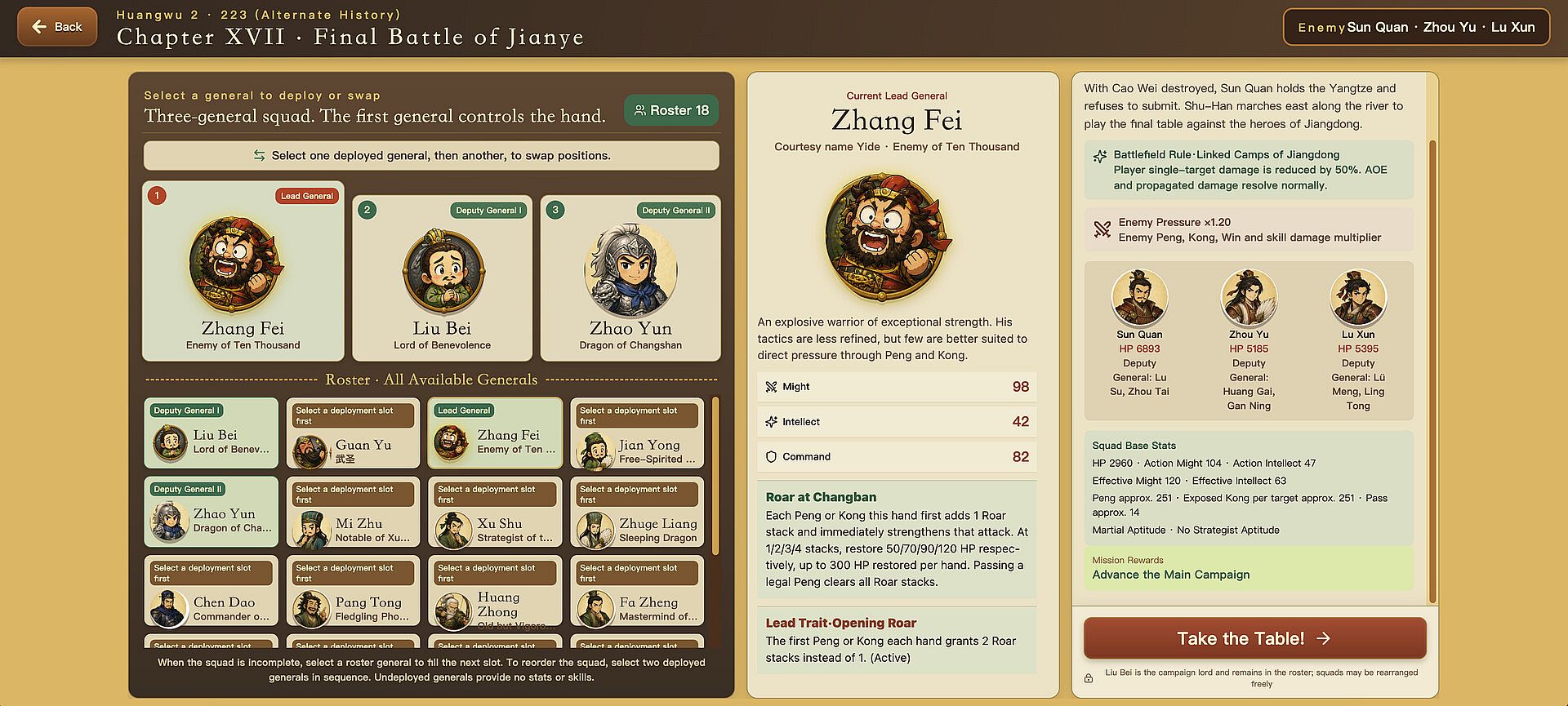
Combat overlays the mahjong mechanics. Winning hands convert into damage against enemy health, while passing actions builds Shield that absorbs incoming attacks. Health persists across hands in a battle, but Shield resets each hand. Squad attributes in Might, Wisdom, and Command influence the strength of Peng, Kong, and Hu actions. Officers bring unique base skills and commander traits that alter draws, patterns such as Seven Pairs or Concealed Triplets, or defensive options like redirecting attacks and stealing Shield.
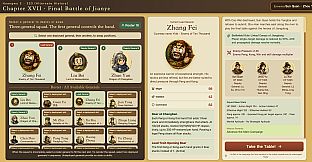
Before each battle, players choose one Lead General who controls the hand and provides an exclusive trait, plus two Deputies whose skills and attributes contribute to the squad. Warriors emphasize direct attacks through Peng and Kong, while strategists focus on draw manipulation and valuable patterns. Battlefield rules in each chapter modify priorities, discard order, and squad choices, and all effects appear in the battle intel display.
Game Modes
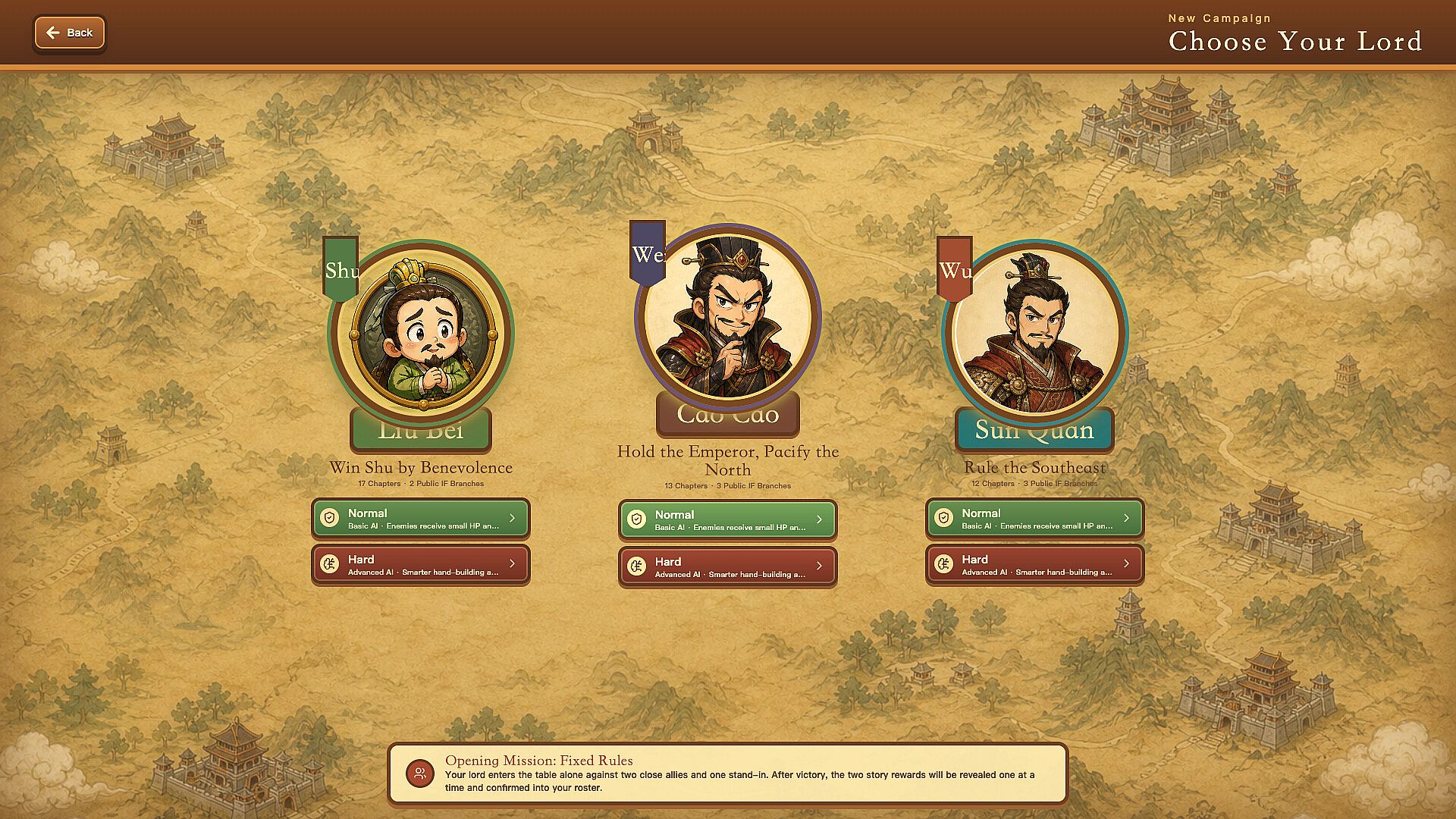
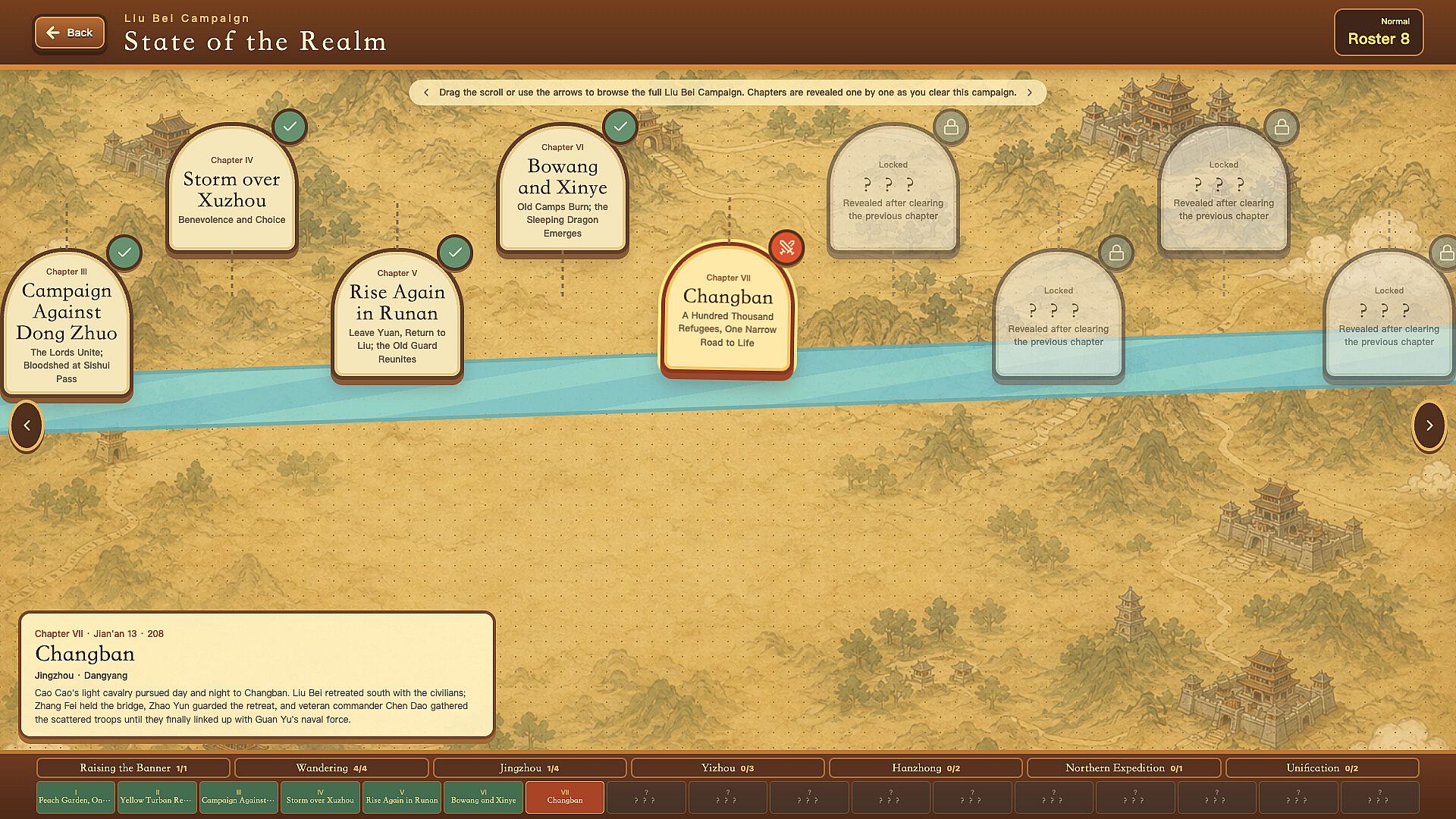
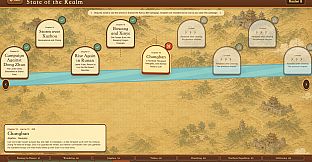
The game features three independent campaign routes, one for each lord: Liu Bei, Cao Cao, and Sun Quan. Together these routes contain 42 chapters drawn from events such as the Oath of the Peach Garden, Guandu, Red Cliffs, and Yiling. Players recruit officers after battles to expand an unrestricted roster and adjust squads for upcoming challenges.
Selected chapters include rescue conditions. Bringing a specific officer into battle and winning can alter that officer's fate and later narrative branches. Missing a rescue does not block progress through the main campaign but records the outcome in the Chronicle.
The Chronicle tracks encountered and recruited officers, progress on all three routes, rescue results, and achievements. Two difficulty settings are available: Normal, which supports learning the roster and systems, and Hard, which increases emphasis on enemy hand development, offense, defense, and skill use.
Campaign Structure and Progression
Each route presents a distinct path through the conflict, with chapters introducing new battlefield modifiers that shift strategic priorities. Officers carry distinct skills that interact with mahjong patterns and battlefield conditions, allowing the same set of tiles to require entirely different approaches depending on the squad composition. Transparent settlement reports detail the winning pattern, multipliers, Shield absorbed, and health lost after every attack.
Progression rewards careful squad building and adaptation. Surviving officers join the roster after battles, enabling players to experiment with different lead generals and deputy combinations across repeated plays of the same chapter or new routes.
Is It Worth Playing?
Three Kingdoms: Blood Battle Mahjong suits players who enjoy single-player strategy games that combine familiar mahjong tile play with layered squad management and campaign progression. The integration of Peng, Kong, and Hu actions into direct combat, combined with persistent health across hands and officer skills that reshape each battle, creates a focused experience built around decision-making rather than speed or reflexes.
Those drawn to the Three Kingdoms setting will find value in the three separate routes and the option to influence specific character outcomes through rescue conditions. The Chronicle system encourages multiple playthroughs to explore different squads and difficulties. The game runs on PC and requires no online connection, making it accessible for solo sessions that reward understanding of both mahjong fundamentals and attribute-driven tactics.