







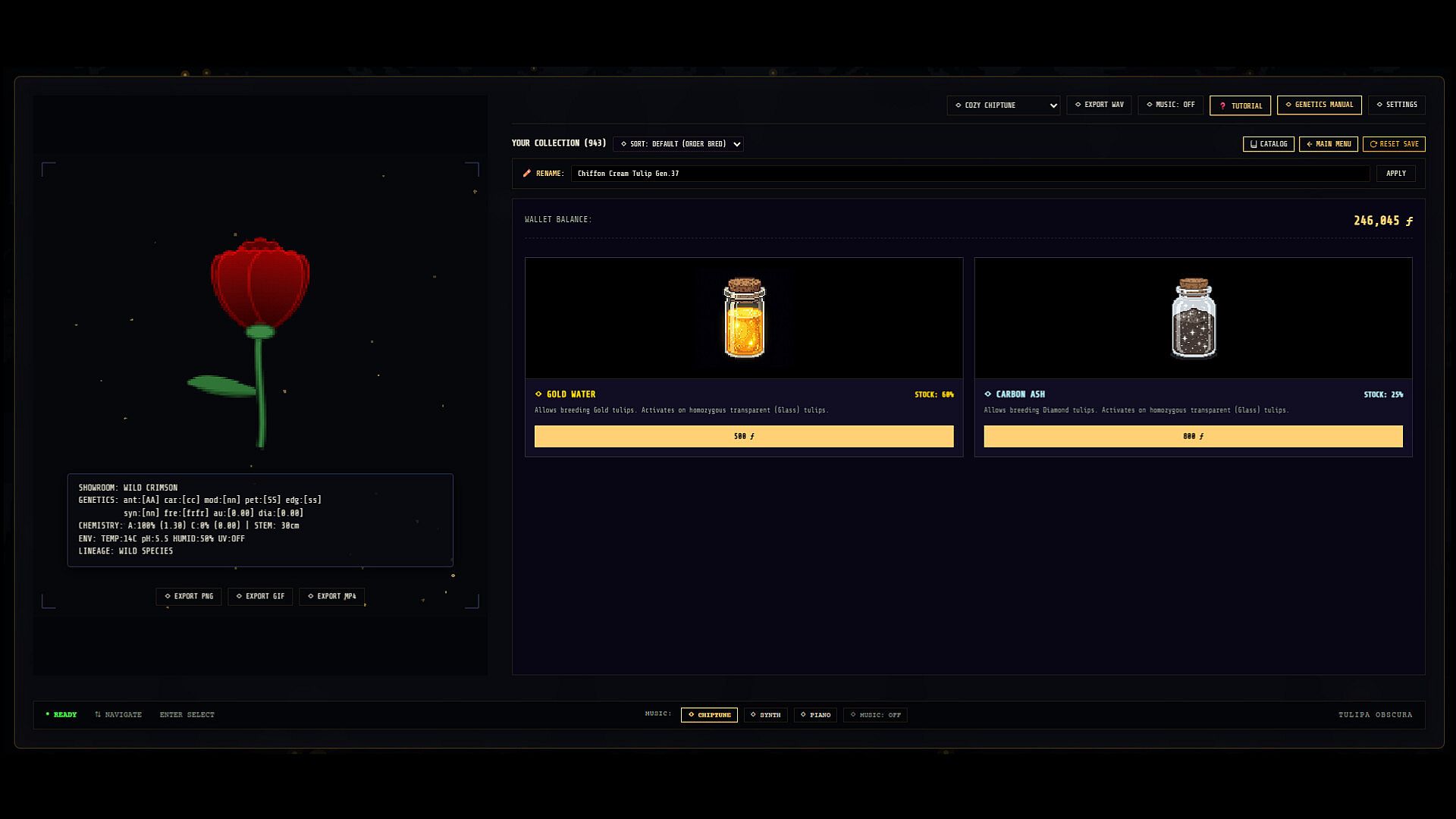
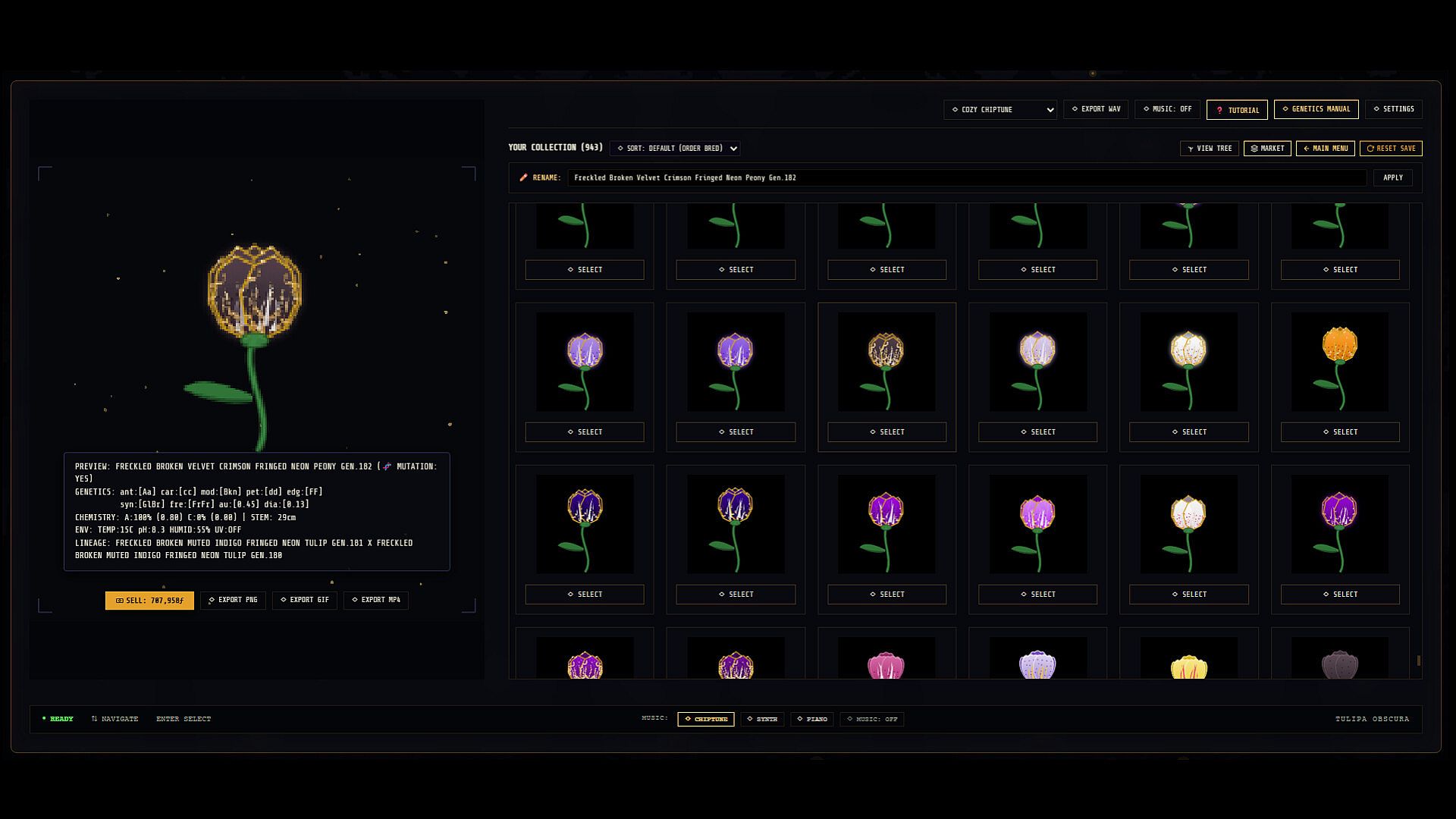

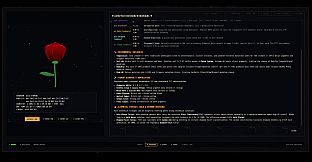
Tulipa Obscura est un jeu de simulation casual indépendant qui propose d'élever et de faire évoluer des tulipes uniques sur PC grâce à une génétique procédurale. Chaque fleur possède des caractéristiques propres, façonnées par les croisements, les conditions environnementales et les mutations aléatoires. L'objectif est de planter, de sélectionner les parents et de guider les générations successives vers des formes plus rares, allant des variétés anciennes réalistes aux spécimens fantastiques aux reflets cristallins ou métalliques.
Gameplay
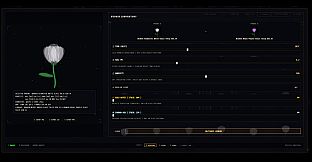
Chaque partie se déroule comme une simulation roguelite de sélection. Le point de départ génétique varie à chaque run selon les conditions initiales et l'environnement. En croisant des tulipes compatibles, le joueur observe comment les traits se transmettent et modifient la forme des pétales, leur répartition de couleurs, leur texture et d'autres propriétés. Des voies génétiques cachées s'ouvrent progressivement, récompensant les choix réfléchis et les expériences menées sur plusieurs générations.
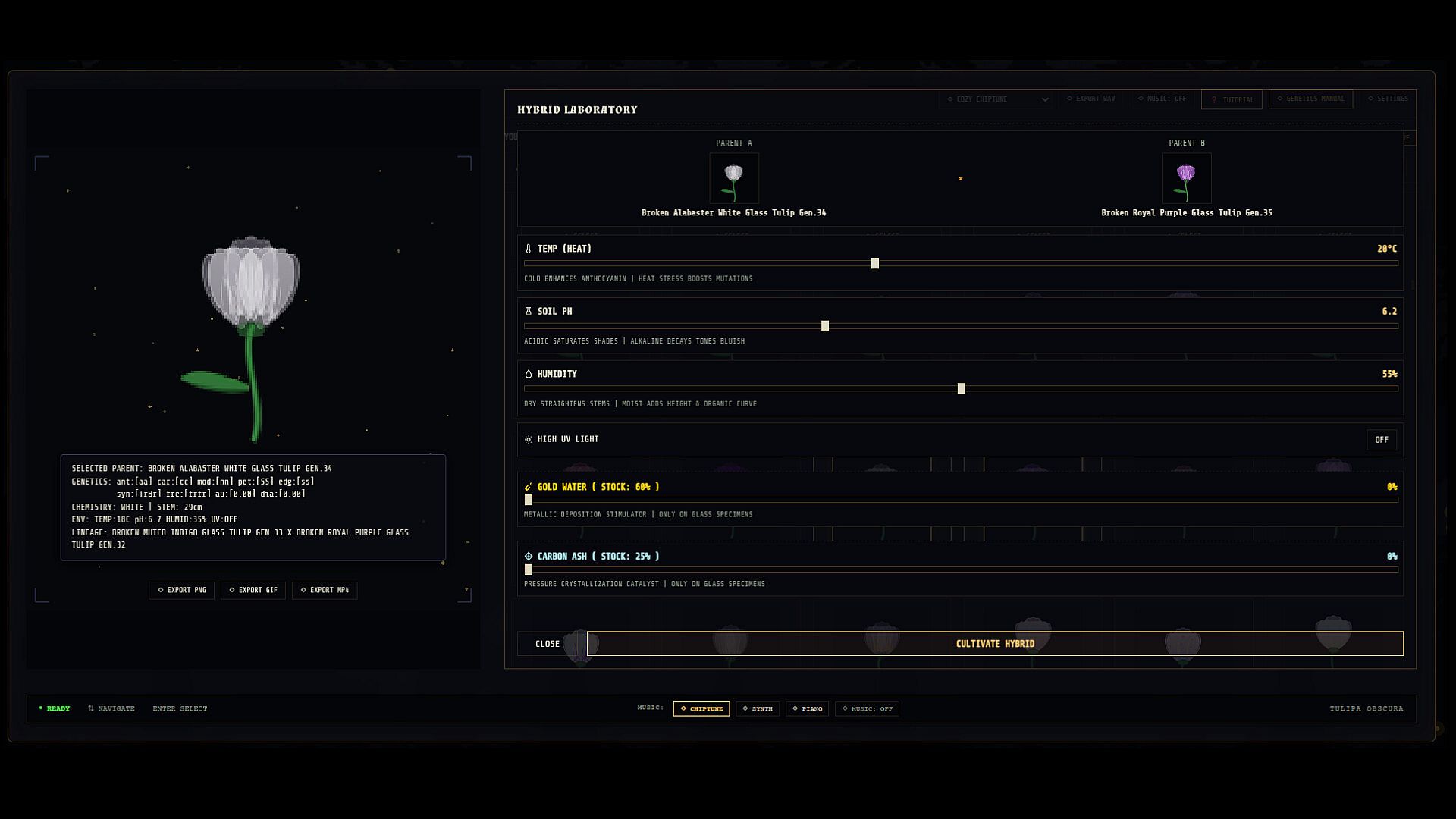
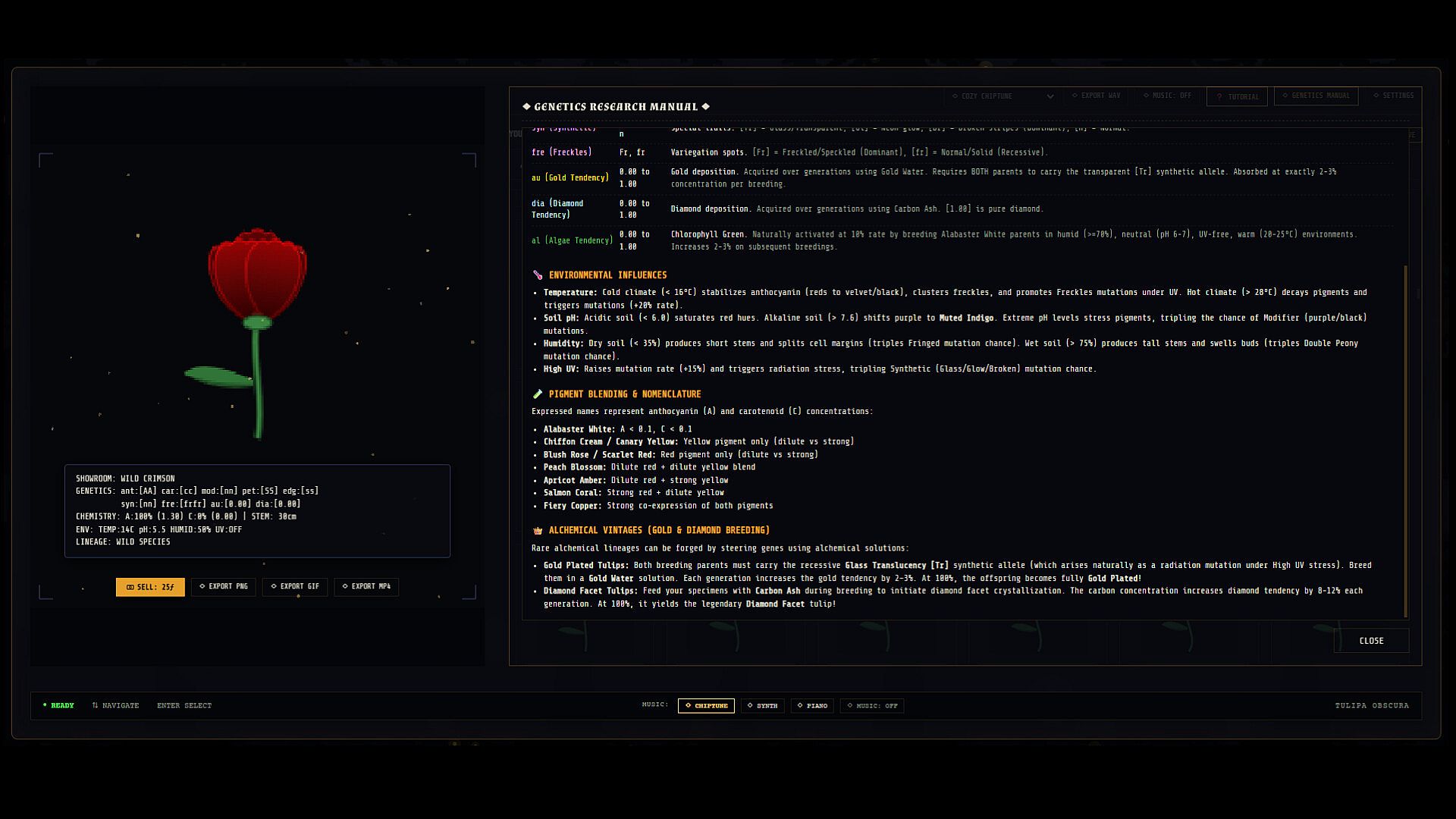
Les réglages environnementaux influencent directement les résultats. Modifier la lumière, le sol ou d'autres paramètres peut provoquer des mutations ou stabiliser des lignées intéressantes. Des découvertes rares apparaissent lorsque certaines combinaisons se rencontrent, donnant naissance à des fleurs luminescentes, dotées d'éclats métalliques ou de motifs inédits. Le système procédural garantit que chaque tulipe est unique et que chaque génération peut orienter différemment la suite de l'élevage.
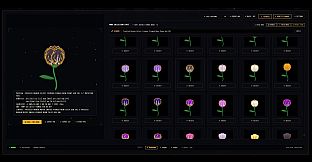
La progression repose sur l'archivage des résultats dans un catalogue botanique. Le joueur y consigne les cultivars réussis, conserve les lignées porteuses de traits précieux et note les croisements ayant produit des résultats remarquables. Ces données facilitent la planification à long terme à mesure que la collection s'enrichit de spécimens plus complexes et spectaculaires.
Game Modes
Le jeu se présente comme une simulation roguelite solo sans modes distincts. Chaque session constitue une run indépendante, dotée de son propre point de départ génétique et de ses propres opportunités de mutation. Le joueur expérimente librement dans cet espace de jeu, en testant différentes stratégies de croisement et différents environnements. La partie s'achève lorsque le joueur décide de recommencer avec un nouveau paysage génétique, favorisant ainsi les tentatives répétées pour stabiliser des traits rares ou obtenir des combinaisons inédites.
Un mode photo est intégré au processus. Après avoir cultivé des tulipes remarquables, le joueur peut capturer des images ou de courtes vidéos pour les exporter et les partager. Cette fonctionnalité permet d'archiver ses créations et d'échanger avec la communauté sans modifier la boucle principale de sélection.
Key Mechanics
La génétique constitue le cœur du jeu. Chaque tulipe possède un code unique qui détermine ses attributs visibles et cachés. Le croisement fusionne ces codes, les résultats variant selon la compatibilité des parents et les conditions extérieures. Des mutations surviennent de manière imprévisible, ouvrant parfois de nouvelles catégories de traits comme des effets lumineux ou des structures cristallines.
L'adaptation et la patience sont essentielles pour progresser. Certaines lignées exigent plusieurs générations pour se stabiliser, tandis que d'autres n'apparaissent que sous des conditions environnementales très précises. Le système valorise à la fois les tests méthodiques et les choix opportunistes face aux mutations inattendues.
Is It Worth Playing?
Tulipa Obscura s'adresse aux joueurs qui apprécient les jeux de simulation axés sur les systèmes et la découverte plutôt que sur le combat ou le récit. La génétique procédurale et la structure roguelite assurent une variété entre les parties, tandis que l'accent mis sur l'expérimentation convient à ceux qui aiment optimiser les combinaisons et consigner leurs résultats. Le mode photo offre un moyen créatif de mettre en valeur ses créations.
Les amateurs de gestion casual de collections vivantes ou de mécaniques de sélection abstraites trouveront une profondeur constante dans les interactions génétiques. L'absence de verrous de progression traditionnels laisse toute la place à la liberté créative au sein de chaque run. Si l'idée de cultiver des fleurs impossibles par une sélection attentive et une adaptation continue vous intéresse, le jeu propose une expérience centrée sur ces systèmes.











