


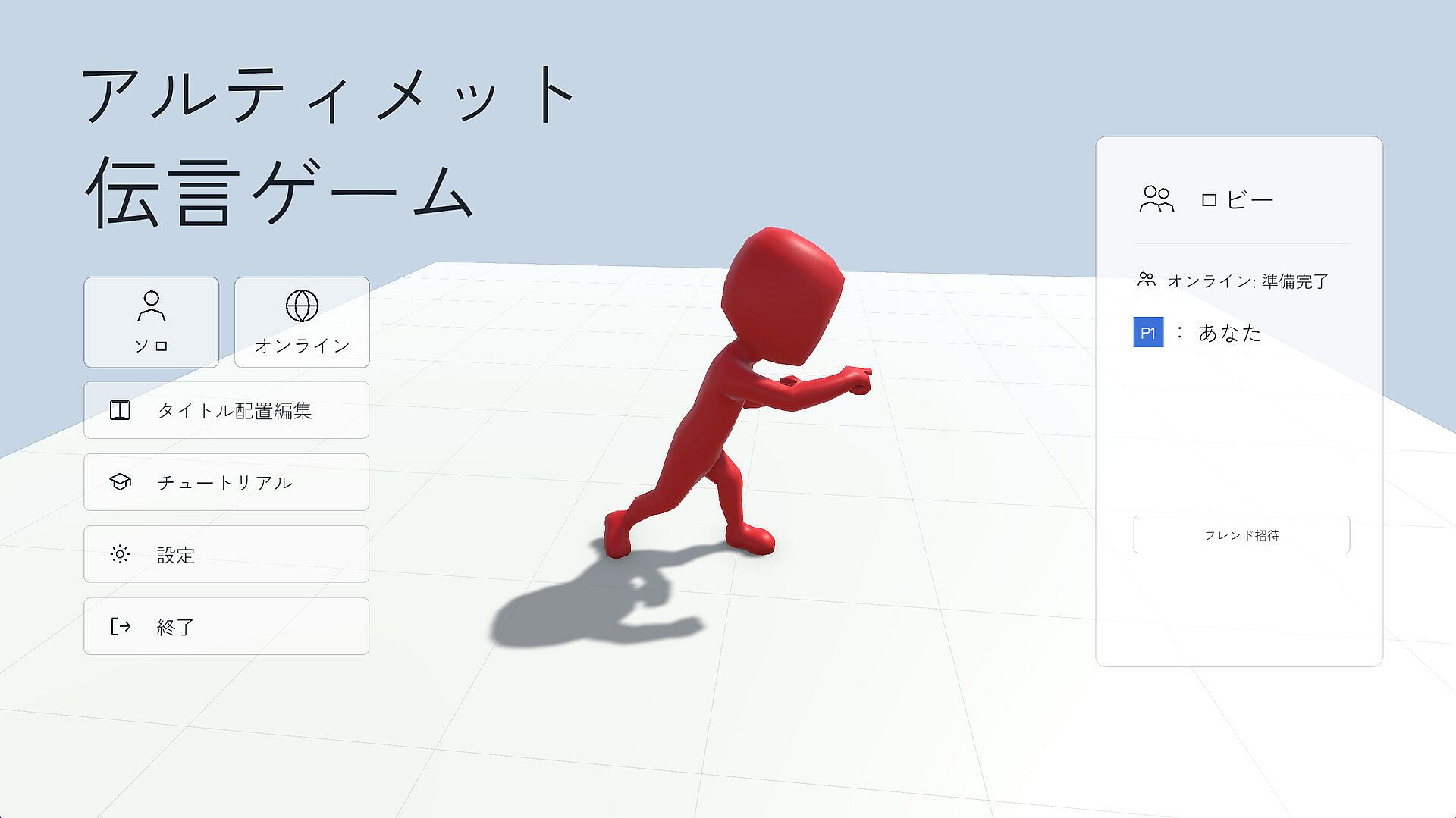
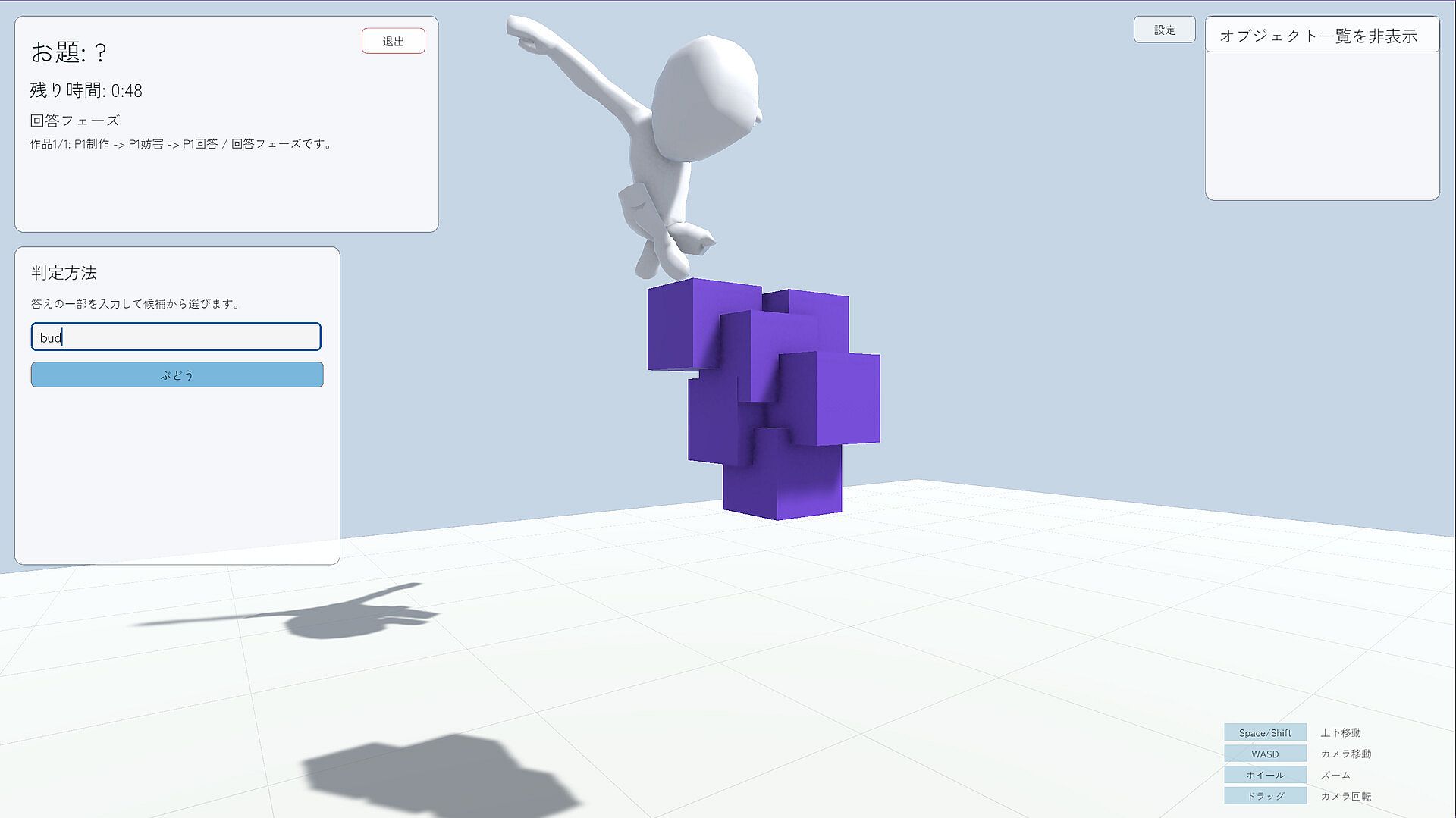
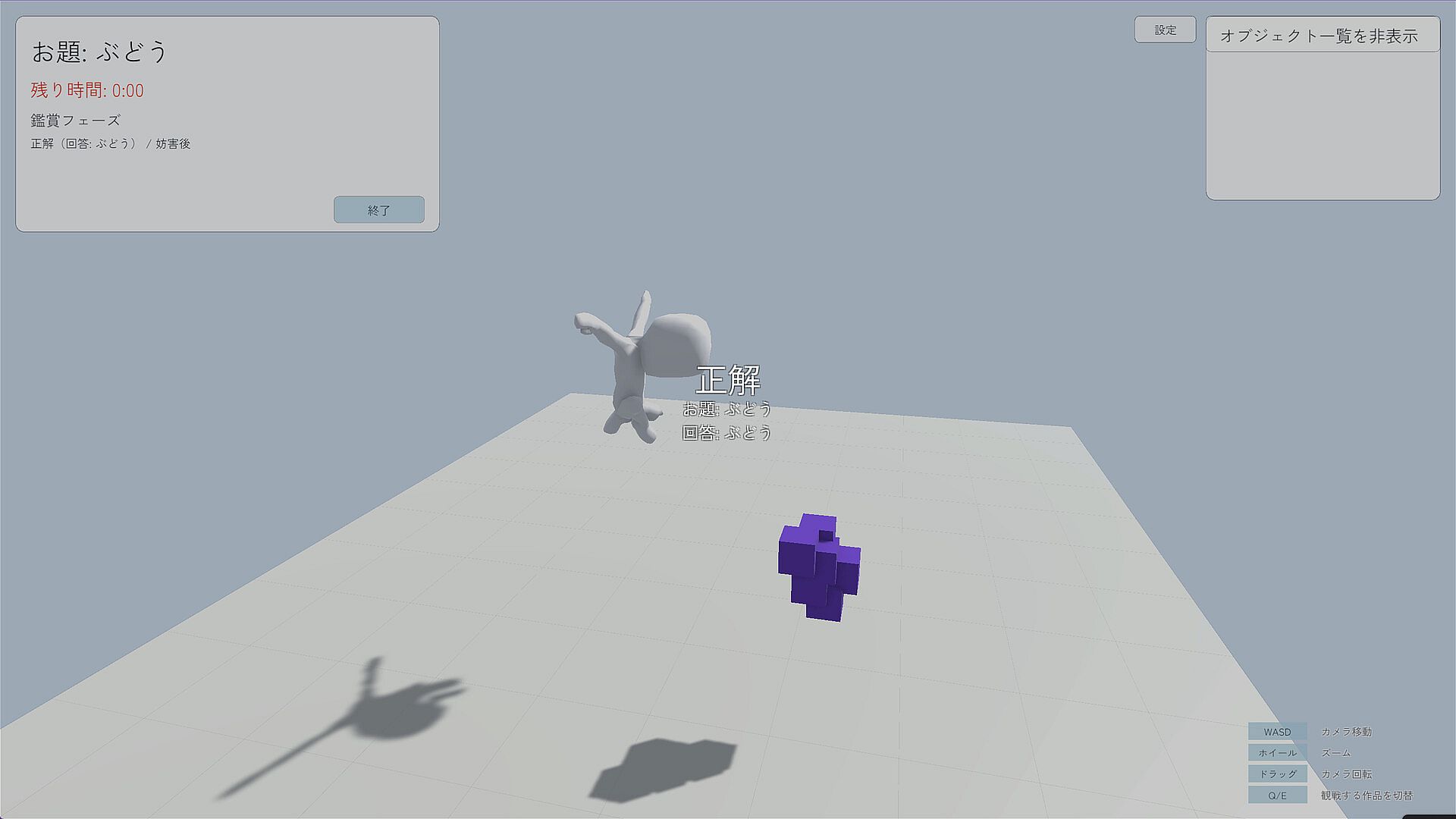

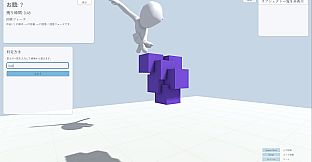
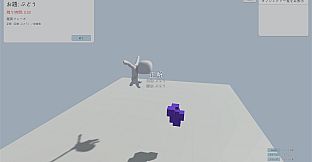
Ultimate Dengon Game est un jeu casual indépendant gratuit pour PC qui transforme le jeu du téléphone arabe en une expérience de placement d'objets en 3D. Les joueurs construisent des scènes à l'aide de formes simples, de figurines et d'accessoires pour illustrer des consignes comme des animaux, des événements ou des situations du quotidien, puis les transmettent pour interprétation.
Gameplay
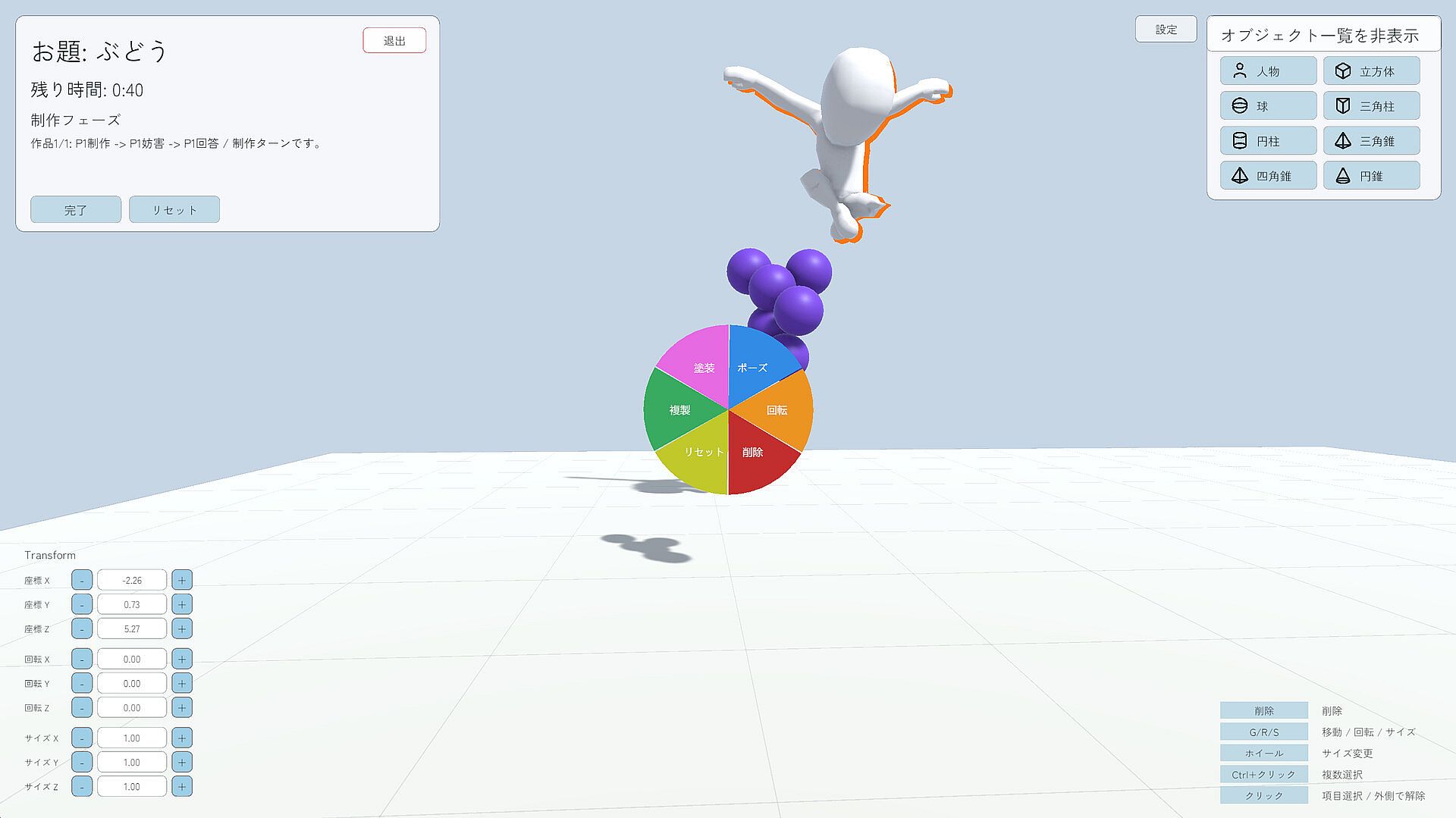
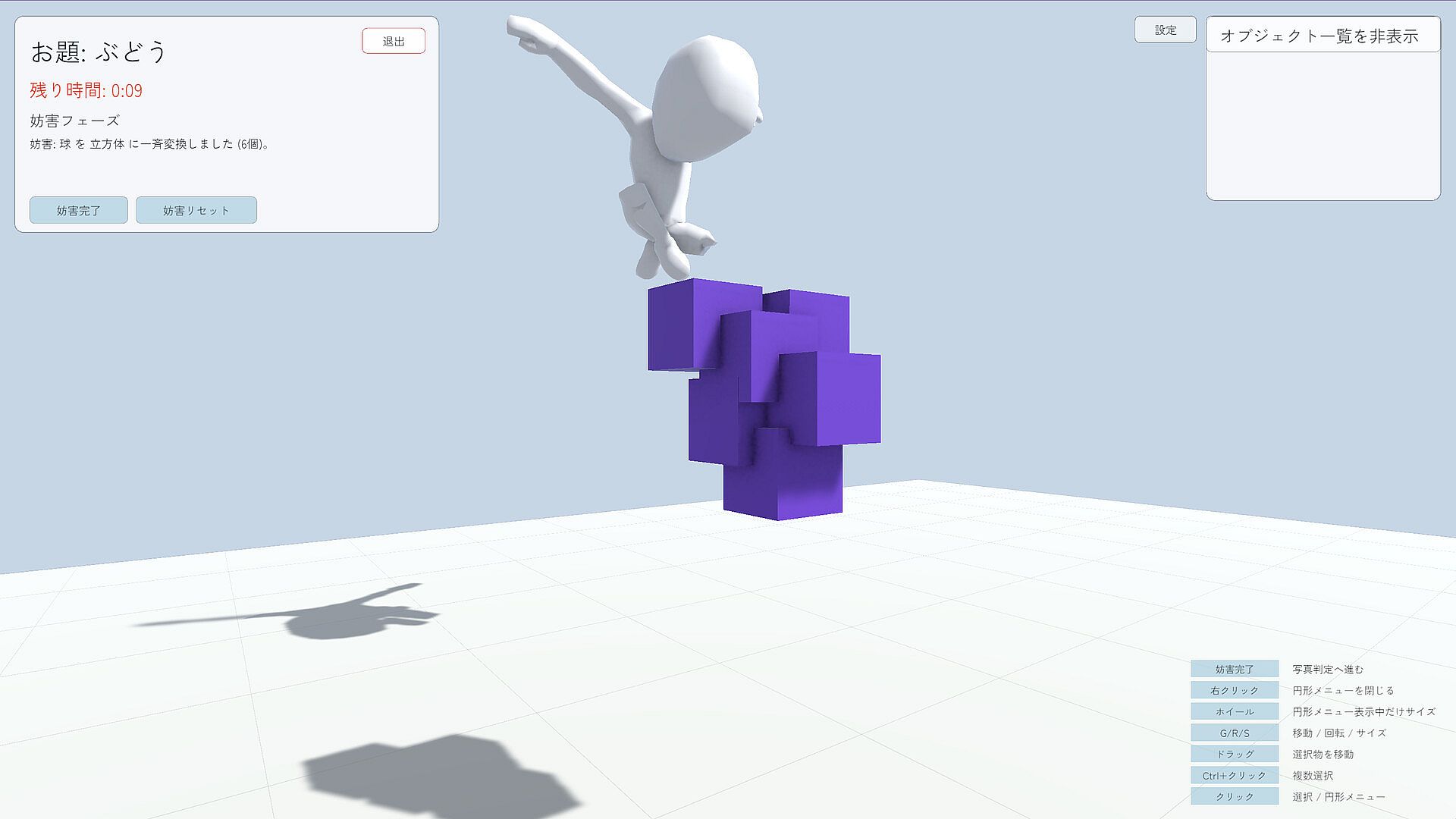
Chaque manche repose sur trois étapes qui se répètent. Un joueur reçoit une consigne et dispose des objets dans un espace 3D partagé pour la représenter. Un adversaire effectue ensuite de légers ajustements - position, échelle - pour introduire une distorsion. Un coéquipier observe la scène modifiée et tente de retrouver la consigne initiale. L'interférence rend chaque résultat imprévisible, transformant parfois une idée claire en une interprétation inattendue.
Le placement d'objets remplace le dessin. Les éléments disponibles - figurines humaines, formes géométriques, accessoires du quotidien - se combinent pour évoquer des concepts tels que des activités sportives ou des tâches ménagères. L'accent porte sur l'arrangement spatial plutôt que sur le talent artistique, permettant à chacun de communiquer par la position et l'échelle.
L'interférence ajoute une part d'imprévu. De petites modifications peuvent inverser le sens initial, provoquant des écarts comiques ou, parfois, des réussites surprenantes. Le jeu récompense la réflexion tout en montrant à quel point le sens peut changer par de simples retouches.
Game Modes
Le mode multijoueur en ligne permet de jouer en groupe ou avec des participants aléatoires. Les sessions suivent le cycle création-interférence-devinette sur plusieurs manches, les équipes alternant les rôles pour maintenir l'équilibre. L'expérience convient particulièrement aux amis qui apprécient la créativité collective et une compétition légère.
Un mode solo propose de s'entraîner seul contre des adversaires IA. Il permet d'expérimenter les placements et de tester ses interprétations sans connexion. Ce mode sert de préparation aux parties en ligne ou d'alternative autonome pour explorer le jeu.
Key Mechanics and Features
Les règles restent simples dans toutes les sessions. Les consignes apparaissent sous forme de texte que les joueurs traduisent en compositions 3D. L'interférence se limite à des manipulations subtiles, préservant une partie de l'intention initiale tout en laissant place aux imprévus. Chaque création modifiée donne lieu à une devinette, comparée ensuite à la consigne de départ.
Le jeu ne propose ni commandes complexes ni système de progression. L'accent porte sur des manches rapides centrées sur la communication par le placement. Chaque consigne étant différente, la variété est assurée, et l'environnement 3D permet de changer de point de vue pour faciliter ou compliquer l'interprétation.
Is It Worth Playing?
Ce titre s'adresse aux joueurs en quête d'expériences sociales courtes, axées sur la créativité et les malentendus. Son modèle free-to-play sur PC supprime les obstacles à l'entrée, et ses règles simples le rendent accessible aux groupes occasionnels ou aux essais en solo. Ceux qui apprécient les jeux où l'interprétation prime sur les réflexes ou la stratégie trouveront le concept captivant.
Parce que l'humour repose sur l'interaction humaine, le jeu révèle tout son potentiel en multijoueur avec des partenaires réguliers. Le mode solo contre l'IA constitue une alternative viable en l'absence d'autres joueurs. En tant que nouveauté, l'expérience se concentre sur les mécaniques décrites, sans contenu supplémentaire confirmé au lancement. Les amateurs de formats festifs légers et répétables y trouveront matière à de nombreuses sessions, tandis que ceux qui recherchent des systèmes plus profonds ou une progression à long terme préféreront peut-être d'autres titres.