

Val Fortuna is an indie tactical roguelite deckbuilder set on a checkerboard and developed for PC. Players take on the role of the Gambler, a figure navigating the casinos of a city ruled by money and violence, where each encounter pits a single pawn against opposing forces known as Scarlets. The core loop combines deck construction with direct board control, as luck provides the cards while decisions determine outcomes on the grid.
Gameplay
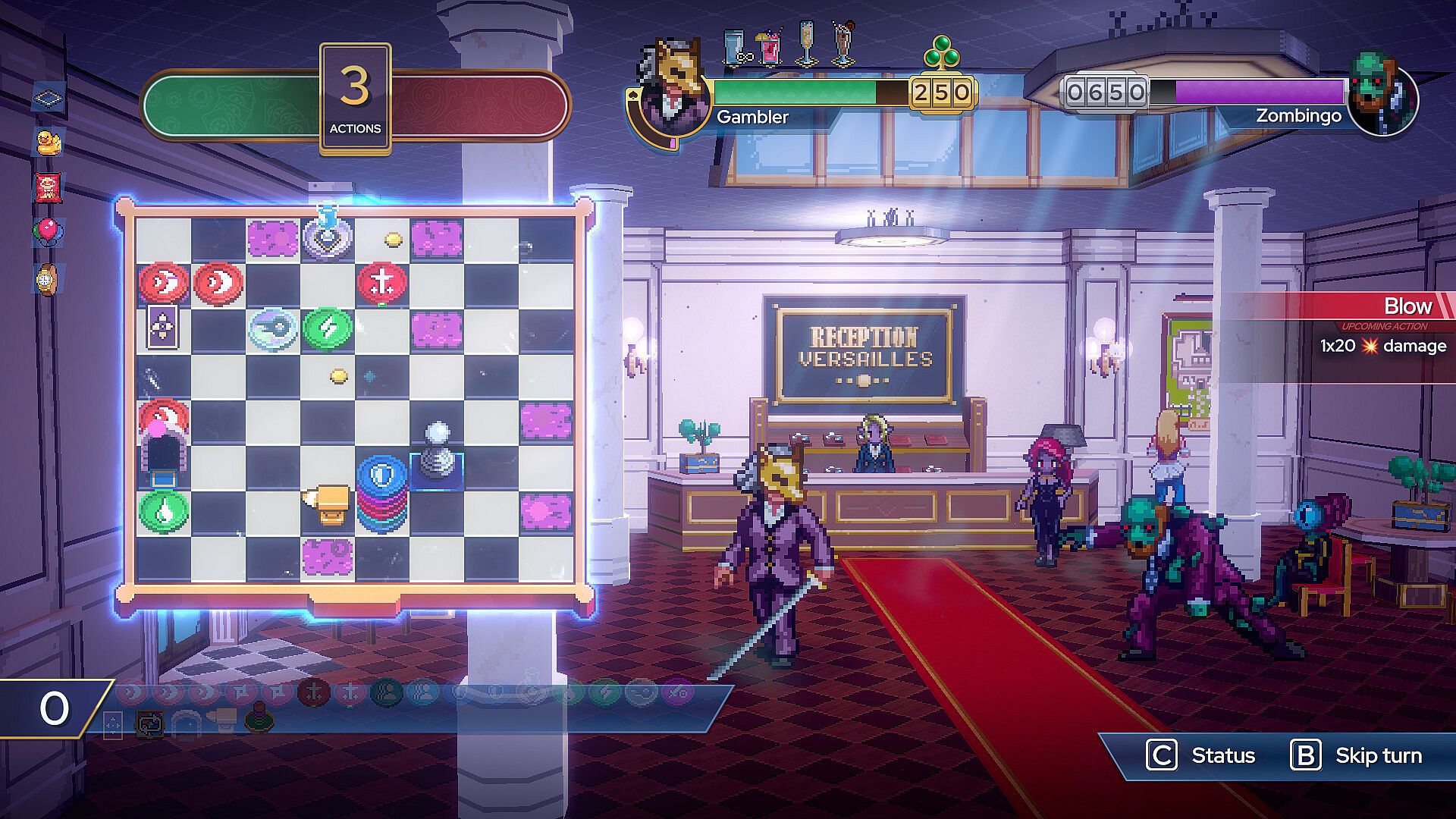
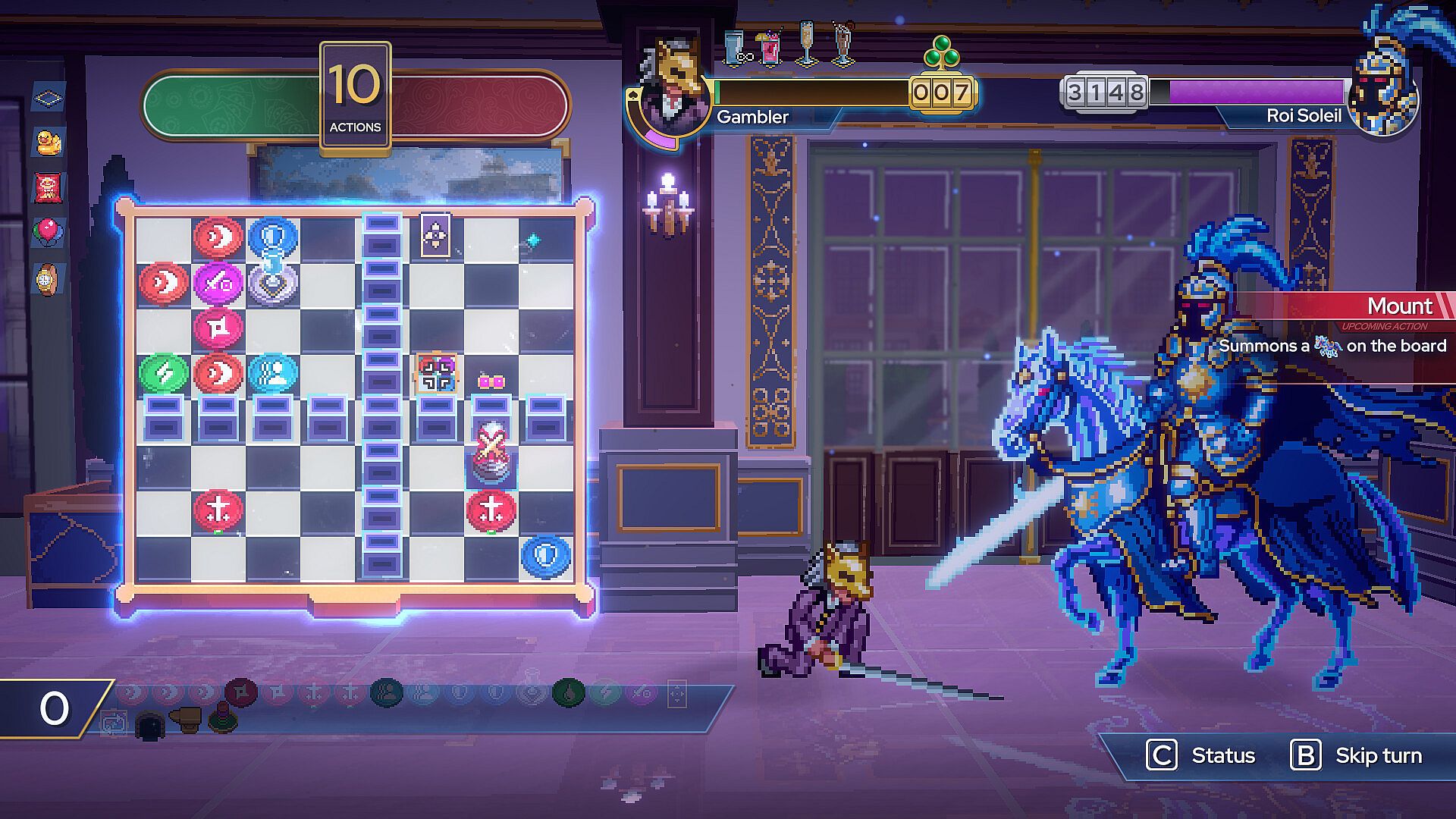
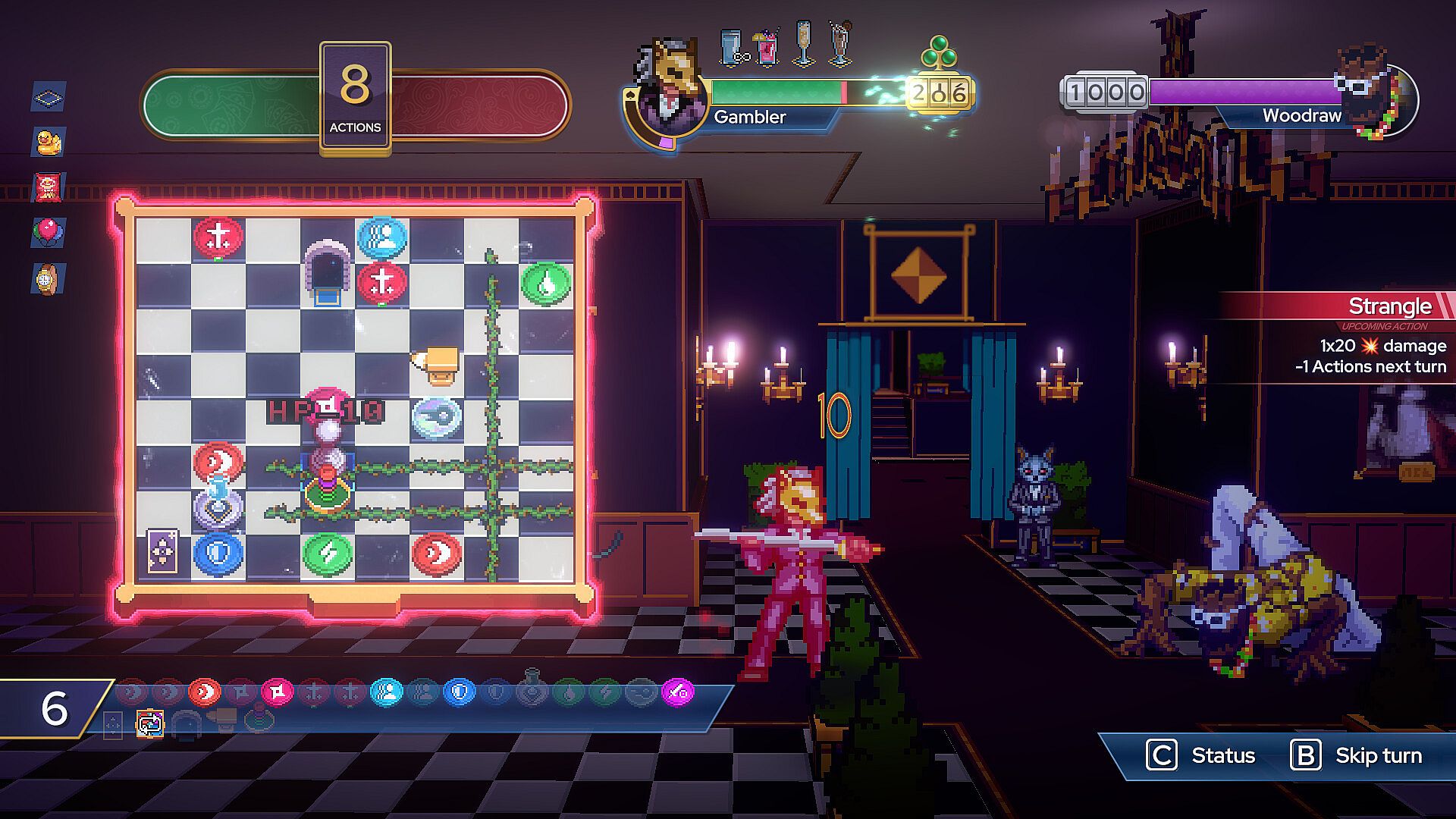
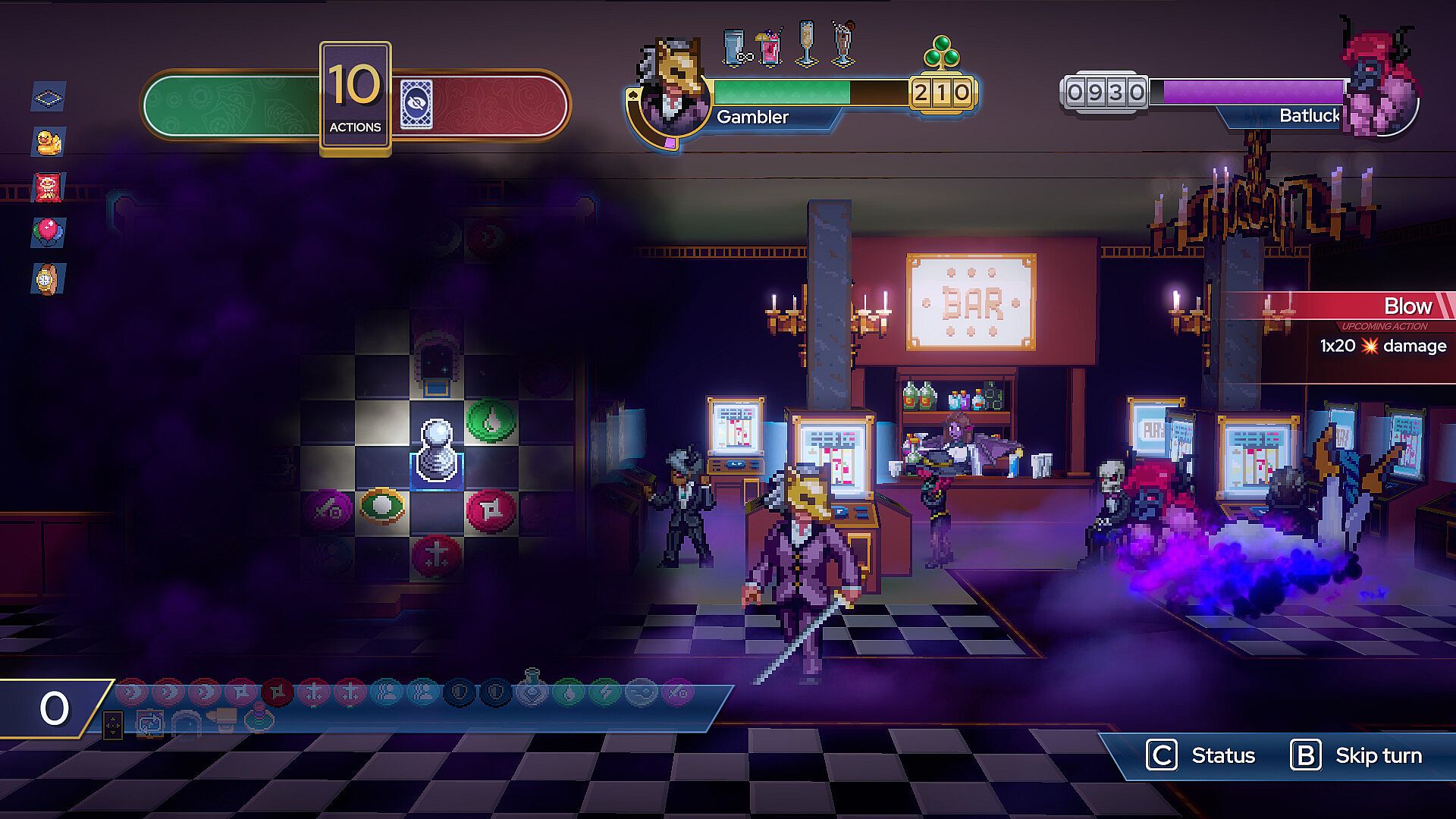
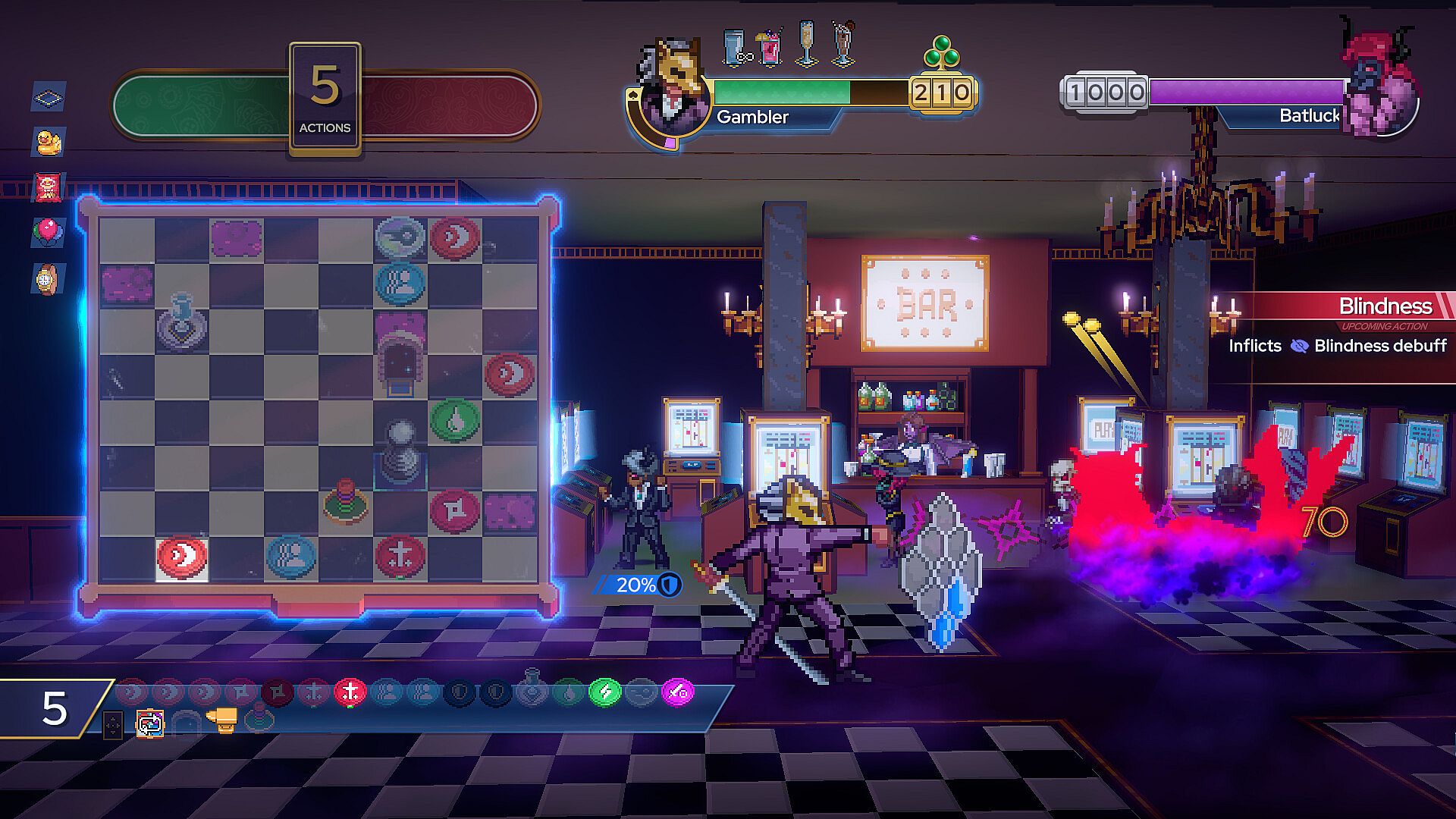
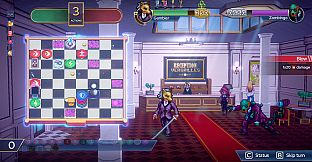
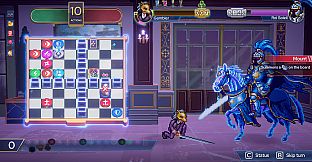
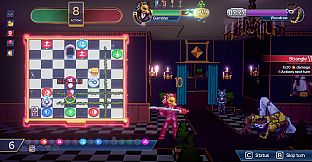
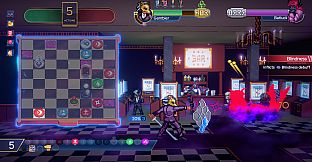
Combat unfolds entirely on a checkerboard where the Gambler controls one pawn and faces enemy entities. The system emphasizes prediction and response, since the player always sees the opponent's next intended action. Options include canceling that action, building combos through token placement, or positioning to reduce incoming harm. Builds form around a token deck, cocktails, artifacts, and stat adjustments that alter how pieces interact.
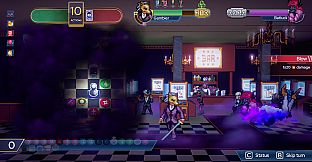
Board manipulation forms the heart of each fight. Players shuffle pieces, stack them for greater effect, and eliminate enemy units before they reach the pawn. Movement choices matter as well, with the option to skip a turn or gather resources needed to counter the next threat. The opposing side interferes through summoned entities that steal coins or shift tokens, decaying tiles that apply poison or glue, and direct harmful effects on the pawn itself.
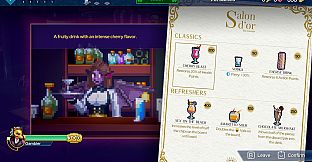
When pressure mounts, the Gambler can order a drink or trigger the Fortuna power to activate every token simultaneously. This risk-reward element rewards aggressive play while punishing overextension. The checkerboard layout keeps every decision spatial and immediate, turning each turn into a calculation of position, timing, and available resources.
Game Modes
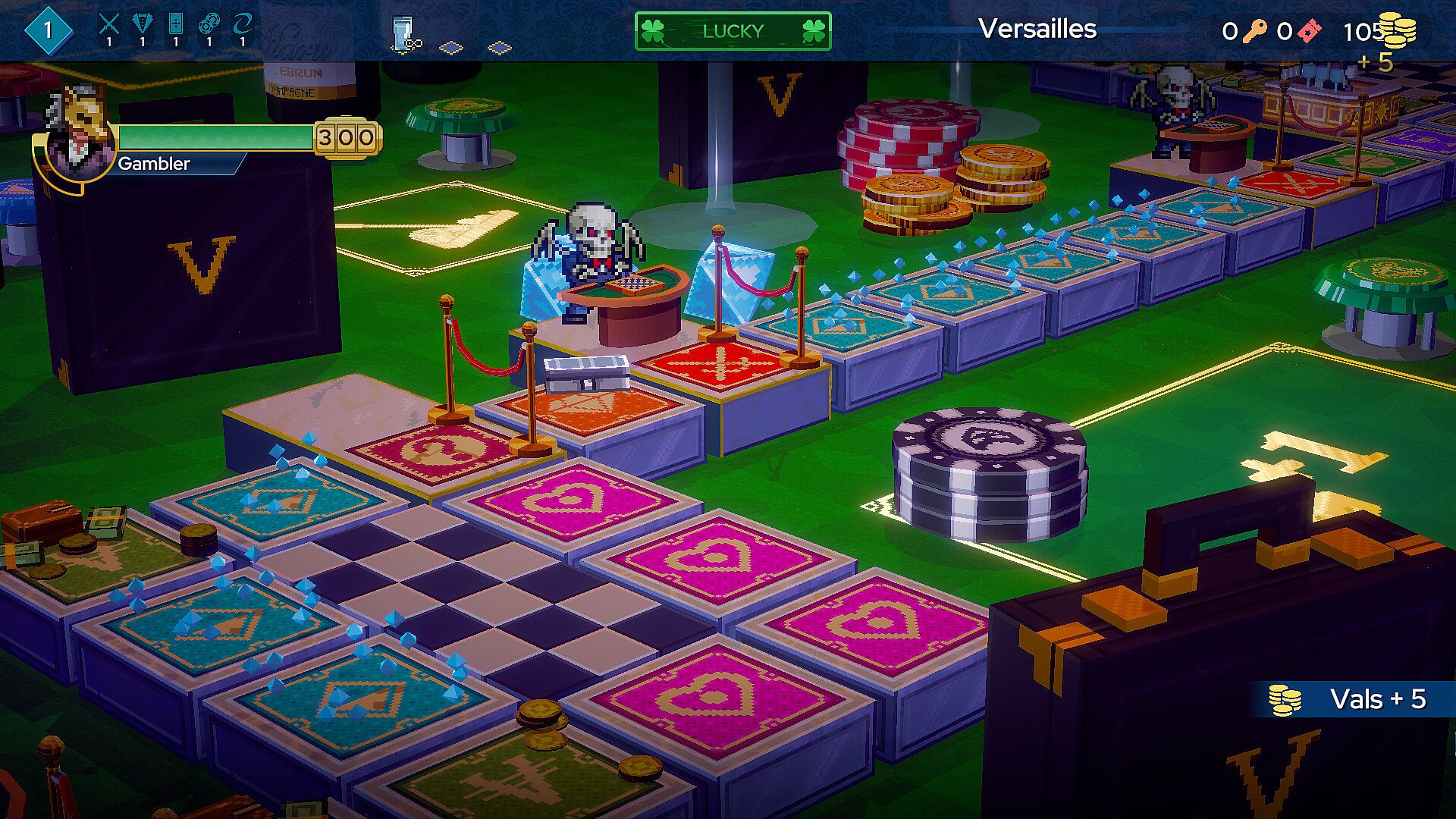
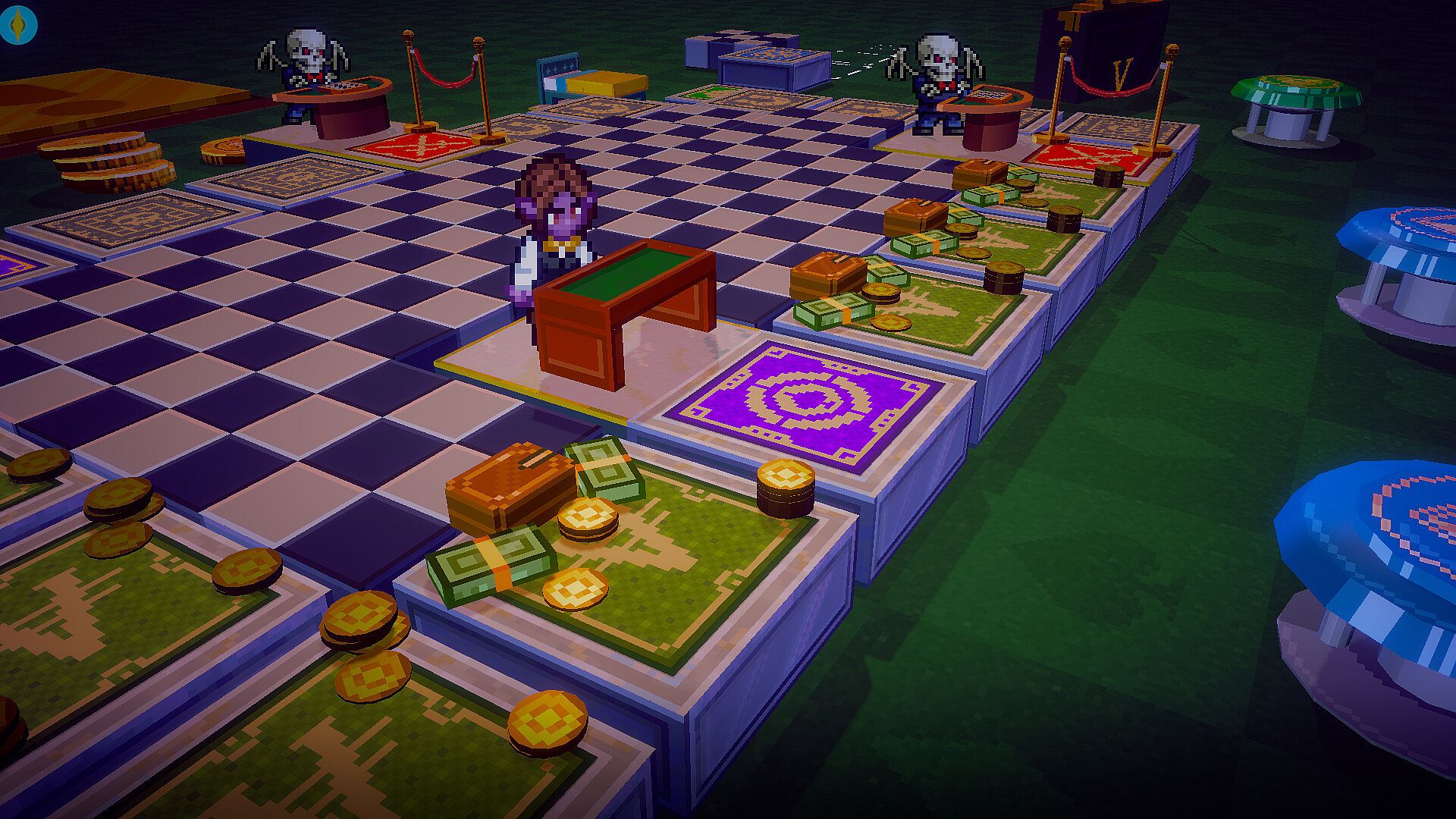
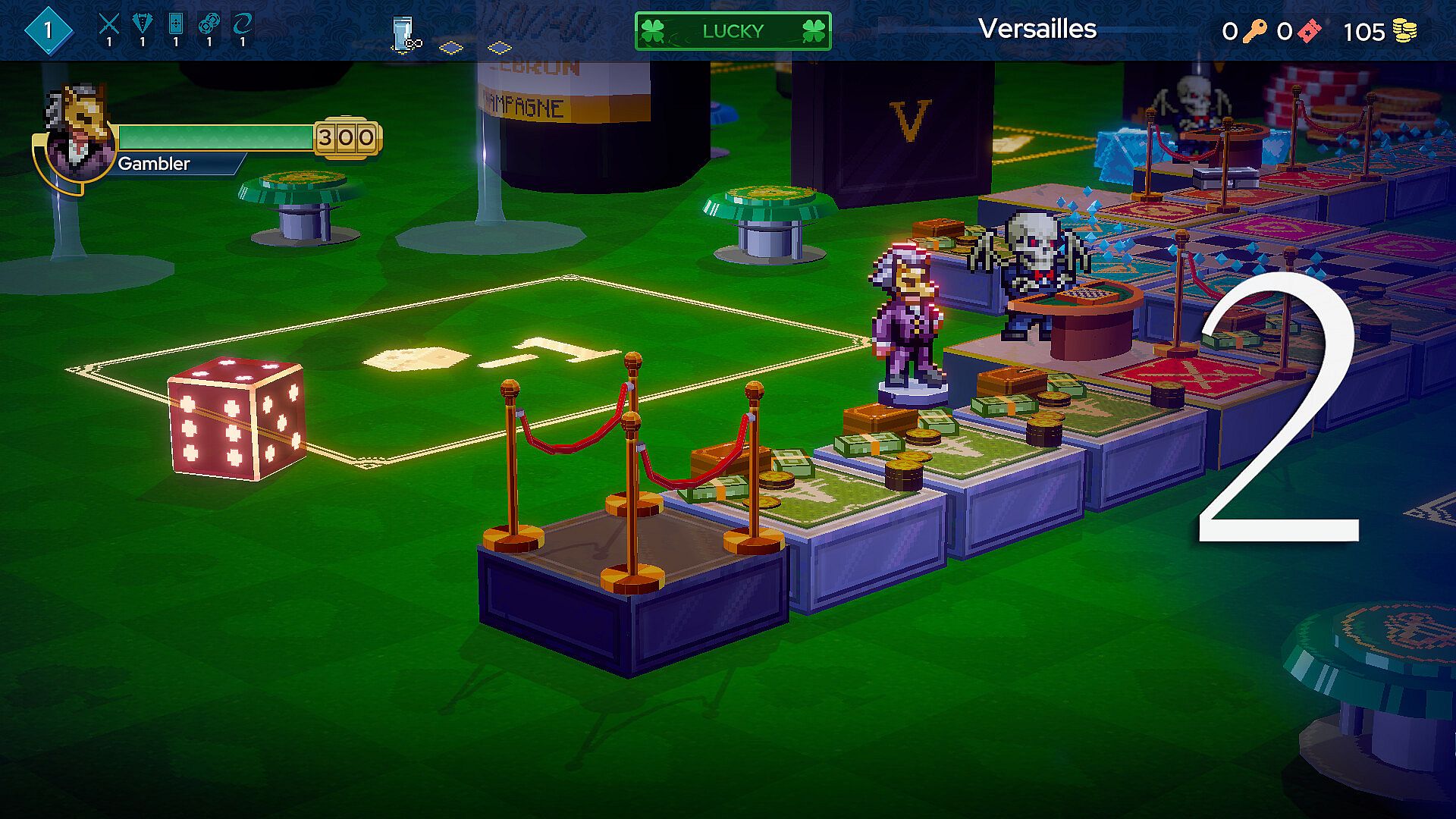
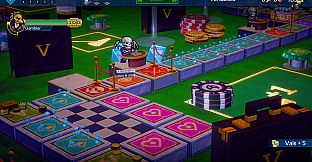
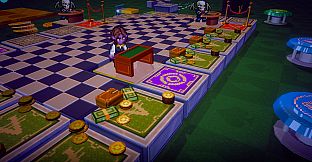
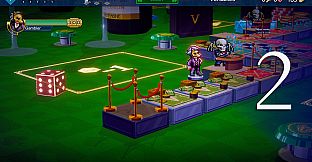
Val Fortuna structures its experience around repeated runs that blend combat encounters with an overarching map phase. Between fights, players roll a die across a fresh layout each time, where individual tiles deliver rewards, traps, additional fights, or special events. The die throw itself allows aiming and strength control, letting the piece bounce off bumpers, open containers, or activate switches.
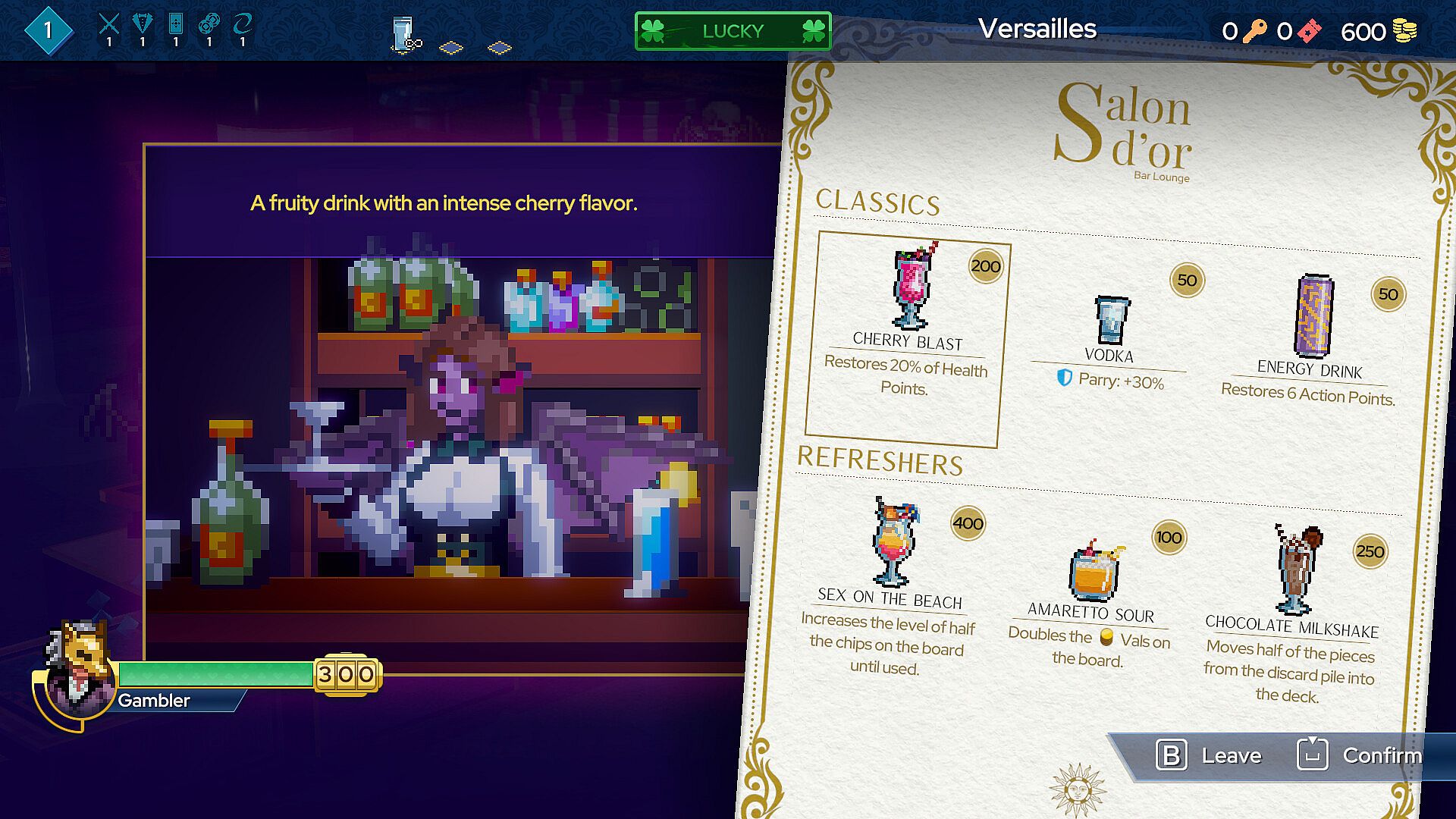
Route selection becomes important once intersections and teleporters appear. Players weigh their current condition and accumulated money when choosing paths toward the casino director. Funds earned at the tables can then be spent at bars, hotels, with dealers, or in souvenir shops to improve the next attempt. This map layer adds variety to each run without altering the fundamental single-pawn tactical focus.
Progression and Roguelite Elements
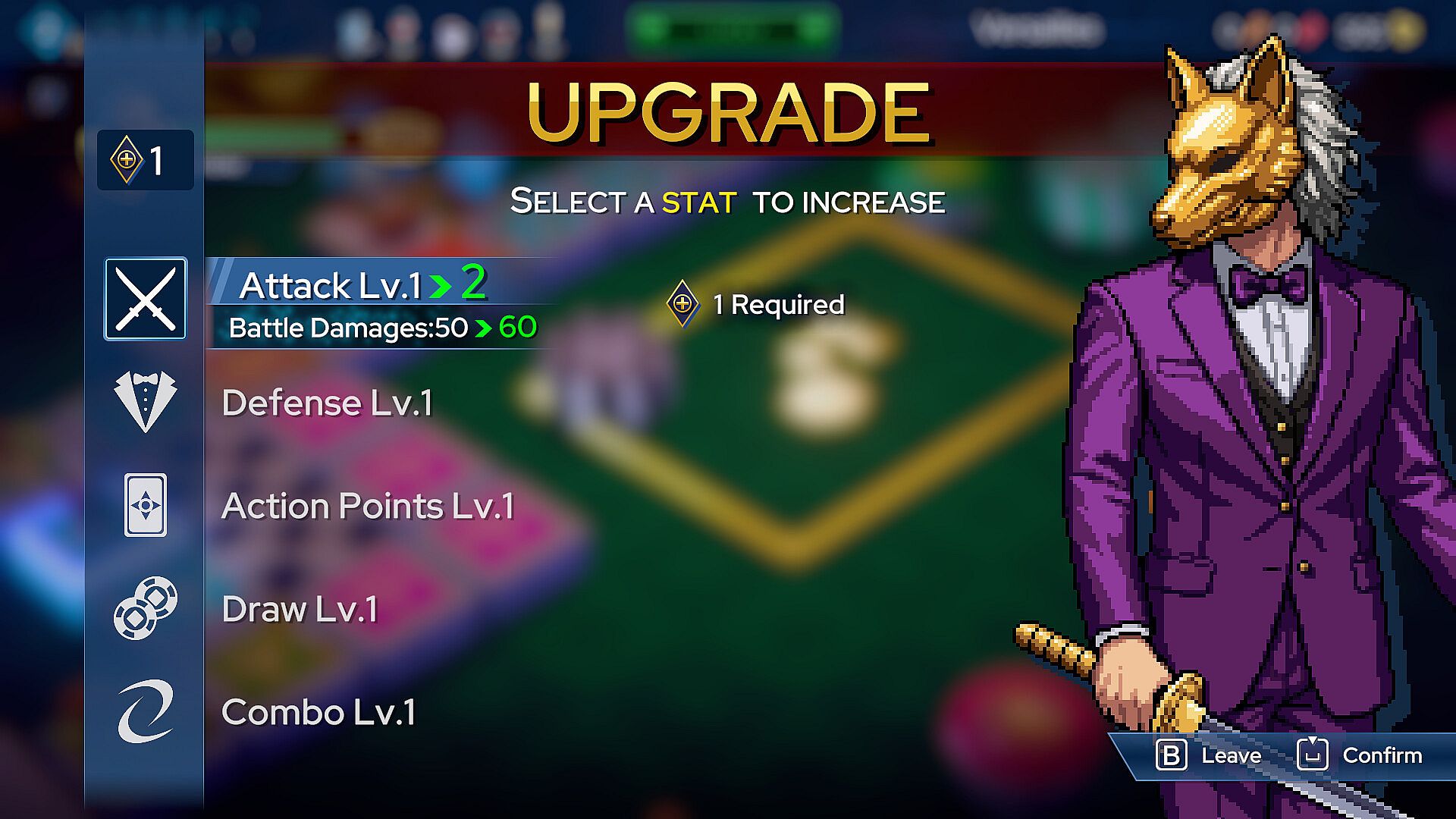
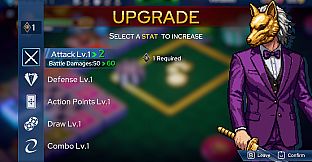
The roguelite structure ensures that failure returns the player to the start with permanent upgrades available. These cover starting deck modifications, customization options, and quality-of-life improvements that carry across runs. New content unlocks gradually, including additional characters, tokens, drinks, and artifacts that expand build possibilities.
Story fragments collected during runs piece together the larger narrative surrounding the Maskmaker and the city's hierarchy. The design supports multiple characters in the future, each planned with distinct mechanics and personal stories, though the initial release centers on the Gambler. Every run ends with the same outcome for the protagonist, yet the Maskmaker supplies another coin, reinforcing the house-always-wins theme while encouraging further attempts.
Is It Worth Playing?
Val Fortuna targets players who enjoy tactical decision-making layered over roguelite progression and deckbuilding systems. Its checkerboard combat demands spatial awareness and foresight rather than rapid reflexes, suiting those who prefer deliberate turns and visible opponent intentions. The combination of map navigation, resource management, and escalating board interference creates a self-contained loop that rewards experimentation with tokens and artifacts.
Because the game remains in early stages following its recent reveal, concrete player feedback and long-term support details are not yet available. Those drawn to single-player experiences that blend casino atmosphere with grid-based strategy will find the described systems align closely with established roguelite deckbuilder conventions while introducing a distinct pawn-and-checkerboard twist. Availability is limited to PC at present, with the full scope of planned character variety still ahead.