

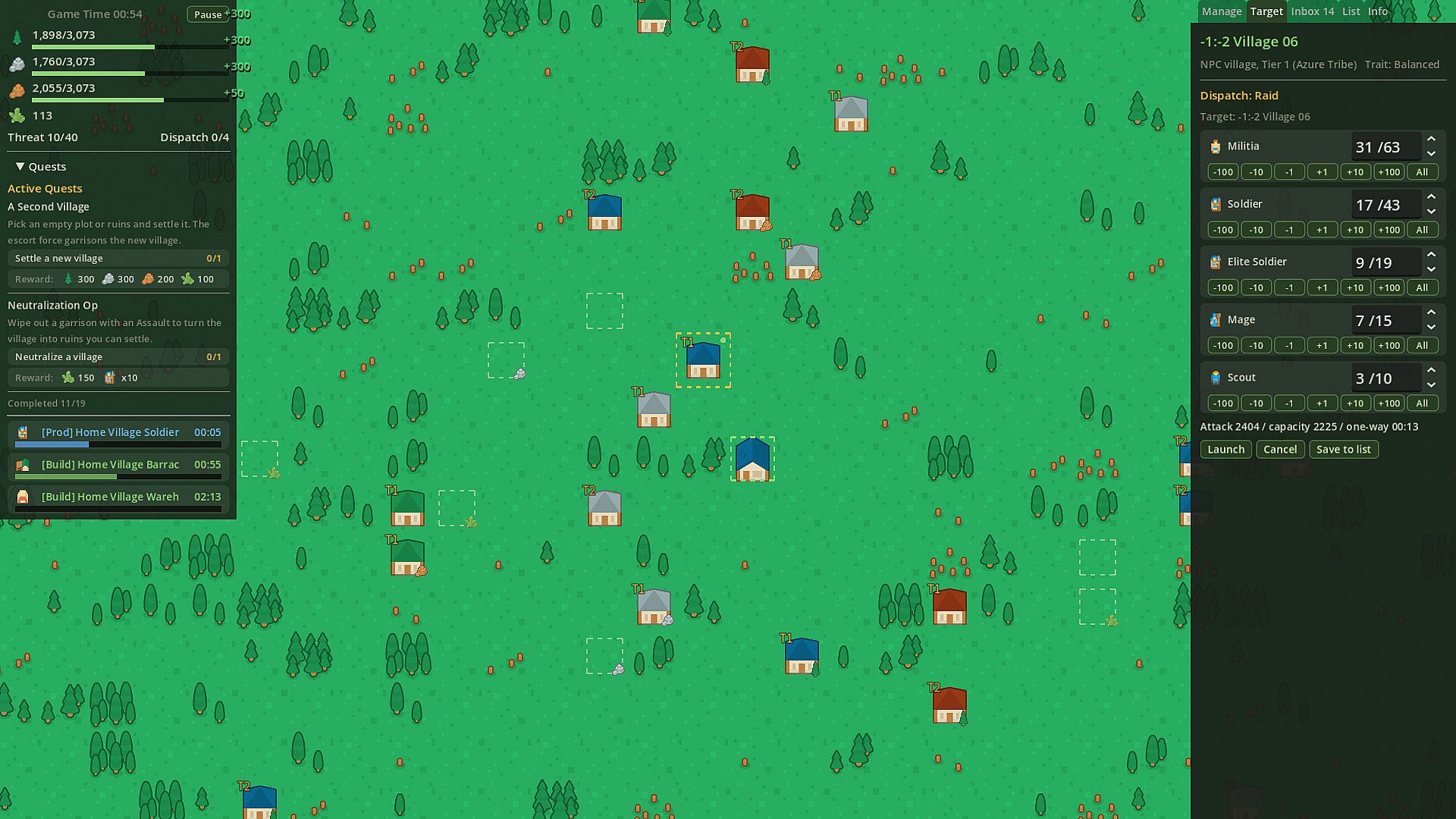
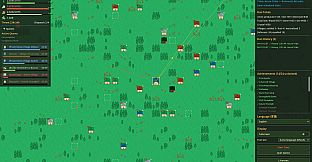
Villfell is a single-player real-time strategy game that distills the core loop of classic browser empire builders into a focused solo experience. Players manage a village on a finite map, balancing economy, military actions, and defenses against escalating threats without any multiplayer or always-online requirements.
Gameplay
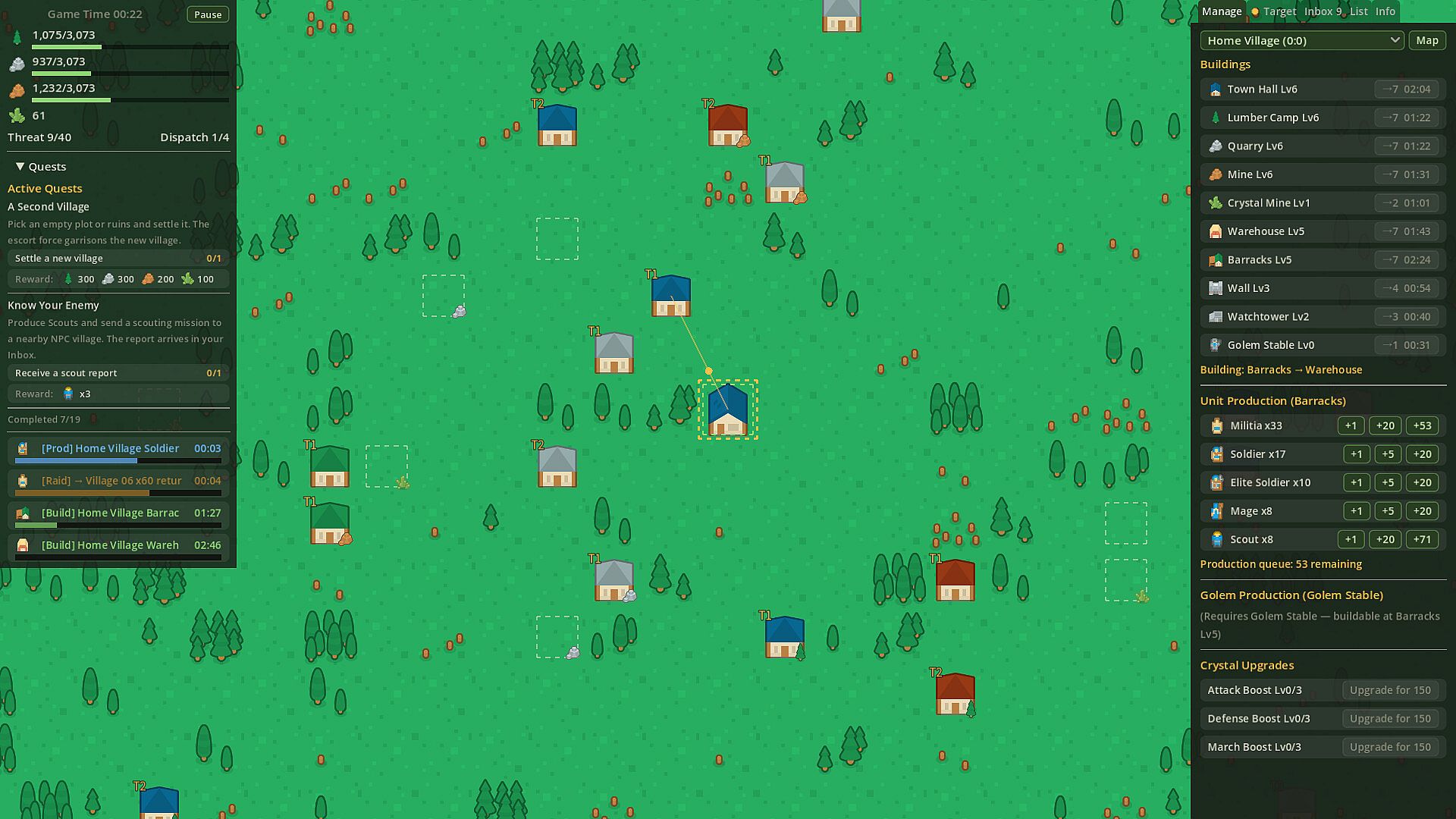
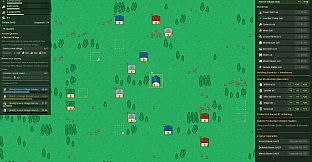
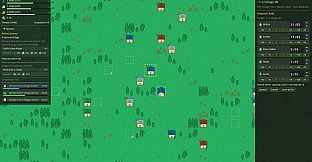
The central loop revolves around scouting nearby villages for intelligence on garrisons, walls, and resources. Players then decide between a Raid for plunder or an Assault for destruction, dispatching units while managing construction queues, troop training, and preparations for the next move. Marches and actions unfold in real time, creating constant activity without forcing long waits or external dependencies.
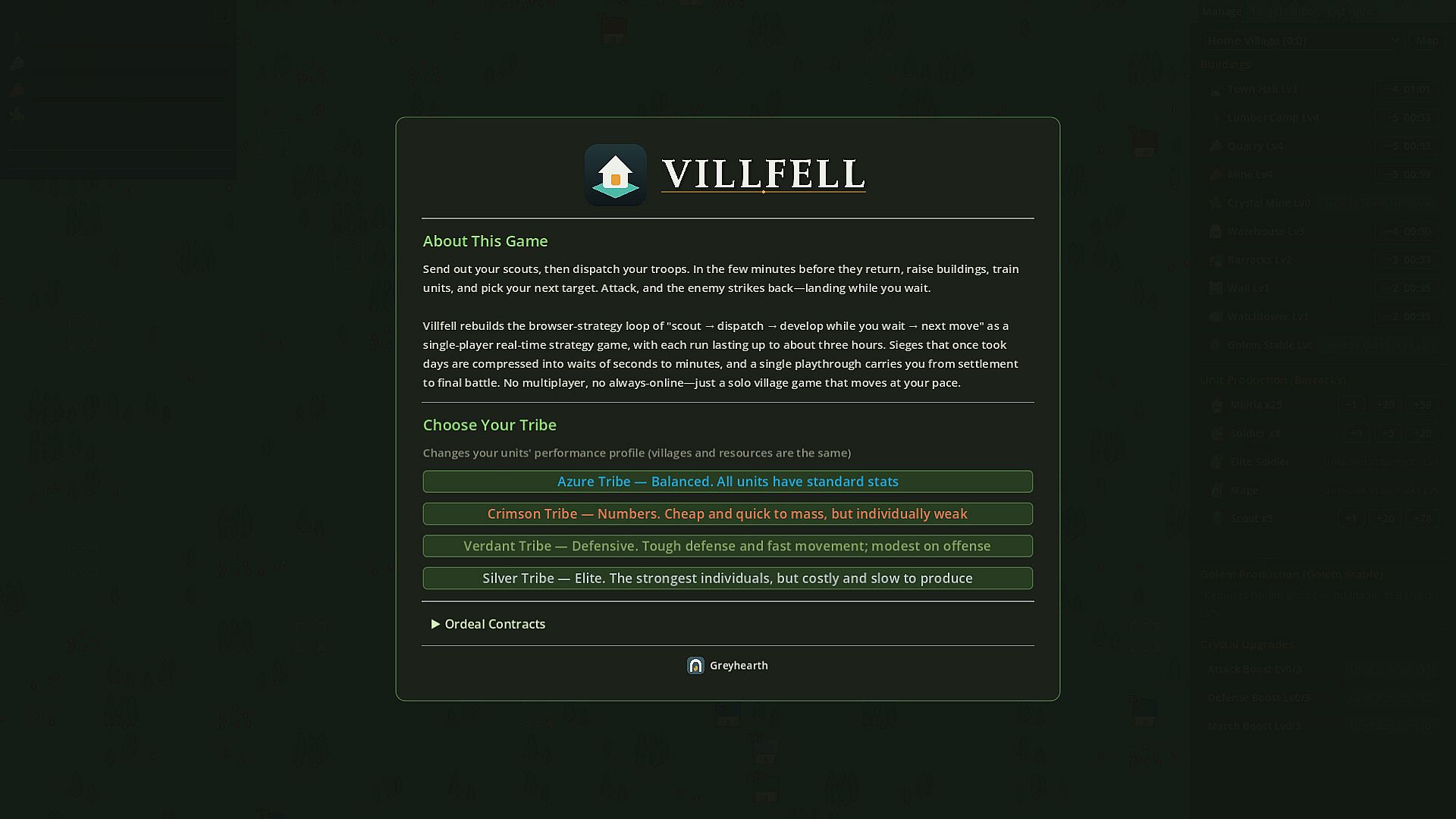
Four races offer distinct playstyles for each run: Azure provides balance, Crimson emphasizes cheap and numerous units, Verdant focuses on defense and speed, and Pale relies on expensive elite forces. Unit types include infantry attackers, specialized defenders, crystal-powered golem cavalry, and scouts, allowing compositions tailored to enemy defenses. Combat resolves deterministically based on army composition and reported intel ranges, removing RNG while leaving uncertainty only in scouting precision.
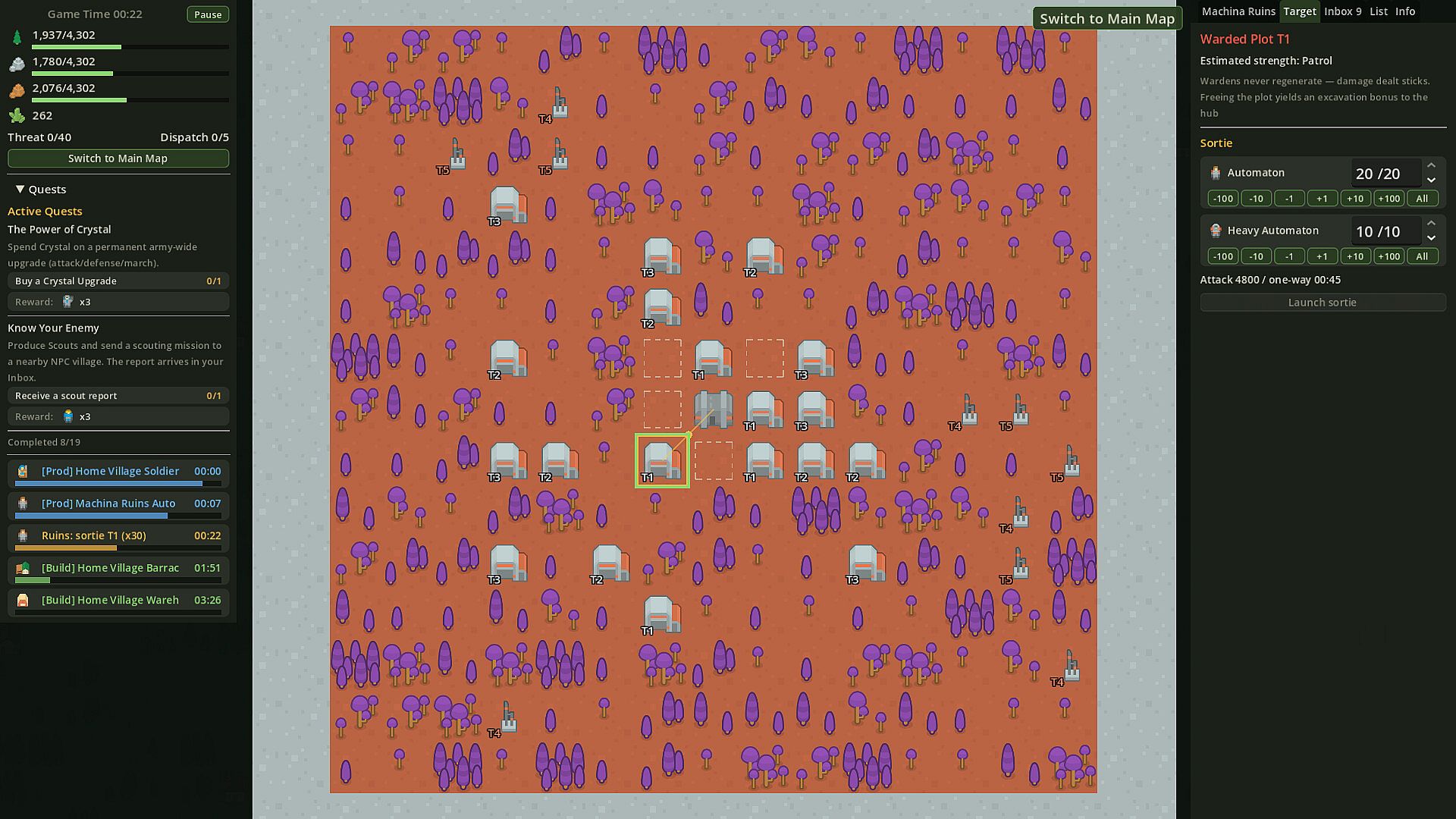
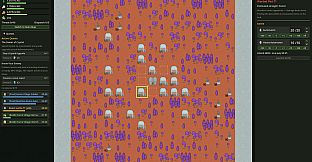
Resources consist of wood, stone, ore, and rare Crystal that funds advanced units and permanent upgrades to attack, defense, and march speed. Expansion occurs through settling ruins rather than capturing villages, supporting a steady solo sandbox progression. A Horde outpost emerges early and grows if ignored, forcing decisions on timing an attack. Later, the Machina Ruins activate with Crystal to provide map-based challenges that yield realm-wide boosts via structures like Resonators and Forgeworks.
Game Modes
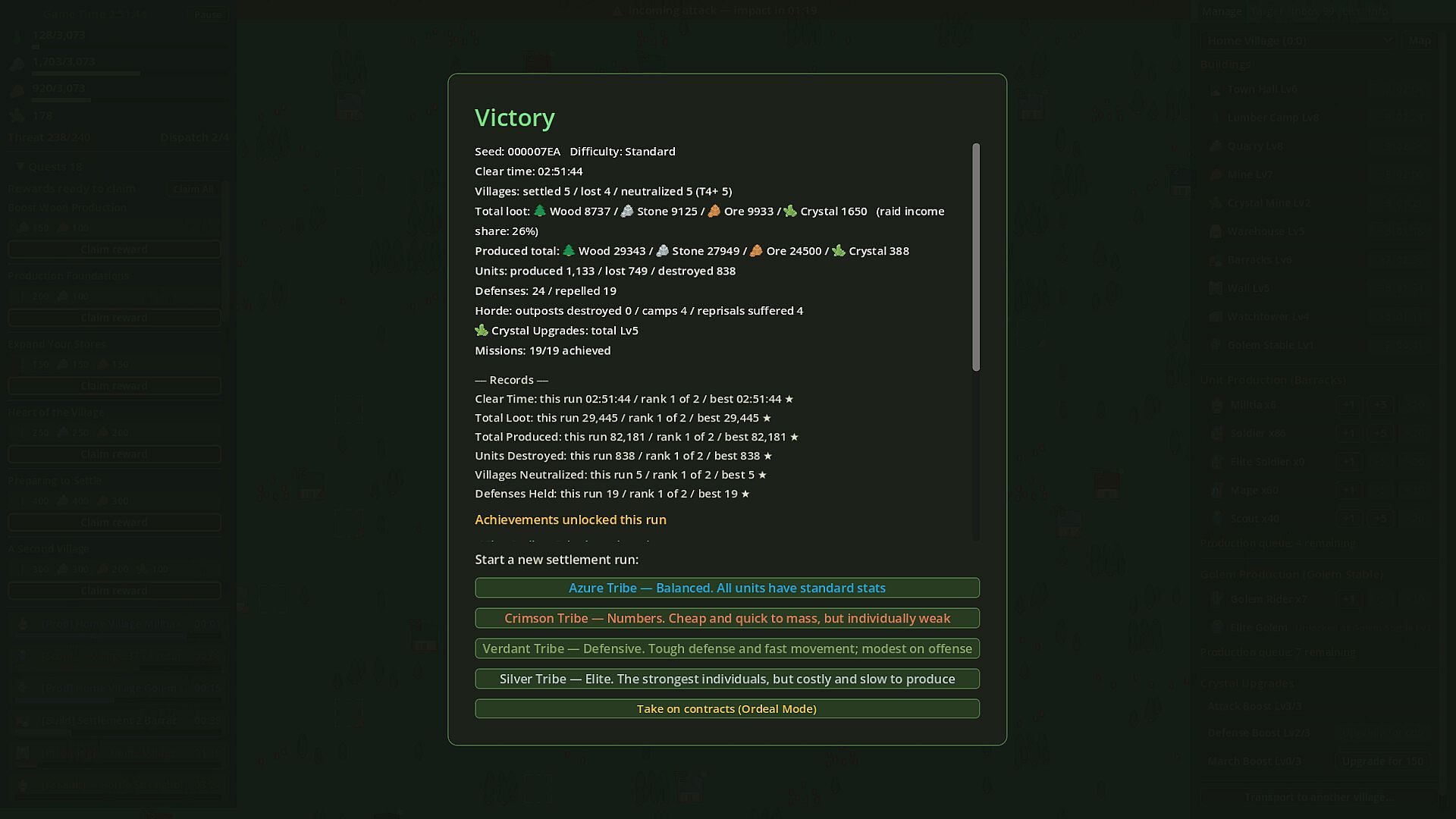
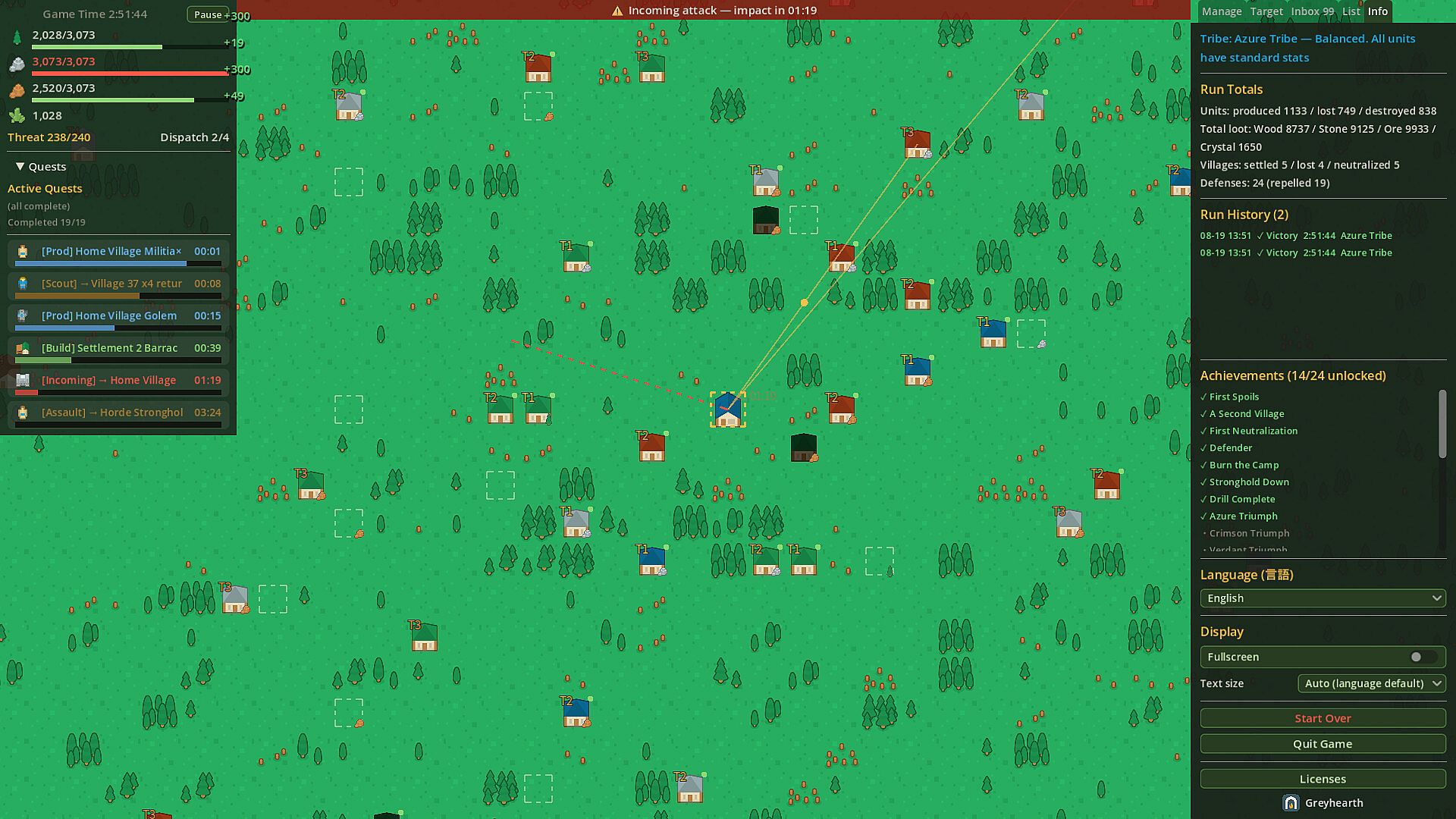
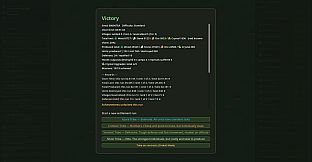
Standard runs follow a structured campaign from initial village foundation through raiding cycles, expansion with golem forces, and an endgame assault on three Horde camps plus a stronghold. The map features around 130 villages arranged in rings of increasing difficulty, with replayability driven by different races and seeded layouts. Leaderboards track metrics such as clear time, loot collected, production totals, units destroyed, villages neutralized, and defenses repelled, alongside 24 achievements.
Ordeal mode unlocks after the first victory and lets players combine up to 20 handicap contracts, including stronger Horde presence, barren resources, time limits, or no retreats. Combined points determine an Ordeal grade, with records kept for highest grades and best times per combination to support extended challenge runs.
Key Mechanics and Features
Threat accumulates from aggressive actions and triggers counter-raids during marches, requiring quick responses like rushing defenders or relocating resources. Building, production, and retaliation all advance simultaneously, keeping players engaged at their own pace. The game runs entirely offline, with time progressing only during active sessions and full pause support available.
A seeded map and lack of permanent progression between runs encourage repeated playthroughs focused on optimization and experimentation with race and strategy variations. The Horde endgame introduces scouting limitations that add tension to the final stronghold assault, where Crystal rewards scale with camp destruction.
Is It Worth Playing?
Villfell suits players who enjoy real-time strategy loops centered on economy management, scouting decisions, and deterministic combat outcomes in a compact solo format. Runs typically last up to three hours, making it accessible for focused sessions without ongoing commitments or external interactions. Those seeking replayable campaigns with adjustable difficulty through Ordeal contracts and clear performance tracking will find structured goals across multiple attempts. The absence of multiplayer or online elements keeps the experience self-contained and uninterrupted, appealing to fans of indie strategy and simulation titles who prefer controlled pacing over persistent worlds.