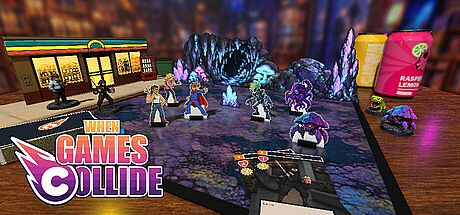



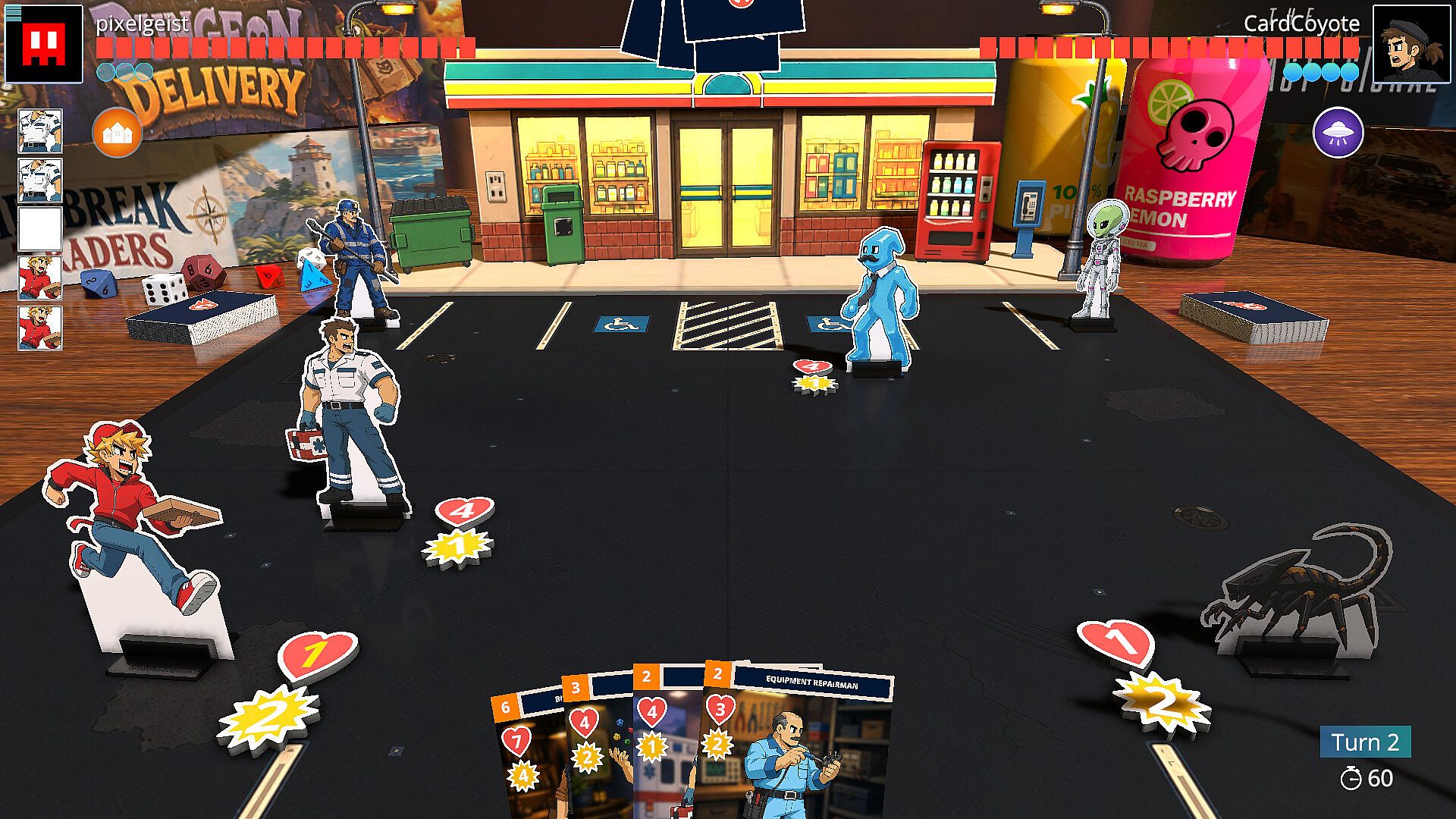
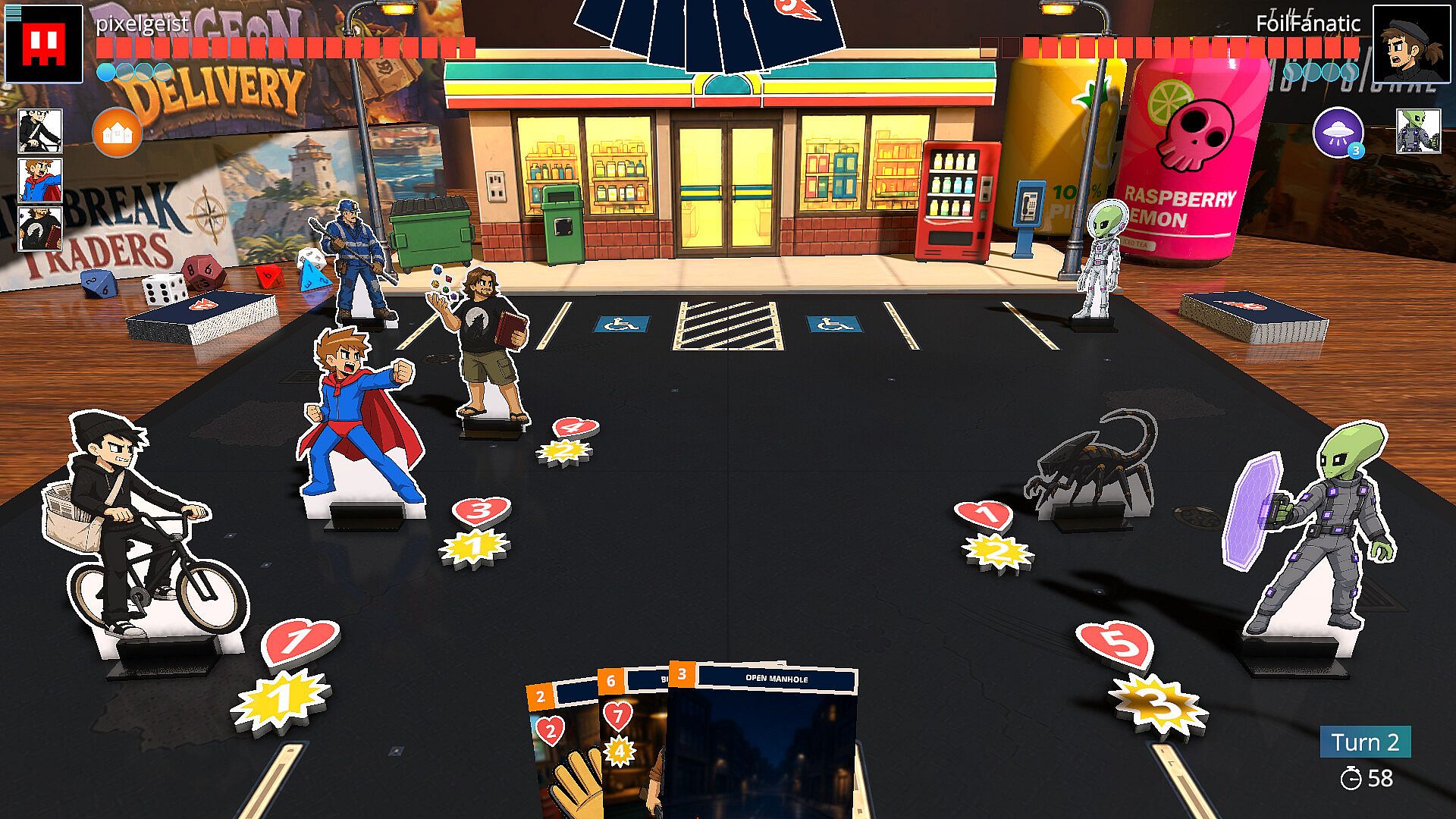
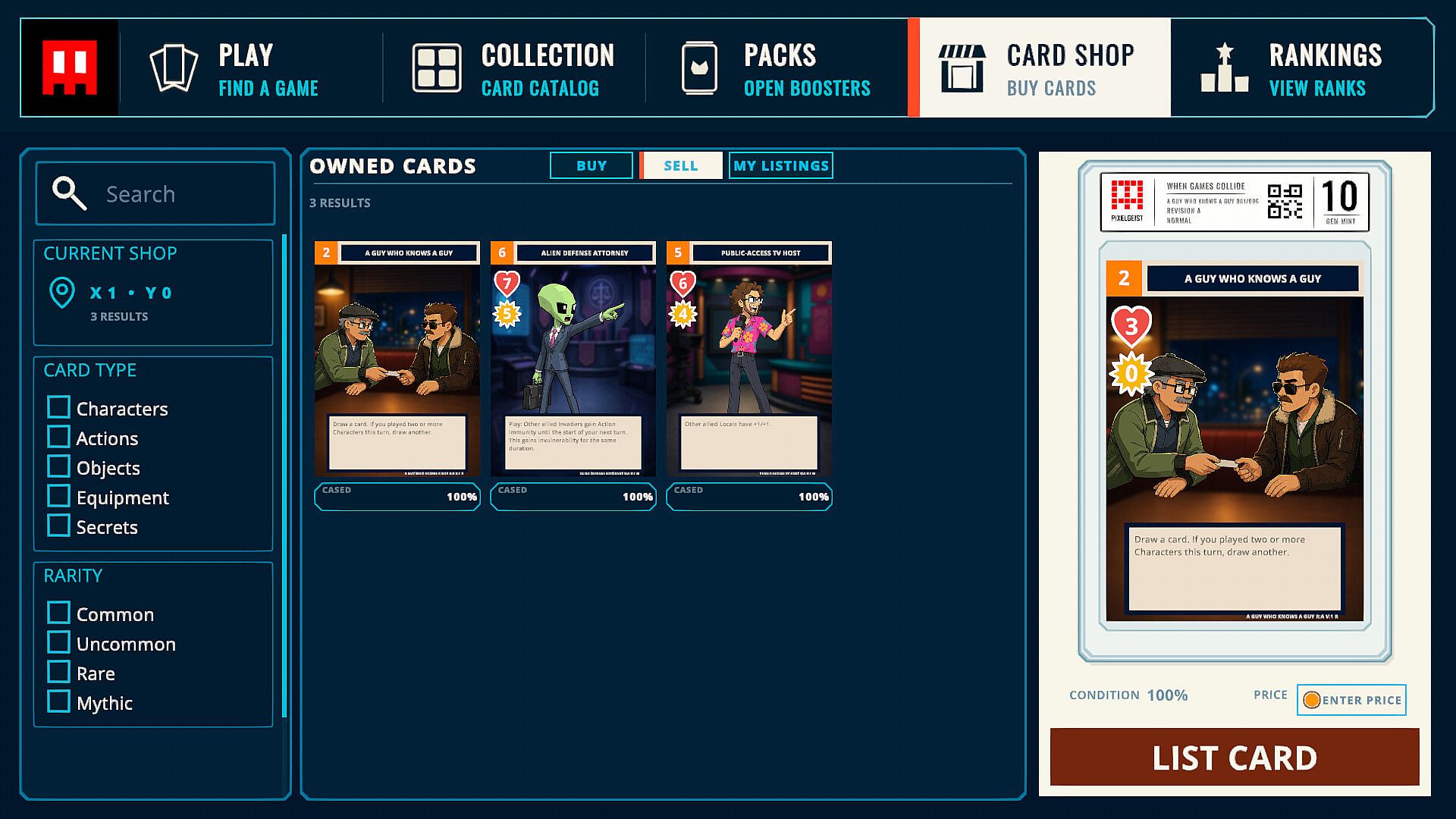
When Games Collide is a strategy, free to play, indie, massively multiplayer online trading card game built around persistent individual cards, regional markets, and direct player interactions on PC. Exploration and collection drive the experience alongside competitive matches, with every card existing as a unique copy that carries its own history and condition.
Gameplay
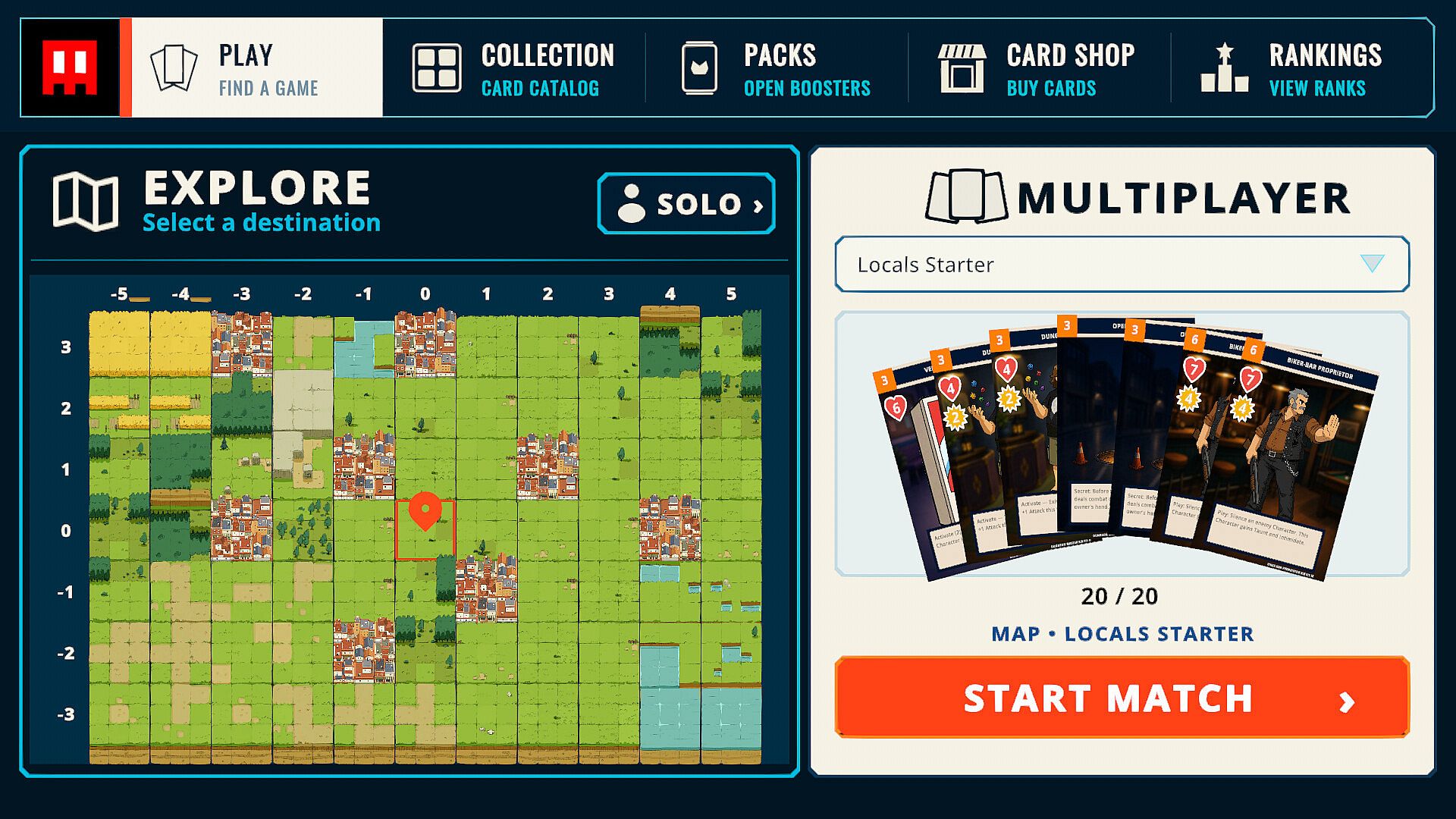
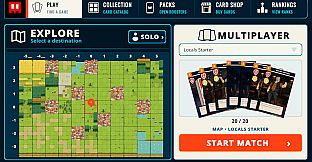
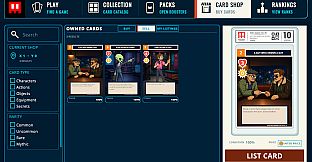
Players travel between towns to locate cards, miniatures, and other items through local shops and player-driven markets. Prices and availability shift by location, so buying low in one area and selling high in another forms a core economic loop. Meeting other players in these spots allows direct trades and immediate 1v1 matches outside of any automated system. Each card copy tracks its condition, ownership chain, and match record independently. Published cards stay unchanged in their original form even after balance adjustments, which instead add new revisions to future packs. Alpha and beta acquisitions carry forward unchanged into the full release.
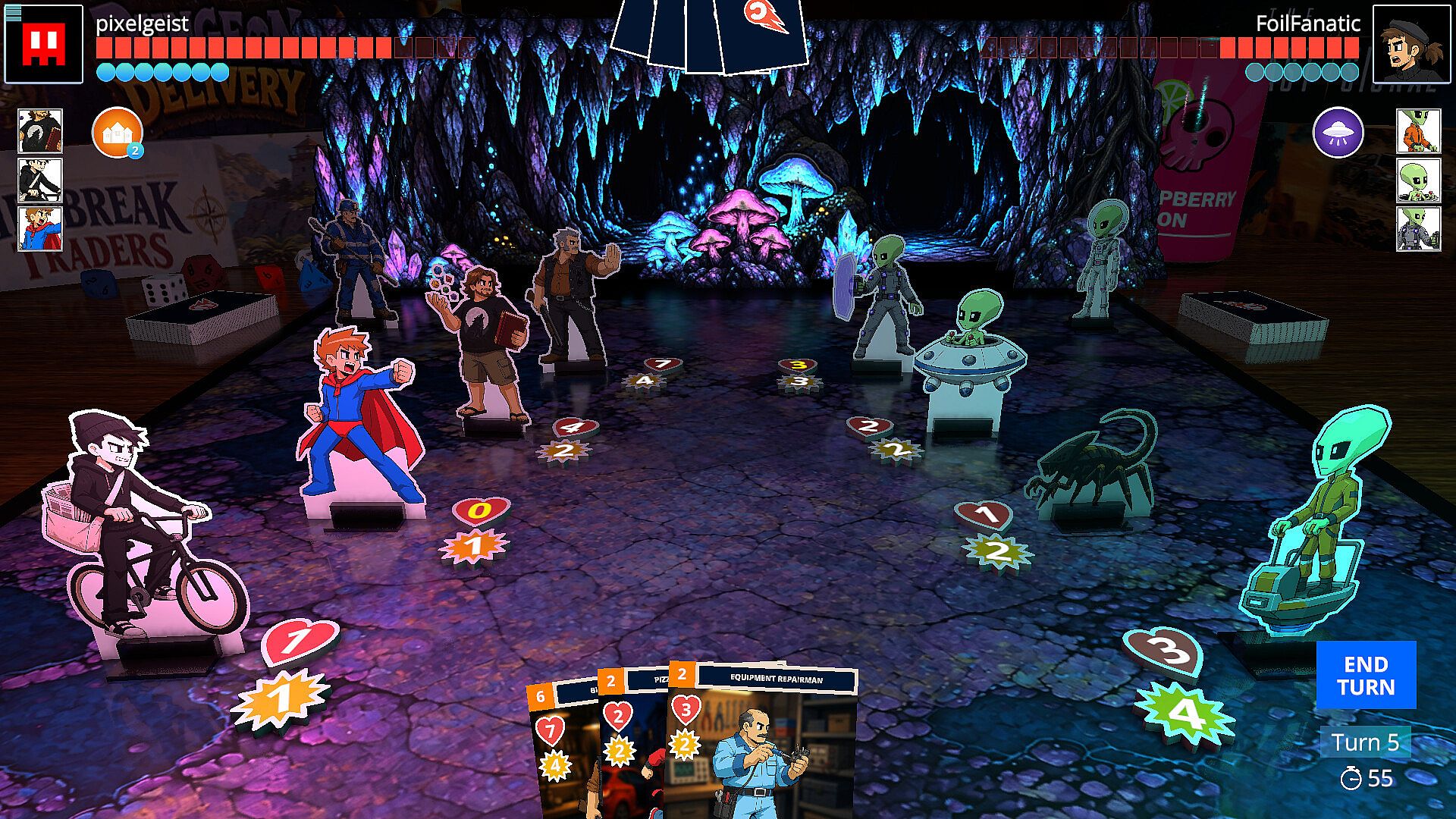
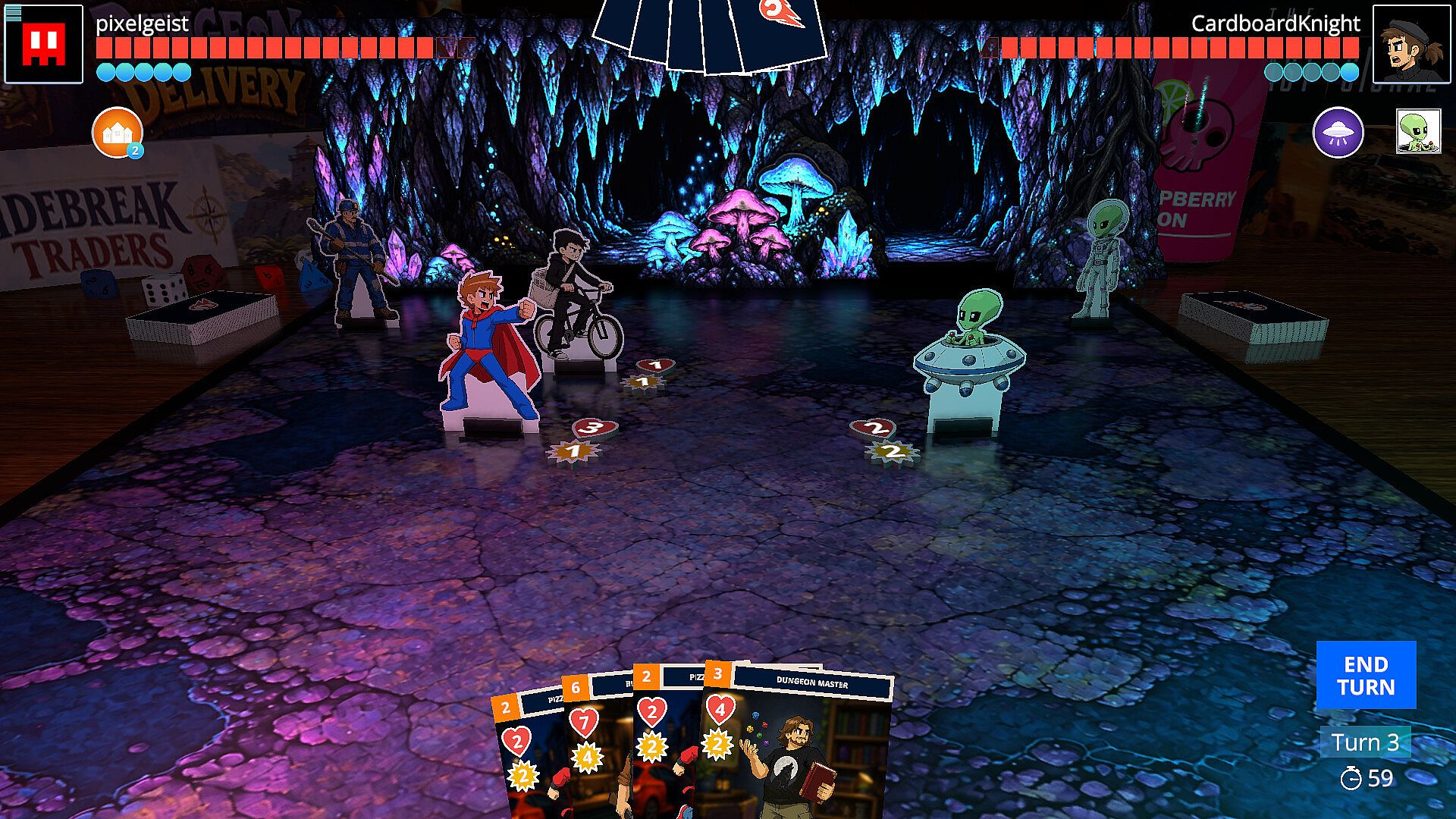
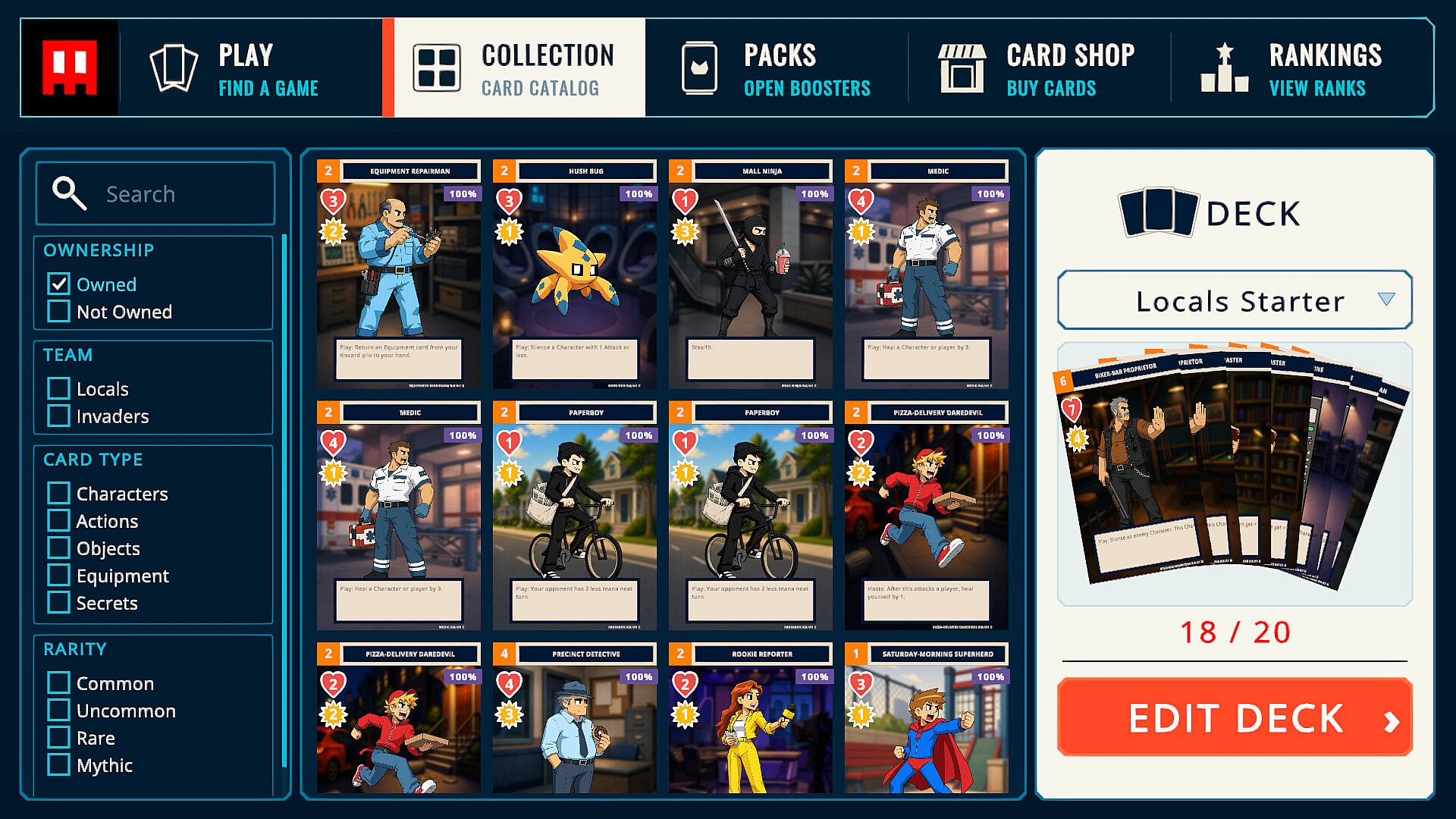
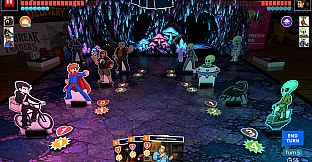
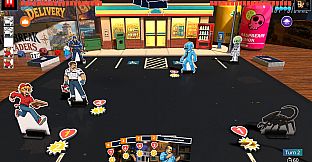
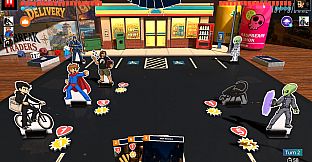
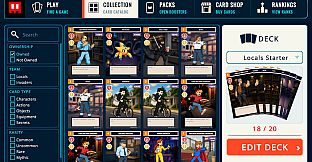
Deck construction pulls from exact copies in a personal collection. Decks carry a team tag, and off-team cards require two extra mana to play while neutral cards incur no penalty. Battles unfold in board-game-style arenas featuring 2D character animations in a JRPG presentation. Condition on every card in a deck declines during ranked play, forcing choices between using high-value copies or protecting them in cases. Currency rewards go to both winner and loser after ranked matches, funding further pack purchases or market acquisitions. Opting into a higher wear multiplier before a match increases condition loss but boosts currency payouts and the odds of rare or mythic rewards.
Game Modes
Direct 1v1 matches can start instantly when players meet in shared locations. Ranked matches form the primary competitive outlet, applying condition wear to decks and distributing currency to participants. These matches also feed into a leadership system where top performers influence a location's visual style and the reward types available during exploration. No additional named modes appear in the current plans, keeping focus on these player-driven and ranked encounters.
Collection and Economy
The launch set plans for 96 cards split across Locals and Invaders. Future expansions will layer new genres onto the same framework, mixing locals with aliens, fantasy figures, and other groups. Steam Workshop support lets creators upload full artwork sets for private use or potential curated release, with revenue sharing considered for selected sets. Individual card persistence means older revisions remain valuable on the secondary market once newer versions enter circulation.
Is It Worth Playing?
The game targets players who enjoy trading card collection combined with economic strategy and persistent ownership rather than frequent balance resets. Its Early Access phase focuses on testing markets, card condition systems, and community-driven elements, with a planned full release around July 2027 that adds the complete launch card set and refined artwork. Those drawn to regional trading, exact-copy deckbuilding, and long-term card history will find the mechanics align closely with those interests. The free-to-play model with in-game purchases supports ongoing access, though the experience remains in active development with limited current features beyond core persistence and matches.