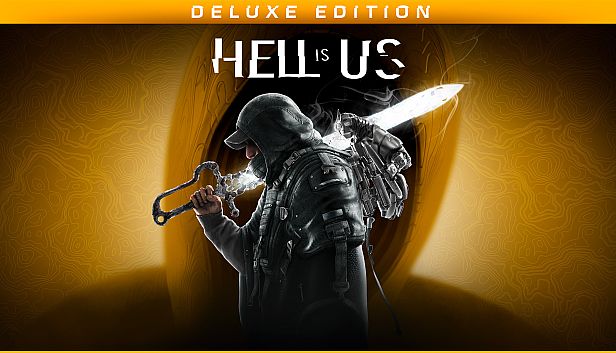



















Hell is Us is a third-person action-adventure game centered on personal discovery amid conflict. Players control Remi, who returns to the isolated fictional country of Hadea after years away, seeking answers about his origins in a land scarred by civil war and a mysterious calamity. The title blends melee-focused combat with deliberate exploration across a semi-open environment filled with remnants of human strife and otherworldly threats.
Gameplay
Core mechanics revolve around close-quarters melee engagements that reward timing and positioning against both human adversaries and strange creatures. Combat feels direct, with emphasis on reading enemy movements rather than complex combos. Exploration forms the backbone of progression, as players traverse varied regions of Hadea to uncover clues, resources, and narrative fragments. Puzzle elements require observation of the surroundings and logical connections between environmental details and story context. The semi-open structure allows freedom to backtrack and investigate side paths, though the journey remains linear in its overall narrative arc. Themes of war's brutality surface through encounters and environmental storytelling, highlighting everyday hardships without relying on supernatural elements alone.
Game Modes
The game operates exclusively as a single-player experience. Progression unfolds through a continuous campaign that integrates combat sequences, exploration segments, and puzzle resolution. There are no separate competitive or cooperative options, keeping the focus on solitary navigation of Hadea's dangers and secrets. This structure suits players who prefer uninterrupted narrative delivery and personal pacing over multiplayer interactions.
Story and Setting
Hadea serves as the central location, depicted as a hermit nation fractured by internal conflict and external pressures. The setting draws from real-world echoes of civil strife in the 1990s, translated into a near-future context with added fantastical elements. Remi's journey reveals layers of personal history intertwined with the country's downfall, presented through environmental details, character interactions, and discovered documents. The tone stays grounded in the consequences of division, xenophobia, and violence, using these to drive emotional weight rather than spectacle.
Exploration and Discovery
Travel occurs on foot and with limited vehicle access in later areas, encouraging players to map out connections between locations manually. Backtracking reveals new insights as abilities or knowledge expand. The design rewards note-taking and attention to landmarks, as many objectives tie into piecing together fragmented information from the world itself. Mysterious creatures appear as both obstacles and indicators of deeper lore, prompting further investigation into their origins alongside human conflicts.
Is It Worth Playing?
Reception highlights the game's strength in atmospheric storytelling and its unflinching portrayal of conflict's human cost. Combat provides satisfying feedback without overwhelming complexity, while exploration appeals to those who enjoy piecing together narratives from the environment. The single-player focus delivers a complete, self-contained experience suitable for players drawn to thoughtful action-adventures with mature themes. Those seeking fast-paced multiplayer or expansive post-launch content may find the package more limited, but the core loop of investigation and confrontation holds steady appeal for the intended audience. Current availability on PC supports straightforward access for those matching the described preferences.