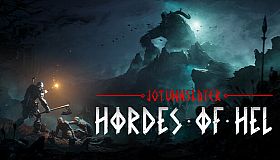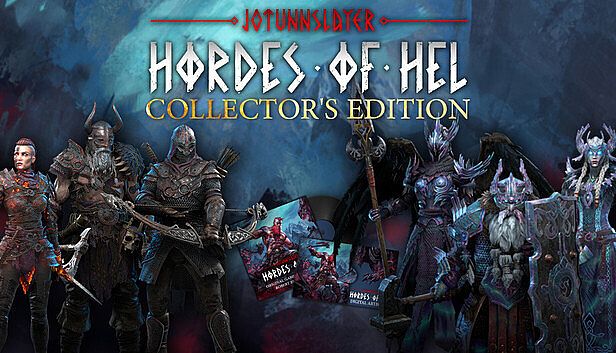





Jotunnslayer: Hordes of Hel is an action roguelike RPG that blends horde survival mechanics with Norse mythology. Players control one of several distinct classes in short, intense runs across hostile realms, fighting waves of enemies while completing objectives to summon and defeat powerful bosses known as Jotunn.
Gameplay
The core loop centers on survival against escalating enemy hordes in an isometric view. Characters automatically attack nearby foes or allow manual aiming and activation of weapon skills depending on player preference. Experience crystals drop from defeated enemies, enabling level-ups that grant choices from a pool of divine blessings drawn from gods such as Thor, Loki, Freya, and Odin. These blessings provide abilities like lightning strikes, poison effects, or summoned creatures that evolve over the course of a run.
Positioning and resource management matter because health can deplete quickly under pressure. Food items restore health when collected, and a dash ability helps avoid incoming attacks. Gold earned from successful runs funds permanent meta-progression upgrades in a skill tree that improves classes and global options. Each class brings unique traits, such as the Berserker's close-range focus and health regeneration or the Revenant's ranged attacks and wolf summons.
Before each run, players select difficulty settings that adjust enemy strength, time limits, and objective counts. Modifiers add further customization by trading benefits for drawbacks, such as reduced enemy damage in exchange for fewer resources. The system rewards experimentation with class and god combinations to create varied builds.
Game Modes
Runs take place in one of five verified realms: Niflheim, Jotunheim, Muspelheim, Svartalheim, and Helheim. Each realm features distinct environmental hazards and enemy types that influence strategy. Players must complete a set number of objectives within the time limit to open a portal for the final Jotunn boss fight. Examples of objectives include gathering marked mushrooms in Fungal Harvest, defending against summoned bosses in Chieftain Trials, and enduring movement-impairing storms in Blizzard Survival.
Difficulty options range from Normal through Hard and Insane to the Endless mode added in the 1.0 update. Higher difficulties increase enemy power and objective requirements while offering greater rewards. Endless mode removes the time limit for prolonged survival challenges. The structure emphasizes completing objectives rather than pure endurance, adding structure to each session.
Realms and Progression
Progression extends beyond individual runs through permanent upgrades purchased with gold. Classes start limited and unlock fully by advancing through realms on lower difficulties. An in-game archive tracks encountered enemies and provides details to aid preparation. Updates have introduced additional content such as new classes, gods, and realms while maintaining the single-player focus with options for local co-op in later patches.
The meta layer encourages repeated play as players refine builds across different class and god pairings. Skill trees offer targeted improvements to specific abilities or broader enhancements that carry over between runs.
Is It Worth Playing?
The game delivers a focused horde-survivor experience with meaningful objectives and strong visual presentation rooted in Norse themes. Reception has been positive, with a Very Positive rating on its primary platform from thousands of reviews. It suits players who enjoy short, repeatable sessions with build variety and escalating challenges rather than open-world exploration or story emphasis.
Those seeking deep customization through classes, divine abilities, and modifiers will find substantial replay value. The current state includes ongoing support with new content additions. It appeals most to fans of the roguelike horde-survival genre who appreciate structured runs over pure endless waves.