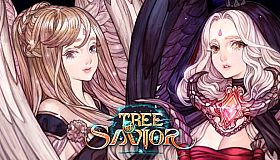







Tree of Savior stands as a free-to-play MMORPG that blends classic isometric visuals with real-time action combat on PC. Players create characters and advance through a multi-rank class system, exploring open fields and instanced areas while completing quests and engaging in group activities.
Gameplay
Combat unfolds from an isometric 2.5D perspective with direct mouse-click targeting and manual movement controls. Players actively position characters to avoid attacks and land skills without automated pathing or tab-target locks. The system supports keyboard, mouse-and-keyboard, or controller inputs, allowing fluid dodging and skill aiming during fights against monsters in fields or dungeons.
Character progression separates character level from class level. Starting with one of four base classes, players unlock advanced jobs across multiple ranks and switch between them using dedicated points. Stats and skills receive allocation based on these levels, supporting varied builds focused on damage, support, or utility. Exploration involves traveling across diverse maps, gathering resources, and tackling daily or weekly objectives that reward equipment and experience.
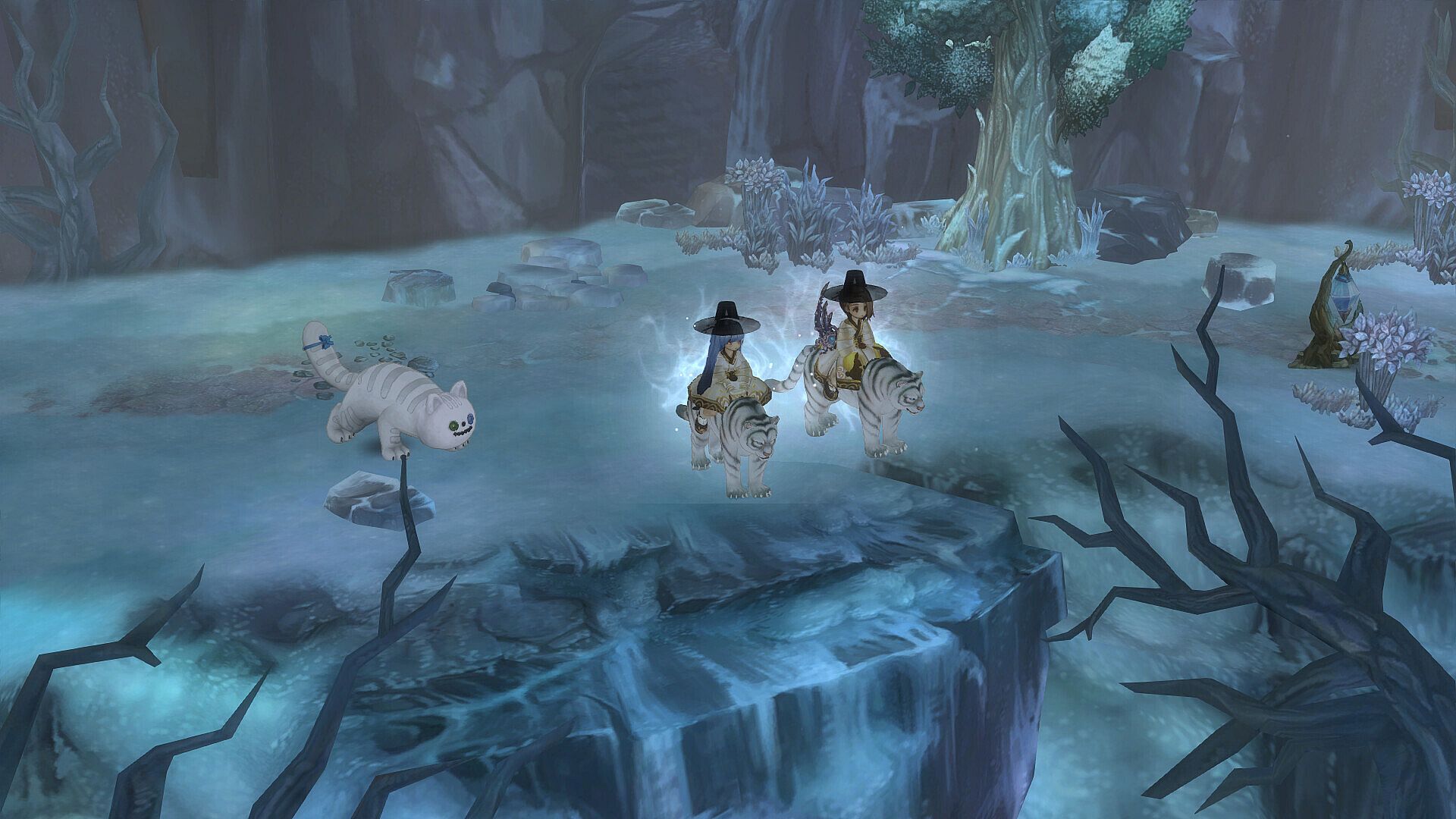
Companions and mounts enhance travel and combat utility. Mounts provide movement speed bonuses and special effects, while companions assist in battles with their own attacks. The economy revolves around in-game currency earned through hunting and quests, with optional convenience purchases available.
Game Modes
Structured player-versus-player content centers on Team Battle League, where participants form teams for best-of-three arena matches across multiple daily sessions. Gemstone Feud pits two factions against each other in resource-control objectives at scheduled times, open to characters above a set level threshold. Guild Wars enable large-scale open-world skirmishes in shared maps.
Player-versus-environment options include instanced dungeons entered multiple times daily for faster leveling and loot. Challenge Mode summons escalating waves of monsters in player-specific instances, accessible once per day through field encounters or vouchers, with higher stages offering improved rewards. Raids require parties of one to five players and feature weekly entry limits, multiple difficulty settings, and boss encounters that demand coordinated mechanics.
Additional activities encompass weekly team dungeons with rotating elements, daily demon trials, and arena-style PvP with ranking systems. These modes reset on daily or weekly schedules and provide targeted rewards such as equipment, gems, and materials.
Current State and Updates
The game receives ongoing maintenance and content additions, including new episodes, raids, equipment sets, and skill systems. Recent expansions have raised the maximum character level and introduced fresh story content alongside balance adjustments. Servers remain active with regional options, and the title continues to support both solo and group playstyles through its free-to-play model.
Is It Worth Playing?
Tree of Savior appeals to players who enjoy classic MMORPG loops with action-oriented combat and extensive class customization. Its mixed reception on Steam reflects a dedicated community that values the nostalgic feel alongside modern conveniences like auto-matching for groups. Low concurrent player numbers mean quieter servers in some regions, yet regular updates keep core systems fresh for returning and new users alike.
Those seeking deep character building, varied PvE challenges, and scheduled PvP events will find consistent engagement without upfront cost. The package of exploration, raids, and competitive modes suits fans of isometric action MMOs who prefer manual control and incremental progression over fast-paced alternatives.