

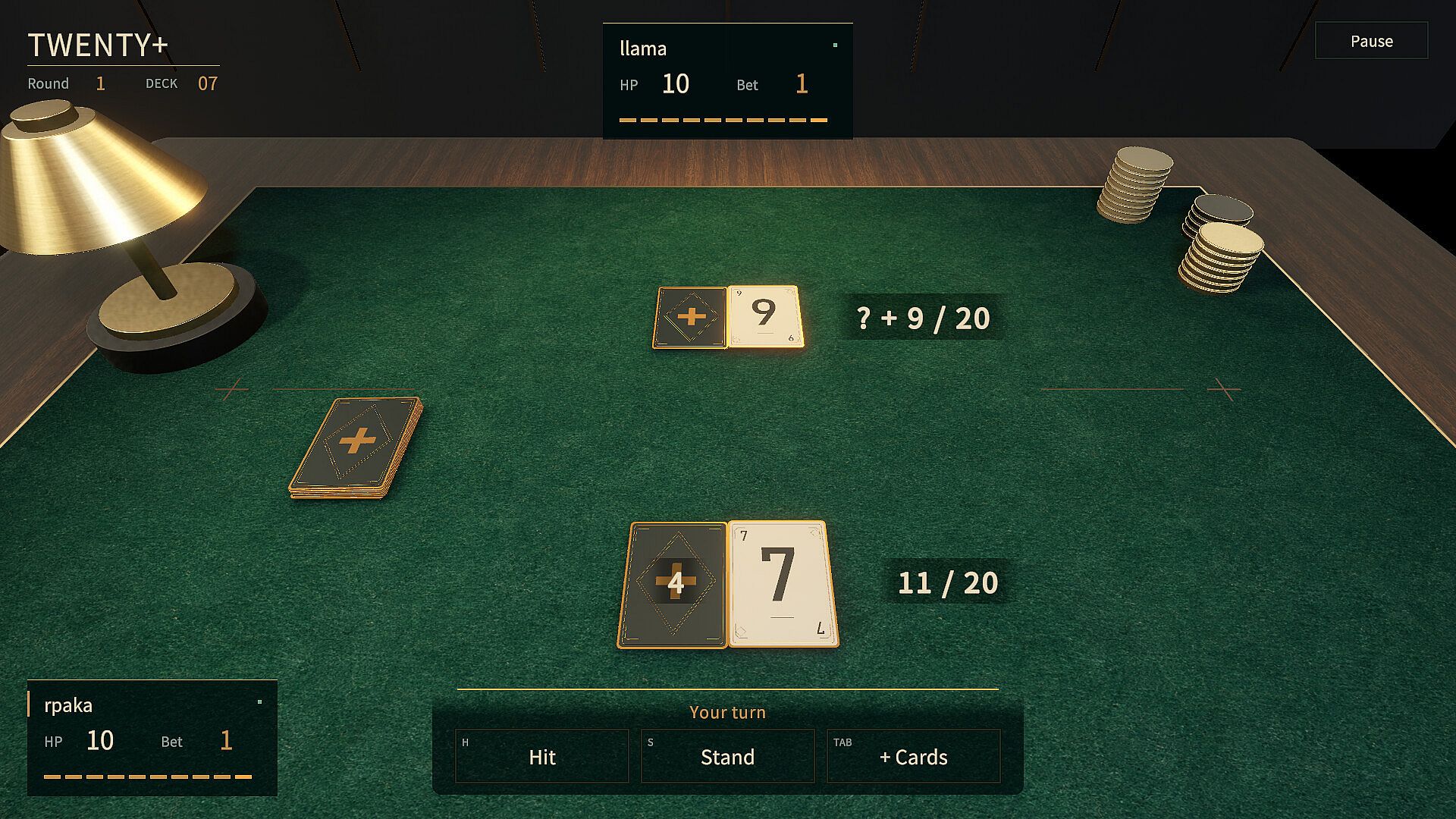
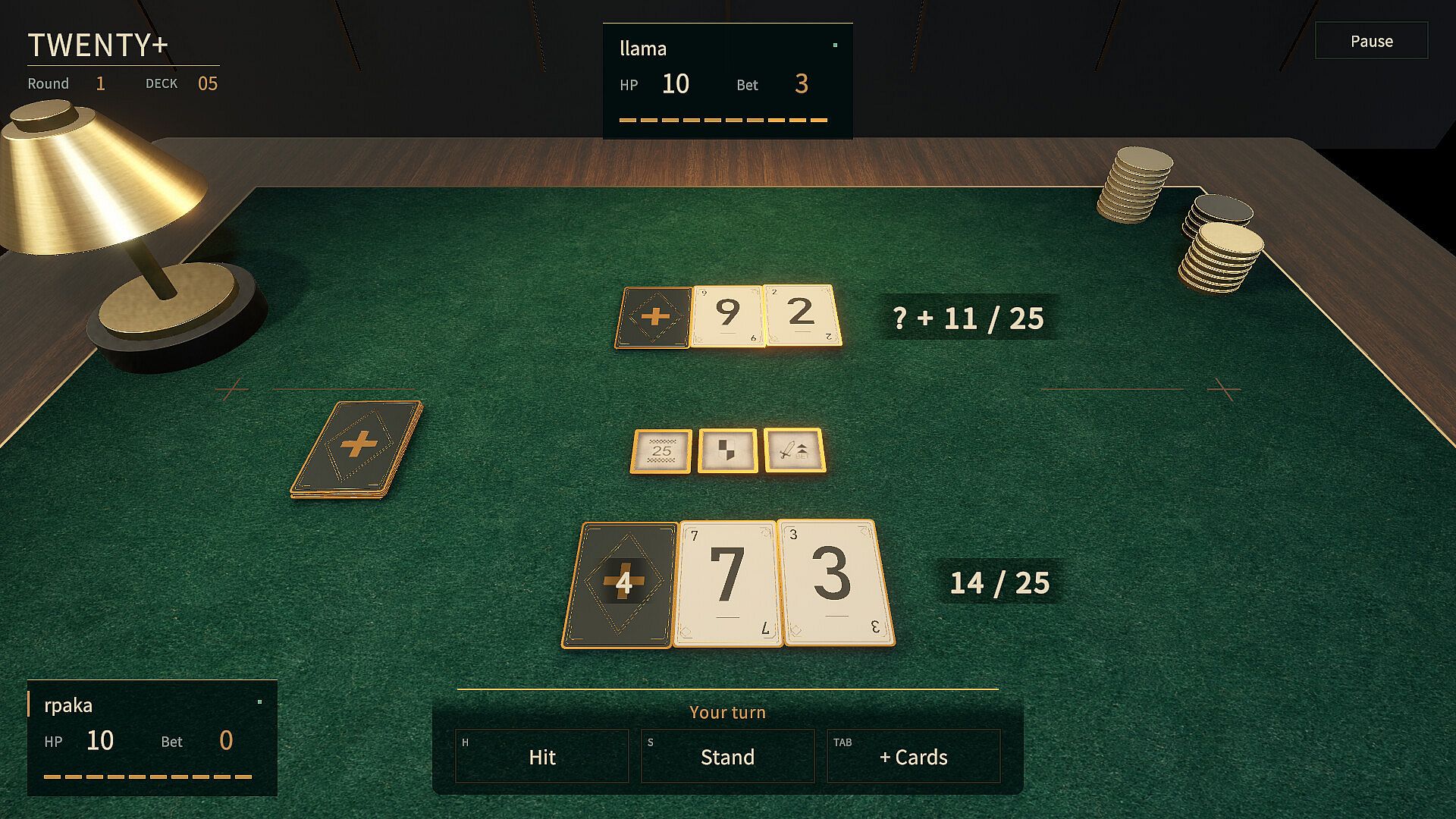
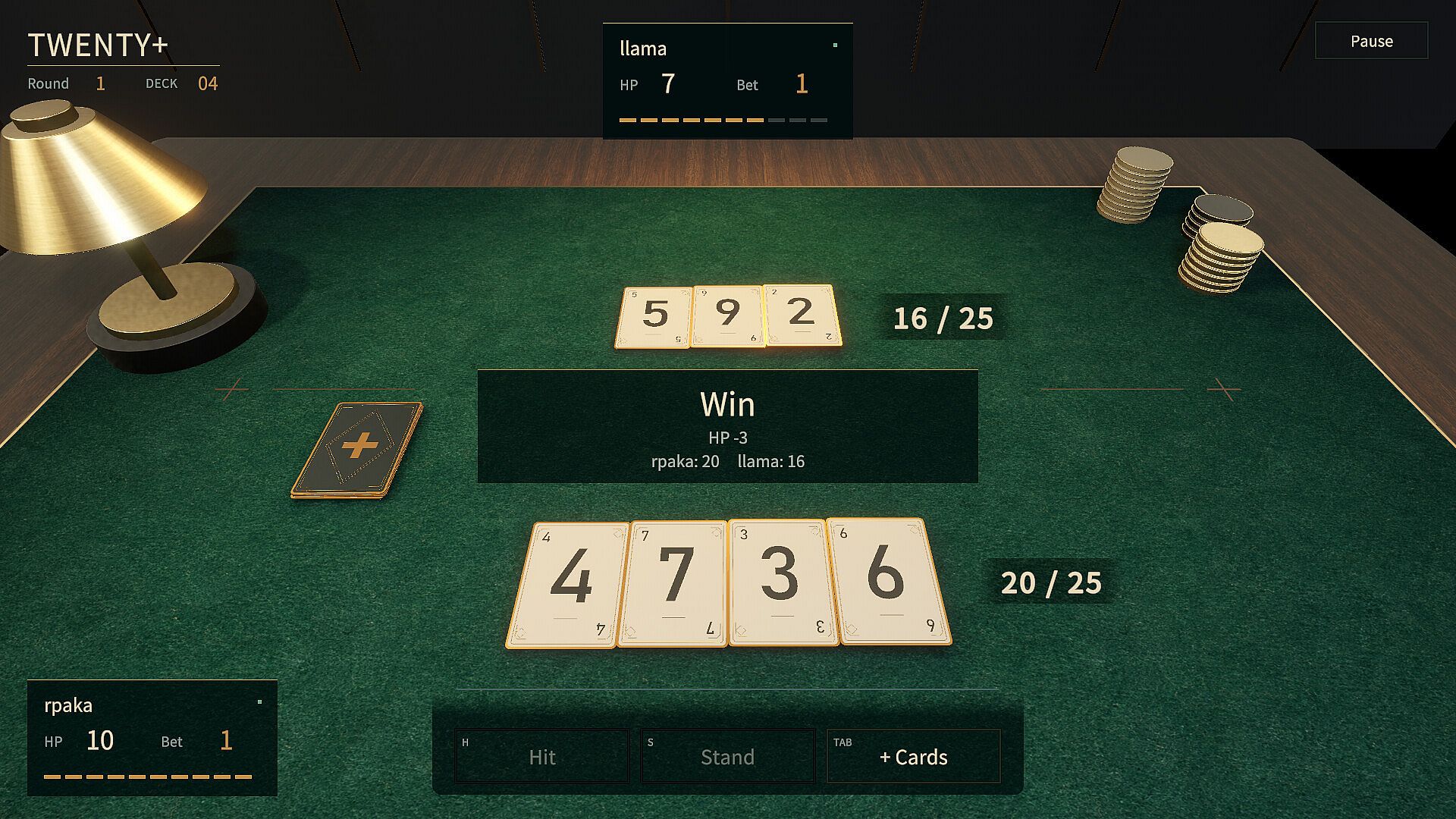
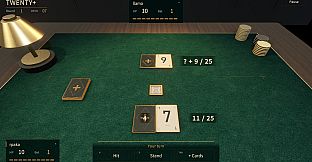
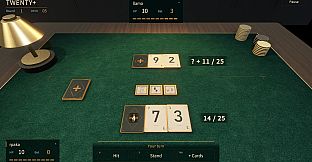
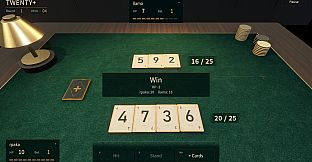
TWENTY+ is a strategy card game for PC that pits two players against each other in tense rounds of number management and tactical disruption. Built around a shared deck of cards numbered 1 through 11, the core loop centers on drawing toward a target of 20 while reading an opponent's hidden card and deciding when to stand or push further. The game blends casual accessibility with strategic depth, rewarding careful observation of visible cards and opponent behavior over pure luck.
Gameplay
Each match begins with players receiving one hidden card and then taking turns drawing from the shared deck or choosing to stand. Visible cards on the table provide information about what remains, allowing skilled players to infer likely holdings and anticipate moves. The objective involves finishing closer to 20 than the opponent without exceeding it, though additional systems layer on risk and reward.
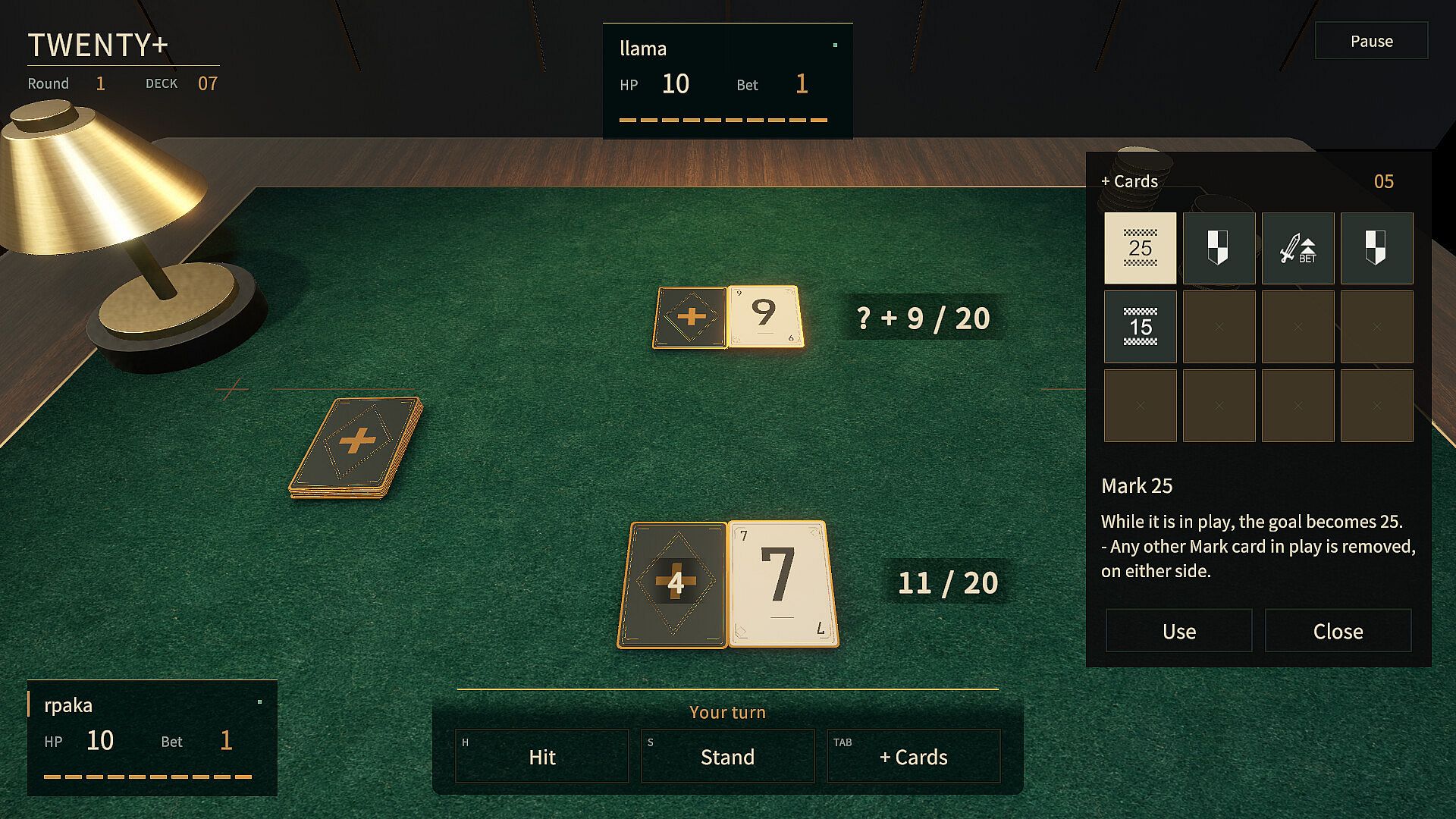
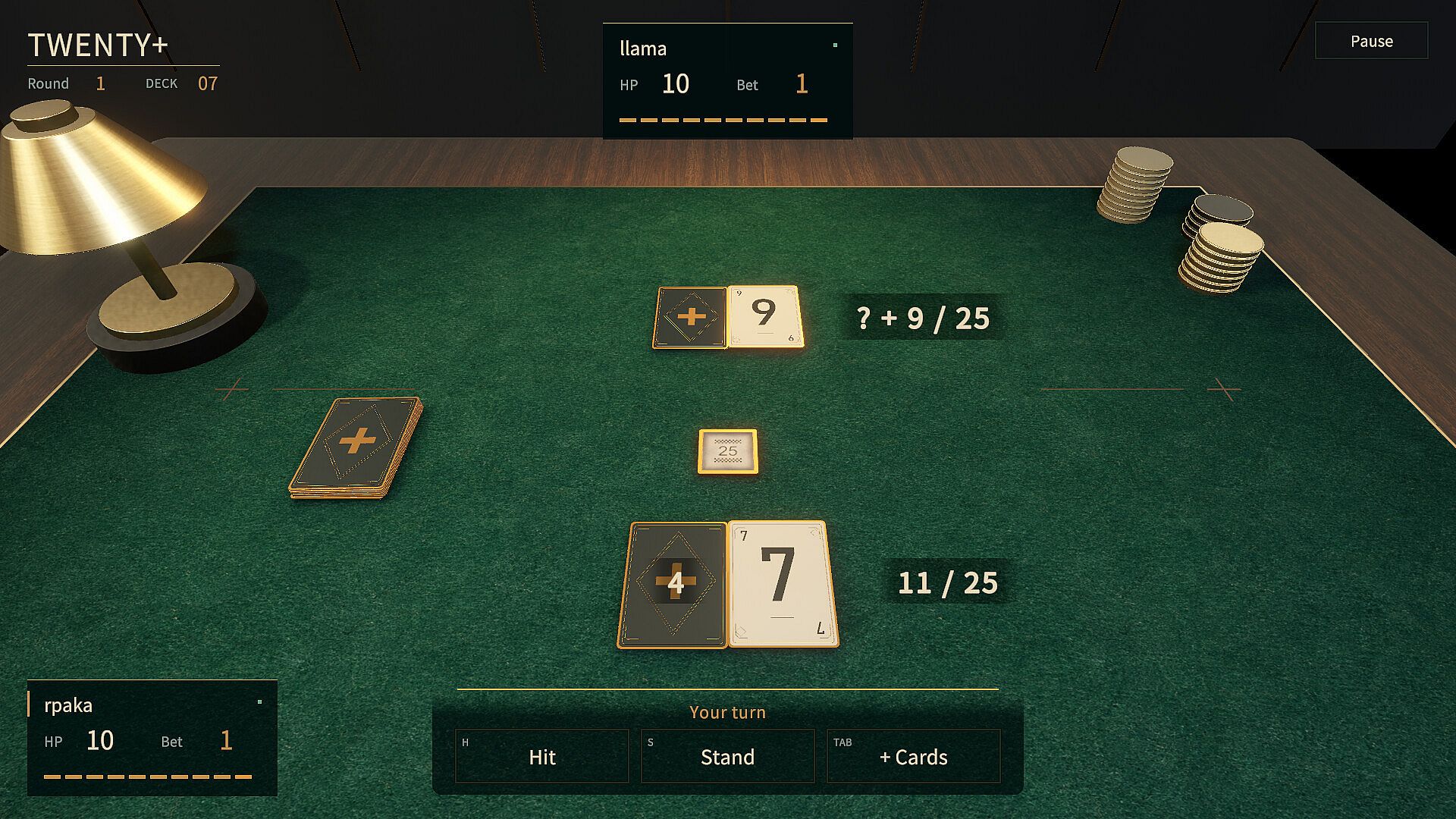
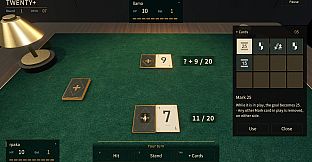
+ cards introduce direct intervention during a turn. These allow drawing a specific number, returning the last drawn card to the deck, swapping cards with the opponent, or even shifting the overall target value to 15, 25, or 30. Multiple + cards can be played in sequence, turning a disadvantageous position into an advantage through precise timing. A round loss deducts HP based on the current stake, and options to raise the opponent's stake or shield one's own add another layer of decision-making before each hand resolves.
Matches require an internet connection even against CPU opponents. The system emphasizes reading patterns across multiple rounds rather than isolated hands, with the shared deck ensuring every card played reveals information for the next exchange.
Game Modes
TWENTY+ supports several distinct ways to play. Online free matches connect players directly for head-to-head competition. CPU matches offer practice against artificial opponents set to normal or strong difficulty levels. The Gauntlet provides a structured challenge sequence that tests consistency across successive encounters.
Room creation enables hosts to set up public or password-protected sessions for one-on-one play. Friend invitations allow Steam friends to join without owning additional content, though participants need the base game and an internet connection. These options expand beyond limited free allowances in the base version by removing play caps entirely.
Core Mechanics and Strategy
The numbered deck from 1 to 11 creates a closed information environment where every draw narrows possibilities for both sides. Players must balance immediate gains against long-term positioning, since cards removed from the deck affect future rounds within the same match. + card combinations reward forward planning, as chaining effects like a swap followed by a targeted draw can force an opponent into a losing position.
Stake management adds economic tension. Raising forces the opponent to commit more HP on a loss, while shielding protects personal resources at the cost of flexibility. Successful play often hinges on timing these adjustments alongside card plays rather than relying solely on numerical totals.
Is It Worth Playing?
TWENTY+ appeals to players who enjoy strategic card games with elements of bluffing, deduction, and direct interaction. The mechanics reward repeated sessions against the same opponent, as patterns in card usage and decision-making become exploitable over time. CPU modes provide a reliable way to learn the systems without external opponents, while online and room features support casual or competitive multiplayer.
The Full Access version removes daily or session limits on CPU matches, Gauntlet runs, and free matches, while unlocking room hosting and friend invitations. This structure suits those who want unrestricted access to all available formats. As a new release with no accumulated player reviews yet, individual fit depends on preference for compact, information-driven card battles rather than expansive campaigns or large-scale multiplayer. Those drawn to head-to-head strategy with quick setup and clear win conditions will find the systems engaging from the first matches onward.