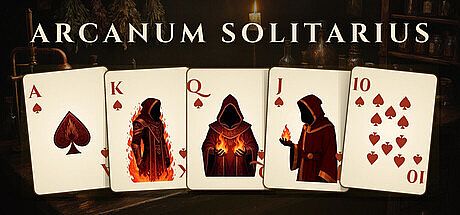



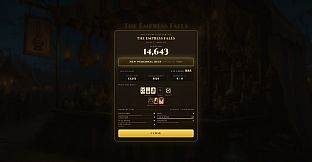
Arcanum Solitarius est un jeu de stratégie indépendant casual sur PC qui mêle les mécaniques du poker solitaire à une progression roguelike et à des éléments thématiques inspirés du tarot. Les joueurs construisent des mains de poker sur une grille tout en gérant des ressources limitées et en s'adaptant à des règles qui évoluent à chaque partie.
Gameplay
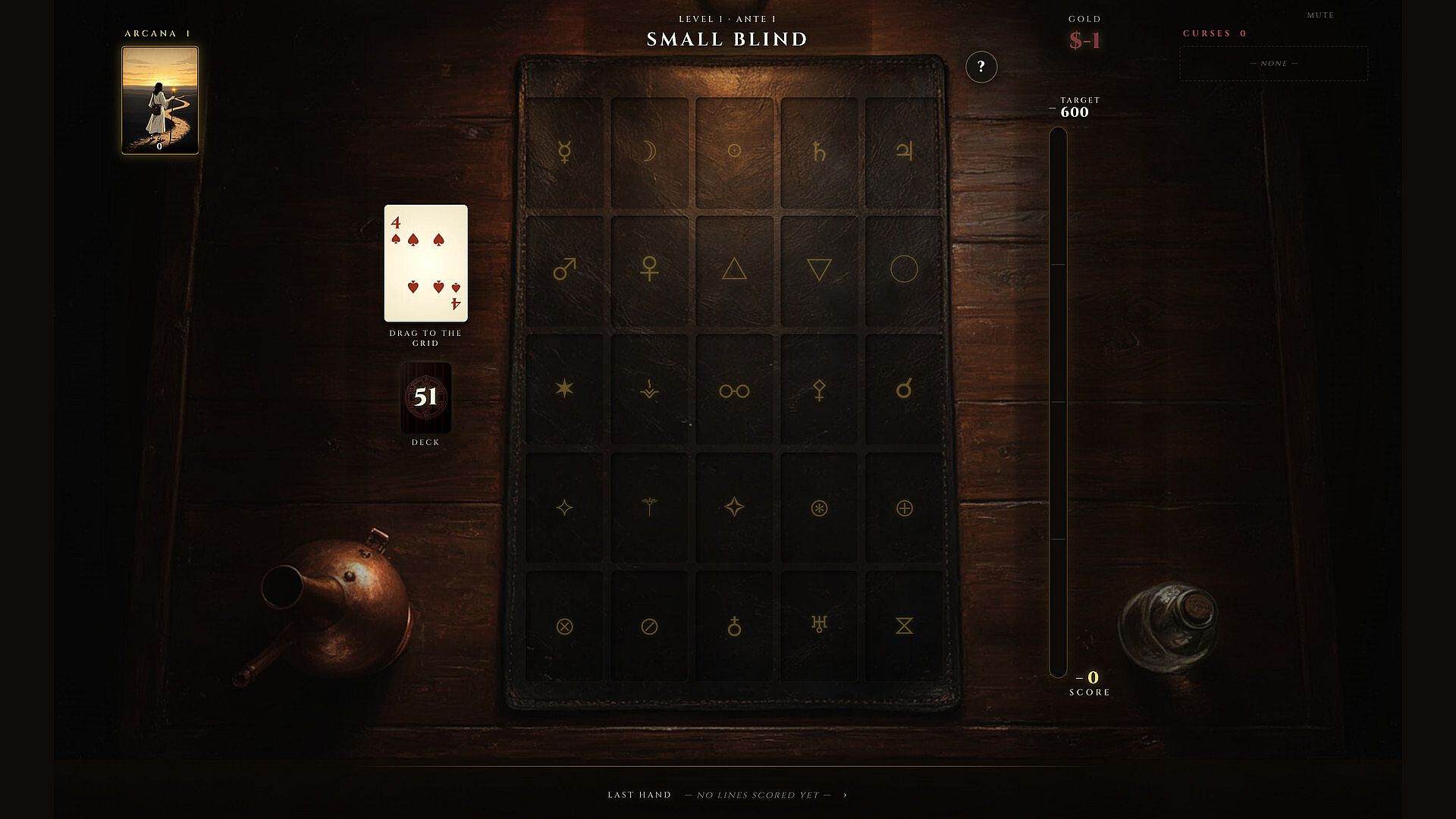
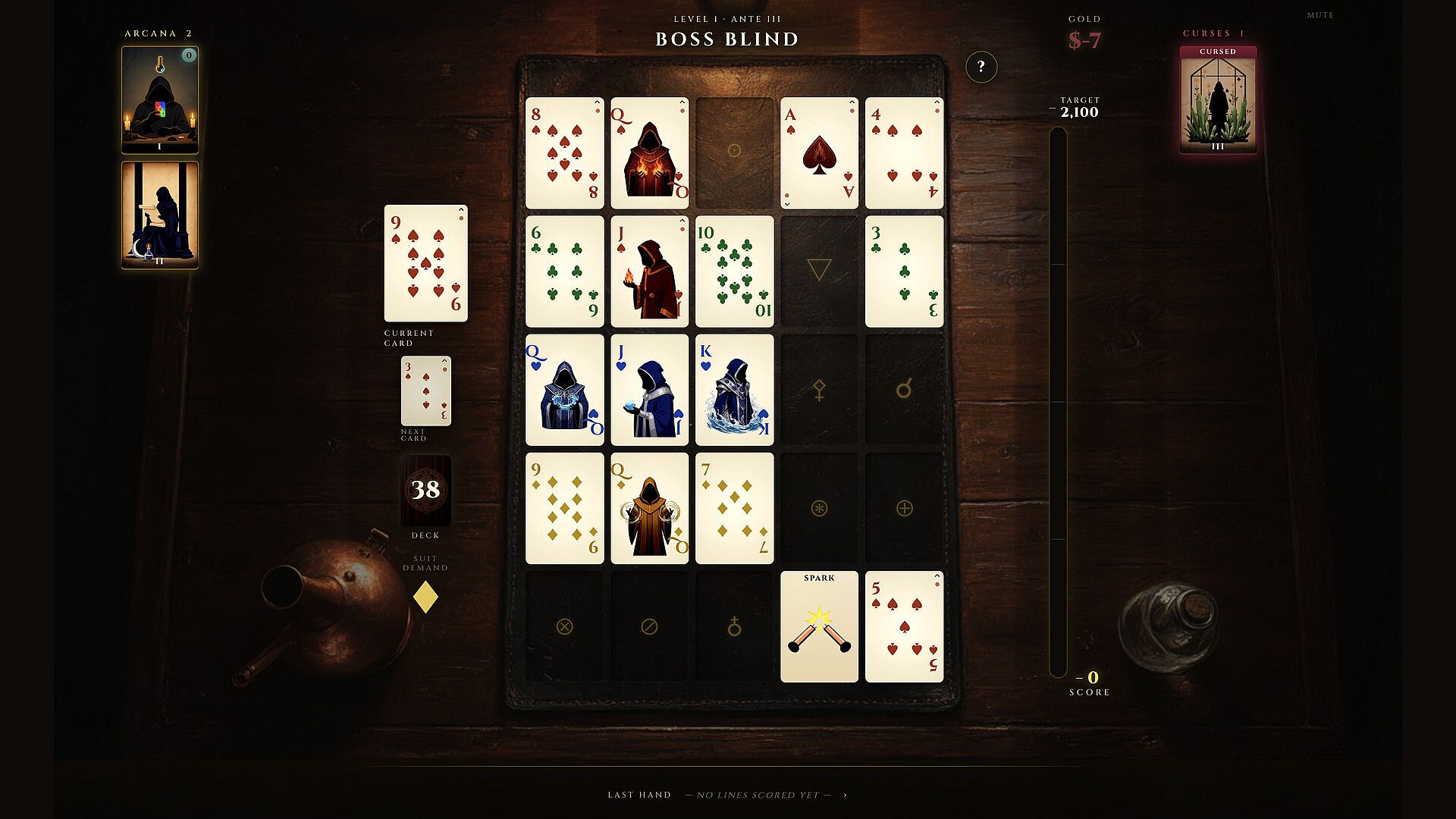
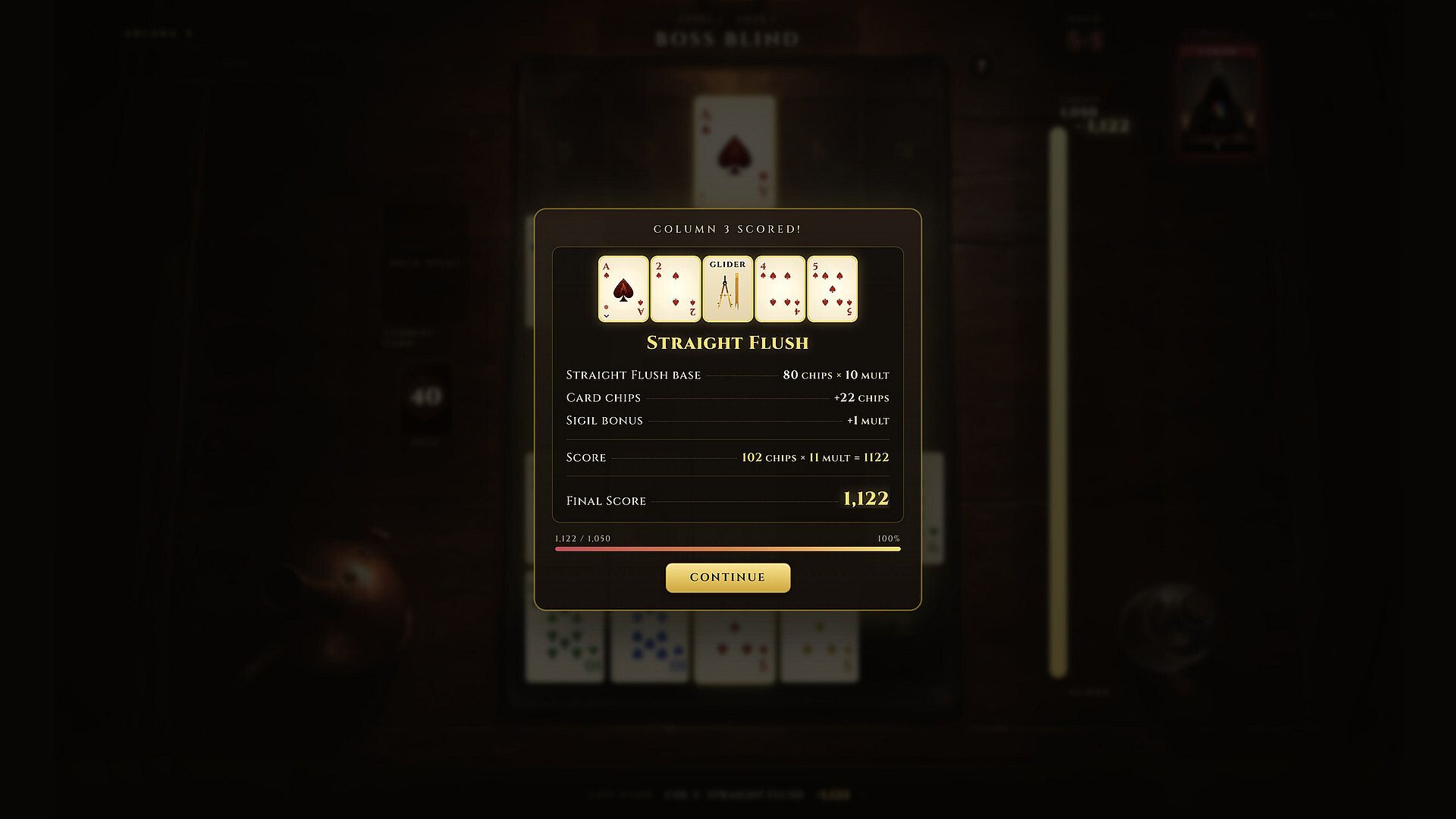
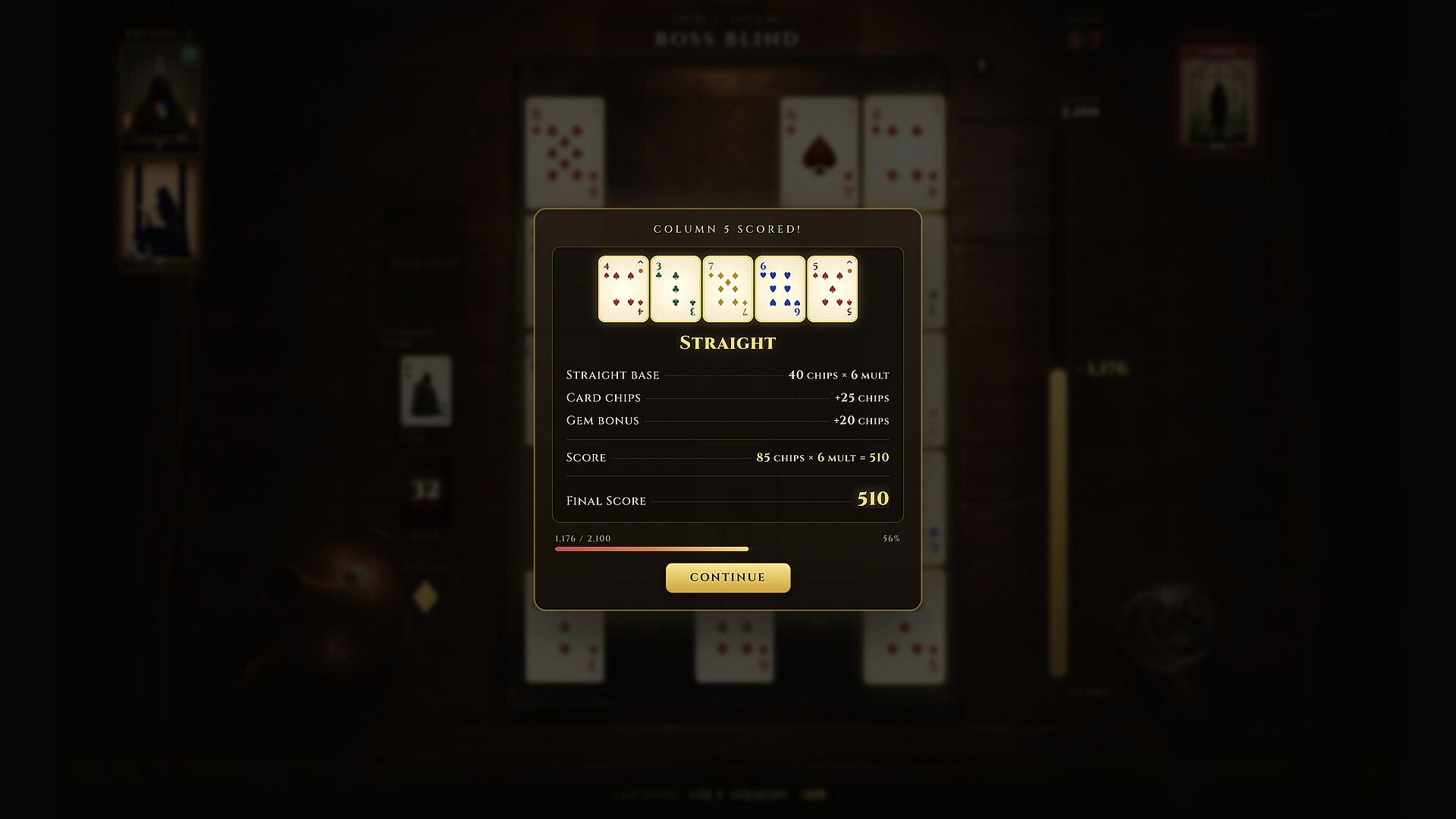
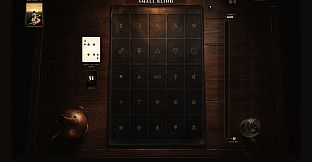
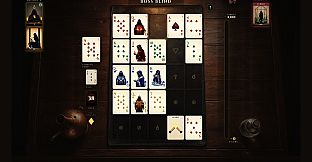
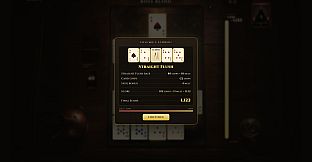
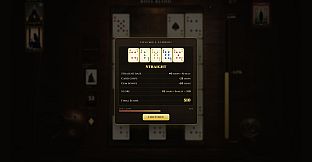
Le cœur du jeu consiste à remplir une grille de 5×5 où chaque carte placée participe à la fois à une ligne horizontale et à une colonne verticale. Les cartes arrivent une par une depuis un paquet, et chacune doit être positionnée dans une case libre. Dès qu'une ligne ou une colonne atteint cinq cartes, elle est évaluée comme une main de poker et son score est calculé immédiatement. Les cinq cartes de la main disparaissent, tandis que les kickers restent en place pour influencer les combinaisons futures.
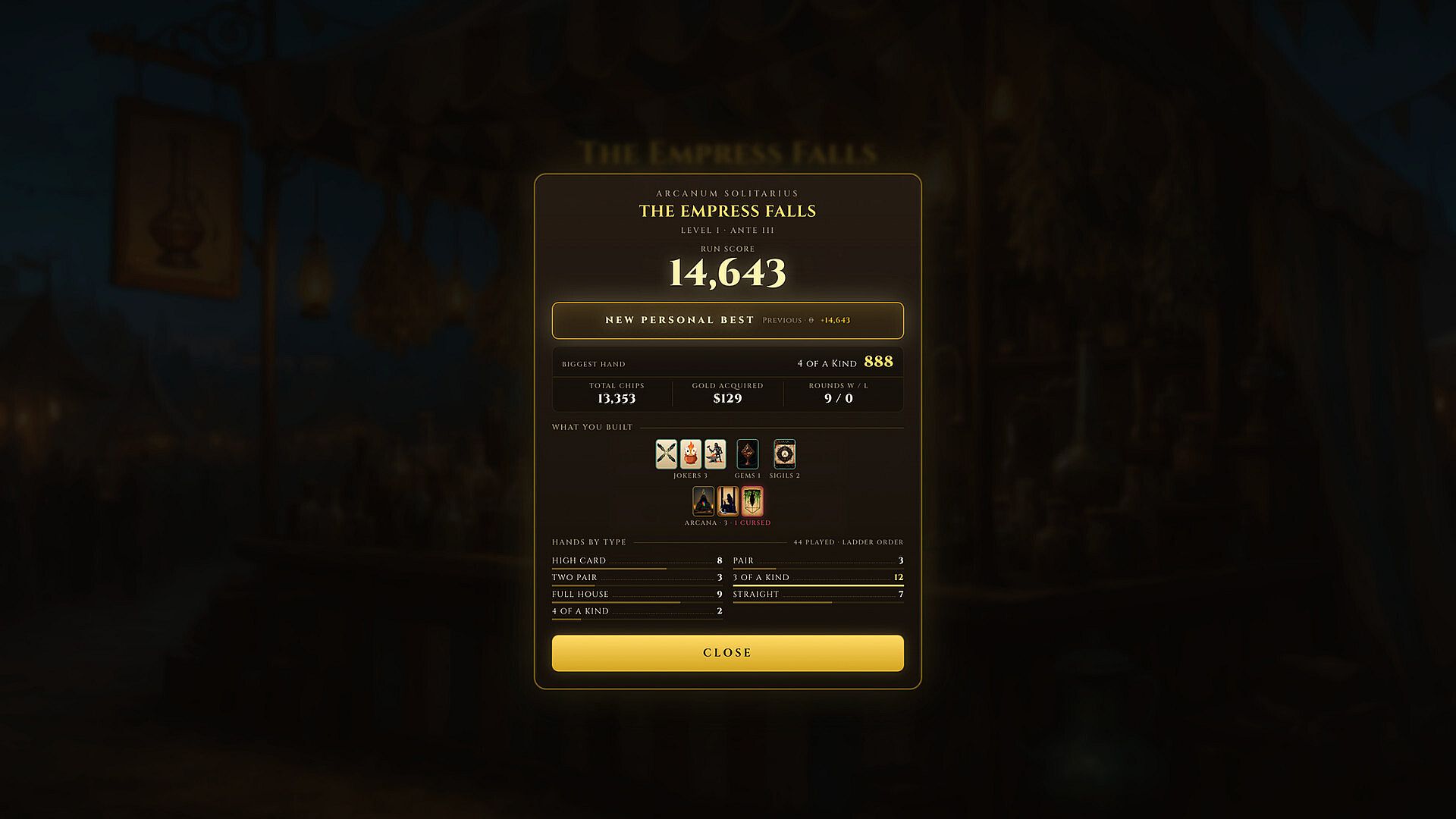
Chaque carte remplit une double fonction, obligeant le joueur à faire des compromis constants. Une pose qui renforce une ligne peut affaiblir celle qui l'intersecte, et l'ordre aléatoire des tirages empêche toute planification rigide. Les suites et les couleurs sont plus faciles à former dans une grille complète, mais répéter le même type de main déclenche un multiplicateur décroissant. La deuxième main identique vaut la moitié, la troisième le quart, et ainsi de suite jusqu'à ce qu'un autre type de main réinitialise la pénalité.
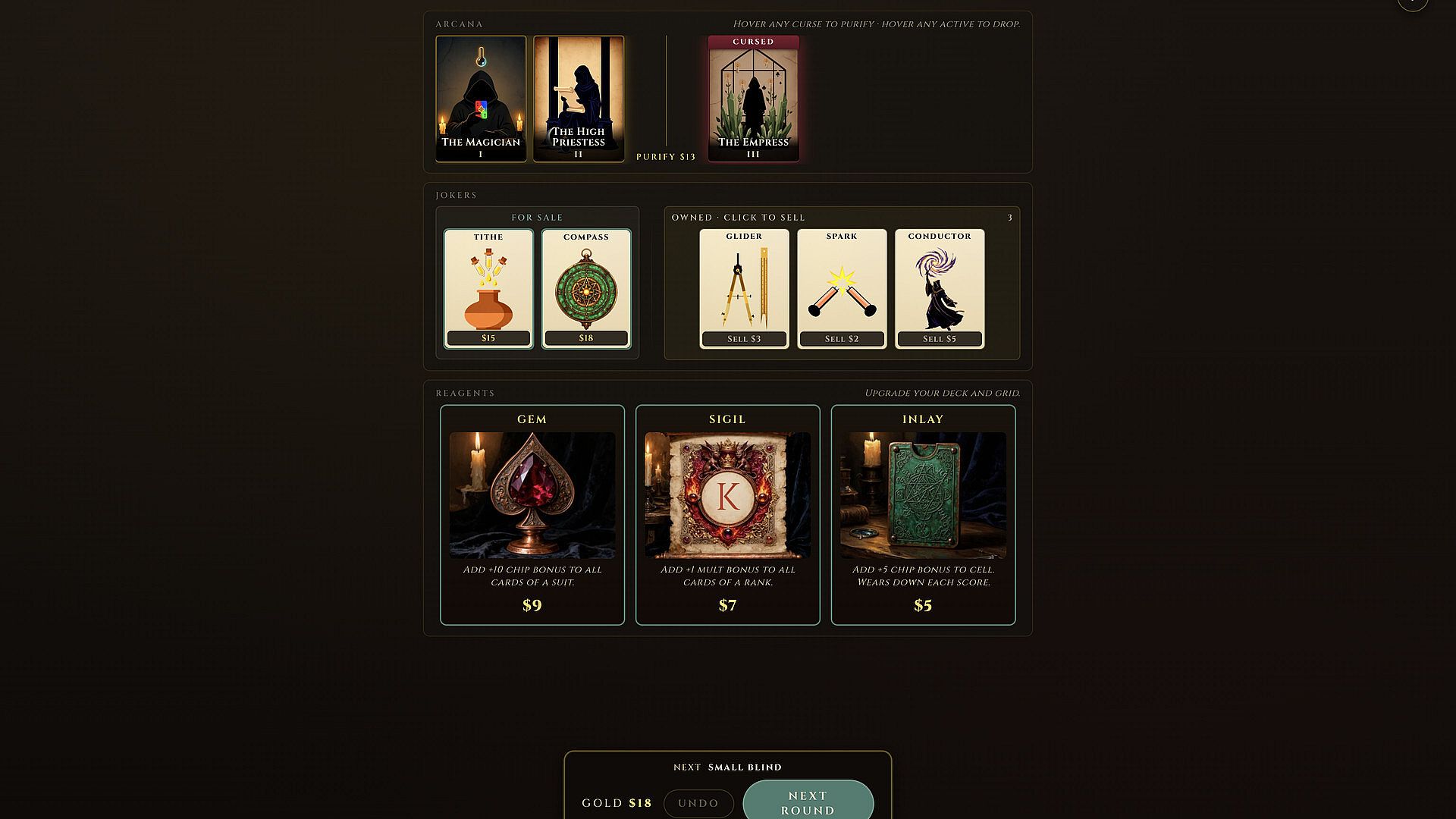
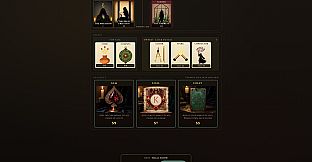
D'autres systèmes viennent enrichir la grille. Les gemmes octroient des bonus de jetons à des couleurs précises, les incrustations améliorent des cases individuelles et les sigiles multiplient la valeur de certaines valeurs. Ces modificateurs s'accumulent au fil d'une partie, mais leur acquisition a un coût qu'il faut équilibrer.
Game Modes
La partie se déroule en rounds successifs qui partagent un même paquet jusqu'à ce qu'il soit épuisé ou que le score cible soit atteint. Chaque round se termine lorsque le seuil de score est atteint ou que le paquet est vide, déterminant la réussite ou l'échec de la tentative.
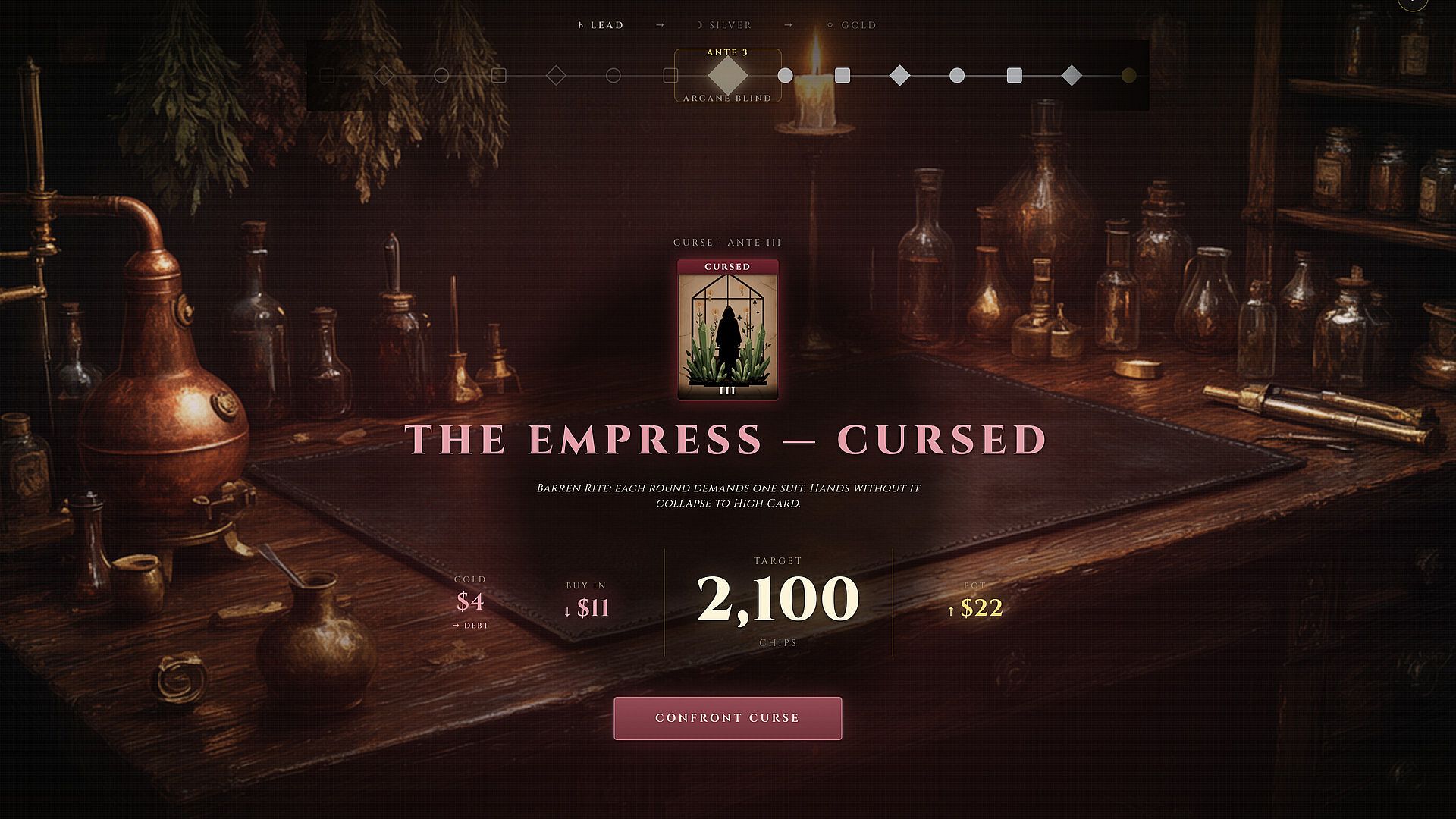
Les rounds boss introduisent les Arcanes maudites du Voyage du Mat. Ces 22 cartes de l'Arcane majeur modifient les règles de score et appliquent des pénalités continues si elles ne sont pas purifiées. Elles s'accumulent d'un round à l'autre, augmentant la difficulté jusqu'à ce qu'elles soient traitées. Les rounds standards se concentrent sur la construction régulière de la grille, tandis que les boss exigent une adaptation aux conditions altérées.
Chaque tentative complète constitue une run roguelike indépendante. Les améliorations achetées pendant une partie ne persistent que pour cette tentative, et l'échec met fin à la séquence, obligeant à recommencer avec de nouvelles opportunités.
Deck Building and Upgrades
La progression repose sur l'expansion du paquet et l'amélioration du plateau. Les jokers entrent dans le paquet comme des cartes sauvages dotées de pouvoirs uniques qui transforment le calcul des mains. Trente-sept jokers distincts sont disponibles, chacun proposant des effets différents sur le score ou les règles de placement.
La gestion des ressources est directement liée à la survie. La monnaie dépensée en améliorations représente également la vie, si bien qu'un investissement excessif peut mettre fin prématurément à une run. Le système récompense les achats sélectifs qui complètent les cartes tirées plutôt qu'une accumulation large.
Les mécaniques de rotation encouragent la variété. L'utilisation répétée d'un même type de main réduit sa valeur au fil du temps, poussant le joueur à modifier sa stratégie en cours de partie pour maintenir son efficacité.
Is It Worth Playing?
Arcanum Solitarius s'adresse aux joueurs qui apprécient un placement de cartes réfléchi et proche du puzzle, associé à une prise de décision roguelike. La construction de mains sur deux axes crée une tension spatiale et combinatoire constante, absente des variantes classiques de solitaire.
Les amateurs d'évaluation de mains de poker retrouveront un scoring familier enrichi de contraintes de grille et de systèmes de décroissance qui pénalisent la répétition. Les éléments arcaniques ajoutent des défis modifiant les règles sans submerger les mécaniques de base.
Les parties en solo mettent l'accent sur l'adaptation plutôt que sur de longues campagnes, rendant les sessions flexibles pour des durées courtes ou longues. L'orientation indie casual stratégie maintient une complexité accessible, tandis que les améliorations roguelike offrent une profondeur de rejouabilité grâce aux différentes combinaisons de jokers et aux choix de modificateurs.
Les retours soulignent la boucle satisfaisante du scoring instantané et l'impact de chaque placement sur plusieurs résultats. Les joueurs en quête d'une nouvelle approche du solitaire avec une stratégie en couches apprécient souvent l'équilibre entre le hasard du tirage et le positionnement tactique. Le jeu est encore en développement actif et une démo permet de tester les systèmes principaux avant de s'engager dans une partie complète.